10 Daily Habits That Grow Toddler Speech

Sarah Mitchell
Sarah Mitchell is a Registered Pediatric Nurse and a mother of three who has spent over a decade helping families navigate the beautiful, chaotic early years of childhood. She combines evidence-based medical knowledge with real-world parenting experience to offer practical, compassionate advice. At Awesome Parent, Sarah's mission is to help exhausted parents find solutions, trust their instincts, and finally get some sleep.
If you are here because your toddler is not saying what you expected by now, take a breath with me. As a pediatric nurse and a mom who has lived through the “he understands everything but says basically nothing” season, I want you to know two things can be true at once: you can support communication every day, and your child can still be perfectly okay.
Also, a quick clarity point that helps a lot of parents feel less confused: speech is how we make sounds (like clarity and pronunciation). Language is the bigger system (understanding words, using words, gestures, and back-and-forth). Most of the tips below support language, which is the foundation speech builds on.
Development is not a single milestone; it is a whole stack of skills: understanding words, paying attention to faces, taking turns, copying sounds, using gestures, and eventually combining words. The good news is you do not need fancy flashcards or marathon “learning time.” The best progress usually comes from tiny, repeatable habits sprinkled into the day.
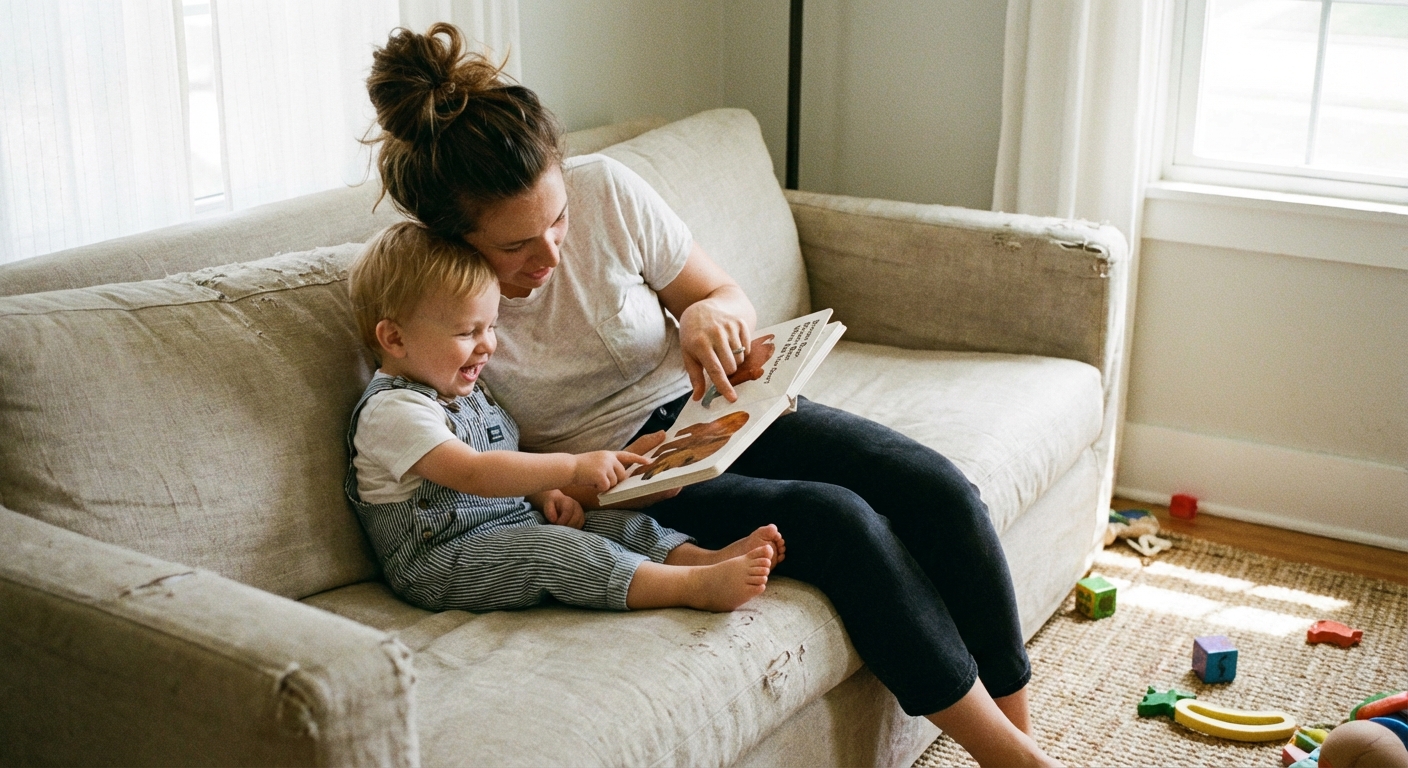
What helps toddlers talk
In clinic, I saw families get overwhelmed by conflicting advice. Here is an evidence-aligned foundation many speech-language pathologists emphasize: toddlers learn language through responsive back-and-forth interaction. That means your child signals (a look, a point, a sound, a word), you respond in a warm, meaningful way, and then you pause so they can take another turn.
Keep it pressure-free. We are aiming for more connection, not perfect pronunciation.
10 daily habits that help speech
1) Get face-to-face for 30 seconds
You do not need to sit cross-legged on the floor for an hour. Just build micro-moments where your toddler can clearly see your mouth and your expressions: at the high chair, during diaper changes, in the car seat mirror, or while you put on shoes.
- Try this: “Hi! I see you. Ready for snack?” then pause.
- Why it works: kids learn sounds and words by watching your face and timing their “turn.”
2) Narrate with short, correct phrases
Think: sports commentator, but calmer and with fewer words. Use simple, repeatable phrases that are still grammatically correct. This gives your toddler a clean model to copy.
- Instead of: “Okay, we’re going to go upstairs and get your pajamas and then we’ll brush your teeth…”
- Try: “Upstairs. Pajamas on. Brush teeth.”
- Why it works: repetition plus simplicity helps toddlers map words to actions.
3) Follow their lead, then add one
If your toddler is focused on cars, you are now a car person. When we join their interest, we get more attention and more learning.
- Try this: child pushes car and says “vroom.” You say, “Vroom! Fast car.” Then pause.
- Add one: if they say “car,” you say “blue car.” If they say “blue car,” you say “blue car goes” or “go, blue car.”
- Why it works: this is a gentle way to expand language without correcting or quizzing.

4) Comment, do not test
A lot of well-meaning adults accidentally turn conversation into a pop quiz: “What color is this? What does the cow say?” Some kids love that. Late talkers often shut down.
- Swap this: “What’s that?”
- For this: “Cow. Moo!”
- Then pause: give them a chance to copy a sound, gesture, or word.
Comments feel safer than questions, and safety is where communication grows.
5) Use playful pauses
Pauses really do work wonders, and here is why: toddlers need extra processing time, and they need a clear spot where it is “their turn.”
- Try this: “Ready, set…” (pause and look expectantly) “…GO!”
- Or: blow bubbles and wait with the wand near your mouth until they look at you or vocalize.
- Why it works: the pause creates a predictable place for your child to communicate.
6) Label what they want
Motivation matters. Words tied to getting needs met tend to show up sooner.
- At snack: “More crackers?” “Milk?” “All done?”
- At the door: “Outside!” “Shoes on.”
- At bath: “Pour.” “Splash.” “Towel.”
Use the word, give the item, repeat. No need to hold the crackers hostage until they perform. We are building association, not compliance.
7) Read one short book every day
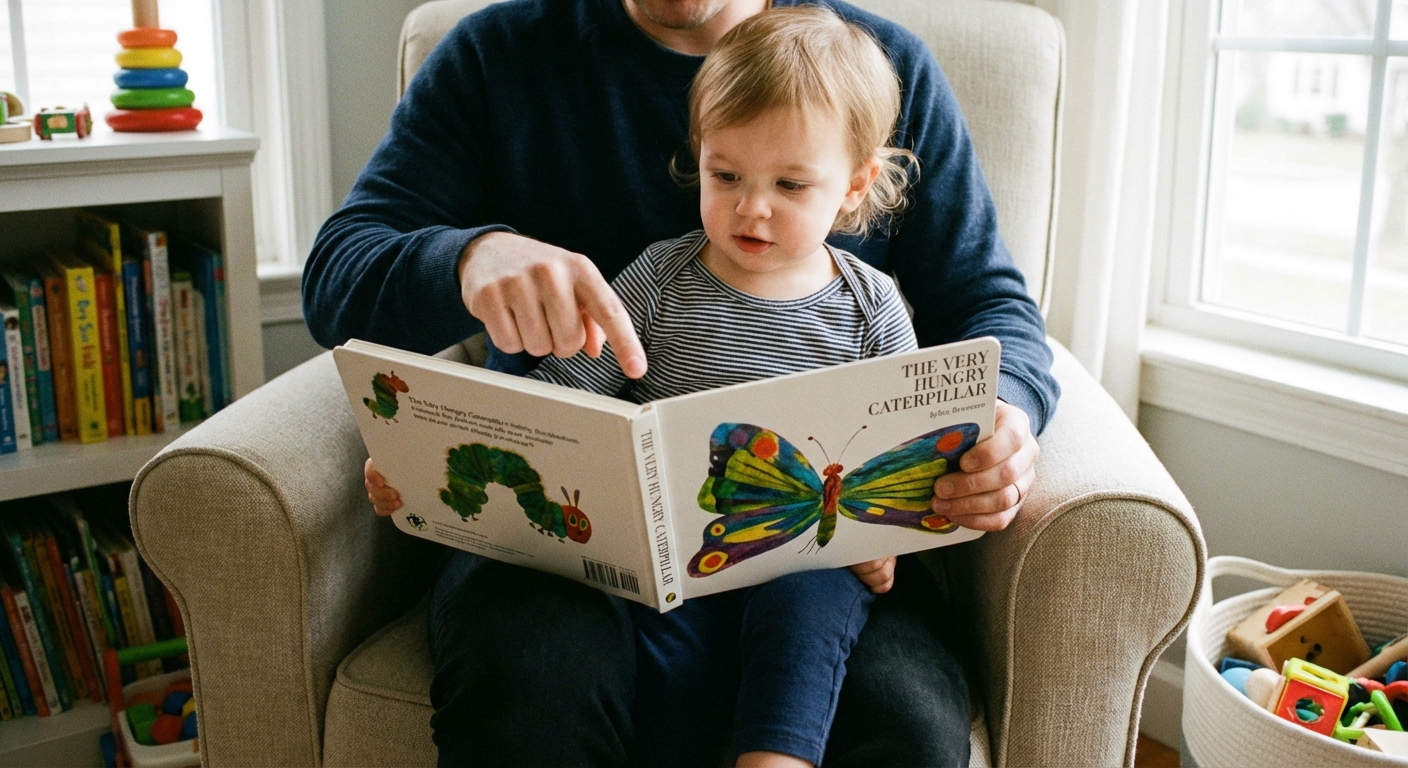
Re-reading is not boring to toddlers, it is how they learn. Pick one sturdy board book and make it your daily “anchor book,” even if it is two minutes before bed.
- Try this: point, label, pause. “Dog. Woof!” Pause. “Ball.” Pause.
- Let them lead: if they flip pages fast, label one thing per page and keep going.
- Why it works: predictable language plus pictures support vocabulary growth.
8) Sing songs with motions
Songs slow language down and make it more memorable. Motions add meaning, which helps late talkers connect words to actions.
- Great options: Itsy Bitsy Spider, Wheels on the Bus, Head, Shoulders, Knees, and Toes.
- Pro tip: pause before the “big word” so they can fill it in: “The wheels on the bus go…” (pause) “…round!”
9) Add one communication temptation
This sounds fancy, but it is basically creating a small, safe reason for your toddler to communicate.
- Give a closed container they cannot open easily and wait for a look, point, sound, or word.
- Offer two choices: “Apple or banana?” and hold them up near your face.
- Start a favorite toy (like a wind-up) then stop and wait for “more,” a gesture, or eye contact.
Keep it playful and low-frustration. Do not withhold essentials, and if they are melting down, help them and try again later. Celebrate any attempt. A point counts. A sign counts. A sound counts. That is the start of intentional communication.
10) Lower background noise
Constant TV or loud audio makes it harder for toddlers to pick out speech sounds. You do not need a screen-free house, just a few quiet pockets of the day.
- Easy win: turn off background TV during meals.
- Another: music is fine, but lower the volume during play when you want interaction.
Think of it as giving your toddler’s brain less “static” so your words come through clearly.
If your toddler is a late talker
Late talkers are often strong communicators in other ways. They might point, bring you items, understand routines, or follow directions long before they say many words. That is encouraging. Receptive language (what they understand) is a big piece of the puzzle.
Also, toddlers rarely go from zero to full sentences overnight. Progress can look like:
- more eye contact during play
- more pointing and showing you objects
- more sounds and babbling
- copying animal noises or “car sounds”
- one new word that shows up everywhere for a week
And if your child uses gestures, signs, pictures, or AAC to communicate, that counts. Those supports do not prevent talking. They often reduce frustration and can help language grow.
Bilingual homes
If your family uses two (or more) languages, you did not cause a delay by being bilingual. Keep using the language you are most comfortable speaking with your child. Rich, warm interaction in any language supports language development. If you have concerns, it is still worth getting support. A good evaluation will consider skills across languages, not just English.
When to get extra help
You are not overreacting by asking. Early support can be incredibly helpful, and an evaluation does not obligate you to anything. These are common benchmarks that often prompt a check-in, but they are not “hard lines” for every child or situation.
- By 12 months: not babbling, not using gestures like pointing or waving, or not responding to their name consistently.
- By 16 months: no spoken words.
- By 24 months: fewer than about 50 words or not combining two words (like “more milk”).
- Any age: loss of previously used words, concerns about hearing, or limited social engagement.
Trust your gut. If something feels off, bring it up with your pediatrician. Many regions offer early intervention evaluations for toddlers, often at low cost or no cost. And when there is a speech or language concern, a hearing screen is often a smart first step, even if your child seems to hear fine day to day.
Quick nurse note: frequent ear infections or persistent fluid can contribute to temporary hearing changes, which may affect how clearly a child hears speech sounds. If you are seeing a pattern of ear infections, ask about a hearing screen.
A gentle reminder
You do not need to talk at your toddler all day to help them talk. Pick two habits from this list and do them consistently for two weeks. Then add one more. Small, steady, responsive interaction is the secret sauce.
And if you are doing all the things and still worried, you are allowed to ask for help. That is not failing. That is parenting.