10 Practical Tips to Ease Separation Anxiety at Daycare Drop-Off

Sarah Mitchell
Sarah Mitchell is a Registered Pediatric Nurse and a mother of three who has spent over a decade helping families navigate the beautiful, chaotic early years of childhood. She combines evidence-based medical knowledge with real-world parenting experience to offer practical, compassionate advice. At Awesome Parent, Sarah's mission is to help exhausted parents find solutions, trust their instincts, and finally get some sleep.
If daycare drop-offs feel like a tiny heartbreak on repeat, you are not alone. Separation anxiety is a normal, healthy part of development. It can still be brutal at 8:05 AM when you are trying to get to work and your baby is clinging to you like a koala.
As a pediatric nurse and a mom of three, I want you to hear this clearly: tears at drop-off do not mean you are doing anything wrong, and they do not mean daycare is harmful. Most kids adjust with consistent routines, supportive caregivers, and a few strategic tweaks at home.

Below are 10 practical, research-informed tips to reduce the chaos and help your child build trust in the routine.
First, a quick reality check
Separation anxiety often ramps up (timing varies by child):
- Around 6 to 9 months as object permanence develops (your baby realizes you can leave and they do not love that).
- Again around 12 to 18 months as attachment and mobility explode at the same time.
- In toddlerhood during big transitions (new room, new teacher, new schedule, new sibling, illness, travel).
A little protest at goodbye is common. The goal is not “zero tears forever.” The goal is a predictable, safe routine that helps your child recover faster and feel secure over time.
1) Practice separations at home
If your child has been mostly with you, going from 0 to full-day daycare can feel like stepping onto a moving treadmill. Practice separation in tiny, boring increments.
- Step into another room for 30 to 60 seconds while talking calmly: “I’m getting your water. I’ll be right back.”
- Build up to a few minutes with a trusted adult in the house while you take a short walk.
- Keep your return steady and warm. Very big reactions can unintentionally crank up the emotional intensity.
Why it works: Repeated experiences of “Mom/Dad leaves and always comes back” help the brain learn safety.
2) Start the routine early
Kids love predictability, even when they act like they do not. A few days to a week before the first drop-off, begin shifting toward “daycare timing.”
- Wake-up, breakfast, and getting dressed at the same time you will do on daycare days.
- Practice the same steps: diaper change, shoes, coat, into the car or stroller.
- If possible, drive by daycare or walk past it and say, “This is where you’ll play with friends.”
Why it works: The body and brain handle one new thing at a time better than five new things at once.
3) Use a short goodbye script
Your child needs a consistent “ending” to the drop-off. Aim for 15 to 30 seconds once you are at the hand-off point.
Try a simple script:
- “I love you.”
- “You are safe.”
- “I will come back after snack and outside time.” (Use their schedule.)
- “One hug, one kiss, high five.”
Then go. Kindly, confidently, and with a clear goodbye. In most cases, a brief, consistent exit works best.
Why it works: Lingering can accidentally ramp up distress. A clear, predictable goodbye helps your child shift attention to the caregiver and the environment.
4) Use a comfort object
A comfort item can be a powerful tool, especially for infants and young toddlers.
- A small lovey, blanket, or stuffed animal (if daycare allows it).
- A pacifier if your child uses one.
- For babies: a clean t-shirt you wore briefly can help for awake comfort time only. Follow daycare rules and safe-sleep guidance. Many programs cannot allow extra items in cribs.
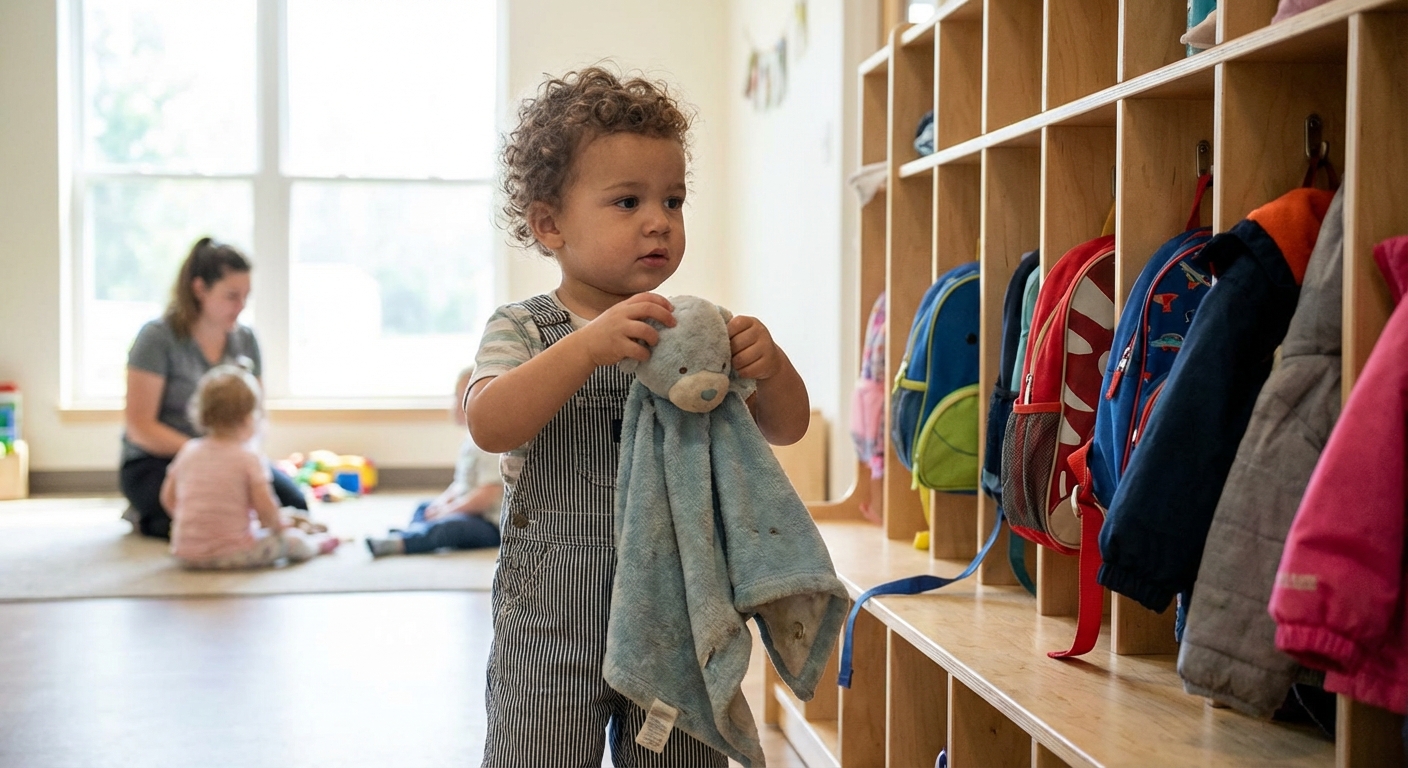
Why it works: Familiar smell and texture can lower stress and help a child self-soothe when you are not there.
5) Talk about daycare calmly
Kids are emotional detectives. If we sound unsure, they feel it.
- Instead of: “I’m so sorry you have to go, I know it’s awful.”
- Try: “You’re going to daycare. Ms. Ana will help you. I’ll be back after nap.”
You can absolutely validate feelings without feeding the fear:
“You feel sad. Saying goodbye is hard. I will come back.”
6) Use time anchors
Toddlers struggle with time. “After work” means nothing. Use daycare landmarks instead.
- “I’ll come back after lunch.”
- “I’ll be back after nap.”
- “One more outside time, then I come.”
If your child is an older toddler, you can also use a simple picture routine at home: breakfast, daycare, snack, nap, pickup.
Why it works: Predictable sequencing helps kids tolerate waiting.
7) Plan the hand-off with teachers
Daycare teachers are pros at this. Use them.
- Ask what time tends to be easiest for your child (some kids do better arriving a bit earlier to settle in).
- Have a specific hand-off spot and routine.
- Share what helps your child calm down: songs, a back rub, being shown a favorite toy, looking out the window for a minute.
If possible, pass your child to the caregiver instead of trying to peel them off your legs while you stand there panicking. Gentle, clear transfer is often faster.
Also, many centers have constraints (drop-off at the door, no loveys, limited time in the classroom). If that is your situation, ask what is allowed: a family photo in the cubby, a special goodbye handshake, or the teacher walking your child to a favorite activity.
8) Do not sneak out
I know it is tempting. You wait for a distraction and slip out like a ninja. Unfortunately, this often backfires.
Why it can make things worse: If your child learns you disappear without warning, they may cling harder the next time to prevent it.
Even if they cry, a consistent goodbye teaches trust: “My parent says goodbye, and they come back.”
9) Keep pick-ups steady
Reunions matter. They teach your child what separation means.
- Greet warmly, then pause for a moment of connection: “I’m back. I missed you.”
- Offer a snack if it has been a long stretch. Hunger makes everything harder.
- Try 10 minutes of phone-free “special time” at home: floor play, books, a short walk, or snuggles.
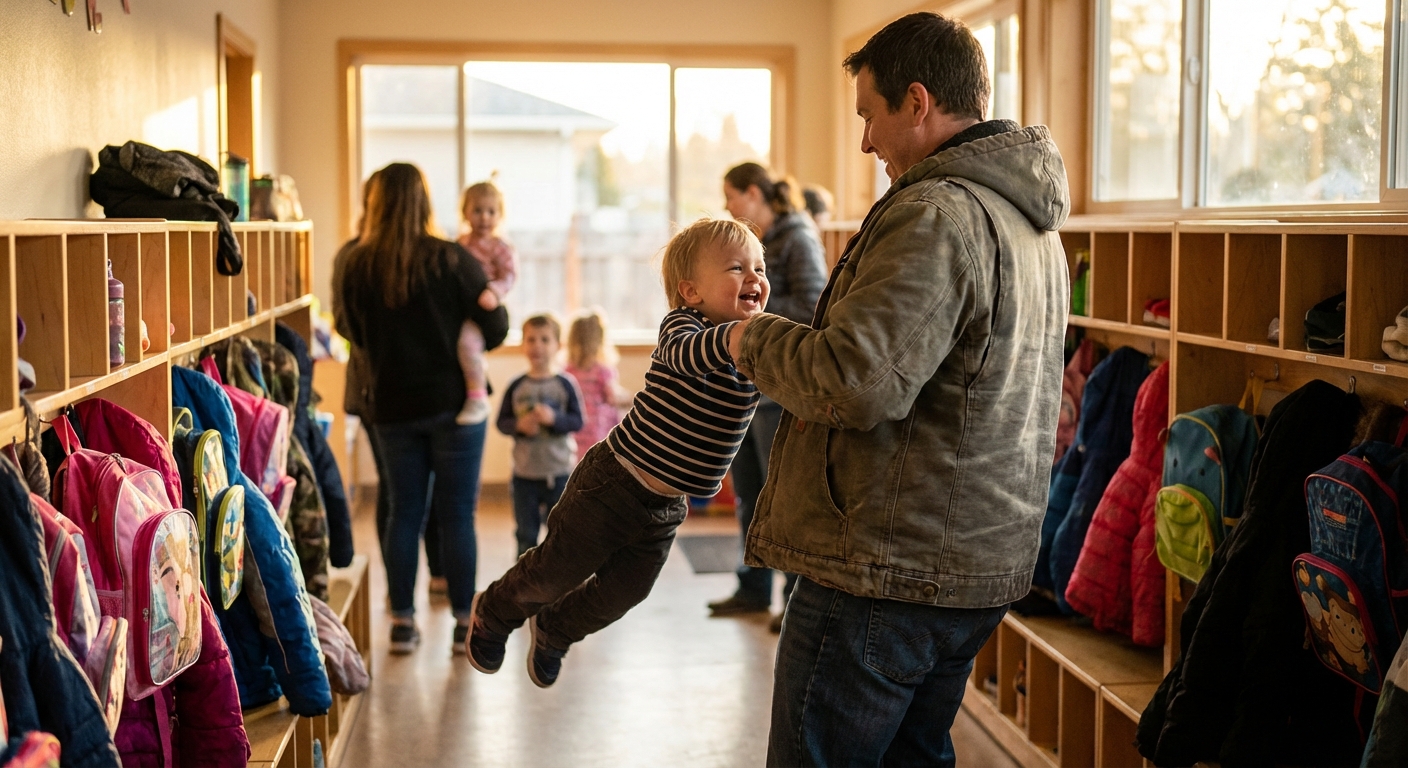
Why it works: Predictable reconnection helps your child feel secure heading into the next separation.
10) Plan for setbacks
Even after things improve, separation anxiety can pop back up with:
- Illness
- Vacation or long weekends
- A new classroom or teacher
- Developmental leaps (hello, toddlerhood)
When it happens, go back to basics: consistent routine, short goodbye, confident tone, comfort object (if allowed), and caregiver hand-off. Most kids restabilize faster the second time around.
If your daycare offers a gradual start (shorter first days or a phase-in schedule), it can help some kids. It is not required for every child, but it is worth asking about.
If crying lasts a long time
One of the hardest parts is not knowing what happens after you leave. A lot of children calm down within minutes once the day gets going, but some take longer, especially in the first couple of weeks.
- Ask the teacher, “About how long does the crying usually last after I go?”
- Request a quick check-in message if the program allows it, such as a note once your child is settled.
- Track patterns for 1 to 2 weeks (sleep, illness, drop-off time, which teacher is present) so you and the caregiver can problem-solve together.
What not to do at drop-off
- Do not prolong the goodbye with repeated returns for “one more hug.” Pick a script and stick to it.
- Do not bribe with big rewards at the door. It can unintentionally signal that daycare is something to endure.
- Do not scold or shame tears. Crying is communication, not misbehavior.
- Do not ghost your child by leaving without a goodbye.
When to call the pediatrician
Most separation anxiety is normal. Reach out for extra support if you notice any of the following lasting more than a few weeks, or if it feels severe:
- Your child is not eating or sleeping well at all due to distress.
- Drop-off distress escalates over time instead of gradually improving.
- Your child seems withdrawn, unusually irritable, or loses previously mastered skills.
- Frequent vomiting, diarrhea, or stomachaches that consistently occur with daycare and do not have another explanation.
Also, trust your gut about the daycare environment. If something feels off, you are allowed to ask questions, observe, and advocate for your child.
One of the most reassuring things I told families in triage was also something I had to tell myself as a new daycare mom: your child can be both sad at goodbye and safe at daycare. Those two things can coexist while they learn.
A drop-off routine to copy
If you want a plug-and-play plan, here you go:
- At home: “After breakfast, we go to daycare. Then I pick you up after nap.”
- In the car: One tiny ritual (same song, same phrase, same snack if allowed).
- At the door: Hand to caregiver, “I love you, you are safe, I’ll be back after nap.”
- Exit: Turn and leave. No second goodbye.
- Pickup: “I came back, just like I said.” Snack and 10 minutes of connection.
Consistency is the secret sauce. Not perfection. Not magic words. Just steady, loving repetition.