12-Month Sleep Regression

Sarah Mitchell
Sarah Mitchell is a Registered Pediatric Nurse and a mother of three who has spent over a decade helping families navigate the beautiful, chaotic early years of childhood. She combines evidence-based medical knowledge with real-world parenting experience to offer practical, compassionate advice. At Awesome Parent, Sarah's mission is to help exhausted parents find solutions, trust their instincts, and finally get some sleep.
If your baby was sleeping pretty decently and then, right around their first birthday, everything went sideways, you are not imagining things. Many families report a very real-feeling stretch of disrupted sleep around 11 to 13 months. It can look like midnight parties, nap protests, early wake-ups, and a suddenly clingy little human who cannot possibly allow you to leave the room.
The good news: this phase is usually temporary. The even better news: you can handle it without accidentally creating brand-new sleep habits you do not want to keep long-term.
Quick note: This article is educational and not medical advice. If something feels off, your pediatrician is the best next step.
What it looks like
Not every baby checks every box, but these are the most common signs parents report around 11 to 13 months.
- More night wakings, especially after previously sleeping longer stretches
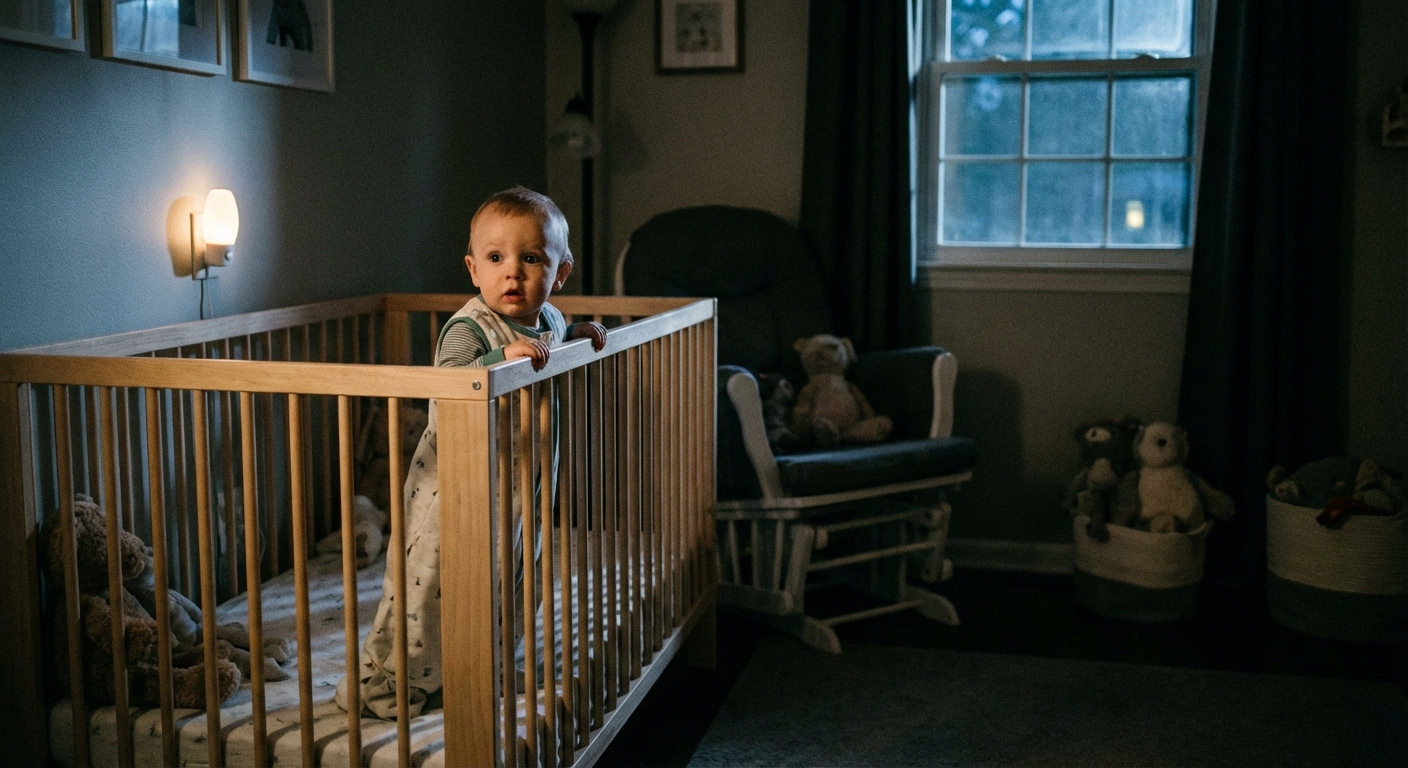
- Longer time to fall asleep at bedtime, with more babbling or standing in the crib
- Nap refusal or very short naps (20 to 40 minutes)
- Early morning wake-ups (hello, 4:45 AM)
- More separation anxiety at bedtime and during night wakes
- New skills on repeat, like pulling to stand, cruising, or practicing steps instead of settling
One thing I always tell parents from my triage-nurse days: a “sleep regression” is a pattern, not a diagnosis. If sleep changes come with fever, vomiting, ear pulling, significant congestion, or new snoring, it is worth checking for illness instead of assuming it is developmental.
Why it happens
At 12 months, your baby’s brain and body are doing a lot. Sleep often gets disrupted for the same reason your phone battery drains faster when you have 17 apps running.
1) Big-motor skills
Many babies are pulling up, cruising, or walking around this age. They want to practice. Unfortunately, they also want to practice at 2 AM. Standing in the crib is a classic move.
2) Separation anxiety ramps up
Separation anxiety can increase anytime in the 9 to 18 month window, and a lot of families feel it strongly around the first birthday. Object permanence is stronger now. Your child knows you exist even when they cannot see you, and they have opinions about where you should be. This can show up as bedtime tears, sudden night wake-ups calling for you, or nap battles that feel more emotional than tired.
3) Teething and discomfort
Molars sometimes start making an appearance in the 12 to 18 month window. Not every baby feels it intensely, but if you see swollen gums, new drool, or biting everything in sight, discomfort can be part of the picture.
4) The one-nap temptation
A lot of 12-month-olds start fighting one nap and parents understandably think, “Maybe they are ready for one nap a day?” Sometimes they are, but very often they are not. Dropping to one nap too early can cause overtiredness, which then fuels more night waking and earlier mornings.

Sleep needs at 12 months
Every child varies, but many one-year-olds still do best with:
- 11 to 14 total hours of sleep in 24 hours (including naps)
- 2 naps most days
- About 2 to 3.5 hours of daytime sleep total, often split across two naps
That total sleep range is consistent with common pediatric sleep guidance for toddlers. (If you want a source to bookmark, the American Academy of Sleep Medicine has age-based sleep duration recommendations.)
Most babies are not truly ready for a consistent one-nap schedule until closer to 14 to 18 months, but there is real variation. Some transition earlier (often 12 to 15 months), especially with daycare schedules. The key is whether sleep is improving, not just whether a nap is being refused.
Wake windows, simply explained
If “wake windows” makes you want to close your browser, here is the plain-language version: it is just the amount of time your baby is awake between sleeps. Too short and they may not be tired enough. Too long and they can get overtired and wired.
Common wake windows at this age are about 3 to 4 hours between sleeps. Many babies do well with something like 3 hours before nap 1, 3.5 hours before nap 2, and 4 hours before bed. If your baby is taking tiny naps, you may need slightly shorter windows for a few days to prevent overtiredness.
A sample 2-nap day
If you want something more concrete than math, here is an example day for a baby who wakes around 7:00 AM:
- 7:00 AM Wake
- 10:00 AM Nap 1 (aim 60 to 90 minutes)
- 2:00 PM Nap 2 (aim 60 to 90 minutes)
- 7:30 PM Bedtime (adjust earlier if naps fell apart)
Use this as a template, not a rule. Your baby might do better with nap 1 closer to 9:30 or a bedtime closer to 7:00. The goal is keeping the overall rhythm steady.
How to handle it
When you are exhausted, it is completely normal to grab whatever works. The goal here is not perfection. It is avoiding brand-new habits that you will have to repeat at every wake-up.
Step 1: Protect the schedule
A schedule does not have to be rigid to be effective. Think “anchor points.”
- Keep a consistent wake time within about 30 to 60 minutes most days.
- Aim for bedtime based on wake windows, not the clock alone.
- Use early bedtime strategically after rough nap days, instead of shifting bedtime wildly every night.
Step 2: Keep two naps (most days)
If your baby fights the second nap, it is tempting to drop it. Instead, try “quiet nap practice” for 30 to 45 minutes.
- Offer nap 2 at the usual time in a dark room with your normal routine.
- If they do not sleep, get them up calmly and keep the rest of the afternoon low-key.
- Move bedtime earlier that night to make up for lost sleep.
Many 12-month-olds go through a week or two where nap 2 is messy, then it comes back when the skill burst settles.
If nap 2 fails, here is a simple rule of thumb: make bedtime about 30 to 60 minutes earlier than usual, depending on how tired your baby seems.
Step 3: Be boring at night
When your baby wakes, your job is to communicate: “It is still sleep time.” Keep responses consistent and low-stimulation.
- Lights off or very dim
- Minimal talking
- Short, predictable check-ins if you choose to check in
- Put baby back down awake when possible
If you are currently rocking or feeding back to sleep every time and you want to keep doing that, you can. But if your baby is waking more because they now expect that help, it may be time to gradually step back.
Step 4: Pick a plan and stay consistent
Inconsistent responses are sneaky. They can accidentally teach your baby to escalate because sometimes it leads to extra cuddles, extra snacks, or a parent sleeping on the floor.
Pick a plan you can follow at 2 AM:
- Brief check-ins: wait a few minutes, then soothe with a quick pat and phrase, then leave
- Camping out: sit nearby and slowly move farther away every few nights
- Gradual reducing: shorten rocking time or reduce ounces or minutes of overnight feeding over several nights
Whatever you choose, aim for small changes you can be consistent with, rather than one huge overhaul when you are running on fumes.
Step 5: Watch for new sleep crutches
These are common “regression band-aids” that can become long-term patterns:
- Falling asleep only while being held or rocked
- Extra bottles or nursing sessions that were not previously needed overnight
- Bringing baby into your bed when that is not your usual plan
- Letting baby fall asleep with a parent in the room if that was not your norm
No judgment if you have done any of these. We all do what we need to survive. The key is deciding what you want long-term and gently steering back toward it once the rough patch starts.
Nap refusal: what to do
If naps are the battlefield right now, here are practical moves that often help within a few days.
Refresh the routine
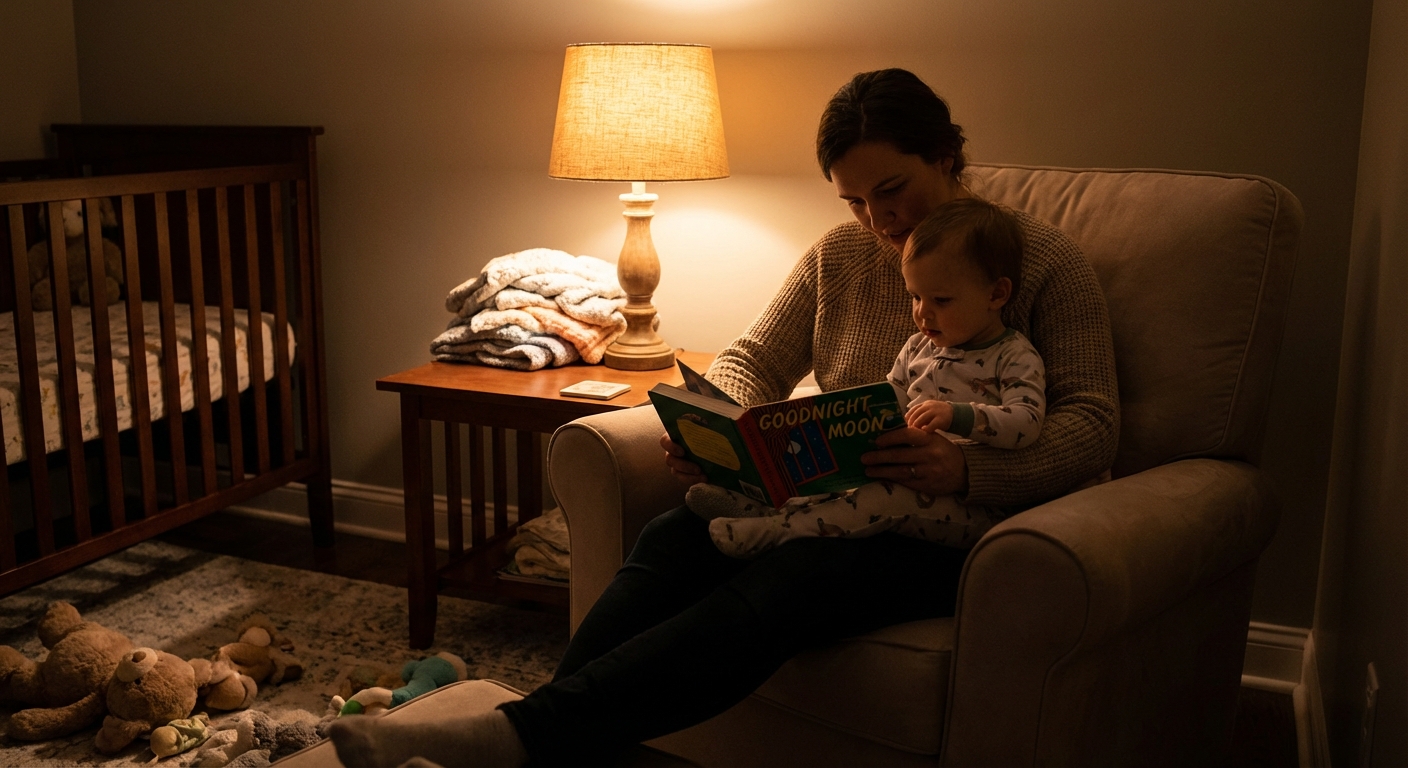
Keep it short and repeatable: diaper, sleep sack, quick book or song, into crib. A long routine can accidentally hype your child up or create more opportunities for negotiation.
Make the room boring
- Dark room (blackout curtains help)
- White noise if you use it
- Comfortable temp (generally cool side)
- Safe sleep setup: firm mattress, fitted sheet only
Use a rescue plan for short naps
If your baby wakes after one sleep cycle (around 30 to 45 minutes), give them a few minutes to try to resettle. If they cannot, you can either:
- Rescue the nap with a brief assist (patting, holding) and then put them back down, or
- Move on and offer the next sleep a bit earlier to prevent overtiredness
Rescuing sometimes is not “ruining sleep.” It is a tool. Just be mindful about not turning every nap into contact-only sleep if that is not what you want long-term.
One nap at 12 months?
Sometimes yes, often no. Here is how I think about it as both a nurse and a mom who has been tricked by the one-nap mirage.
Signs they are not ready
- They can make it to one midday nap, but then melt down by late afternoon
- Night wakings increase or early mornings start after dropping a nap
- The one nap is short (under 90 minutes) and they cannot extend it
- They do well with two naps on days you can manage it
Signs the transition may be starting
- They consistently refuse one nap for 10 to 14 days
- They take one long midday nap (often 1.5 to 3 hours)
- Bedtime and nights improve on one nap
- They can comfortably handle a longer morning wake window without getting overtired
If you are on the fence, try a hybrid approach for a bit: two naps most days, and on daycare or travel days where nap 2 will not happen, do one nap plus an earlier bedtime.
Feeding and night waking
A lot of families are also navigating weaning around 12 months. Some one-year-olds still need nighttime calories, but many night wakes are habit or comfort, especially if growth is steady and daytime intake is solid.
If you are unsure whether to keep night feeds, reduce them, or drop them, ask your pediatrician. They can help you weigh growth, feeding history, and what is typical at this age. If you do decide to reduce, doing it gradually (shorter nursing sessions or fewer ounces every few nights) is often easier on everyone.
Common curveballs
Daycare sleep
Daycare naps are often shorter, later, or simply different. If daycare days are rough, you are not failing. Try an earlier bedtime those nights and keep the morning wake time fairly steady.
Travel and routine changes
New environments can trigger more wakes. Keep your routine as familiar as possible: same sleep sack, same sound machine, same short wind-down. If things get messy for a few nights, you can usually tighten back up once you are home.
Overtired vs undertired
- Overtired often looks like short naps, cranky late-day behavior, and early mornings.
- Undertired can look like long bedtime playtime or consistent nap refusal with a generally happy baby.
If you cannot tell which one you have, start by tightening consistency and using age-appropriate wake windows for 5 to 7 days. That alone often clarifies the picture.
Safe sleep and crib safety
When babies start standing, sleep gets more exciting and so does safety.
- Lower the crib mattress as soon as baby can sit or pull to stand
- Keep the crib empty: no pillows, bumpers, loose blankets, or positioners
- Remove mobiles and anything baby can grab
- Stop swaddling once baby shows signs of rolling (most are long past this by 12 months, but it is worth stating)
If you bring baby into your bed during a hard night, it is worth reviewing safe sleep guidance first. The American Academy of Pediatrics recommends a separate, flat sleep surface in the parents’ room for infants, and cautions that bedsharing increases risk. If bedsharing happens anyway, talk with your pediatrician about risk reduction based on your specific situation.
How long it lasts
This kind of sleep disruption often improves within a few weeks. Some families see a quick return to normal in a week. Others take longer if the regression overlaps with travel, illness, teething, or an early one-nap switch. There is not a single official timeline, so focus on trends rather than counting exact days.
If sleep is not improving after a few weeks of consistent routines and age-appropriate scheduling, consider whether something else is layering on top, like lingering ear issues after a cold, reflux flares, or restless sleep. For example, iron deficiency can be associated with restless sleep in some kids, and your pediatrician can assess whether screening makes sense for your child.
When to call the doctor
Trust your gut. You do not need to “wait it out” if something feels off. Consider checking in if you notice:
- Fever, vomiting, diarrhea, or signs of dehydration
- Ear tugging, new intense night crying, or pain when lying flat
- Snoring, gasping, or labored breathing during sleep
- Reflux symptoms worsening (arching, frequent spit-up, discomfort after feeds)
- A sudden major change in sleep plus poor weight gain or low energy
And if you are feeling unsafe due to exhaustion, please ask for help. Swap nights with a partner, call in a relative, or talk to your doctor about postpartum mood support. Sleep deprivation is no joke.
A simple plan for tonight
If you want a clear, low-stress reset, try this for the next 5 to 7 days:
- Keep two naps with wake windows around 3 to 4 hours.
- Lock in a short bedtime routine (same steps, same order).
- Put down awake when possible, even if it takes a little longer.
- Respond to night wakes the same way each time, as boring and consistent as you can manage.
- Use an earlier bedtime on rough nap days.
You are not “creating bad habits” because your baby is having a hard week. You are guiding them through a developmental growth spurt with calm boundaries and a lot of love. Also, it is okay if you are doing it with coffee.
Sources to consult if you want to go deeper: American Academy of Sleep Medicine (sleep duration recommendations), and HealthyChildren.org (AAP parent guidance on sleep and safe sleep).