2-Year Sleep Regression: Why It Happens and What to Do

Sarah Mitchell
Sarah Mitchell is a Registered Pediatric Nurse and a mother of three who has spent over a decade helping families navigate the beautiful, chaotic early years of childhood. She combines evidence-based medical knowledge with real-world parenting experience to offer practical, compassionate advice. At Awesome Parent, Sarah's mission is to help exhausted parents find solutions, trust their instincts, and finally get some sleep.
If your toddler used to sleep “fine enough” and now bedtime feels like a tiny hostage negotiation, you are not imagining it. A lot of families notice a big sleep wobble around age 2, and it is usually tied to major developmental leaps rather than anything you “caused.”
Around this age, sleep often gets disrupted for toddler-specific reasons: a rapidly growing imagination, a strong desire for independence, shifting nap needs, and sometimes big transitions like moving to a toddler bed. The good news: you can get through this without turning your evenings into a power struggle.

What is the 2-year sleep regression?
“2-year sleep regression” is a common parenting term for a phase where a toddler who was sleeping relatively well suddenly has trouble falling asleep, staying asleep, or napping. It often shows up as:
- Bedtime battles (stalling, refusing pajamas, needing “one more thing”)
- Night wakings with crying, calling for you, or needing reassurance
- Nap resistance or nap shortening
- Early morning wake-ups
- New fears (darkness, shadows, “monsters,” separation)
- Climbing out of the crib or sudden crib escapes
Many families see things improve within 2 to 4 weeks once routines and responses are consistent. Sometimes it stretches longer, especially if there is a big transition or your child is uncomfortable or anxious. If you are still in the thick of it at 6 weeks, it is worth troubleshooting more intentionally (or looping in your pediatrician).
Why it happens
Two-year-olds are growing fast in all the ways that matter for sleep: emotionally, cognitively, and physically. Here are the most common triggers.
1) Imagination and fears
Two-year-olds start blending reality and pretend. That is adorable at 2 PM and much less adorable at 2 AM. Your child may suddenly fear shadows, loud sounds, the dark, or being alone. They might also dream more vividly, which can look like nightmares or night terrors.
Worth knowing: Nightmares usually happen in the second half of the night, and your child can often tell you what scared them. Night terrors usually happen in the first few hours of sleep, and your child may look very upset but is not truly awake and will not remember it in the morning.
2) Independence and boundary testing
At two, your toddler is wired to push limits. Sleep is a prime testing ground because it is the one time you are asking them to stop doing fun things and separate from you. Expect new negotiations like:
- “Water.”
- “Different cup.”
- “Potty.”
- “Another hug, but the special hug.”
This is not your child being manipulative. It is them learning cause and effect and trying to stay connected.
3) Separation anxiety (yes, still)
Separation anxiety can flare again at this age, especially after travel, illness, a new sibling, a daycare change, or any routine disruption. If bedtime suddenly includes clinginess, tears, or panic when you leave the room, this may be part of what you are seeing.
You can be warm and reassuring while still holding the boundary that sleep happens in their bed.
4) Nap needs change
Many 2-year-olds still need a nap, but the nap may get shorter, start later, or become harder to settle into. A too-long nap can push bedtime later. A skipped nap can cause overtiredness, which ironically can lead to more wake-ups and harder bedtimes.
Sleep needs vary widely, but many experts suggest toddlers average around 11 to 14 hours total sleep in 24 hours, including naps.
5) Big transitions
Sleep is sensitive. If you stack a big transition on top of a developmental leap, sleep can wobble. Common culprits include:
- Switching to a toddler bed or big-kid bed
- Potty training (especially night training)
- Moving rooms
- Travel
- A new baby in the house
- Dropping a pacifier
First, rule out real problems
This is always my quick mental checklist. “Regression” is common, but pain and illness are also common at age 2.
Quick check
- Teething: Second molars often erupt between about 2 and 3 years and can disrupt sleep.
- Ear infection: Sudden frequent wakings, new fussiness, fever, or symptoms that can worsen when lying down may be clues.
- Reflux, constipation, or eczema itch can flare at night.
- Snoring, gasping, pauses in breathing, or very restless sleep can be signs of sleep-disordered breathing (including possible obstructive sleep apnea) and are worth discussing with your pediatrician.
- New meds or major schedule changes.
Call your pediatrician if your child has fever, ear pain, breathing trouble, persistent vomiting, severe snoring, or you have that gut feeling something is off. You are allowed to trust that instinct.
What to do
Start with a few high-impact basics, then build from there. You do not need a perfect plan, you need a consistent one.
1) Keep the routine boringly consistent
Two-year-olds love predictability, even when they act like they do not. A simple routine lowers anxiety and reduces stalling because your toddler knows what is next.
A solid bedtime routine is often 20 to 30 minutes and follows the same order nightly:
- Bath or wash-up
- Pajamas and diaper or potty
- Brush teeth
- Two books
- Song, cuddle, lights out
If your child is delaying, consistency matters more than creativity. When you add new steps nightly, toddlers learn: “If I keep asking, the routine gets longer.”
2) Check the environment (small tweaks, big payoff)
When sleep falls apart, it helps to make the room do more of the work for you:
- Keep it dark (a dim night light is fine if fear is the issue).
- Use steady white noise if it helps your child settle.
- Keep the room comfortably cool and dress your toddler appropriately for temperature.
- Cut screens for at least 1 to 2 hours before bed when possible. Screens can ramp up energy and make it harder to wind down.
3) Use limited choices
Give choices that are real, small, and end at the same bedtime:
- “Do you want the dinosaur pajamas or the striped pajamas?”
- “Two books. Do you want the truck book first or the bear book first?”
- “Do you want me to carry you to bed or do you want to walk?”
When the choices are done, switch to a calm, confident statement: “All done. It’s sleep time.”
4) Tackle fears in daylight
If your toddler is afraid at bedtime, your goal is to validate without accidentally reinforcing a long nighttime hangout.
At night:
- Stay calm and brief.
- Use one reassuring phrase: “You’re safe. I’m right here. It’s time to sleep.”
- Keep lights dim, voices quiet, and interactions minimal.
During the day:
- Talk about fears with curiosity: “What feels scary about your room?”
- Practice coping tools: deep breaths, a comfort phrase, hugging a lovey.
- Play it out: stuffed animals act out “teddy feels scared, teddy gets a hug, teddy goes back to bed.”
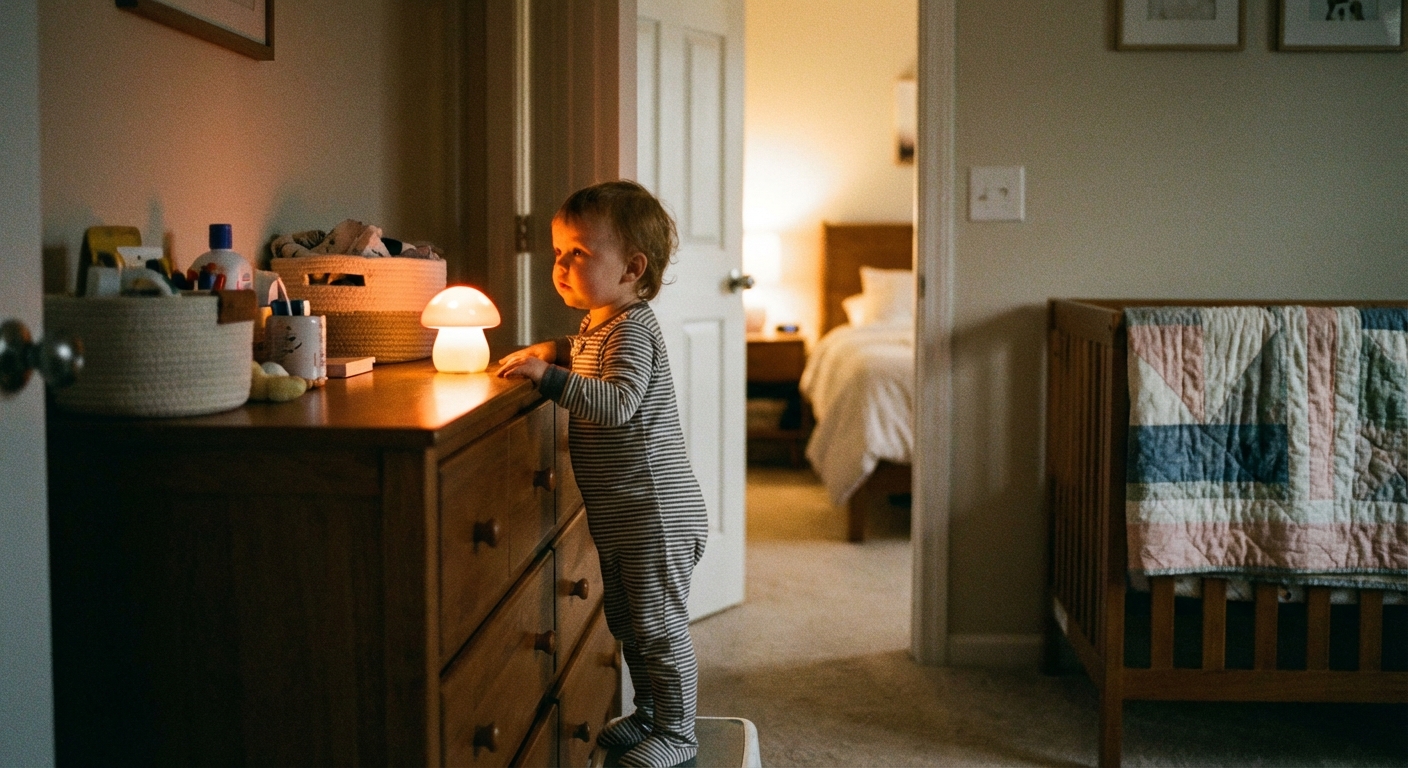
Helpful additions: a warm night light, leaving the door slightly ajar, and a consistent comfort object.
5) Plan for stalling
Many toddlers stall because they are trying to reconnect. You can honor that need without reopening bedtime endlessly.
Try this: before lights out, ask, “Do you need water or potty before I leave?” Then do it once. After that, any additional requests get the same response: “We already did that. It’s sleep time.”
Some families like a simple “one more thing” token (a literal card or a small object). Your child can use it once for one reasonable request. After it is used, it is done for the night.
6) Adjust nap timing before dropping naps
Nap refusal at 2 does not always mean your child is ready to drop it. Sometimes the nap is simply too late or too long.
- If bedtime is taking forever, try capping the nap (often 60 to 90 minutes) or waking by a consistent time.
- If your toddler is melting down by late afternoon, they may be overtired and still need that nap.
- If naps are truly gone, replace with quiet time in their room for 45 to 60 minutes so their body still gets a midday reset.
Quiet time counts as a win. Your toddler does not have to sleep to benefit from a break.

If they climb out of the crib
Climbing out of the crib is a safety issue, not just a sleep issue. If your toddler has climbed out once, assume they can do it again.
Safer options
- Lower the mattress to the lowest setting if it is not already.
- Remove climbable objects near the crib (dressers, toy boxes).
- Sleep sack: Some families use a properly fitted sleep sack to make climbing harder. Use only if your child can move safely in it, and stop if it seems to increase the risk of tripping or falling.
- If climbing continues, it is usually time to transition out of the crib. A toddler bed or a low mattress on the floor can be safer than repeated crib escapes.
Toddler-proof the room
Once they can leave the bed, the room becomes the “crib.” Do a quick safety sweep:
- Anchor furniture to the wall.
- Cover outlets and manage cords.
- Lock away medications, creams, and small choking hazards.
- Make sure windows are secured and cords from blinds are out of reach.
About door containment: Some families use a baby gate in the doorway or a doorknob cover so a toddler cannot roam at night. This can improve safety in some homes and create concerns in others (especially for emergency exit and caregiver access). If you are considering it, make sure you can reach your child quickly, your plan fits your home’s fire safety needs, and you are following any local guidance or regulations. When in doubt, ask your pediatrician or local fire department for practical input.
Night wakings
The fastest way to stretch a sleep wobble is to accidentally create a brand-new sleep habit during it. (This is not a guilt trip. We have all done survival mode at 3 AM.)
A simple response plan
- Pause for 30 to 60 seconds before going in. Some toddlers resettle.
- Go in, keep it brief: reassure, re-tuck, one phrase.
- Avoid bright lights, snacks, or starting conversation.
- Leave while they are drowsy. If they protest, that is okay. You are teaching a boundary, not abandoning them.
If your child is truly panicked, it is fine to stay a bit longer. Just try to keep the overall vibe calm, dim, and boring. Boring is your best friend at night.
Shared caregiving tips
If more than one adult does bedtime (or your child moves between households), consistency matters even more. You do not have to do it identically, but try to agree on:
- The same bedtime window
- The same short routine steps
- The same response to stalling and night wakings
- The same boundary phrase (for example: “All done. It’s sleep time.”)
If your toddler is getting mixed messages, they are not being “bad.” They are doing normal toddler math: “Maybe it will work with the other grown-up.”
What not to do
These are the common traps that can accidentally keep the cycle going:
- Switching routines every night in search of the magic fix
- Letting naps run very late, then wondering why bedtime falls apart
- Starting screens during night wakings
- Adding new bedtime steps each time your toddler asks (the routine can grow fast)
- Changing the plan daily between caregivers
Sample schedules
Every toddler is different, but these can help you troubleshoot timing.
One nap
- Wake: 6:30 to 7:00 AM
- Nap: 12:30 to 1:30 PM (cap at 60 to 90 minutes if bedtime is late)
- Bedtime: 7:30 to 8:00 PM
Quiet time (if naps fade)
- Wake: 6:30 to 7:00 AM
- Quiet time: 12:30 to 1:15 PM
- Bedtime: 7:00 to 7:30 PM
If your toddler is waking very early, an earlier bedtime for a week can help reset the cycle. Overtired toddlers often wake earlier, not later.
How long does it last?
Many families see improvement within 2 to 4 weeks once routines and responses are consistent. Sometimes it takes up to 6 weeks, especially when fears, separation anxiety, illness, or big transitions are in the mix.
If it is dragging on, look at:
- Nap timing and total sleep
- Any new sleep associations (needing you to lie down, needing a show)
- Underlying anxiety, illness, or discomfort
- Whether a recent transition needs more support
You are not failing if it takes longer. Some kids simply need more repetition to feel safe and settled.
When to get help
Consider looping in your pediatrician if:
- Snoring is loud or frequent, or you notice pauses in breathing
- Night wakings are extreme and persistent, or your child seems in pain
- Sleep disruption is significantly affecting daytime mood, behavior, or safety
- You suspect anxiety, sensory issues, or developmental concerns
And if you are feeling like you are unraveling, that counts too. Exhaustion makes everything harder. You deserve support, not just more willpower.
One of my favorite reminders: “Consistent does not mean perfect.” You can respond with warmth, set boundaries, and still have nights that go sideways. That is parenting.
Game plan for tonight
- Pick a bedtime routine you can repeat every night for two weeks.
- Check the environment basics (dark, cool, calm, no late screens).
- Offer two limited choices, then close the door on negotiations.
- Address fears with reassurance, a night light, and daytime practice.
- If your toddler climbs out of the crib, prioritize safety and consider a bed transition.
- Keep night responses calm, brief, and boring.
You do not need to do everything at once. Choose one or two changes, stick with them, and let your toddler adjust. The 2-year sleep regression is a season, not your new permanent identity.