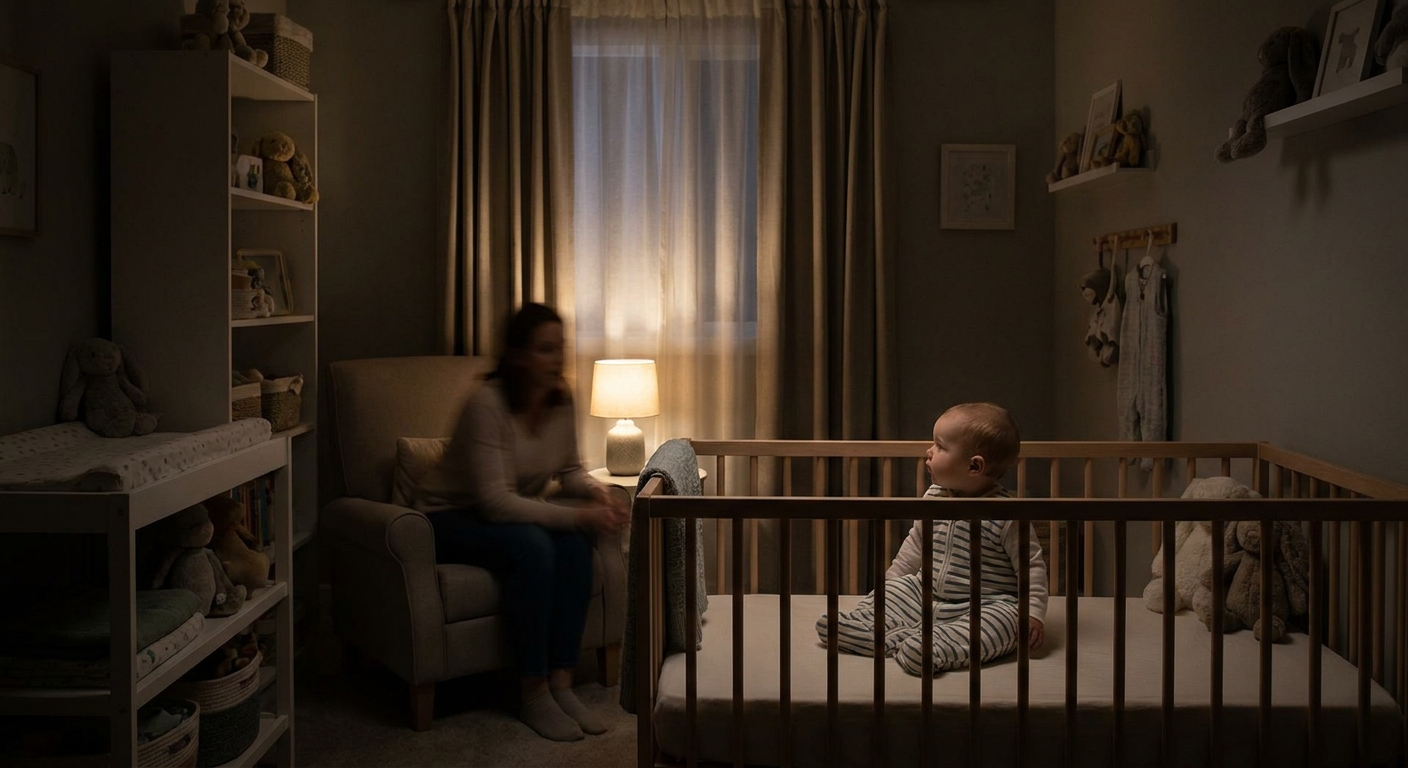
If your 6-month-old suddenly fights naps or wakes hourly, you are not alone. Here’s how to tell a common sleep bump from teething and reset routines withou...
5-Month Sleep Regression: Short Naps and Early Wakings

Sarah Mitchell
Sarah Mitchell is a Registered Pediatric Nurse and a mother of three who has spent over a decade helping families navigate the beautiful, chaotic early years of childhood. She combines evidence-based medical knowledge with real-world parenting experience to offer practical, compassionate advice. At Awesome Parent, Sarah's mission is to help exhausted parents find solutions, trust their instincts, and finally get some sleep.
If your baby hit five months and sleep suddenly got weird, you are not imagining it. I have talked to so many parents in triage who swear their baby used to nap like a champ, then overnight it turned into 32-minute naps, 5:12 AM wake-ups, and a new hobby of practicing rolling at bedtime.
The good news is this is common. Even better, you do not have to “just wait it out” with no plan. Let’s talk about what typically shifts around five months and what actually helps without doing anything unsafe or unrealistic.

Is there really a 5-month sleep regression?
Some babies have a clear 4-month regression and some do not. Around five months, sleep can wobble again because your baby is building on those developmental changes and adding new skills. In real life, regressions do not always follow the calendar perfectly.
So yes, a “5-month sleep regression” is a common pattern parents notice. It often looks like:
- Short naps (30 to 45 minutes) with difficulty linking cycles
- Early morning wake-ups (before 6:00 AM, sometimes much earlier)
- More night wake-ups or needing more help to fall back asleep
- Increased fussiness around sleep because of teething discomfort, new mobility, or overstimulation
How long does it last? It varies. For many families it feels most intense for a week or two, but it can stretch longer if a schedule is drifting, sleep associations are getting stronger, or a new skill is really revving your baby’s brain.
What changes around five months
1) Sleep cycles mature
By this age, many babies are moving into more distinct sleep stages. That is great for long-term sleep development, but it can cause more wake-ups between cycles, especially during naps. If your baby fully wakes and cannot settle, you often get the classic 30 to 45 minute nap.
2) Rolling and wiggles can disrupt sleep
Five months is prime time for rolling, scooting, and full-body practicing. Many babies roll onto their belly, get surprised, and protest loudly. Or they roll and then get excited like it is a new party trick they should perform every 20 minutes.
Important safety note: If your baby rolls onto their belly on their own during sleep, it is okay to let them stay there as long as you always place them down on their back on a firm, flat sleep surface with no loose bedding.
3) Teething can start (or seem like it)
Some babies cut their first teeth around this time. Others drool and chew everything for weeks with no tooth in sight. Either way, gum discomfort can make falling asleep harder and can cause more frequent wake-ups.
Safety reminder: Skip amber teething necklaces or anything worn around the neck for sleep. If you are considering medication for discomfort, check dosing and timing with your clinician.
4) More awareness means more FOMO
At five months, babies are often more alert and socially aware. That can make it harder to settle, especially if bedtime routines are inconsistent or if naps are happening on the go with lots to see.

What’s normal at 5 months
Every baby is different, but many healthy 5-month-olds fall somewhere in these ranges:
- Total sleep: about 12 to 15 hours in 24 hours
- Naps: 3 naps is common, sometimes 4 if naps are short
- Wake windows: often around 2 to 2.5 hours (some can do a bit longer before bed)
- Night feeds: many still need 1 to 2 feeds overnight, especially breastfed babies
Short naps can be developmentally normal at this age, especially if your baby is still learning to link sleep cycles. The goal is not “perfect naps,” it is a schedule that prevents overtired spirals and supports longer stretches when they can happen.
Why naps get short
Short naps usually come down to one of these:
- Wake window mismatch: too short (not sleepy enough) or too long (overtired)
- Sleep association: baby needs the exact same help to fall asleep again at the 30 to 45 minute mark
- Environment: light, noise, or inconsistent nap location
- Hunger: not enough daytime intake can contribute to short naps and early wake-ups (if feeding is a concern, loop in your pediatrician or an IBCLC)
Try this nap reset plan for 7 days
- Protect the first nap. Do it at home if possible, in the best sleep environment you have. The first nap often sets the tone for the day.
- Aim for age-appropriate wake windows. Start with about 2 hours after morning wake. If naps are consistently 30 minutes, try shortening the next wake window by 10 to 15 minutes for a few days.
- Use a brief “pause.” If your baby wakes after one cycle and is not upset, give 5 to 10 minutes to see if they resettle. If crying is escalating, respond.
- Consider a “nap rescue.” If your baby wakes early and you can extend the nap with contact (holding, rocking), do it for the next week. This is not “creating bad habits,” it is triage to prevent overtiredness while you work on foundations.
- Keep the nap routine short and consistent. Same steps, same order, every time. Think: diaper, sleep sack, quick cuddle, sound machine on, lights out, into crib.
- Cap the last nap if bedtime is unraveling. A long, late nap can steal sleep pressure from bedtime. Many families do well keeping the final nap shorter and ending it with enough awake time to get a smoother bedtime.
If you get one long nap per day, take the win. Consolidated naps often improve naturally over the next couple of months as sleep skills mature.

Early wakings
Early mornings are one of the most exhausting parts of this phase, because it feels like the day is starting before you ever slept.
The most common causes at five months:
- Overtiredness from short naps or too much awake time before bed
- Too early bedtime (sometimes) or bedtime that shifts earlier and earlier due to short naps
- Light exposure in the early morning, especially in spring and summer
- Hunger or a feed schedule that is not lining up well
- Baby treats it like morning because they get lots of interaction right away
What helps
- Keep the room dark until your desired wake time. Blackout curtains can be a game changer.
- Treat wake-ups before 6:00 AM like night wake-ups. Keep it boring: low light, minimal talking, quick soothing, back down.
- Check the last wake window. Many 5-month-olds do well with roughly 2.25 to 2.75 hours before bed. If your baby is waking early, experiment for 3 to 5 days with bedtime 15 minutes earlier or 15 minutes later and see which direction helps.
- Top off daytime feeds. A distracted five-month-old may “snack feed” during the day and then wake early hungry. Try feeding in a quieter spot and offering an extra feed in late afternoon.
If your baby wakes at 4:30 to 5:30 AM consistently, it is usually not a “bad habit” so much as a schedule and biology puzzle. We can work with it.
A simple 5-month schedule
Here is a sample day for a 5-month-old on three naps. Use this as a flexible framework, not a rulebook.
- 6:30 AM Wake and feed
- 8:30 AM Nap 1
- 10:00 AM Wake and feed
- 12:15 PM Nap 2
- 1:45 PM Wake and feed
- 4:00 PM Nap 3 (short nap is okay)
- 4:30 PM Wake
- 6:45 PM Bedtime routine, feed
- 7:15 PM Asleep
If naps are very short, a fourth nap (a brief catnap) can temporarily help prevent an overtired bedtime battle. Many babies transition from 4 naps to 3 naps somewhere between 4 and 6 months.
Signs you may be ready for 3 naps
- The fourth nap is a daily fight or only happens with lots of help
- Bedtime is getting pushed very late because naps end late
- Your baby can handle closer to 2.25 hours awake for most wake windows
Soothing that helps
You do not need to pick an “all or nothing” approach. The goal at this age is to support your baby while slowly nudging them toward falling asleep in the same conditions they will have when they naturally wake between cycles.
Gentle options to try
- Put down drowsy but calm when possible. If it only works once a day, that still counts.
- Use consistent, low-level cues. White noise, sleep sack, dark room, same short phrase.
- Try “shush-pat” in the crib. A hand on the chest or gentle patting can bridge the gap without picking up every time.
- Offer a pacifier if you already use one. If your baby cannot replace it yet, consider offering it at bedtime only for a week to reduce constant night reinsertions.
- Comfort for teething. Cold teether during the day, extra cuddles, and if your clinician says it is appropriate, discuss safe pain relief options for night discomfort.
What I do not recommend is adding unsafe sleep props or switching strategies every night. Consistency, even with a gentle plan, is usually what moves the needle.
Sleep environment basics
A few small environment tweaks can make a big difference at this age:
- Dark: keep naps and early mornings dim. Light in the early hours can lock in those early wake-ups.
- Sound: steady white noise can help, especially for apartment living or siblings. Keep volume moderate and place the machine away from the crib.
- Comfort: aim for a comfortable room temperature and breathable sleepwear. Overheating is not helpful for sleep or safety.
Safe sleep reminders
Rolling changes bedtime logistics, but it does not change safe sleep basics. The safest setup remains:
- Back to sleep for every sleep, every time you place your baby down
- Firm, flat sleep surface that meets current safety standards
- Alone in the sleep space, no pillows, blankets, stuffed animals, or positioners
- Room sharing without bed sharing is recommended for at least the first 6 months, ideally 12 months, when possible
- Stop swaddling as soon as baby shows signs of rolling, or at the latest by first roll. At five months, most babies should be in a sleep sack with arms free.
If your baby rolls onto their belly during sleep, you do not need to flip them back repeatedly if they got there on their own and their sleep space is safe. Continue to place them on their back at the start of sleep.
When to call your pediatrician
Most sleep regressions are normal. Reach out to your pediatrician or clinician if:
- Your baby has a fever, signs of illness, or seems to be in significant pain
- You notice ear pulling with fever, persistent irritability, or worsening sleep plus cold symptoms (possible ear infection)
- Feeding drops significantly, there are fewer wet diapers, or weight gain is a concern
- Your baby’s snoring is loud, they have pauses in breathing, or you are worried about breathing during sleep
And trust your instincts. You know your baby best, and you never need to apologize for checking in.
Quick troubleshooting checklist
If you want the fastest path to “what should I try tonight,” start here:
- Dark room: blackout shades, especially for early morning
- Sound: steady white noise (moderate volume, placed away from the crib)
- Wake windows: around 2 to 2.5 hours, adjust by 10 to 15 minutes for 3 to 5 days
- Bedtime: aim for a consistent window, not wildly different each night
- Feeding: reduce distracted snacking, add a calm feed before bed
- Rolling: stop swaddling, practice rolling during the day
- Response plan: choose a soothing approach you can repeat consistently for a week
The most important thing
Sleep regressions are loud, messy, and personal. They make you question everything. But they are also a sign that your baby is developing rapidly.
For the next couple of weeks, set the bar at “safe and sustainable.” Aim for a calmer bedtime, protect one nap, and make small schedule adjustments instead of reinventing your entire life at 3 AM.
You are not failing. You are parenting a five-month-old with a very busy brain.
Sarah Mitchell
Sarah Mitchell is a Registered Pediatric Nurse and a mother of three who has spent over a decade helping families navigate the beautiful, chaotic early years of childhood. She combines evidence-based medical knowledge with real-world parenting experience to offer practical, compassionate advice. At Awesome Parent, Sarah's mission is to help exhausted parents find solutions, trust their instincts, and finally get some sleep.