6-Month Sleep Regression

Sarah Mitchell
Sarah Mitchell is a Registered Pediatric Nurse and a mother of three who has spent over a decade helping families navigate the beautiful, chaotic early years of childhood. She combines evidence-based medical knowledge with real-world parenting experience to offer practical, compassionate advice. At Awesome Parent, Sarah's mission is to help exhausted parents find solutions, trust their instincts, and finally get some sleep.
If your baby is around 6 months old and sleep has suddenly gone off the rails, you are in very good company. In clinic, I used to hear the same sentence on repeat: “They were sleeping fine, and then… what happened?” At home, I have said it too, usually while reheating the same cup of coffee for the third time.
A sleep bump around 6 months is common for many families, even though it gets less attention than the 4- and 8-month versions. This age is a perfect storm of developmental leaps, changing sleep needs, and new habits that can sneak in during long nights. The good news: you can often reset things with a few targeted routine tweaks, not a total sleep overhaul.
What it can look like
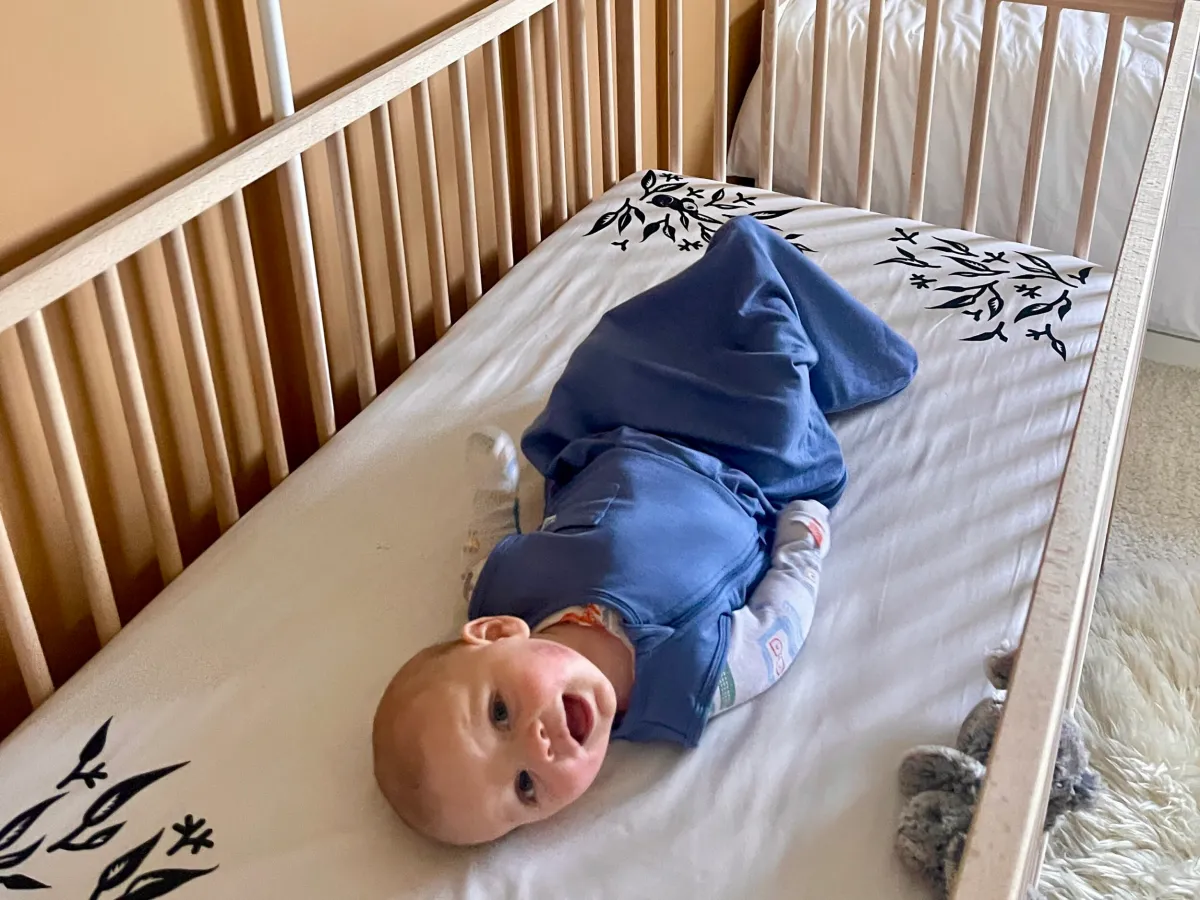
A “sleep regression” is basically a sudden, temporary disruption in sleep patterns. It is not a formal medical diagnosis, but it is a useful shorthand for what many families experience. Around 6 months, it often shows up as:
- More night wakings, especially after midnight or every 1 to 2 hours
- Short naps that cap at 20 to 40 minutes
- Fighting naps or bedtime even when baby seems tired
- Earlier morning wake-ups (hello, 4:45 AM)
- More crying at bedtime or needing extra help to fall asleep
One clue it may be a regression (or a schedule and habit shift) is that sleep is messy across the board, not just one bad night here or there.
Teething or regression?
Teething can absolutely disrupt sleep. But it is also the most common “default diagnosis” we give ourselves when we are desperate and tired.
Here are signs it might be more than teething:
- Wake-ups are frequent and patterned (for example, every 45 to 90 minutes), which often points to sleep-cycle transitions and new habits.
- Baby settles quickly once helped (rocked, fed, pacifier replaced) and then wakes again soon after. This can signal a sleep association issue rather than pain.
- Naps are also affected. Teething can bother naps, but widespread nap chaos is often developmental and schedule-related.
- No daytime teething signs such as increased drooling, chewing, swollen gums, or fussiness with feeding.
Signs teething may be a main factor:
- Gums look swollen or red, and baby is chewing everything in sight
- New refusal of bottle or breast or pulling off while feeding
- Waking with a more distressed, hard-to-console cry than usual
- Daytime irritability that is new and out of character
If you suspect discomfort, talk with your pediatrician about appropriate pain relief options and dosing. Avoid numbing gels with benzocaine unless your clinician specifically recommends them, as they are not advised for infants.

Why this age is bumpy
The 4-month regression is often attributed to a big change in sleep maturation and how babies cycle through sleep. By 6 months, sleep structure may be more stable, but everything else is changing fast.
Development
Many babies are practicing big skills around this age: rolling both ways, sitting with less support, babbling more, grabbing feet, and becoming much more aware of their environment. That awareness can lead to “Where did you go?” wake-ups and lots of bedtime protest.
Sleep needs shift
Around 6 months, many babies need slightly more awake time between sleeps than they did at 4 to 5 months. If your schedule has not evolved, your baby may simply not be tired enough at bedtime, or they may be getting overtired after too-long wake windows.
Nap timing
This is the age where many babies settle into a more consistent 3-nap rhythm, and a smaller group starts flirting with 2 naps. A mismatch can create night waking, short naps, and early mornings.
New sleep associations
When sleep gets rough, we do what works in the moment. More feeding to sleep, more rocking, more pacifier replacements. Totally understandable. But if baby now expects the same help at every brief wake-up, you can end up with frequent night wakings that feel endless.
What is “normal” at 6 months?
Normal has a wide range, but many 6-month-olds do something like:
- Total sleep: roughly 12 to 15 hours in 24 hours
- Naps: 2 to 4 hours total, often across 2 to 3 naps
- Night sleep: 10 to 12 hours with 0 to 2+ wakings
Some babies are genuinely ready for fewer night feeds around this age, while others still need them. If your baby was previously going longer stretches and suddenly cannot, that points more toward regression, schedule, or habit than hunger alone.
Common causes of night waking
- Too much daytime sleep or a late catnap pushing bedtime too late
- Too little daytime sleep leading to overtiredness-related wake-ups
- Wake windows that are too short (not sleepy enough) or too long (meltdown territory)
- Sleep association shifts (feeding or rocking to sleep, pacifier dependency)
- New mobility like rolling and getting “stuck”
- Inconsistent morning wake time that makes the whole day drift later
- Growth spurts or increased calorie needs
- Illness such as ear infection or congestion
Gentle routine reset
When I triaged sleep calls, the best results came from small changes applied consistently for 10 to 14 days. Here is the reset plan I use with families and, honestly, with my own kids when things get weird.
1) Set a morning anchor
Choose a realistic wake time you can stick with most days (even after a rough night). Aim for consistency within about 30 minutes. This anchor helps naps and bedtime fall into place.
2) Recheck wake windows
Many 6-month-olds do well with awake times of roughly 2 to 3 hours, often longest before bed. Some babies are closer to 2 to 2.5 hours earlier in the day, especially if naps are short. If bedtime is a battle, your baby may need a little more awake time. If naps are falling apart, your baby may need a slightly shorter window to prevent overtiredness.
Instead of chasing exact numbers, watch for sleepy cues plus the clock.
3) Choose 3 naps or 2
At 6 months, 3 naps is still very common. Consider staying on 3 naps if:
- Naps are frequently short
- Your baby cannot comfortably handle 3+ hour wake windows
- Bedtime would become very early on 2 naps
Consider easing toward 2 naps if:
- Your baby regularly takes two longer naps (often 60 to 90+ minutes)
- The third nap is a daily fight
- Bedtime is getting pushed too late because the last nap happens late
If you transition, do it gradually by stretching wake windows in small increments and keeping bedtime earlier during the adjustment. (And if 2 naps feels impossible at 6 months, you are not doing anything wrong. For many babies, it is more realistic a bit later.)
4) Protect bedtime
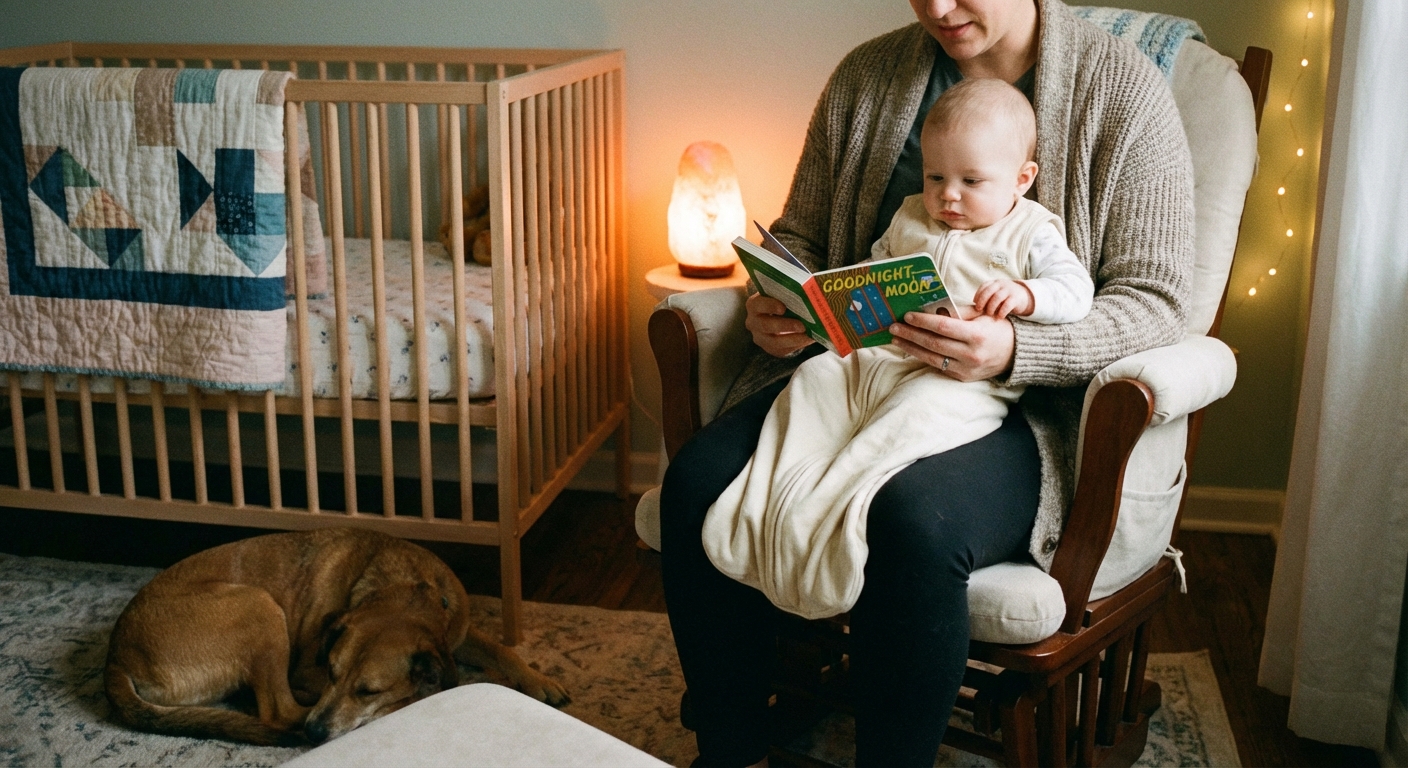
A calming routine does not need to be Pinterest-worthy. Think 20 to 30 minutes, same order, dim lights, predictable steps.
- Diaper
- PJs and sleep sack
- Feed (try to keep baby awake)
- Book or song
- White noise on
- Into crib drowsy or awake, depending on your comfort level
The goal is for baby to recognize: this is the runway to sleep.
Night wakings: what to do
There is no single right approach. The “best” plan is the one you can repeat consistently at 2 AM without feeling like you are betraying your values.
You can improve sleep with a range of approaches, including responsive settling, gradual methods, or more formal sleep training. The method matters less than choosing one you feel okay about and sticking with it long enough to see change.
If your baby still needs night feeds
Many 6-month-olds still feed at night. If your pediatrician has said night feeds are appropriate, you can keep them while still improving sleep. If you are considering night weaning, it is worth checking in with your pediatrician first, especially for breastfed babies, babies with growth concerns, or preterm infants.
- Keep feeds purposeful: low light, minimal talking, back to bed.
- Separate feeding from falling asleep when possible: a small tweak is to feed, then do a quick book or song, then bed.
- Support daytime calories: make sure daytime feeds are solid, and if you have started solids, keep them developmentally appropriate and guided by your pediatrician. This can help reduce reverse cycling for some babies.
- Use a consistent response for non-feeding wakes: for example, brief soothing without a full feed.
If you suspect habit wakes
Habit wakes often happen at predictable times and stop quickly once baby gets the usual help.
- Pause for 60 to 90 seconds before responding. Many babies resettle when given a moment.
- Offer the least help first: hand on chest, shush, pat, then pick up if needed.
- Work on the first sleep of the night: bedtime is where sleep associations are formed most strongly.
Pacifier problems
If you are playing the “pacifier re-insert Olympics” all night, you have options:
- Teach replacement by placing a couple of pacifiers within reach and practicing during the day (and follow your safe-sleep guidance).
- Wean gently by reducing how quickly you replace it and using other soothing methods.
Always follow safe sleep guidance: firm mattress, fitted sheet, no loose bedding or bumpers. If your baby can roll, continue placing them on their back to start sleep, but let them find their own position. You do not need to flip them back repeatedly as long as their sleep space is safe.
Short naps: quick fixes
Short naps are common during regressions and schedule shifts. Try these:
Rescue window
If your baby wakes at 30 minutes, try 10 to 15 minutes of soothing to extend the nap. If it does not work, end the nap and adjust the next wake window slightly shorter to prevent overtiredness. Some babies will not extend naps for a while even with perfect timing, and that can be normal.
Watch the last nap
A late catnap can steal sleep pressure from bedtime. If the third nap is necessary, keep it short (often 20 to 30 minutes) and avoid letting it run too close to bedtime.
Nap setup
- Dark room
- White noise
- Comfortable temperature
- Same pre-nap mini routine (diaper, sleep sack, quick song)
Sample schedules
Every baby is different, but here are two common patterns to use as training wheels. Adjust based on your baby’s cues and sleep totals.
3-nap day
- Wake: 6:30 AM
- Nap 1: 8:30 to 10:00 AM
- Nap 2: 12:30 to 2:00 PM
- Nap 3: 4:15 to 4:45 PM
- Bedtime: 7:15 PM
2-nap day (for some babies)
- Wake: 6:30 AM
- Nap 1: 9:00 to 10:30 AM
- Nap 2: 1:30 to 3:00 PM
- Bedtime: 7:00 PM
This 2-nap pattern is more common closer to 7 to 8 months, but a subset of 6-month-olds can handle it, especially if they take two solid naps and the third nap is a struggle. If your baby melts down with longer wake windows, go back to 3 naps and revisit later.
When it is more than regression
Trust your instincts here. Call your pediatrician if you notice:
- Fever, especially in younger infants
- Ear tugging, new intense night crying, or trouble settling that feels painful
- Persistent vomiting, diarrhea, or signs of dehydration
- Wheezing, labored breathing, or significant congestion
- Snoring with pauses, choking, or gasping during sleep
- A sudden major change in feeding or wet diapers
Also consider reaching out if sleep is impacting your mental health. You matter in this equation.

How long it lasts
Many families see improvement in 1 to 3 weeks, especially once routines match new sleep needs and any new sleep associations are handled consistently.
If you make a change, give it time to work. Switching strategies nightly is like changing directions every time your GPS recalculates. It just keeps you awake longer.
Bottom line
If your baby is waking more at 6 months, it is not automatically teething and it is not a sign you “broke” sleep forever. This age is full of exciting brain and body changes, and sleep often gets messy while babies practice new skills and adjust to new rhythms.
Start with a consistent morning anchor, tune wake windows, protect bedtime, and choose a night response you can repeat with confidence. Gentle, steady tweaks go a long way, and yes, you can get back to longer stretches again.