8-Month Sleep Regression and Separation Anxiety

Sarah Mitchell
Sarah Mitchell is a Registered Pediatric Nurse and a mother of three who has spent over a decade helping families navigate the beautiful, chaotic early years of childhood. She combines evidence-based medical knowledge with real-world parenting experience to offer practical, compassionate advice. At Awesome Parent, Sarah's mission is to help exhausted parents find solutions, trust their instincts, and finally get some sleep.
If your 8-month-old suddenly acts like their crib is a personal betrayal, you are not alone. One week you are doing bedtime, a quick cuddle, lights out. The next week you are back to multiple night wakings, nap protests, and the kind of crying that makes you question every parenting decision you have ever made.
As a pediatric nurse and a mom of three, I want to say this clearly: many families go through a very real rough patch around 8 to 10 months. People often call it the “8-month sleep regression.” It is common, and it is often tied to healthy development, not a sign you “broke” your baby’s sleep.
One quick note: this is general education, not medical advice. If you are worried about your baby’s health, growth, or feeding, check in with your pediatrician.
The goal is not to ignore your baby’s needs. The goal is to respond in a way that helps them feel safe while keeping bedtime predictable so you do not accidentally teach, “The only way I can fall asleep is on a parent.”
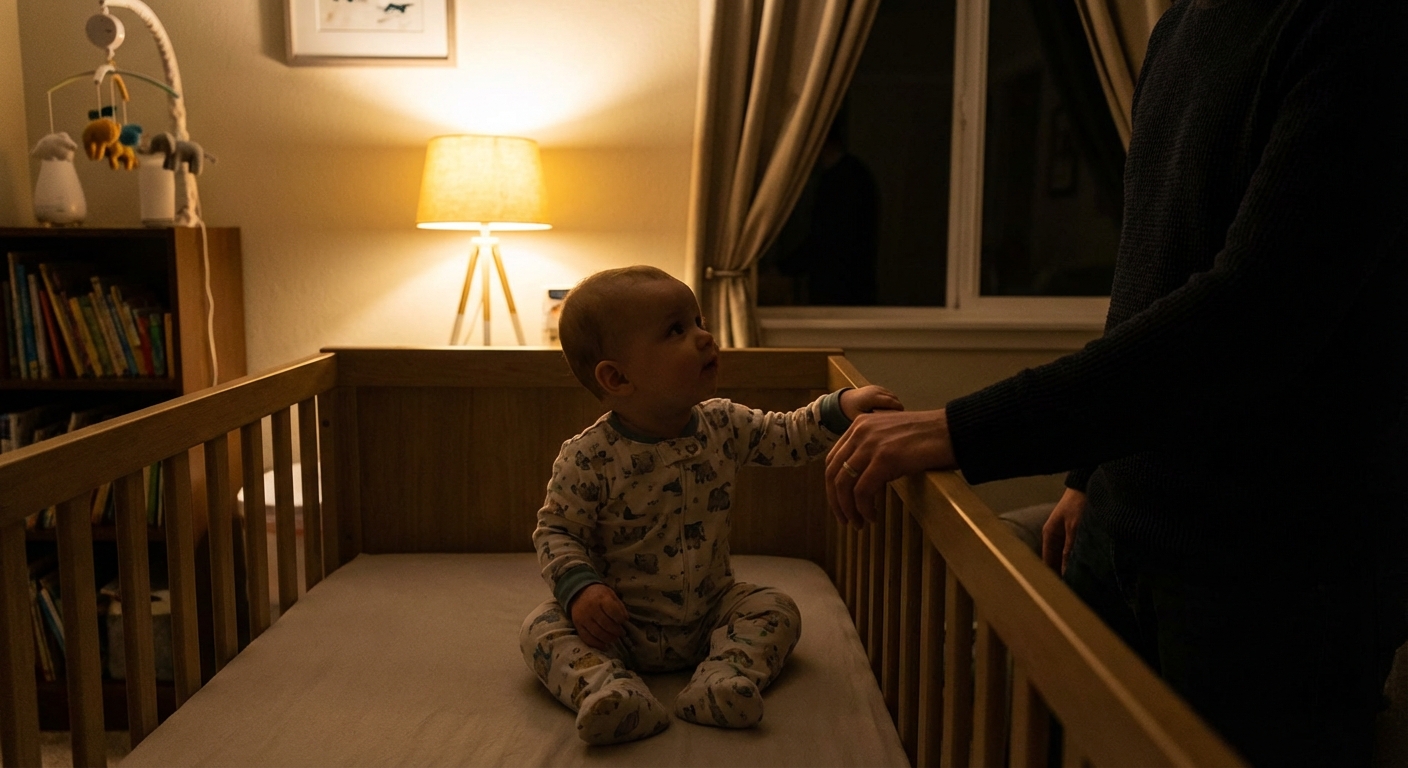
What this stage really is
“Sleep regression” is not a formal medical diagnosis. It is a useful label for a pattern many parents notice when brain development, changing sleep needs, and new skills collide all at once. Around 8 to 10 months, sleep disruption often happens because:
- Separation anxiety ramps up. Your baby now understands you exist even when you leave the room. That is a big cognitive leap, and it can make bedtime feel scary.
- Mobility explodes. Sitting, crawling, pulling to stand, cruising. New skills can lead to lots of practicing at 2 AM.
- Lighter moments between sleep cycles become more obvious. Babies briefly rouse between cycles just like adults. When a baby is waking more fully at this age, sleep associations tend to show up loudly. If they rely on a very specific condition to fall asleep, they may need that condition again during the night.
- Schedule shifts happen. Many babies are transitioning toward two solid naps. Too much daytime sleep or too little can both cause night waking.
- Teething and minor illness can pile on. Not every rough week is a regression. Sometimes it is a stuffy nose plus developmental leaps plus bad timing.
This does not mean you have to “wait it out” with no plan. It means you need a steady, comforting approach for a few weeks while your baby’s brain sorts itself out.
Separation anxiety at bedtime
Separation anxiety often shows up between 6 and 12 months, and for many babies it peaks around 9 to 10 months. It can look like:
- Crying when you leave the room, even for a second
- Increased clinginess during the day
- Bedtime suddenly becoming much harder
- Waking more often and needing reassurance that you still exist
Here is the part parents do not hear enough: separation anxiety is a sign of healthy attachment. Your baby is not being manipulative. They are being developmentally appropriate and loudly opinionated.
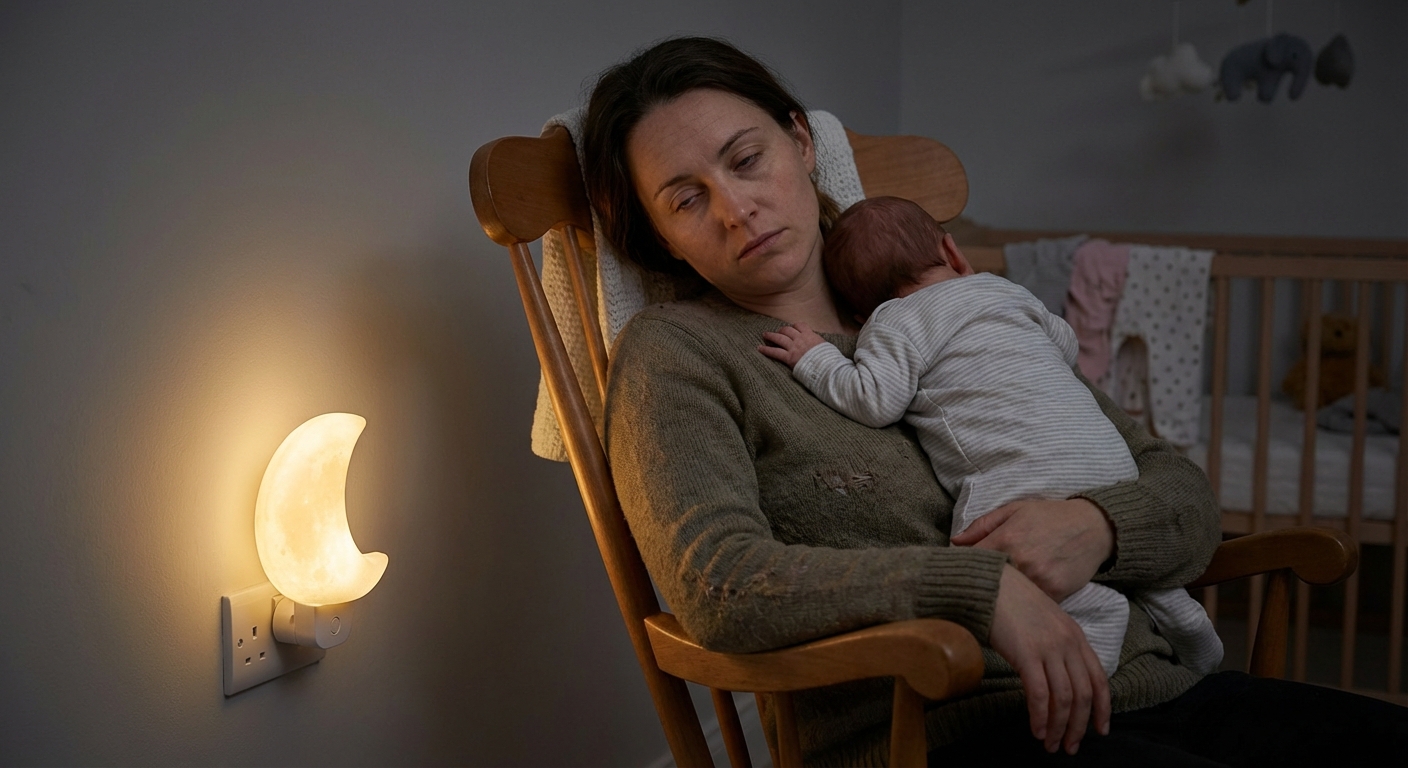
How long does it last?
Many families see the rough patch improve within 2 to 6 weeks, especially when they keep the schedule and bedtime approach consistent. Some babies move through it faster. Some take longer, especially with travel, illness, teething, or a big milestone burst.
If sleep is getting worse over time, your baby is waking every hour for many nights in a row, or you suspect pain or illness, it is worth checking in with your pediatrician.
The biggest mistake (and the fix)
When babies start waking more, parents understandably throw everything at the problem: extra feeding, rocking to fully asleep, bringing baby into bed, new sleep associations every night. Some of these can help short-term, but inconsistency is what tends to create longer-term sleep issues.
Instead, pick a response plan you can live with at 2 AM and stick with it for at least 5 to 7 nights. Your baby learns patterns quickly. You want the pattern to be: “When I wake up, I get comfort. And I also get a chance to fall back asleep in my own sleep space.”
If you are ever tempted to bring your baby into bed in the middle of the night, pause and think safety first. The safest sleep space for most babies is alone, on their back, on a firm surface (crib or bassinet) with no loose bedding. If bedsharing is part of your reality, talk with your pediatrician about risk reduction, because adult beds and soft bedding can significantly increase risk.
Your survival plan
1) Start with the basics
Before we assume “regression,” quickly rule out the common disruptors:
- Teething: Drooling, chewing, swollen gums. If your pediatrician has cleared it, use appropriate pain relief. (Avoid teething gels with benzocaine. They are not recommended for infants.)
- Illness: Congestion, ear tugging, fever, new rash. Call your pediatrician if you are concerned.
- Hunger: Many 8-month-olds can sleep through without feeds, but some still need one, especially during growth spurts. If your baby was born early, is smaller, or has medical or feeding concerns, confirm nighttime feeding needs with your pediatrician.
- Room and sleepwear: Aim for a cool room and comfortable layers. Overheating can worsen waking.
2) Keep bedtime repeatable
Think: 10 to 20 minutes, same order every night. Example:
- Diaper and pajamas
- Feeding (ideally ending before baby is fully asleep)
- Two books
- Sleep sack
- White noise on
- Short cuddle, key phrase, into crib
The routine is less about magic steps and more about predictability. Predictability reduces anxiety.
3) Try “boring comfort” at night
When your baby wakes and cries, you can absolutely respond. The trick is responding in a way that reassures without turning into a brand-new sleep requirement.
Try this ladder, moving up only as needed:
- Pause 20 to 60 seconds to see if they resettle. Many babies fuss briefly between cycles.
- Voice first: A calm “Shhh, I’m here” from the doorway or beside the crib.
- Touch second: Hand on chest or gentle patting for 30 to 60 seconds.
- Pick up if needed: If crying escalates, pick up until calmer, then place back down drowsy but awake if possible.
If you currently rock fully to sleep, you do not have to quit cold turkey. But start aiming for a tiny shift: calm in arms, then finish the last step in the crib. Small changes done consistently add up.
4) If night feeds are in the mix
If your baby still needs a night feed, it helps to make it as consistent as possible so every wake-up does not turn into a snack request.
- Consider one planned feed (if appropriate for your baby) rather than feeding on demand all night. Your pediatrician can help you decide what is reasonable for your child.
- Keep it dark and boring: low light, minimal talking, straight back to bed.
- Hunger versus habit clues: A truly hungry baby often feeds actively and settles after. A baby who takes a few sips, pops off, and stays upset may be asking for the feeding routine more than the calories.
5) Practice separation during the day
This is one of my favorite “why didn’t anyone tell me this earlier” tools.
- Play peekaboo.
- Do quick, cheerful separations: “I’m going to grab laundry. I’ll be right back.” Then come back.
- Give your baby lots of face-to-face connection during the day. A “full cup” baby often tolerates bedtime better.

Schedule tweaks at 8 months
Many 8-month-olds do best with 2 naps and wake windows that are gradually stretching. Every baby is different, but a common range is:
- Wake window: about 2.5 to 3.5 hours
- Total daytime sleep: often 2 to 3.5 hours
- Night sleep: often 10 to 12 hours (not always consecutive during rough patches)
If you want a simple sample 2-nap schedule, here are two common options. Adjust based on your baby’s wake windows and your household.
- Option A (earlier bedtime): Wake 7:00. Nap 1: 9:30 to 10:45. Nap 2: 2:00 to 3:15. Bedtime 7:30.
- Option B (later bedtime): Wake 7:30. Nap 1: 10:00 to 11:15. Nap 2: 2:30 to 3:45. Bedtime 8:00.
Clues your schedule might need adjusting:
- False starts (waking 30 to 60 minutes after bedtime) can mean overtiredness or bedtime too early for your child.
- Long middle-of-the-night parties can mean too much daytime sleep or a too-early bedtime.
- Early morning waking can mean overtiredness, too-late bedtime, or hunger.
If you adjust, do it gently. Shift one thing by 15 to 20 minutes for a few days and reassess.
Naps during this stage
Yes, naps often fall apart too. Babies may fight naps because they know you are leaving, or because their new skills are more exciting than sleep.
Helpful nap strategies:
- Keep the first nap easy. If you need to do a stroller or carrier nap for a few days to avoid meltdown-level overtiredness, that is okay.
- Use the same mini routine before naps: sleep sack, white noise, quick cuddle.
- Aim for consistency over perfection. One “rescued” nap does not ruin independent sleep.
What about sleep training?
Families ask this a lot, and there is no one right answer.
Some babies do well with a gentle, responsive approach. Some families choose a more structured sleep training method. The key is choosing something that matches your comfort level and then being consistent.
Two evidence-based points I share with parents in clinic:
- Responsive sleep approaches can still support independent sleep. Comforting your baby and teaching sleep skills are not opposites.
- Consistency is the ingredient that helps most. Switching approaches night to night is what tends to prolong the struggle.
If you are unsure, talk to your pediatrician. And if your mental health is in the basement because nobody has slept in weeks, that matters too. You deserve support.
When wakings become a habit
During this stage, it is common for babies to develop a strong preference for a specific sleep association, like nursing to sleep, being rocked fully asleep, or needing a parent in the room.
Ask yourself these two questions:
- How does my baby fall asleep at bedtime?
- Are they asking for the same thing at 1 AM?
If the answer is yes, you can gently work on shifting bedtime first. Bedtime is when sleep pressure is highest, and it is usually the easiest time to make change.
When to call the pediatrician
Most rough patches are normal. Still, trust your instincts. Call your pediatrician if your baby has:
- Fever (especially in younger infants) or signs of significant illness
- Ear pulling plus increased night waking or crying when lying down
- Breathing difficulty, persistent cough, or wheezing
- Vomiting, dehydration, or poor feeding
- New rash with illness symptoms
- Snoring with pauses in breathing
If you are ever worried your baby is in pain or “not acting right,” it is worth a call.
A simple bedtime script
Babies do better when your goodbye is predictable and confident. Try something like:
“I love you. You are safe. It’s time for sleep. I’ll see you in the morning.”
Say it the same way each night. Keep it short. Lingering often makes separation anxiety worse, because your baby keeps getting a fresh “goodbye” to react to.
One last thing at 3 AM
If you are reading this with one eye open, holding a baby who will not accept the crib: you are not failing. This is a hard, normal chapter. Your baby is learning that you still exist when you leave, and that is both fascinating and deeply unfair from their perspective.
Pick a plan you can stick with. Offer steady comfort. Keep bedtime boring and predictable. And when you can, tag out with a partner or a friend so you can get one solid chunk of sleep. A rested parent makes better decisions, and you deserve that.