A calm, realistic plan for the 8 to 10 month sleep rough patch: what is happening developmentally, how to handle separation anxiety, schedule tweaks, and saf...
9-Month Sleep Regression: Why It Happens and What to Do

Sarah Mitchell
Sarah Mitchell is a Registered Pediatric Nurse and a mother of three who has spent over a decade helping families navigate the beautiful, chaotic early years of childhood. She combines evidence-based medical knowledge with real-world parenting experience to offer practical, compassionate advice. At Awesome Parent, Sarah's mission is to help exhausted parents find solutions, trust their instincts, and finally get some sleep.
If your baby was sleeping “pretty decently” and then suddenly started waking like a tiny, determined alarm clock, welcome to the 9-month sleep regression club. Membership is free. The initiation is… not.
The good news: this is common, usually temporary, and it often improves with a few targeted tweaks. Also, quick reality check: “sleep regression” is more of a pattern parents report than a single, official event that hits every baby. Some babies breeze through 9 months. Others throw a full nighttime plot twist.
At around 9 months, babies are learning big skills (hello, crawling and cruising), noticing when you leave the room (separation anxiety), and sometimes shifting nap needs. All of that can spill into nighttime.

This page fills the gap between the 8- and 10-month sleep guides already on Awesome Parent, because many families hit a very real bump somewhere between 8 and 10 months and wonder why their usual tricks suddenly stopped working.
When it happens
Most families notice it sometime between 8 and 10 months, with 9 months being a very common peak. It can show up as:
- More night wakings (often after midnight)
- Difficulty falling asleep at bedtime or after wakes
- Short naps or nap refusal
- Early morning wakes that feel suspiciously permanent
- Increased crying when you leave (even for 10 seconds)
How long does it last? Many families report a rough patch of about 1 to 3 weeks. Some babies take longer, especially if illness, travel, daycare transitions, or new sleep habits get layered on top.
Why it happens
Separation anxiety ramps up
Around this age, babies truly understand that you can leave and that they want you not to. This can lead to bedtime protests and “Where did you go?!” wakeups at night.
Big motor milestones collide with sleep
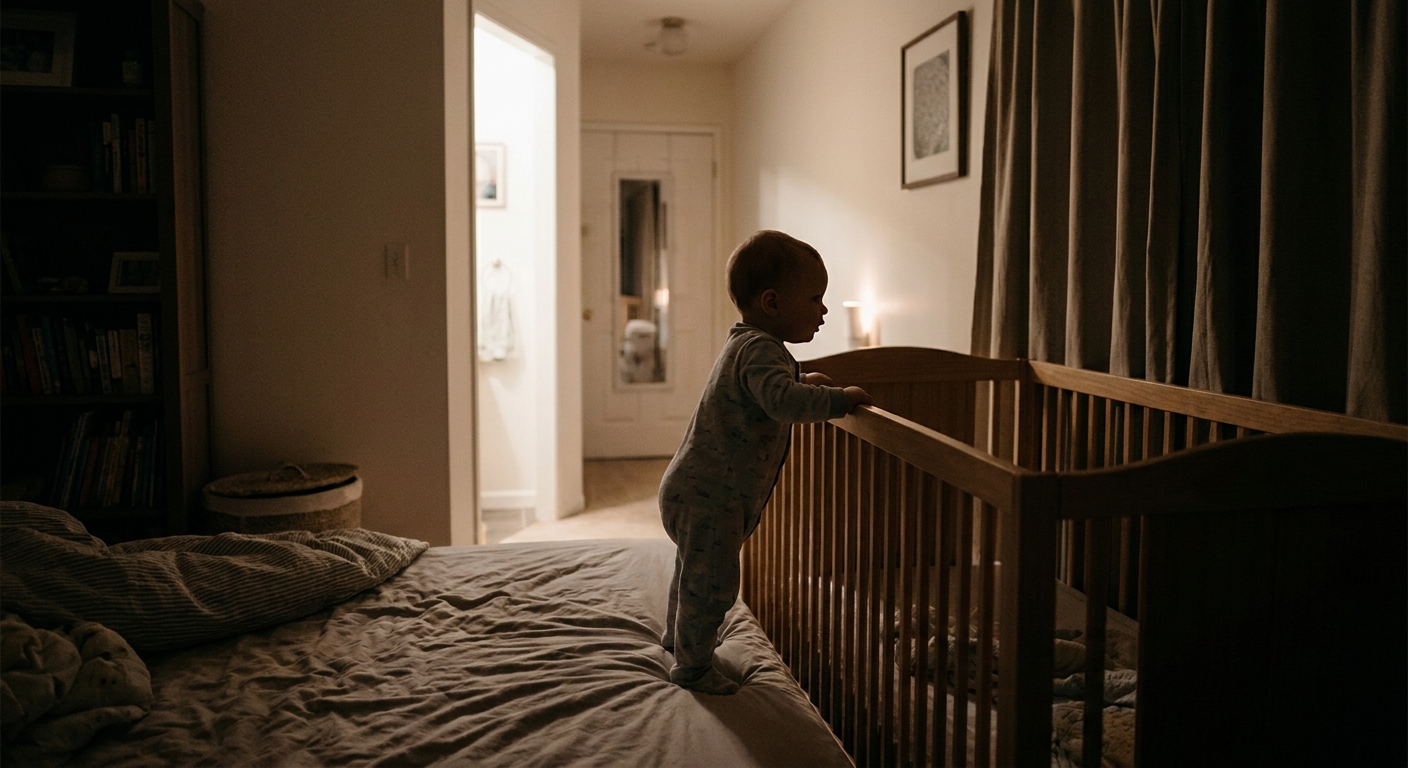
Crawling, pulling to stand, cruising, and practicing sitting up are exciting. Some babies will literally practice in the crib at 2 AM like they are training for the Baby Olympics.
Nap needs start changing
Most 9-month-olds still do best with two naps, but timing can get tricky. Wake windows often lengthen, and if naps drift too late or too short, nighttime sleep can get bumpy.
Teething can be a factor (but is often over-blamed)
Teething can cause discomfort and extra waking, especially if there is gum swelling and daytime fussiness. But if a baby is otherwise cheerful during the day and only struggling at night, the bigger drivers are often schedule changes, separation anxiety, and sleep associations.
New awareness, new preferences
This is the age of opinions. Your baby may suddenly decide the crib is unacceptable, pajamas are suspicious, and bedtime is a negotiation.
Common patterns
Pattern 1: Split nights
Your baby wakes and stays awake for 45 to 90 minutes, ready to party. This is most commonly an undertired issue, too much daytime sleep, or a schedule mismatch (like wake windows that are a little too short).
Pattern 2: Wakeups that only stop with you
If your baby recently started needing more help to fall asleep, they will often need the same help at 1 AM, 3 AM, and 5 AM. This is not a character flaw. It is a sleep association.
Quick definition: “sleep props” or “sleep associations” are things like feeding to sleep, rocking to sleep, holding until fully asleep, or needing you to replace a pacifier repeatedly.
Pattern 3: Nap fights and short naps
Short naps are common during developmental leaps. But if every nap becomes a 25-minute mystery, it may be time to adjust wake windows or protect the nap routine more firmly.
Pattern 4: Early morning wakes
Waking before 6 AM is often related to schedule and circadian rhythm. Common culprits include:
- Overtiredness (bedtime was too late, naps were short)
- Undertiredness (too much daytime sleep, bedtime too early for your baby)
- Light or noise in the early morning hours (even a small light leak can be loud to a baby’s brain)
It can also happen when a baby is learning new skills and sleeps more lightly toward morning.
Regression vs illness
As a former pediatric triage nurse, I always want to give you the calming answer and the safe answer. This section is both. (And of course, this is not medical advice, just practical guidance.)
More likely “regression”
- Baby is eating and drinking normally
- No fever
- Normal energy and mood during at least part of the day
- Wakes are similar each night (predictable timing)
- Settles with your usual soothing, but wants more of it than before
- Extra clinginess, especially at bedtime and nighttime
More likely illness or discomfort
- Fever or baby feels unusually warm
- New cough, wheeze, noisy breathing, or working harder to breathe
- Vomiting or significant diarrhea
- Refusing feeds or fewer wet diapers
- Sudden inconsolable crying that is not typical for your baby
- Pulling at ears with fever or significant irritability (ear tugging alone can be teething or habit)
- Rash plus lethargy or fever
- Waking with crying that seems like pain, not frustration
When to call your pediatrician urgently: trouble breathing, bluish lips/face, dehydration signs (very few wet diapers, dry mouth, no tears), seizures, extreme sleepiness or hard to wake, or if your gut says “something is off.” Also call for guidance if fever is 102.2°F (39°C) or higher, lasts more than 24 to 48 hours, or comes with a worrisome change in behavior. You are allowed to trust that feeling.

Basics that help most
Keep bedtime steady
When sleep gets bumpy, consistency becomes your best friend. Aim for a bedtime that keeps your baby from getting overtired. For many 9-month-olds, bedtime often lands somewhere around 7 to 8 PM, but follow your baby’s total sleep needs and nap quality.
Protect a simple routine
Think: 15 to 30 minutes, same order nightly.
- Diaper, pajamas, sleep sack
- Feeding (finish at least 10 minutes before crib if possible)
- Brush gums/teeth
- Two books or a song
- Key phrase (something like “I love you, time for sleep”)
Check the environment
- Dark room (early morning light is powerful)
- White noise if it helps your baby
- Comfortable temperature
- Safe sleep basics: firm, flat crib mattress with a fitted sheet only. No loose blankets, pillows, bumpers, stuffed animals, or sleep positioners in the crib.
Practice new skills during the day
If your baby is pulling to stand in the crib, give them lots of safe practice time while awake. Also practice “how to get back down” from standing, because some babies get stuck and panic at night.
Naps at 9 months
Most 9-month-olds do best with two naps and wake windows that are gradually stretching. Many babies land around:
- 2.75 to 3.5 hours awake between naps (varies by baby)
- Total daytime sleep often around 2 to 3 hours
Sample 2-nap schedules
These are examples, not rules. If you need a starting point, try one for 5 to 7 days before making more changes.
- Schedule A (balanced): Wake 7:00 AM, Nap 1 9:45 to 11:00, Nap 2 2:15 to 3:30, Bed 7:15 to 7:45
- Schedule B (longer wake windows): Wake 6:30 AM, Nap 1 9:30 to 10:45, Nap 2 2:15 to 3:15, Bed 7:15
Signs your schedule needs a tweak:
- Bedtime takes longer than 20 to 30 minutes most nights
- Frequent night wakes plus short naps
- Naps starting too late in the day
- Consistent split nights
If your baby is trying to drop to one nap at 9 months, it is usually temporary. Many babies who “refuse” the second nap actually need a slightly longer wake window before nap 2, or a shorter first nap so there is enough sleep pressure later.

A week-by-week plan
Here’s the plan I give parents who are fried and need something clear. Adjust to your baby and your family. The goal is progress, not perfection.
Week 1: Stabilize
- Pick a consistent wake time (within 30 minutes daily). This anchors naps and bedtime.
- Keep two naps. If nap 2 is a fight, try moving it 15 to 30 minutes later for a few days rather than dropping it.
- Lock in a bedtime routine you can repeat even when you are exhausted.
- Respond consistently overnight. Decide what you will do for wakeups and do the same thing each time.
Overnight response script: pause 60 to 90 seconds (many babies resettle), then go in calm and boring. Keep lights off, minimal talking, quick comfort, back in crib.
If you are feeding overnight and you suspect hunger, keep feeds. If you suspect habit, you can still keep one feed while you work on independent settling for the other wakes. If you are unsure whether night weaning is appropriate for your baby (growth, medical history, feeding issues), ask your pediatrician for individualized guidance.
Week 2: Ease separation anxiety
- Play “I come back” games during the day (peekaboo, stepping out for 10 seconds and returning).
- Do a confident bedtime handoff: routine, cuddles, then into crib drowsy but awake or fully awake, but calm.
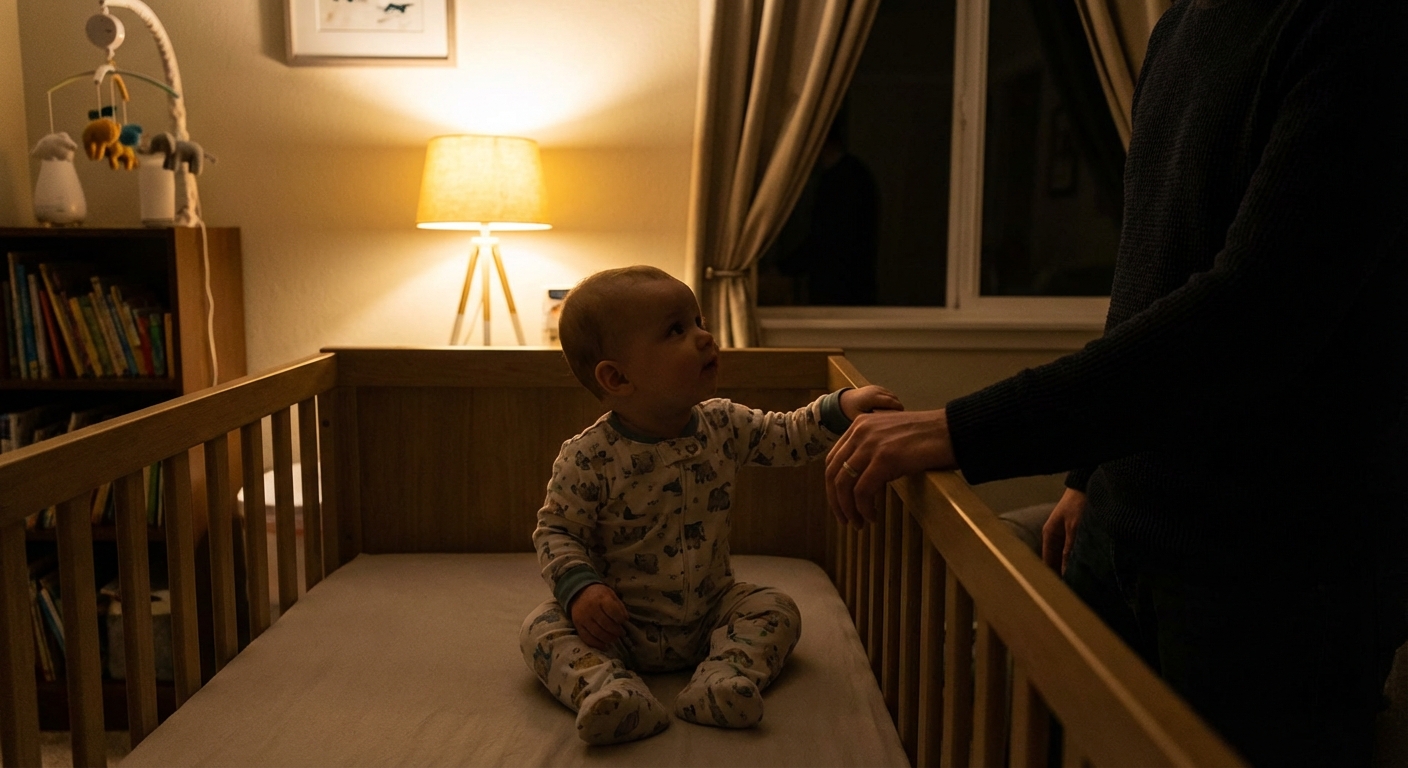
- Use brief check-ins if your baby is upset: 20 to 60 seconds, reassure, then leave again.
The key is that your presence is supportive, not a full restart of bedtime at 2 AM.
Week 3: Fine-tune
- If early morning wakes persist, check for light leakage and noise. If baby seems overtired, try an earlier bedtime for a week. If baby seems undertired, consider capping total daytime sleep slightly or nudging bedtime a bit later.
- If you are seeing split nights, evaluate whether total daytime sleep is too high or wake windows are a little short.
- If your baby needs you to fall asleep every time, pick one approach and stick with it for 7 to 10 days (gradual check-ins, pick-up/put-down, or a consistent soothing method you can repeat).
Week 4: Keep what works
- Keep the schedule that produces the best nights most consistently.
- Reintroduce flexibility slowly (travel, late nights) once sleep is stable.
- Expect occasional blips during new milestones. They are normal and usually shorter when your routine is solid.
Night waking checklist
When you are standing in a dark nursery at 3 AM, you need a simple checklist.
Step 1: Quick scan
- Is baby sick or in pain?
- Diaper leak?
- Too cold or too hot?
- Teething pain signs (swollen gums, increased drooling, chewing everything)?
Step 2: Decide on feeding
If your baby still genuinely needs an overnight feed, feed them and keep it calm. If you are unsure, consider keeping one feed (often the first wake after midnight) and using non-feeding soothing for the rest, then reassess after a week.
Step 3: Soothe briefly, back to crib
Try: gentle patting, a quiet phrase, a quick cuddle. Keep it short. Long rocking sessions often teach the brain, “I can only sleep if this happens.”
Step 4: Give them a chance
Even if they fuss a bit, many babies can resettle if we give them a consistent pattern and a little space to practice.
FAQs
How much sleep does a 9-month-old need?
Many 9-month-olds sleep roughly 12 to 15 hours total in 24 hours, but ranges vary. Some are higher sleep needs, some lower. Focus on mood, growth, and whether your baby can make it through wake windows without melting down.
Is it okay to let my baby cry?
You can choose an approach that fits your family. Some parents use check-ins, some do more hands-on soothing, and some choose a more structured sleep training method. What matters most is consistency and making sure your baby’s needs are met. If crying ramps up intensely or feels abnormal, reassess for illness, schedule issues, or an overtired cycle.
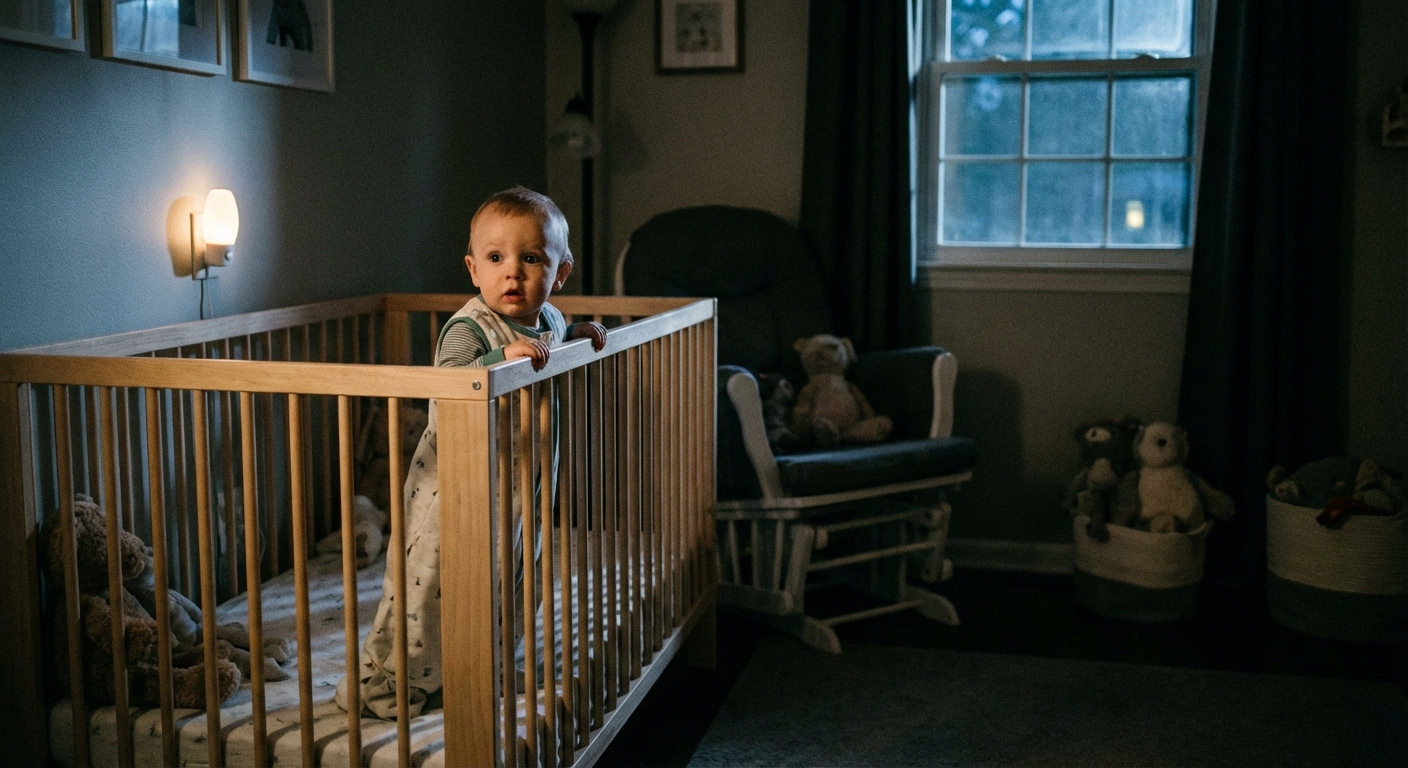
My baby stands up in the crib and screams. What now?
Practice standing and sitting during the day. At night, keep responses calm and repetitive. You can gently lay them back down a few times, but avoid turning it into a game. Most babies stop once the skill is mastered and boredom returns.
Should I drop to one nap at 9 months?
Usually not. One nap is more common closer to 12 to 18 months. If your baby is refusing a nap, first try shifting timing, capping the first nap, or ensuring nap 2 is not too late.
One last note
Sleep regressions feel personal because they happen at night when everything feels louder and harder. But this phase is almost always a sign of development, not damage.
Pick a plan you can follow when you are tired, give it a solid week, and adjust gently from there. And if you are worried your baby is sick or in pain, you are never overreacting by asking your pediatrician.
If sleep has been severely disrupted for weeks, you are feeling unsafe-level sleep deprivation, or your baby has feeding, reflux, eczema, or breathing concerns that might be affecting sleep, it is also reasonable to ask your pediatrician about extra support.
You are not failing. You are parenting a baby who is growing fast, learning constantly, and still figuring out how to sleep through all of it.
Sarah Mitchell
Sarah Mitchell is a Registered Pediatric Nurse and a mother of three who has spent over a decade helping families navigate the beautiful, chaotic early years of childhood. She combines evidence-based medical knowledge with real-world parenting experience to offer practical, compassionate advice. At Awesome Parent, Sarah's mission is to help exhausted parents find solutions, trust their instincts, and finally get some sleep.