
Simple strategies for car, plane, and amusement park motion sickness: best seating, snack timing, breaks, distractions, and when to call the pediatrician.
Airplane Ear in Babies and Toddlers

Sarah Mitchell
Sarah Mitchell is a Registered Pediatric Nurse and a mother of three who has spent over a decade helping families navigate the beautiful, chaotic early years of childhood. She combines evidence-based medical knowledge with real-world parenting experience to offer practical, compassionate advice. At Awesome Parent, Sarah's mission is to help exhausted parents find solutions, trust their instincts, and finally get some sleep.
If your baby screams like you have personally offended them the moment the plane starts descending, you are not alone. “Airplane ear” is common, it can be genuinely painful, and it is often manageable with a few simple, well-timed tricks.
I am a pediatric nurse and a mom of three, and I can tell you this: you do not need to “tough it out” or feel like you did something wrong. Little ears have shorter, narrower Eustachian tubes, and airplanes are basically a stress test for them.
One reassuring silver lining (that I wish every parent knew): crying can actually help. The big jaw movements and vocalizing can help open the Eustachian tubes and move pressure along. So if your baby cries during descent, it does not mean you failed. Sometimes their body is doing exactly what it needs to do.
What airplane ear is
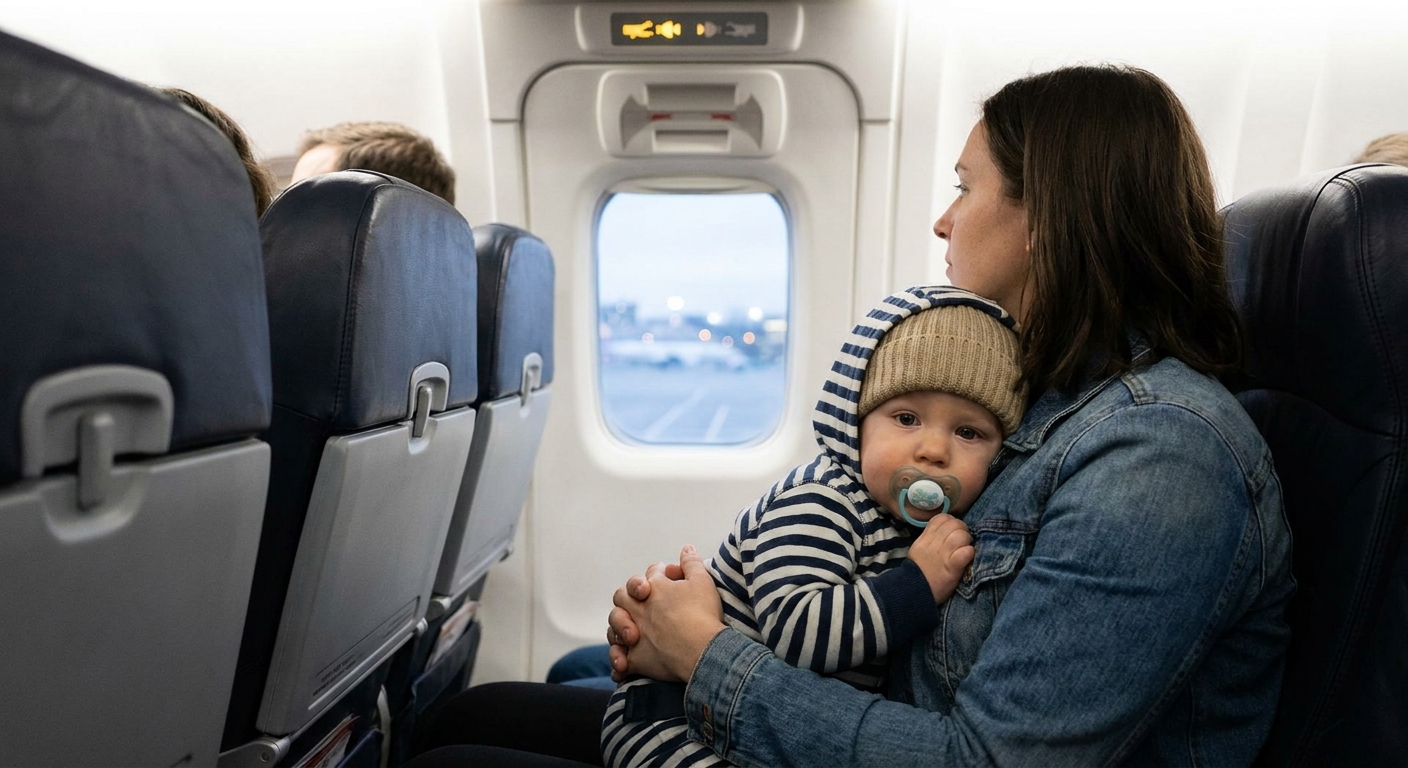
Airplane ear is pressure pain caused by changes in cabin pressure, especially during descent (landing) and sometimes during takeoff. Your ear has a small tunnel called the Eustachian tube that connects the middle ear to the back of the nose and throat. Its job is to equalize pressure on both sides of the eardrum.
Adults can yawn, swallow on command, or do a gentle “pop.” Babies and toddlers cannot reliably do any of that. Their Eustachian tubes are also narrower and more easily blocked by:
- Normal baby anatomy
- Mucus from a cold
- Allergies
- Enlarged adenoids (common in toddlers)
When pressure does not equalize, the eardrum gets stretched and pulled. That pressure can feel sharp, full, or burning. Some kids will say their ears “feel stuffed,” while babies make their feelings known.
Also worth knowing: even when you do everything “right,” symptoms can linger. Some kids feel plugged or mildly sore for a few hours after landing, especially if they were congested.
Who gets it most
Most likely to struggle
- Babies and toddlers (smaller Eustachian tubes)
- Kids with a cold, congestion, or recent ear infection
- Kids with allergies or chronic nasal stuffiness
- Kids who fall asleep as descent begins (some kids swallow less when asleep)
Most painful moments
- Descent: the biggest offender
- When descent begins: often when the captain announces it or you feel the plane start to gradually go down
- Takeoff: can bother some kids, but tends to be easier to manage
Practical takeaway: set yourself up for success as soon as descent starts. If you wait for the crying, you are already playing catch-up.
Before you fly
Do these before boarding if you can. They make the in-flight stuff more effective.
- Pack “swallow tools” in your personal item: pacifier, bottle, sippy cup, snacks, lollipops for older kids (if age-appropriate), breastfeeding cover if you use one, burp cloths.
- Safety note on candy: hard candy and lollipops are a choking risk for little kids. Only use if your child can safely manage them seated and supervised, and skip them for kids who are too young to handle them reliably (many families avoid them under about age 4).
- Choose easy-to-sip drinks: water is fine. For toddlers, a favorite drink can motivate consistent sipping during descent.
- Consider timing naps: if possible, avoid letting your child fall asleep right before or during descent.
- If your child is sick: expect more ear discomfort. If they have significant ear pain before travel or a recent ear infection, it is worth a quick call to your pediatrician to discuss whether flying is advisable.
Takeoff and landing
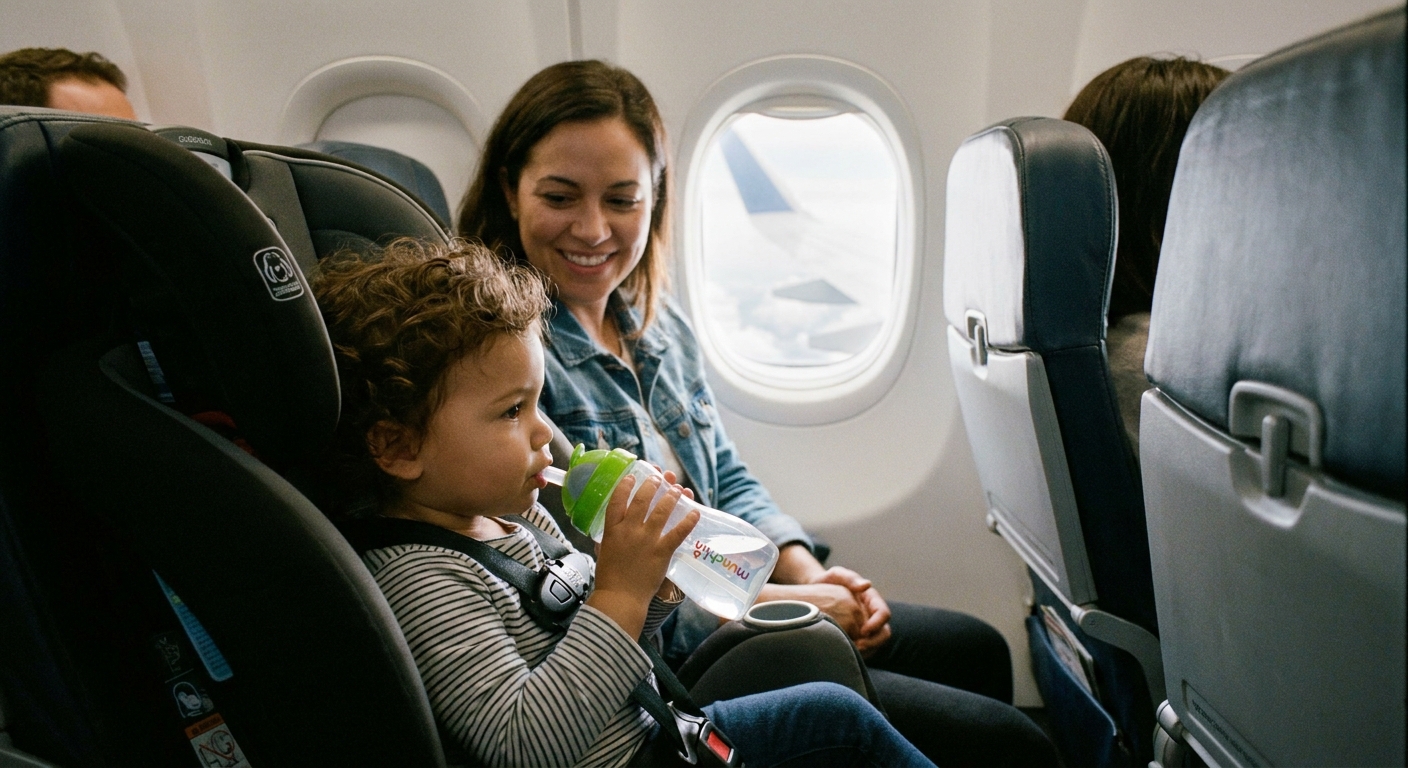
Your goal is simple: encourage swallowing. Swallowing helps open the Eustachian tube and equalize pressure.
Two tiny tweaks that help in real life:
- Go upright if you can: holding babies more upright (rather than fully reclined) can help some kids feel less pressure.
- If they are already crying: you can let the crying do some work, then as soon as they can take it, reset with upright positioning plus pacifier, nursing, or a few sips. Once they swallow a couple of times, many kids turn a corner.
Babies (0 to 12 months)
- Breastfeed or bottle-feed during takeoff and especially descent. If you can, start when descent begins so you are not scrambling later.
- Pacifier: great backup if your baby is not hungry. The sucking and swallowing helps.
- Try to keep them lightly awake during the pressure change if possible. Some babies swallow less when asleep.
Toddlers (1 to 3 years)
- Offer frequent sips: water, milk, or a preferred drink. Think “tiny sips often,” not one big drink.
- Snacks that require chewing: crackers, pretzels, dry cereal, fruit snacks. Chewing encourages swallowing.
- Pacifier or thumb-sucking: if they already use it, this is not the moment to wean.
Preschoolers and up
- Teach the “big swallow” game: swallow like a dinosaur, swallow like a robot, swallow with a sip.
- Yawning practice: some kids can learn to yawn on purpose.
- Gentle ear “pop” (only if they can follow directions): for some older kids, a gentle Valsalva (pinch nose, close mouth, blow softly like fogging a mirror) can help. If they strain or blow hard, stop. Forced pressure can irritate the ears.
One thing parents often ask about: earplugs. Standard foam earplugs do not equalize middle ear pressure. Some “pressure regulating” earplugs are marketed for flying, but data in young kids is limited, and many toddlers will not tolerate them anyway. Sucking, chewing, sipping, and swallowing strategies are usually the best return on effort.
OTC pain medicine
Sometimes, yes. Pain relief can be helpful, especially for kids who have struggled on previous flights or who are congested.
One important clarification: medicine does not fix the pressure problem. It can make the discomfort more tolerable while your child works on equalizing through swallowing and jaw movement.
What to use
- Acetaminophen (Tylenol) is commonly used for infants and toddlers.
- Ibuprofen (Motrin, Advil) is an option for many children 6 months and older, if your pediatrician has said it is ok for your child.
Important: Dose should be based on your child’s current weight, using the product label or your pediatrician’s guidance. If you are not 100 percent sure of the dose, ask your pediatrician before travel.
Best timing
For pressure-related pain, the goal is for medicine to be working during descent.
- Give it about 30 to 60 minutes before you expect descent (depending on the medication and your child’s typical response).
- If you have a short flight, this might mean dosing shortly after takeoff.
What I avoid without medical guidance
- Decongestants for babies and young toddlers. Many are not recommended under age 4, and they can cause side effects without reliably preventing airplane ear.
- Ear drops marketed for “ear pain” unless prescribed, especially if there is any chance of an eardrum issue.
If your child has a medical condition, is on other medications, was premature, or has liver or kidney concerns, check with your clinician before using OTC pain meds for flight discomfort.
Flying with a cold
A mild runny nose is common and many kids fly just fine. The problem is significant congestion that blocks the Eustachian tube.
Tips for congestion
- Lean harder on sucking and chewing: nursing, pacifier, sips, snacks.
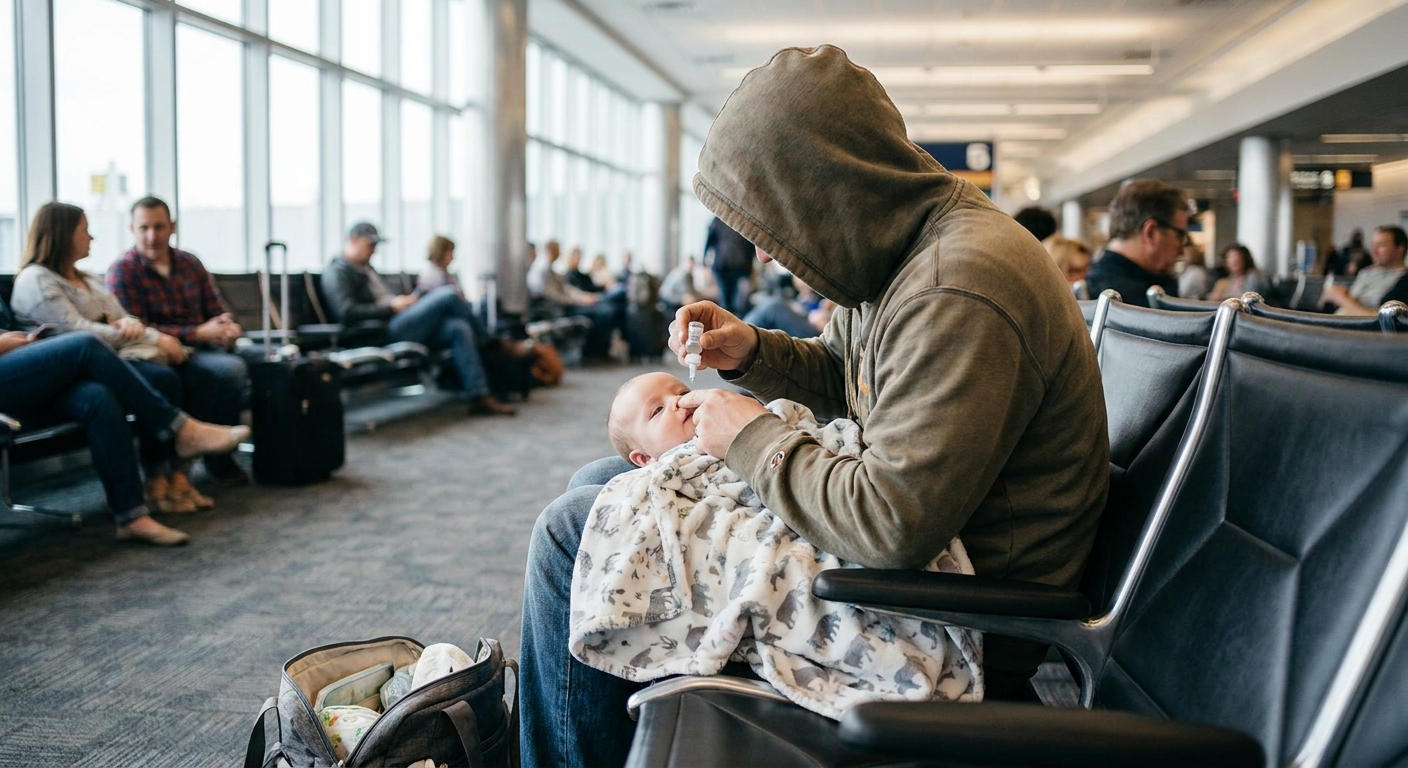
- Use saline drops or spray and gentle suction for babies before takeoff and again when descent begins to reduce nasal blockage.
- Hydrate: dry cabin air thickens mucus.
If your child has severe ear pain before the trip, fever, or you suspect an ear infection, call your pediatrician. A child with an acute ear infection can have a rough landing. In uncommon cases, especially with significant congestion and an inability to equalize pressure, pressure changes can contribute to eardrum injury.
Ear popping techniques
Older kids sometimes can learn gentle equalizing. For toddlers and babies, do not force anything.
- Yawning, chewing, and swallowing are safest.
- Blowing nose can help older kids if they can do it gently.
- Gentle Valsalva can be ok for older kids who can follow instructions, but it should never be forceful or painful.
Airplane ear or infection?
Airplane ear typically starts during descent and improves after landing once pressure equalizes. Ear infections tend to cause ongoing pain, often with other symptoms.
More like airplane ear
- Pain begins during takeoff or landing
- Ear feels full or “plugged”
- Child improves within minutes to a few hours after landing
- Temporary muffled hearing
More like an ear infection
- Ear pain that continues or worsens well after the flight
- Fever
- Recent cold symptoms plus significant irritability
- Drainage from the ear
- New trouble sleeping or lying flat
One important nuance: a flight can unmask an ear infection that was already brewing, because pressure changes make the ear hurt more. So if the timing seems flight-related but symptoms persist, trust that instinct and get it checked.
Kids with ear tubes
If your child has tympanostomy tubes (ear tubes), many families notice less pressure pain during flights because the tubes help ventilate the middle ear. Kids with tubes can still have discomfort from congestion, and they can still get ear infections.
Call your pediatrician or ENT if your child has ear pain plus drainage, fever, or symptoms that do not settle after the trip.
When to get care
Most airplane ear resolves quickly. Call your pediatrician or seek urgent care if you notice:
- Severe ear pain that does not improve within a few hours after landing
- Blood or fluid draining from the ear
- New hearing loss that persists into the next day
- Dizziness, balance problems, or vomiting that is more than typical travel upset
- Fever (especially in babies) or your child looks unusually ill
- Ear pain plus swelling, redness, or tenderness behind the ear
If your baby is under 3 months with a fever, or if your child seems lethargic or hard to wake, seek medical care promptly.
Quick landing plan
If you remember nothing else, remember this: start before the pain starts.
- When descent begins: wake gently if needed, go upright, offer water, set out pacifier or bottle.
- 30 to 60 minutes before you expect landing: consider weight-based OTC pain relief if you planned to use it.
- During descent: nurse, bottle, pacifier, frequent sips, or chewy snacks.
- After landing: keep offering sips and swallowing if ears still feel “stuck.”
If your child has recurrent, severe airplane ear or symptoms that linger well beyond the travel day, mention it to your pediatrician. Sometimes frequent or intense pain points to underlying Eustachian tube dysfunction or chronic congestion that is worth addressing.
And if you have a tough flight, please do not take it as a parenting grade. Pressure pain is real. You showing up with a plan is already a win.
Sarah Mitchell
Sarah Mitchell is a Registered Pediatric Nurse and a mother of three who has spent over a decade helping families navigate the beautiful, chaotic early years of childhood. She combines evidence-based medical knowledge with real-world parenting experience to offer practical, compassionate advice. At Awesome Parent, Sarah's mission is to help exhausted parents find solutions, trust their instincts, and finally get some sleep.