Baby Acne: Causes and When It Goes Away

Sarah Mitchell
Sarah Mitchell is a Registered Pediatric Nurse and a mother of three who has spent over a decade helping families navigate the beautiful, chaotic early years of childhood. She combines evidence-based medical knowledge with real-world parenting experience to offer practical, compassionate advice. At Awesome Parent, Sarah's mission is to help exhausted parents find solutions, trust their instincts, and finally get some sleep.
If you have found tiny red bumps on your newborn’s cheeks and immediately wondered, Did I do something wrong? let me stop you right there. Baby acne is incredibly common, not your fault, and in most cases it clears up on its own with time and gentle care.
As a pediatric nurse and a mom who has stared at plenty of mysterious baby skin spots under a nightlight at 3 a.m., I can tell you this: most baby skin changes look dramatic because babies are basically brand new humans with brand new skin. Their bodies are still learning how to regulate oil, sweat, and irritation.
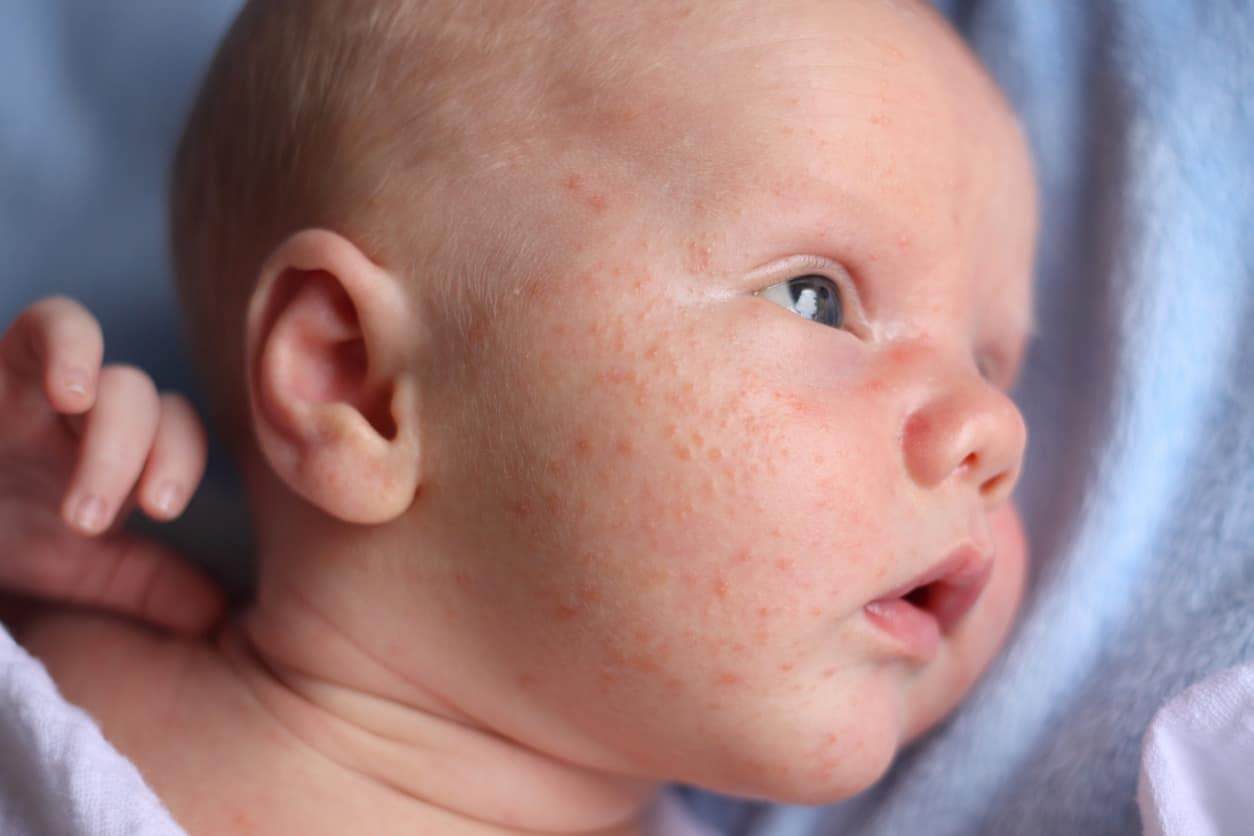
Below is what baby acne looks like, what causes it, how long it lasts, how it differs from eczema and other rashes, and when it is time to check in with your pediatrician.
What is baby acne?
Baby acne is a breakout of small bumps, usually on a baby’s face. There are two main types you will hear about:
- Neonatal acne: shows up within the first few weeks of life, often in the first 2 to 4 weeks.
- Infantile acne: starts later, usually after 6 weeks of age, and can last longer.
Both can look similar at first glance, but infantile acne is more likely to include true pimples like blackheads or whiteheads and may stick around for months.
One helpful nuance: Many acne-like newborn rashes without blackheads or whiteheads (mostly tiny pustules on the cheeks/forehead) are sometimes labeled neonatal cephalic pustulosis. It can be related to a common skin yeast. The at-home care is usually the same: gentle cleansing and time.
What does baby acne look like?
Most commonly, baby acne shows up on:
- Cheeks
- Chin
- Forehead
- Sometimes the nose
Typical baby acne features include:
- Small red or pink bumps
- Tiny pustules that look like little whiteheads
- Skin around it may look slightly red or “flushed”
- Usually not scaly, crusty, or oozing
Baby acne often looks worse when your baby is warm or upset, like after crying, feeding, or being bundled up.
What causes baby acne?
In most cases, baby acne happens because of a mix of normal newborn skin changes and hormones.
Hormone shifts
During pregnancy, hormones pass from parent to baby. After birth, those hormone levels shift. That transition can temporarily stimulate your baby’s oil glands, leading to clogged pores and bumps.
Immature oil glands
Newborn skin is still learning how to balance oil production. Some babies are simply more prone to clogged pores in those first weeks.
Yeast involvement (sometimes)
Some babies have an acne-like rash related to a common skin yeast (Malassezia). This is one reason bumps can look irritated or spread across the cheeks and forehead, even when you are doing everything “right.”
What does not usually cause it
- Dirty skin. Please do not scrub your baby’s face.
- Something you ate, in most cases.
- Allergies, unless there are other symptoms like hives, swelling, vomiting, or breathing changes.
Baby acne vs. other rashes
This is the part that sends parents down the late-night rabbit hole. Here is a simple way to sort out the most common look-alikes.
Baby acne
- Texture: bumps or tiny pustules
- Location: cheeks, chin, forehead
- Feel: usually not very dry
- Itch: typically not itchy
Eczema
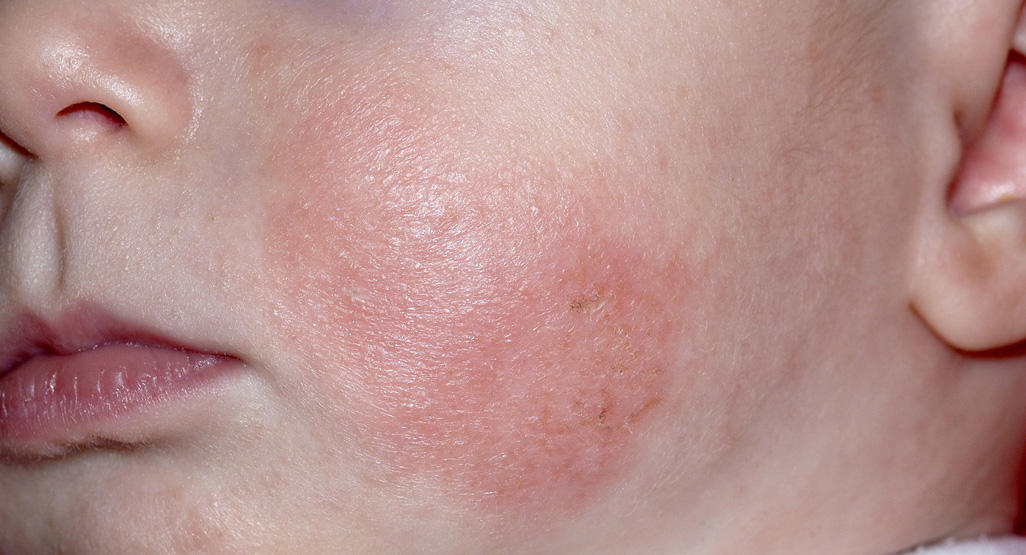
- Texture: dry, rough patches that may look scaly
- Location: cheeks and scalp in young babies, then often elbows, knees, and body folds later
- Feel: noticeably dry, sometimes cracked
- Itch: often itchy, babies may rub their face or seem extra fussy
Heat rash
- Texture: tiny red bumps, sometimes very fine
- Location: neck, chest, back, skin folds, under a hat
- Trigger: warmth, sweating, overdressing
Milia
- Texture: tiny white bumps that look like little pearls
- Location: nose, cheeks
- Cause: trapped keratin, not inflamed like acne
Cradle cap
- Texture: greasy yellow scales or flakes
- Location: scalp, eyebrows, around the nose, behind ears
- Note: can appear with an acne-like rash in some babies
If the rash is very red, spreading quickly, oozing, crusting with honey-colored scabs, or your baby seems unwell, it is worth calling your pediatrician. Those can be signs of infection or another condition that needs treatment.
Do you need to treat it?
Most of the time, no. Neonatal acne is usually harmless and self-limited, meaning it resolves without special treatment.
In triage, my most common advice was simple: gentle skin care and patience. I know, patience is the hardest one.
What to do at home
- Wash gently once a day with lukewarm water. If you use soap, choose a mild, fragrance-free baby cleanser.
- Pat dry. Do not rub.
- Avoid heavy oils and greasy ointments on the face unless your pediatrician recommended them for another reason. They can clog pores.
- Use fragrance-free products for lotions, detergents, and wipes when possible.
- Keep it hands-off. No picking, no squeezing. Picking can inflame delicate skin and, in true infantile acne, can increase the risk of scarring.
What to avoid
- Adult acne products (benzoyl peroxide, salicylic acid, retinoids) unless specifically prescribed.
- Harsh scrubbing or exfoliating tools.
- Essential oils on the face. “Natural” can still be irritating.
If your baby seems bothered, or if the bumps look angry and inflamed, check in with your pediatrician before trying any over-the-counter acne treatments.
When does it go away?
The timeline depends on which type it is.
Neonatal acne timeline
- Often appears within the first 2 to 4 weeks of life
- Typically improves within weeks to a few months
- Many babies are clearer by around 2 to 3 months, sometimes longer
Infantile acne timeline
- Usually starts after 6 weeks
- Can last several months
- Sometimes persists up to 12 to 18 months
If you are watching it come and go from day to day, that can still be normal. Baby acne often fluctuates with heat, drool, spit-up, and even how much your baby has been rubbing their cheeks on your shoulder.
When to call the pediatrician
Baby acne is usually a “watch and wait” situation, but you should reach out if:
- Your baby is older than 6 weeks and the acne is getting worse or looks more like true pimples (possible infantile acne).
- The rash is spreading beyond the face in a big way, especially with lots of bumps on the trunk.
- You see crusting, oozing, open sores, or honey-colored scabs.
- You notice blisters, rapidly worsening redness, or the skin looks painful to touch.
- The rash involves the eyelids or area very close to the eyes, especially if there is eye discharge or swelling.
- The bumps were present immediately at birth and your baby has other symptoms (fever, poor feeding, unusual sleepiness).
- Your baby has a fever, seems unusually sleepy, is feeding poorly, or seems sick.
- The skin looks like it is causing significant discomfort or itching.
- There are signs of an allergic reaction like hives, facial swelling, vomiting, or breathing trouble (seek urgent care for breathing trouble or swelling).
Your pediatrician may simply confirm the diagnosis and reassure you, or in some cases prescribe a gentle medication if it looks like infantile acne or another treatable rash.
What your pediatrician may use
If it is true infantile acne (especially with blackheads/whiteheads or deeper inflamed bumps), your clinician may consider a prescription such as a topical medication to calm inflammation or treat bacteria or yeast. This might include a topical antibiotic or other acne medicine in carefully selected cases. The key is that these decisions are age-specific, so it is not something to self-treat.
Quick reassurance for the 3 a.m. scroll
If your baby is otherwise acting like themselves, feeding well, peeing and pooping normally, and the bumps are mostly on the cheeks and chin, baby acne is often the most likely explanation.
In my house, baby acne always seemed to flare the exact week I finally felt brave enough to take a few photos. If that is happening to you too, you are in good company.
Remember: Baby acne is common, temporary, and not a sign you are doing anything wrong. Gentle washing, avoiding irritating products, and giving it time is usually the best medicine.
Frequently asked questions
Can breast milk cause or cure baby acne?
Breast milk does not typically cause baby acne. Some families try dabbing breast milk on baby skin, but it is not a proven treatment and can sometimes irritate skin or add more moisture than the area needs. If you want to try it, use a tiny amount, keep the area clean and dry, and stop if the skin looks redder or more irritated.
Should I moisturize baby acne?
If your baby’s skin is otherwise dry, a light, fragrance-free moisturizer can be fine. Avoid thick, greasy products on the acne areas unless your clinician advised them.
Is baby acne contagious?
No. Baby acne is not contagious.
Will baby acne leave scars?
Neonatal acne typically does not scar. Scarring is more of a risk with more severe infantile acne, especially if lesions are picked or become infected. If you see deep bumps, blackheads, or worsening pimples, check in with your pediatrician.
Where does this guidance come from?
The general approach here aligns with guidance commonly found in major pediatric and dermatology references and children’s hospital patient education, including organizations like the American Academy of Pediatrics and pediatric dermatology resources.