Simple, scannable guidance on when to start fluoride toothpaste, how much to use (rice-sized vs pea-sized), and what to do if your child swallows or eats extra.
Baby Bottle Tooth Decay: Signs, Prevention, and When to See a Dentist

Sarah Mitchell
Sarah Mitchell is a Registered Pediatric Nurse and a mother of three who has spent over a decade helping families navigate the beautiful, chaotic early years of childhood. She combines evidence-based medical knowledge with real-world parenting experience to offer practical, compassionate advice. At Awesome Parent, Sarah's mission is to help exhausted parents find solutions, trust their instincts, and finally get some sleep.
Baby teeth are tiny, but the trouble they can cause is not. One of the most common problems I saw in pediatric triage, and later as a mom watching friends panic, is baby bottle tooth decay, a common pattern of early childhood caries (ECC). It often shows up on the upper front teeth first, and it can move fast.
If you are here because you just noticed a weird white line near the gumline or a brown spot that “was not there yesterday,” take a breath. This is fixable, especially when caught early. Let’s talk about what causes it, what it looks like, how to prevent it without turning bedtime into a battle, and when it is time to call a pediatric dentist.
Quick note: This is educational, not medical advice. If you are worried about your child’s teeth or pain, call your pediatric dentist or pediatrician.

What it is (and why front teeth get hit first)
Baby bottle tooth decay happens when teeth are repeatedly exposed to sugars and acids for long stretches of time. The sugar can come from:
- Formula or milk (both contain natural sugars)
- Juice, soda, sweet tea, flavored milk
- “Toddler drinks” or sweetened water
- Sweetened medicines or syrups (risk goes up with frequent dosing, especially at night, and when teeth are not cleaned after)
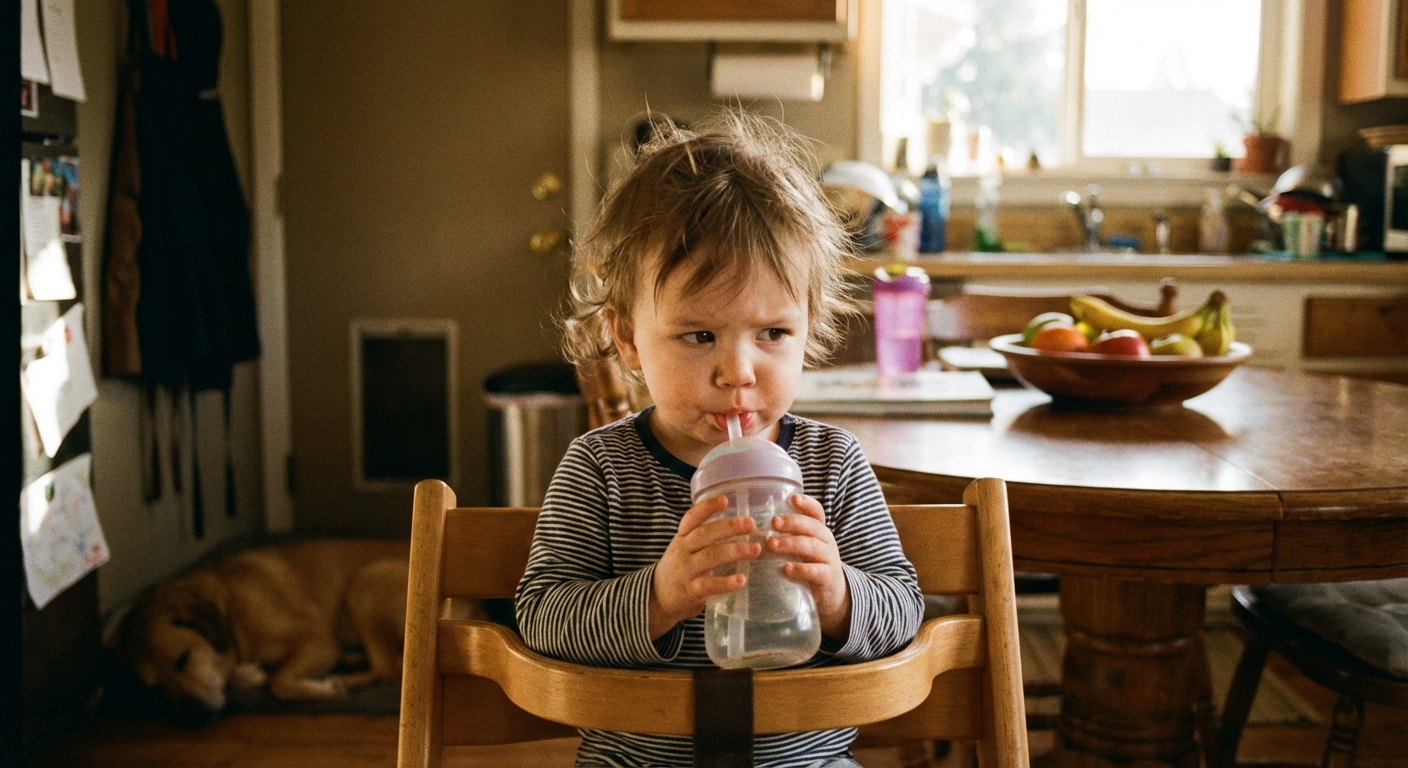
Bacteria in the mouth love sugar. They convert it into acids that weaken enamel. During the day, saliva helps wash things away. At night, saliva flow drops, and if a child falls asleep with a bottle or sippy cup, liquid can pool around the upper front teeth. That is why decay often starts there.
Important nuance: This is not about blaming parents for giving a bottle. It is about frequency and timing, especially sipping to sleep and sipping all night.
What it looks like
Early childhood caries can be subtle at first. The earlier you catch it, the easier it is to treat. White spots can sometimes be remineralized with fluoride and habit changes. Brown spots or holes usually need a dentist.
Early signs (easy to miss)
- Chalky white spots or a white “line” near the gumline, especially on the upper front teeth
- Dull-looking enamel that does not shine like the other teeth
- Color change (yellow to light brown) near the gumline that does not wipe away
- Gum irritation or redness around the upper front teeth
Progressing signs (call the dentist)
- Brown spots or visible pitting
- Dark staining that seems to spread
- Chips on the front teeth or edges that crumble easily
- Sensitivity to cold, brushing, or certain foods (toddlers may just avoid eating)
Advanced signs (urgent)
- Pain, especially waking at night crying and touching the mouth
- Swelling of the gum or face
- Pimple-like bump on the gum (can suggest an abscess)
- Fever along with dental swelling or facial redness
One more nuance for tired parents: teething can also cause night waking and fussiness. Red flags are persistent localized pain, swelling, fever, or a visible spot that is getting worse.

Why bedtime bottles and “just a little juice” matter
In clinic, I heard versions of this all the time: “It is only milk,” or “It is watered-down juice,” or “He only sips it to fall asleep.” The issue is not the one-time bottle. The issue is slow, frequent exposure.
- Sipping over time gives bacteria a steady fuel source.
- Falling asleep with a bottle means the liquid sits on teeth longer.
- Night waking plus bottle repeats the cycle multiple times when saliva is low.
And yes, even milk can contribute when it coats teeth all night. Juice and sweet drinks just accelerate the process.
Prevention that works
You do not need perfection. You need a few high-impact habits that protect enamel and reduce sugar exposure.
1) Start brushing when the first tooth shows up
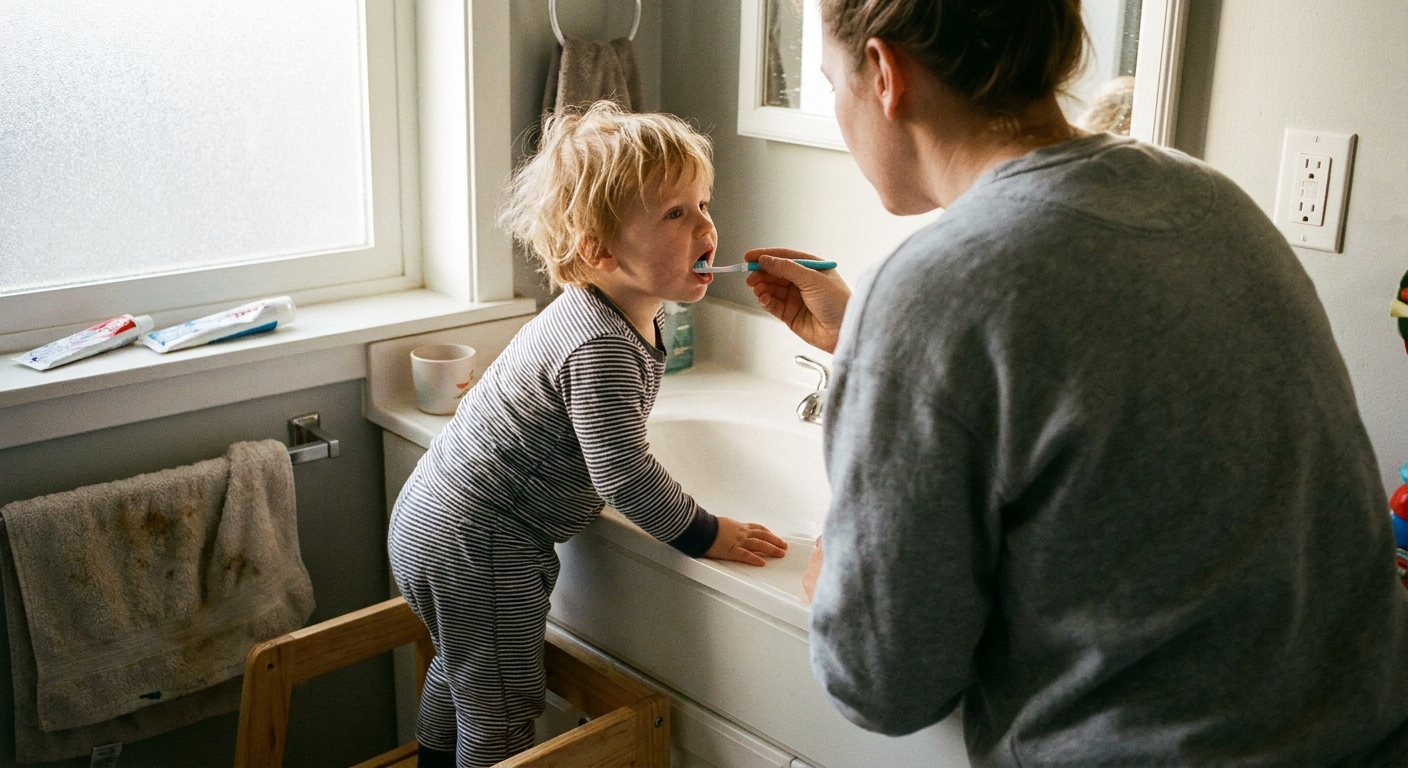
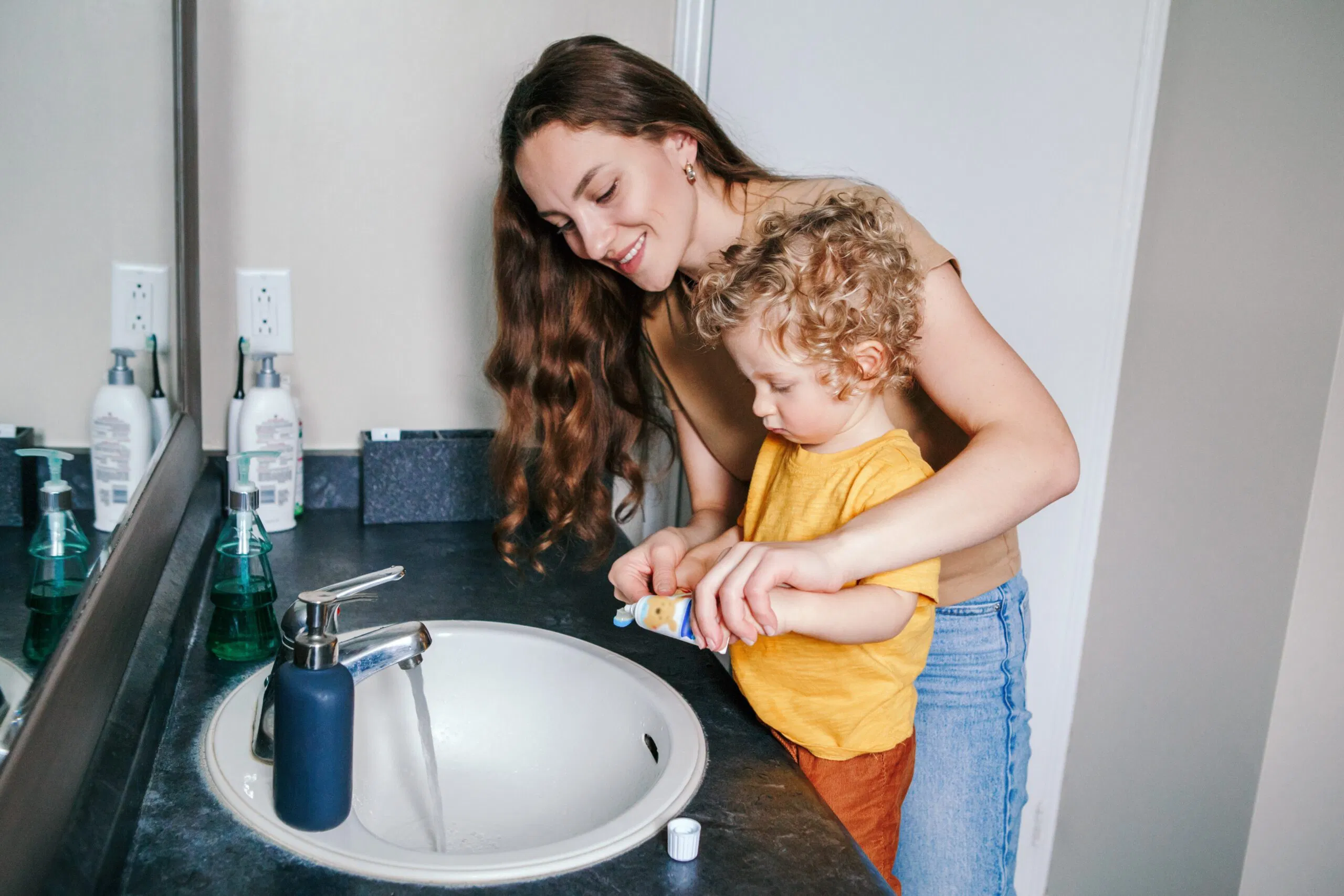
As soon as you see that first tooth, start brushing twice a day. Most kids still need a grown-up to do (or finish) brushing until around age 7 to 8, because little hands are not great at plaque control.
2) Make water the only sleep drink
If your child needs something in bed, aim for plain water only. If you are transitioning away from milk at bedtime, do it gradually and expect a few grumbles. (Toddlers are very committed negotiators.)
3) Brush before bed, and make it the last thing
The most protective routine is:
- Brush with fluoride toothpaste
- Spit if they can, but do not stress if they cannot
- No more milk, juice, or snacks after brushing
Fluoride toothpaste amount:
- Under 3 years: a smear the size of a grain of rice
- 3 years and up: a pea-sized amount
If your child screams through brushing, you are still doing something valuable. A quick, thorough brush is better than skipping it because it is not “fun.”
4) Focus on the teeth that matter most
If you can only get one good angle, focus on the upper front teeth near the gumline. That is the classic starting point for bottle-related decay.
5) Keep juice and sweet drinks out of the sipping zone
If you choose to offer juice, keep it with meals, not as a sippy companion all morning. Constant sipping is rough on teeth. Pediatric guidance commonly includes:
- Under age 1: avoid juice
- Age 1 to 3: limit to about 4 oz per day, served in a cup, ideally with meals
6) Do not dip pacifiers or bottles in sweet stuff
This includes honey, sugar, juice, or syrups. (And honey is not safe under 12 months anyway.)
7) Ask about fluoride in your water
If your family drinks mostly bottled water or you have well water, ask your pediatrician or dentist whether your child is getting enough fluoride. Fluoride strengthens enamel and helps prevent cavities.
8) Reduce saliva-sharing when you can
Cavity-causing bacteria can spread through saliva. If possible, avoid sharing spoons, and avoid cleaning a pacifier by putting it in your mouth.
Cup transition tips
This is not a full bottle-weaning guide, but a few tooth-focused swaps make a big difference:
- Do not let your child graze on milk all day. Offer milk at meals and snacks, then water between.
- Use an open cup or straw cup when possible. They can be better than a bottle for many kids, but they still cause problems if used for long, frequent sipping. The goal is shorter drink times, not carrying a cup around all day.
- Avoid juice in a sippy cup. It turns a sweet drink into an all-day tooth coating.
- If your child insists on a bedtime comfort drink, keep it small, earlier in the routine, then brush last.
If you are stuck in the cycle of night waking for bottles, you are not alone. From a dental standpoint, the goal is reducing nighttime milk exposure first, even if daytime bottles linger a bit longer.
When to see a pediatric dentist
Here are the practical “when to book it” rules I share with parents:
Routine timing
- First dental visit: by age 1, or within 6 months of the first tooth erupting
- Regular checkups: typically every 6 months, unless your dentist advises differently
Make an appointment soon if you notice
- White spots or lines near the gumline
- Any brown spot, pitting, or chipping
- Bad breath that does not improve with brushing
- Gums that look inflamed around specific teeth
Seek urgent dental or medical care if
- Facial swelling, gum swelling, or a pus-filled bump on the gums
- Fever with dental pain or swelling
- Your child cannot eat, drink, or sleep due to mouth pain
If you cannot get into a pediatric dentist quickly and your child has swelling or fever, call your pediatrician. Dental infections can become serious, and kids can go downhill faster than adults.
What a dentist might do
Parents often imagine the worst. In reality, treatment depends on how early you catch it:
- Early white spots: fluoride varnish, a stronger home hygiene plan, diet changes, and close monitoring (these spots can sometimes be reversed)
- Small cavities: fillings, sometimes silver diamine fluoride (it can stop decay but may darken the spot)
- More advanced decay: crowns on baby teeth, and in some cases treatment under sedation for very young children or extensive work
Baby teeth matter. They hold space for adult teeth, support speech, and let kids eat comfortably. Treating decay is not cosmetic. It is health and comfort.
Quick FAQ
Is this only from bottles?
No. Frequent sipping from sippy cups, overnight feeding after teeth erupt, and constant snacking can contribute. The classic pattern is “sleep plus milk or sweet drink sitting on teeth.”
What about breastfeeding at night?
Breastfeeding itself is not “bad.” The risk for cavities tends to rise when teeth are exposed frequently overnight after teeth erupt, especially if there are other sugars in the diet and teeth are not being cleaned well. If you are doing night feeds, focus on excellent brushing with fluoride toothpaste and ask your pediatric dentist for personalized guidance.
My child hates toothbrushing. Is wiping teeth with a cloth enough?
For very young babies before teeth, wiping gums is fine. Once teeth are in, brushing with fluoride toothpaste is the gold standard. If all you can manage some nights is a quick brush or a wipe, do it, and try again tomorrow. Consistency beats perfection.
Should I switch to lactose-free milk or a different formula?
The bigger factor is how often and when the teeth are exposed, not a special product. Focus first on brushing before bed and avoiding bottles in bed.
A calm next step
If you saw a spot today and your stomach dropped, here is your simple plan:
- Take a clear photo of the tooth in good light.
- Start “brush last” tonight with fluoride toothpaste.
- Switch bedtime and overnight drinks to water.
- Book a pediatric dental appointment, especially for any white or brown changes on the upper front teeth.
You are not behind, and you are not a bad parent. You are noticing something and taking action. That is exactly what your child needs.
Sarah Mitchell
Sarah Mitchell is a Registered Pediatric Nurse and a mother of three who has spent over a decade helping families navigate the beautiful, chaotic early years of childhood. She combines evidence-based medical knowledge with real-world parenting experience to offer practical, compassionate advice. At Awesome Parent, Sarah's mission is to help exhausted parents find solutions, trust their instincts, and finally get some sleep.