Baby Constipated After Starting Solids? Foods for Quick Relief

Sarah Mitchell
Sarah Mitchell is a Registered Pediatric Nurse and a mother of three who has spent over a decade helping families navigate the beautiful, chaotic early years of childhood. She combines evidence-based medical knowledge with real-world parenting experience to offer practical, compassionate advice. At Awesome Parent, Sarah's mission is to help exhausted parents find solutions, trust their instincts, and finally get some sleep.
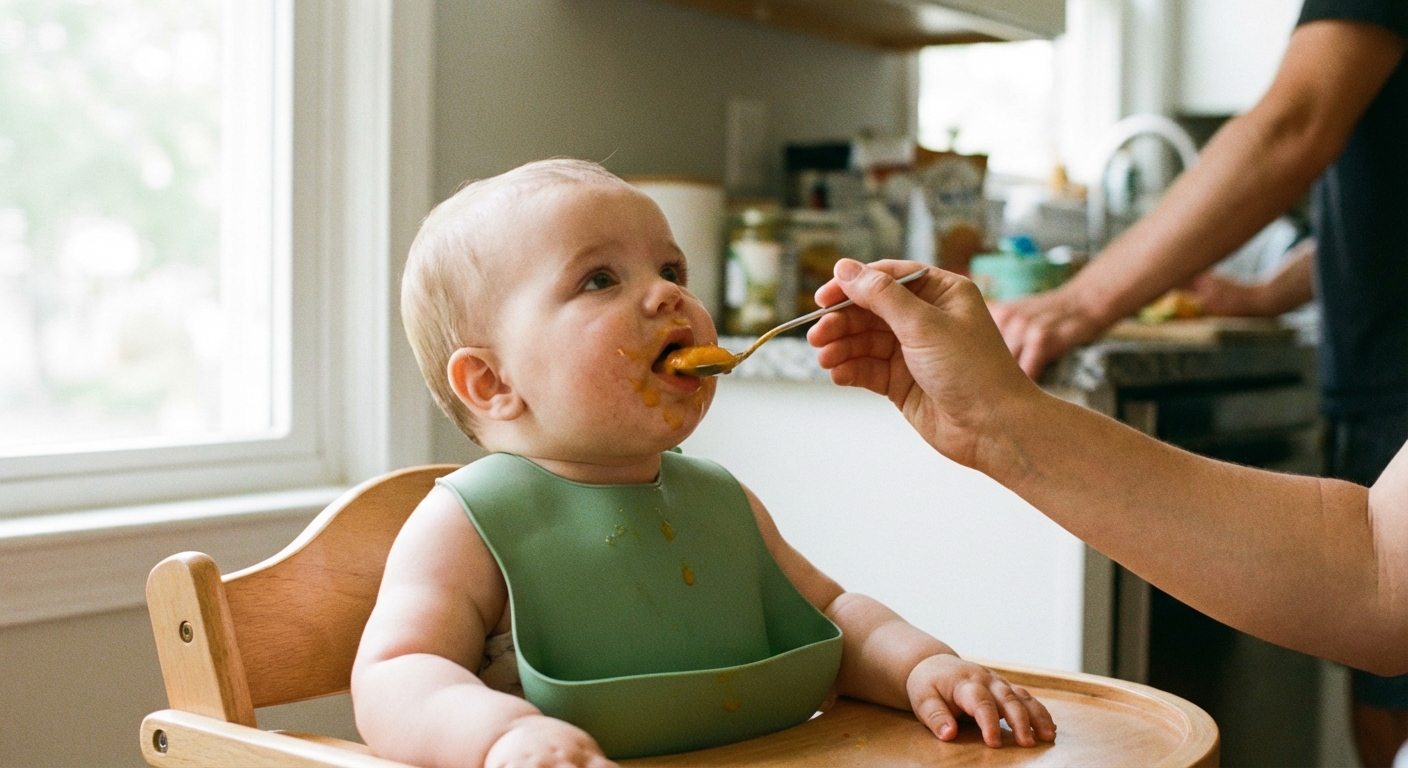
If your baby was happily pooping along on breast milk or formula and then suddenly... nothing... right after starting solids, you are in very good company. I saw this all the time as a pediatric triage nurse, and I lived it in my own kitchen too. A new menu can mean a new poop schedule, and sometimes that schedule is: “Nope.”
The good news: constipation after starting solids is usually temporary, and a few smart food choices can often get things moving again. Let’s talk about what actually helps, what to pause for a bit, and when it is time to call your pediatrician.
Quick note on age: Most babies start solids around 6 months. Until 12 months, breast milk or formula is still the main source of nutrition and hydration, with solids playing a supporting role.
Is it really constipation?
Parents often tell me, “He has not pooped in two days, he must be constipated.” Sometimes that is true, but frequency alone does not tell the whole story.
Constipation signs that matter
- Hard, dry, pellet-like stools (think: little pebbles or rabbit pellets)
- Straining with little output (some grunting is normal, but prolonged straining with hard stool is not)
- Pain with pooping, crying, or arching
- Streaks of blood on the outside of stool from a small anal fissure (common with hard stools, but still worth mentioning to your clinician)
- Firm, bloated belly or less interest in eating
If your baby is otherwise comfortable and stools are soft when they do happen, it may just be a normal pattern shift as their gut learns a new skill.
Why starting solids can cause constipation
There are a few very normal reasons this happens:
- Less liquid overall. Breast milk and formula are mostly water. Solids add bulk with less fluid.
- Lower fiber early on. Iron-fortified cereal, bananas, and lots of refined starches can slow things down for some babies.
- Gut adjustment period. Their digestive system is learning to move different textures through.
- Iron. Iron matters for brain development. Some babies seem more prone to constipation with iron supplements or iron-fortified foods, but the bigger drivers are often total fluid intake and overall diet balance. Do not stop iron supplements or switch formula without medical guidance.
That does not mean you did anything wrong. It means your baby is human.
The best foods for quick relief (the famous “P” fruits)
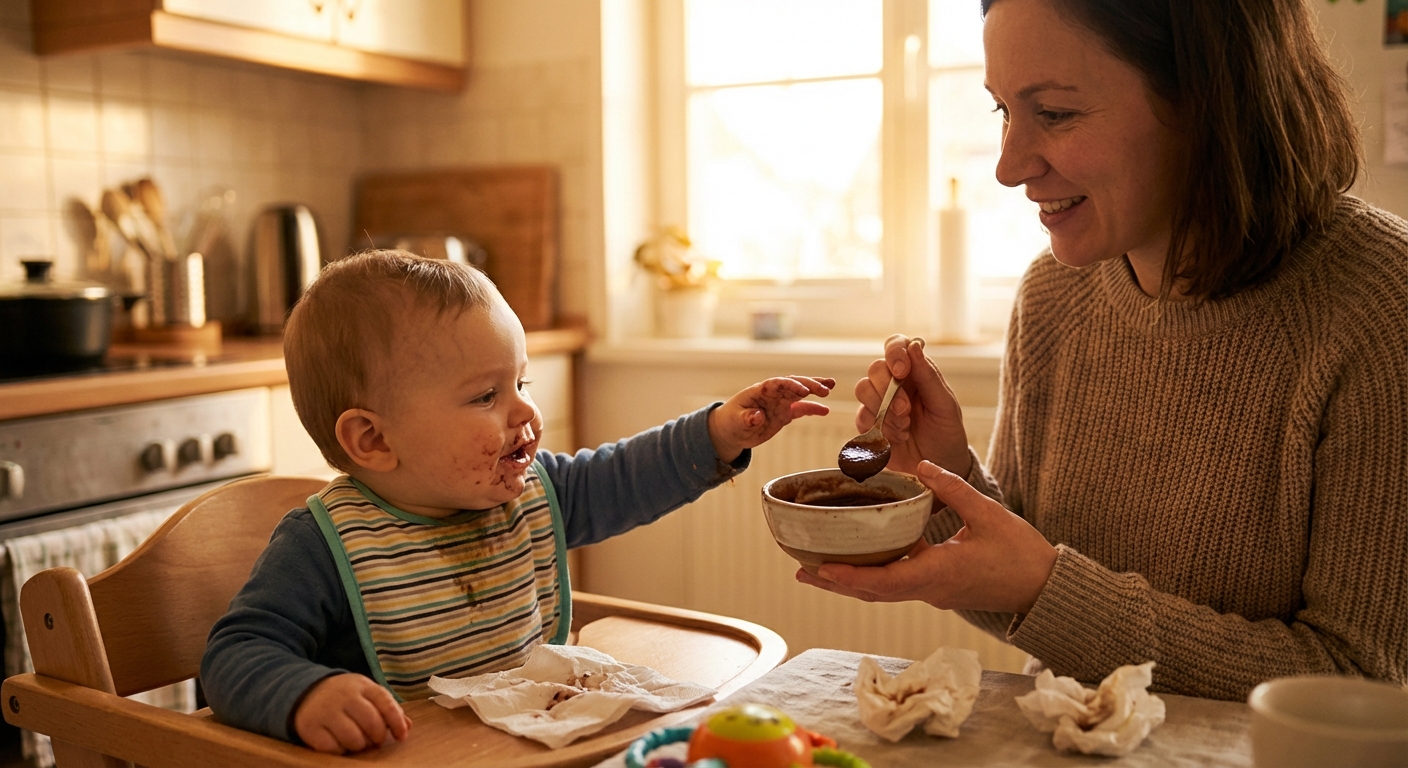
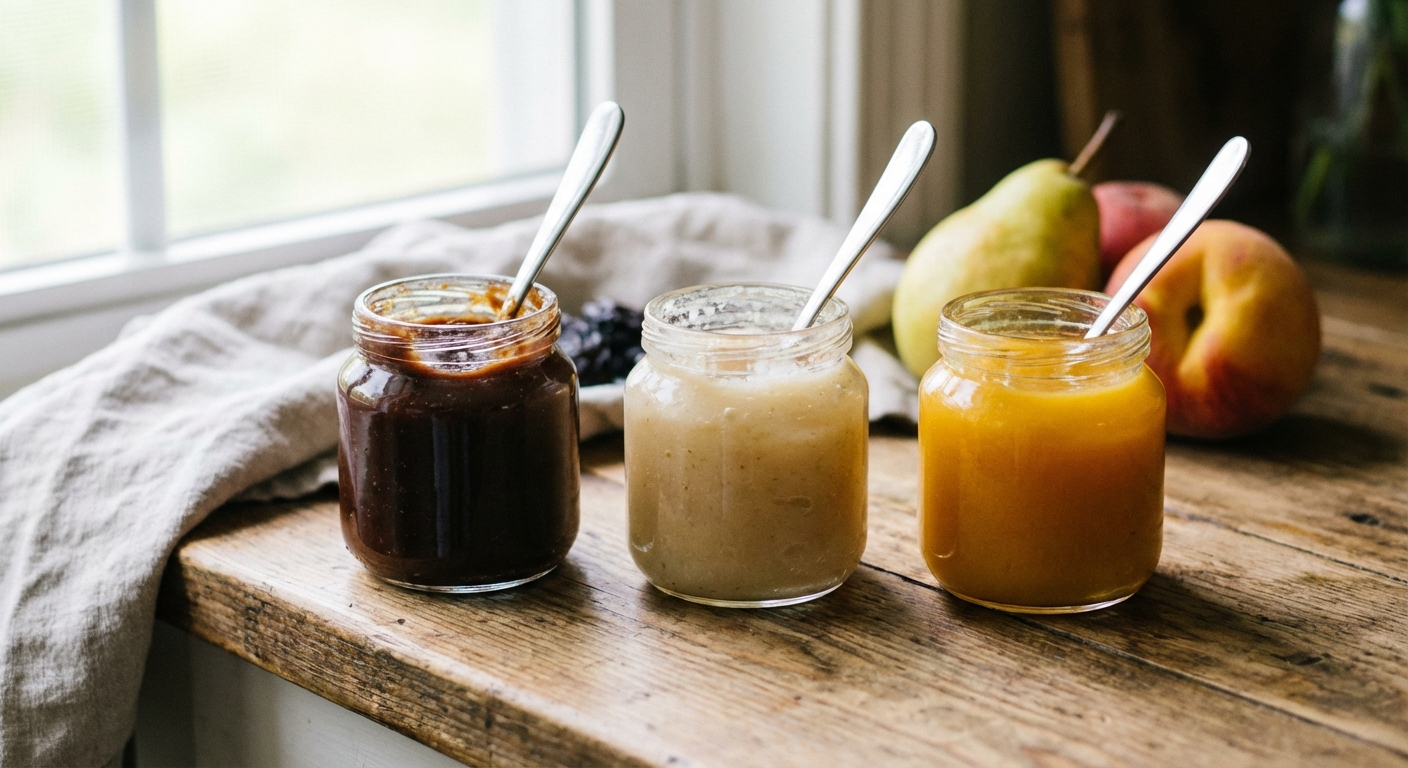
If I could hand every tired parent a short list at 3 AM, it would start here. “P” fruits are classic constipation helpers because they contain fiber and natural sugars (like sorbitol) that can pull water into the stool.
1) Prunes
Often the most effective for hard stools. Prunes are the heavy-hitter when your baby is truly backed up.
- How to serve: Prune puree, mashed prunes, or thin prune puree with a little water, breast milk, or formula.
- Tip: Start small. Too much can swing you from “no poop” to “poop everywhere.”
- Safety: Offer prunes in an age-appropriate texture (pureed or mashed for younger babies). Whole dried prunes are a choking risk.
2) Pears
Pears are gentle and usually well tolerated, especially when babies are early in solids.
- How to serve: Pear puree, mashed ripe pear, or steamed pear blended smooth.
- Bonus: Easy to mix into oatmeal or yogurt (if age appropriate).
3) Peaches
Peaches can help soften stool and are a nice change from the prune routine.
- How to serve: Peach puree or mashed very ripe peach.
- Note: If using canned peaches, choose ones packed in water or their own juice, not syrup.
Other helpful “P” options
- Plums: Similar to prunes, just a bit milder.
- Papaya: Some families find it helpful, especially in puree form.
More poop-friendly purees
If your baby is not into prunes (some babies are deeply offended by the taste, which I respect), these are great alternatives.
Apricot puree
Apricots have fiber and can be helpful for mild constipation.
Apple puree (it depends)
Apples can go either way. Smooth applesauce (especially store-bought) has less fiber and can be more binding for some babies. Thicker apple puree (more of the whole fruit) is often more poop-friendly. If your baby is backed up, apples are usually not my first pick.
Berries (for babies ready for them)
Strawberries, raspberries, and blueberries can add fiber. For younger babies, offer as a smooth puree. For older babies, mash well or serve safely in an age-appropriate way to reduce choking risk.
Avocado
Not a laxative, exactly, but the combination of healthy fats and fiber can help keep stool softer.
Fiber-friendly veggies
Vegetables can be great constipation helpers, especially when you are balancing out cereal and other starches.
- Peas: A go-to for gentle fiber. Serve as a smooth puree or mashed.
- Sweet potato: Many babies do well with it, but some parents notice it firms things up. Watch your baby’s pattern.
- Broccoli: Higher fiber, but can be gassy. Steam until very soft and puree or chop finely for older babies.
- Spinach: Puree into other foods in small amounts.
If your baby is already uncomfortable and gassy, start with fruits first, then add higher-fiber veggies as things improve.
Easy serving ideas
You do not need complicated recipes to fix constipation. Here are simple combinations that work well:
- Prune + pear puree: Prune for power, pear for sweetness.
- Oatmeal + pear: Oats tend to be less constipating than rice cereal.
- Peach + plain yogurt: For babies who have started dairy and tolerate it well.
- Pea puree + a splash of water: Helps with hydration plus fiber.
- Avocado + peach: Creamy, calorie-dense, and often poop-friendly.
If you are using store-bought purees, look for options with just fruit and water. Some pouches lean heavily on banana, which can slow things down for certain babies.
Foods to pause
You do not need to ban these forever. Just consider taking a short break while you are working on softer stools:
- Rice cereal (switch to oatmeal or barley cereal if you use cereal)
- Bananas (especially less-ripe bananas)
- Applesauce (for some babies)
- Lots of cheese or yogurt (in older babies, dairy can firm things up)
- Crackers, white bread, and other refined starches (for babies on finger foods)
Hydration matters
When solids start, it is easy for total fluid intake to dip. Keeping stools soft is a water game.
What to offer
- Breast milk or formula: Still the main source of hydration through the first year.
- Small sips of water: If your pediatrician has okayed water for your baby’s age and stage, a little water with meals can help. (Many families start offering a few sips around 6 months.)
Avoid juice as your everyday fix. In some cases, clinicians may recommend a small amount of certain juices, but food-first is usually the gentlest route.
Comfort measures (non-food)
Sometimes you need a little support while the food changes kick in:
- Movement: Bicycle legs, gentle knee-to-belly motion, and tummy time (for babies who are not yet mobile) can help with comfort.
- Warm bath: Not magic, but it can relax a tense baby.
- Skip home laxatives unless your clinician says otherwise: Suppositories, rectal stimulation, and over-the-counter laxatives should be used only with pediatric guidance.
How fast will these foods work?
Sometimes you will see a poop within 6 to 24 hours, especially with prunes. For other babies, it can take 1 to 3 days of consistent poop-friendly meals to soften things up.
If your baby is in pain, passing only tiny hard pellets, or you are on day three of struggle, that is a good time to check in with your pediatrician for individualized guidance.
When to call the doctor right away
Most constipation after starting solids is not dangerous. But a few symptoms should get prompt medical advice:
- Vomiting, especially green (bilious) vomit
- Swollen, very firm belly or severe belly pain
- Blood mixed throughout the stool (not just a small streak on the outside)
- Fever or your baby seems unusually lethargic
- Refusing feeds or signs of dehydration (very dry mouth, significantly fewer wet diapers)
- No stool for a prolonged period plus discomfort, especially in younger infants
- Constipation that keeps recurring or is not improving with dietary changes
Also call your pediatrician if constipation seems persistent or is paired with other concerns (poor weight gain, ongoing vomiting, or a history of very delayed first stool after birth). Most of the time it is still something simple, but it is worth checking.
If you are ever unsure, trust your gut. You are not overreacting. That is literally your job as a parent.
A simple constipation plan
- Pause the usual “binders” for a couple of days (rice cereal, banana, lots of refined starches).
- Add a “P” fruit daily, starting with pears or peaches for mild constipation and prunes for hard stools.
- Use oatmeal instead of rice if you serve cereal.
- Keep milk feeds steady, and offer small sips of water with meals if age-appropriate.
- Reassess in 24 to 72 hours. If baby is uncomfortable or not improving, call your pediatrician.
You do not need to fix this perfectly. You just need to nudge your baby’s system back into its normal rhythm. And you will. Preferably before your next load of laundry finishes.
Quick FAQ
Can iron-fortified foods cause constipation?
They may contribute for some babies, but it varies and is not the whole story. Iron is still important, so do not stop iron supplements or switch formulas without medical guidance. If you suspect iron is playing a role, ask your pediatrician about options.
Is straining always a sign of constipation?
No. Many babies grunt and turn red while learning to coordinate their abdominal muscles. If stool is soft, it is usually not constipation.
What is the best first food for constipation relief?
If you need quick relief, prune puree is often the most effective. For a gentler option, start with pear puree.