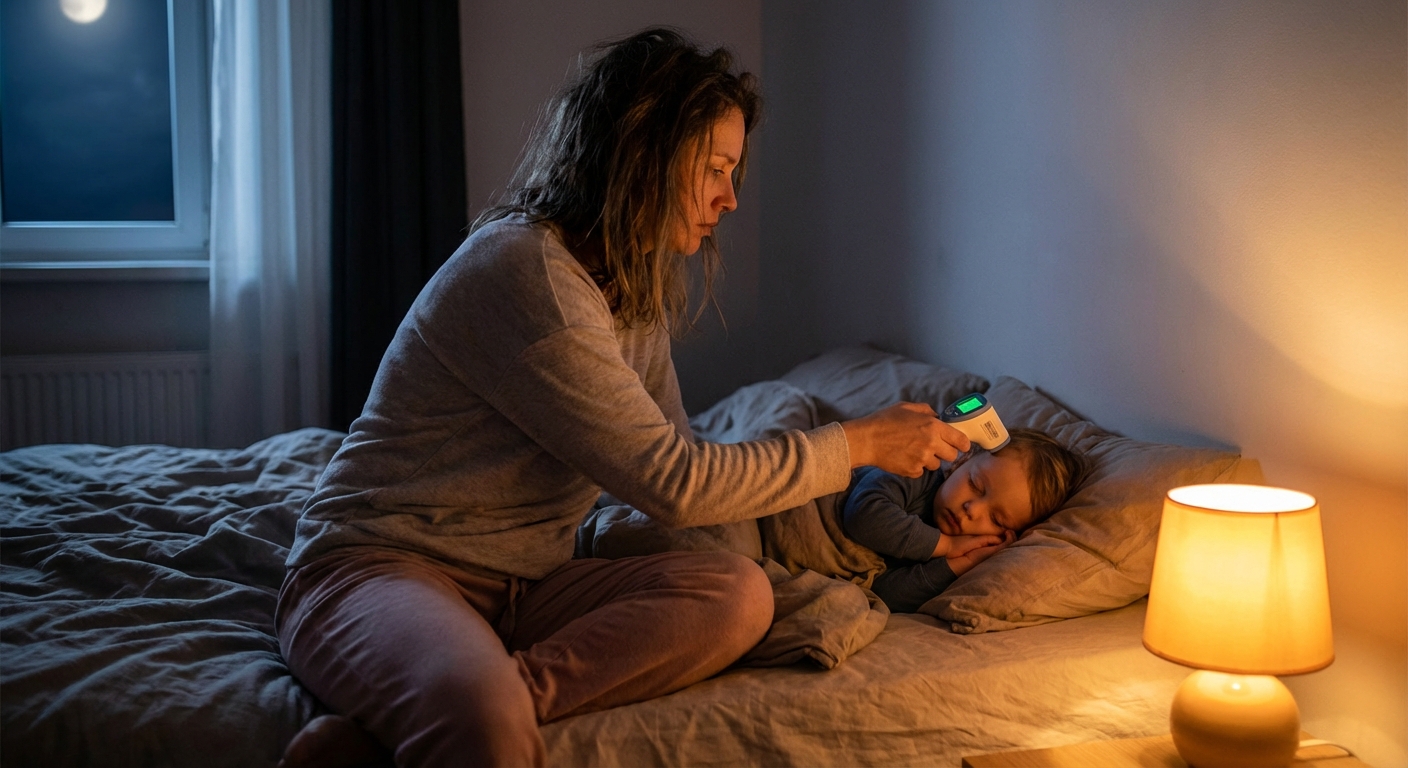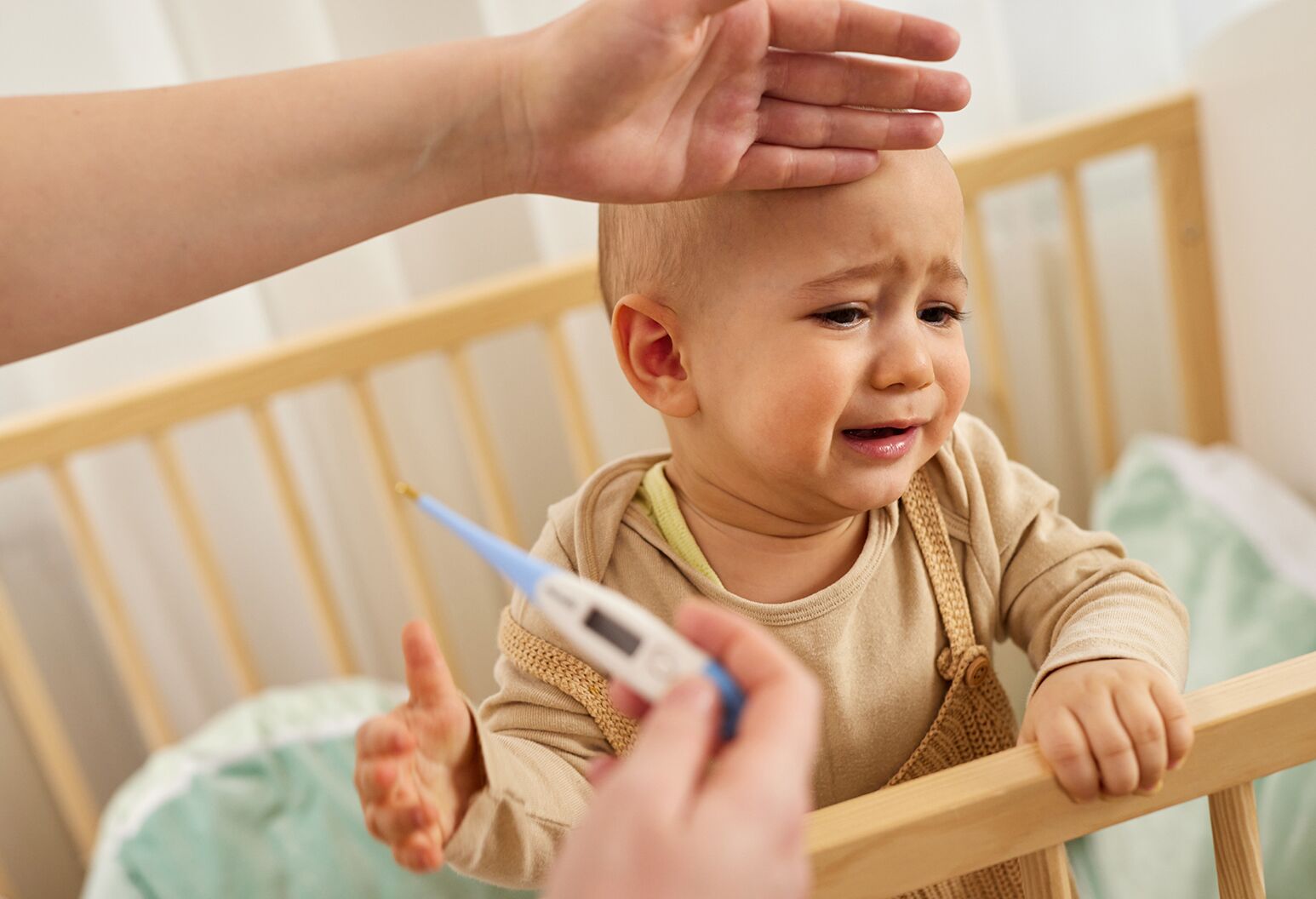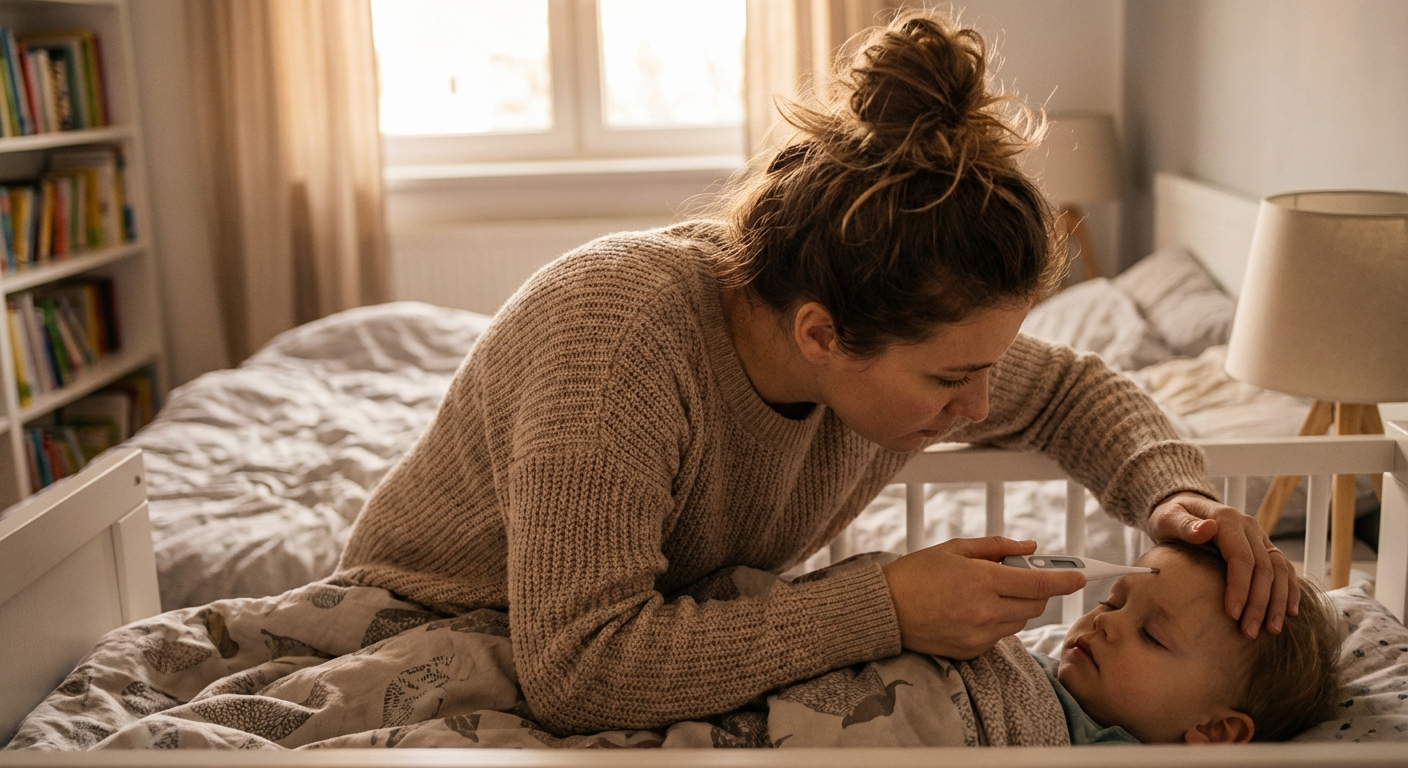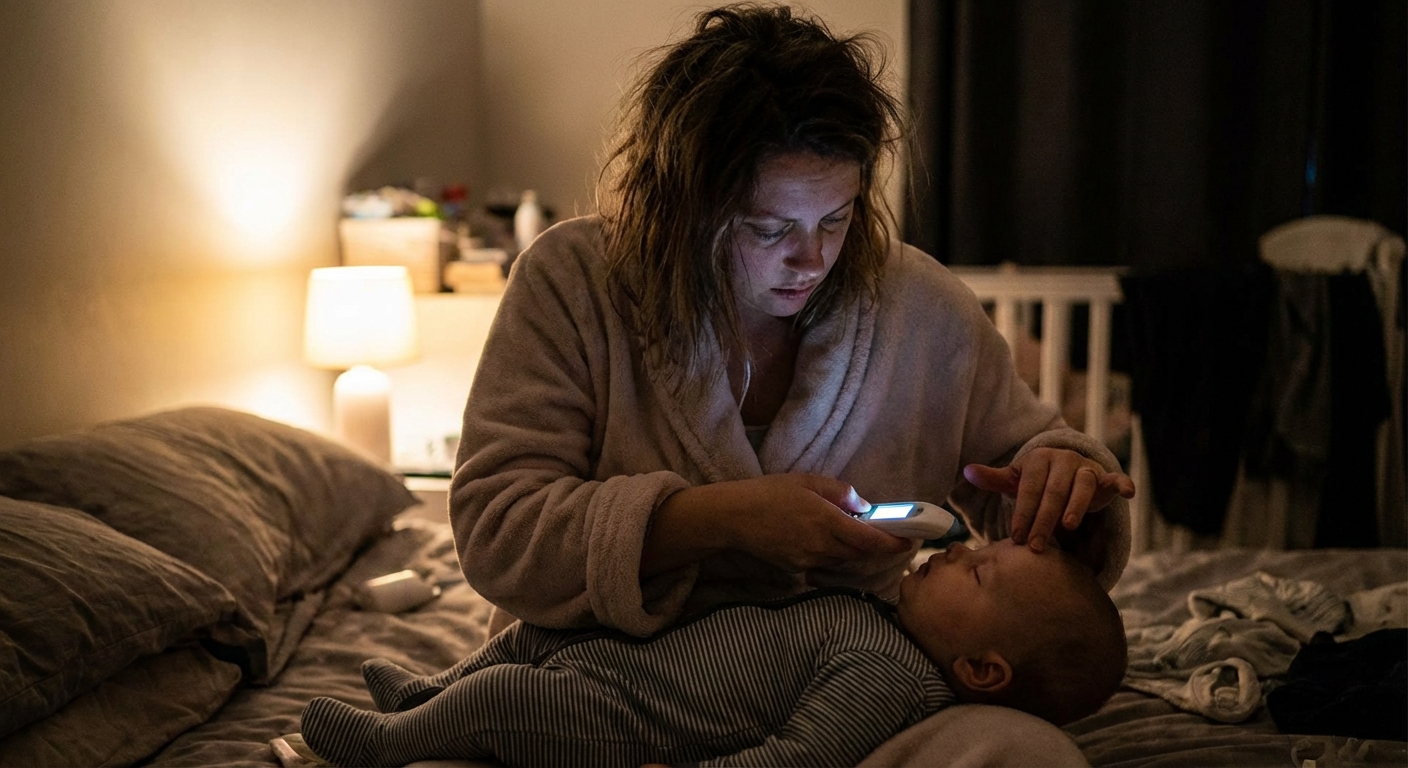
Pediatric nurse and mom advice on taking your baby’s temperature correctly, easing discomfort safely, and knowing when a fever needs urgent care.
Baby Fever Without Other Symptoms: What It Can Mean

Sarah Mitchell
Sarah Mitchell is a Registered Pediatric Nurse and a mother of three who has spent over a decade helping families navigate the beautiful, chaotic early years of childhood. She combines evidence-based medical knowledge with real-world parenting experience to offer practical, compassionate advice. At Awesome Parent, Sarah's mission is to help exhausted parents find solutions, trust their instincts, and finally get some sleep.
Few things spike a parent’s adrenaline like this sentence: “They feel really warm… but nothing else seems wrong.” I’ve said versions of it myself at 2 a.m., and I took fever calls for years as a pediatric triage nurse. Here’s the reassuring truth: a fever by itself is common, especially early in an illness, and most kids do just fine with simple monitoring.
This page will help you figure out what an isolated fever can mean, what to watch for over the next 24 to 48 hours, and when fever alone is urgent enough to call your doctor right now or head in.
First, what counts as a fever?
In most pediatric offices, we use these cutoffs:
- Fever: 100.4°F (38.0°C) or higher
- Very high fever: many clinicians consider 104°F (40°C) or higher to be very high
Best thermometer methods by age:
- Under 3 months: rectal temp is the most accurate and the one clinicians rely on.
- 3 months to 4 years: rectal is still most accurate, but a good digital armpit (axillary) temp can be a helpful screen. If the armpit temp is elevated, confirm with rectal if you can.
- 4+ years: oral is usually fine if your child can cooperate.
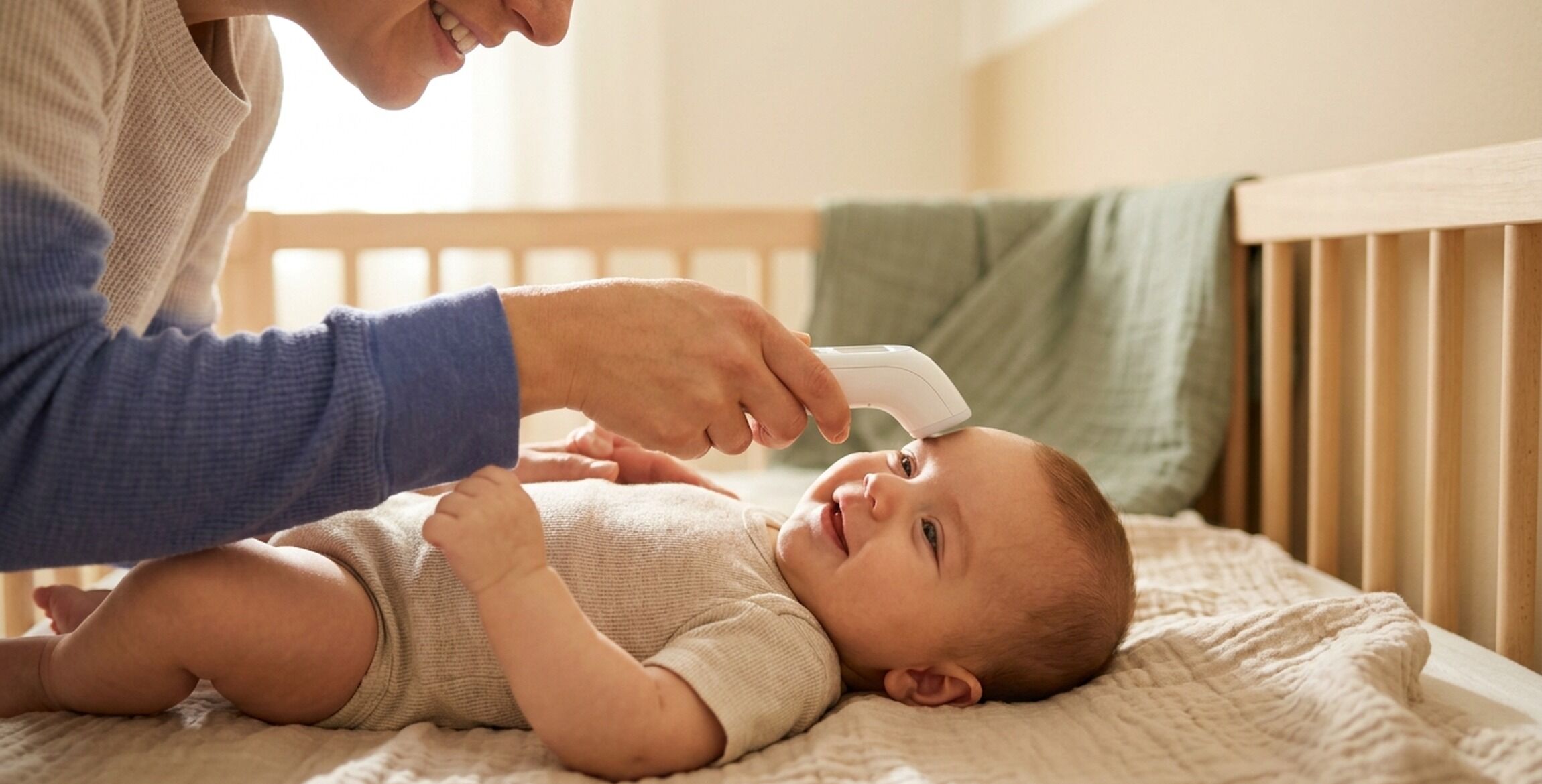
Forehead (temporal artery) thermometers can be reasonably accurate after about 3 months when used correctly, but if the number is going to change what you do, confirm with a more reliable method. Ear (tympanic) thermometers tend to be less reliable in young babies (especially under about 6 months) because it is easy to get a poor seal or angle.
Quick temp check tips
If a fever reading surprises you, check the basics before you panic. I saw lots of “false alarms” in triage that were really measurement issues or a temporarily warm kid.
- Wait after a bath: a warm bath can raise skin temperature. Give it a bit and recheck.
- Unbundle first: heavy blankets, a hot room, or a warm car seat setup can make kids feel very hot. Remove layers, wait 15 to 20 minutes, then recheck.
- Oral temps need timing: wait about 15 minutes after hot or cold drinks before taking an oral temperature.
- Recheck if it does not fit the child: if your kid looks well but the reading is alarming (or vice versa), repeat the temp with a method you trust.
Why fever can show up first
A fever is part of the immune system’s “alarm system.” Often, the fever is the first sign, and the more recognizable symptoms follow later. Fever is a symptom, not a diagnosis.
In the clinic, we’d hear this pattern constantly:
- Day 1: fever only
- Day 2 or 3: runny nose, cough, sore throat, vomiting, diarrhea, rash, or ear pain appears
So if your child has a fever and seems mostly okay otherwise, it can simply mean you are early in the course of a common infection.
Common causes of isolated fever (at first)
1) A viral infection just getting started
This is the most common reason. Many viruses start with fever alone, especially in babies and toddlers who cannot tell you about a sore throat, body aches, or headache.
Sometimes the “missing symptom” is subtle: a little extra clinginess, reduced appetite, or worse sleep.
2) Roseola (classic “fever first” virus)
Roseola often causes 3 to 5 days of fever in infants and toddlers who may otherwise look surprisingly okay. Then, as the fever breaks, a pink, flat rash can show up on the trunk and spread outward.
Many families only recognize roseola in hindsight, because the rash comes later.
3) Urinary tract infection (UTI)
In babies and young toddlers, a UTI can present as fever with no obvious source. They may not have pain with urination that they can communicate.
UTIs are more likely to be considered when:
- Fever is persisting 24 to 48 hours without a clear cause (or earlier if your child looks unwell)
- Your child is under 2 years
- There is vomiting, poor feeding, or unusual fussiness
- There is no obvious viral source (no runny nose or cough) and risk factors are present (for example, a prior UTI or an uncircumcised male infant)
- Urine smells strong, there are fewer wet diapers, or urination seems uncomfortable
UTIs need testing and often antibiotics, so this is a good reason to call your pediatrician for guidance.
4) Ear infection or strep throat that is not obvious yet
Some kids spike a fever before they start tugging an ear or complaining of a sore throat. Babies cannot tell you their ear hurts, and toddlers often just act “off.”
If fever continues and your child becomes more irritable, sleeps poorly, or refuses to eat, an exam can be helpful.
5) Teething (usually not a true fever)
Teething can cause drooling, gum discomfort, and mild temperature elevations. But teething alone typically does not cause a true fever of 100.4°F (38°C) or higher.
If your baby has a real fever, assume it is illness until proven otherwise.
6) Vaccines
After some vaccines, fever can happen within the first day or two. Timing matters. If the fever starts soon after immunizations and your child is otherwise acting okay, that may be the explanation.
Still, call your pediatrician if:
- Your baby is very young
- The fever is high or persistent
- Your child seems unusually sleepy, hard to comfort, or you are worried
7) Overheating (bundling, hot room, car seat blankets)
Overheating can raise body temperature, especially in infants. If you remove layers, cool the environment, and your baby’s temperature returns to normal quickly, overheating may have contributed.
But do not assume overheating if your baby has a rectal temp of 100.4°F (38°C) or higher. Treat it as a fever and watch closely.
8) Less common but serious bacterial infections
Most isolated fevers are viral, but occasionally fever is the early sign of a more serious infection. This is why age and overall appearance matter so much.
Age matters most
Different pediatric practices have slightly different triage rules. If your pediatrician’s office gives you guidance that differs from general advice online, follow your office’s plan.
Under 3 months (0 to 12 weeks)
This is the group we treat most cautiously because young infants can get very sick with fewer outward signs.
- Call your doctor right away for any rectal temperature of 100.4°F (38°C) or higher.
- If you cannot reach your doctor promptly, this usually means urgent evaluation.
One practical note many offices use: for babies under 3 months, call before giving fever medicine unless your clinician has already told you to do otherwise.
3 to 6 months
Fever still deserves close attention, but the approach depends more on your baby’s behavior and the fever height.
- Call the pediatrician for guidance if fever is 100.4°F (38°C) or higher, especially if it is the first fever, the baby is not feeding well, or seems unusually sleepy or irritable.
- Many offices use a fever of 102.2°F (39°C) or higher as a threshold to call the same day, even if there are no other symptoms.
6 to 24 months
In this age range, isolated fever is often viral. The big “hidden” thing we watch for is UTI.
- Call if fever lasts more than 24 to 48 hours without any other symptoms, or sooner if your child looks unwell.
- Call sooner for very high fevers, poor drinking, fewer wet diapers, or persistent vomiting.
2 years and up
For many otherwise healthy toddlers and kids, the urgency is less about the number and more about the overall appearance, hydration, breathing, and duration.
- Call if fever lasts more than 72 hours, even if symptoms remain mild.
- Call sooner if your child is hard to wake, dehydrated, in significant pain, or your gut says something is not right.
When it is an emergency
Trust your instincts here. You know your child’s “normal.” Seek urgent care or emergency evaluation now if your baby or toddler has fever and any of the following:
- Under 3 months with a temperature 100.4°F (38°C) or higher
- Trouble breathing, grunting, or working hard to breathe
- Blue, gray, or very pale color to lips or face, or extreme mottling that does not improve with warming
- Hard to wake, unusually limp, confused, or not making eye contact like usual
- Seizure (including a first-time febrile seizure)
- Signs of dehydration: no tears when crying, very dry mouth, or significantly fewer wet diapers or urination
- Stiff neck, severe headache, or extreme light sensitivity (more relevant in older toddlers and children)
- Purple or blood-colored spots on the skin that do not blanch when pressed
- Inconsolable crying or obvious severe pain
- Fever after hot environment exposure (possible heat illness), especially if symptoms started quickly and your child seems confused, very sleepy, or is vomiting
- Immune compromise (for example, on chemotherapy or certain immune-suppressing meds) or a complex medical history, with fever
If you are debating whether it is “serious enough,” that is often your answer to get help.
How to monitor at home
When a child looks okay overall, home monitoring is mostly about two things: trend and behavior.
What to track
- Time and temperature (and how you took it: rectal, oral, armpit, forehead)
- Medications given: name, dose, time
- Drinking and peeing: wet diapers or bathroom trips
- Energy and responsiveness: are they making eye contact, reacting normally, waking for feeds?
- New symptoms as they appear (cough, runny nose, rash, vomiting, diarrhea, ear pulling)
What “looks okay” usually means
Even with a fever, many kids are safe to monitor at home when they are:
- Breathing comfortably
- Drinking at least some fluids
- Urinating regularly (even if it is less than usual)
- Responsive, making eye contact, and able to be comforted
- Improving after fever medicine (not required, but reassuring)
Comfort steps that help
- Offer fluids often. Small sips count.
- Dress in light layers.
- Keep the room comfortably cool.
- Rest is allowed. Sleep is healing.
Avoid alcohol rubs or ice baths. Those can be unsafe and miserable for kids.
Fever medicine basics
Fever itself is not “bad.” It is a body response. We treat fever mainly to improve comfort and hydration. Antipyretics can help your child feel better, but they do not treat the underlying cause of the illness.
Acetaminophen (Tylenol)
- Commonly used for babies and toddlers.
- Dosing is based on your child’s weight, not age.
- Follow your pediatrician’s guidance, especially for young babies.
Ibuprofen (Motrin, Advil)
- Typically used for babies 6 months and older.
- Also weight-based dosing.
- Use cautiously if your child is significantly dehydrated or vomiting a lot, and ask your clinician if you are not sure.
Two safety points I never skip
- Know the concentration of the bottle you have and use a proper dosing syringe.
- Avoid combination cold medicines in young children unless your pediatrician specifically recommends them.
If you are unsure about dosing, call your pediatrician or a pharmacist. Double-checking is responsible parenting, not overreacting.
Why the number is not everything
I know it is hard not to panic at a high reading, especially when it pops up out of nowhere. But in triage, we cared most about:
- Breathing
- Hydration
- Alertness and comfort
- Underlying medical conditions
- Age (especially under 3 months)
Some kids run 103°F (39.4°C) and still sip fluids and watch a show. Others have 100.6°F (38.1°C) and look truly unwell. The second child worries us more.
What may show up next
- Runny nose or cough: common cold viruses, flu, COVID, RSV, croup depending on age and season
- Vomiting or diarrhea: stomach virus, sometimes ear infection in younger kids
- Rash after fever breaks: roseola is a frequent cause in toddlers
- Ear tugging, sudden night waking, pain when lying down: possible ear infection
- Sore throat, refusal to swallow, drooling: throat infection, sometimes strep in older toddlers and kids
- Fever that persists without any localizing symptoms: consider UTI, and call your pediatrician
If your child is in daycare, school, or you have high-risk family members at home, ask your pediatrician whether home testing for COVID or flu (and when appropriate, RSV testing) would be useful. It does not change every plan, but it can change some decisions.
When to call the pediatrician
Call your child’s clinician for advice if:
- Your baby is 3 to 6 months and has a fever, especially if it is their first fever
- Fever lasts more than 24 to 48 hours in a child under 2 years with no other symptoms
- Fever lasts more than 72 hours in a child 2 years or older
- Your child is drinking poorly, peeing less, or you are concerned about dehydration
- Your child has significant medical problems or takes immune-suppressing medications
- The fever keeps returning after improving
- You simply cannot get comfortable with how your child looks
If you call, you will help the clinician a lot by sharing: your child’s age, the highest temp, how it was measured, how long the fever has lasted, wet diapers or urination, and any medications given.
FAQ
Can babies have a fever from being overtired?
Overtired kids can feel warm, flushed, and sweaty, but overtiredness does not typically cause a true fever of 100.4°F (38°C) or higher. If the thermometer says fever, assume illness until proven otherwise.
My child’s fever goes down with medicine. Does that mean it is not serious?
Not necessarily, but it is often reassuring. Many viral and bacterial infections respond to fever reducers. What matters most is how your child looks and acts as the medicine wears off.
Should I wake my child to give fever medicine?
If your child is sleeping comfortably, it is usually okay to let them sleep. If they are waking miserable, cannot drink, or have a history of febrile seizures and your clinician has given you a specific plan, follow that plan.
What if the fever is high but my child is playing?
That can happen. Keep monitoring fluids, breathing, and overall behavior. If the fever is 104°F (40°C) or higher, or your child is very young, it is reasonable to call your pediatrician for next steps even if they seem okay.
A calm bottom line
A baby or toddler can absolutely have a fever with no other symptoms at first. Most of the time, it is a routine viral illness that will declare itself within a day or two. Your job is not to guess the exact virus at 3 a.m. Your job is to watch your child’s breathing, hydration, and alertness, track the trend, and know the age-based red flags.
If your baby is under 3 months with a fever, or if your child looks truly unwell at any age, get seen promptly. You are not being dramatic. You are being safe.
Sarah Mitchell
Sarah Mitchell is a Registered Pediatric Nurse and a mother of three who has spent over a decade helping families navigate the beautiful, chaotic early years of childhood. She combines evidence-based medical knowledge with real-world parenting experience to offer practical, compassionate advice. At Awesome Parent, Sarah's mission is to help exhausted parents find solutions, trust their instincts, and finally get some sleep.