Baby Poop Color Chart: What’s Normal and When to Call the Doctor

Sarah Mitchell
Sarah Mitchell is a Registered Pediatric Nurse and a mother of three who has spent over a decade helping families navigate the beautiful, chaotic early years of childhood. She combines evidence-based medical knowledge with real-world parenting experience to offer practical, compassionate advice. At Awesome Parent, Sarah's mission is to help exhausted parents find solutions, trust their instincts, and finally get some sleep.
There are a few universal truths of parenting: babies are adorable, sleep is precious, and you will spend an absolutely unreasonable amount of time staring into diapers. If you’ve ever thought, “Is this color normal?” you’re not alone. In pediatric triage, poop questions were daily. In my own house, they were hourly.
This baby poop color chart will help you quickly sort what’s normal, what’s worth a call, and what needs urgent attention.
Quick note: This is general education, not medical advice. If your baby looks very sick, has trouble breathing, is hard to wake, has severe pain, or you just know something is off, trust that instinct and get care right away.
Quick color chart (save this)
Use this as your fast “Should I worry?” check. Then scroll to the color that matches what you’re seeing for causes and next steps.
| Color | Most common meaning | What to do |
|---|---|---|
| Mustard yellow / seedy | Normal, especially breastfed babies | Normal; no action needed (keep hydration checks as usual) |
| Tan / light brown | Normal, common with formula and solids | Normal; no action needed |
| Green | Usually normal (diet, bile, faster gut transit) | Usually normal; monitor and call if baby seems ill |
| Black (first days) | Meconium, normal in the first 1 to 3 days | Normal in the first days |
| Black (later) | Could be iron, or digested blood | Call same day if not clearly from iron or it looks tarry |
| Red | Blood, or food dye | Call same day unless clearly from food and baby is well |
| White / gray / clay | Lack of bile in stool | Call urgently today |
What “normal” looks like by age
Newborn (first week)
- Day 1 to 3: black, sticky, tar-like poop (meconium).
- Day 3 to 5: greenish-brown “transition” stools as milk intake increases.
- By end of week: breastfed babies usually turn yellow and seedy; formula-fed babies are often tan to yellow-brown and thicker.
Call your pediatrician if: your baby is still passing mostly meconium by day 4 to 5, especially if feeding is poor, wet diapers are low, or your baby seems unwell.
1 to 6 months
- Breastfed: yellow, mustard, sometimes green, often loose and seedy.
- Formula-fed: tan, yellow-brown, or greenish, usually thicker like peanut butter.
6 months and up (starting solids)
- Expect more variety: browns, greens, and occasional surprising colors from foods.
- Texture gets more formed and smells stronger. Welcome to the next chapter.
Important: Frequency varies wildly. Some newborns poop after every feed. Some breastfed babies after the early weeks may poop every few days and still be normal if stools are soft and baby is thriving.
Yellow poop
What it looks like: mustard yellow, sometimes with little “seeds.”
Most common cause: totally normal digestion, especially in breastfed infants.
Action steps:
- Relax. Yellow stool is usually the gold standard of normal.
- Watch your baby, not just the diaper. Feeding well and making wet diapers are the big indicators.
Call the doctor if: stools are very watery and frequent with signs of dehydration (fewer wet diapers, dry mouth, no tears, unusual sleepiness), or if your baby is under 3 months with fever.
Green poop
What it looks like: light green, dark green, or bright “spinach” green.
Most common causes:
- Normal bile pigment: bile is green. If stool moves through faster, it can stay green.
- Formula: many formulas produce green stools.
- Iron supplements: can darken stool to deep green or almost black-green.
- Illness: a stomach bug can cause green, looser stools.
- Starting solids: peas, spinach, and food dyes can turn stool green.
Action steps:
- If baby is happy, feeding well, and peeing normally, green is usually fine.
- If green stool comes with diarrhea, vomiting, poor feeding, or fever, call your pediatrician.
Call urgently if: green stool is paired with signs of dehydration, significant lethargy, or your newborn is not feeding well.
Black poop
Black in the first days (meconium)
What it looks like: thick, sticky, tar-like black poop.
Most common cause: meconium, the newborn’s first stool. Normal for the first 1 to 3 days, and in some babies it can linger longer while stools transition.
Action steps:
- Expect a few days of this.
- Let your pediatrician know if it is still mostly meconium by day 4 to 5, especially if baby is not feeding well or output seems low.
Black after the newborn period
Most common causes:
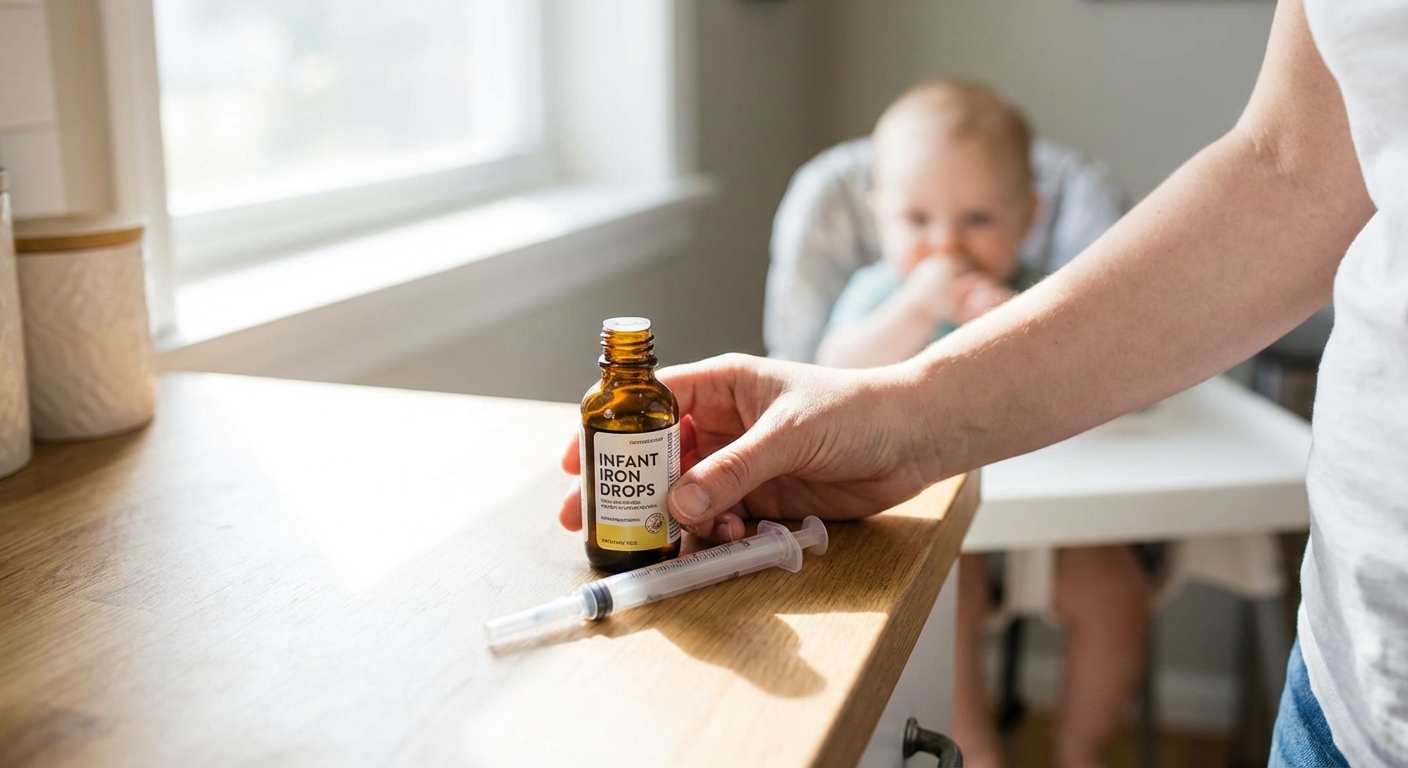
- Iron: iron-fortified formula or iron drops can make stool very dark green or black.
- Digested blood: can appear black and tarry (melena). This is not something to ignore.
Action steps:
- If your baby is on iron and otherwise well, darker stools can be expected.
- If stool is truly tarry, shiny, and jet black and you do not have a clear iron explanation, call your pediatrician the same day.
Go to urgent care or the ER now if: black tarry stool happens with paleness, weakness, vomiting blood, persistent vomiting, belly swelling, or your baby seems very unwell.
Red poop
What it looks like: bright red streaks, red-tinged stool, or occasionally a more maroon color.
First question: Is it really blood?
- Foods: beets, watermelon, red gelatin, fruit punch or juice, tomatoes, and some food dyes can color stool.
- Medicines: antibiotics more commonly cause loose stools, but color changes can happen too.
- Early breastfeeding note: in the first days, swallowed blood (from delivery or from cracked, bleeding nipples) can sometimes show up as red streaks or darker flecks. It still deserves a call so someone can confirm what you’re seeing, but there can be a benign explanation.
Common medical causes of blood in infant stool:
- Anal fissure: a tiny tear from passing a hard stool. Usually a small streak of bright red on the outside of the poop or on the wipe.
- Cow’s milk protein allergy/intolerance: can cause mucus and blood flecks, often with fussiness, eczema, or reflux-like symptoms.
- Infection: can cause diarrhea with blood and fever.
Action steps:
- If you see red and there is no obvious food cause, call your pediatrician the same day.
- If your baby is straining and stools are hard, ask about constipation support and check for fissures.
- Take a photo in good light before you wipe everything away. Gross, yes. Helpful, also yes.
Go to the ER now if:
- Your baby is under 3 months with any blood in stool plus fever or acting ill
- There is a large amount of blood, or repeated bloody stools
- Stools are black and tarry
- Your baby is very sleepy or difficult to wake
- Severe belly pain, swollen belly, or inconsolable crying
- Persistent vomiting, especially bright green (bilious) vomiting
White, gray, or clay-colored poop
What it looks like: very pale, chalky, putty-like stool. Not “light tan,” but truly lacking color.
Most concerning cause: not enough bile getting into the intestines, which can signal a liver or bile duct problem.
Action steps:
- Call your pediatrician urgently today. Do not wait to see if it changes tomorrow.
- Bring a photo if possible and note whether your baby also has yellowing of the skin or eyes (jaundice), dark urine, poor feeding, or slow weight gain.

Brown poop (the “classic”)
What it looks like: tan, light brown, brown, or brown-green.
Most common cause: normal digestion, especially in formula-fed babies or babies eating solids.
Action steps: If your baby seems comfortable and is growing well, brown is generally a non-event, which is the dream.
Orange poop
What it looks like: orange or orange-brown stool.
Most common cause: usually diet. Think beta-carotene foods like carrots, sweet potatoes, squash, and some purees.
Action steps: If baby is acting well, this is typically normal. Call if orange stool is paired with white or clay stools, jaundice, poor feeding, or your baby seems unwell.
What matters more than color
Color is helpful, but it’s only one piece. In triage, these were my top follow-up questions:
- How is baby acting? alertness, comfort, consolability
- Feeding: normal interest and ability to keep feeds down
- Hydration: number of wet diapers, moist mouth, tears
- Stool consistency: formed, soft, watery diarrhea, mucus
- Frequency change: sudden increase can suggest illness; sudden decrease with hard stools can suggest constipation
- Fever: in babies under 3 months, fever is always a same-day medical call
When to call the doctor (use this checklist)
Call the pediatrician today
- White, gray, or clay-colored poop
- Red poop that you cannot clearly link to food dye, especially if there’s mucus or diarrhea
- Black poop after the newborn period if your baby is not on iron, or it looks tarry and sticky
- Persistent diarrhea, or diarrhea with dehydration, blood, fever, or poor feeding
- Signs of dehydration: fewer wet diapers, very dry mouth, sunken soft spot, no tears when crying
Go to urgent care or the ER now
- Baby under 3 months: a rectal temperature of 100.4°F (38°C) or higher is an urgent evaluation (follow your clinic’s guidance, but don’t wait)
- Large amounts of blood in stool or repeated bloody stools with an ill-appearing baby
- Black tarry stool with weakness, paleness, or vomiting blood
- Severe belly swelling, intense pain, or inconsolable crying
- Persistent vomiting, especially bright green (bilious) vomiting
If your gut says “this is not my normal baby,” it counts. You are not overreacting. You’re parenting.
How to get a helpful answer fast
If you do need to call, here’s how to make the conversation quick and productive:
- Take a photo in natural light if you can.
- Note timing: when it started and how many diapers.
- List recent changes: new formula, new foods, vitamins (especially iron), antibiotics.
- Share symptoms: fever, vomiting, diarrhea, fewer wet diapers, rash, poor feeding.
- Tell age: a 2-week-old and a 9-month-old get triaged differently.
Common questions parents ask at 3 AM
Can teething cause diarrhea and poop color changes?
Teething can increase drool and hand-to-mouth germs, which can mildly change stools. But significant diarrhea, fever, or blood should not be blamed on teething alone. If your baby seems sick, call.
Is mucus in baby poop normal?
A small amount can happen with mild irritation or a cold. Lots of mucus, especially with blood, poor weight gain, or persistent diarrhea, deserves a call.
What about “peanut butter” texture?
Soft, peanut butter texture is often normal for formula-fed babies and babies on solids. However, if it thickens into hard, pellet-like stools, that suggests constipation and you should ask your pediatrician about safe options.
My baby strains and turns red, but the poop is soft. Is that constipation?
Not always. Many young babies do a whole dramatic production to coordinate their muscles and have a soft poop. If the stool is soft, this can be normal (often called infant dyschezia) and usually improves with time. Constipation is more about hard, dry, pellet-like stools, or pain with passing stool.
Bottom line
Most baby poop colors are surprisingly normal, especially yellow, tan, brown, orange, and many shades of green. The big “call right away” color is white/gray/clay. Red and black after the newborn period deserve a same-day call unless you have a clear, harmless reason like a red food, swallowed blood in the early days that your clinician has confirmed, or iron.
And if you’re reading this with one hand while holding a sleepy baby in the other, I’m sending you the most practical parenting wish of all: a boring diaper and a long stretch of sleep.