Baby-Proofing Checklist: Room by Room

Sarah Mitchell
Sarah Mitchell is a Registered Pediatric Nurse and a mother of three who has spent over a decade helping families navigate the beautiful, chaotic early years of childhood. She combines evidence-based medical knowledge with real-world parenting experience to offer practical, compassionate advice. At Awesome Parent, Sarah's mission is to help exhausted parents find solutions, trust their instincts, and finally get some sleep.
Baby-proofing can feel like trying to bubble-wrap your entire life. I promise you do not need to turn your home into a padded cell. You just need to handle the highest-risk hazards first, then tighten things up as your baby levels up from rolling to crawling to climbing.
I’m writing this as both a pediatric nurse (former triage, where I heard the same scary stories on repeat) and a mom of three who has watched a baby lick a baseboard with the focus of a tiny scientist. Let’s make your home safer in a way that is realistic and actually doable.
Quick note: This is general home safety information, not medical advice. Follow product instructions and your local building codes. If you have concerns about your child’s safety or development, check in with your pediatrician.
When to start baby-proofing
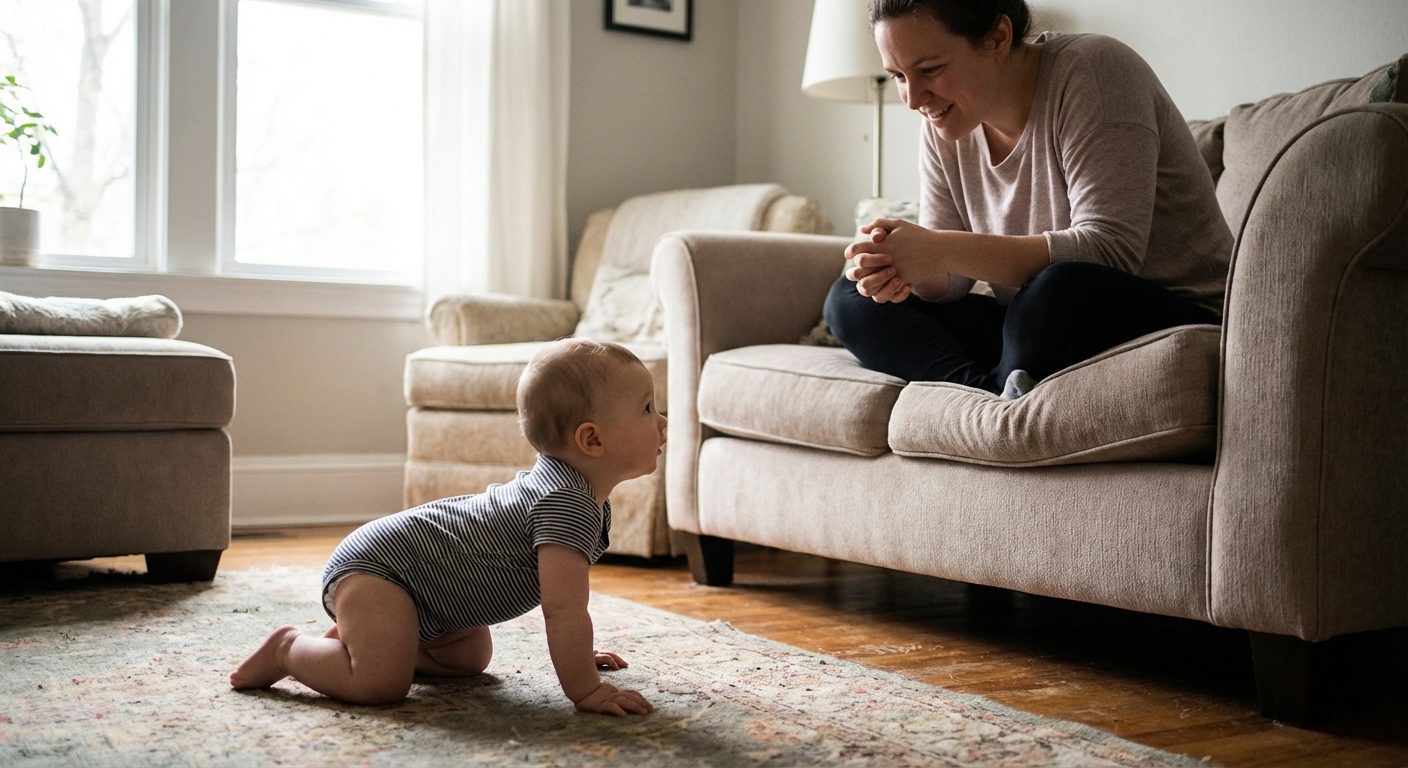
Start the basics by about 4 months or before your baby gets mobile, and aim to have the big stuff done before crawling. Some babies roll early. Some skip crawling and go straight to pulling up and cruising. The theme is not the calendar. It is mobility.
Here’s a simple way to pace it without spiraling.
A quick timeline
- Before rolling: Safe sleep setup, cord safety near sleep spaces, check smoke and carbon monoxide alarms.
- Before crawling: Outlet covers, anchor furniture and TVs, gates, cabinet locks for dangerous areas, choking hazards off the floor.
- Before pulling to stand: Re-check furniture stability, secure blinds cords, add corner guards where needed, revisit low shelves and tables.
- Before climbing (toddler stage): More advanced locks (including doors), move breakables, lock up medications, revisit kitchen and bathroom safety.
My nurse trick: Get down on your hands and knees and do a slow “baby crawl” through each room. If you can reach it, your baby can eventually reach it.
Quick safety priorities
If you do nothing else this week, do these. This is where the biggest risk reduction lives.
- Anchor: TVs, dressers, bookcases, and any top-heavy furniture.
- Gate: Stairs and any no-go rooms.
- Lock up: Medications, cleaning products, alcohol, cannabis products, vape liquids, and sharp tools.
- Button battery and magnet sweep: Remotes, key fobs, flameless candles, musical greeting cards, tiny toys, and fridge magnets that wander.
- Prevent burns: Set water heater temp, add stove safety basics, keep hot drinks out of reach.
- Prevent choking: Clear floors and low surfaces of coins, batteries, small toys, and pet food.
- Prevent drowning: Bathrooms and any water sources, including buckets and kiddie pools.
- Window safety: Keep furniture away from windows and use window guards or stops where needed.
Living room checklist
This is where babies spend a lot of time, which means it is where little hazards add up. Think cords, corners, windows, and anything heavy that can tip.
Must-do
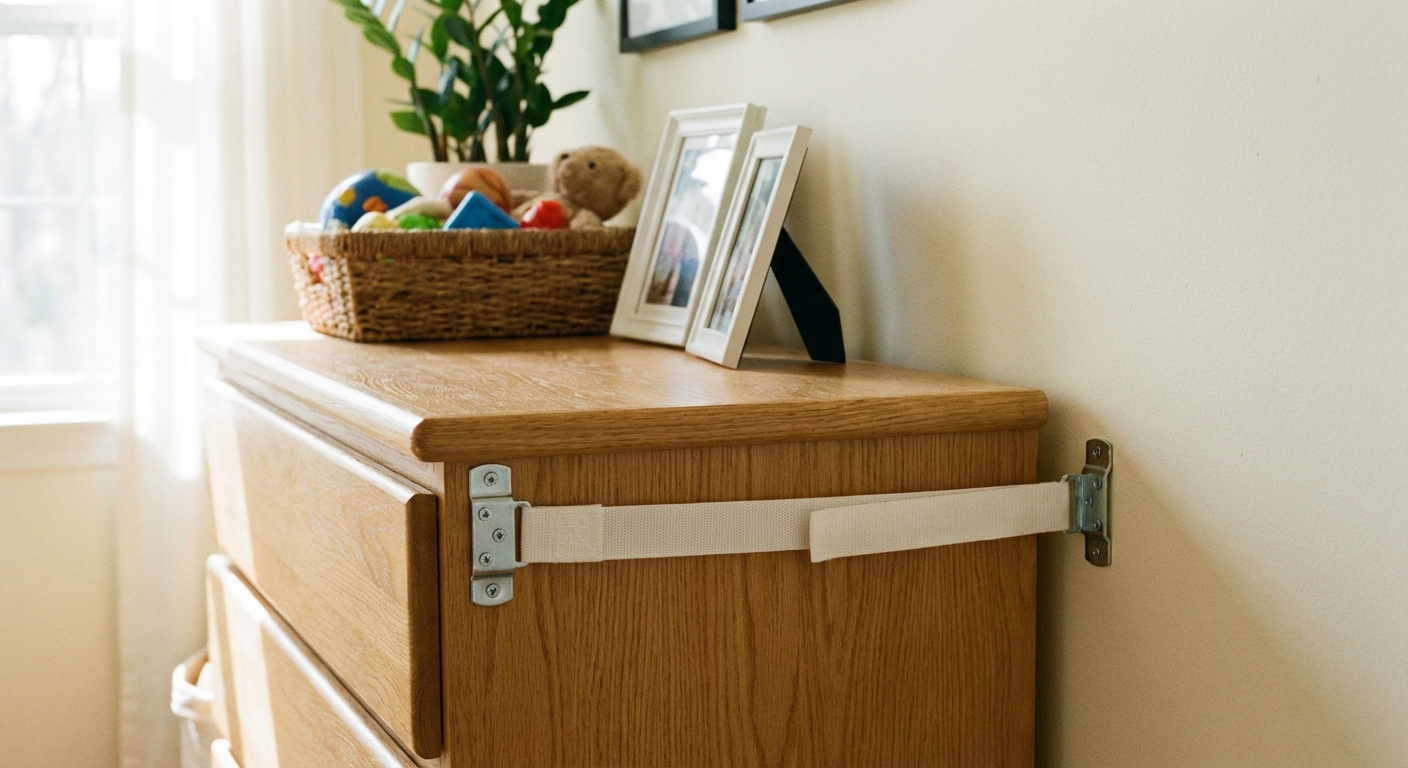
- Anchor TVs and furniture: Secure TVs to the wall or to a stable TV stand, and strap dressers, bookcases, and consoles. Tip-overs are a real emergency we see, and they can happen fast.
- Outlet safety: Use outlet covers that fit snugly. In high-use areas, consider sliding outlet covers or outlet plates with built-in covers so you are not constantly removing plugs.
- Cord management: Tie up lamp cords, phone charger cords, and speaker wires. Keep cords out of reach and avoid dangling loops. This also includes curtain and blind cords.
- Window safety: Keep furniture away from windows. Consider window guards or stops so a window cannot open wide enough for a fall risk.
- Choking sweep: Check under couches, coffee tables, and near entryways for coins, batteries, small toy parts, and earbuds.
Nice-to-do
- Corner and edge guards: Helpful on sharp coffee table corners, especially once your baby is cruising.
- Fireplace safety: Use a secured fireplace gate or screen, and consider padded hearth guards if your hearth has sharp edges.
- Plant check: Move toxic houseplants out of reach and keep potting soil covered (babies love dirt like it is a snack).
Easy-to-miss hazards
- Button batteries in remotes, flameless candles, and key fobs. Store them up high and check battery compartments are screwed shut.
- Magnets (including fridge magnets that make their way into living spaces).
- Heavy decor on low shelves: vases, frames, and anything that can topple.
Kitchen checklist
The kitchen is one of the highest-risk rooms in most homes because it combines heat, sharp objects, glass, chemicals, and choking hazards. The goal is not to lock every cabinet. The goal is to make it hard for your baby to access the dangerous stuff.
Must-do
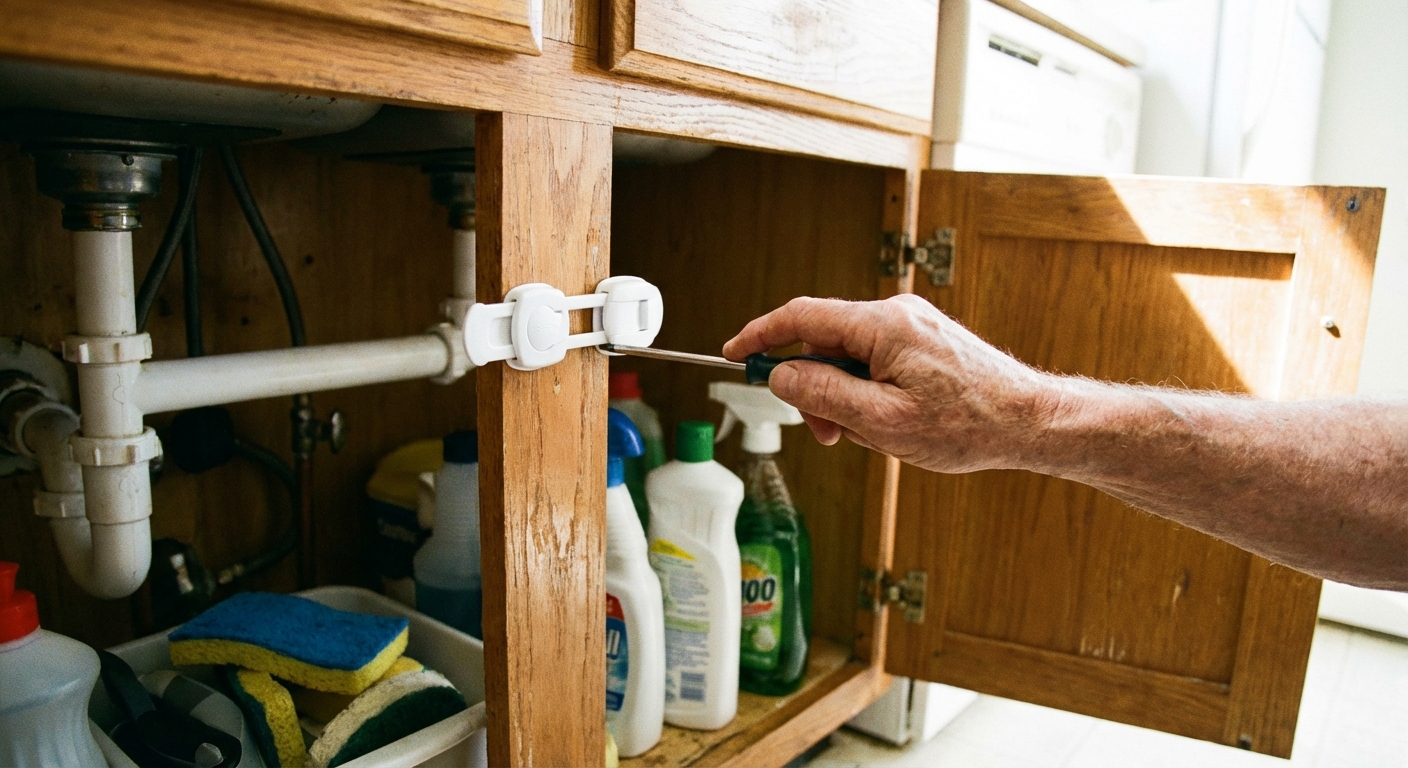
- Cabinet and drawer locks: Prioritize the under-sink cabinet, any cabinet with cleaners, trash bags, dishwasher pods, alcohol, and any drawer with knives or tools. Magnetic locks can be great for a clean look, but simple strap latches work too.
- Stove and oven safety: Use back burners when possible and turn pot handles inward. Consider a stove knob cover if your knobs are front-facing and easy to turn. An oven lock is helpful for curious toddlers.
- Stove guard (if needed): A stove guard can help block little hands from reaching hot cookware on the front edge, especially on ranges that sit flush with counters.
- Choking and food prep: Keep small foods out of reach, and prep them safely once your child is eating. Cut grapes and cherry tomatoes lengthwise, and avoid nuts, popcorn, hard candy, and other high-risk foods for little kids.
- Trash safety: Use a lidded trash can with a child-resistant latch or keep it behind a locked cabinet door. Trash is basically a baby treasure chest.
Nice-to-do
- Appliance cords: Keep blender, kettle, air fryer, and slow cooker cords short and out of reach. Avoid dangling cords where a baby can yank.
- Fridge and freezer locks: Optional for babies, more useful for toddlers who will happily “help” themselves.
- High chair zone: Keep hot drinks away from table edges and never place a hot mug where a baby can grab the handle.
Kitchen reality check
If you only do three things in the kitchen this week: lock under-sink cleaners, secure knives, and address stove safety. You just covered a huge chunk of risk.
Bathroom checklist
Bathrooms are deceptively dangerous because water is involved, and because so many households store medications and cleaning products here. Small amounts of water can be a drowning risk, and common items can be poisonous.
Must-do
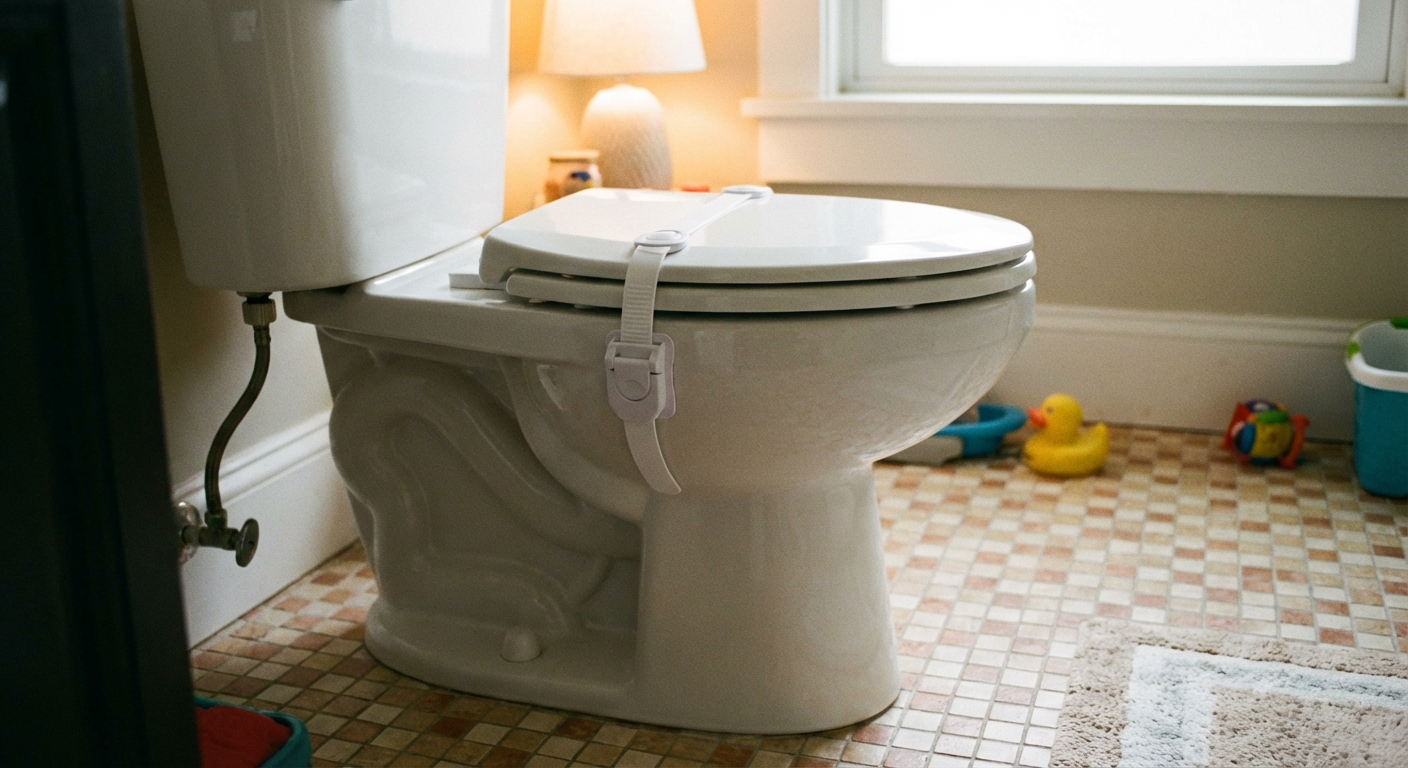
- Toilet lock: Toilet water is not only gross, it is also a drowning hazard. Use a simple toilet lid lock once your baby is mobile.
- Water temperature: Set your water heater to about 120°F (49°C) to reduce scald risk. Test bath water every time with your wrist or elbow and never rely on “it feels fine to me” when you are sleep-deprived.
- Lock up medications: Store all medications, vitamins, and supplements in a locked cabinet, ideally up high. Child-resistant caps are not child-proof.
- Lock up cosmetics and chemicals: Nail polish remover, mouthwash, hair products, bleach cleaners, toilet bowl tabs, and essential oils should be locked away.
- Bathtub safety: Never leave a baby unattended in the tub, even for a moment. Keep bath seats in perspective: they are not a substitute for hands-on supervision.
Nice-to-do
- Non-slip bath mat: Helpful as soon as your baby is sitting in the tub and especially in toddlerhood.
- Cover sharp edges: If you have a vanity with sharp corners, consider corner guards.
- Plunger and toilet brush: Store out of reach or behind a locked door.
If your child gets into medicine or chemicals
Call Poison Control (US): 1-800-222-1222 right away for guidance. If your child is having trouble breathing, is very sleepy, or collapses, call emergency services.
Nursery and bedrooms checklist
We tend to baby-proof the nursery first, which makes sense. The key here is safe sleep, choking hazards, windows, and anything that can fall, tip, or wrap around a neck.
Must-do
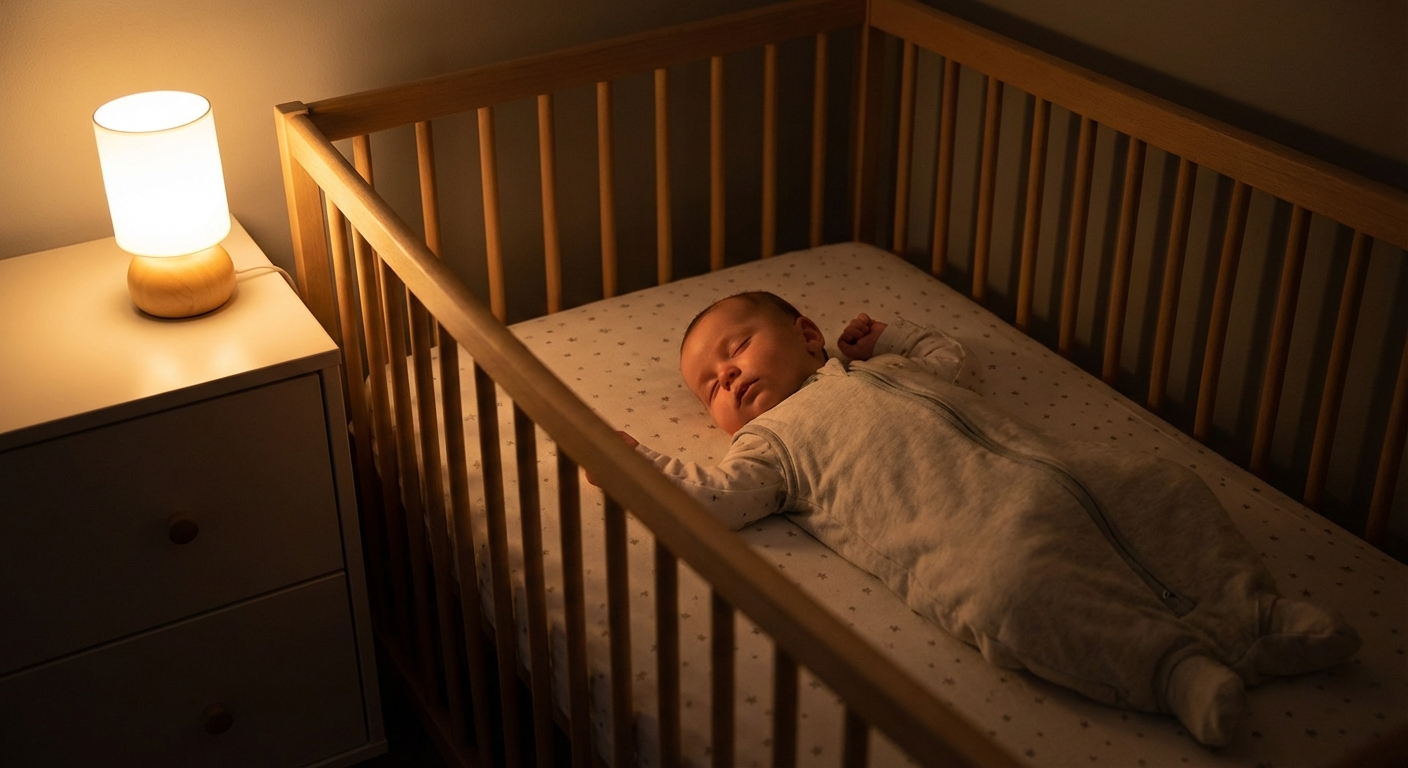
- Safe sleep setup: A firm mattress with a fitted sheet. No pillows, loose blankets, bumpers, or stuffed animals in the crib for babies. If you need warmth, use a wearable sleep sack.
- Crib placement: Keep the crib away from windows, cords, curtain ties, and wall decor that could fall.
- Anchor changing tables and dressers: Any furniture that could tip should be secured. Babies become toddlers and toddlers climb.
- Small object sweep: Pacifier clips, hair ties, coins, older siblings’ toys, and tiny batteries should be out of reach.
- Blind and monitor cords: Keep cords high and tight. Avoid cords hanging down near the crib. Place baby monitors and their cords well out of reach.
- Window safety: Consider window guards or window stops, and keep climbable furniture away from windows.
Nice-to-do
- Door safety: Consider a doorknob cover once your child is a toddler and can wander. For babies, focus on hazards inside the room first.
- Night light: Helpful for safe navigation during night feeds and diaper changes.
A note about teething jewelry
Skip amber necklaces and any jewelry for babies. Choking and strangulation risks are not worth it, even if it is marketed as “natural.”
Stairs and hallways checklist
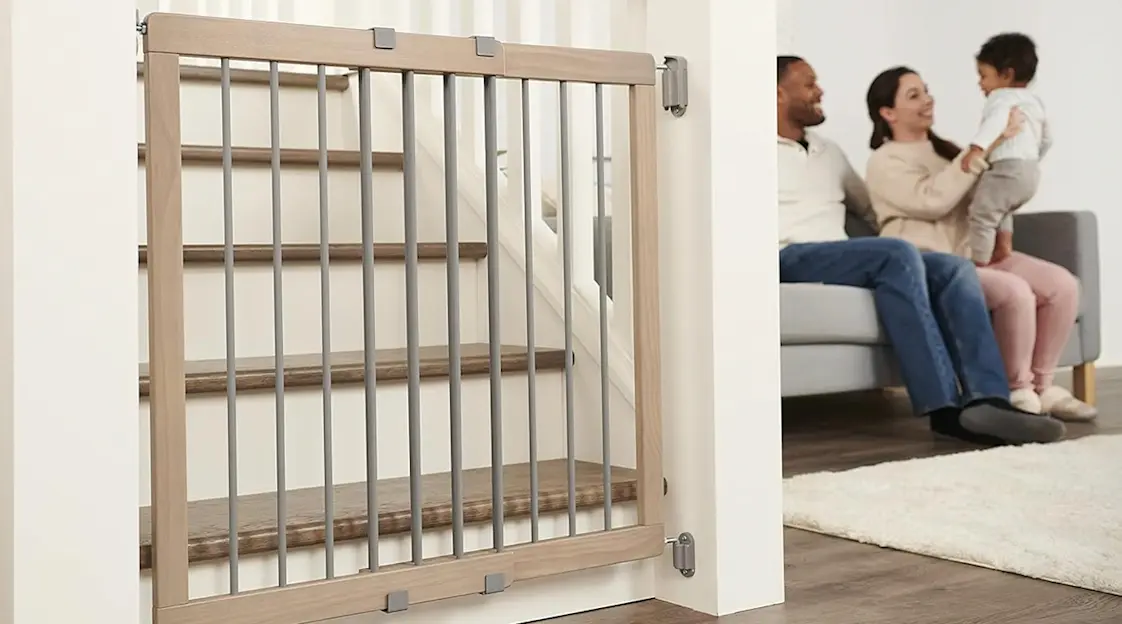
Stairs are a major injury risk once babies start crawling and especially once they start experimenting with speed. The goal is simple: block access and eliminate tripping hazards.
Must-do
- Gates at top and bottom: Use a hardware-mounted gate at the top of stairs. Pressure-mounted gates can shift and are better for doorways or the bottom of stairs.
- Keep stairs clear: No laundry piles, toys, or shoes on steps. This is for you too, because carrying a baby while tripping is nobody’s dream.
- Secure railings: If your balusters have wide gaps, use a railing guard to prevent squeezing through.
- Window safety on landings: If you have a window near a stair landing, keep furniture away from it and consider a window guard or stop.
Nice-to-do
- Door pinch protection: Door pinch guards can help prevent finger injuries in busy hallways.
- Rug grip pads: Secure runners so they do not slide.
Garage and laundry checklist
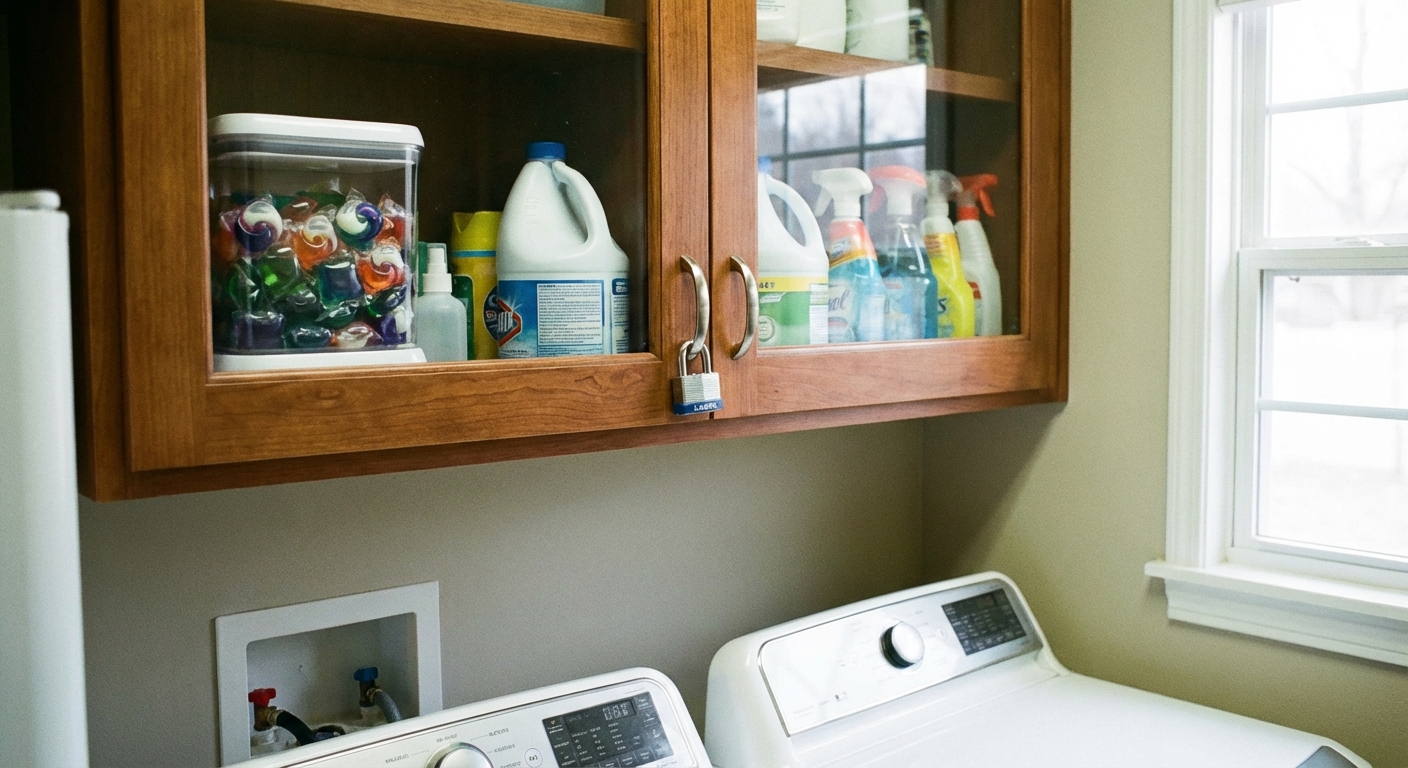
These spaces are usually packed with the exact items you do not want in a baby’s mouth, hands, or eyes. If you can make any door in your home “always locked,” make it this one.
Must-do
- Lock the door or add a gate: Limit access entirely if possible.
- Store chemicals up high and locked: Detergent pods, bleach, windshield washer fluid, pesticides, paint, and automotive products should be locked away.
- Tool safety: Keep tools, nails, screws, and small hardware in closed, latched containers out of reach.
- Battery safety: Store loose batteries locked up, especially button batteries.
- Laundry machines: Keep washer and dryer doors closed. If you have a front-loader, get in the habit of checking the drum before starting a cycle. Toddlers love to climb in and explore.
Nice-to-do
- Water hazards: Empty buckets immediately after use and store them upside down and out of reach.
- Pet products: Lock up flea and tick treatments and keep pet food contained to reduce choking risks.
Outdoor areas checklist
Outside is where we loosen up, which is exactly why it deserves a quick safety scan. Water, heights, and chemicals are the big themes.
Must-do
- Fence and gate checks: Make sure gates latch securely and cannot be pushed open by a toddler.
- Pool and water safety: If you have a pool, use a four-sided fence with a self-latching gate. Empty kiddie pools right after use. Never leave a child unattended near any water source.
- Lock up yard chemicals: Fertilizers, weed killers, and pest products should be secured.
- Grill safety: Keep babies and toddlers away from hot grills and ensure propane tanks are stored safely.
- Balcony safety: Follow local codes, keep furniture away from railings (climbing happens fast), and use a safety guard if railing gaps are wide enough for a small child to slip through.
Nice-to-do
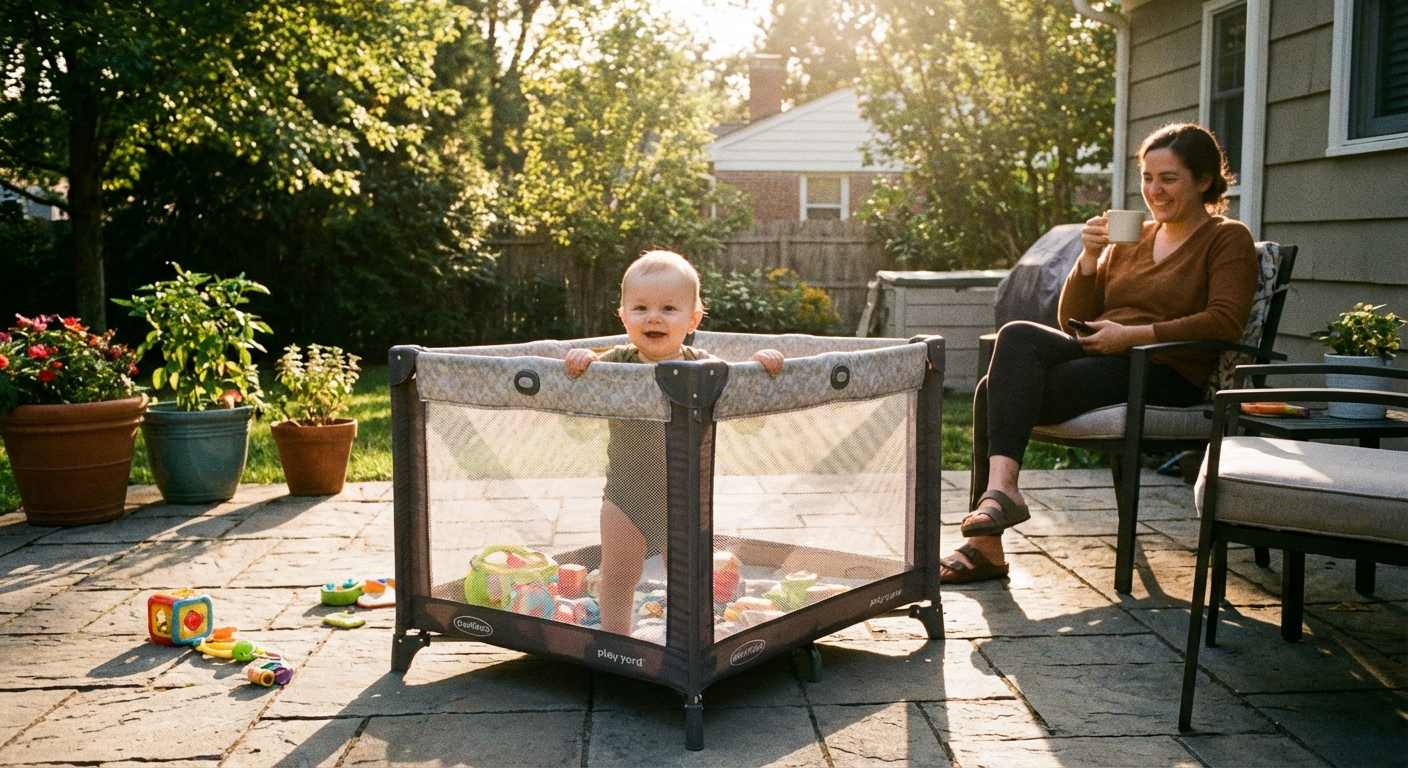
- Safe play zone: A gated play yard or a designated safe area can give you a few minutes to breathe.
- Plant awareness: Identify toxic outdoor plants and mushrooms and remove them from areas your child can reach.
Printable checklist
If you want a printable checklist, here’s an easy way: copy the list below into a notes app or document and print it. Bonus points if you stick it on the fridge and check boxes with a pen. It is weirdly satisfying when you are exhausted.
Whole house
- ☐ TVs and tall furniture anchored
- ☐ Outlet covers installed
- ☐ Cords managed and blinds cords secured
- ☐ Button batteries and small magnets secured
- ☐ Small choking hazards cleared from floors
- ☐ Smoke and carbon monoxide alarms tested
- ☐ Windows made safer (guards or stops as needed, furniture moved away)
- ☐ Emergency numbers saved (Poison Control: 1-800-222-1222)
Living room
- ☐ Furniture anchored and stable
- ☐ Fireplace screened or gated (if applicable)
- ☐ Heavy decor moved off low shelves
Kitchen
- ☐ Under-sink cabinet locked
- ☐ Knife drawer locked or moved out of reach
- ☐ Stove knobs covered or otherwise secured (if needed)
- ☐ Oven locked (especially for toddlers)
- ☐ Trash can secured
Bathroom
- ☐ Toilet lock installed
- ☐ Water heater set to about 120°F (49°C)
- ☐ Medications and vitamins locked up
- ☐ Cleaning products locked up
Nursery/bedrooms
- ☐ Safe sleep space set up (firm mattress, fitted sheet, no loose items)
- ☐ Crib away from windows and cords
- ☐ Dresser/changing table anchored
- ☐ Small items out of reach (hair ties, coins, batteries)
Stairs/hallways
- ☐ Hardware-mounted gate at top of stairs
- ☐ Gate at bottom of stairs (as needed)
- ☐ Stairs kept clear
Garage/laundry
- ☐ Door locked or gated
- ☐ Chemicals locked up and stored high
- ☐ Tools and small hardware secured
- ☐ Buckets emptied and stored safely
Outdoor
- ☐ Gates latch securely
- ☐ Pool/water hazards secured and supervised
- ☐ Yard chemicals locked up
- ☐ Grill area blocked off during use
FAQ
Do I need baby-proofing products for everything?
No. Focus on preventing falls, poisoning, burns, choking, drowning, and tip-overs. If a product solves one of those problems in your home, it is worth considering.
What is the most important step?
If I had to pick one: anchor TVs and heavy furniture. Tip-overs can cause severe injuries, and prevention is straightforward.
How often should I re-check baby-proofing?
Do a quick scan every month during the first year, and any time your baby hits a new milestone (rolling, crawling, pulling to stand, climbing). Babies update their skills. Your house should too.
Is this about car seats too?
This guide is home-focused. Car seat safety matters a lot, but it is its own topic and worth following your seat manual and local recommendations.
One last note
If you’re reading this with one eye open and a baby monitor in your hand, here is your permission slip: you do not have to do it all today. Do the top hazards first, make one room truly safe, and build from there. Safety is not a vibe. It is a series of small, boring steps that add up to you sleeping a little easier.
If you want one extra practical step, keep a small fire extinguisher where you can grab it quickly (often the kitchen), and make sure the adults in the house know how to use it.