Baby Sleeping on Stomach: When It’s Safe and What to Do If Baby Rolls Over

Sarah Mitchell
Sarah Mitchell is a Registered Pediatric Nurse and a mother of three who has spent over a decade helping families navigate the beautiful, chaotic early years of childhood. She combines evidence-based medical knowledge with real-world parenting experience to offer practical, compassionate advice. At Awesome Parent, Sarah's mission is to help exhausted parents find solutions, trust their instincts, and finally get some sleep.
If you are reading this at 2:47 AM with one eye open because your baby just rolled onto their belly in the crib, I have good news: this is a very common panic moment, and in many cases it is not an emergency.
As a pediatric nurse and a mom of three, I have coached a lot of families through this exact milestone. The key is understanding one important difference: you should always place your baby down on their back, but if your baby rolls on their own, it is generally okay to let them sleep in the position they assume as long as the sleep surface is firm, flat, and the crib is bare.

The quick answer
If your baby rolls onto their stomach during sleep, here is what to do right now:
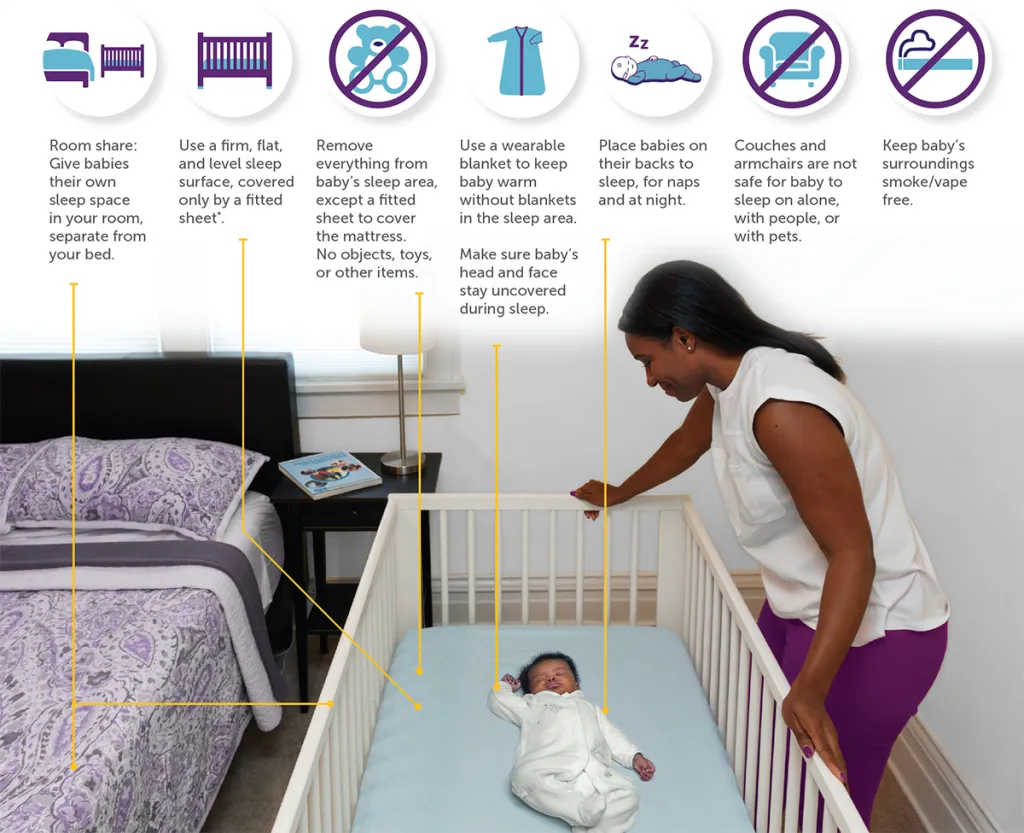
- Check the sleep space. Firm, flat mattress, fitted sheet only. No blankets, pillows, bumpers, stuffed animals, loungers, wedges, or positioners. Use only the mattress made for that crib or bassinet, with no add-ons.
- Make sure baby is not swaddled. If you are using any wrap or product that restricts arm movement and baby is rolling or even trying to roll, stop tonight and switch to arms-free sleepwear.
- If baby rolls on their own, you can usually let them stay. Keep starting sleep on the back, and keep the crib bare on a firm, flat surface.
- If baby is face-down and cannot lift or turn their head, reposition. Gently roll them back onto their back. If they are not stuck, keep placing them on their back for every sleep and bring it up with your pediatrician. You do not need to hover and flip them repeatedly all night.
If you notice breathing trouble, baby seems weak or unusually floppy, their color looks off (blue or very pale), or you cannot wake them easily, trust your gut and seek emergency help right away.
What the AAP says
The American Academy of Pediatrics (AAP) safe sleep guidance is clear on one point: always place babies on their backs for every sleep, including naps, until they are 1 year old.
The AAP also addresses the reality of rolling. If a baby can roll over on their own, you should still start them on their back, but you generally do not need to keep turning them back, as long as their sleep environment is safe (firm, flat, and free of soft bedding and other items).
Think of it like seatbelts. You cannot control every bump in the road, but you can control whether the car seat is installed correctly.
For reference: AAP safe sleep recommendations are summarized for parents on HealthyChildren.org, and detailed in the AAP policy statement (updated guidance published in 2022).
When tummy sleep is OK
Most babies start rolling somewhere around 3 to 6 months (some earlier, some later). “Safe” depends less on age and more on skills and setup.
In general, you can let baby stay on their stomach if:
- You placed them on their back to start sleep.
- They rolled there on their own (no positioning devices, wedges, or propping).
- They can roll both ways consistently during awake time.
- They are in arms-free sleepwear (not swaddled, not restricted).
- The crib or bassinet is bare and uses a firm, flat mattress with only a fitted sheet.
Reposition and ask your pediatrician if:
- Baby is not yet rolling both ways and ends up stuck face-down or cannot lift and turn their head.
- Baby was placed on their stomach to sleep (instead of rolling independently).
- Baby is swaddled or in any product that restricts the arms and they are rolling or attempting to roll.
- Baby has a medical condition affecting airway, tone, or breathing and you have not been given specific sleep instructions.
One more reassuring note: when a baby rolls themselves, it often means they are gaining the strength and coordination to move their head and reposition. That said, it is not a guarantee. This is why the basics matter so much: a firm, flat mattress and a bare sleep space, because soft items and soft surfaces increase risk even for strong babies.
Placed on tummy vs rolling
This is the heart of the confusion.
Placing baby on their stomach
The AAP recommends against tummy sleeping when you are the one placing baby down that way, especially in the first year. That recommendation exists because young babies can have a harder time moving their head to keep their airway clear, and soft bedding or extra items raise risk significantly.
Baby rolling onto their stomach
If a baby rolls there on their own, you still start every sleep on the back, but you typically do not need to be on flip duty all night if they can roll both ways and the sleep space is safe.
Safer setup for rollers
If your baby has entered the “I only sleep face-down like a tiny skydiver” phase, you will sleep better if you do a quick safe-sleep reset.
Do this tonight
- Use a firm, flat sleep surface with a tight fitted sheet. No pillow-top add-ons, no memory foam toppers, no inclined products.
- Use the correct mattress only. Use only the mattress designed for your crib, bassinet, or play yard. No aftermarket inserts or “comfort” add-ons.
- Keep the crib totally bare. No blankets, no plushies, no bumpers, no positioners.
- Dress for warmth, not bedding. Use footed pajamas or a wearable blanket (sleep sack). If you are wondering whether they are cold, feel their chest or back, not their hands.
- Stop swaddling when rolling starts. Avoid any product that restricts the arms once rolling begins. Transition to arms-free sleepwear.
- Follow your sleep product limits. Discontinue bassinet use once baby meets the manufacturer’s limits (often rolling, pushing up on hands and knees, or weight and height limits) and move to a crib or play yard with a firm, flat surface.
- Offer a pacifier at sleep if baby takes one. If it falls out, you do not have to replace it repeatedly.
- Consider room-sharing (not bed-sharing) for at least the first 6 months, ideally up to 1 year, per AAP guidance.
One more note for the “they fell asleep in the car seat” moments: car seats, swings, bouncers, and similar sitting products are not recommended for routine sleep. If your baby falls asleep there, move them to a firm, flat sleep space as soon as you can safely do so.

If baby cannot roll back
This happens a lot in the early rolling days. Many babies learn back-to-tummy first, then tummy-to-back later.
If your baby rolls onto their stomach and seems stuck, you can gently roll them back onto their back. Then keep placing them on their back at the start of sleep. You do not have to spend the whole night hovering, but do make sure the sleep space is as safe as possible while they build the skill.
Practice in the day
- More tummy time, little and often. Even a few minutes at a time adds up.
- Practice rolling both directions during play, using a toy to encourage turning the head and shoulders.
- Give lots of floor time on a safe mat. (This is one of the reasons babies often roll later when they spend lots of time in swings, bouncers, and seats.)
Most babies move through this “stuck on my tummy” stage quickly, especially when they get stronger and realize they can push, pivot, and roll out of it.
Swaddling and rolling
If your baby is showing signs of rolling, stop swaddling. The safety issue is any wrap or product that restricts arm movement once rolling begins, because it can limit a baby’s ability to reposition.
What to use instead:
- Sleep sack (wearable blanket)
- Footed pajamas
- Layered clothing if your home is cool, following safe sleep clothing guidance from your pediatrician
A quick word on “transition swaddles” and “arms-out swaddles”: some products are fine if they truly keep arms free and are used exactly as the manufacturer instructs. If the product limits arm movement in any way, treat it like a swaddle and stop using it once rolling starts.
If the transition is rough for a few nights, that is normal. I promise your baby will not be the first tiny human to complain loudly about having access to their hands.
Why they sleep better
Yes, many babies sleep more deeply on their stomach once they can roll there. It can feel like they finally found the “right setting” for their body.
Back-sleeping is recommended early on because it is strongly associated with a lower risk of SIDS. One theory is that back-sleeping supports easier arousal. Regardless of the mechanism, the goal is not to force a tummy sleeper to stay on their back forever. The goal is to start on the back and keep the sleep space clear, firm, and flat so that when they roll, they are as safe as possible.
3 AM questions
Do I need to flip my baby back every time?
If baby rolls on their own, can roll both ways, is in arms-free sleepwear, and the sleep space is firm, flat, and bare, you generally do not need to keep turning them back. Keep placing them on their back at the beginning of sleep.
What if baby presses their face into the mattress?
On a firm crib mattress with a fitted sheet only, babies who can roll will often turn their head and reposition. It is not a safety guarantee, which is why the firmness and lack of soft items matters so much. Soft surfaces and loose bedding increase risk, even for babies who seem strong.
If your baby cannot lift or turn their head well, cannot roll both ways, or you see them repeatedly stuck face-down, reposition them and talk with your pediatrician.
Can I use a wedge or positioner?
No. Positioners and wedges are not recommended for sleep. A bare, flat, firm surface is the safest setup.
What about reflux?
It is understandable to want to help reflux, but tummy sleeping and inclined sleepers are not recommended for routine sleep. Most babies with reflux can still sleep safely on their back. If reflux is severe, causing poor weight gain, choking episodes, or breathing concerns, talk with your clinician for individualized guidance.
What about naps or daycare?
The rule stays the same for every caregiver: always place baby on their back for naps and nighttime sleep. If baby rolls on their own, follow the same guidance and keep the sleep space firm, flat, and bare.
When to call the doctor
Bring this up with your pediatrician (or call an after-hours nurse line if you are worried) if:
- Your baby rolled very early and seems to have poor head control or low tone.
- You notice noisy breathing that seems worse on the stomach, pauses in breathing, or persistent color changes.
- Your baby has been diagnosed with a condition that affects breathing, muscle tone, or airway anatomy.
- You are unsure whether your sleep product meets current safety standards, or you are not sure when to stop using a bassinet.
And as always, if your baby is hard to wake, struggling to breathe, or turning blue, seek emergency care immediately.
Remember tonight
- Always place baby on their back for every sleep.
- If they roll on their own, you can usually let them stay in the position they assume if the sleep space is firm, flat, and bare.
- Stop swaddling once rolling starts.
- Keep the sleep space bare and firm.
If you want one simple next step: stand over the crib for ten seconds and ask, “If my baby presses their face into anything in here, what is it?” The safest answer is: a firm mattress with a fitted sheet.