Baby Won’t Take a Bottle: Tips for Bottle Refusal

Sarah Mitchell
Sarah Mitchell is a Registered Pediatric Nurse and a mother of three who has spent over a decade helping families navigate the beautiful, chaotic early years of childhood. She combines evidence-based medical knowledge with real-world parenting experience to offer practical, compassionate advice. At Awesome Parent, Sarah's mission is to help exhausted parents find solutions, trust their instincts, and finally get some sleep.
If your breastfed baby is acting like the bottle is personally offensive, you are not alone. Bottle refusal is a very common (and very stressful) feeding concern, especially right before a parent returns to work. The good news: many babies can learn to take a bottle, and it often comes down to a few tweakable details like timing, flow, and who is holding the bottle.
Quick reassurance: a baby refusing a bottle is usually about preference and practice, not about you doing anything “wrong.” Let’s walk through why it happens and what tends to work in real life.

Why breastfed babies refuse bottles
Babies are tiny creatures of habit. Breastfeeding is warm, predictable, and smells like you. A bottle is… different. Here are the most common reasons:
Flow preference (too fast or too slow)
This is the big one. Some babies reject a bottle because the milk flows too quickly and feels overwhelming. Others get frustrated because the flow is slower than what they’re used to at the breast (especially if you have a fast letdown).
Timing (too hungry, too full, or too tired)
A very hungry baby often has zero patience for “learning” a new feeding method. A very sleepy baby can also be less flexible. The sweet spot is usually when baby is calm and slightly hungry, not frantic.
They want you, not just milk
Comfort is part of breastfeeding. If you are the one offering the bottle, some babies get upset because they can smell you and expect the breast.
Oral tension or latch challenges
Tongue-tie, lip-tie, oral motor tension, reflux discomfort, or even nasal congestion can make bottle feeding feel difficult. If feeding has always been a struggle (breast and bottle), it is worth a closer look with your pediatrician or an IBCLC.
Flow confusion vs nipple confusion
Parents hear “nipple confusion” a lot. In practice, many bottle struggles are about flow and feeding style. When bottle feeding is paced and slow, many breastfed babies handle the switch better. (And yes, some babies really do have strong preferences about nipple shape too.)
What to try first
If you only have the energy for a short plan, start here. These are the strategies that help most families the fastest.
1) Use paced bottle feeding
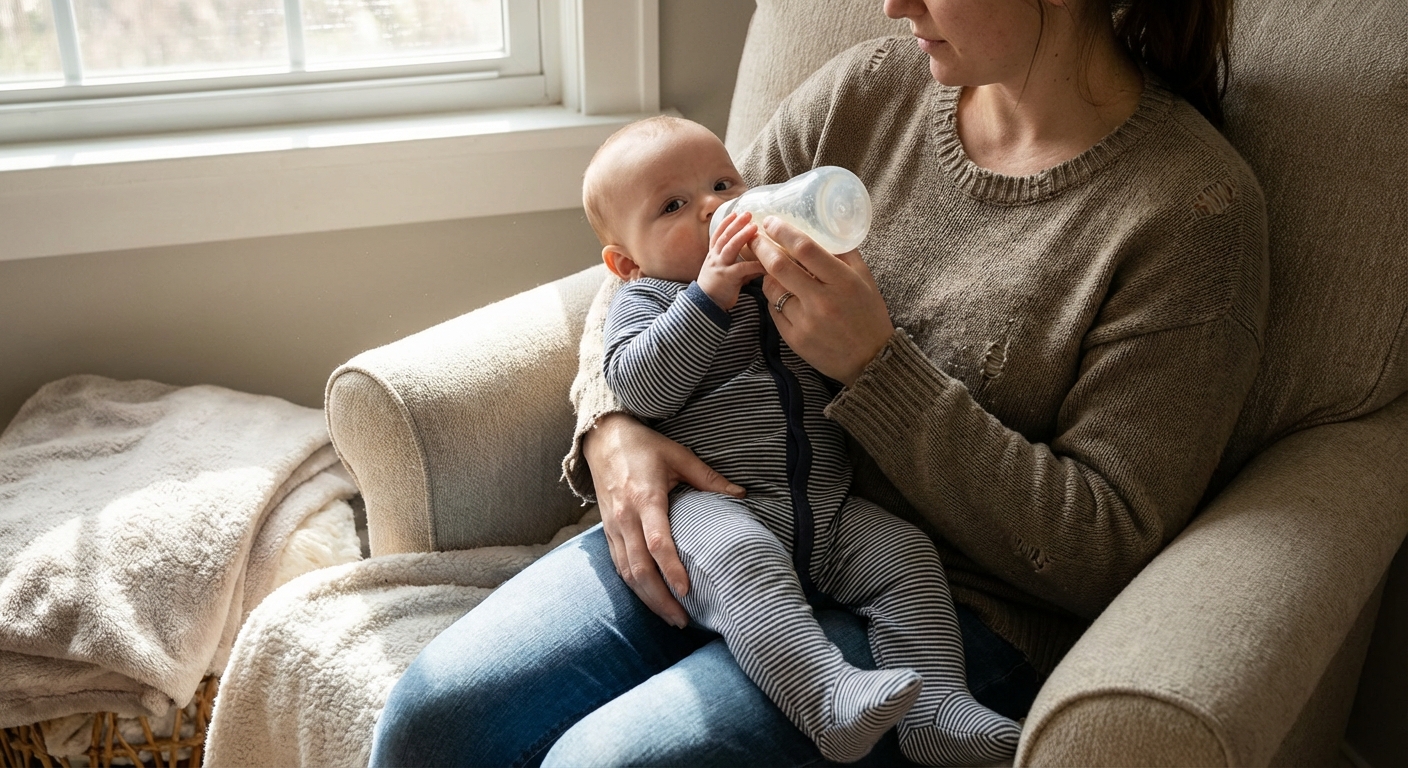
Paced feeding mimics breastfeeding. It slows the flow and lets baby control the pace, which reduces coughing, gulping, and “I hate this” drama.
- Hold baby more upright (not flat on their back).
- Hold the bottle more horizontal so milk does not pour in. Aim to keep the nipple filled enough to reduce air swallowing, while still keeping the flow gentle.
- Tickle baby’s upper lip with the nipple and let them open wide, like a breast latch.
- Offer pauses every 30 to 60 seconds, after a few swallows, or whenever baby’s cues say “whoa” (eyes widening, fingers splaying, milk leaking, frantic sucking).
- Stop when baby shows “I’m done” cues (turning away, relaxed hands, slowing down, falling asleep).
One bonus: paced feeding can reduce overfeeding and spit-up, which can make future bottle attempts easier.

2) Have someone else offer the bottle
If baby associates you with breastfeeding, they may refuse a bottle from you on principle. Try having a partner, grandparent, or caregiver offer the bottle while you are in another room or step outside briefly.
- Baby may do better if you are out of sight (and, practically speaking, not right next to them).
- Caregiver should stay calm and unhurried. Babies are excellent at detecting “please just take it!” energy.
3) Try different positions
Some breastfed babies accept a bottle more readily in positions that feel less like a “replacement breast” and more like a normal cuddle.
- Side-lying (baby on their side, caregiver facing them).
- Facing outward on the caregiver’s lap (great for curious babies who hate being cradled).
- Walking and feeding (gentle motion can help).
- In a baby carrier (some babies take a bottle surprisingly well while snug).
If baby is arching, crying hard, or pushing the bottle away, take a break and try again later. Repeated battles can turn the bottle into a long-term enemy.
4) Try different milk temperatures
Many breastfed babies prefer milk that is closer to body temperature.
- Try warm (not hot) expressed milk first.
- If you have high lipase milk (soapy smell after storage), baby may prefer it fresh. Some families also have luck mixing fresh with stored milk. Another option is scalding milk before storage, but ask an IBCLC first since it can reduce some protective factors.
5) Pick a calm moment
Plan a low-pressure practice session once a day for a few days.
- Try 30 to 60 minutes after a breastfeed when baby is not starving.
- Avoid introducing the bottle for the first time when baby is overtired or already crying.
- Keep sessions short. If baby refuses after a few minutes, stop and try again later.
Best bottle and nipple types
There is no single “magic bottle,” but there are features that tend to work better for breastfed babies.
What to look for
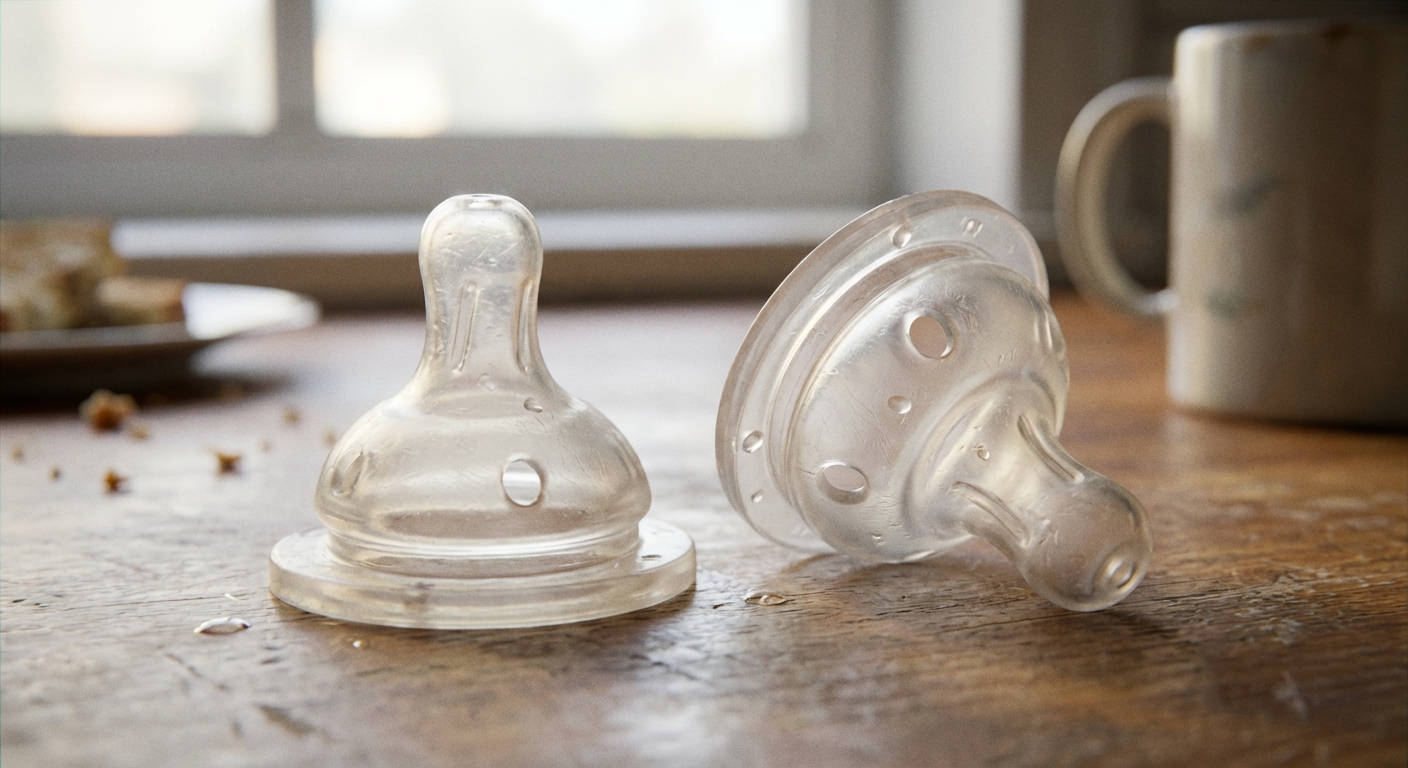
- Slow-flow nipple (often labeled newborn or size 0 or 1). Many breastfed babies do best with the slowest flow, even if they are older.
- Gradual slope nipple that supports a deep, wide latch (rather than an ultra-wide, mound-like nipple that can encourage tip-latching for some babies).
- Soft, flexible nipple that allows a deeper latch.
- Vented/anti-colic design if baby is gulping air or getting gassy.
Flow matters more than brand
If baby is gagging, clicking, leaking milk, coughing, or finishing a bottle very quickly, the flow may be too fast. If baby is collapsing the nipple, sucking hard, or giving up quickly, the flow may be too slow.
A quick flow check
- “Slow flow” labels are not standardized across brands, so treat them as a starting point, not a promise.
- Watch your baby, not the packaging. A good match looks like steady drinking with breathing breaks, minimal leaking, and a relaxed face.
A practical starting point
If you are overwhelmed by choices, start with one bottle designed for breastfed babies and a slow-flow nipple, then change one variable at a time (nipple flow first, then nipple shape, then bottle style).
Tip from the clinic: buy single bottles before investing in a full set. Your baby gets a vote here.
How long does refusal last?
It depends on your baby’s age, temperament, and how consistently they get low-pressure practice. Some babies accept a bottle in a day or two. Others take a couple of weeks.
- Under 8 weeks: often easier to introduce, but not always.
- 3 to 6 months: a common window where many parents report new or stronger bottle refusal, especially if bottles were not offered regularly.
- Older babies: may do better skipping straight to a cup approach (more on that below).
If you have a return-to-work deadline, start practicing as soon as you can, even if it is just a small bottle every few days to keep the skill familiar.
Daycare bottles: how much?
This is the part nobody tells you until you are packing bottles at midnight.
- Many breastfed babies take 1 to 1.5 oz (30 to 45 mL) per hour away from you, but there is a wide normal range.
- Some babies do “reverse cycling,” meaning they take smaller bottles while separated and nurse more when reunited. Annoying, but common.
- Ask childcare to use paced feeding and to avoid pushing baby to finish a bottle. We want “calm and steady,” not “chug and crash.”
If you are unsure what to send, your pediatrician or an IBCLC can help you estimate based on weight, age, and feeding patterns.
When to try cup feeding
If your baby is older, strongly anti-bottle, or you need another option for short separations, cup feeding can be a lifesaver.
Good candidates
- Babies around 4 to 6 months and up who can sit with support and have good head control.
- Babies who will sip from a small open cup or a straw cup with help.
- Families who want to avoid buying more bottles and nipples.
Note: Cup feeding can be used earlier in certain situations, but for most families at home, it is easiest and safest once baby has solid head control and you can do it slowly with close supervision.
Which cup?
- Open cup: small, sturdy cup with a thin rim is easiest to control.
- Straw cup: often works well for older babies and can be introduced with caregiver support.
- Sippy cups: fine for some babies, but many lactation specialists prefer straw or open cups for oral development when possible.
Safety note: Cup feeding should be slow and supervised. Milk should be offered at the lip and allowed to be lapped or sipped, not poured into the mouth.

Milk handling basics
If you are doing lots of practice attempts, milk handling comes up fast. A few basics that prevent both waste and misery:
- Warm safely: use a bowl of warm water or a bottle warmer. Do not microwave (hot spots are real).
- Swirl, do not shake if you can. Shaking is not “dangerous,” but swirling is gentler and usually mixes the fat back in just fine.
- Once baby has started a bottle, use it within about 2 hours (common public health guidance). When in doubt, follow your pediatrician’s or childcare center’s policy.
What not to do
- Do not force the bottle into baby’s mouth. It can create a negative association fast.
- Do not increase nipple flow to “get it over with” unless you have clear signs the flow is too slow. Too-fast flow often backfires.
- Do not wait until the last minute before childcare starts. Practice is easier when you are not in a time crunch.
- Do not assume refusal means baby will starve in a safe childcare setting. Many babies take a bottle better from a caregiver once parents are not present, and they often make up calories by nursing more when reunited.
Troubleshooting
Baby chews the nipple and cries
- Try a slower flow and paced feeding.
- Offer when baby is calm, not extremely hungry.
- Try a different nipple shape, especially a gradual slope style that supports a deeper latch.
Baby takes 1 ounce then refuses
- Pause, burp, and reset. Many babies need breaks.
- Check temperature and try a slightly warmer bottle.
- Try feeding in a quieter, dimmer space.
Baby gulps, coughs, or milk leaks out
- Slow the flow and use paced feeding.
- Hold baby more upright and keep bottle more horizontal.
- If this is frequent or scary, ask your pediatrician about reflux and consider a feeding evaluation (SLP/OT) to assess swallow safety.
Baby takes a bottle some days but not others
- Look for patterns: time of day, overtiredness, growth spurts, congestion.
- Keep practice consistent, but keep it low-pressure.
When to call the pediatrician
Most bottle refusal is common and fixable. But please reach out for help if you notice any of the following:
- Fewer wet diapers than usual, dark urine, or signs of dehydration (dry mouth, no tears, sunken soft spot).
- Poor weight gain or your baby seems consistently lethargic.
- Choking, persistent coughing, or breathing changes during feeds.
- Feeding is painful for you or baby seems in distress with feeds.
- Sudden refusal of both breast and bottle, especially with fever or illness symptoms.
An IBCLC can help with supply, bottle strategy, and suspected high lipase. A feeding therapist (SLP/OT) can help if there are oral motor concerns, persistent gagging, frequent coughing, or suspected tethered oral tissues.
Protect breastfeeding
If your goal is “bottle for childcare, breast when we’re together,” you can absolutely support both.
- Use paced feeding and a slow-flow nipple so bottles do not become the fast-food option.
- Keep breastfeeding on demand when you are together, especially during the transition back to work.
- If you are pumping, aim for a schedule that matches bottle feeds as closely as your life allows.
7-day practice plan
If you like having a plan that does not require a PhD in baby behavior, here is one:
- Days 1 to 2: 1 calm practice session daily. Someone else offers 0.5 to 1 oz using paced feeding.
- Days 3 to 4: Try a different position and a different temperature if needed. Keep volume small and positive.
- Days 5 to 6: Aim for 1 to 2 oz once daily. Keep breaks frequent.
- Day 7: Try one practice session at the time of day the bottle will usually be offered in childcare.
If baby refuses on any day, that is not failure. It is information. Adjust one variable and try again.
My triage-nurse motto: we do not need “perfect,” we need “repeatable.” Small, calm practice beats one big stressful showdown every time.
Bottom line
Bottle refusal is common, especially for breastfed babies. In many cases, the winning combination is slow flow + paced feeding + good timing + a different caregiver. If bottles continue to be a hard no, cup feeding can be a perfectly reasonable backup plan, especially for older babies.
You are not behind. You are not failing. You are teaching a new skill, and babies are allowed to have opinions about new skills.