A calm, kid-safe plan to confirm bed bugs, isolate the bed, hot-dry and seal correctly, use steam and encasements, prevent spread, and decide when profession...
Bed Bug Bites on Kids: How to Spot Them

Sarah Mitchell
Sarah Mitchell is a Registered Pediatric Nurse and a mother of three who has spent over a decade helping families navigate the beautiful, chaotic early years of childhood. She combines evidence-based medical knowledge with real-world parenting experience to offer practical, compassionate advice. At Awesome Parent, Sarah's mission is to help exhausted parents find solutions, trust their instincts, and finally get some sleep.
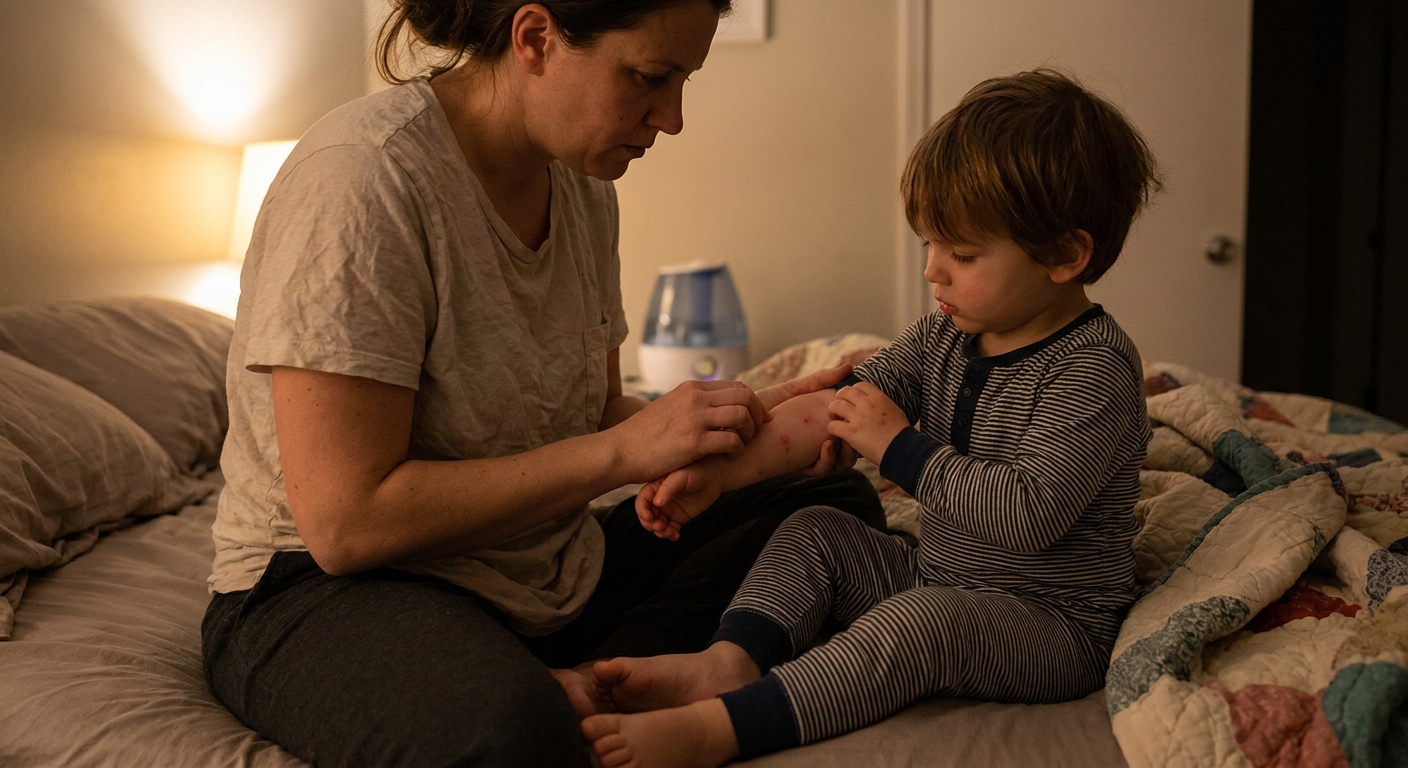
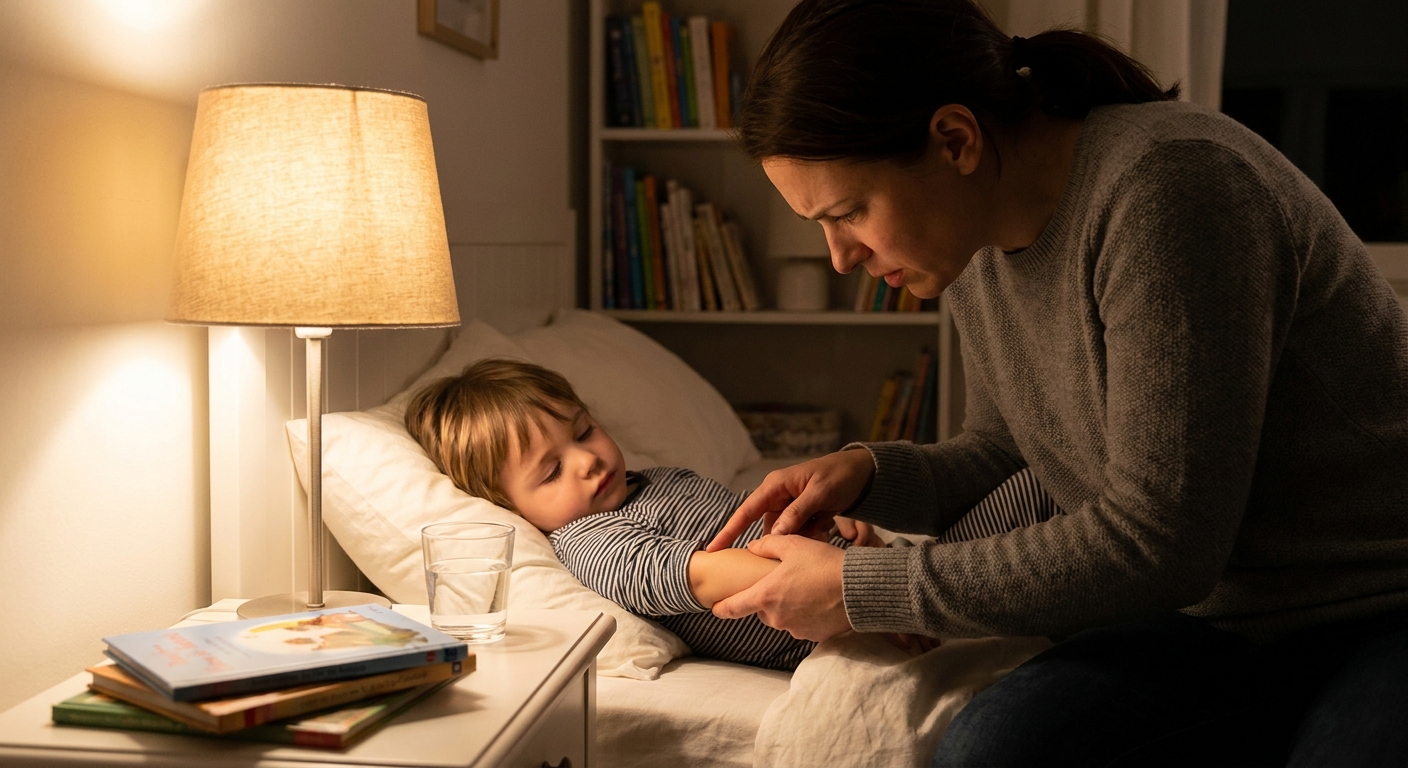
If you’re staring at your child’s skin at 2 AM wondering, “Are these bed bug bites or just another random kid rash?” you are not alone. I did pediatric triage for years, and this exact question came up constantly, especially after travel, sleepovers, or a sudden run of mysterious morning bumps.
Here’s the calming truth: most bite-like rashes in kids are not dangerous. The goal is to (1) identify patterns that suggest bed bugs, (2) treat the itch so your child can sleep, and (3) take smart, non-panicky steps at home.
Quick note: This is general education, not a diagnosis. If you’re worried or your child looks unwell, trust your gut and call your child’s clinician.
What bed bug bites look like on kids
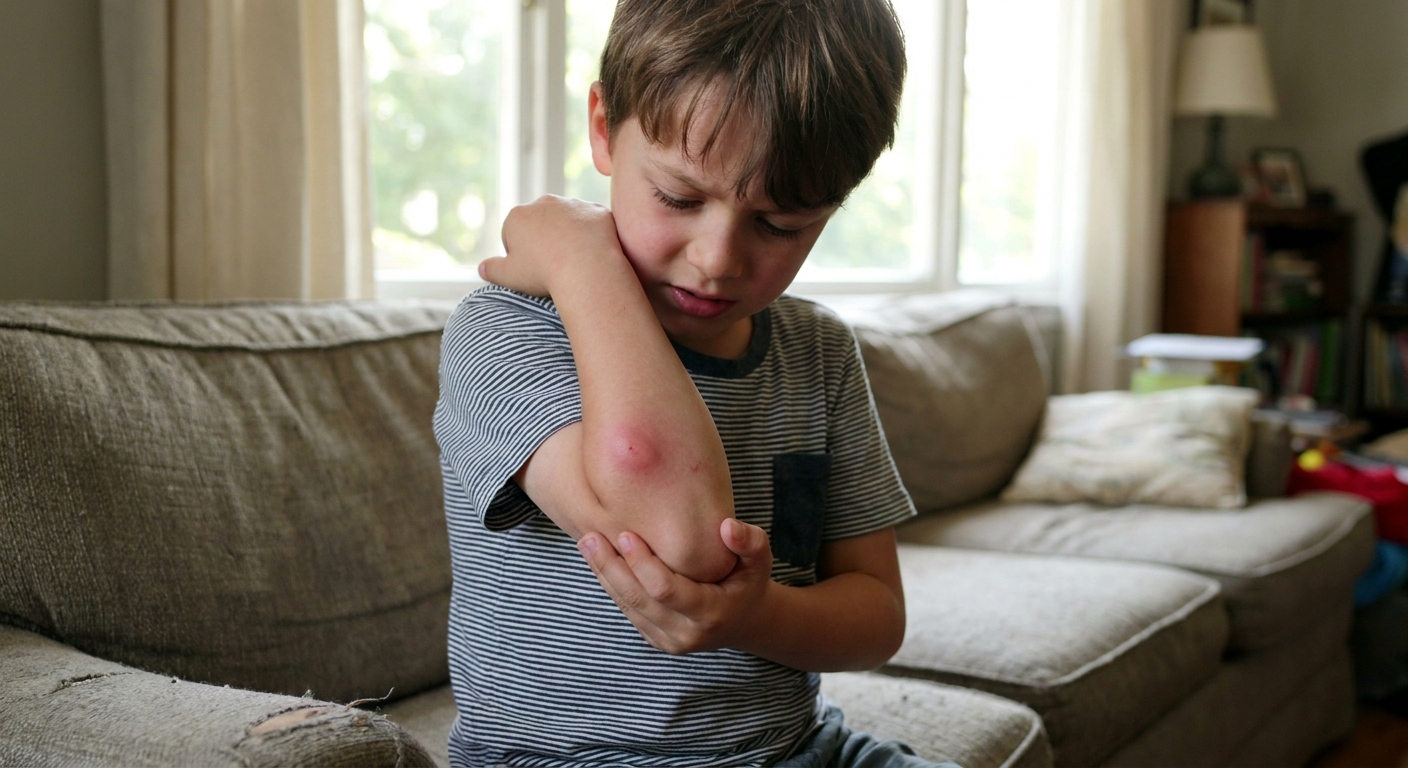
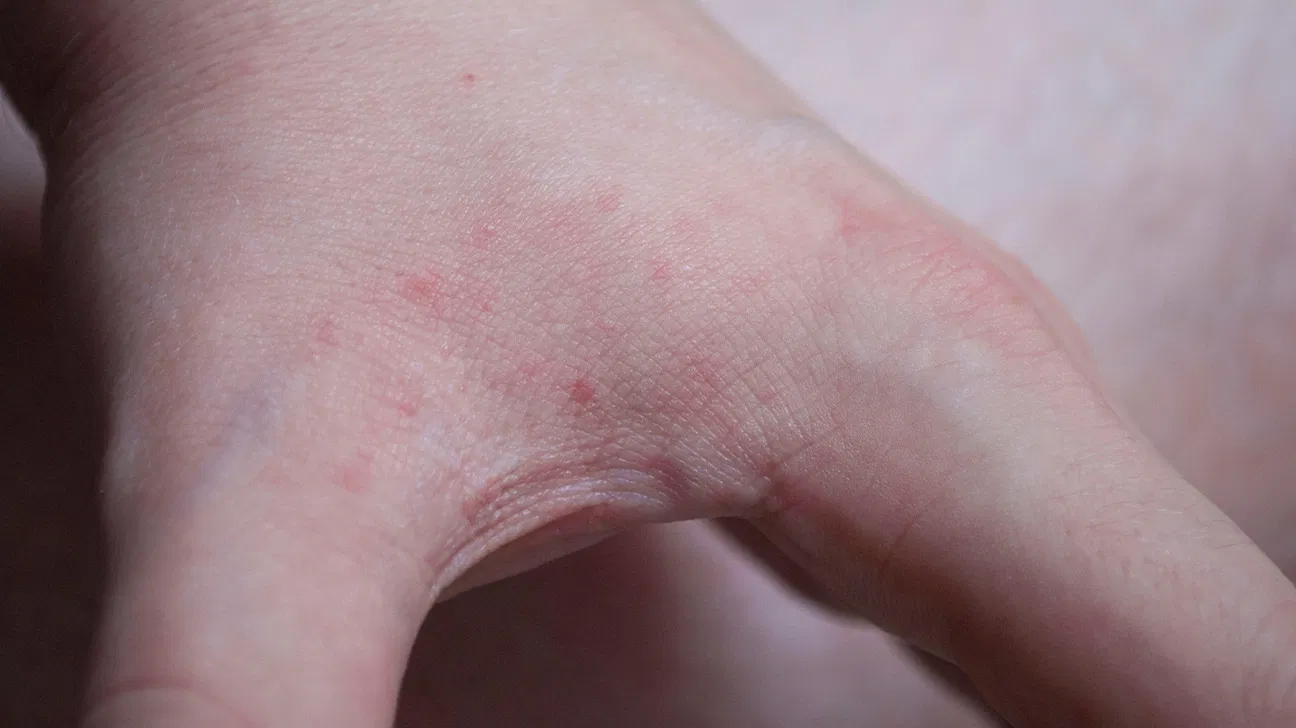
Bed bug bites can look different from child to child. Some kids barely react, while others get big, puffy welts. That said, a few classic clues show up often.
Common patterns
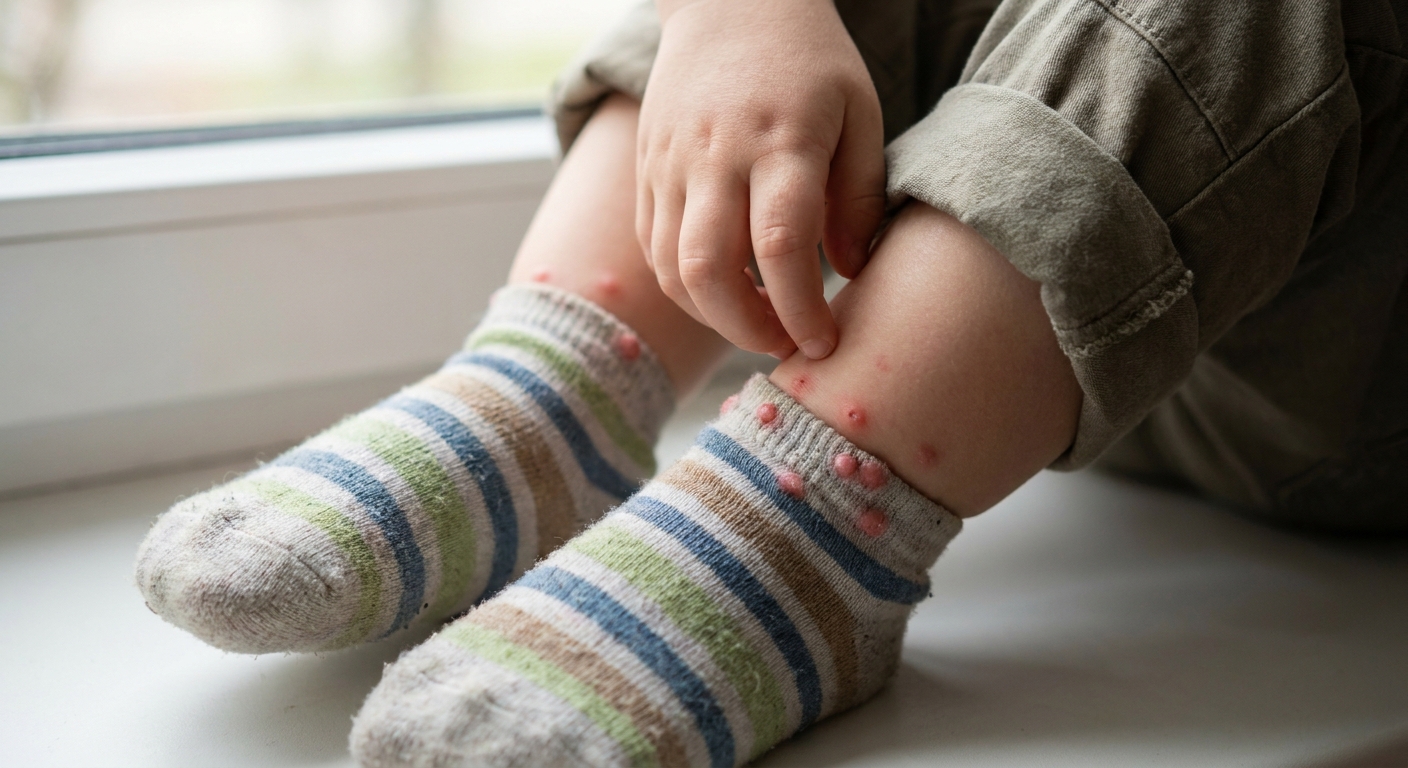
- Clusters or lines: Multiple bites close together, sometimes in a rough line or zigzag. People often call this “breakfast, lunch, and dinner,” but real life is messier than that phrase.
- Small red bumps or welts: They may have a darker center or tiny scab if your child scratched.
- Very itchy: Itch is usually the biggest complaint, often worse at night.
- On exposed skin: Arms, hands, neck, face, and lower legs are common because pajamas and blankets shift while kids sleep.
Timing that can fit
- Noticed in the morning: Many parents first see new bumps after sleep.
- Recurring crops: New spots show up every few days, even if yesterday’s bumps are fading.
- Other family members may have bumps, especially anyone sharing a room or bed, though not everyone reacts.
Important nuance: bites do not always show up right away. Many kids have a delayed skin reaction, so bumps may appear hours to 1 or 2 days later. That delay can make it hard to connect the dots, especially after travel.
One important note: bed bugs are not a sign of a dirty home. They are expert hitchhikers, and I have seen them show up in spotless houses after travel or a single used piece of furniture.
Bed bug bites vs other kid rashes
In triage, the fastest way to narrow things down is to compare (1) distribution, (2) timing, and (3) whether it looks like “bites” or more like an all-over rash.
Mosquito bites
- More random and spread out, often on ankles, legs, arms.
- Often bigger single welts rather than tight clusters.
- More likely after outdoor time, especially at dusk.
Flea bites
- Often on lower legs and ankles.
- Small, very itchy bumps, sometimes in clusters.
- Pet clue: If you have cats or dogs, check them and their bedding. Fleas and bed bugs can look similar on skin.
Scabies
- Intense itching, often worse at night.
- Common locations: between fingers, wrists, elbows, armpits, waistline, groin, feet.
- Look for tiny burrow lines (thin, wavy tracks) or widespread bumps.
- Very contagious with close contact. This one is worth a call to your child’s clinician.
Hives (urticaria)
- Raised, pale or red welts that can change shape and move around.
- Come and go within hours in the same spot.
- Often linked to viral illness, food triggers, or new meds, but sometimes no clear cause.
Heat rash
- Tiny pinpoint bumps, often in skin folds (neck, chest, diaper area) or under tight clothing.
- Triggered by sweating and hot weather or overdressing for sleep.
Eczema flare
- Dry, rough, itchy patches rather than discrete “bites.”
- Common spots: behind knees, inside elbows, cheeks (especially in younger kids).
Papular urticaria
This is a common kid pattern where the immune system overreacts to bites (mosquito, flea, bed bug). It can look like groups of itchy bumps that linger. In real life, the diagnosis is often environmental: what matters most is whether you can find signs of an insect problem at home, not just what the skin looks like.
If you are unsure, take a few clear photos in good lighting and track when new spots appear. That timeline is surprisingly helpful.
How to check without spiraling
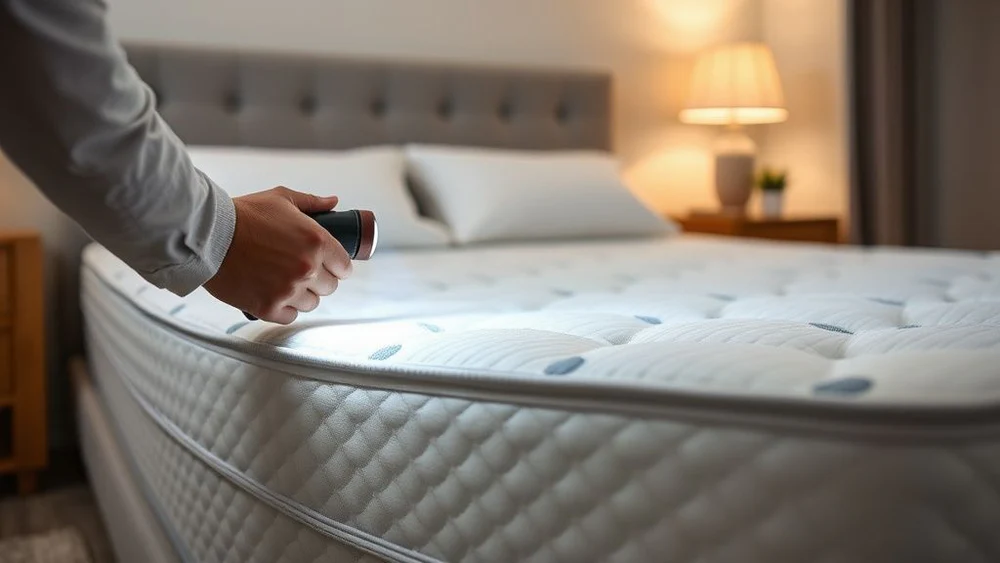
You do not need to rip your whole house apart at midnight. A focused check gets you a lot of information fast.
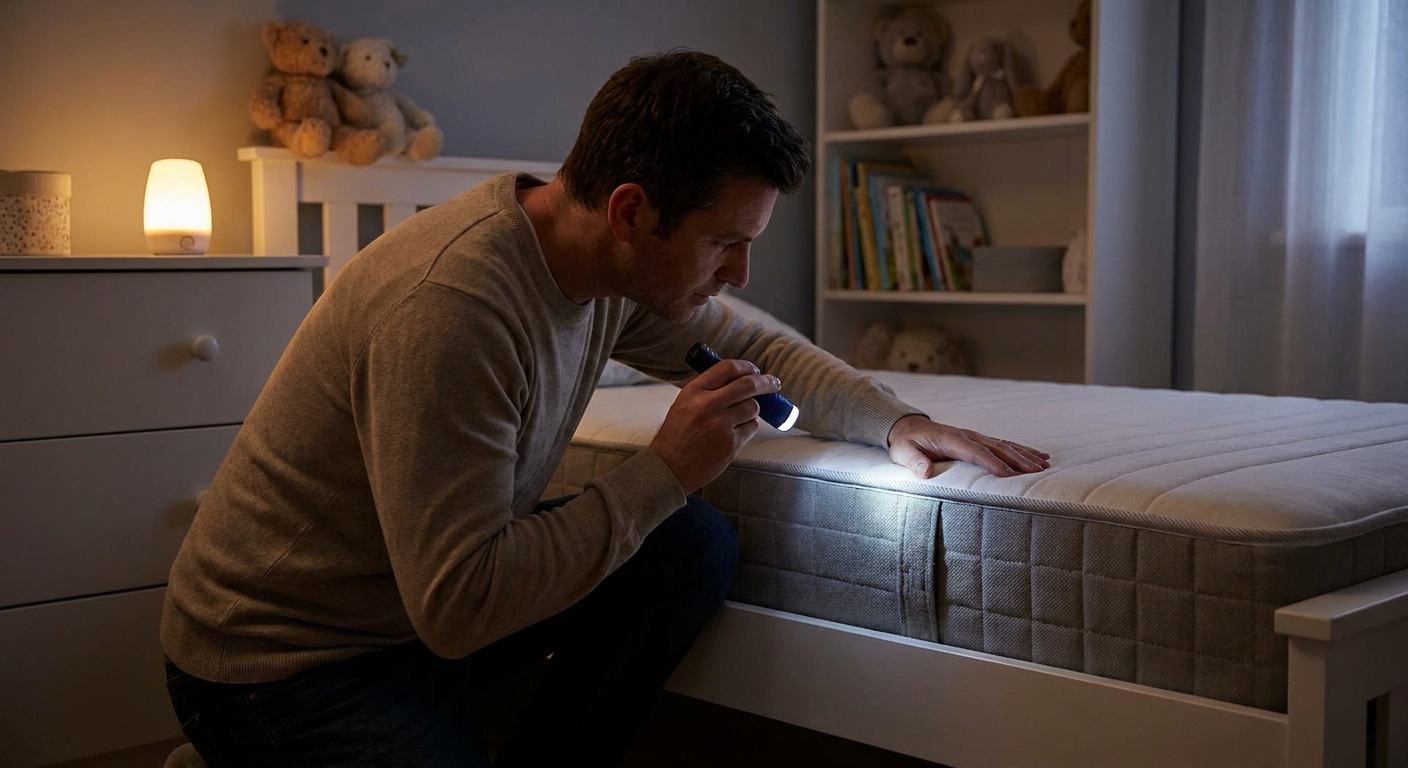
Quick check (10 minutes)
- Strip the bed and look closely at fitted sheet seams and mattress piping.
- Check the headboard area, especially cracks, screw holes, and where the bed touches the wall.
- Look in nearby hiding spots: mattress tags and tufting, box spring edges and inside corners, bed frame joints, nightstand cracks, baseboards near the bed, and the backside of picture frames close to the bed.
- Look for these signs:
- Fecal spots: tiny dark brown to black specks along seams. They can look like ink dots and may smear or “bleed” reddish-brown when damp.
- Rusty or reddish stains on sheets: often from crushed bugs.
- Shed skins: pale yellow, papery shells.
- Live bugs: flat, oval, brown, about the size of an apple seed (adults).
If your child was recently away from home (hotel, camp, sleepover), inspect luggage seams and wash travel clothes right away.
Soothing the itch safely
Most kids do not need anything fancy, but they do need itch control. Scratching is what turns “annoying bumps” into infected sores.
At-home itch relief
- Cool compress for 10 minutes, a few times a day.
- Fragrance-free moisturizer to support the skin barrier.
- Oatmeal bath (colloidal oatmeal) if the itch is widespread.
OTC options (common pediatric choices)
- 1% hydrocortisone cream: A thin layer 1 to 2 times daily for a few days can reduce inflammation and itching. Be extra cautious with infants and face or genitals and ask your clinician first for those areas.
- Oral antihistamine: Some families use a non-drowsy option in the daytime. For nighttime itching, a sedating antihistamine is sometimes used, but it is not a routine sleep aid and dosing depends on age and weight. Check with your pharmacist or clinician before using it for this purpose.
Skip topical antibiotics “just in case.” For minor scratched areas, plain petrolatum is often a good skin protectant. If you see signs of secondary infection (like impetigo with honey-colored crusting), your child’s clinician may recommend a specific treatment.
Scratch prevention that works
- Trim nails short.
- Consider cotton gloves or socks on hands for toddlers who scratch in their sleep.
- Use loose, breathable pajamas.
When bites get infected
Public health guidance (including the CDC) notes that bed bugs are not known to transmit disease to humans. The bigger medical issue is skin infection from scratching.
Call your child’s clinician if you see
- Increasing redness, warmth, swelling, or pain around a bite
- Pus, honey-colored crusting, or a rapidly enlarging scab
- Red streaking moving away from the area
- Fever or your child seems unwell
- Bites near the eye with swelling that is getting worse
Get urgent care now for
- Signs of an allergic reaction: trouble breathing, swelling of lips or face, widespread hives with vomiting or faintness
- A rapidly spreading rash with fever
- A very young infant with a concerning rash and poor feeding or unusual sleepiness
Next steps: doctor vs pest control
Here is the tricky part: the rash looks medical, but the long-term solution is usually environmental.
When to focus on medical evaluation
- The rash is not improving with basic itch care.
- Your child has eczema, immune issues, or frequent skin infections.
- The pattern does not really fit bites and looks more like hives, scabies, or a viral rash.
When to bring in pest control
- You find clear signs of bed bugs (bugs, shed skins, fecal spots).
- New bites keep appearing every few days despite laundering and basic cleaning.
- Multiple family members have similar overnight or near-sleep-time bites.
If you suspect bed bugs, professional help is often the fastest and cheapest path long-term. DIY sprays and “panic cleaning” can spread bugs to new areas if they are used incorrectly.
What to do tonight at home
You can reduce bites and prevent spread with a few targeted steps.
Immediate containment
- Wash and dry bedding, pajamas, and comfort items on the hottest settings the fabric can safely handle. Heat from the dryer is key.
- Dryer tip: running items on high heat for about 30 to 60 minutes (depending on the item and load) is commonly used in bed bug protocols. If you are unsure, err on the longer side and do not overload the dryer.
- Bag items you cannot wash (stuffed animals, special blankets) in sealed plastic bags until you can heat-treat or launder them.
- Vacuum mattress seams, bed frame joints, and baseboards. Empty the vacuum into a sealed bag right away and take it outside.
Prevention and monitoring
- Use mattress and box spring encasements designed for bed bugs (zippered, labeled bed bug proof).
- Reduce bedroom clutter near the bed so there are fewer hiding spots.
- Move the bed slightly away from the wall if possible, and avoid bedding touching the floor.
- Consider interceptors (bed bug traps) under bed legs to help monitor activity and reduce climbing access. They are not a complete solution, but they can be useful data.
What to avoid
- Avoid foggers or bug bombs: they are often ineffective for bed bugs and can drive bugs deeper into walls or spread them to other rooms.
- Avoid random pesticide use around kids: if pesticides are needed, a licensed pest professional can help you choose safer, more effective options and proper application.
Try not to throw out mattresses or furniture until a pest professional advises you. It is expensive, and it does not always solve the problem if bugs are elsewhere.

FAQs parents ask at night
Do bites always come in a line?
No. Clusters and lines are common, but some kids get scattered bumps, especially if they move a lot in sleep.
Can only one child be bitten?
Yes. Bed bugs may feed on whoever is easiest to reach, and not everyone reacts to bites. One child can look “covered” while another seems untouched.
How long do bites last?
Many fade in a few days. In kids with strong reactions, bumps can last 1 to 2 weeks. Scratching and infection make them linger longer.
Should I send my child to school?
If your child feels well and there are no signs of infection, they can usually attend. Bed bugs are a home environment issue, not a reason to isolate a healthy child. If the school has policies or you need documentation for the nurse, your pediatric clinician can help.
A steady plan for tonight
- Step 1: Calm the itch (cool compress, moisturizer, hydrocortisone if appropriate).
- Step 2: Prevent scratching (trim nails, socks on hands for little ones).
- Step 3: Do a focused bed check (seams, headboard, nearby cracks).
- Step 4: Heat-treat bedding and sleepwear (hot wash and hot dry).
- Step 5: If bites continue or you find signs, call pest control and loop in your child’s clinician if the rash is worsening or infected.
If you’re in that bleary, worried headspace, I want you to hear this clearly: you’re not failing. This is a solvable problem, and you can take it one calm step at a time.
Sarah Mitchell
Sarah Mitchell is a Registered Pediatric Nurse and a mother of three who has spent over a decade helping families navigate the beautiful, chaotic early years of childhood. She combines evidence-based medical knowledge with real-world parenting experience to offer practical, compassionate advice. At Awesome Parent, Sarah's mission is to help exhausted parents find solutions, trust their instincts, and finally get some sleep.