Best Foods for Teething Babies

Sarah Mitchell
Sarah Mitchell is a Registered Pediatric Nurse and a mother of three who has spent over a decade helping families navigate the beautiful, chaotic early years of childhood. She combines evidence-based medical knowledge with real-world parenting experience to offer practical, compassionate advice. At Awesome Parent, Sarah's mission is to help exhausted parents find solutions, trust their instincts, and finally get some sleep.
If teething has turned your sweet little eater into a tiny, angry dragon who refuses the spoon, you are not imagining it. Sore gums can make chewing and swallowing feel like work. The goal is to offer foods that are cool, soft, and easy to manage, while still packing enough calories and nutrients to keep your baby growing.
Below are my go-to teething foods from years of pediatric nursing and real-life parenting. They are practical, safe, and designed for those days when everyone is tired and nobody wants to fight over lunch.

First, a quick safety checklist
Before we talk recipes, let’s keep your baby safe. Many common teething foods can become choking hazards if the size or texture is not quite right.
- Baby sits upright in a high chair or secure seat while eating. No walking, crawling, or car-seat snacking.
- Always supervise. Teething babies may push food toward the back of their mouth to “scratch” their gums.
- Start solids when ready, usually around 6 months, showing readiness signs like sitting with support and bringing food to mouth.
- Size and texture matter: offer soft foods that squish easily between your fingers. Avoid hard, round, sticky, or crumbly foods.
- Skip honey under 12 months, even in smoothies or baked goods.
- Choking hazards to avoid: whole grapes, raw apple, chunks of carrot, popcorn, nuts, nut chunks, globs of nut butter, hot dog rounds, marshmallows, hard crackers, and anything that breaks into sharp shards.
If you are doing baby-led weaning, these tips still apply. The difference is presentation, not safety.
Quick baby food reminder: Keep added salt and added sugar out of baby foods. Simple is best, especially when gums are angry.
Cooling purees for sore gums
Cold can temporarily numb tender gums and feel soothing. The easiest trick is to refrigerate (not freeze) purees so they are cool and calming but still easy to swallow.
Temperature tip: Think “cool yogurt” rather than “frozen popsicle.” Very cold foods can be uncomfortable for some babies.
1) Chilled banana and avocado mash
Soft, calorie-dense, and full of healthy fats for days when intake is low.
- Mash 1/2 ripe banana with 1/4 to 1/2 avocado.
- Add a spoonful of breast milk, formula, or plain yogurt (if dairy is already tolerated) to thin.
- Chill for 20 to 30 minutes before serving.
2) Applesauce (cinnamon optional)
Applesauce is naturally smooth and soothing. If your baby has already tried cinnamon without any issues, a tiny pinch can add flavor.
- Choose unsweetened applesauce.
- Serve cold from the fridge.
3) Pear and oat puree
This is a gentle option if your baby’s tummy seems a little sensitive during peak drooling days.
- Blend cooked pear with a spoonful of finely ground oats or baby oatmeal.
- Chill before serving for extra gum comfort.
4) Yogurt comfort bowl
Yogurt is cool, smooth, and often well accepted during teething. Use plain whole-milk yogurt if your baby is eating dairy.
- Stir in pureed peaches, mango, or berries.
- Add chia only if your baby already tolerates it and you keep it well mixed and not too thick.
Dairy note: Yogurt and cheese are commonly offered once solids are started (when tolerated), but cow’s milk as a drink is typically not recommended as the main drink until 12 months. Breast milk or formula remains the main milk drink under 12 months.
5) Sweet potato and carrot puree (served cool)
Some babies prefer cool foods when gums are swollen. If warm foods seem to bug your baby, let these cool to room temp or chill.
- Blend cooked sweet potato with cooked carrot and enough liquid to make it silky.
- Add a drizzle of olive oil for calories and satiety.

Safe gnawing snacks
Some babies want pressure more than they want food. These options let them gnaw more safely while still getting a little nutrition.
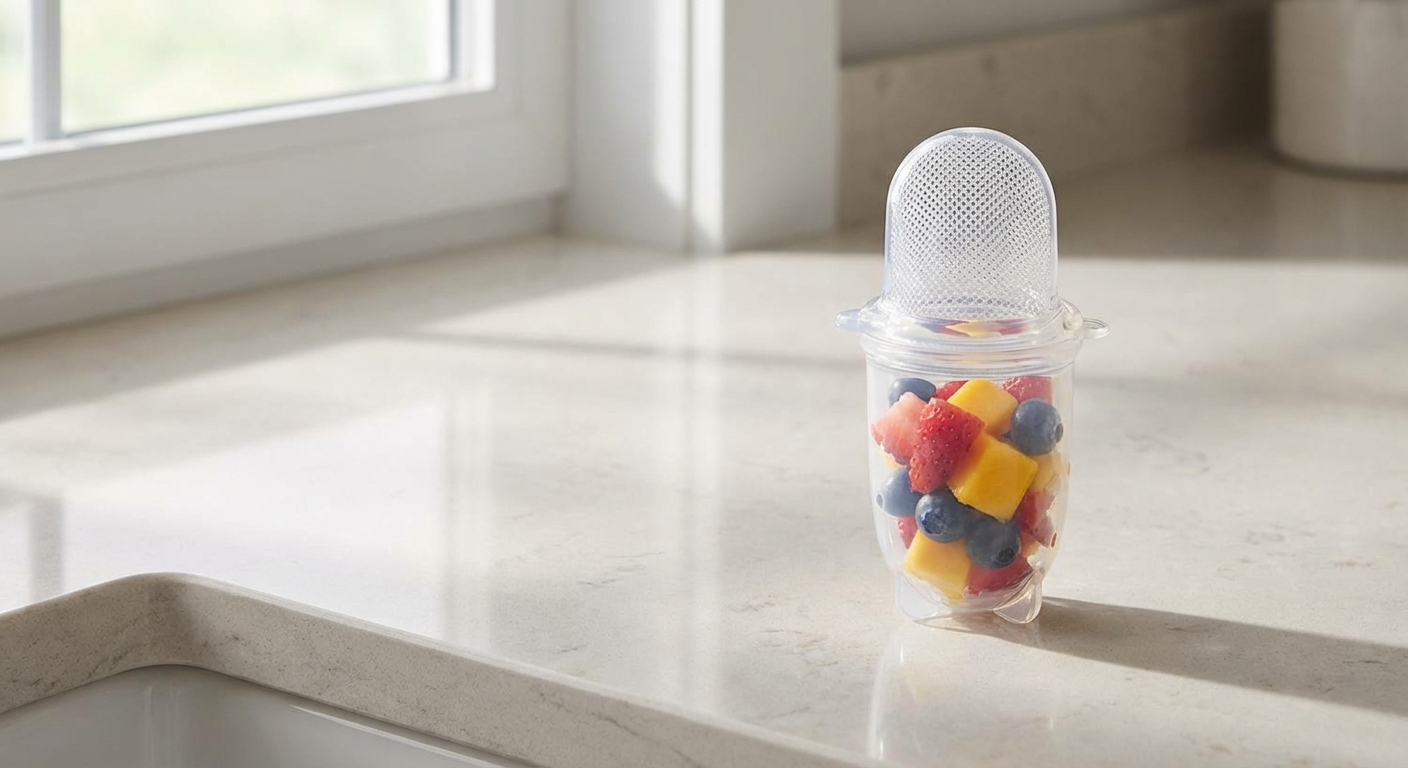
1) Silicone feeder with cold fruit
This is one of my top teething tools because it combines cold plus chewing pressure while lowering choking risk.
- Fill with refrigerated berries, mango, peach, or banana.
- For extra relief, use slightly thawed frozen fruit so it is soft and slushy, not rock-hard.
- Wash thoroughly after each use to prevent mold in crevices.
2) Cold cucumber spear (for babies who handle textures well)
Cucumber can be soothing, but it must be served safely.
- Offer a large spear with most of the peel on for grip.
- Supervise closely. Cucumber can get slippery and chunks can break off.
- If your baby is an aggressive biter, skip this and choose a silicone feeder instead.
3) Very ripe pear slices or peach wedges
Ripe stone fruit and pears can be wonderfully soothing and soft.
- Use fruit that squishes easily between your fingers.
- Serve in large, graspable pieces (not tiny cubes).
4) Toast fingers with a thin layer of nut butter (as tolerated)
For babies who are already on finger foods, toast can be a satisfying chew and can carry calories.
- Use lightly toasted bread cut into thick strips.
- Spread a very thin layer of peanut or other nut butter, thinned with yogurt or warm water if needed.
- Only do this if nuts have been introduced safely and your pediatrician has not advised otherwise.
Allergen note: Current guidance generally supports introducing common allergens (like peanut and egg) when your baby is developmentally ready for solids, in age-appropriate forms. If your baby has severe eczema, a known food allergy, or you are nervous about allergens, ask your pediatrician for a plan.
5) Soft-cooked veggie sticks
These give gums something to work on without the hardness of raw vegetables.
- Steam carrot sticks, zucchini sticks, or sweet potato wedges until very soft.
- Cool in the fridge before serving.
When baby eats less: make bites count
During peak teething days, it is common for babies to take fewer bites. A helpful strategy is to make each bite count.
- Add healthy fats: avocado, olive oil, full-fat yogurt, tahini (thinly mixed), nut butter (thin layer).
- Choose higher-calorie fruits: banana, mango, and avocado-based blends.
- Keep iron in the mix: pureed meats, lentil puree, beans blended smooth, iron-fortified baby cereal mixed into fruit puree.
- Offer milk feeds as usual: breast milk or formula remains the main nutrition source under 12 months.
If your baby is refusing solids, focus on hydration and milk intake, and offer small, low-pressure chances to eat throughout the day.
Foods to skip during teething
In triage, I saw a lot of well-meaning advice that made me cringe a little inside. These are common “teething foods” that can be risky:
- Teething biscuits, rusks, and hard crackers: even the ones that seem to “dissolve” can soften, then break into chunks that are easy to choke on.
- Frozen foods that are rock solid: overly hard items can bruise gums and can be risky if pieces break off.
- Amber necklaces: not a food, but worth saying. Strangulation and choking risks outweigh any unproven benefit.
- Juice for comfort: it can add sugar and irritate gums, and it is easy to overdo.
A simple one-day menu
Here is a realistic day for a teething baby who is “meh” about food. Adjust portions to your baby and keep milk feeds consistent.
- Breakfast: chilled yogurt with mashed banana
- Snack: silicone feeder with cold mango
- Lunch: cool sweet potato puree with olive oil stirred in
- Snack: ripe pear wedge or soft-cooked zucchini stick (cooled)
- Dinner: avocado mash with iron-fortified baby cereal mixed in
When to call the pediatrician
Teething can cause drooling, mild gum swelling, and extra crankiness. It does not typically cause a true fever or serious illness. If your baby has a real fever, it is worth looking for another cause.
Call your pediatrician if:
- Your baby has a fever (especially 100.4°F or higher in babies under 3 months, or a persistent fever at any age).
- There are signs of dehydration: fewer wet diapers, very dry mouth, no tears when crying, unusual sleepiness.
- Your baby refuses most feeds for more than a day, or you see weight loss.
- You notice mouth sores, bleeding gums, white patches, or a rash you are worried about.
- You suspect choking or your baby has persistent coughing, gagging, or noisy breathing after eating.
Non-food comfort options: A cold teething ring (not frozen solid), a clean damp washcloth chilled in the fridge, or gentle gum massage can help. Skip over-the-counter numbing gels with benzocaine or lidocaine unless your pediatrician specifically tells you to use them.
And if you are up at 3 AM Googling “is this normal,” please know this: you are not failing. Teething is a short season that feels long when you are living it. Keep foods simple, keep them safe, and give yourself credit for getting everyone fed at all.