How to tell cellulitis from a simple bite, hives, or impetigo, what to do at home, when antibiotics are needed, and the red flags that mean ER now.
Big Mosquito Bites on Kids: Skeeter Syndrome vs Infection

Sarah Mitchell
Sarah Mitchell is a Registered Pediatric Nurse and a mother of three who has spent over a decade helping families navigate the beautiful, chaotic early years of childhood. She combines evidence-based medical knowledge with real-world parenting experience to offer practical, compassionate advice. At Awesome Parent, Sarah's mission is to help exhausted parents find solutions, trust their instincts, and finally get some sleep.
If your child gets a mosquito bite that turns into a hot, puffy, dramatic-looking lump, you are not overreacting. Some kids truly do swell up a lot from mosquito saliva. Other times, a bite gets scratched and bacteria get in, causing a skin infection that needs medical care.
As a pediatric triage nurse and a mom, I have had this exact 3 AM worry: Is this just a big bite… or is it infected? Let’s sort it out calmly and clearly, with practical steps you can use tonight.
Quick note: This is general education, not personal medical advice. When in doubt, call your child’s clinician, and if you see emergency signs, seek urgent care right away.
What is “normal” for a mosquito bite?
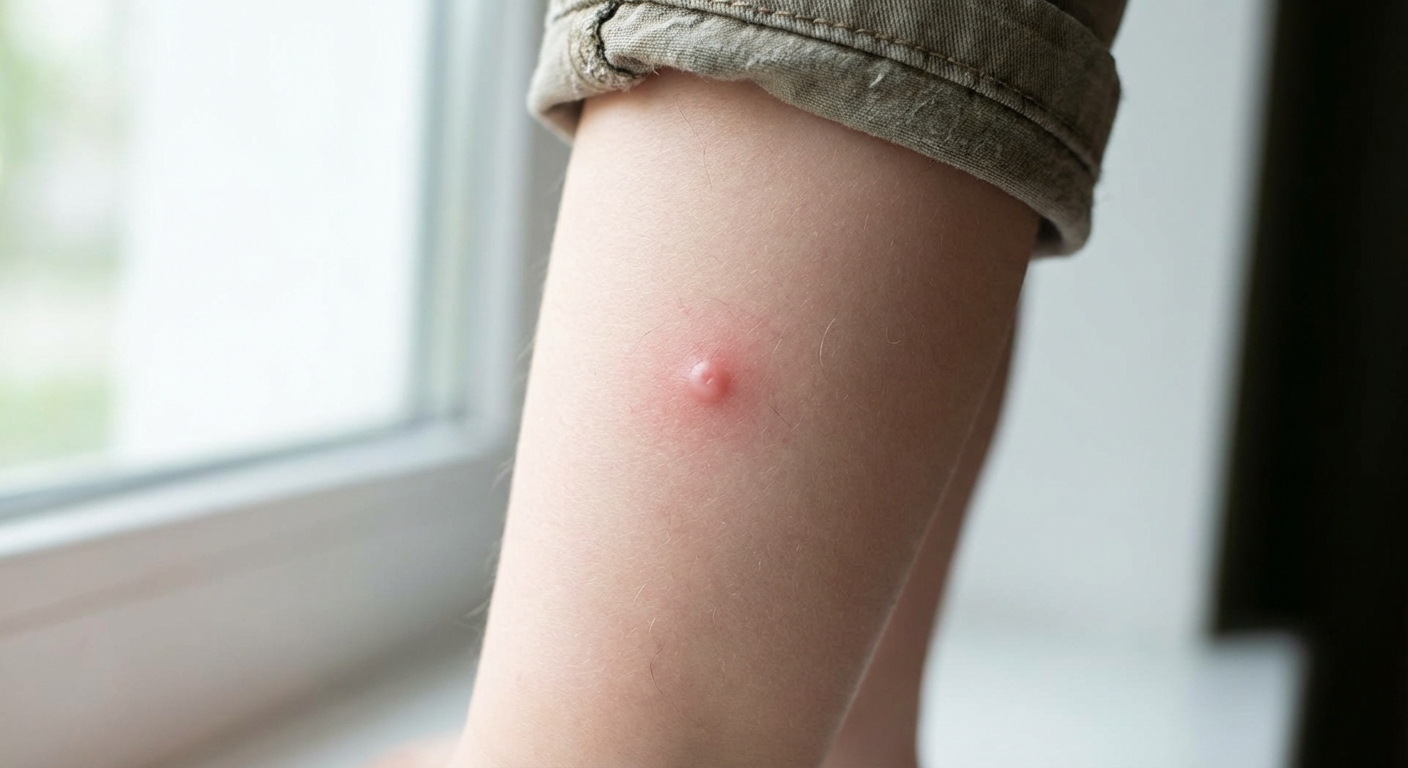
A typical mosquito bite is a small bump or welt with itching that peaks in the first day or two and then gradually fades.
What you might see
- Itchiness that comes and goes
- A small pink or red bump, sometimes with a tiny center dot
- Mild swelling right around the bite
- Usually improves within about a week (some kids itch longer)
Kids often look “worse” than adults because their immune systems can react more strongly, and they scratch with impressive dedication.
Skeeter syndrome: big, fast swelling
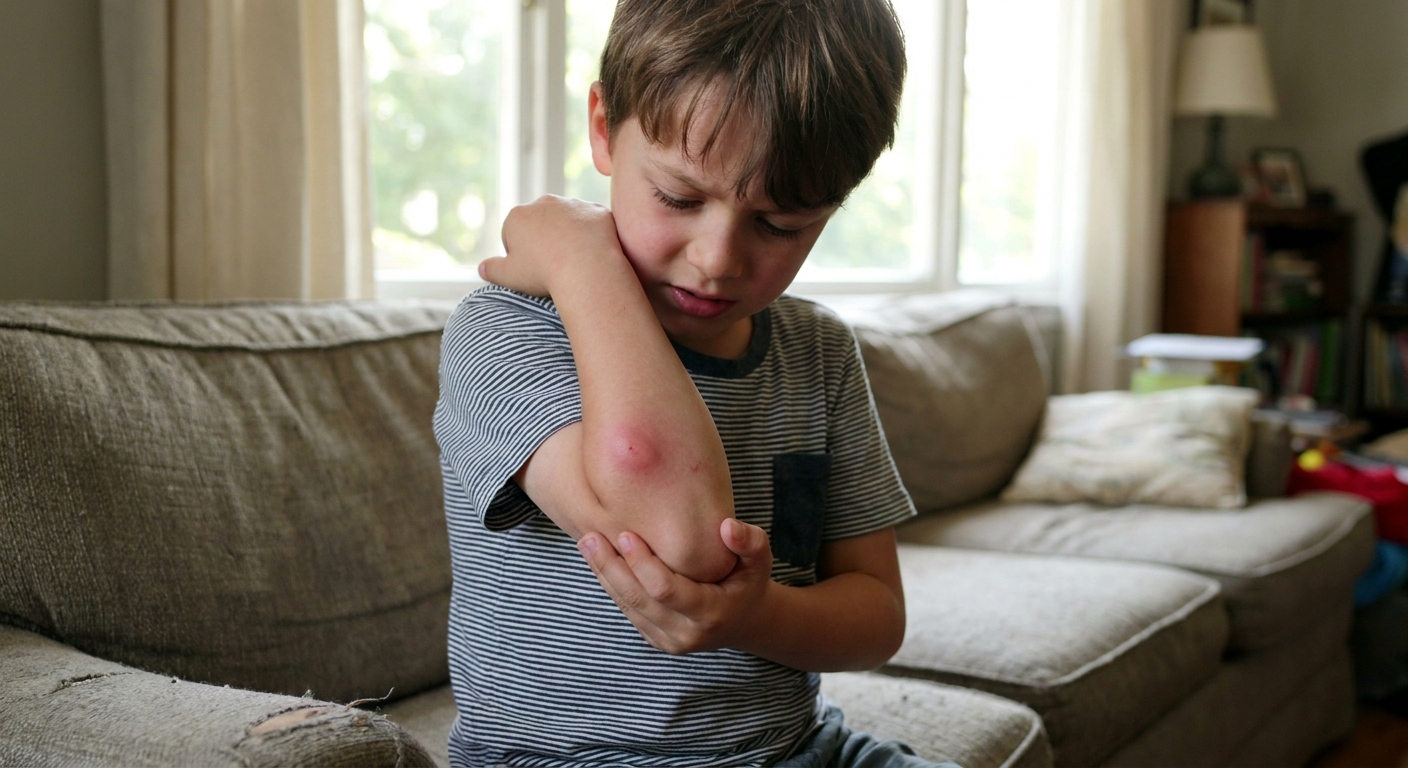
Skeeter syndrome is a large local allergic reaction to proteins in mosquito saliva. It can look alarming, but it is not the same thing as a bacterial infection.
Clues it may be Skeeter syndrome
- Swelling gets big quickly, often within hours of the bite
- The area is itchy and puffy more than painful
- Redness can be wide, sometimes several inches across
- The skin can feel warm (inflammation does that)
- Often happens in the same child repeatedly, especially in mosquito season
- Cool compresses and antihistamines often help, even though the swelling can still take days to fully settle
Some kids can also have a low-grade fever with a big local reaction. That can happen with inflammation, but fever is also a reason to watch more closely and consider a call to your clinician to rule out infection or another illness.
Cellulitis: slower, more painful spreading
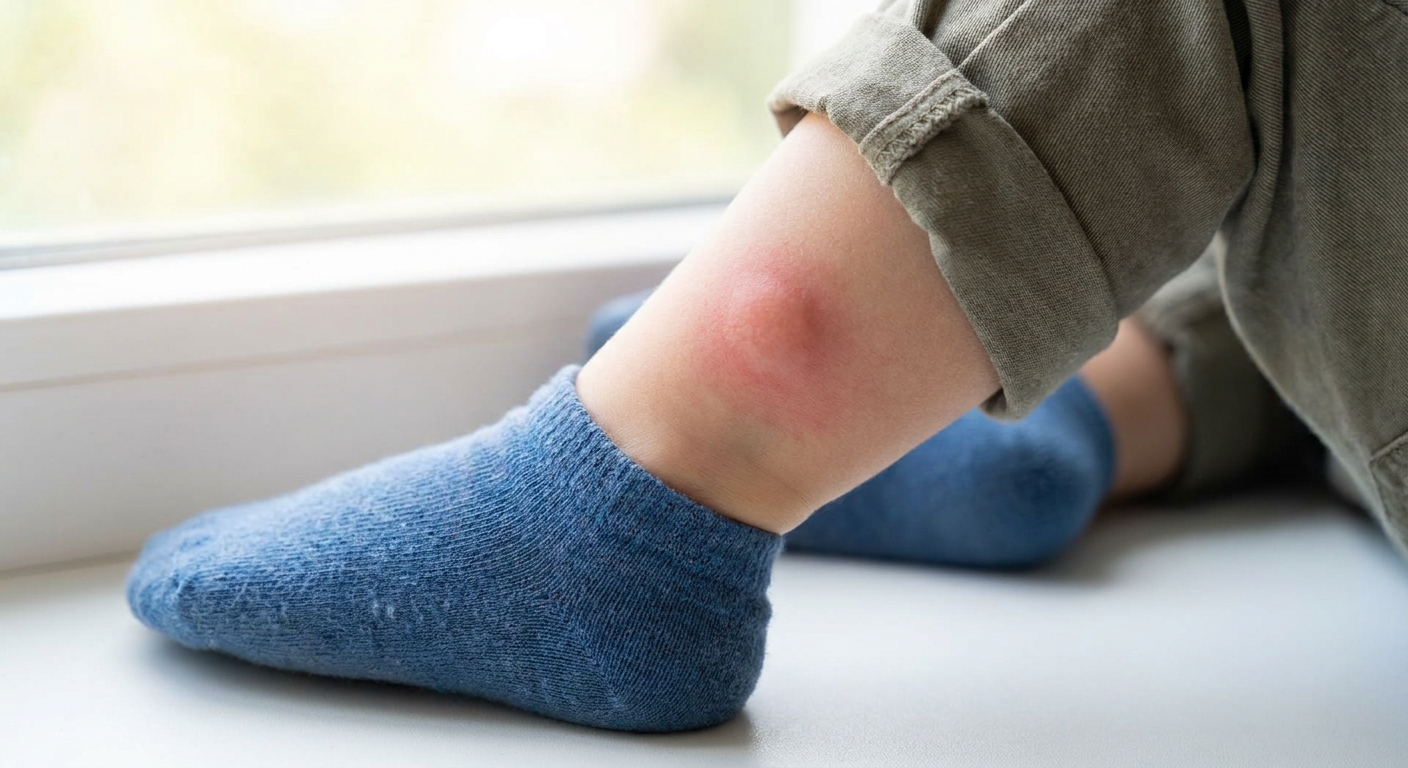
Cellulitis is a bacterial skin infection. It often starts when scratching breaks the skin and germs get in. This is when you want a clinician involved, because antibiotics may be needed.
Clues it may be cellulitis
- Redness that keeps expanding over 24 to 48 hours (not just “big from the start”)
- Increasing pain or tenderness (more “ouch” than “itch”)
- Skin looks tight or shiny, sometimes with swelling that feels firmer
- Fever, chills, feeling unwell
- Pus, crusting, or a weeping sore
- Red streaks moving away from the bite (urgent)
- Swollen lymph nodes nearby (for example, groin nodes with a leg infection)
Important nuance: a big allergic reaction can be red and warm too. The difference is usually the timeline and the direction. Allergic swelling tends to peak fast and then slowly improve, while cellulitis tends to progressively worsen.
Quick compare
| What you notice | More like Skeeter syndrome | More like cellulitis |
|---|---|---|
| When it shows up | Within hours | Often worsens over 1 to 2 days |
| Main feeling | Itchy, annoying | Painful, tender |
| Size | Can be large early | Can start smaller then spreads |
| Kid overall | Usually acting okay | May feel sick, feverish |
| Skin changes | Swollen welt, sometimes dramatic | Spreading redness, possible pus or streaking |
Home care (safe boundaries)
If your child is breathing comfortably, acting mostly like themselves, and you are not seeing urgent red flags, you can start with home care and watch closely.
Step 1: Clean and calm
- Gently wash with soap and water once daily (or after outdoor play). No need to scrub or overwash, which can irritate skin.
- Cool compress for 10 minutes at a time, several times a day. Cold helps itch and swelling.
- Keep nails short. For little kids, consider socks over hands at bedtime if scratching is intense.
Step 2: Itch control (this helps prevent infection)
The goal is to stop the scratch cycle. Less scratching means fewer broken-skin openings for bacteria.
- 1% hydrocortisone cream: thin layer 1 to 2 times daily for a few days (avoid open skin; avoid using on the face unless your clinician has okayed it).
- Oral antihistamine: can help itching. Follow package directions for your child’s age and weight, and check with your pediatrician if your child is under 2, takes other meds, or has medical conditions. (Some antihistamines are not recommended for certain ages.)
- Calamine or colloidal oatmeal lotion can soothe mild itch.
Step 3: Pain and swelling
- Acetaminophen or ibuprofen can help if the area is sore. Use age-appropriate dosing from your pediatrician or product label.
- Elevation (for a hand, arm, foot, or leg bite) can reduce swelling.
Skip “bite suction” gadgets and harsh chemicals. They often irritate the skin more than they help.
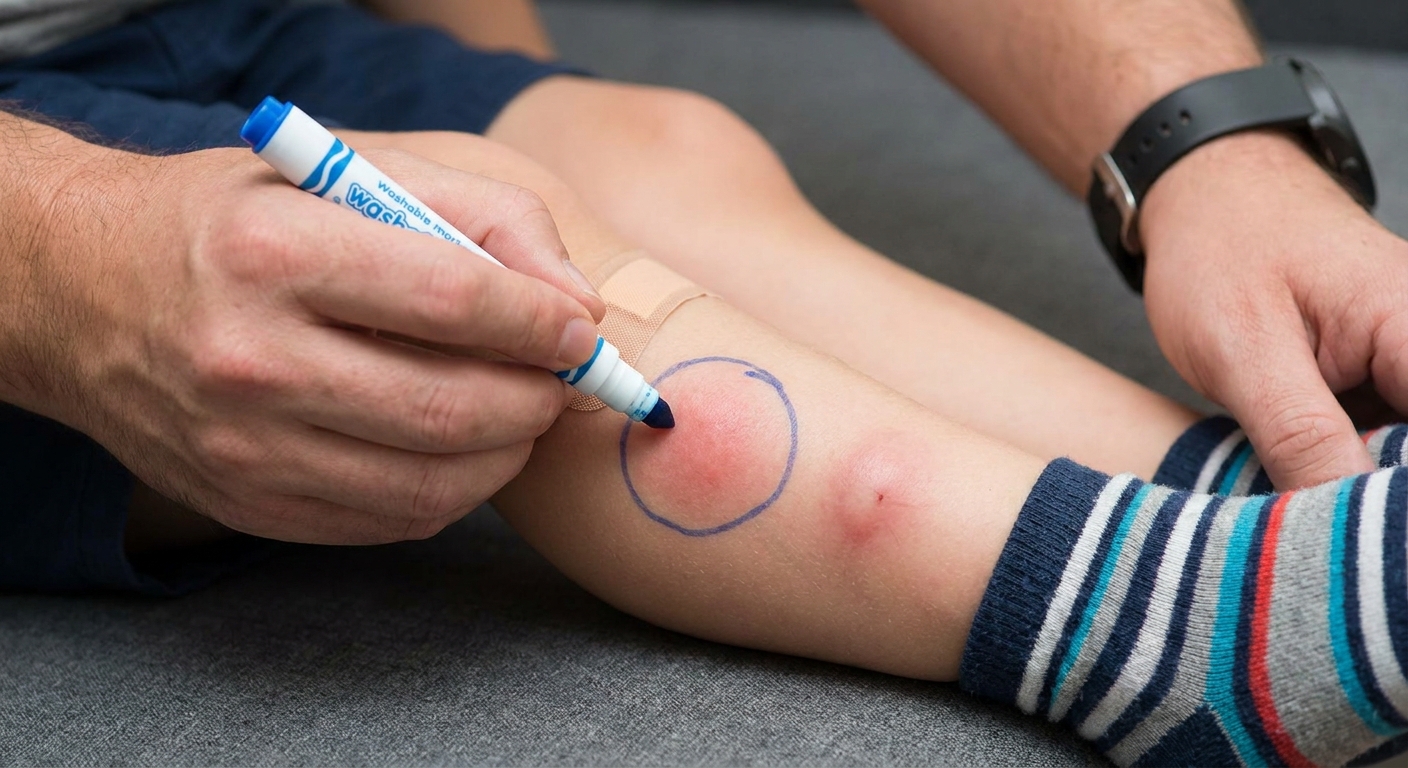
Mark the redness
If you are on the fence about whether redness is spreading, use a washable marker or pen to trace the outer edge of the redness and write the time next to it. Then re-check in 4 to 8 hours.
Allergic reactions often stay within the same general border or start to calm down. Infection more often creeps past the line over time.
Also watch for an abscess
Sometimes an infected bite turns into a small pocket of pus (an abscess or “boil”). This can look like:
- A very tender, firm lump that becomes softer or “squishy” in the middle
- A head or a spot that starts draining
- Pain that feels bigger than the amount of redness
Abscesses sometimes need drainage by a clinician. Do not squeeze or pop it at home.
When to call your pediatrician
Reach out to your child’s clinician (same day or next day) if any of these are true:
- The redness is expanding past your line or clearly worsening after 24 hours.
- The bite area is becoming more painful, not just itchy.
- Your child has a fever (especially if persistent or your child seems unwell).
- There is drainage, pus, honey-colored crusting, or a scab that keeps reopening.
- The bite is on the face near the eye, or swelling is affecting vision.
- Your child has a condition that raises infection risk (for example, immune suppression, significant eczema with open skin).
- Swelling is very large and uncomfortable, even if you suspect Skeeter syndrome, because your clinician may recommend a stronger anti-inflammatory plan.
One more nuance: eyelid swelling after a bite can look extreme due to loose tissue and dependent swelling, and it is not always infection. Still, if the eye is swollen shut, painful, or your child has fever or looks unwell, it deserves prompt evaluation.
Go to urgent care or the ER now
These are the “do not wait” signs:
- Trouble breathing, wheezing, repetitive cough, or swelling of the lips, tongue, or throat
- Hives all over the body, vomiting, or fainting after a bite (possible severe allergic reaction)
- Red streaks extending from the bite toward the body
- High fever with a child who looks or acts very sick
- Severe pain out of proportion to how the skin looks
- Rapidly worsening swelling that affects function (for example, cannot open the eye, cannot use the hand)
- A baby under 3 months with any fever
If you suspect anaphylaxis and your child has an epinephrine auto-injector, use it and call emergency services.
Timelines
Normal bite
- Itch is worst in the first 24 to 48 hours
- Redness and bump gradually fade over several days (sometimes longer in sensitive kids)
Skeeter syndrome
- Swelling can peak within hours to a day
- Then slowly improves over 3 to 10 days
- A lingering firm “knot” can hang around after the redness improves
Infection
- Symptoms often worsen without treatment
- With the right antibiotics, fever and pain often improve within 24 to 48 hours
- Redness can look the same, or even a bit worse, before it clearly turns the corner. Follow your clinician’s guidance closely.
Common parent questions
Why is my child’s bite so huge?
Kids can have a stronger local immune reaction to mosquito saliva. Some children are simply big reactors, especially early in the season or if they have allergies, asthma, or eczema.
Can Skeeter syndrome turn into an infection?
The allergic reaction itself is not an infection, but intense itching can lead to scratching, broken skin, and then a secondary infection. That is why itch control is more than comfort. It is prevention.
Is it okay to use topical antibiotic ointment?
If the skin is broken, a small amount may be reasonable, but it does not treat deeper cellulitis and some kids develop contact irritation from these ointments. If you see spreading redness, fever, increasing pain, a growing tender lump, or pus, you need a clinician, not just ointment.
What about bites that look like rings?
Mosquito bites can sometimes have a ring of redness around a paler center, especially with swelling. If a rash is expanding day by day, not very itchy, and you live in an area where ticks are common, call your clinician to discuss possible tick exposure. The Lyme rash (erythema migrans) is not always a perfect bull’s-eye and can be solid, oval, or uneven, so focus on the expanding pattern, not the artistry.
Prevent the next round
- Dress barriers: long sleeves and pants at dusk when possible.
- Fix the environment: dump standing water (buckets, toys, plant saucers) where mosquitoes breed.
- Use an age-appropriate insect repellent and follow label instructions. Evidence-based options include DEET and picaridin. Use the lowest effective concentration for the time you need, avoid hands and eyes, and wash off when you are done for the day.
- Repellent safety notes: apply sunscreen first, then repellent. Avoid products with oil of lemon eucalyptus (OLE) or PMD in children under 3.
- After-bite routine: wash, cool compress, and itch control early to prevent the scratch spiral.
Bottom line
Big mosquito bites can be completely normal for some kids, and Skeeter syndrome can look very intense without being dangerous. Focus on the timeline and your child’s overall wellbeing.
If it is getting steadily worse, becoming more painful, spreading past a marked border, forming a very tender lump, or your child seems sick, get medical advice. And if you see breathing issues, facial swelling affecting the eyes or lips, red streaking, or severe illness signs, go in urgently.
You are not being dramatic. You are being a good parent who is paying attention.
Sarah Mitchell
Sarah Mitchell is a Registered Pediatric Nurse and a mother of three who has spent over a decade helping families navigate the beautiful, chaotic early years of childhood. She combines evidence-based medical knowledge with real-world parenting experience to offer practical, compassionate advice. At Awesome Parent, Sarah's mission is to help exhausted parents find solutions, trust their instincts, and finally get some sleep.