A parent-friendly guide to why toddlers point their toes in or out, what usually improves with time, red flags to watch for, and when to see a specialist.
Bow Legs and Knock Knees in Toddlers

Sarah Mitchell
Sarah Mitchell is a Registered Pediatric Nurse and a mother of three who has spent over a decade helping families navigate the beautiful, chaotic early years of childhood. She combines evidence-based medical knowledge with real-world parenting experience to offer practical, compassionate advice. At Awesome Parent, Sarah's mission is to help exhausted parents find solutions, trust their instincts, and finally get some sleep.
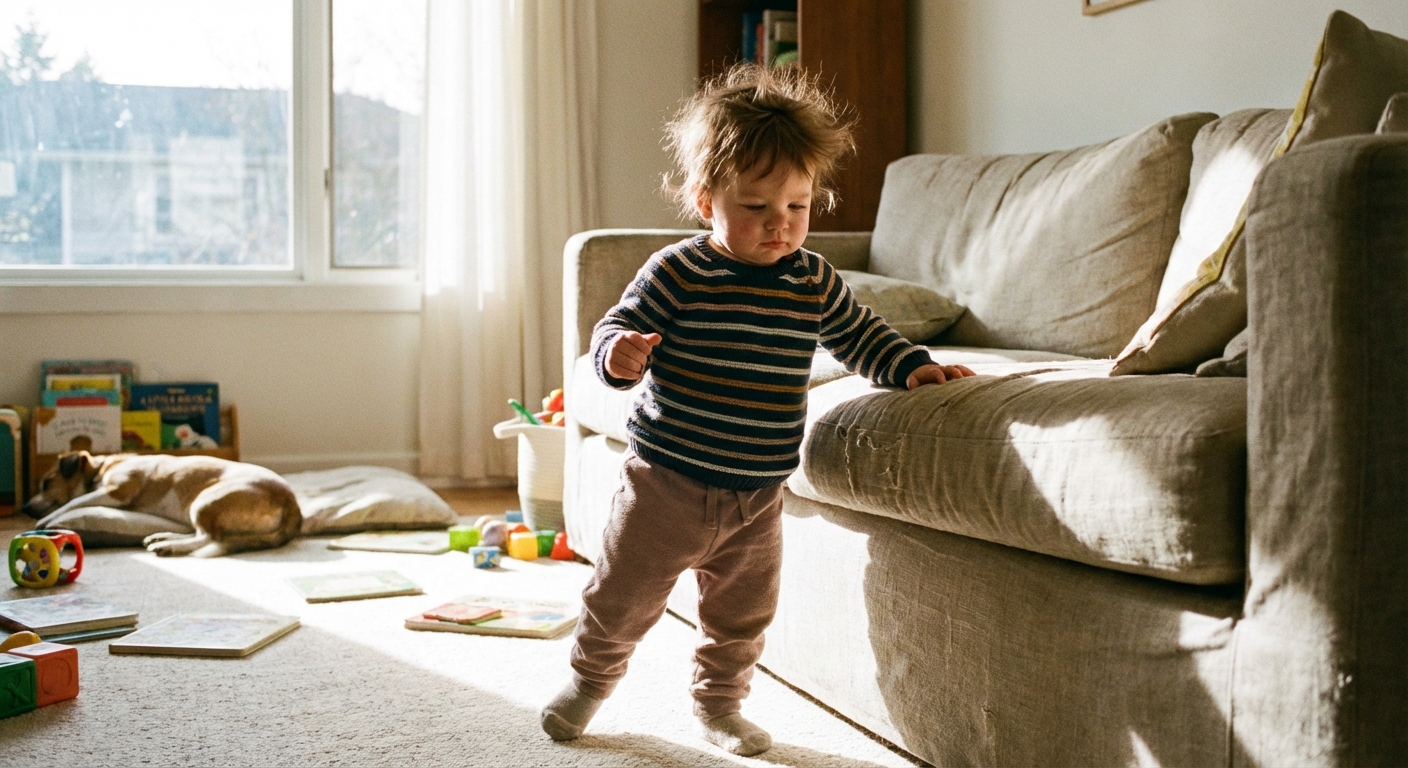
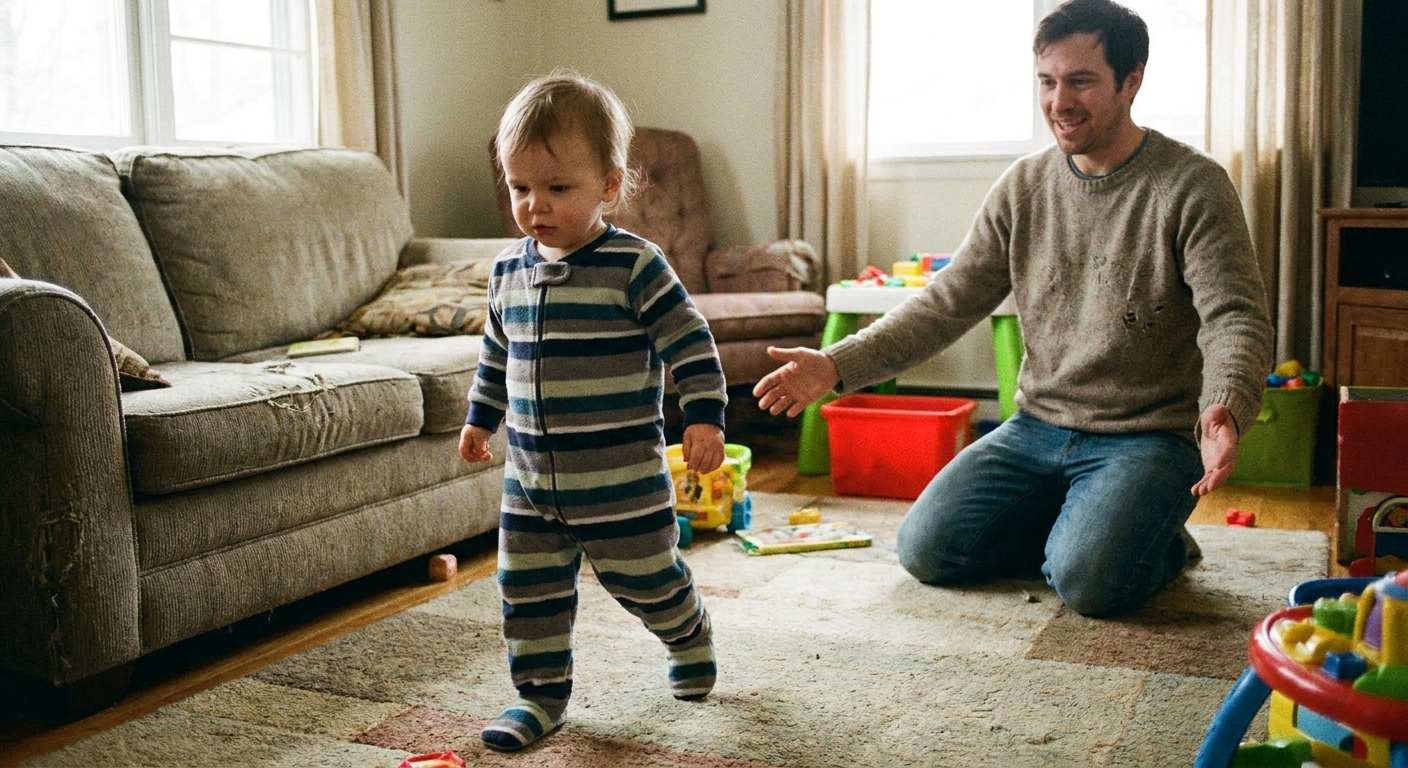
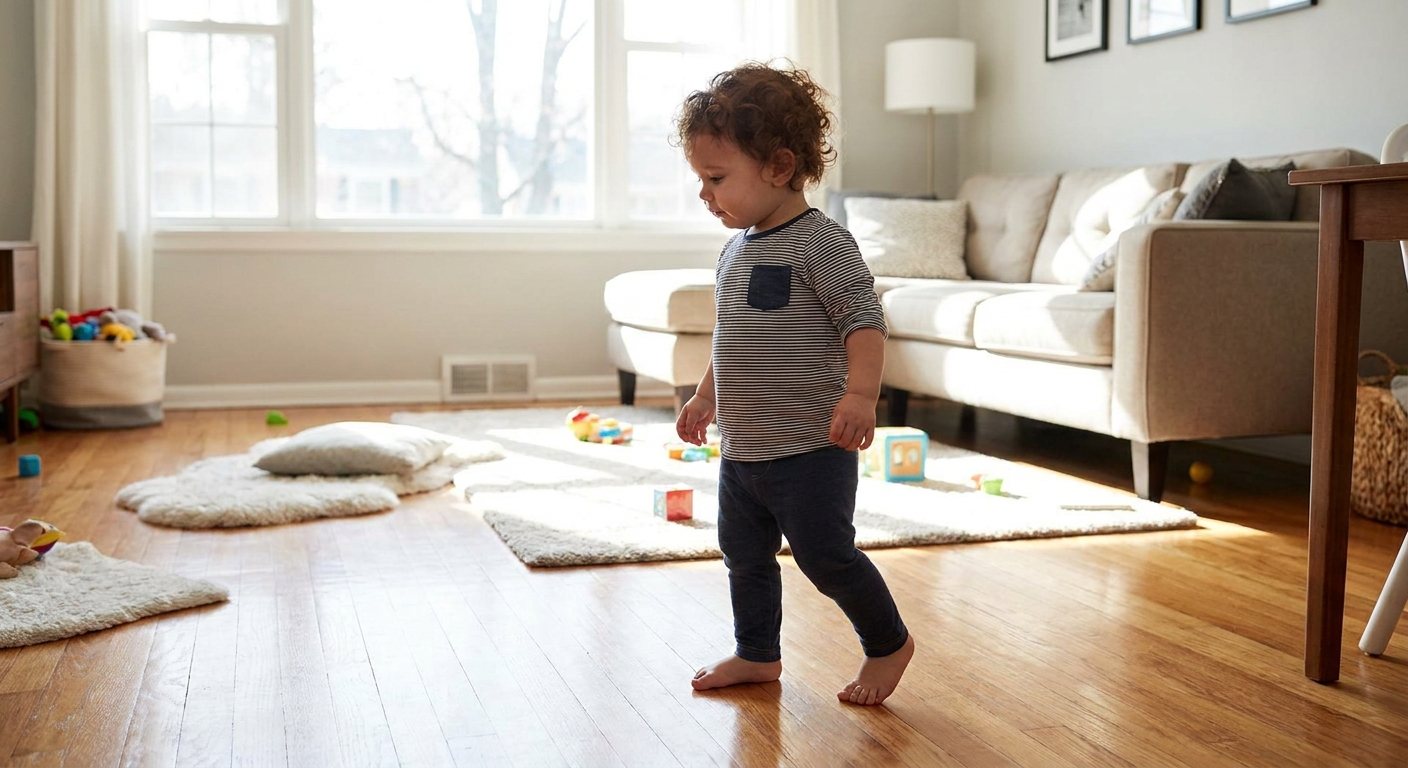
If you have ever watched your toddler waddle across the living room and thought, Why do their legs look like that? you are in very good company. Bow legs and knock knees can look dramatic in photos, especially when your child is in shorts, standing with their feet planted, and you are zooming in at 2 AM.
Here is the calm truth: most leg shape changes in toddlers are part of normal growth. Kids are not built like tiny adults. Their bones are still forming, their hips are widening, their gait is still learning, and their legs often move through a predictable “bowed to straight to knock-kneed” pattern before settling into a more neutral alignment.
One important note: the ages below are typical ranges, not hard cutoffs. Kids grow on their own schedules.
What bow legs and knock knees mean
Bow legs (genu varum)
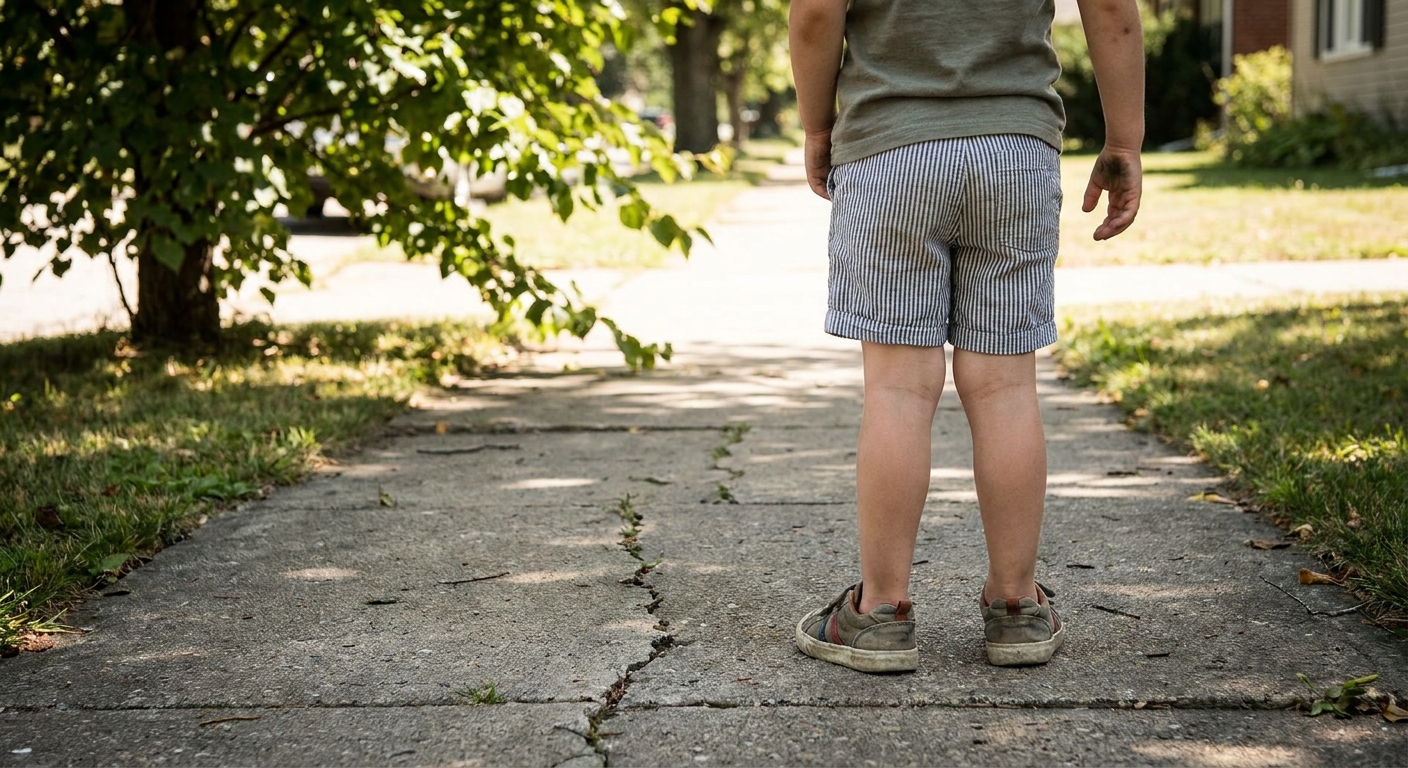
Bow legs mean the knees angle outward. When a child stands with their ankles together, there is a gap between the knees. Mild bowing is very common in babies and young toddlers.
Knock knees (genu valgum)
Knock knees mean the knees angle inward. When a child stands with knees together, the ankles are farther apart. This often appears after the bow-legged stage and can look especially pronounced in the preschool years.
Both can be normal variations of development, especially when they are symmetric and your child is otherwise thriving.
Normal timeline
Leg alignment tends to follow a pattern as kids grow. Individual timing varies, but this general arc is what pediatricians and pediatric orthopedic specialists often expect to see:
- Birth to about 18 months: Bow legs are common and usually most noticeable when babies start standing and cruising.
- Around 18 months to 2 years: Legs often begin to straighten toward neutral.
- About 2 to 4 years: Many kids shift into knock knees. This can peak around ages 3 to 4.
- About 4 to 7 years: Knock knees usually gradually improve toward a more typical alignment.
In other words, the thing that looks “wrong” today is often your child’s body doing exactly what it is supposed to do as they grow.
Quick at-home check
You do not need special tools, braces, or a vitamin regimen to get a basic sense of what is going on. You just need a calm minute and good lighting.
Simple standing look
- Have your child stand naturally with knees straight but not locked.
- Look for symmetry: Do both legs look similar?
- Look at the overall shape: Physiologic bowing is often a gentle, smooth curve through the whole leg. More concerning patterns sometimes look like the bend is happening at one specific spot.
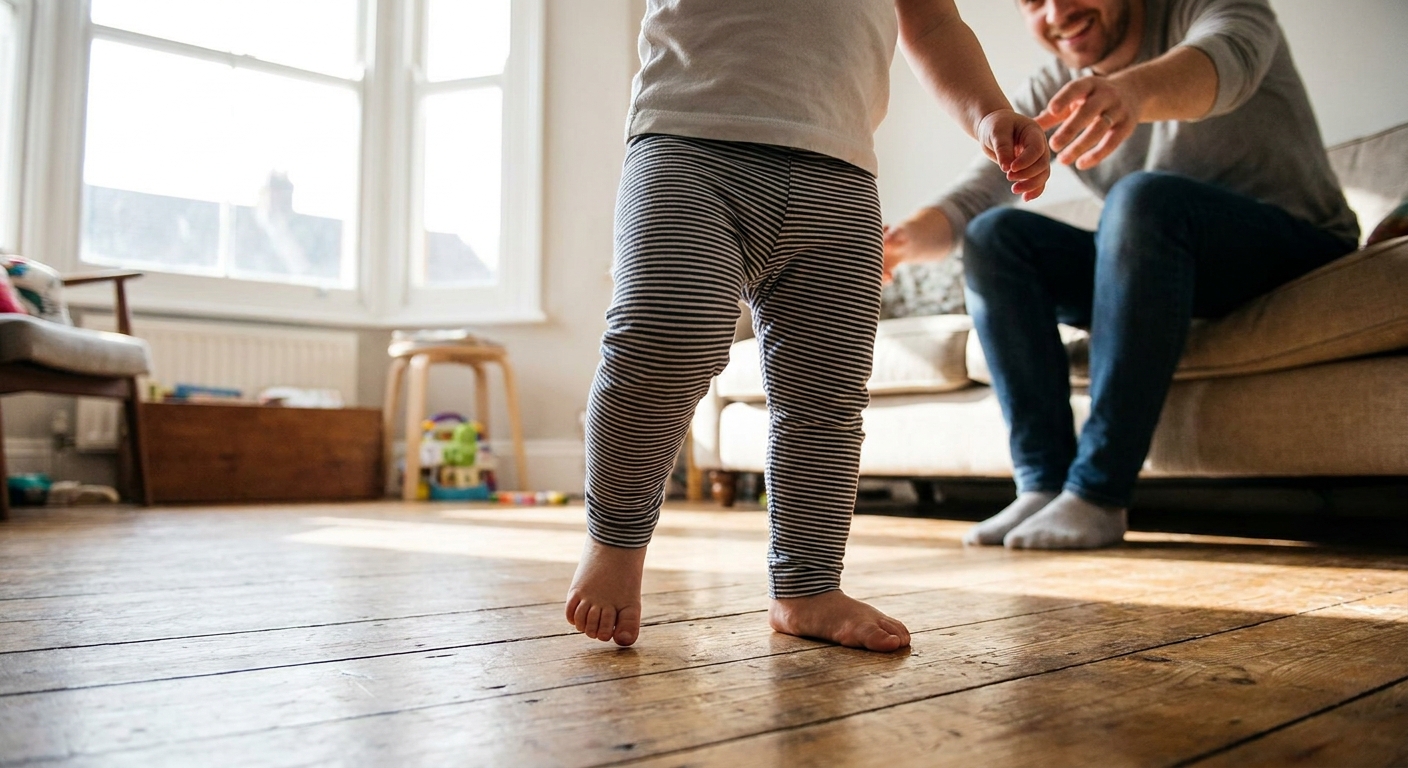
- Look at the feet: Mild in-toeing or out-toeing can be part of normal toddler gait and can make leg shape look more dramatic.
- Watch them walk: Is there a limp? Do they avoid putting weight on one side?
If your child is happy, active, not in pain, and both legs look similar, that is very often reassuring.
Parenting reality check: toddlers rarely stand like models for a “before” photo. A hip popped out, a wiggly stance, or a foot turned can make a normal leg look alarmingly crooked.
A note on measuring gaps
You may see advice online about measuring the distance between knees (with ankles together) or between ankles (with knees together). It can be tempting, but at-home measurements are imprecise and not diagnostic. If you do measure, use it only as a rough way to track change over time, not as a pass or fail test.
What is usually reassuring
These patterns commonly fall into the “watch and wait” category, assuming your child is otherwise healthy and growing well:
- Symmetric bowing in a baby or young toddler.
- Symmetric knock knees in a 2 to 4 year old.
- No pain and no swelling.
- No limp and normal play behavior.
- Steady, gradual change over months, not sudden worsening over weeks.
- Family history of a similar leg shape in childhood that resolved.
For many kids, the “treatment” is time and normal activity.
Red flags
Online posts often focus on the scariest possibilities. In real life, the biggest clues are asymmetry, pain, and function. Contact your child’s pediatrician if you notice any of the following, and ask whether an outpatient pediatric orthopedics referral or imaging is needed.
Make an appointment soon if you see:
- Asymmetry: One leg is clearly more bowed or more knock-kneed than the other.
- Limping or a new change in walking pattern.
- Pain in the knee, shin, ankle, or hip, especially if it limits play.
- Swelling, warmth, or redness of a joint.
- Rapid worsening over a short period of time.
- Short stature or poor growth compared with their usual pattern.
- Delayed walking combined with significant bowing or other concerns.
- Bowing that persists or progresses after about age 2 (some kids improve closer to 2.5 to 3, but ongoing or worsening varus after 2 is worth a closer look).
- Knock knees that are severe, worsening, or persist beyond about age 7 (mild valgus can linger a bit longer and still be normal, but the trend should generally be improving).
- New alignment change after an injury or a sudden “my child’s leg looks different” moment, even if the injury seemed minor at the time.
Seek urgent care today if:
- Your child cannot bear weight or refuses to walk.
- There is severe pain after an injury, especially with swelling or obvious deformity.
- Fever plus joint pain or refusal to move a leg.
Those urgent scenarios are less about typical bowing or knock knees and more about ruling out injury or infection.
What clinicians may watch for
Most kids with bow legs or knock knees do not have an underlying disease. When clinicians look closer, they are generally trying to rule out a few categories.
Blount disease
This is a growth disorder of the shin bone that can cause progressive bowing, sometimes more noticeable on one side. It is more likely to be considered when bowing is worsening, asymmetric, or beyond the usual age range.
Context your clinician may factor in: early walking, higher weight, and family history can raise suspicion in the right clinical picture. These are not “causes” of normal toddler bowing, just clues that may influence how closely your pediatrician watches things.
Rickets or low vitamin D and calcium issues
Nutritional rickets is uncommon in many settings but still possible. Clinicians consider it when there are risk factors plus signs like poor growth, bone pain, or other skeletal changes.
Previous fracture or injury
An old injury can sometimes affect growth plates and alignment. This is one reason a history of trauma plus asymmetry raises eyebrows.
Hip or rotational patterns
Sometimes what looks like “crooked legs” is actually a hip alignment or rotational pattern, such as tibial torsion or femoral anteversion. These are frequently normal developmental variations, but they are evaluated through a physical exam.
Will my child need X-rays?
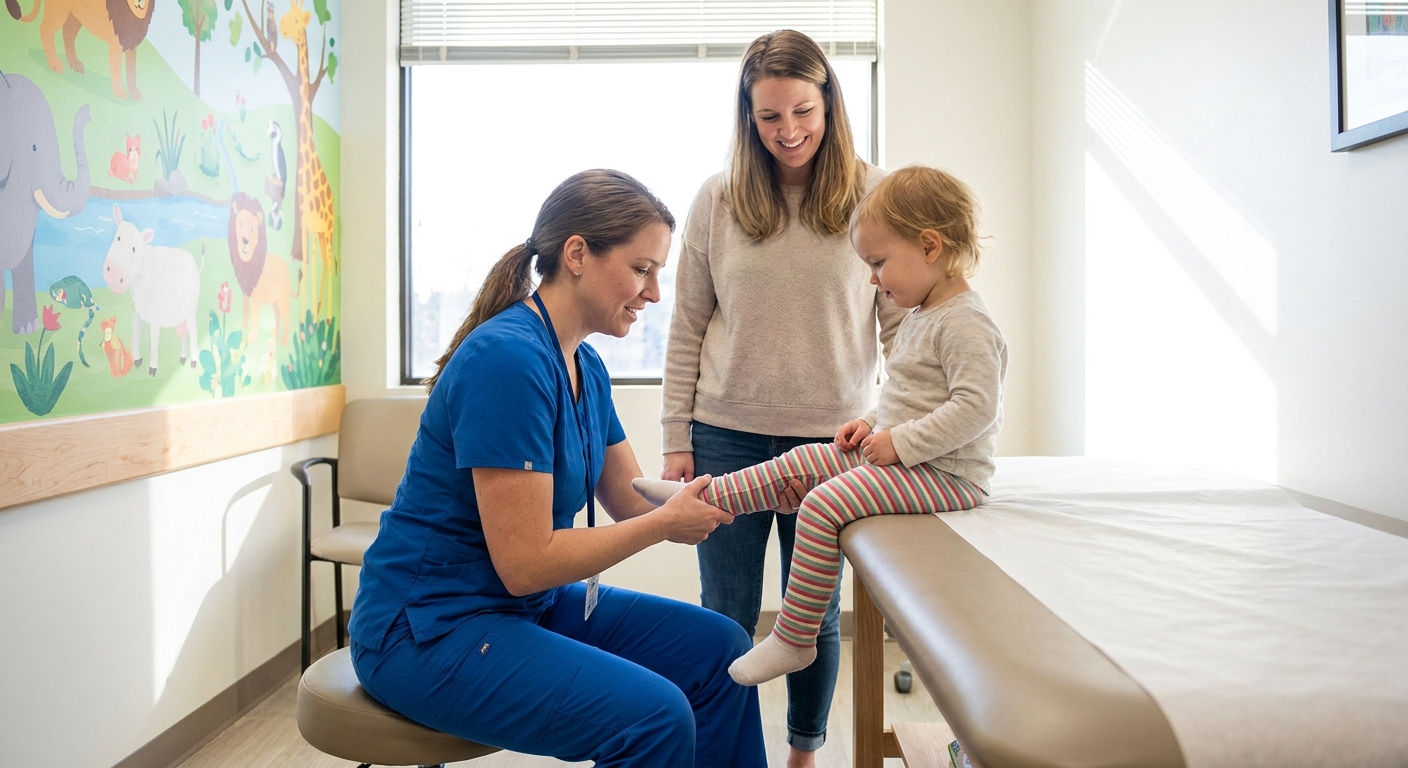
Often, no. Many children with symmetric, age-appropriate bowing or knock knees do not need imaging.
Your pediatrician may consider X-rays or an orthopedics referral when:
- There is asymmetry or a deformity focused at a specific bone rather than a gentle curve.
- There is pain, limp, or functional limitation.
- The pattern is outside the expected age range or is progressive.
- There are concerns about bone health, growth, or an underlying condition.
If imaging is recommended, it is usually to be thorough and to guide next steps, not because something terrible is assumed.
What helps and what is mostly myth
Braces, special shoes, and inserts
For typical physiologic bowing or knock knees, braces and special shoes generally do not speed up normal development. They can be expensive and uncomfortable, and they often add stress without adding benefit.
There are specific orthopedic conditions where bracing may be used for specific ages and stages under specialist guidance (for example, certain cases of Blount disease). The key phrase there is under specialist guidance. Bracing is not the routine fix for everyday toddler bowing.
Vitamins and supplements
Unless a clinician has identified a deficiency or your child has risk factors that warrant testing, supplement “stacks” marketed for straightening legs are not evidence-based.
What is evidence-based is making sure your child gets:
- A balanced diet with calcium-rich foods when possible
- Vitamin D from diet and or supplements as advised by your pediatrician
- Plenty of active play for strength, coordination, and overall bone health
Chiropractic adjustments and stretching programs to “fix” alignment
Gentle stretching and play-based movement can support overall mobility, but there is insufficient evidence that adjustments or aggressive stretching can reshape normal toddler bone alignment. If anyone is promising to “correct” physiologic bow legs in a few visits, I would take a step back.
What to do at home
- Take one set of reference photos every 2 to 3 months, not every day. Use the same setup: standing straight, feet about hip-width, good lighting.
- Track function, not just appearance: running, climbing, squatting, and getting up from the floor are great real-world markers.
- Choose comfortable, flexible footwear for everyday play. Barefoot time indoors is fine if safe.
- Write down your questions before the checkup. Tired brains forget details.
If your gut says “this is changing fast” or “this looks different on one side,” you are not overreacting by asking. You are doing the job.
Questions to ask
- Does this look physiologic for my child’s age?
- Is it symmetric?
- Do you see any signs of rotation (in-toeing or out-toeing) affecting the appearance?
- Do we need follow-up timing, like a recheck in 3 to 6 months?
- Are there any reasons to get X-rays or labs?
- What changes would mean I should call sooner?
The bottom line
Most bow legs in babies and young toddlers, and most knock knees in preschoolers, are normal stages of growth. The biggest reasons to seek a closer look are asymmetry, pain, limping, rapid worsening, a new change after injury, or a pattern that does not start to improve as your child gets older.
And if you needed permission to stop doom-scrolling photos of “toddler bow legs before and after,” here it is. Bring your concerns to your pediatrician, focus on how your child moves and plays, and let time do a lot of the heavy lifting.
Medical note
This article is for general education and cannot diagnose your child. If you are concerned about your toddler’s leg shape, gait, pain, or growth, contact your pediatrician for an exam and personalized guidance.
Sarah Mitchell
Sarah Mitchell is a Registered Pediatric Nurse and a mother of three who has spent over a decade helping families navigate the beautiful, chaotic early years of childhood. She combines evidence-based medical knowledge with real-world parenting experience to offer practical, compassionate advice. At Awesome Parent, Sarah's mission is to help exhausted parents find solutions, trust their instincts, and finally get some sleep.