A calm, practical guide to exclusive pumping: routines that work, boosting and maintaining supply, flange fit troubleshooting, updated clog and mastitis tips...
Breast Milk Storage Rules Parents Actually Use

Sarah Mitchell
Sarah Mitchell is a Registered Pediatric Nurse and a mother of three who has spent over a decade helping families navigate the beautiful, chaotic early years of childhood. She combines evidence-based medical knowledge with real-world parenting experience to offer practical, compassionate advice. At Awesome Parent, Sarah's mission is to help exhausted parents find solutions, trust their instincts, and finally get some sleep.
If you have ever stared at a bottle of pumped milk at 2 AM thinking, Is this still good? you are in excellent company. Breast milk storage is one of those topics where the internet can make it feel complicated and scary. In real life, most families just need a few clear rules, a labeling system that works when you are tired, and a plan for the weird situations like travel days and power outages.
I am a pediatric nurse and a mom of three, and I am going to give you the safety-first guidelines families actually use. This is general education, not a substitute for medical advice. If your baby was born prematurely, is medically fragile, or you are storing milk for a NICU, follow your hospital or lactation team’s specific rules. (Donor or banked milk can also follow different handling rules.)
Quick rules
If you only read one section, let it be this. These are widely used, evidence-based limits for healthy, full-term infants at home. When you are unsure, shorter is safer.
- Room temperature (up to 77°F / 25°C): use within 4 hours. (If the room is hot, aim shorter.)
- Refrigerator (40°F / 4°C or colder): use within 4 days.
- Freezer: best within 6 months, acceptable up to 12 months if the freezer holds a steady 0°F / -18°C.
- Small internal freezer compartment (inside a fridge): treat as short-term storage. A 2-week goal is conservative for quality because temperatures fluctuate. If you can confirm it reliably stays at 0°F / -18°C, storage can be longer.
- Thawed in the fridge: use within 24 hours after it is completely thawed (no ice crystals).
- Warmed milk: use within 2 hours.
- Leftover milk after a feed: use within 2 hours, then discard.
- Do not refreeze fully thawed breast milk.
These ranges align with common CDC-style home storage recommendations used in pediatric settings. If your baby is preterm or medically complex, your care team may recommend stricter handling.
Cheat sheet
- 4 hours: fresh milk at room temp (cool room)
- 4 days: milk in the fridge (40°F / 4°C or colder)
- 2 weeks: conservative goal for a small internal freezer compartment
- 6 months: best quality in a steady 0°F / -18°C freezer
- 12 months: acceptable maximum in a very stable freezer (quality best earlier)
- 24 hours: thawed milk in the fridge, after fully thawed (no ice crystals)
- 2 hours: warmed milk or leftovers after feeding
Before you store
Start clean
You do not need to turn your kitchen into an operating room. You do need decent hygiene, especially if you are pumping multiple times a day.
- Wash hands before pumping and before handling milk.
- Use clean pump parts and clean bottles or storage bags.
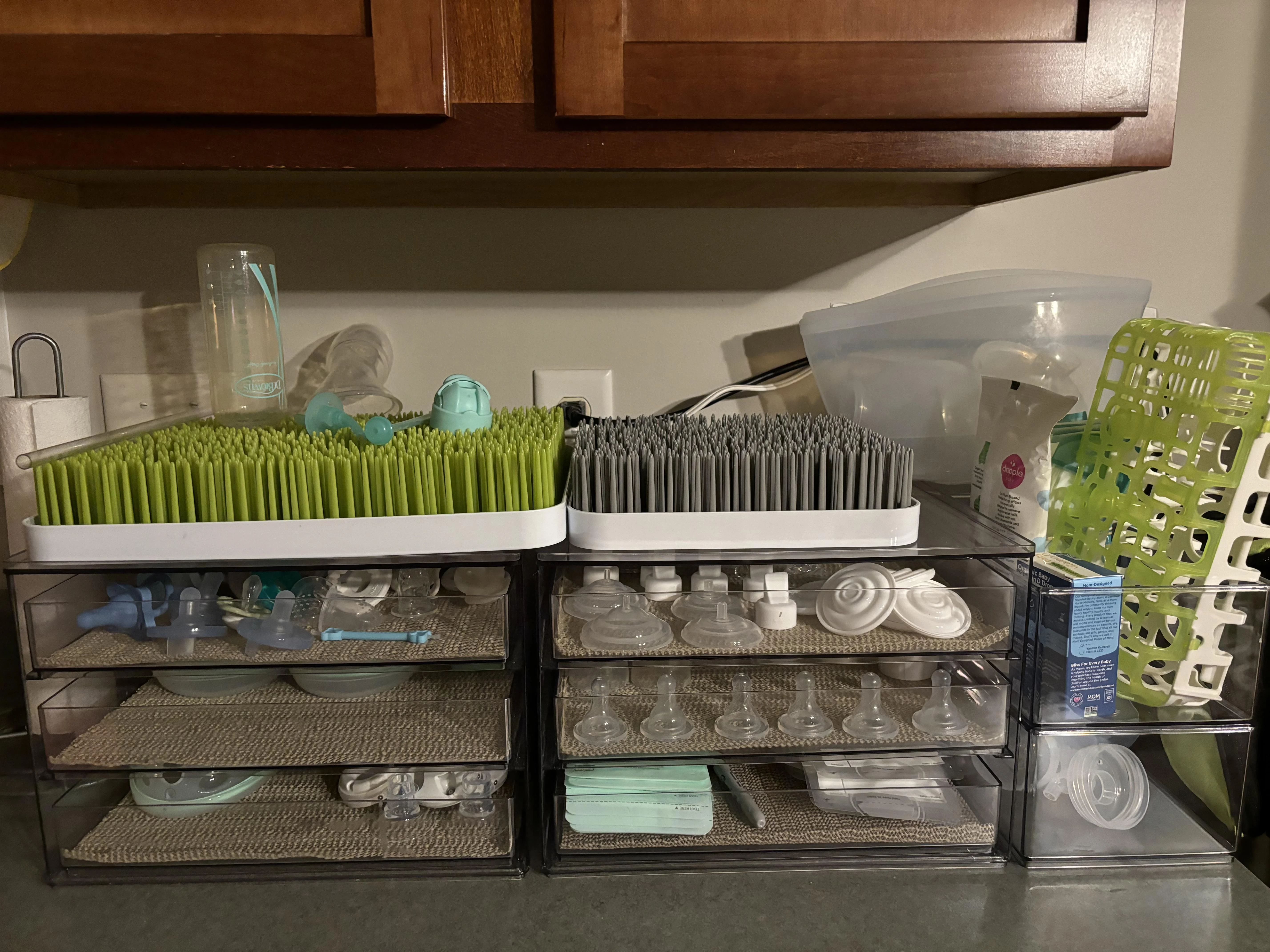
- Let parts fully air-dry on a clean surface if possible.
Pick the right container
- Use food-grade, BPA-free bottles or purpose-made breast milk storage bags.
- Avoid thin disposable sandwich bags. They leak and can split in the freezer.
- Do not overfill bags or bottles. Milk expands when frozen.
Cool before combining
If you pump at different times and want to pool milk into one container, the simplest safety step is: cool the newer milk first. Warm milk poured onto already chilled milk can raise the overall temperature.
- Put freshly pumped milk in the fridge until it is cold.
- Then combine with previously chilled milk.
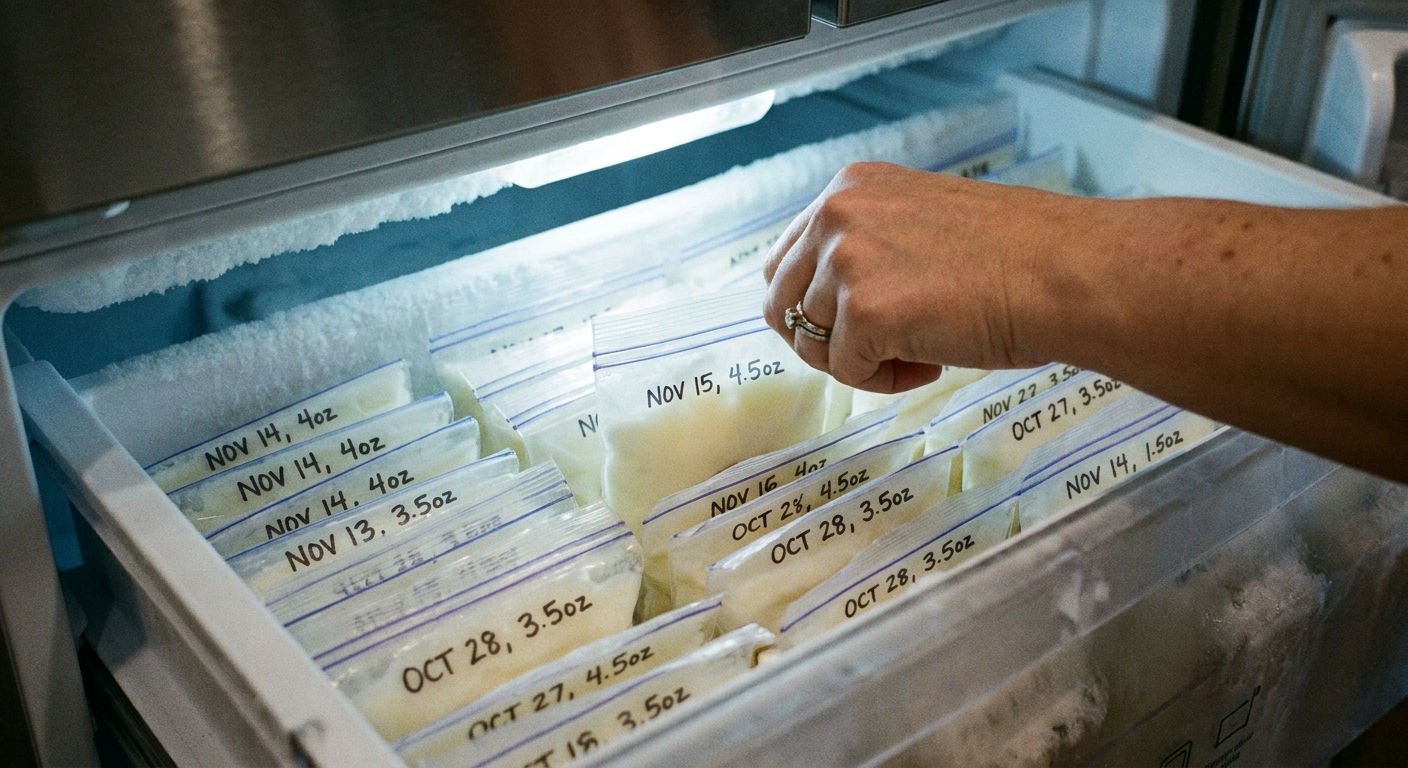
Label like you are exhausted
Because you will be.
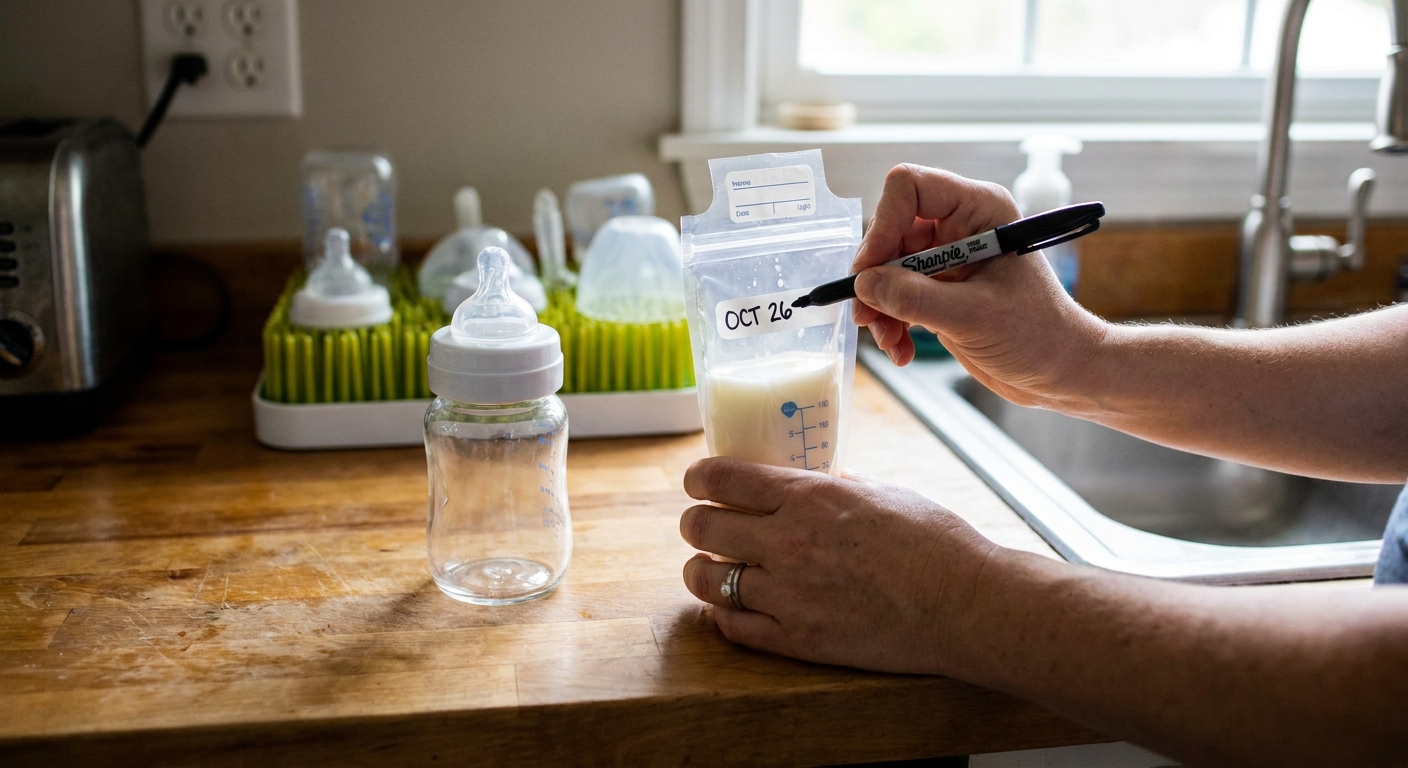
- Write the date (and time if you want).
- If milk is going to daycare, add your baby’s name.
- Store in 2 to 4 oz portions to reduce waste, unless your baby reliably takes larger bottles.
Room temp
Freshly pumped milk can sit out up to 4 hours at normal room temperature (up to 77°F / 25°C). If your home is warmer, if milk is sitting in direct sun, or if you are out in summer heat, aim for 1 to 2 hours.
Fresh vs chilled
The 4-hour guideline is for freshly expressed milk. If milk was previously refrigerated and then brought back to room temp, use a more conservative approach and aim to use it sooner.
Used bottle rule
Once a baby drinks from the bottle, bacteria from the mouth can get into the milk. That is why the rule changes to:
- Use within 2 hours of the end of the feed.
- If you are not going to use it, discard it.
It feels wasteful, I know. If your baby often leaves a little behind, try smaller bottles and top up if needed.
Do not top off leftovers
A common sneaky mistake is adding fresh milk to a bottle your baby already started. It can extend the life of milk that is now on the leftover clock. If your baby needs more, pour a new small amount into a clean bottle and save the rest.
Fresh vs thawed
The 4-hour room temp guideline is for freshly expressed milk. If milk was previously frozen and then thawed, or if it was warmed, treat it more conservatively (use within 2 hours once warmed).
Refrigerator storage
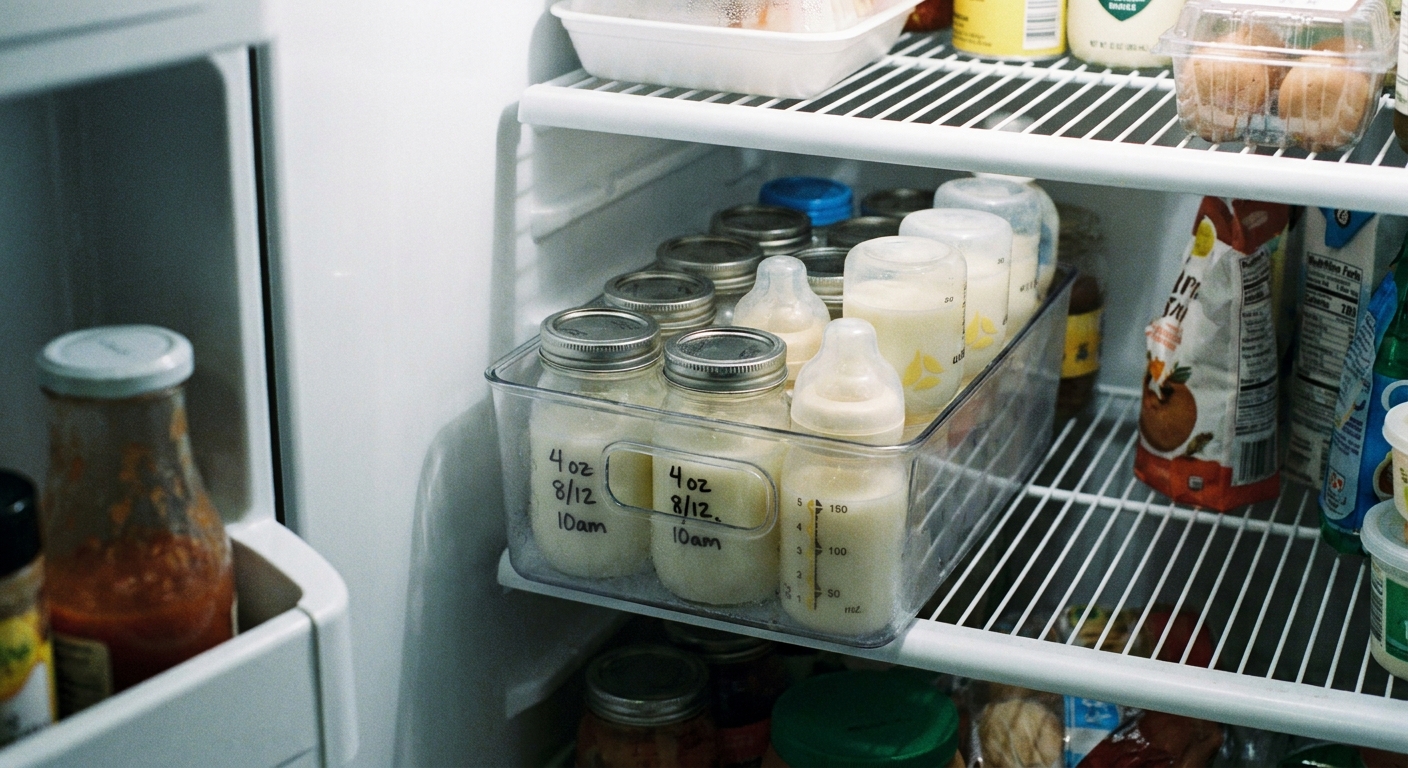
In a fridge set to 40°F / 4°C or colder, breast milk is best used within 4 days.
Where to put it
- Best spot: the back of the main fridge compartment, where temperatures are most stable.
- Avoid: the door, which warms up every time it opens.
Normal changes
- Separation: cream rises to the top. Gently swirl to mix. (Swirling is preferred; shaking is not a major safety issue.)
- Smell: some milk smells soapy after storage because of an enzyme called lipase. If baby drinks it happily, it is typically fine.
If baby refuses high-lipase milk, talk to an IBCLC about options like briefly heating (scalding) freshly pumped milk before freezing. Scalding is usually described as heating to about 180°F / 82°C until tiny bubbles appear around the edges (not a full boil). It can help with taste, but it may reduce some protective components, so it is a tool, not a default step.
Freezer storage
Freezing is a lifesaver for exclusive pumpers, return-to-work plans, and “I just need a cushion” peace of mind.
How long it lasts
- Small internal freezer compartment (inside a fridge): treat as short-term storage. A 2-week goal is conservative for quality because these compartments often fluctuate. If you can confirm it reliably stays at 0°F / -18°C, storage can be longer.
- Freezer with a separate door (steady 0°F / -18°C): best within 6 months, acceptable up to 12 months.
- Deep freezer (0°F / -18°C or colder, very stable): acceptable up to 12 months, though quality is best earlier.
Freeze smart
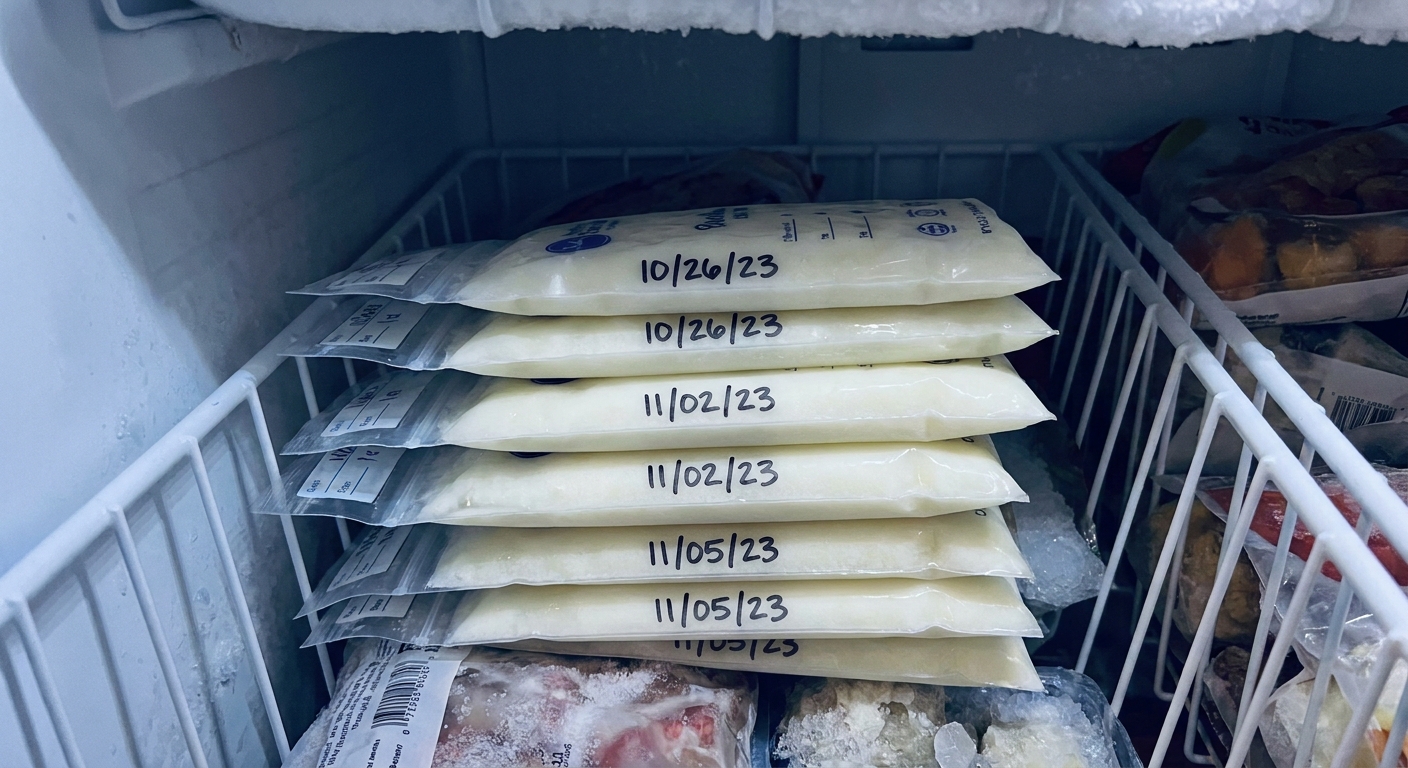
- Freeze bags flat so they stack like little “milk files.”
- Leave a bit of space at the top of bags or bottles.
- Use a first-in, first-out system. New milk goes behind older milk.
If you are building a stash, do not stress about perfection. A small, rotating stash that actually gets used beats a freezer full of mystery bags.
Thawing rules
Thawing is where many parents accidentally break the rules, usually because they are tired and trying to get a hungry baby fed quickly. Here is the safest approach.
Best methods
- Overnight in the refrigerator: easiest and gentlest.
- Warm water bath: place the sealed bag or bottle in a bowl of warm (not hot) water.
- Under lukewarm running water: works in a pinch.
Methods to avoid
- Microwave: it can create hot spots and may damage some protective components of milk.
- Boiling water or direct stovetop heating: overheating increases burn risk and is hard to control.
- Leaving on the counter to thaw: temperature sits in the “bacteria love it here” zone too long.
The 24-hour clock
Once breast milk is completely thawed in the refrigerator (no ice crystals), use it within 24 hours. If you warmed the milk, use it within 2 hours. Thawed milk should not be refrozen.
Mixing fresh and thawed
If you want to combine milk, it is safest to combine milk of the same temperature. Avoid adding warm fresh milk to thawed milk. And if any of the mix includes thawed milk, follow the thawed milk timeline and do not refreeze.
Warming and serving
Breast milk does not have to be warmed. Many babies will take it cool or room temp once they are used to it. If your baby prefers warm, aim for body temperature-ish, not steaming.
How to warm safely
- Use a bottle warmer or a mug of warm water.
- Gently swirl to mix and distribute heat evenly.
- Test a few drops on the inside of your wrist. It should feel neutral, not hot.
How long can milk sit out once warmed?
Try to use within 2 hours. If your baby drank from the bottle, stick to the 2-hour leftover rule.
Traveling
Travel days can make even confident parents second-guess everything. The goal is temperature control and a clear plan for when milk will be used.
Day trips
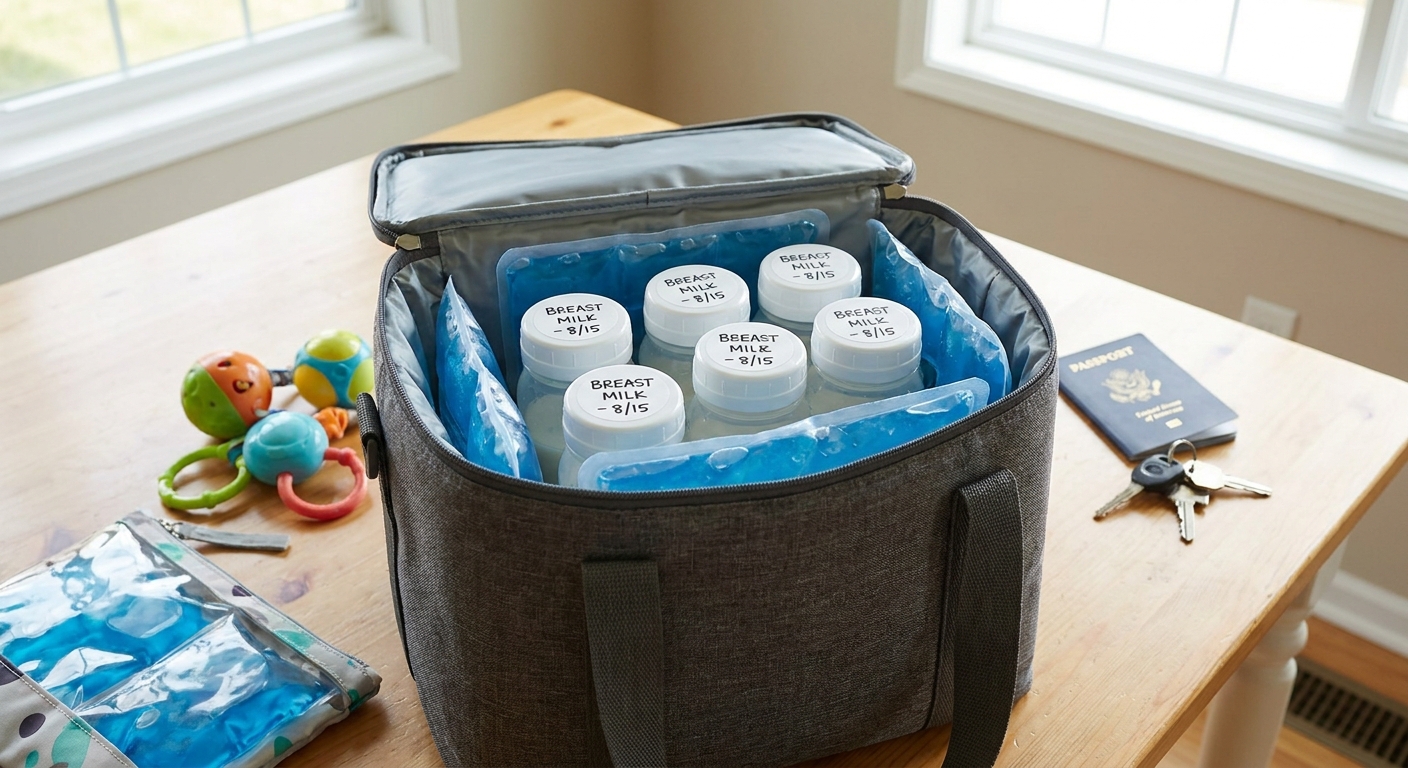
- Bring a cooler with ice packs.
- If you can keep milk at 40°F / 4°C or below, you can treat it like refrigerated milk.
- If milk warms above 40°F / 4°C for an unknown stretch, use a more conservative timeline and aim to use it soon (think room-temp rules).
- If you are out for more than a couple hours, a small cooler thermometer turns guesswork into a decision.
Flying with breast milk
Breast milk is typically allowed through airport security in many countries, often in quantities larger than standard liquids. Rules vary, so check your airport and airline. Practical tips:
- Pack milk in a cooler with frozen gel packs.
- Separate milk from other liquids to speed screening.
- Bring extra bags and labels in case something leaks.
Hotels and shared fridges
- Ask for a mini fridge that can hold 40°F / 4°C reliably. Some minibar fridges are not cold enough.
- Store milk in a closed container or bag for cleanliness.
- If you are unsure about the fridge temp, use milk sooner rather than later.
Power outage
This is the scenario nobody wants, and it happens more often than you would think. Take a breath. Then do two things: keep doors closed, and check temperatures when power returns.
During the outage
- Keep the fridge and freezer doors closed as much as possible.
- If you have thermometers (fridge and freezer), use them. If you do not, consider buying them for the future. They turn guesswork into a decision.
When power returns
Fridge milk
- If you can confirm the fridge stayed at 40°F / 4°C or colder, your usual fridge timeline still applies.
- If you can confirm the fridge was above 40°F / 4°C for about 2 hours or longer, the safest move is to discard the milk. (This is a conservative, safety-first cutoff.)
- If you cannot confirm how warm it got or for how long, err on the side of discarding, especially for younger babies.
Freezer milk
- If milk is still frozen solid: keep it frozen.
- If milk has ice crystals and is still at 40°F / 4°C or colder: you can return it to the freezer. Quality may drop a bit.
- If milk is fully thawed but stayed refrigerator-cold (40°F / 4°C or colder): use within 24 hours after it is completely thawed (no ice crystals) and do not refreeze.
- If milk is above 40°F / 4°C, or you cannot tell: discard.
If you have a large stash, a small freezer thermometer is a cheap tool that makes stressful decisions much clearer.
How to tell milk is bad
Dates and temperatures are the gold standard, but sometimes you end up with a bottle you forgot about. Signs milk may be spoiled:
- Strong sour or rancid smell that is noticeably different from your milk’s usual smell.
- Baby refuses it suddenly when they usually accept it (after you rule out other common reasons).
- Clumps that do not mix back in with gentle swirling (some fat separation is normal).
When in doubt, toss it. I know that hurts. But a little waste is better than a baby with vomiting or diarrhea.
Common mistakes
- Mistake: Storing milk in the fridge door. Fix: Move it to the back in a bin.
- Mistake: Freezing huge bags. Fix: Freeze smaller portions and combine at feeding time if needed.
- Mistake: Combining warm and cold milk. Fix: Chill new milk first.
- Mistake: Trying to “save” leftovers from a used bottle all day. Fix: Use within 2 hours of the feed, then discard.
- Mistake: Topping off a bottle your baby already started. Fix: Pour a fresh small amount into a clean bottle instead.
- Mistake: Forgetting to label. Fix: Keep a marker next to the pump and freezer.
When to call the pediatrician
Storage questions are common, and your pediatrician or lactation consultant can help you tailor rules to your baby. Reach out if:
- Your baby was born premature or has immune or medical issues and you need stricter storage guidance.
- Your baby has vomiting, diarrhea, fever, or seems unusually sleepy after a feed.
- You suspect your fridge or freezer is not holding safe temperatures.
Parenting note from a triage nurse: you do not have to prove you are “worried enough” to call. If you are unsure, it is okay to ask.
A simple routine
If decision fatigue is your biggest problem, here is a low-effort system:
- Today’s milk: keep in the fridge, use within 4 days.
- Extra milk: freeze in 2 to 4 oz portions, flat.
- Night before: move tomorrow’s milk from freezer to fridge to thaw.
- Always: oldest milk gets used first.
And if you slipped up on a rule once during a rough night, you are not a bad parent. You are a tired parent. Set yourself up with labels, bins, thermometers, and smaller bottles so 3 AM you has fewer judgment calls to make.
Sarah Mitchell
Sarah Mitchell is a Registered Pediatric Nurse and a mother of three who has spent over a decade helping families navigate the beautiful, chaotic early years of childhood. She combines evidence-based medical knowledge with real-world parenting experience to offer practical, compassionate advice. At Awesome Parent, Sarah's mission is to help exhausted parents find solutions, trust their instincts, and finally get some sleep.