Can Teething Cause a Fever?

Sarah Mitchell
Sarah Mitchell is a Registered Pediatric Nurse and a mother of three who has spent over a decade helping families navigate the beautiful, chaotic early years of childhood. She combines evidence-based medical knowledge with real-world parenting experience to offer practical, compassionate advice. At Awesome Parent, Sarah's mission is to help exhausted parents find solutions, trust their instincts, and finally get some sleep.
If you have ever touched your baby’s warm forehead mid-teething and thought, “Is this just teeth… or are we getting sick?” you are not alone. I heard this question constantly as a pediatric triage nurse, and I have asked it myself at 2:00 AM with my own kids.
Here’s the calm, evidence-based answer: teething can make babies a little warmer, but it rarely causes a true fever. If your child has a real fever, treat it as possible illness until proven otherwise.
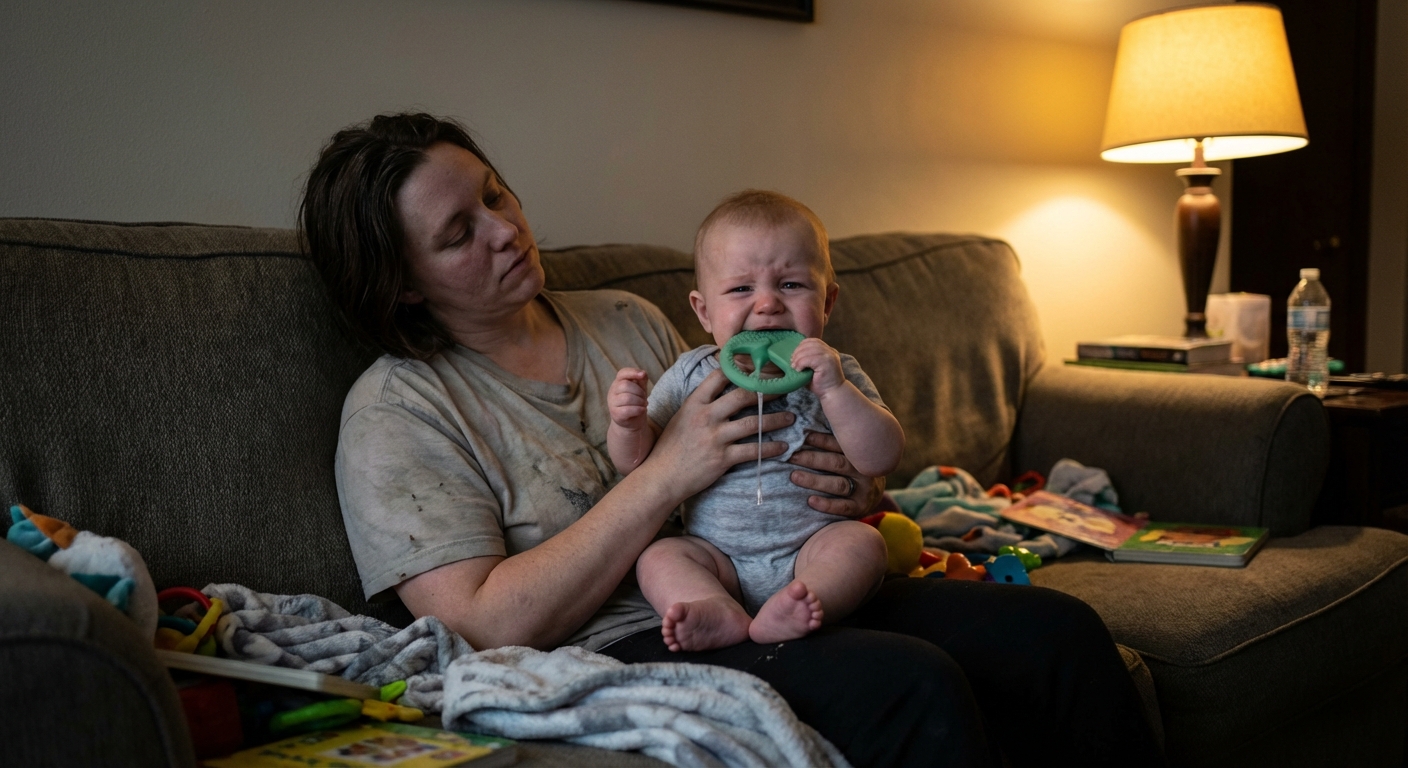
Teething and fever: what the evidence shows
Research that tracks babies during tooth eruption shows some children have a small bump in temperature, but generally not into the fever range used in pediatric care. That is why many pediatric resources (including guidance commonly used in clinics and reflected in AAP-style fever thresholds) separate “a little warm” from “a true fever.”
- Possible: a slightly elevated temperature during teething.
- Uncommon: a true fever from teething alone.
The most common reason parents connect teething and fever is timing. Teeth often start coming in around the same age that babies begin catching more viruses, especially if they are around siblings, daycare, playgroups, or simply putting everything in their mouth.
Bottom line: If the thermometer reads in the fever range, do not assume it is the tooth first. Treat it like potential illness and watch closely.
What counts as a true fever?
Use a thermometer, not a hand check. Babies can feel warm after crying, bundling, a warm room, or being held close.
Fever thresholds (commonly used)
- Rectal (most accurate for infants): Fever is 100.4°F (38°C) or higher.
- Forehead/temporal: Convenient, but can be less reliable. Confirm with a more accurate method if you get a high reading.
- Ear (tympanic): Can be accurate if positioned correctly, but can be difficult to use accurately in young infants (often under 6 months, sometimes under 1 year depending on the device and fit).
- Armpit/axillary: Useful for screening, but less accurate. If it suggests fever, confirm with rectal (especially in infants) or the method your pediatrician recommends.
- Oral: Not reliable for babies and young toddlers.
What teething may cause instead
Some babies run a little warm, often described as below 100.4°F (38°C). If your baby is hovering under that line and otherwise acting fairly normal, teething could be part of the picture.
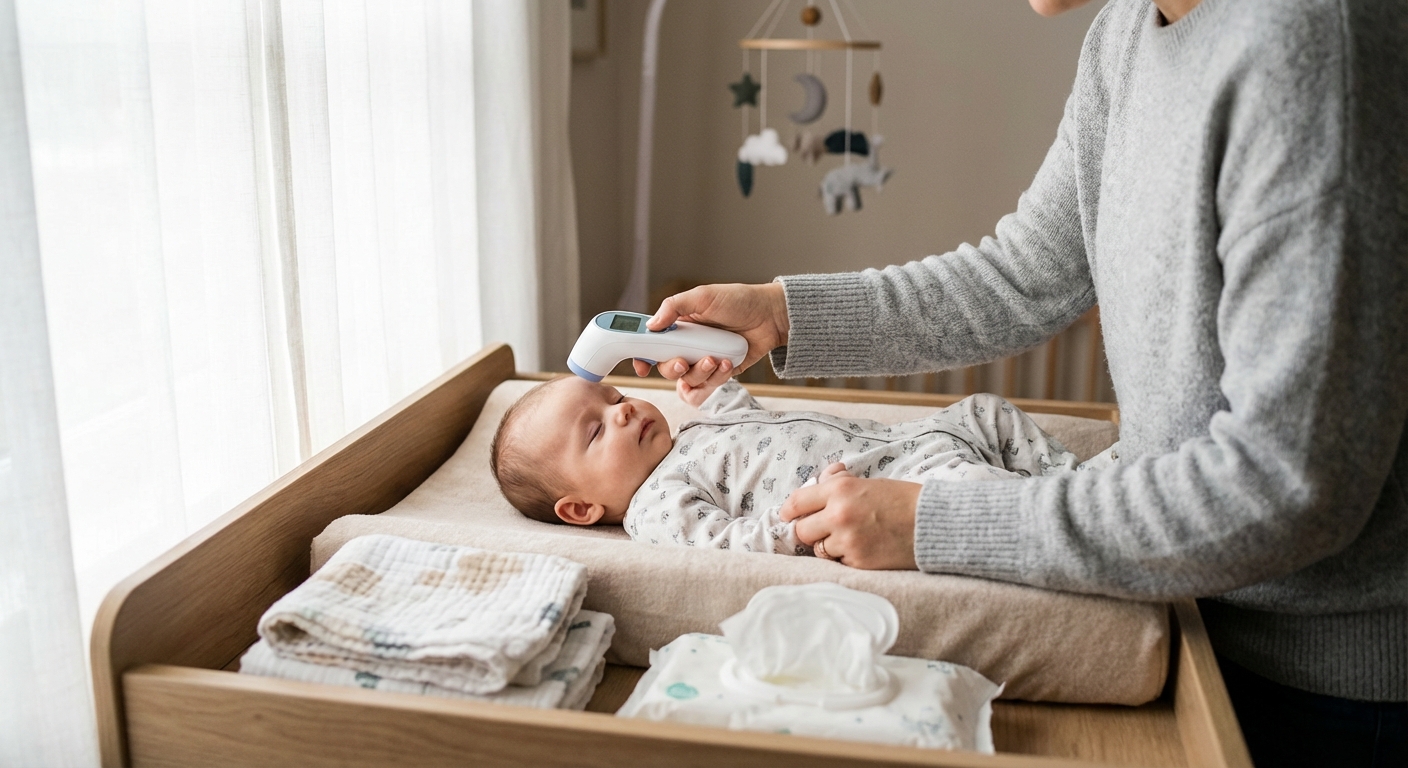
Common teething symptoms
Teething can be dramatic in a very specific way. Here are the usual suspects.
Typical teething signs
- Drooling (often a lot)
- Chewing on hands, toys, or anything within reach
- Gum swelling or tenderness
- Mild irritability, especially later in the day
- Rubbing cheeks or pulling ears (referred discomfort, not always an ear infection)
- Sleep disruption (because discomfort loves a bedtime cameo)
- Slight appetite dip for solids, sometimes nursing or bottles feel more soothing
Less typical for teething alone
- Fever at or above 100.4°F (38°C)
- Vomiting
- Significant diarrhea (a little looser stool can happen from swallowing drool, but watery frequent diarrhea is a red flag)
- Severe lethargy or unusual sleepiness
- Rash that spreads beyond mild drool irritation on the chin or chest
Teething or illness?
When parents call a clinic, these are the exact questions we ask because they help separate “uncomfortable” from “sick.”
Clues it is mostly teething
- Temperature is normal or slightly elevated, but not a true fever.
- Baby is still having wet diapers and looks well hydrated.
- Fussiness comes in waves and improves with chewing, cuddling, or appropriate pain relief.
- No major respiratory symptoms, or only mild sniffles.
Clues it is likely illness (even if teething is also happening)
- Fever 100.4°F (38°C) or higher.
- Runny nose plus cough that is worsening, fast breathing, or wheezing.
- New rash with fever.
- Watery diarrhea, vomiting, or poor intake.
- Baby is much harder to console than usual, or unusually sleepy.
If you are unsure, you are not “overreacting” by calling your pediatrician. You are gathering information. That is good parenting.
When to call the doctor
These guidelines are conservative on purpose. Babies can change quickly, and it is always okay to trust your gut. When in doubt, follow your pediatrician’s office guidance for your child’s age.
Call right away or seek urgent care
- Any baby under 3 months with a rectal temperature of 100.4°F (38°C) or higher.
- Fever plus trouble breathing, bluish lips, or persistent chest retractions.
- Signs of dehydration: very dry mouth, no tears when crying, or significantly fewer wet diapers.
- Seizure, stiff neck, extreme lethargy, or baby is difficult to wake.
- Purple or non-blanching rash (spots that do not fade when pressed).
Call your pediatrician soon
- Fever with ear pain signs (intense crying when lying down, tugging plus fever, new drainage from the ear).
- Fever that persists beyond 24 hours in younger babies and toddlers (especially under 12 months), or any fever that lasts about 3 days, or sooner if symptoms worsen.
- Baby has a chronic condition or is immunocompromised.
- Your baby seems “off” in a way you cannot quite explain.
Quick note: If your child recently had vaccines, a low-grade fever can be a normal immune response. If you are not sure what is normal for that vaccine and age, call and ask.
If you do not have a thermometer: If your baby feels hot and is acting unwell, treat it seriously and call your pediatrician. If your baby is under 3 months and might have a fever, you should get an accurate temperature as soon as possible (rectal is typically recommended for that age).
Safe ways to soothe teething
There is no award for suffering through teething without help. Comfort matters, and there are safe ways to do it.
What helps most
- Chilled (not frozen) teether: Cold can reduce gum inflammation. If using a washcloth, wet it, chill it, and supervise.
- Gentle gum massage: Clean finger, light pressure, 30 to 60 seconds.
- Extra fluids: Offer feeds a little more often because some babies drink less when they are uncomfortable. If your baby is under 6 months, stick with breast milk or formula unless your clinician advises otherwise. For older babies, small sips of water can be okay if age appropriate.
- Drool skin care: Pat dry and use a thin barrier ointment on chin and chest to prevent rash.
Pain medicine: what is ok
If your baby is truly uncomfortable, medication can be appropriate. Your pediatrician can help with dosing based on your child’s weight and age.
Generally considered safe when used correctly
- Acetaminophen for infants and older babies (dose by weight, and use the product your pediatrician recommends).
- Ibuprofen for babies 6 months and older (dose by weight and confirm with your clinician if unsure).
Important dosing reminders
- Dose by weight, not age alone, and use an oral syringe or dosing device that comes with the product.
- Do not alternate acetaminophen and ibuprofen unless your pediatrician specifically instructs you to. Alternating schedules are easy to mix up at 2 AM.
- Be mindful of different formulations and concentrations. If you are unsure, ask your pediatrician or pharmacist before giving a dose.
Skip these teething remedies
- Teething gels with benzocaine: not recommended for infants due to a rare but serious risk (methemoglobinemia).
- Homeopathic teething tablets: safety and quality can be inconsistent.
- Amber teething necklaces: choking and strangulation hazards.
- Freezing teethers solid: can bruise tender gums.
- Rubbing alcohol on gums: never safe.
If you are ever unsure about a product, bring it to your next visit or ask your pediatrician before using it.
How to take temperature
If fever is on the table, accuracy matters.
Best practices
- Under 3 months: Rectal temperature is typically recommended for accuracy.
- 3 to 36 months: Rectal is most accurate; temporal can be useful for screening, confirm if high.
- Do not add a degree to modern digital readings unless your pediatrician specifically instructs you to.
- Recheck if your baby was just bundled, crying hard, or in a warm car seat.
And yes, it is normal to take it twice because the first reading feels emotionally suspicious.
FAQ
Can teething cause a fever at night?
Teething discomfort often feels worse at night because there are fewer distractions, but a true fever is still more likely illness than teething. If the temperature is 100.4°F (38°C) or higher (especially on a rectal thermometer in an infant), treat it as fever.
My baby is teething and has 101°F. What should I do?
101°F is a real fever. Focus on hydration, comfort, and monitoring for other symptoms. Call your pediatrician for guidance, especially if your baby is under 6 months, seems very uncomfortable, has trouble breathing, is not drinking, or you are worried.
Does teething cause diarrhea?
Some babies have slightly looser stools from swallowing drool, but watery frequent diarrhea is not a typical teething symptom and should be treated as possible illness.
The takeaway
Teething can make your baby drooly, fussy, and mildly warm. But teething rarely causes a true fever. If the thermometer says your baby has a fever, your job is not to “tough it out because it is probably teeth.” Your job is to pause, assess, and treat it like potential illness.
If you want a simple rule to keep in your back pocket at 3 AM: below 100.4°F (38°C) with classic teething signs often equals teeth. 100.4°F (38°C) or higher equals call it a fever and look for illness.