
Chronic diarrhea, slow growth, irritability, family history, and what testing looks like. Plus a parent-friendly overview of strict gluten-free living withou...
Celiac Diagnosis in Kids: Blood Tests, Biopsy, and the Gluten Challenge

Sarah Mitchell
Sarah Mitchell is a Registered Pediatric Nurse and a mother of three who has spent over a decade helping families navigate the beautiful, chaotic early years of childhood. She combines evidence-based medical knowledge with real-world parenting experience to offer practical, compassionate advice. At Awesome Parent, Sarah's mission is to help exhausted parents find solutions, trust their instincts, and finally get some sleep.
If you are in the testing stage for celiac disease, you are probably living in limbo. Your child is uncomfortable, you are trying to do the right thing, and every instinct is screaming, “Let’s just cut gluten and see if it helps.”
I get it. I used to be the triage nurse on the phone telling parents to not change the diet yet, and then I became the parent staring at a toddler who refused dinner unless it was crackers.
Quick note: This is general education, not medical advice. Always follow your child’s clinician and GI team, especially around gluten intake and timing.
This article is your calm, step-by-step explanation of how celiac disease is diagnosed in children, what the blood tests mean, when an endoscopy is used, and why doctors often ask kids to keep eating gluten during the workup.

At a glance: the usual steps
- Keep gluten in the diet (unless your clinician says otherwise).
- Start with blood tests: tTG-IgA plus total IgA (often with a few supporting labs).
- Confirm the picture: sometimes with EMA-IgA and other antibodies.
- Endoscopy and biopsy for many kids, or a no-biopsy diagnosis for some kids who meet strict criteria.
What counts as an official celiac diagnosis?
Celiac disease is an autoimmune condition where gluten triggers the immune system to attack the lining of the small intestine. The key word is autoimmune. A true diagnosis is not based on symptoms alone, because lots of common childhood issues can look similar.
In most kids, the diagnosis is made with a combination of:
- Blood tests that look for celiac-related antibodies
- Sometimes an endoscopy with biopsy to look for intestinal damage
- Clinical context, meaning symptoms, growth, labs like anemia, and family history
Some pediatric specialists can diagnose certain children without biopsy if blood work is very strongly positive and strict criteria are met (often based on ESPGHAN-style pediatric guidelines). In plain language, that “no-biopsy” pathway typically requires:
- Very high tTG-IgA (often at least 10 times the lab’s upper limit of normal)
- A second confirmatory test like EMA-IgA positive on a separate blood sample
- The right clinical picture and specialist oversight (some centers also add genetic testing in specific situations)
Many children still need an endoscopy to confirm the diagnosis or clarify confusing results.
The main blood test: tTG-IgA
The most commonly used screening test for celiac disease is:
- Tissue transglutaminase IgA (tTG-IgA)
Think of tTG-IgA as your child’s immune system waving a flag that says, “Gluten is causing a problem.” It is widely available and, in the right situation, it is a strong test.
What parents should know about tTG-IgA
- It works best when your child is eating gluten regularly. If gluten is removed or reduced, antibody levels can fall and the test can look normal even if celiac disease is present.
- It is a screening test, not a symptom meter. Some kids with sky-high antibodies have mild symptoms. Some kids with significant symptoms have only mildly elevated numbers.
- Numbers matter, but context matters more. A mildly positive result can happen for reasons other than celiac, and a specialist may repeat testing or add other labs.
If your child’s tTG-IgA is clearly elevated, your pediatrician will usually refer you to a pediatric gastroenterologist for next steps.
Why total IgA is checked
When you see “total IgA” on the lab order, it is not extra fluff. It is a safety check.
Some children have IgA deficiency, meaning their bodies do not make enough IgA antibodies. If a child has low IgA, the tTG-IgA test can come back falsely negative because the immune system cannot produce the antibody the test is looking for.
If total IgA is low
Your clinician may switch to IgG-based tests, such as:
- tTG-IgG
- DGP-IgG (deamidated gliadin peptide IgG)
This is one of the most common reasons a family is told, “The blood work was normal,” but the GI specialist still wants to keep digging.
Other blood tests you may see
Depending on your child’s age, symptoms, and initial results, the gastroenterologist may add:
- EMA-IgA (endomysial antibody): very specific, often used as a confirmatory test, and sometimes used in a no-biopsy pathway when tTG-IgA is very high
- DGP IgA/IgG: can be helpful in younger children (especially under about age 2) and in certain unclear cases
- Nutritional and screening labs: CBC (anemia), iron studies, folate, B12, vitamin D, liver enzymes, thyroid screening, and growth or nutrition markers
Those nutritional and screening labs do not diagnose celiac disease by themselves, but they help show what celiac might be doing to your child’s body.
Genetic testing: when it helps
You may hear about genetic testing for HLA-DQ2 and HLA-DQ8. This does not diagnose celiac disease.
- If HLA-DQ2 and DQ8 are negative, celiac disease is very unlikely, which can be useful when labs are confusing or a child is already gluten-free.
- If HLA-DQ2 or DQ8 is positive, it only means your child has the genetic risk. Many people do and never develop celiac.
Some GI teams use this as a rule-out tool in specific scenarios. Your clinician can tell you if it is helpful for your child.
Common pitfalls
Here are the big ones I see, both as a nurse and as a parent in waiting rooms.
1) Starting gluten-free too early
This is the classic trap. Removing gluten can ease symptoms and lower antibodies, which makes tests harder to interpret. If you already started a gluten-free diet, tell the doctor honestly. It changes the plan, and you will not be the first family to do it.
2) Borderline results without a plan
Mildly elevated tTG-IgA results can happen with other inflammatory conditions or transient illness. That does not mean your child is fine, and it does not mean they definitely have celiac disease. It usually means you need a pediatric GI to decide whether to repeat labs, add confirmatory testing, or proceed to endoscopy.
3) Testing in very young toddlers
tTG-IgA is still commonly used in toddlers, but in some very young children the antibody pattern can be less clear early on. That is why GI teams sometimes add DGP testing (often IgG), repeat labs later, or make decisions based on the whole picture.
4) Assuming symptoms alone confirm celiac
Gluten can be involved in several different conditions, including wheat allergy and non-celiac gluten sensitivity. The treatment and long-term implications are different, so nailing the correct diagnosis matters.
When endoscopy is used
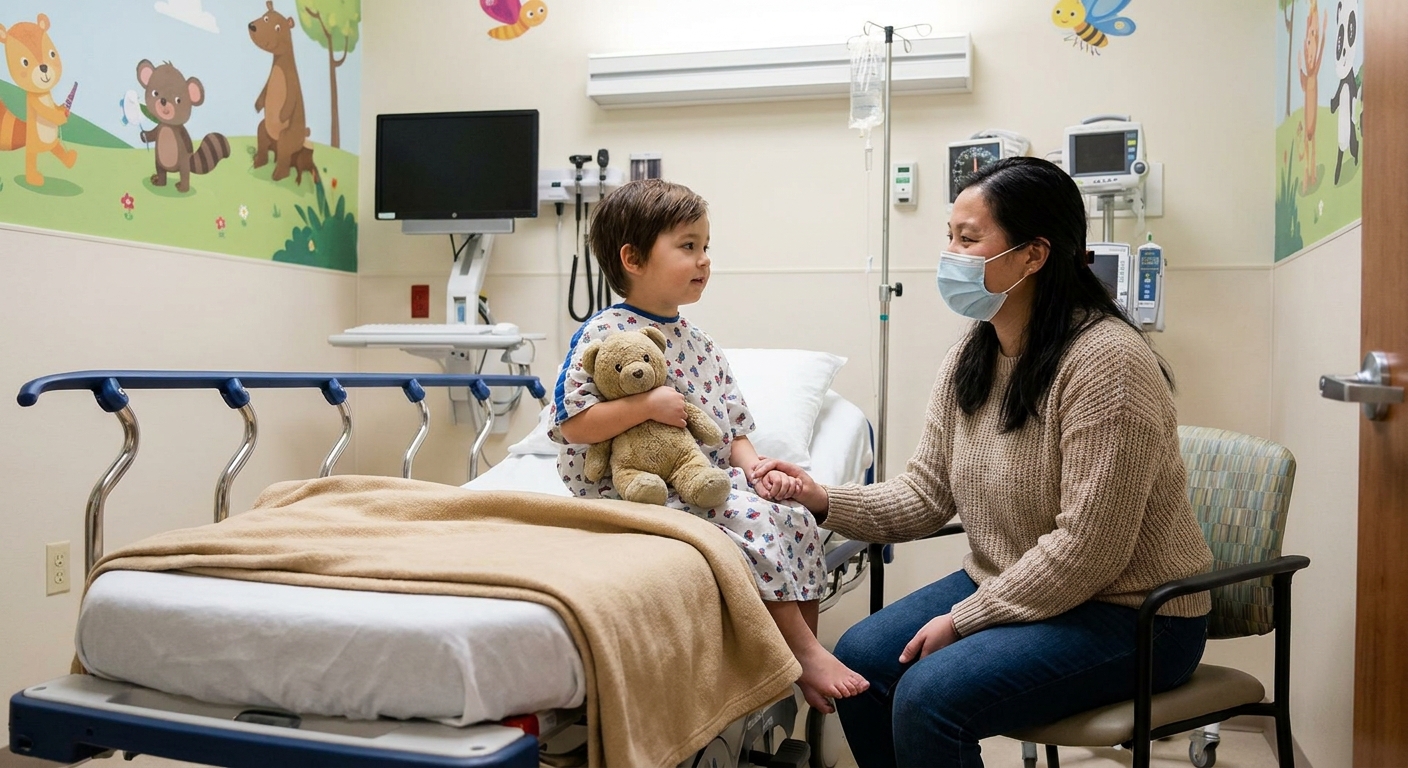
An upper endoscopy (EGD) lets the specialist look at the first part of the small intestine and take tiny biopsies. The biopsies are checked for damage that is typical of celiac disease.
This step is often recommended when:
- Blood tests are positive but not high enough for a no-biopsy pathway
- Results are mixed or confusing
- Your child has significant symptoms or growth concerns
- There is a strong family history and high suspicion despite uncertain labs
Why kids must keep eating gluten
This is the part that feels unfair. If gluten is the problem, why keep giving it?
Because the tests are looking for your child’s immune reaction to gluten. If gluten is removed or cut way down:
- Antibody levels can drop
- The intestine can begin to heal
- Biopsies can look normal or less clear
In other words, going gluten-free early can erase the evidence we need to make a solid diagnosis.
How much gluten is “enough” before testing?
Your GI team should give you a specific target, and there is some variation between clinics. As a general, guideline-aligned ballpark, many specialists aim for something like about 1 to 2 servings of gluten per day (for example, roughly 1 to 2 slices of bread or the equivalent) for several weeks before initial blood work, and sometimes longer if an endoscopy is planned.
If your child is barely eating gluten, or has been unintentionally “mostly gluten-free,” mention that. Inadequate gluten intake is a common reason tests come back falsely reassuring.
The gluten challenge
A “gluten challenge” means reintroducing gluten after a child has already been gluten-free, so testing can be accurate.
It is hard because:
- Symptoms can return quickly
- Kids may refuse foods that make them feel awful
- Parents feel like they are causing harm on purpose
How much and how long?
This depends on what you are trying to accomplish (blood tests only versus blood tests plus biopsy), how long your child has been gluten-free, and how severe symptoms are.
Many pediatric protocols use a target in the range of about 1 to 2 slices of bread per day (or equivalent). The duration can range from a few weeks to 8 to 12 weeks or longer in some cases, especially if the goal is to maximize the chance of clear serology and biopsy findings. Your child’s GI team should tailor the plan to your situation.
If your child has been gluten-free and the doctor recommends a gluten challenge, ask these specific questions:
- How much gluten per day do you want?
- For how many weeks?
- Are we aiming for blood tests only, or blood tests plus biopsy?
- What symptoms should make us stop and call you?
- How can we manage constipation, diarrhea , nausea, or pain during the challenge?
This is one place where you want a pediatric GI guiding you, not internet rules.
If your child cannot tolerate gluten
Sometimes kids simply cannot function during the workup. If gluten exposure is causing severe pain, repeated vomiting, dehydration, significant weight loss, or your child is just not able to attend school or daycare, do not white-knuckle it at home.
Call your pediatrician or GI team and say it plainly: “We are trying to keep gluten in, but symptoms are getting unmanageable.” They may adjust the amount, shorten the plan, change the testing sequence, treat symptoms more aggressively, or talk through risk and benefit in your specific case.
What else doctors consider
Part of why the diagnosis process can feel slow is that many common childhood problems overlap with celiac symptoms. Depending on your child’s story, your clinician may also consider things like constipation, lactose intolerance (sometimes temporary if the gut is irritated), functional abdominal pain, IBS-like patterns, inflammatory bowel disease, infections, or thyroid issues.
This is not to dismiss your concern. It is to make sure the final answer fits, and the treatment actually helps.
What to do while you wait
Waiting for celiac results can feel endless, especially if you are watching your child struggle to eat, sleep, or gain weight.
While you wait, focus on three things
- Keep gluten consistent unless your doctor tells you otherwise. Consistency helps testing be accurate.
- Track symptoms simply: stool changes, belly pain timing, vomiting, rashes, fatigue, and what foods seem to trigger the worst days.
- Watch hydration and growth: if your child is having frequent diarrhea, vomiting, or poor intake, call the pediatrician.
If you are comparing your situation to a symptom-focused celiac page, remember this: symptom lists are meant to raise suspicion. Diagnosis pages are about proving it safely. They serve different purposes, and it is normal to feel whiplash going back and forth.
How to interpret results
Here is a parent-friendly way to think about common scenarios. This is not a substitute for your doctor, but it can keep you grounded until your follow-up appointment.
tTG-IgA negative, total IgA normal
Celiac is less likely, but not impossible if symptoms and history are strong. False negatives can happen if gluten intake has been low, if it is very early disease, or in certain medical situations that affect the immune system. Your doctor may consider other causes, repeat testing later, or add other labs.
tTG-IgA negative, total IgA low
The screening test may not be reliable. Ask whether IgG-based testing was done or should be done.
tTG-IgA mildly positive
This often leads to repeat labs, additional antibody tests, and sometimes endoscopy. The next step depends on seeing how the immune system behaves with gluten still present.
tTG-IgA clearly positive or very high
Your child will likely be referred to pediatric GI. Depending on age and local guidelines, they may recommend endoscopy or confirm with additional blood tests (often including EMA-IgA) as part of a no-biopsy diagnostic pathway.
After diagnosis
A confirmed diagnosis matters because a true celiac diagnosis means:
- A strict lifelong gluten-free diet, not a “most of the time” situation
- School and daycare accommodations with real medical weight
- Follow-up labs to confirm healing and monitor nutrition
- Possible screening for close relatives
When families skip the proper testing and go gluten-free based on symptoms alone, it can create years of uncertainty. Later, if your child wants a definitive answer, they may need a gluten challenge that is even harder when they are older.
Call the pediatrician urgently
Celiac testing is usually outpatient and not an emergency, but some symptoms should be addressed quickly:
- Signs of dehydration (very dry mouth, no tears, minimal urine, lethargy)
- Persistent vomiting
- Blood in stool or black stools
- Severe belly pain that is worsening or localized
- Rapid weight loss, poor growth, or extreme fatigue
If your gut says, “This is more than a routine wait,” trust that instinct and call.
Appointment script
If you want to walk in prepared, here are a few sentences you can steal:
- “My child is currently eating gluten daily. How long do you need that to continue for accurate testing?”
- “Was total IgA checked, and was it normal?”
- “If the results are borderline, what is our next step and timeline?”
- “Do you recommend endoscopy in our case, and why?”
- “If we already reduced gluten, what gluten challenge plan do you want us to follow?”
You do not need to be the expert. You just need a clear plan.