A parent-friendly guide to common bites and stings, normal vs allergic reactions, tick removal, home treatment, antihistamines, prevention tips, and emergenc...
Chigger Bites in Kids

Sarah Mitchell
Sarah Mitchell is a Registered Pediatric Nurse and a mother of three who has spent over a decade helping families navigate the beautiful, chaotic early years of childhood. She combines evidence-based medical knowledge with real-world parenting experience to offer practical, compassionate advice. At Awesome Parent, Sarah's mission is to help exhausted parents find solutions, trust their instincts, and finally get some sleep.
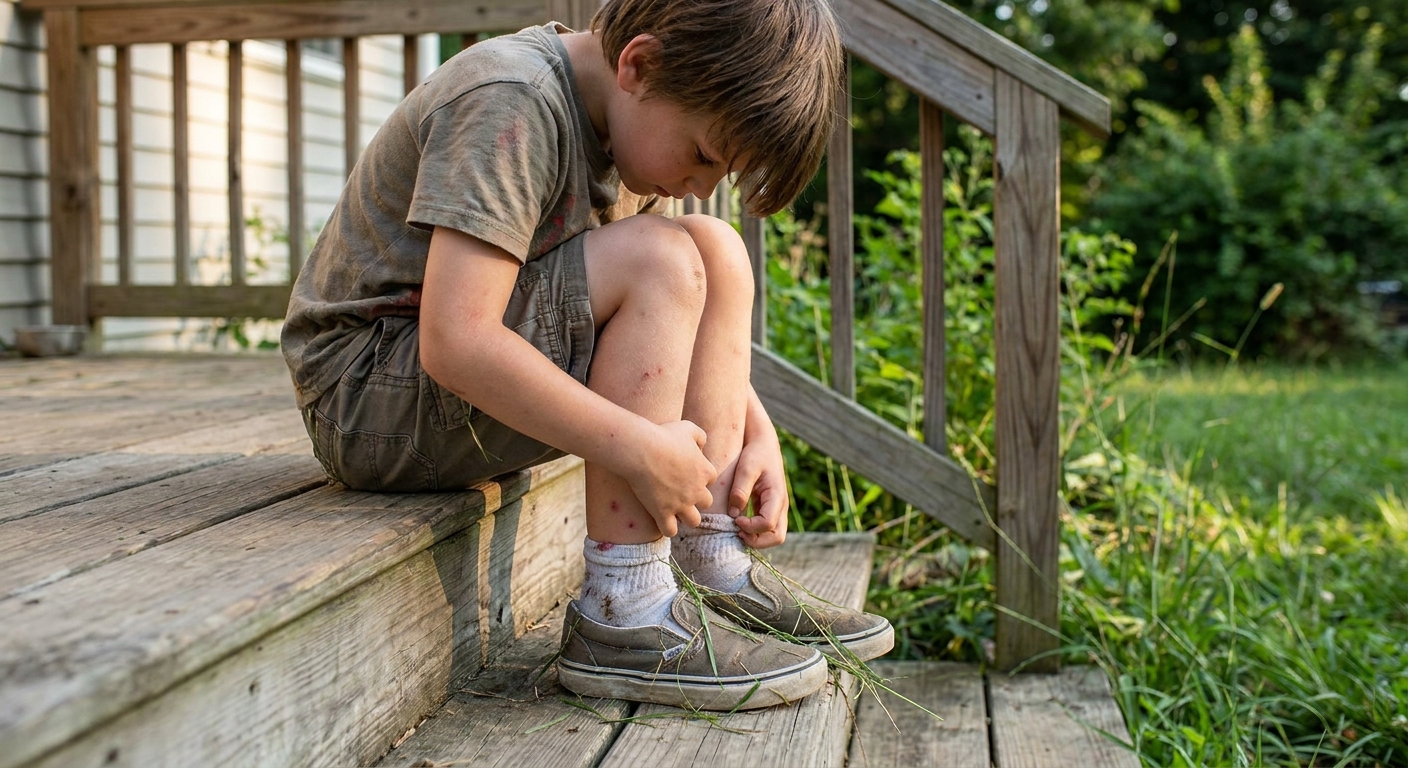
If your child comes in from playing in grass and suddenly cannot stop scratching, chiggers jump to the top of the suspect list. The good news is that chigger bites are miserable but usually manageable at home. The tricky part is that they can look like other rashes, and mixing up chiggers with poison ivy or scabies can lead to the wrong treatment and a longer, itchier week.
Let’s walk through what chigger bites typically look like on kids, what the timeline feels like, how to relieve the itch safely, and when to call your pediatrician.
What chigger bites look like on children
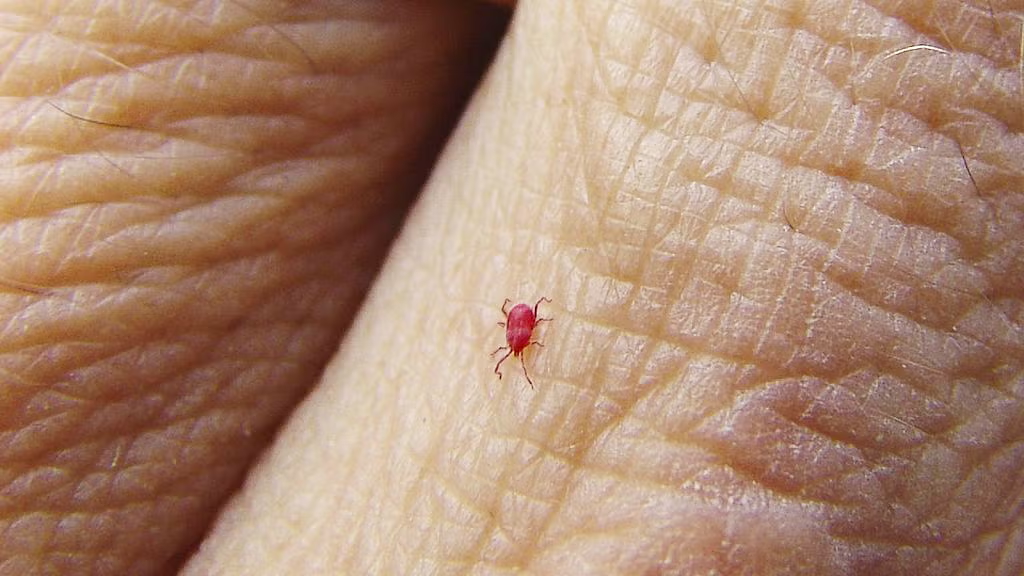
Chiggers are tiny mite larvae that attach to skin and trigger an intense itchy reaction. They do not burrow into the skin. They also usually do not stay attached for long. In many cases they are removed with clothing changes, bathing, or scratching, and what lingers is the skin reaction.
If you have ever heard that chiggers “bite” like mosquitoes, here is the more accurate version: they irritate the skin by using digestive enzymes and then feed on damaged skin cells, not by sucking blood. That is why the itch can feel so intense.
Myth to skip: Putting clear nail polish on bites to “suffocate” chiggers. Since chiggers are not burrowed in your child’s skin, nail polish will not help and it can irritate already inflamed skin.
Common appearance
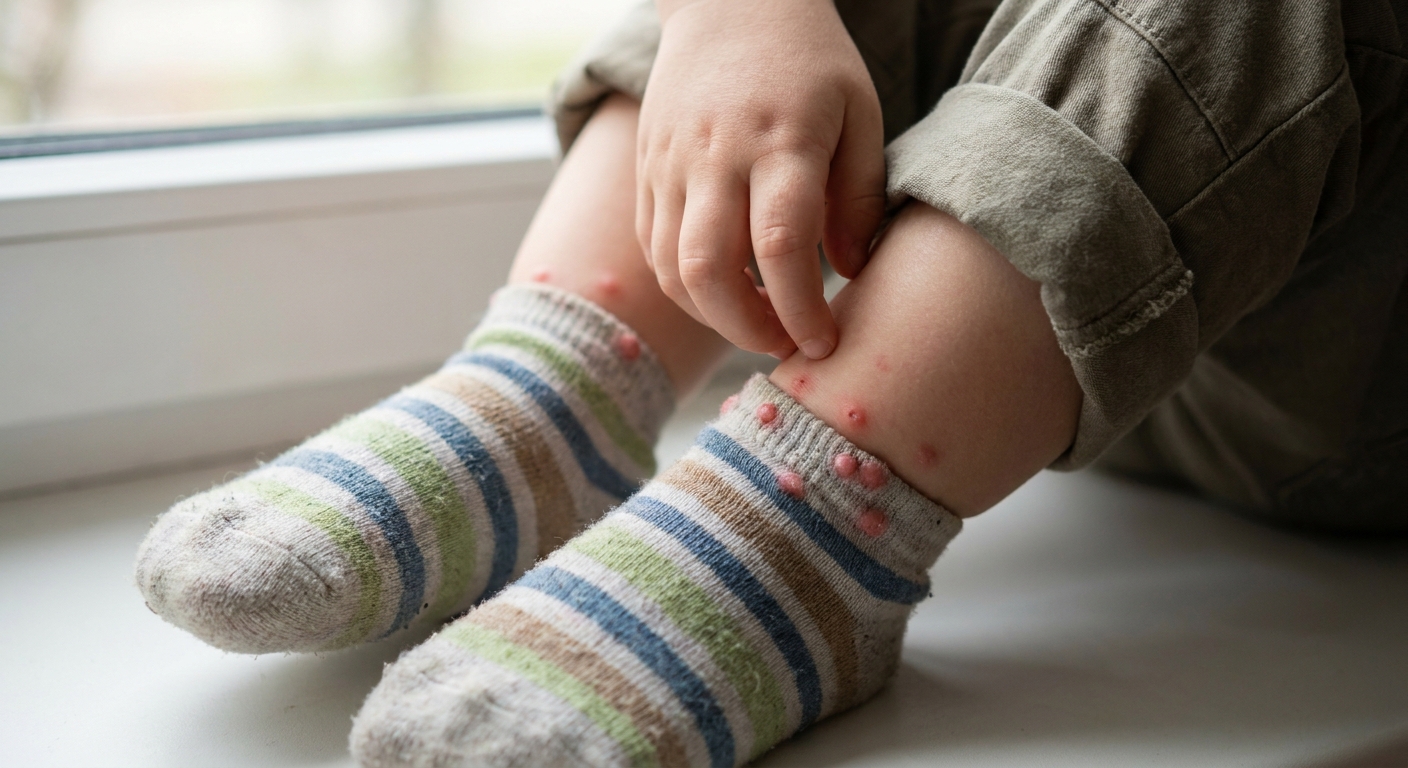
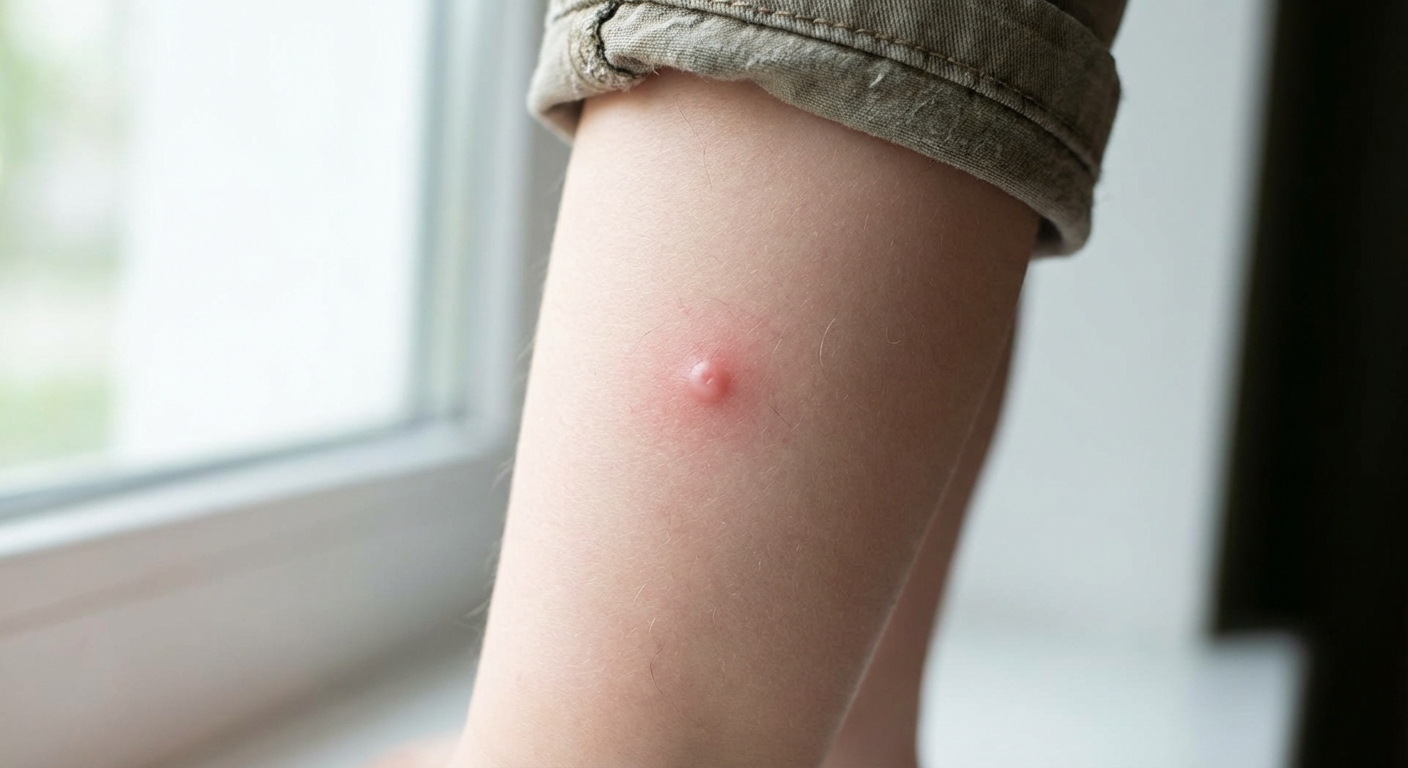
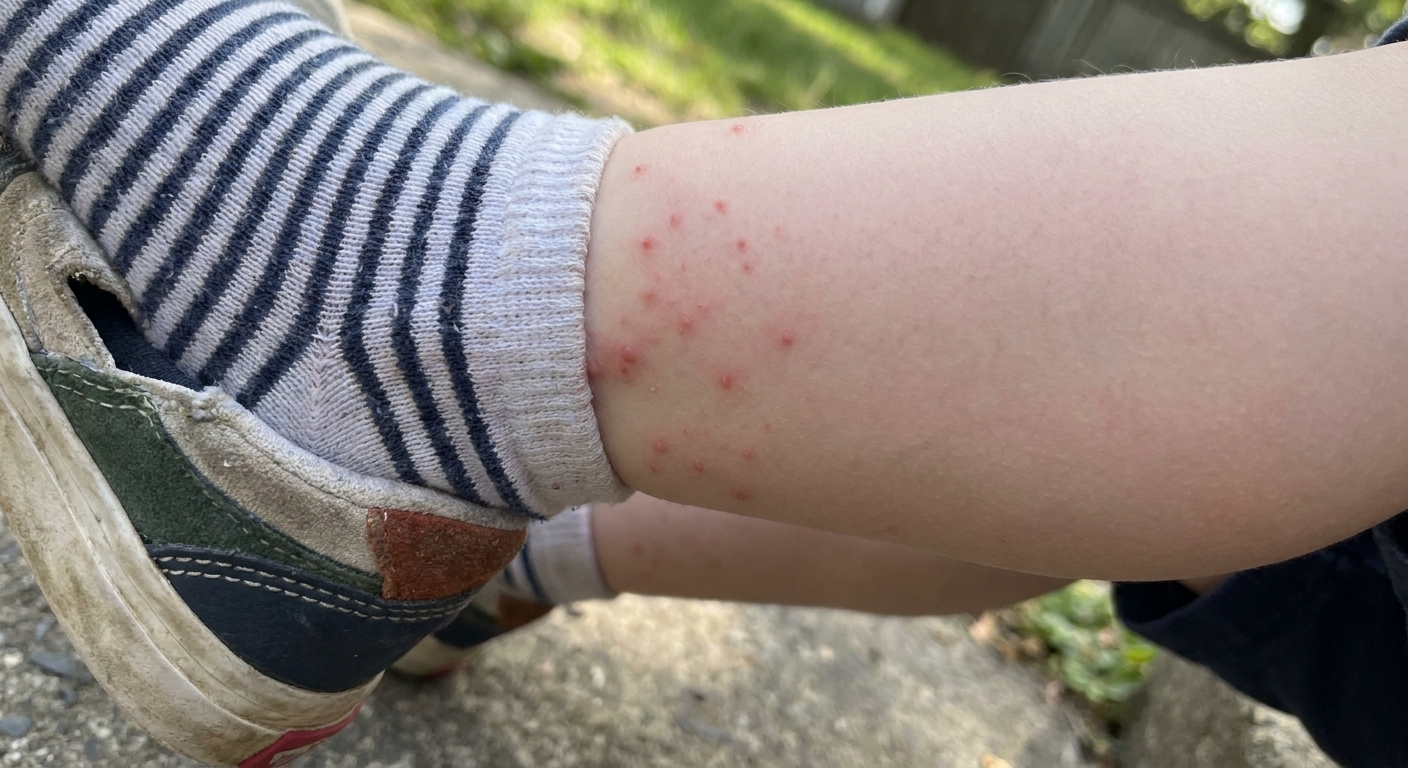
- Clusters of small red bumps or raised welts, often in groups
- Very itchy, sometimes out of proportion to how mild the bumps look
- A line or band pattern where clothing was snug
- Sometimes tiny blisters or a pimple-like top after a day or two
Common locations on kids
Chiggers tend to bite where it is warm and where clothing presses against skin:
- Around the ankles and sock line
- Behind the knees
- At the waistband or belly button area
- Along underwear lines
- In the armpits or groin folds
If your child has bumps mostly on exposed skin like forearms and lower legs, think about mosquitoes too. If it is strongly concentrated under tight clothing lines, chiggers move up the list.
Timeline: when itching starts and how long it lasts
One reason chigger bites cause so much panic is the timing. Kids often feel fine at the park, then are miserable later.
Typical timeline
- First few hours: Many kids do not notice right away.
- 4 to 24 hours: Itching ramps up, often dramatically, and bumps become more noticeable.
- 1 to 3 days: This is commonly the peak itch window.
- 3 to 7 days: Bumps start calming down. Scratching can keep them irritated longer.
- Up to 2 weeks: In some kids, especially those with sensitive skin or lots of bites, the itch and marks can linger.
Blisters can happen, especially if a child has a strong reaction or scratches a lot. Clear fluid blisters are usually part of irritation, not automatically infection. We worry more about spreading redness, warmth, pus, or increasing pain .
Safe itch relief at home
Your main goals are simple: cool the skin, reduce inflammation, and prevent scratching. Scratching is what turns a rough couple of days into a skin infection.
Step 1: Clean the skin and change clothes
- Have your child take a shower or bath with soap and water as soon as you suspect chiggers.
- Wash the clothes they wore outside in hot water if possible, then dry on high heat.
Step 2: Cool it down
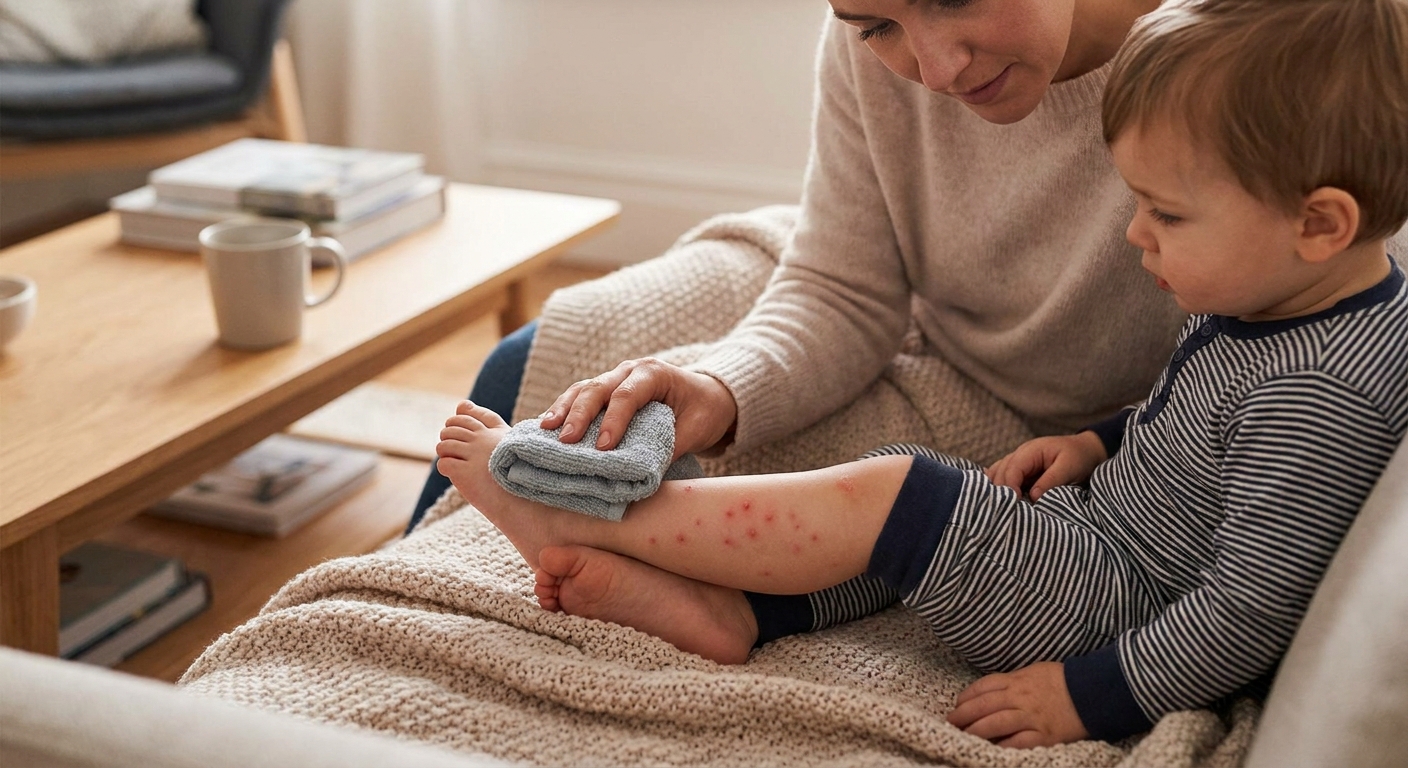
- Cool compresses for 10 to 15 minutes, a few times a day
- A cool bath can help some kids, especially before bed
Step 3: Topicals that are usually kid-friendly
These can take the edge off itching:
- 1% hydrocortisone cream in a thin layer 1 to 2 times daily for a few days (often up to 5 to 7 days). Avoid eyes, mouth, genitals, and broken skin unless your pediatrician advised it.
- Calamine lotion for soothing itch
- Colloidal oatmeal bath for widespread itching
Skip topical antihistamine creams (like diphenhydramine cream) and topical numbing creams unless your child’s clinician recommends them. They can irritate skin and, in some kids, cause a rash of their own.
Step 4: Oral antihistamines (OTC) by age
Oral antihistamines can help with itch, especially at night. Always follow the product label and your child’s pediatrician guidance, especially if your child has chronic medical conditions or takes other medications.
- Under age 2: Do not give OTC antihistamines for itching unless your pediatrician tells you exactly which one and how much.
- Ages 2 and up: Non-drowsy options like cetirizine or loratadine are commonly used for itch from allergic reactions. Use the age and weight dosing on the package.
- Nighttime: Some families use diphenhydramine for sleep-disrupting itch in children old enough per label. It can cause drowsiness, but some kids get paradoxical hyperactivity. Use only as directed on the label and avoid combining with other sedating medicines unless a clinician advises it.
Step 5: The anti-scratch plan
- Keep nails short.
- Use cotton pajamas and consider light socks on little kids who scratch in their sleep.
- Offer a replacement action: a cool cloth to press instead of scratching.
When bites might be infected
In the U.S., chigger bites are usually not dangerous, just intensely itchy. The bigger issue is that broken skin from scratching gives bacteria an easy entrance. In triage, this is the main reason we see kids for bug bites .
If you live or traveled in parts of Asia and the Pacific where scrub typhus occurs, talk with a clinician if your child develops fever or seems ill after possible chigger exposure.
Call your pediatrician if you notice
- Increasing redness that is spreading beyond the original bumps
- Warmth, swelling, or worsening tenderness
- Pus, honey-colored crusting, or cloudy drainage
- Red streaks moving away from the area
- Fever or your child seems more ill, not just itchy
- Swollen lymph nodes near the area (for example, groin nodes with lots of leg bites)
Go to urgent care now (or ER depending on severity) if
- Fast-spreading redness with fever
- Severe swelling of the face or lips, trouble breathing, or vomiting after bites (possible allergic reaction)
- Bites near the eye with worsening swelling or pain
Trust your gut. If your child’s skin is getting worse each day instead of slowly improving, it is worth a call.
Chiggers vs poison ivy vs scabies
These three are the most common mix-ups I see, and the treatments are not the same. Here is a practical way to sort them out.
Chigger bites
- Trigger: Playing in tall grass, weeds, brushy areas, wooded edges
- Look: Clusters of tiny red bumps or welts, often at clothing pressure points
- Pattern: Sock line, waistband, behind knees, underwear lines
- Itch timing: Often starts hours later and peaks over 1 to 3 days
- Contagious: No
Poison ivy (urushiol plant rash)
- Trigger: Contact with poison ivy, oak, or sumac, or touching clothing, pets, or gear that has the plant oil on it
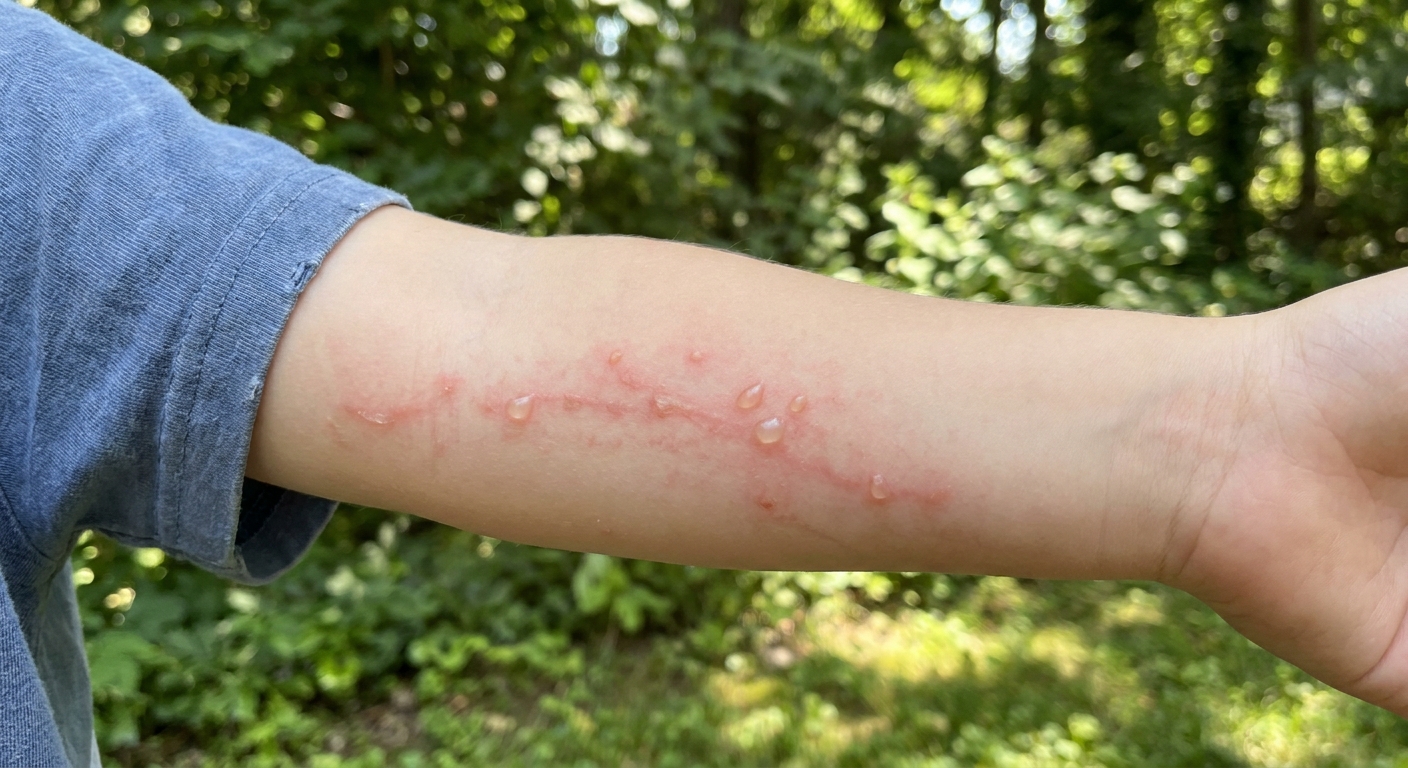
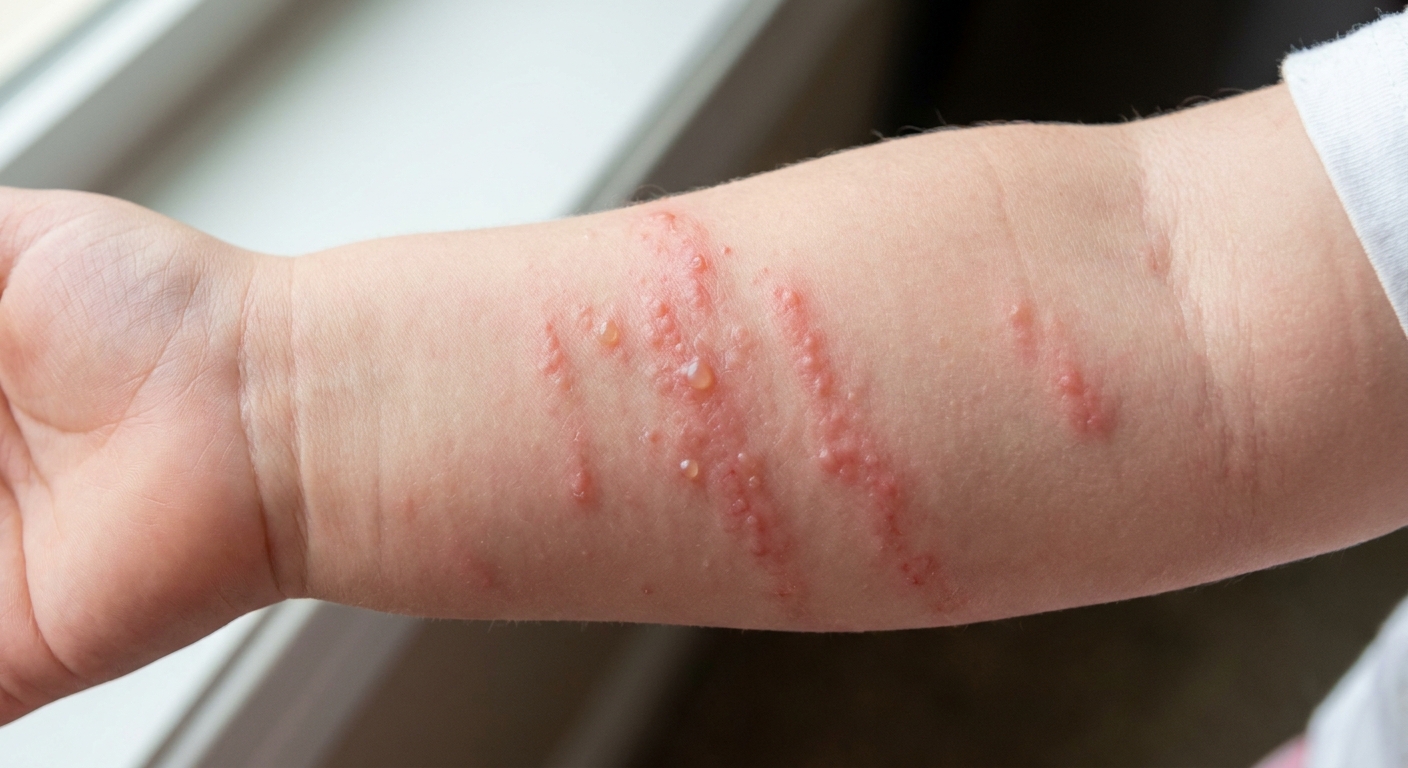
- Look: Red rash with streaks or lines, often with blisters that can weep
- Pattern: Where the plant brushed the skin, commonly arms, legs, face
- Itch timing: Usually develops 12 to 48 hours after exposure (sometimes sooner if sensitized)
- Contagious: The rash itself is not contagious, but the plant oil is. If oil is still on skin, clothing, or under nails, it can keep spreading.
Clue parents love: If you see linear streaks that look like your child walked through something and it painted on, poison ivy is more likely than chiggers.
Scabies
- Trigger: Skin-to-skin contact with someone who has scabies, sometimes spread within households
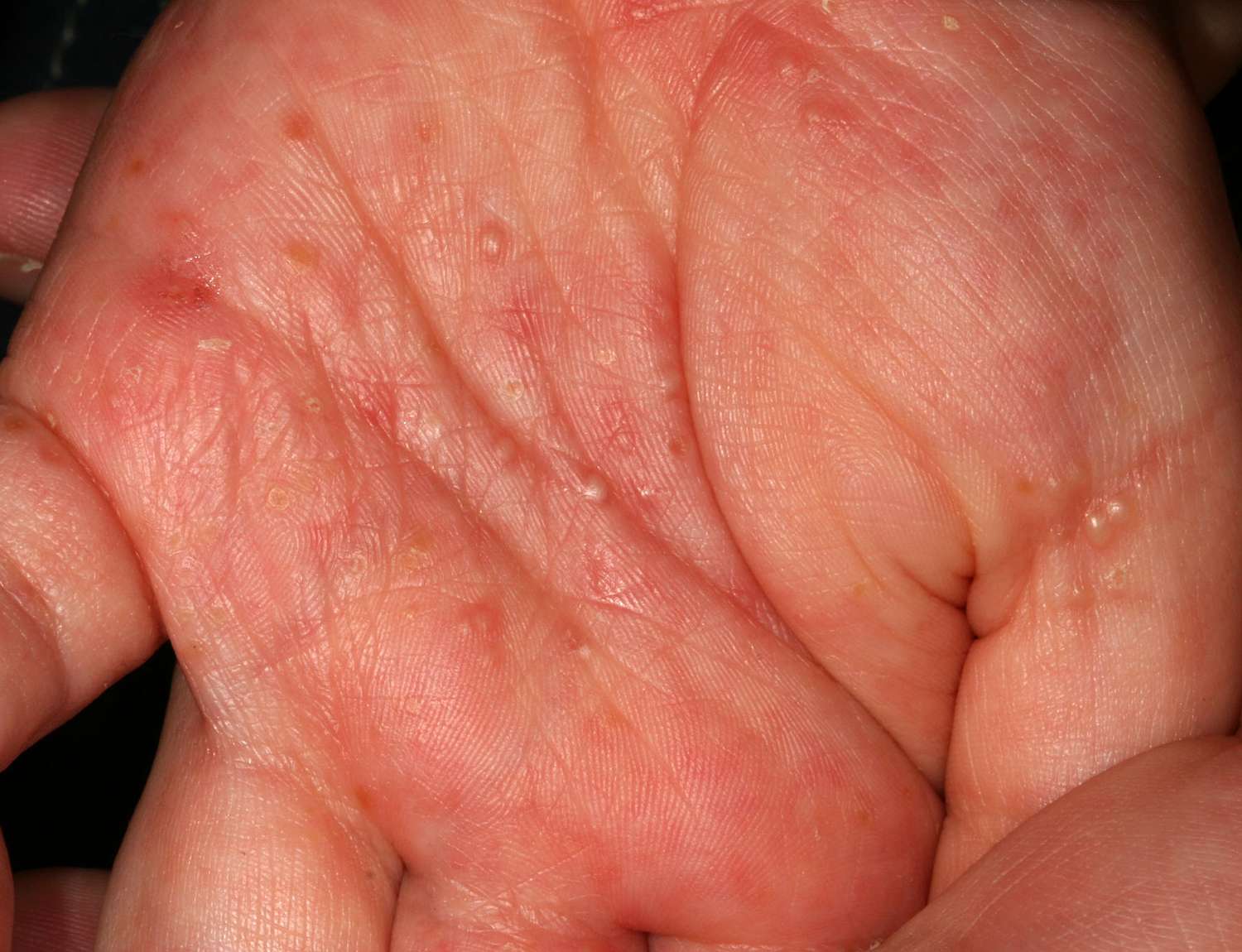
- Look: Small bumps, sometimes tiny blisters, and sometimes thin burrow lines (not always obvious)
- Pattern: Often between fingers, wrists, elbows, armpits, waistline, groin, buttocks. In babies and toddlers, can involve scalp, palms, soles.
- Itch timing: Often worse at night and persists for weeks without treatment
- Contagious: Yes, very
Big clue: If multiple family members are itchy, especially at night, and it is not improving with standard bug-bite care, ask your pediatrician about scabies . It requires prescription treatment for the child and close contacts.
Important note: Even after correct scabies treatment, itching can linger for a while (post-scabetic itch). That does not always mean treatment failed, but it does mean you should follow your clinician’s plan and check back if symptoms are not trending better.
Preventing chigger bites next time
You do not have to ban the backyard. A few habits make a big difference, especially in late spring through early fall.
- Dress for the grass: Long pants tucked into socks for hikes or tall grass play.
- Avoid sitting in tall grass: Use a blanket or towel for picnics and sidelines.
- Shower after outdoor play: A bath or shower within a couple of hours can help wash off lingering mites and irritants and help you spot bites early.
- Wash outdoor clothes promptly: Hot water and a hot dryer cycle when possible.
- Use insect repellent correctly: Follow label directions. Many families use products containing DEET when used as directed. Do not use insect repellent on babies under 2 months. Apply to exposed skin and clothing, avoid hands and faces, do not apply under clothing, and wash off when back inside.
- Consider permethrin on clothing and shoes: Permethrin-treated clothing is very effective for chiggers and ticks. It is for clothing and gear, not skin. Use pre-treated items or follow the product directions carefully and let items dry fully before wearing.
- Yard basics: Keep grass trimmed and minimize brush piles where mites and other pests thrive.
Quick checklist for parents at 3 AM
- Clusters of itchy bumps at sock line or waistband after grass play? Likely chiggers.
- Skip the clear nail polish myth. It will not help and can irritate skin.
- Cool compress, hydrocortisone (short course), and an age-appropriate oral antihistamine can help.
- Focus on stopping scratching to prevent infection.
- Watch for spreading redness, warmth, pus, fever, or increasing pain.
- Linear streaky blisters suggest poison ivy. Whole-house nighttime itch suggests scabies.
If you are unsure, take a clear photo in good light and send it to your pediatrician through your patient portal. It can save you a lot of guesswork and a lot of lost sleep.