Most toe walking is a phase, but not always. Here’s how to tell habitual toe walking from tight Achilles tendons or neurological causes, plus when to get a...
Childhood Scoliosis: Ribs, Asymmetry, and When to Check a Spine
Sarah Mitchell
Sarah Mitchell is a Registered Pediatric Nurse and a mother of three who has spent over a decade helping families navigate the beautiful, chaotic early years of childhood. She combines evidence-based medical knowledge with real-world parenting experience to offer practical, compassionate advice. At Awesome Parent, Sarah's mission is to help exhausted parents find solutions, trust their instincts, and finally get some sleep.
If you have ever stared at your child’s back while they brush their teeth and thought, “Are those ribs uneven?”, welcome to a very normal parenting moment. Sometimes what you’re seeing is posture, growth, or muscle tone. Sometimes it is scoliosis, a true curve of the spine that can change during growth spurts.
Let’s walk through what school screenings actually catch, what families often notice at home, and how to decide when it is worth getting a professional spine check.
What scoliosis is and what it is not
Scoliosis means the spine curves sideways and usually also rotates a bit. That rotation is often why ribs look uneven, because the rib cage moves with the spine.
In medicine, scoliosis is typically defined on an X-ray as a Cobb angle of 10 degrees or more. That matters because it separates “looks a little uneven” from a measurable curve that may need monitoring.
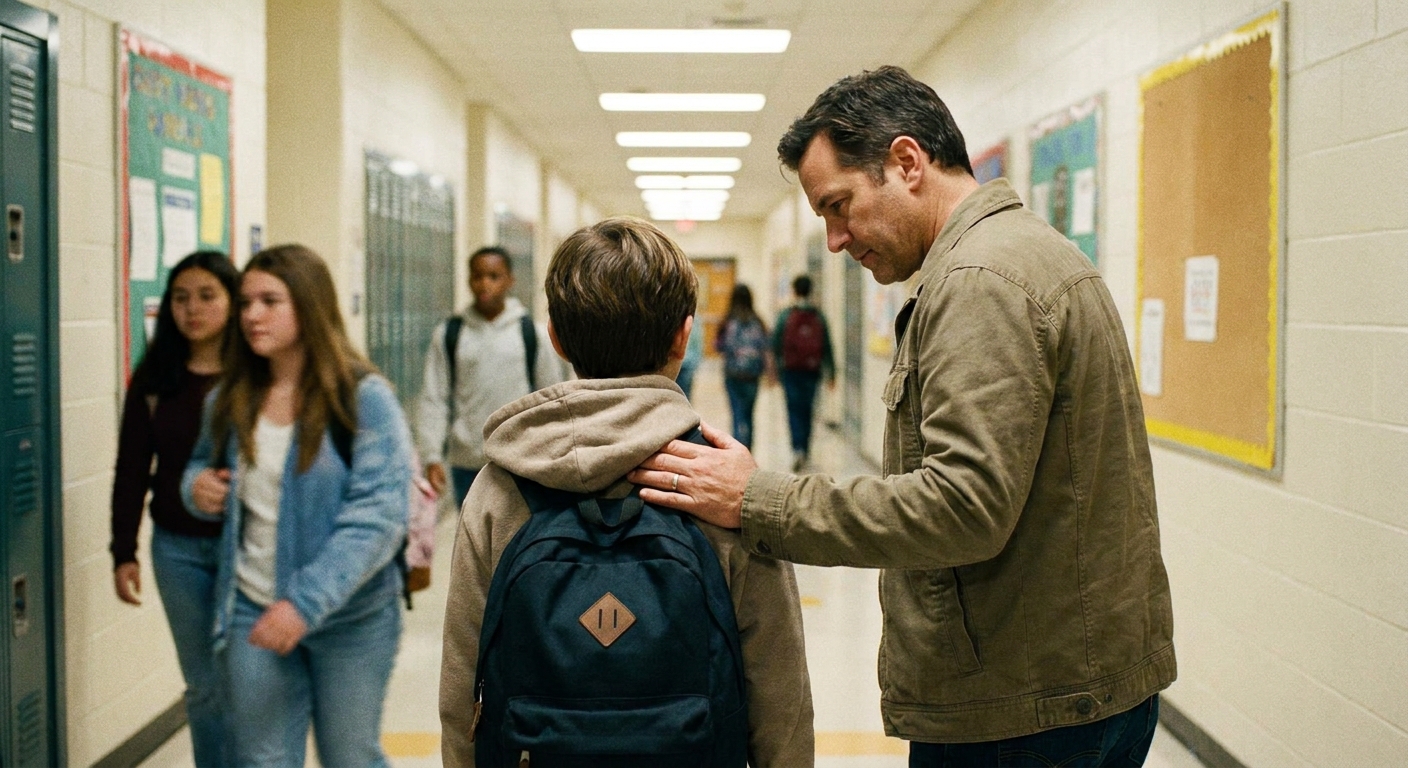
Postural slouching is different. Most kids can look “crooked” when they are tired, carrying a heavy backpack, or lounging in a classic preteen slump. With posture, the spine itself is not structurally curved, and the asymmetry often improves when they stand tall.
There is also something called functional scoliosis, where the spine looks curved because of something like a leg length difference or muscle spasm. Treating the cause can improve the curve.
In clinic, the question is not “Does this look imperfect?” because every body is a little imperfect. The question is “Is there a consistent pattern that suggests a real spinal curve, and could it progress as my child grows?”
Why school screenings cause so much stress
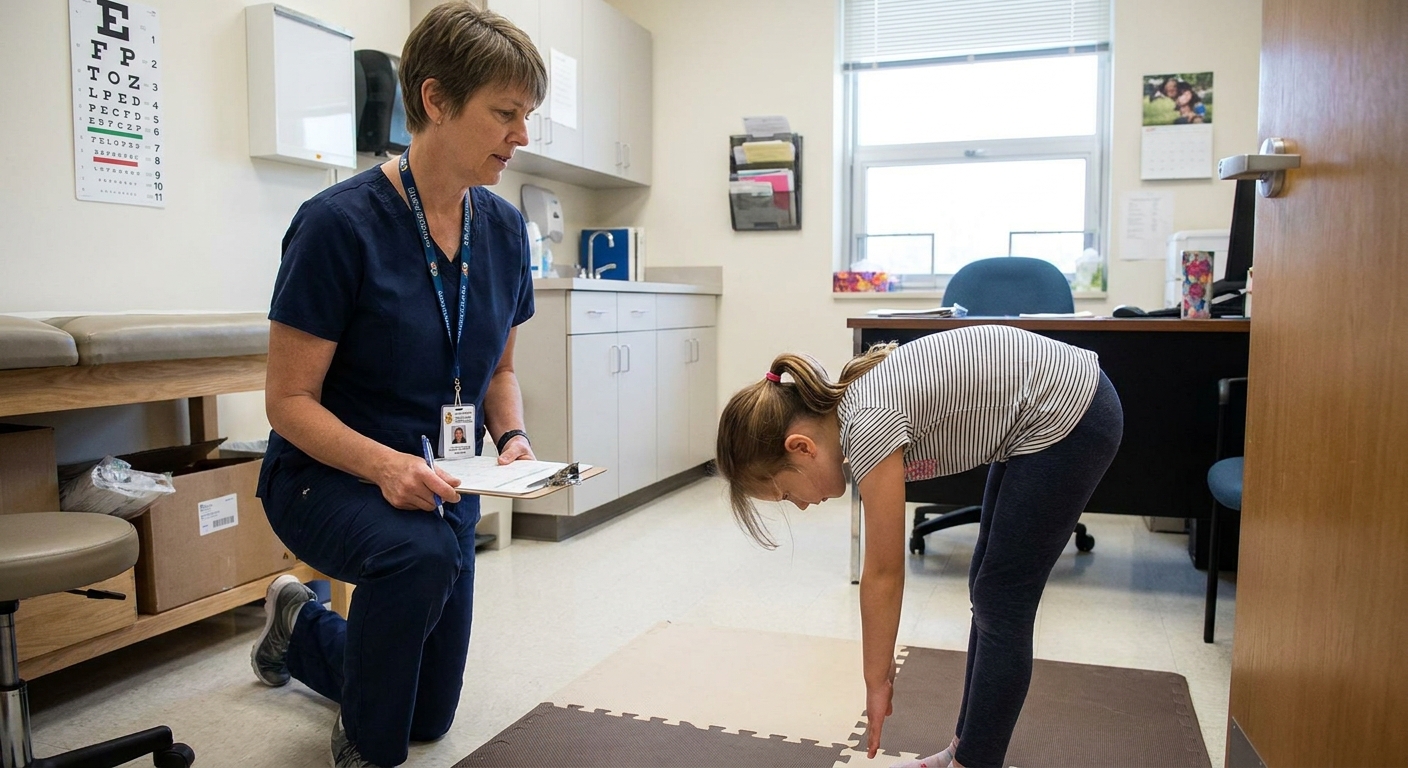
School scoliosis screening typically involves a quick look at the back and an Adams forward bend test, where the child bends forward with arms hanging. Some programs also use a small level-like tool called a scoliometer to estimate trunk rotation.
Screenings are designed to catch kids who need a closer look, not to diagnose scoliosis on the spot. That means false alarms happen. Posture, body shape, and the awkwardness of a quick screening can make asymmetry more noticeable, especially during times of rapid growth.
If you got a note home, it usually means: “We saw asymmetry. Please have your child checked.” It does not automatically mean your child needs a brace or surgery.
What families notice at home
Parents rarely notice a “curve” first. They notice clues. Common things families mention include:
- One shoulder higher or one shoulder blade sticking out more
- Ribs that look uneven, especially when the child bends forward or twists
- Waistline asymmetry, like one side looks more indented
- Hips that seem uneven or pants that hang oddly
- Clothes that twist consistently, like shirt seams drifting to one side
- A head that sits slightly off center over the pelvis
Many children with scoliosis have no pain at all. So the absence of pain is reassuring, but it does not rule anything out.
One more helpful context clue: adolescent idiopathic scoliosis is often noticed around puberty and is more common in girls. It can happen in any child, but that timing is why it so often shows up in the middle school years.
A quick at-home check you can do calmly
You do not need special tools. You just need a few minutes and good lighting. Pick a neutral moment, not right before bed when everyone is tired and anxious.
Step 1: Look from behind while they stand tall
- Have your child stand with feet hip-width apart, arms relaxed.
- Check if shoulders look level and if the waist looks symmetrical.
- Notice whether the head appears centered over the pelvis.
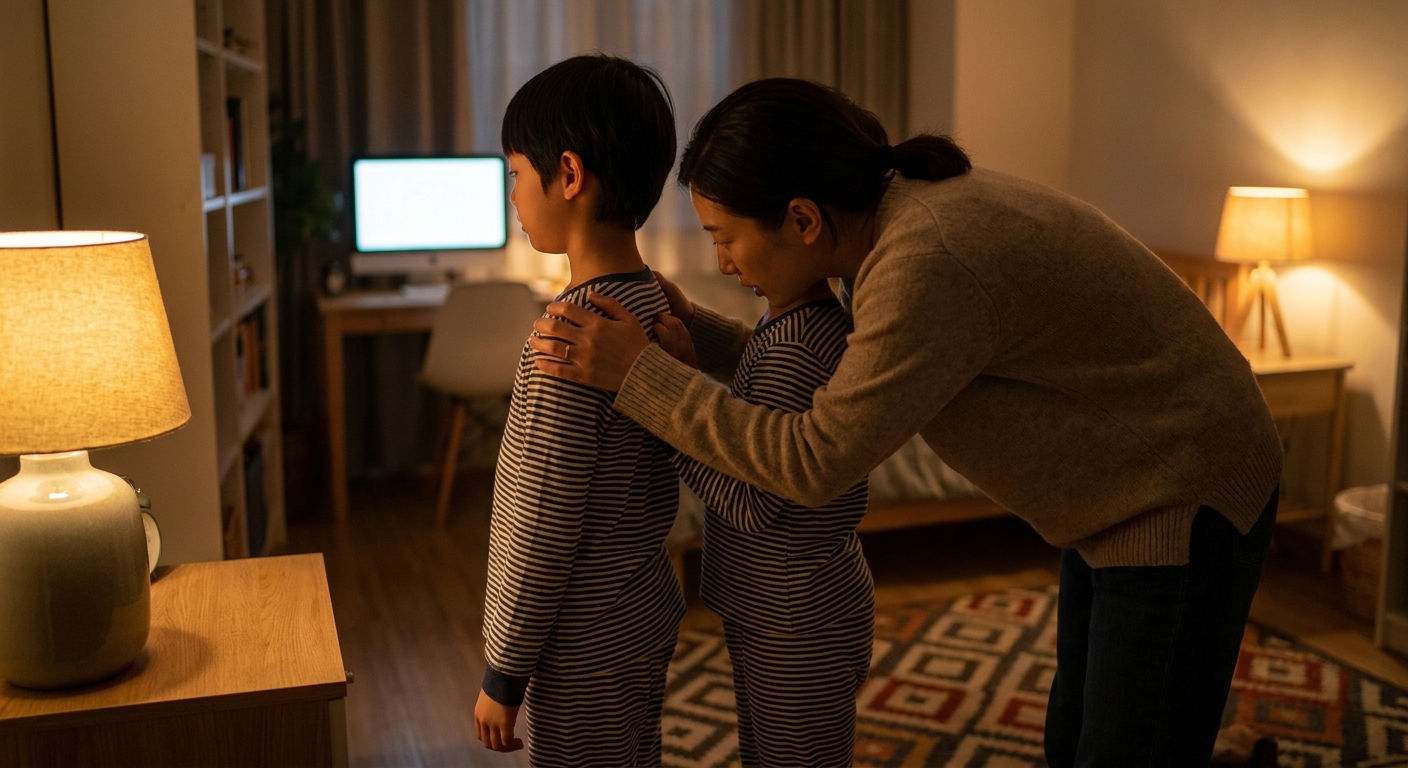
Step 2: Do the forward bend check
- Have your child bend forward slowly like they are reaching toward their toes, knees straight but not locked.
- Stand behind them and look across the back for a “rib hump” or one side of the back appearing higher.
What matters most is consistency. If the asymmetry is obvious every time and does not disappear when they stand tall, it is worth discussing with your pediatrician.
What to avoid: Please do not repeatedly measure, photograph, and analyze daily. I have been that parent. It escalates anxiety fast and does not improve outcomes. One calm check, then a plan, is the way to go.
Posture vs true curve
Here are patterns I look for that often help families understand the difference.
More consistent with posture
- Unevenness changes a lot depending on how they stand
- When they “stand tall”, shoulders and waist look much more even
- No noticeable rib prominence on forward bend
- Back looks fairly straight when viewed from behind
More consistent with scoliosis
- Asymmetry is noticeable in multiple positions
- Ribs or one side of the back look higher during the forward bend test
- One shoulder blade is consistently more prominent
- Waist looks uneven in a persistent way
That said, the human eye is not a diagnostic tool. If you are on the fence, that is exactly when a quick medical check is helpful.
When a spine check is worth it
As a parent, you are not overreacting by asking. A simple exam can bring clarity and, just as importantly, peace of mind.
Make a routine appointment soon (in the next few weeks) if
- You notice a persistent rib hump or back prominence with forward bending
- Shoulders, shoulder blades, waist, or hips look consistently uneven
- A school screening flagged your child for follow-up
- Your child is entering or in a growth spurt, especially around puberty
- You have a family history of scoliosis
Ask for sooner evaluation if
- The curve or asymmetry seems to be getting worse quickly over a few months
- Your child is younger and you are seeing a significant curve early (early-onset curves need closer watching)
- You are seeing frequent tripping, balance changes, or weakness along with asymmetry
Seek urgent care or urgent medical advice today if
- Back pain is severe, persistent, or wakes your child at night
- There is fever, unexplained weight loss, or your child looks ill
- New numbness, tingling, weakness, or trouble walking appears
- Loss of bladder or bowel control occurs
Those urgent symptoms are not typical for adolescent idiopathic scoliosis and deserve prompt evaluation.
What the pediatrician or specialist will do
A typical evaluation is straightforward and kid-friendly.
- History: When you noticed changes, family history, growth stage, any pain or neurologic symptoms.
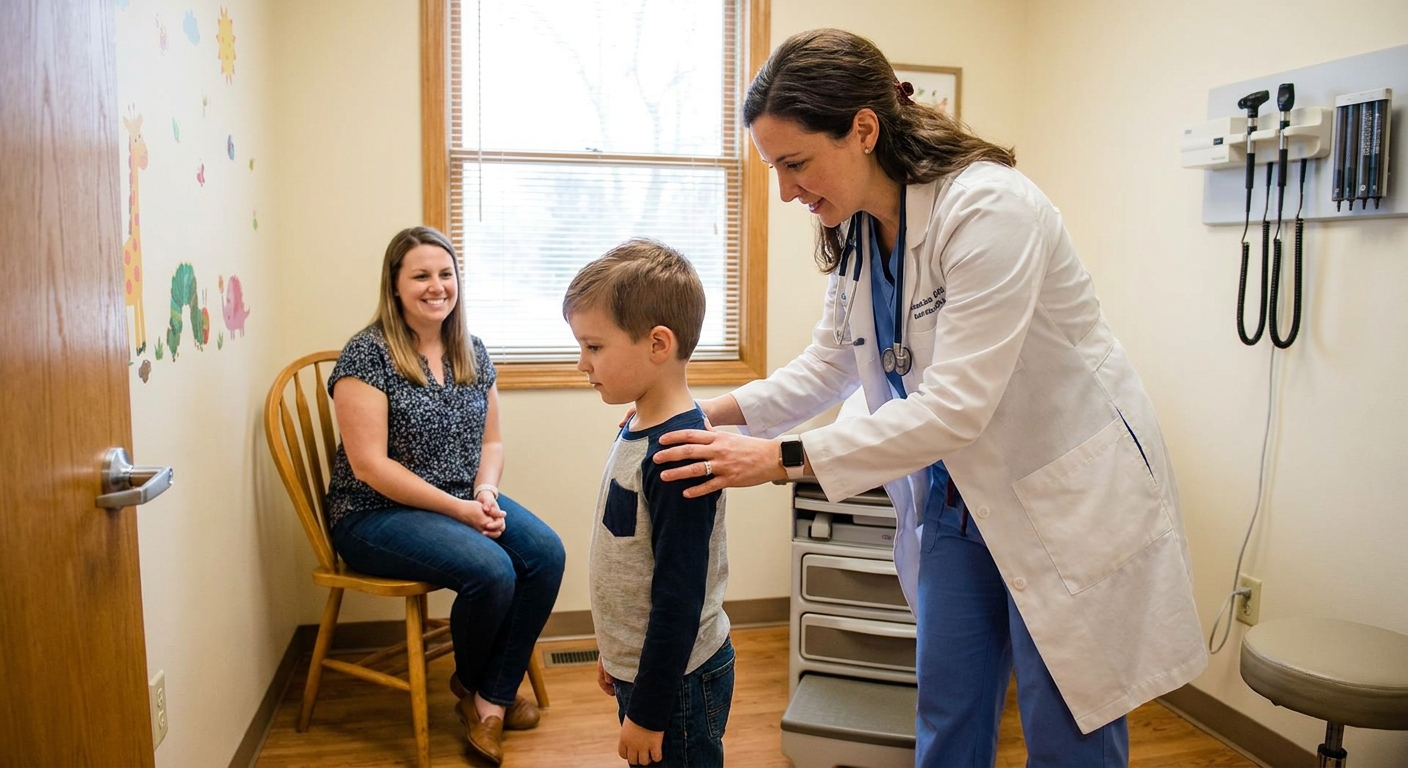
- Physical exam: Looking at posture, shoulder and hip level, forward bend test, and a basic neurologic exam.
- Imaging if needed: If scoliosis is suspected, the next step is often a standing spinal X-ray to measure the curve (called the Cobb angle). Some centers use low-dose imaging techniques when available.
If a curve is confirmed, your clinician will talk about curve size and growth remaining. Those two factors drive most treatment decisions.
If monitoring is recommended, it often looks like repeat exams every few months during growth, with repeat imaging only as needed to track change.
Common questions parents ask
Can heavy backpacks cause scoliosis?
Backpacks can absolutely worsen posture and cause sore muscles. They have not been shown to cause idiopathic or structural scoliosis. A heavy pack can make asymmetry more noticeable, which is why it often shows up on a busy school day.
Does scoliosis always need treatment?
No. Many mild curves are simply monitored over time, especially if your child is near the end of growth. Others may benefit from bracing during growth to help prevent progression. Surgery is reserved for more significant curves and is not the typical outcome for most kids who get flagged on screening.
Should my child stop sports?
In general, kids with scoliosis are encouraged to stay active unless their clinician gives specific restrictions. Strong cores, good conditioning, and joyful movement are beneficial for overall back health and confidence.
Is rib asymmetry always scoliosis?
No. Some rib and chest wall asymmetry can be normal variation. But rib prominence during the forward bend test is one of the more useful signs to get checked, because spinal rotation can show up there.
A calm timeline for families
If you are trying to decide what to do next, here is a realistic, low-stress approach:
- Today: Do one quick home observation in good light. Jot down what you see.
- This week: Schedule a routine pediatric visit if the asymmetry seems consistent or you received a school note.
- At the visit: Ask directly, “Do you think this needs imaging or an orthopedic referral?”
- Afterward: If monitoring is recommended, set the follow-up schedule and then let yourself stop scanning their back daily.
If your parenting brain is spiraling at 3 AM, remember this: getting checked is not a commitment to treatment. It is just information, delivered in daylight, by a professional who can tell you what matters and what can wait.
Bottom line
Uneven ribs, shoulders, or hips can be nothing, and they can be the first sign of scoliosis. The forward bend test and a consistent pattern of asymmetry are the biggest clues that a spine check is worth it. When in doubt, a calm conversation with your pediatrician is the right next step, especially during growth spurts.
You are not looking for perfection. You are looking for patterns that deserve a closer look. That is good parenting.
Sarah Mitchell
Sarah Mitchell is a Registered Pediatric Nurse and a mother of three who has spent over a decade helping families navigate the beautiful, chaotic early years of childhood. She combines evidence-based medical knowledge with real-world parenting experience to offer practical, compassionate advice. At Awesome Parent, Sarah's mission is to help exhausted parents find solutions, trust their instincts, and finally get some sleep.