Choking Hazards for Babies and Toddlers by Age

Sarah Mitchell
Sarah Mitchell is a Registered Pediatric Nurse and a mother of three who has spent over a decade helping families navigate the beautiful, chaotic early years of childhood. She combines evidence-based medical knowledge with real-world parenting experience to offer practical, compassionate advice. At Awesome Parent, Sarah's mission is to help exhausted parents find solutions, trust their instincts, and finally get some sleep.
If you have ever watched your baby cough, gag, and turn beet-red over a tiny bite of banana, you know the feeling: your heart stops, time slows, and you suddenly cannot remember a single thing you have ever learned.
Take a breath. Most kids will gag while learning to eat, and gagging is not the same as choking. But actual choking can happen fast, especially with certain foods and small household objects. This guide breaks down the most common choking hazards by age, how to serve foods more safely, and what to do in an emergency.

Gagging vs. choking (10-second clarity)
Gagging
- Noisy: coughing, sputtering, retching, or making sounds
- Color: may look red or watery-eyed
- Breathing: air is moving
- What to do: stay close, stay calm, let them work it out, and avoid a blind finger sweep
Choking
- Quiet: cannot cough effectively or make sound
- Breathing: struggling to breathe or not breathing
- Signs: lips or face turning blue or gray, panicked expression, hands to throat, loss of consciousness
- What to do: treat as an emergency and start age-appropriate choking first aid while someone calls 911
If you are not sure what you are seeing, use this gut-check: if your child cannot breathe, cough, cry, or make sound, treat it as choking and act immediately. If they are coughing effectively and moving air, let them cough while you watch closely.
Choking hazards by age
Kids develop chewing skills over time. Molars, the back teeth that do the real grinding, usually come in stages: first molars often around 13 to 19 months, and second molars often around 23 to 33 months. Even after teeth arrive, coordination and impulse control take longer. That is why some foods stay risky well into the preschool years.
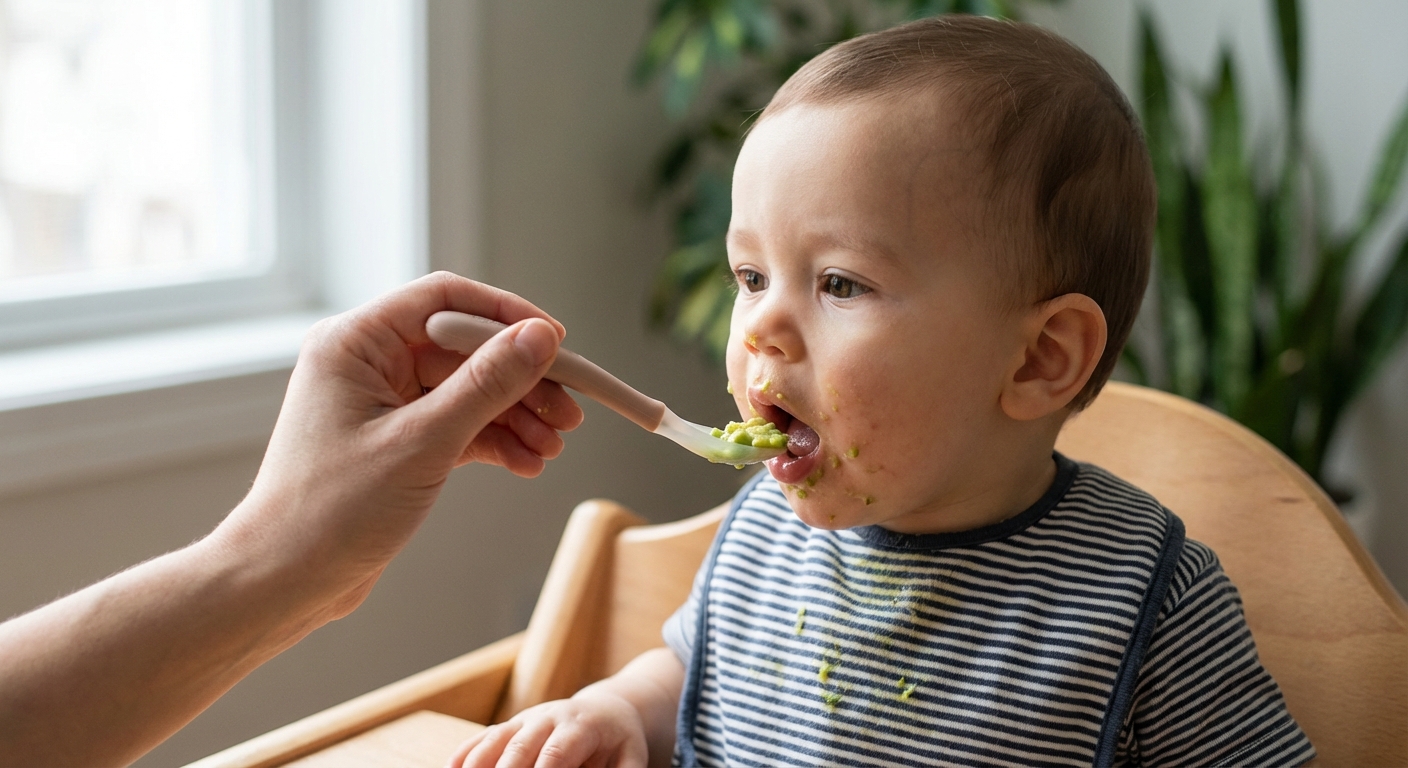
Under 1 year: highest risk
Babies are new to textures, may swallow before chewing, and have small airways. Keep meals slow, supervised, and seated.
Foods to avoid (or modify carefully)
- Whole grapes, cherry tomatoes, blueberries: round and slippery
- Hot dogs and sausages: the “perfect plug” shape
- Nuts and chunky nut pieces: hard and irregular
- Popcorn: unpredictable shape plus hulls
- Hard chunks of raw veggies: raw carrot coins, celery chunks
- Apple chunks: especially raw, firm pieces
- Hard candy, chewing gum: always unsafe
- Marshmallows: squishy, sticky, can conform to and block the airway
- Chunks of meat or cheese: especially cubes that are not shredded or softened
- Globs of nut butter: can stick and be hard to clear
Household objects to keep far away
- Coins
- Latex balloons and balloon pieces
- Button batteries: especially from remotes, key fobs, singing books, and toys
- Magnets: small high-powered magnets are particularly dangerous if swallowed
- Small toy parts: anything small enough to fit into a small-parts tester is a “no”
- Pen caps, beads, marbles, game pieces
Nurse note: Button batteries are not just a choking hazard. They can burn the esophagus quickly, and even “dead” batteries can cause injury. If you suspect ingestion, treat it as an emergency. In the US, call Poison Control at 1-800-222-1222 for immediate guidance, and seek urgent care as directed.
Ages 1 to 2: fast and learning
This is the age of running while snacking, stuffing cheeks like a chipmunk, and turning away mid-bite to laugh at the dog. Chewing skills are improving, but impulse control is not.
Highest-risk foods at this age
- Grapes and cherry tomatoes (unless cut safely)
- Hot dogs (unless cut safely)
- Popcorn
- Whole nuts and thick nut chunks
- Large spoonfuls of peanut butter or other nut butters
- Hard raw produce: carrots, apples, snap peas unless cooked or prepared safely
- Cheese cubes: especially firm cheeses
- Sticky foods: marshmallows, gummy candies
Common household hazards
- Coins and small metal objects
- Button batteries and small magnets
- Toy parts from older siblings: building bricks, doll accessories, mini wheels
- Small craft items: googly eyes, beads

Ages 2 to 4: still not “safe yet”
Preschoolers can chew better, but they still get distracted, talk with food in their mouth, and may not spit something out quickly when you ask. Many choking incidents in this age group happen during play, car rides, or parties.
Foods that still commonly cause choking
- Whole grapes and cherry tomatoes (still cut them)
- Hot dogs (still cut them)
- Popcorn
- Nuts (whole nuts remain risky; consider thinly spread nut butter or finely ground nuts in baking if your pediatrician says it is appropriate)
- Hard candy and gum
- Marshmallows
- Large meat chunks or tough meats
Objects to watch for
- Small toys and parts that get shared at daycare or playdates
- Coins
- Button batteries and magnets
- Caps and small office supplies: paper clips, push pins (yes, really)
Rule of thumb: if they can pop it in their mouth, they will. Sometimes while making full eye contact with you.
How to cut and serve risky foods
You do not need to be perfect. You just need a few go-to habits that reduce risk dramatically.
Grapes and cherry tomatoes
- Best practice: cut lengthwise into quarters (quarters are safer than halves)
- Avoid: round slices that create coin shapes
Hot dogs and sausages
- Best practice: cut lengthwise into strips first, then chop into small pieces
- Avoid: round “coin” slices
Blueberries
- Best practice: smash gently between your fingers or cut in half lengthwise for newer eaters
Cheese
- Best practice: shred it, crumble it, or cut into very thin strips
- Avoid: firm cubes
Carrots and apples
- Best practice: cook until soft (steam or roast) and cut into thin strips or small pieces
- Another option: grate raw apple or carrot into fine shreds
Nut butters
- Best practice: spread thinly on toast, crackers, or fruit, or thin with yogurt or applesauce
- Avoid: big spoonfuls or thick clumps
Meat
- Best practice: choose tender textures, shred well, moisten with sauce or broth if needed
- Avoid: dry, chunky bites that require a lot of chewing

Habits that prevent choking
- Seat them to eat: high chair, booster, or at the table. No walking, running, or climbing with food.
- Supervise closely: ideally within arm’s reach for babies and young toddlers.
- Slow the pace: offer small portions at a time so they cannot overstuff.
- Keep distractions low: eating in the car seat or while playing increases risk.
- Check the floor: older siblings’ toys and dropped snacks are frequent culprits.
- Use a small-parts tester: if it fits inside, it is a choking hazard for kids under 4. No tester? A cardboard tube can be a rough guide, but sizes vary.
High-risk eating moments
This is where a lot of real-life choking scares happen, even with “safe” foods.
- Car rides and strollers: kids slump, hit bumps, and you cannot get to them quickly.
- Playing, bouncing, laughing: food goes down the wrong way fast.
- Lying down with snacks: increases the chance of gagging and choking.
- Parties and daycare pickups: fast eating, distractions, and unfamiliar foods.
Triage-nurse version: if you would not want to perform first aid while buckled into a parking lot, make snacks a sit-down activity.
Basic choking first aid
Important: This is a quick, practical overview, not a substitute for an in-person CPR class. If you are a parent or caregiver, I strongly recommend taking infant and child CPR through the Red Cross, AHA, or a local hospital. Under pressure, hands-on practice matters.
If your child is coughing or gagging
- Let them cough.
- Stay close and watch carefully.
- Do not do back blows if they are effectively coughing and moving air.
- Do not do a blind finger sweep. Only remove something from the mouth if you can clearly see it and it is easy to grasp.
If your child is choking (cannot breathe, cough, or make sound)
- Call for help: have someone call 911. If you are alone, start first aid immediately.
- Start age-appropriate first aid: infants get back blows and chest thrusts, not abdominal thrusts.
For babies under 1 year
- Back blows: Support baby face-down along your forearm with the head lower than the chest. Give 5 firm back blows between the shoulder blades.
- Chest thrusts: Turn baby face-up, head still lower than the chest. Give 5 chest thrusts using two fingers in the center of the chest, just below the nipple line (same location as CPR compressions).
- Repeat 5 back blows and 5 chest thrusts until the object comes out or baby becomes unresponsive.
- If baby becomes unresponsive, begin CPR and call 911 if not already done.
For children 1 year and older
- Abdominal thrusts (Heimlich maneuver): Stand or kneel behind the child. Make a fist slightly above the belly button and well below the breastbone, grasp it with your other hand, and thrust inward and upward.
- Repeat until the object comes out or the child becomes unresponsive.
- If unresponsive, begin CPR and call 911 if not already done.
If you are alone: follow your local guidance. Many courses teach giving about 2 minutes of care before calling if you cannot call first, but in the real world you do what you can. Start care immediately and call as soon as you safely can.
Aftercare: If your child needed thrusts or blows, or if they continue coughing, drooling, wheezing, vomiting, or acting “off,” get medical evaluation. Sometimes a small piece can remain irritated or lodged.
When to get urgent help
- Any episode where your child could not breathe, turned blue or gray, or you had to perform thrusts or blows
- Persistent coughing, noisy breathing, drooling, or trouble swallowing after a choking scare
- Suspected button battery or magnet ingestion, even if they seem fine (US: Poison Control 1-800-222-1222)
- Sudden coughing fit during play with small objects
Quick list: top hazards
If you only remember a handful, make it these:
- Whole grapes and cherry tomatoes
- Hot dog rounds
- Popcorn
- Whole nuts
- Hard candy and gum
- Marshmallows
- Coins
- Button batteries
- Small magnets
- Small toy parts
And the best prevention tool you already have: a calm, boring, sit-down snack routine. Not glamorous, but it works.
A final real-parent note
If you are reading this at an ungodly hour, trying to decide whether you should quarter the grapes at daycare tomorrow, I am giving you my triage-nurse answer: yes. Quarter them.
Choking prevention is not about fear. It is about stacking the odds in your favor so you can enjoy meals, not white-knuckle them.