Chronic Cough in Toddlers

Sarah Mitchell
Sarah Mitchell is a Registered Pediatric Nurse and a mother of three who has spent over a decade helping families navigate the beautiful, chaotic early years of childhood. She combines evidence-based medical knowledge with real-world parenting experience to offer practical, compassionate advice. At Awesome Parent, Sarah's mission is to help exhausted parents find solutions, trust their instincts, and finally get some sleep.
If your toddler has been coughing for weeks, you are not alone. In clinic, “the cough that won’t quit” is one of the most common reasons parents come in looking worried and exhausted. The tricky part is that a chronic cough can be normal after a viral cold, or it can be a clue that something else is going on like asthma, allergies, reflux, sinus drainage, or a habit cough that started with an illness and then stuck around.
This page is for the cough that happens during the day too and lingers week after week. If your child mostly coughs at night, you might also like our night cough page, but daytime patterns give us extra clues.
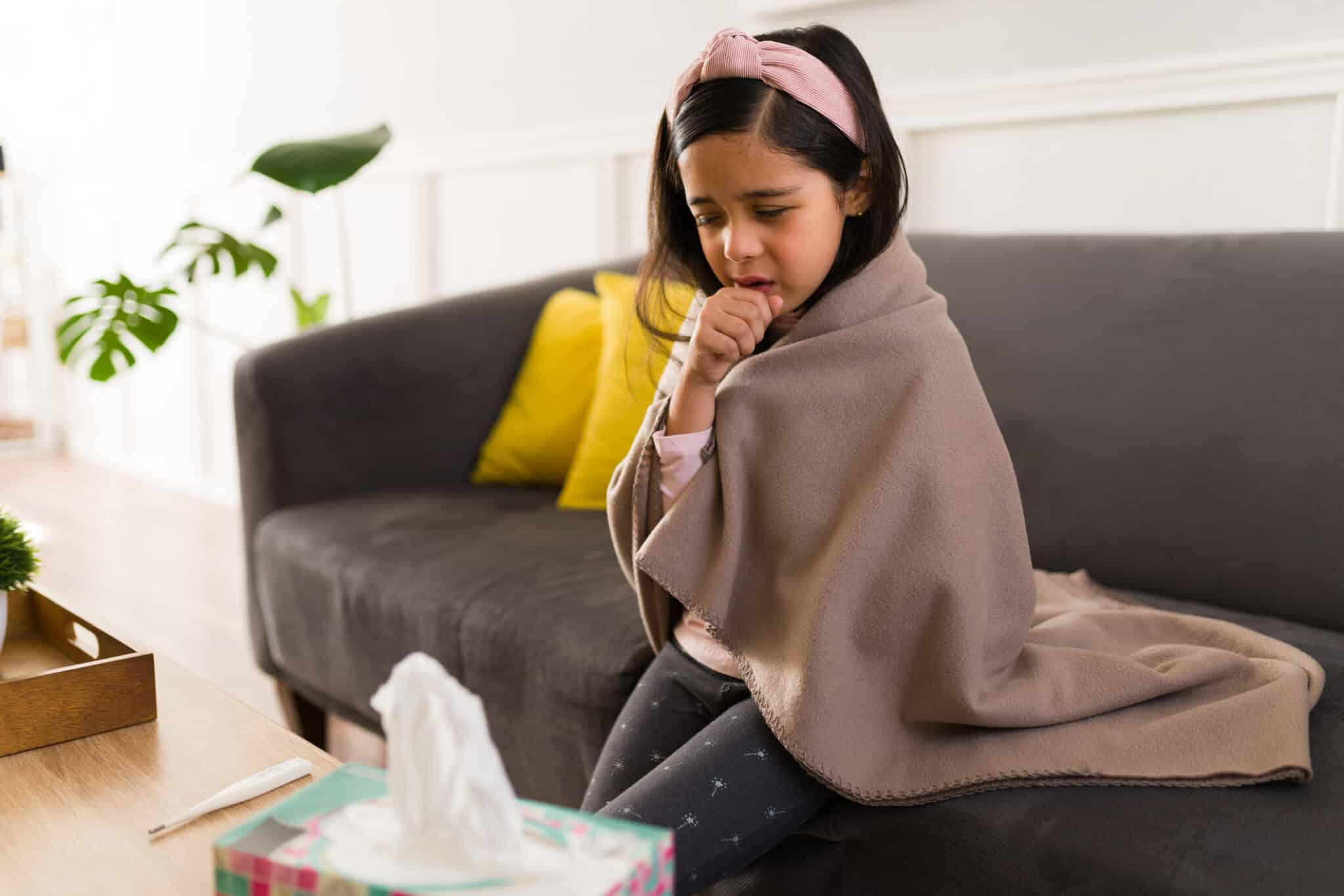
First, what counts as “chronic” in a toddler?
Different medical groups use slightly different cutoffs. Many pediatric guidelines use these benchmarks, and they are helpful at home:
- Acute cough: less than 2 weeks
- Subacute cough: about 2 to 4 weeks (very common after a cold)
- Chronic cough: more than 4 weeks
One important parent reality: toddlers can catch 6 to 10 viral infections a year (often more in daycare). That means it can feel like one long cough, when it is actually back-to-back viruses.
How long should a cough last after a cold?
Most coughs from a typical viral cold often improve steadily over 1 to 3 weeks. A lingering cough is common because airways stay a bit irritated after the infection is gone. Think of it like chapped skin, but inside the lungs and throat. Some post-viral coughs can stretch closer to 3 to 4 weeks and still improve on their own.
Typical timeline
- Days 1 to 3: congestion, fever may happen, cough begins.
- Days 4 to 10: cough often sounds worse because mucus is moving.
- Weeks 2 to 3: cough should be trending better, with longer cough-free stretches.
- Weeks 3 to 4: an occasional cough can still be normal, especially with running, laughing, or cold air.
If the cough is not improving at all by week 3, is getting worse, or you hit week 4 with a daily cough, it is reasonable to check in with your pediatrician.
Wet vs dry cough: the biggest clue you can give your pediatrician
When I triaged phone calls, the single most helpful detail was whether the cough sounded wet (mucus-y) or dry (tickly, barky, or tight).
Wet cough (sounds phlegmy)
A wet cough suggests mucus in the airways. Common causes include:
- Postnasal drip from a lingering cold or sinus congestion
- New viral infections stacked on top of each other
- Bacterial sinusitis (usually with persistent nasal discharge)
- Protracted bacterial bronchitis in some kids (a wet cough daily for weeks)
Wet coughs that persist every day for more than 4 weeks deserve evaluation, especially if your child is also fatigued, not eating well, or having fevers. One extra note to keep on your radar: protracted bacterial bronchitis (PBB) often improves with a clinician-directed antibiotic course, and it is worth follow-up if it keeps recurring.
Dry cough (no mucus sound)
A dry cough often points us toward airway sensitivity. Common causes include:
- Post-viral airway irritation (very common)
- Asthma or reactive airways
- Allergies (often with sneezing and itchy eyes)
- Habit cough (a learned cough pattern)
- Environmental irritation like smoke, strong fragrances, or very dry air
Patterns that point to specific causes
Here are the patterns I listen for as both a nurse and a parent who has heard roughly ten million coughs in the dark.
1) Post-viral cough (the most common)
What it looks like: starts with a cold, then lingers. Usually dry or mildly wet. Gradually improves, but flares with running, laughing, or at bedtime.
What helps:
- Honey (for children over 1 year): a small amount (for example 1/2 to 1 teaspoon) before bed
- Warm fluids
- Saline spray and gentle suction or nose blowing
- Humidified air if your home is very dry
2) Asthma or cough-variant asthma
What it looks like: cough that is triggered by activity, cold air, strong emotions, or viral infections. Often worse at night or early morning, but can be daytime too. Some kids wheeze, many do not.
Clues that raise suspicion:
- Recurrent cough with colds that lasts longer than other kids’
- Cough with exercise or running around
- Family history of asthma, eczema, or allergies
- Improvement with a bronchodilator (like albuterol), if prescribed
Testing and trials: Spirometry (breathing tests) is usually more successful around age 5 and up, but some centers can attempt it earlier depending on the child. For toddlers, your pediatrician may consider a time-limited medication trial based on symptoms and exam rather than formal spirometry.
3) Allergies (seasonal or indoor)
What it looks like: cough plus long-lasting nasal symptoms, throat clearing, or itchy watery eyes. Often more noticeable in certain seasons, or in certain environments (grandma’s house with a cat, a dusty basement playroom).
Common triggers:
- Pollens (spring and fall are big)
- Dust mites (bedding and carpets)
- Pet dander
- Mold in damp areas
Helpful details to track: Does the cough improve when you travel, after washing bedding in hot water, or when the toddler is away from pets?
4) Habit cough (also called somatic cough syndrome or tic-like cough)
This one surprises parents, and I want to say it clearly: a habit cough is real. Your child is not “faking.” It is a cough reflex that becomes a pattern after an illness.
What it looks like:
- Often a dry, repetitive cough
- Can be frequent during the day
- Typically disappears during sleep
- May lessen when the child is distracted or deeply engaged
Important nuance: quieting during sleep is a helpful clue, but it is not a diagnosis by itself. Your pediatrician will still want to listen to the full story and exam.
What helps: reassurance, breaking the loop with sipping water, and (for older kids) soothing options like lozenges. Hard lozenges are a choking risk and are generally for children over age 4. If there is anxiety, big life changes, or school stress (yes, toddlers can have stress too), addressing that supportively can help.
5) Postnasal drip and sinus congestion
What it looks like: cough that is worse when lying down and first thing in the morning, plus ongoing stuffy nose. In toddlers, mucus often runs backward and triggers coughing.
When sinusitis is more likely:
- Nasal discharge and cough lasting more than 10 days with no improvement
- Symptoms that improve, then get worse again
- High fever with thick nasal discharge for several days
6) Reflux (GERD) or “silent reflux”
What it looks like: cough after meals, with burping, sour breath, hoarseness, or frequent throat clearing.
A practical note: reflux can contribute to cough in some children, but it is not always the main cause. Because of that, empiric acid-suppressing medication is not always recommended without other clear reflux symptoms. This is one to work through with your clinician.
7) Whooping cough (pertussis) and other infections
What it looks like: coughing fits, possible vomiting after coughing, a “whoop” sound in some children (not all). Vaccines help a lot, but protection can fade over time. If your child has intense coughing spells or known exposure, call your pediatrician.
8) Foreign body aspiration (something inhaled)
What it looks like: sudden cough that started abruptly during eating or play, especially with nuts, popcorn, grapes, hot dogs, small toys. Sometimes the choking episode is missed, and the clue becomes a persistent cough or one-sided wheeze.
This is one of the big reasons we take “it started out of nowhere” seriously.

When to call the pediatrician urgently
Please seek urgent care or emergency care now if your toddler has:
- Struggling to breathe, fast breathing, chest pulling in between ribs, or nostrils flaring
- Blue or gray lips or face
- Drooling or trouble swallowing with breathing symptoms
- Stridor (a harsh sound when breathing in) at rest
- Suspected choking episode or possible inhaled object
- Dehydration signs (very dry mouth, no tears, very low urine output)
- Extreme sleepiness, poor responsiveness, or a “not acting right” change that worries you
Call your pediatrician soon (within 24 to 48 hours) if:
- Fever returns after improving, or fever persists
- Chest pain, persistent vomiting with coughing, or coughing fits that scare you
- A wet cough is present daily and not improving
- Weight loss, poor growth, or poor appetite over time
What your pediatrician may ask and why
If you want to feel like the most prepared person in the room, track these details for 2 to 3 days:
- Duration: When did it start? Was there a clear cold first?
- Sound: Wet, dry, barking, honking, or wheezy?
- Timing: Daytime, nighttime, morning only, after meals, with activity?
- Triggers: Cold air, running, laughing, lying down, daycare days, pets?
- Associated symptoms: Fever, runny nose, itchy eyes, vomiting after coughing, snoring, reflux signs
- Environment: Smoke exposure, wood-burning stove, strong fragrances, recent home renovations
These answers help your clinician decide whether to watch and wait, treat allergies, consider asthma, evaluate sinus issues, or look for something less common.
Tests and medication trials: when they make sense
Not every chronic cough needs a big workup. A thoughtful, stepwise approach is usually safest.
Chest X-ray
May be considered if the cough is persistent, there are abnormal lung sounds, poor growth, recurrent pneumonia, suspected aspiration, or concerning symptoms.
Viral testing
Sometimes helpful during peaks of respiratory season, but a positive test does not always explain a cough lasting many weeks.
Spirometry (breathing test)
Most reliable in children around age 5 and older, but your pediatrician may discuss it earlier if available and your child can cooperate. It is most useful when asthma is suspected and symptoms keep returning.
Allergy evaluation
If symptoms are seasonal, triggered by pets or dust, or the cough is paired with classic allergy signs, your clinician may suggest environmental steps first and then consider allergy testing or referral.
Trial of asthma medication
In toddlers, clinicians sometimes use a time-limited trial of inhaled bronchodilator and/or inhaled steroid when the pattern strongly suggests asthma-like inflammation. The key is that it should be:
- Targeted (based on symptoms and exam)
- Time-limited (a clear start and stop date)
- Reassessed (did it clearly help?)
Antibiotics
Antibiotics do not help routine viral coughs. They may be considered if your clinician suspects bacterial sinusitis, pneumonia, or protracted bacterial bronchitis based on the story and exam.
What you can do at home (safe, realistic, and actually helpful)
- Honey (over age 1): can reduce cough frequency and improve sleep.
- Saline and suction or nose blowing: especially before sleep and before meals.
- Hydration: thin mucus and soothe irritated throats.
- Humidifier: helpful in dry climates, but clean it regularly to prevent mold.
- Skip over-the-counter cough medicines for young children: they are not recommended for kids under 4, and many labels and pediatric groups advise caution up to age 6. They can also cause side effects.
- Avoid smoke exposure: cigarettes, vaping, cannabis smoke, and even strong incense can keep airways irritated.

A quick “is this asthma, allergies, or habit cough?” checklist
No checklist replaces an exam, but these patterns are useful:
- More likely post-viral: started with a cold, slowly improving, no major triggers besides colds and bedtime.
- More likely asthma-like: cough with running or cold air, recurrent with viruses, family history of eczema or asthma, wakes at night.
- More likely allergies: sneezing, itchy eyes, clear runny nose, seasonal or pet/dust trigger.
- More likely habit cough: repetitive dry cough that disappears during sleep and improves with distraction.
- More likely sinus drainage: persistent congestion, cough worse lying down and in the morning, symptoms beyond 10 days without improvement.
The bottom line
A toddler cough lasting 2 to 3 weeks can be normal, especially after a cold. A cough lasting more than 4 weeks, a cough that is wet every day, or a cough paired with breathing trouble, poor growth, or recurrent fevers deserves a closer look.
If you are unsure, call your pediatrician with the details from the “wet vs dry” and “timing and triggers” sections. You do not need to diagnose it alone. Your job is to notice patterns and advocate for your child. Also, if you are reading this at 3 AM, I’m right there with you in spirit. Coffee helps. So does a plan.
Medical note: This article is for education and support, and it is not a substitute for medical care. If you are worried about your child’s breathing, hydration, or overall behavior, seek urgent evaluation.