Clearing Up Baby Eczema and Severe Diaper Rash

Sarah Mitchell
Sarah Mitchell is a Registered Pediatric Nurse and a mother of three who has spent over a decade helping families navigate the beautiful, chaotic early years of childhood. She combines evidence-based medical knowledge with real-world parenting experience to offer practical, compassionate advice. At Awesome Parent, Sarah's mission is to help exhausted parents find solutions, trust their instincts, and finally get some sleep.
Baby skin can go from “soft as a cupcake” to “why does this look angry?” in about twelve hours. If you are staring at red patches, tiny bumps, or a diaper area that looks truly miserable, take a breath. Most baby rashes are common, treatable, and not a reflection of your parenting.
As a pediatric nurse and a mom who has done her share of 3 AM rash inspections under a phone flashlight, here is what I want you to have: a simple way to tell eczema from diaper rash, a step-by-step plan that is gentle and effective, and a clear list of times you should call your child’s clinician.
Quick note: This guide is for education, not a substitute for medical care. Trust your gut and call your pediatrician if your baby looks ill or you are worried.
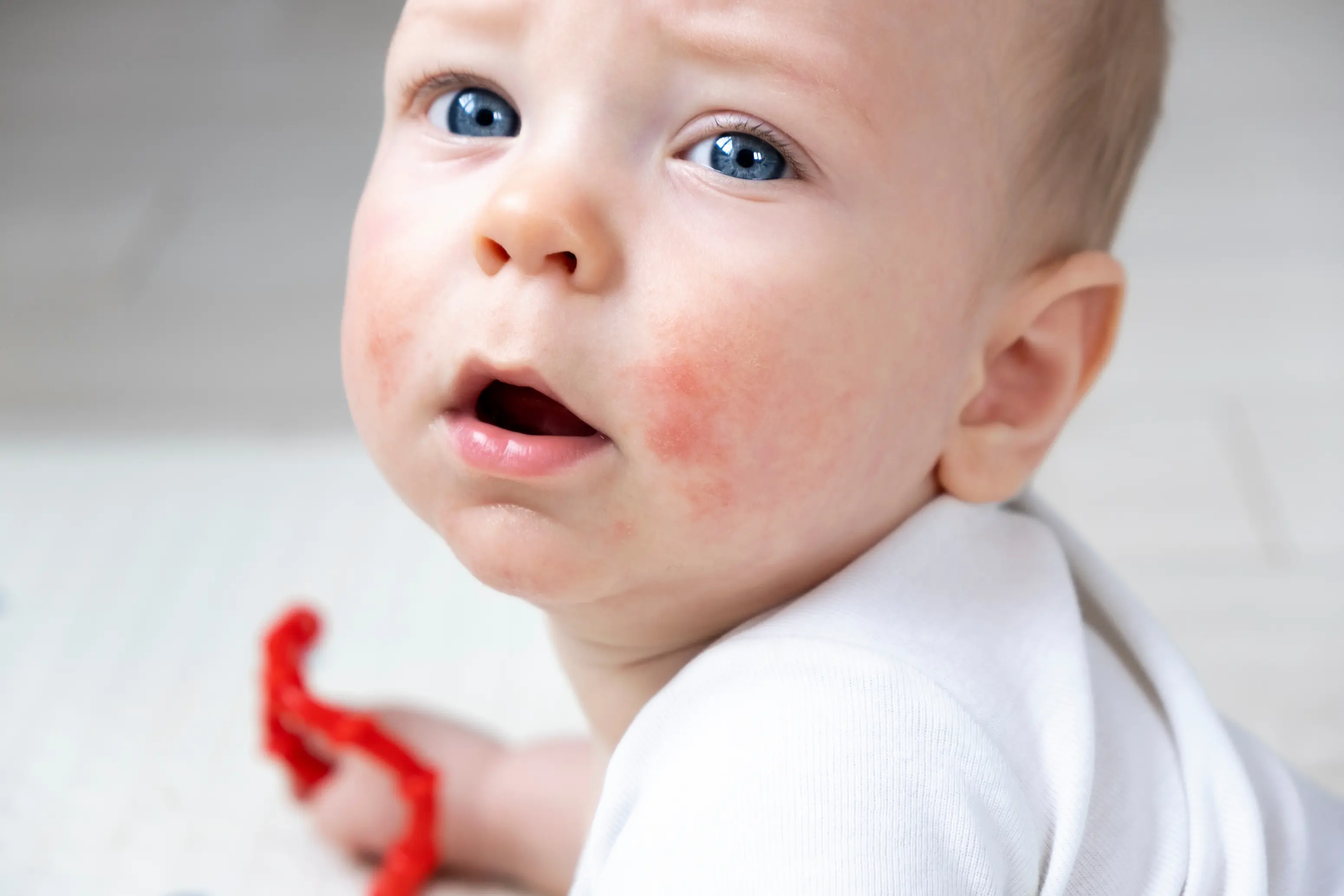
Eczema vs diaper rash
These two problems can both look red and uncomfortable, but the location and texture usually give them away. Sometimes babies have both at the same time, because life enjoys being complicated.
Typical baby eczema (atopic dermatitis)
- Where it shows up: cheeks, scalp, outside of arms and legs, torso. In older babies and toddlers, often in skin folds like elbows and behind knees.
- How it looks and feels: dry, rough patches that can be pink to red to brownish depending on skin tone. It can look scaly, and it is often very itchy.
- Common pattern: flares with cold, dry air, hot baths, fragranced products, saliva drool, scratchy fabrics, sweat/overheating, or illness.
Typical diaper rash (irritant dermatitis)
- Where it shows up: the diaper area where skin contacts urine and stool. Usually worst on the most exposed surfaces.
- How it looks and feels: bright red, shiny, sore-looking skin. It can be tender rather than itchy.
- Common pattern: starts after frequent stools, diarrhea, new foods, not enough barrier cream, or longer time in a wet diaper. Around teething, some babies have more drool, feeding shifts, or looser stools that can contribute, but teething itself is not a guaranteed cause.
A quick location clue
If the rash is mostly in the creases of the groin or has distinct red “satellite” dots around it, think yeast. Yeast diaper rashes often need an antifungal cream. More on that below.
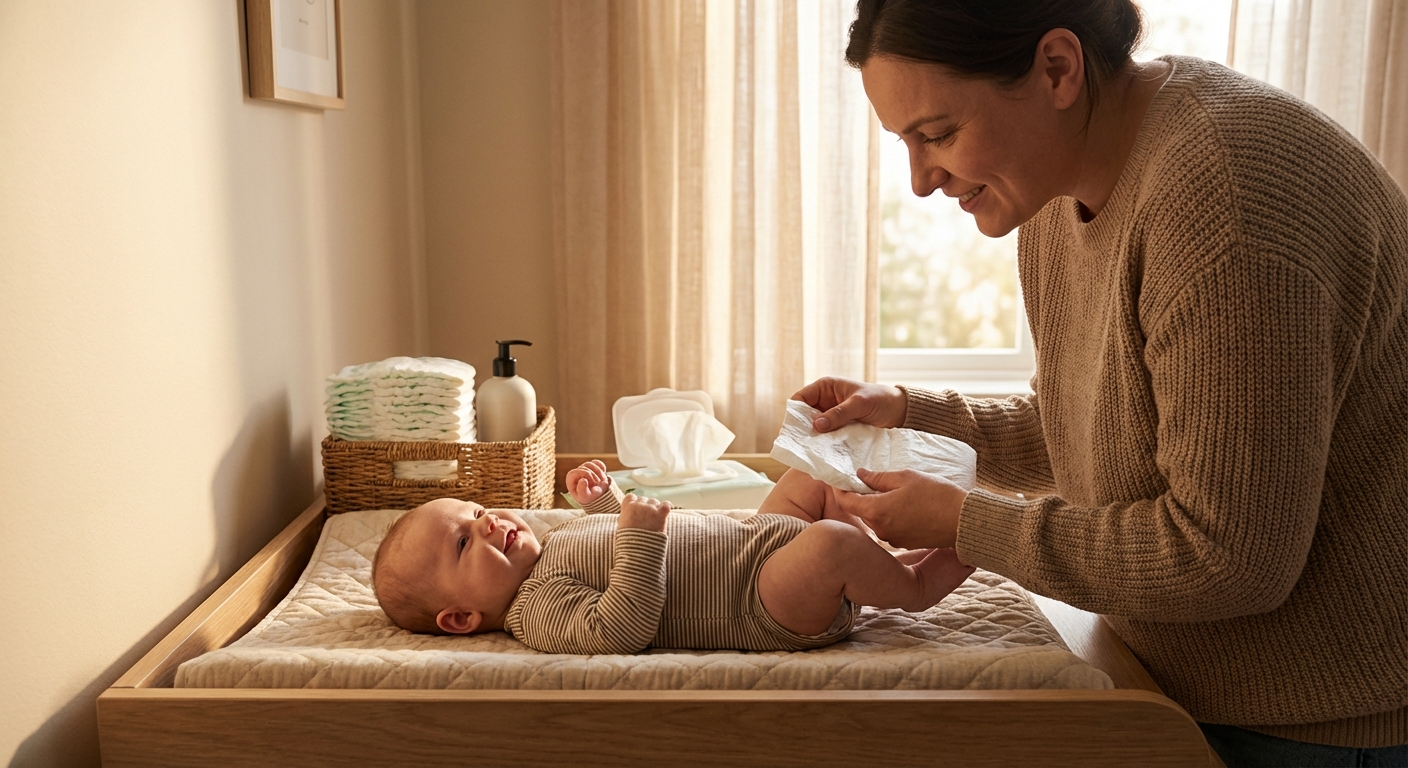
Check red flags
Most eczema and diaper rashes can be handled at home at first. But please contact your pediatrician urgently or seek same-day care if you see any of these:
- Fever with a rash, especially in a young infant
- Blisters, open weeping sores, honey-colored crust (possible infection)
- Rapid spreading redness or the skin looks very swollen, hot, or painful
- Pus, foul odor, or your baby seems very ill or unusually sleepy
- Purple spots that do not blanch when pressed
- Rash near the eyes with swelling or drainage
- Dehydration signs (dry mouth, fewer wet diapers), especially if diarrhea is involved
- Newborns with significant rash (under 1 month), because their skin and immune system are extra delicate
If your baby has eczema and suddenly develops clusters of painful blisters or “punched out” sores, call right away. This can be a serious viral skin infection called eczema herpeticum that needs prompt treatment.
Calm baby eczema
Eczema care is mostly about repairing the skin barrier and calming inflammation. The good news is you do not need an aisle full of products. You need a few consistent steps.
Step 1: Bathe smarter
- Keep baths short: about 5 to 10 minutes.
- Use lukewarm water: hot water can worsen dryness and itching.
- Skip bubbles and fragrance: choose a gentle, fragrance-free cleanser or use cleanser only where needed.
- Pat dry: do not rub.
Step 2: Moisturize often
The most important eczema trick is the “soak and seal” routine: moisturize within a few minutes of getting out of the bath, while skin is still slightly damp.
- Choose thick and bland: ointments and creams usually work better than thin, runny lotions.
- Apply generously: think frosting, not a thin film.
- Repeat at least twice daily: more often during a flare.
If you are wondering what counts as “thick,” look for creams or ointments that stay put on your finger instead of running off immediately. Some pumpable creams can still be great, but very watery lotions often are not enough for eczema.
Step 3: Use anti-inflammatory medicine when needed
Moisturizer is the foundation, but during a flare, many babies need a short course of an anti-inflammatory medication like a topical steroid to break the itch and inflammation cycle. Used correctly and for the right length of time, these can be safe and extremely helpful.
- Talk to your pediatrician: about which strength, where to apply it, and for how long. Face, eyelids, and diaper area usually need extra caution.
- Typical routine: apply medication to the inflamed patches, then moisturizer, unless your clinician instructs a different order for that specific product.
- Do not “save it for later” forever: under-treating can keep baby itchy and inflamed longer.
- Extra diaper-area note: steroids in the diaper region should be clinician-directed because the diaper acts like an occlusive dressing and can increase absorption.
If you run into “wet wraps” or “bleach baths” online: those can be useful for some kids, but they should be done with clinician guidance so they are appropriate and safe for your baby.
Step 4: Reduce triggers (without turning your house into a laboratory)
- Fragrance-free laundry detergent and skip fabric softener and dryer sheets.
- Soft breathable clothing like cotton. Avoid scratchy wool against skin.
- Keep nails short: consider cotton mitts for sleep if scratching is intense.
- Drool care: for cheek and chin eczema, gently dab drool and apply a thin barrier (like a petrolatum ointment) before naps and meals.
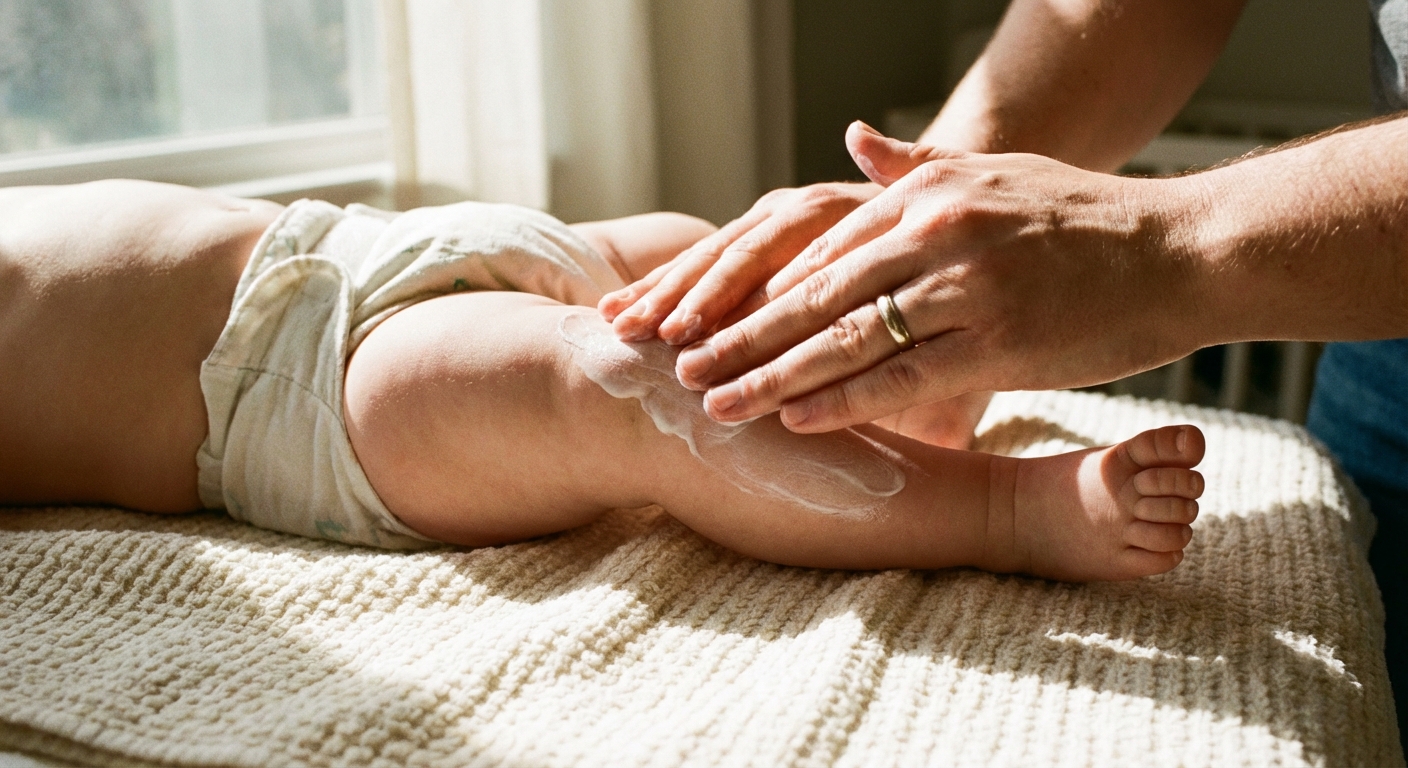
Clear severe diaper rash
Diaper rash is basically a perfect storm of moisture, friction, and irritants. The fix is to get the area clean, keep it dry, and protect it with a barrier.
Step 1: Change more often
For a severe rash, aim for diaper checks every 1 to 2 hours while awake. I know. It is annoying. It is also one of the fastest ways to turn things around.
Step 2: Clean with less rubbing
- Use warm water when possible: a soft cloth or cotton pads can be gentler than wipes during a flare.
- If you use wipes: choose fragrance-free, alcohol-free, and wipe with a light touch.
- For stool stuck to skin: soak the area with warm water rather than scrubbing.
Step 3: Air time helps
Give the diaper area a few minutes to air dry at each change. If your baby is wiggly, a clean towel under them plus a few toys can buy you enough time. You can also use a fan across the room for gentle airflow. Avoid blowing hot air directly on the skin.
Step 4: Use a true barrier, applied thick
For severe rash, you want a product that sits on top of the skin like a raincoat. Common options include zinc oxide paste and petrolatum-based ointment.
- Apply a thick layer: if you can still see the skin easily, add more.
- Do not fully scrub it off at every change: remove soiled areas and reapply. Over-cleaning can re-injure tender skin.
Step 5: Consider a two-cream plan for raw skin
If the skin is very broken down, some clinicians recommend a thin layer of petrolatum or a gentle ointment first, then a thicker zinc oxide barrier on top. Ask your pediatrician if your baby’s rash is severe or recurrent.
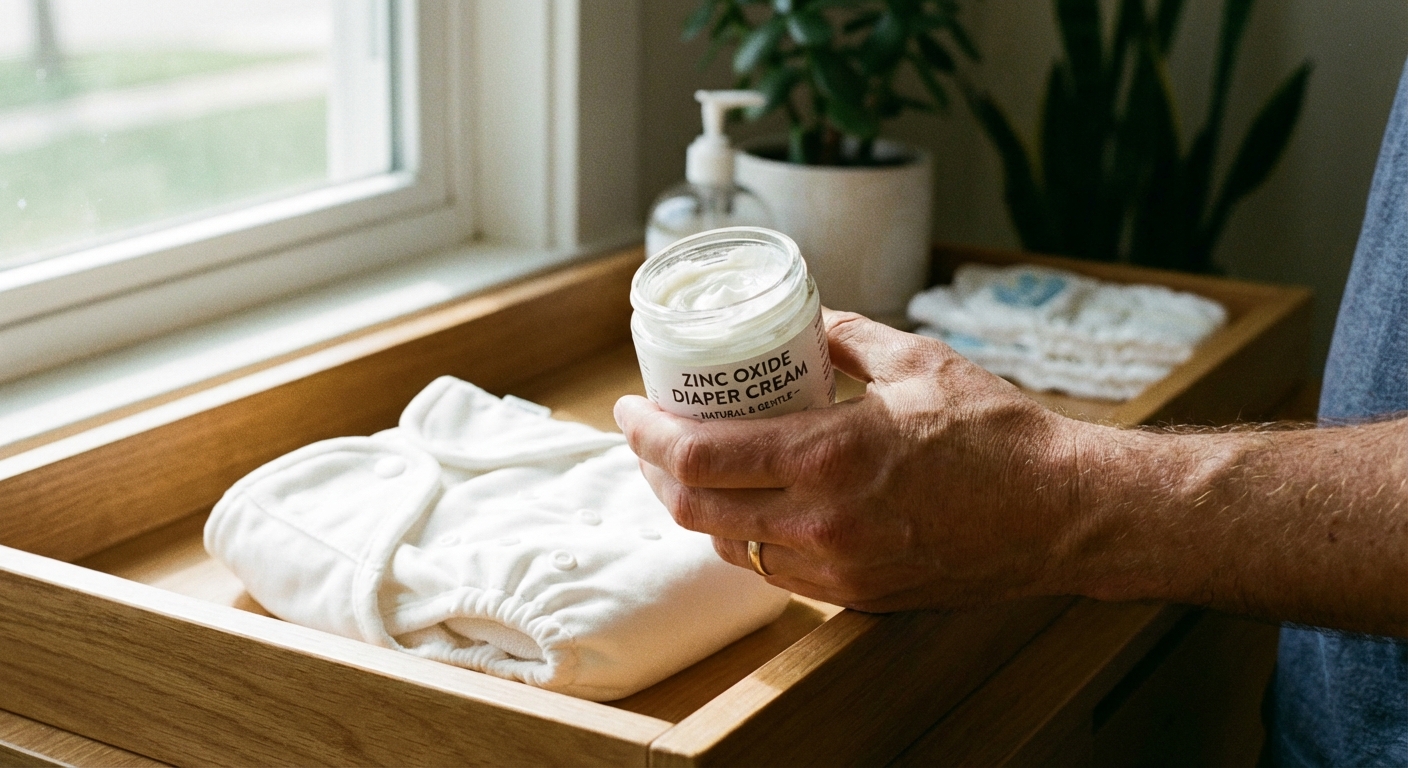
Is it yeast, bacteria, or more?
When a diaper rash is not improving after 2 to 3 days of excellent home care, it is time to think about other causes.
Signs it may be yeast (candida)
- Rash is beefy red and often worse in the skin folds
- Satellite spots: small red dots or bumps just outside the main rash
- Often follows diarrhea or antibiotics
Yeast rashes typically need an antifungal cream (many are available over the counter, but ask your clinician for the right choice and how long to use it for your baby). Barrier cream can still go on top unless your clinician advises otherwise.
Signs it may be bacterial
- Honey-colored crust or oozing
- Small pimples that look like they have pus
- Skin is very painful, increasingly swollen, or spreading quickly
These often need a clinician visit and sometimes a prescription medication.
When to suspect perianal strep
This one is easy to miss and it does not always look like a “typical” diaper rash. Call your clinician if you notice a bright red, sharply defined rash around the anus, especially if your child seems very painful with stooling, has itching, or there is blood streaking.
Could it be an allergy?
True diaper-area allergy is less common than irritation, but it happens. Consider it if the rash consistently appears after a specific brand of wipes, diaper, detergent, or a new topical product, and improves when you switch back. Allergic rashes can look more like eczema, with dryness and itch rather than shiny soreness.
Common look-alikes
Parents are not wrong when they say, “I cannot tell what this is.” A few other very common baby rashes can muddy the waters:
- Seborrheic dermatitis (cradle cap): greasy yellow scales on scalp or eyebrows, sometimes in neck folds. Often not very itchy.
- Heat rash: tiny red bumps in hot, sweaty areas (neck, chest, back). Improves with cooling and lighter layers.
- Normal newborn rashes: tiny white bumps on the nose (milia) or blotchy red patches with little bumps (erythema toxicum) can be normal. Still, if a newborn seems unwell, has fever, or the rash looks severe, they should be evaluated.
What not to do
- Do not use fragranced lotions, powders, or “natural” essential oils on broken or inflamed baby skin. Natural does not mean gentle.
- Avoid talc powder due to inhalation risk. Even cornstarch powder may worsen yeast, so it is best avoided if yeast is suspected.
- Do not use strong steroid creams on your baby unless specifically prescribed, especially on the face or diaper area.
- Do not over-bathe or use hot water for eczema. It can feel soothing briefly, then dryness rebounds.
- Do not scrub off barrier paste at every diaper change. Gentle is faster.
Quick troubleshooting
If eczema is not improving
- Are you moisturizing at least twice a day, and within a few minutes of bathing?
- Are you using a thick cream or ointment rather than a thin lotion?
- Is there a hidden trigger like fragrance, dryer sheets, sweat, or drool sitting on cheeks?
- Is itching causing scratching that keeps the flare going?
- Have you talked to your pediatrician about a short medication course for flares?
If diaper rash is not improving
- Are you changing often enough during the worst days?
- Are you giving air time and letting skin fully dry before the new diaper?
- Are you applying barrier cream thickly and reapplying without scrubbing?
- Does it involve skin folds or have satellite dots (possible yeast)?
- Is your baby having diarrhea that needs its own plan?
- Is it bright red and sharply outlined around the anus (possible perianal strep)?
When to call (non-emergency)
Reach out within 24 to 48 hours if:
- Eczema is interfering with sleep due to itching
- The rash is not improving after 3 to 5 days of consistent home care
- Diaper rash is severe, bleeding, looks like yeast, or is very painful
- You suspect infection, or your baby seems increasingly uncomfortable
- Your baby has frequent flares and you want a prevention plan
One of the best things a pediatric clinician can do is help you create a clear routine for your specific child, including what to use during a flare and what to do for maintenance. That plan saves a lot of midnight Googling.
Prevention that fits
For eczema-prone babies
- Moisturize daily, even when skin looks good
- Keep baths short and lukewarm
- Use fragrance-free cleanser and laundry products
- Dress in breathable layers to avoid overheating sweat
For diaper rash-prone babies
- Use a thin barrier layer during times of higher risk (diarrhea, new foods, more frequent stools)
- Change promptly after stool when possible
- Choose wipes that are gentle, or rinse with water during sensitive stretches
- Size up diapers if they are snug and rubbing
And if you needed someone to say it: you can be doing everything “right” and still get a rash. Baby skin is brand new at being skin. You are not failing. You are just parenting a tiny human who is still figuring out how to exist.
Product checklist
Every baby is different, but these categories are the usual essentials to discuss with your clinician:
- Fragrance-free thick moisturizer (cream or ointment)
- Gentle cleanser for baths
- Barrier paste for diaper area (often zinc oxide or petrolatum-based)
- Antifungal cream option if yeast is suspected (confirm with clinician)
- Prescription topical anti-inflammatory for eczema flares if needed
If your baby’s rash is severe, persistent, or making feeding and sleep hard, it is worth a call. You deserve a plan that works and a night where you are not negotiating with a tube of diaper paste at 3 AM.