A calm, evidence-based guide to AAP safe sleep (2022): back to sleep, firm flat surface, empty crib, room-sharing, swaddling safety (avoid weighted products)...
Co-Sleeping Safety: Room-Sharing vs. Bed-Sharing

Sarah Mitchell
Sarah Mitchell is a Registered Pediatric Nurse and a mother of three who has spent over a decade helping families navigate the beautiful, chaotic early years of childhood. She combines evidence-based medical knowledge with real-world parenting experience to offer practical, compassionate advice. At Awesome Parent, Sarah's mission is to help exhausted parents find solutions, trust their instincts, and finally get some sleep.
It is 3 AM. Your baby will only sleep on a warm human. You are wondering if you are doing something wrong, and Google is being dramatic about it. Take a breath.
Parents use the word co-sleeping to mean different things. From a safety standpoint, it helps to separate it into two buckets:
- Room-sharing: baby sleeps in the same room as you, on their own sleep surface (bassinet, crib, or play yard, including Pack ’n Play-style).
- Bed-sharing: baby sleeps on the same adult bed with a parent.
Most major pediatric guidance, including the American Academy of Pediatrics (AAP), strongly supports room-sharing and discourages bed-sharing, especially in the first months. Guidance can also change as new data emerges, so it is always worth checking the latest from your pediatrician and local public health sources.
That said, many families bed-share intentionally, or they end up doing it accidentally while exhausted. This article aims to be both evidence-aligned and reality-aligned: we will cover the safest default, then talk about how to reduce risk if bed-sharing is happening anyway.
Quick definitions
Room-sharing
Baby sleeps in your room, close enough that you can see and hear them easily and respond quickly, but on a separate, flat, firm surface designed for infant sleep.
Bed-sharing
Baby sleeps on the same mattress with one or more adults. This is the situation most associated with increased risk of sleep-related infant deaths, especially when other hazards are present (soft bedding, adult pillows, impaired caregivers, couches, and armchairs).
Contact napping
Baby sleeps on a caregiver’s chest or in arms. This can feel like the only way anyone rests in the newborn phase. It can be okay when the adult is fully awake, but it becomes risky if the adult dozes off, particularly on a couch or recliner.
Safe sleep defaults
If you want the simplest “nurse triage” version of safer infant sleep, it is this:
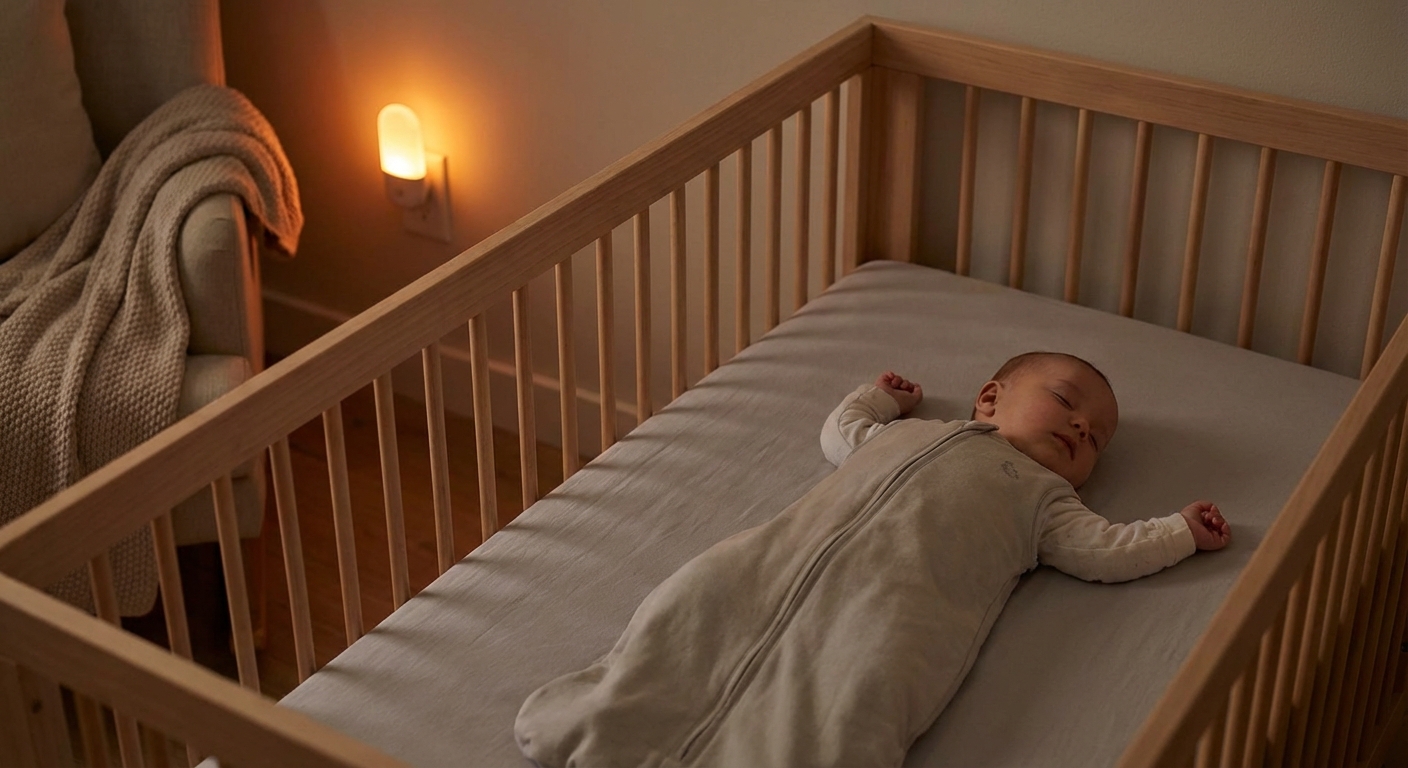
- Back to sleep for every sleep (naps and night).
- Firm, flat sleep surface that meets infant safety standards (crib, bassinet, or play yard). Flat means not inclined.
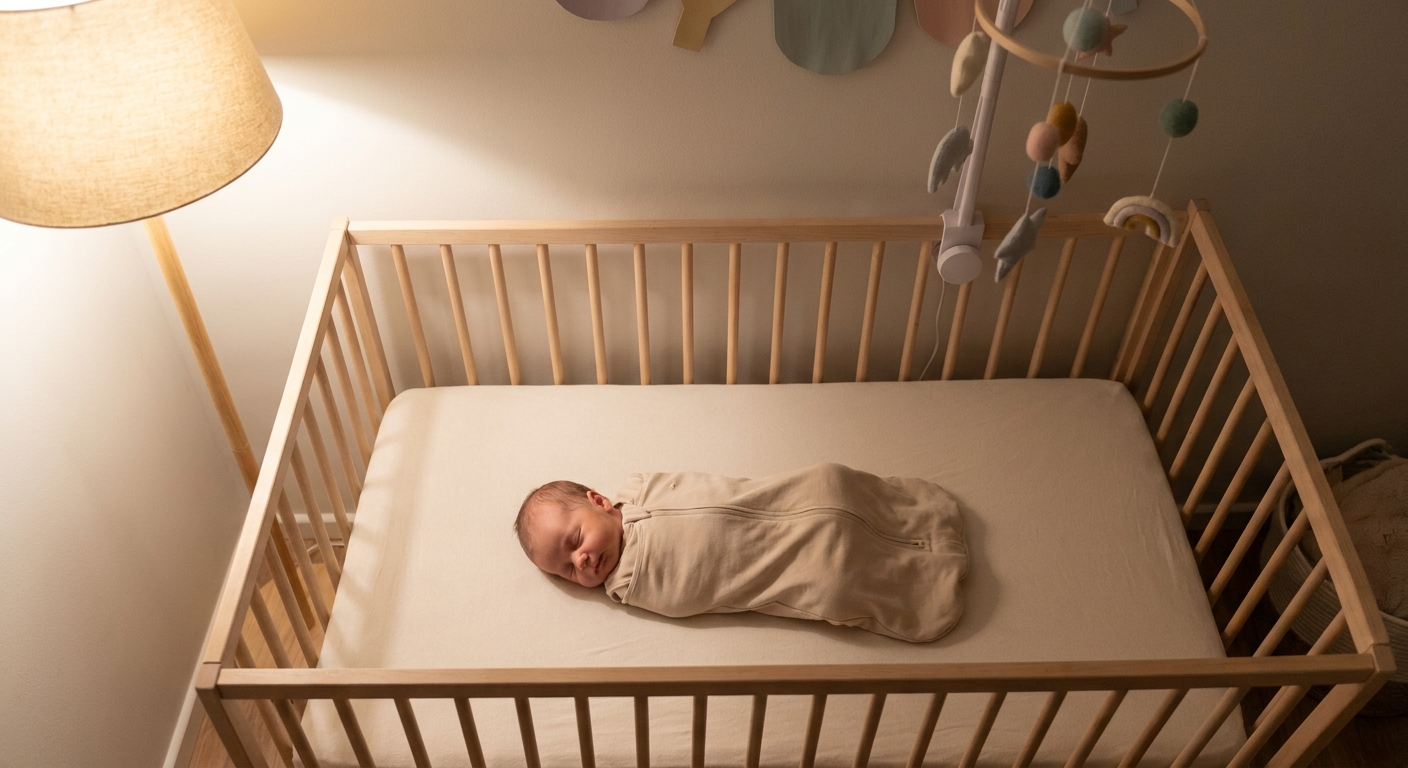
- Baby sleeps alone on that surface: fitted sheet only. No pillows, blankets, loose sheets, stuffed animals, loungers, in-bed nests, positioners, wedges, or bumpers.
- Room-share, do not bed-share, especially for young infants (AAP recommends room-sharing for at least the first 6 months, and ideally up to 12 months).
- Avoid couches and armchairs for infant sleep, including “just for a minute.” If an adult falls asleep there, risk is especially high.
- Keep baby smoke-free during pregnancy and after birth.
- Avoid overheating: use light layers and watch for signs of being too warm (sweating, hot chest/back). A common rule of thumb is dressing baby similarly to you, plus one light layer at most. Sleep sacks are safer than blankets.
- Breastfeeding is associated with lower risk of SIDS. Any amount helps.
- Offer a pacifier at sleep once breastfeeding is established (if you choose).
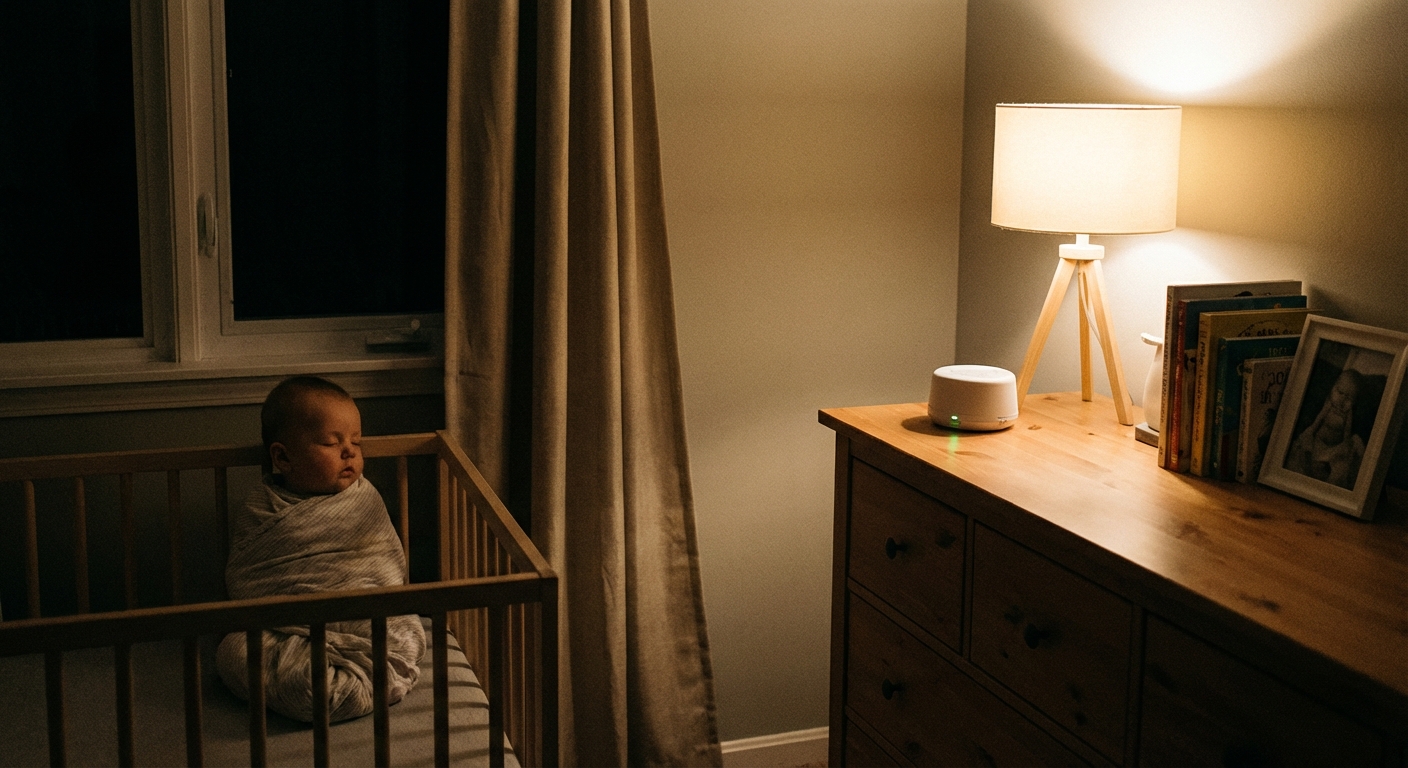
- White noise, if you use it: keep it low and not right next to baby. Many experts advise keeping continuous sound under about 50 dB and placing the device several feet away.
These steps are not about being a perfect parent. They are about stacking the odds in your baby’s favor during a time when babies are still learning how to wake and respond to stressors.

Room-sharing vs bed-sharing
Why room-sharing is recommended
Room-sharing for at least the first 6 months, and ideally up to 12 months, is often recommended by the AAP because it is associated with a lower risk of sleep-related infant death while still allowing proximity for feeding and comforting. Practical benefits count, too: many parents find they respond faster and settle baby sooner when baby is nearby.
Why bed-sharing is discouraged
Bed-sharing can introduce risks that are hard to fully remove, even with the best intentions. Adult mattresses are not designed for infants. Soft bedding, pillows, gaps, and adult bodies can create hazards like suffocation, entrapment, and overheating. Risk rises further with certain factors such as smoking exposure or caregiver impairment.
And here is the very human part: many bed-sharing situations are not planned. They happen when a parent accidentally falls asleep while feeding or soothing in bed or on a couch. If you take nothing else from this article, please take this: couches and armchairs are especially dangerous sleep locations for infants.
If you might fall asleep
Many loving, attentive parents are certain they will stay awake and then nod off. Sleep deprivation is powerful.
If you are feeding at night and there is a real chance you will drift off, it is safer to plan for that possibility:
- Avoid feeding on a couch or recliner if you are sleepy. If you might doze, feeding on a cleared adult bed is generally safer than a sofa or armchair, because couches create deep creases and gaps where a baby can become trapped.
- Clear the bed before you start. Move pillows, quilts, comforters, and extra blankets away from the baby zone.
- Set an alarm on your phone or watch if you are extremely tired.
- Return baby to their own sleep space as soon as you wake up.
This is not an endorsement of bed-sharing as a goal. It is harm reduction for the nights when your body has other plans.
Bed-sharing harm reduction
Let’s be very clear: the safest sleep setup is baby on their back, on a firm, flat surface designed for infant sleep, in your room. If you can room-share without bed-sharing, that remains the safest choice.
If you are bed-sharing anyway, aim to remove as many hazards as possible. Think “make the adult bed act as close to an infant sleep space as you can,” while acknowledging it will never be identical.
Do not bed-share if
- Any caregiver has used alcohol, cannabis, opioids, sedating medications, or any substance that makes them less alert.
- Anyone in the home smokes or vapes, or baby had smoke exposure during pregnancy. Smoking exposure is a major risk amplifier for sleep-related infant death, and the combination with bed-sharing is especially concerning.
- Baby was born premature or has low birth weight, unless your pediatrician specifically advises otherwise.
- Baby is very young. The earliest months carry the highest risk, and many sources flag bed-sharing risk as particularly high under about 4 months. Ask your pediatrician for individualized guidance.
- You are on a couch, recliner, or armchair. If there is one place to avoid, it is this.
- There are other children or pets in the bed.
If it is happening, lower risk
- Use a firm mattress. Avoid memory foam toppers, soft mattresses, waterbeds, and featherbeds.
- No soft bedding near baby: no pillows, comforters, duvets, loose blankets, or stuffed animals.
- Dress baby lightly. Consider a wearable blanket (sleep sack). Avoid hats for sleep.
- Baby on their back, near your chest level, away from pillows.
- One sober, unimpaired adult beside baby.
- Keep baby away from gaps and edges: no space between mattress and wall, headboard, or furniture. An infant can become trapped. Avoid bed rails that can create entrapment spaces.
- Hair and clothing check: tie up long hair, avoid hoodies with strings, and keep necklaces out of the sleep area.
- Temperature check: the adult bed can run warm. Aim for a cool room and light layers.
Breastfeeding context: Many families who bed-share do so around nighttime breastfeeding. Breastfeeding is associated with reduced SIDS risk, and breastfeeding parents often adopt a curled, protective sleep posture around baby. Still, breastfeeding does not cancel out hazards like smoking, alcohol, a soft mattress, or heavy bedding.
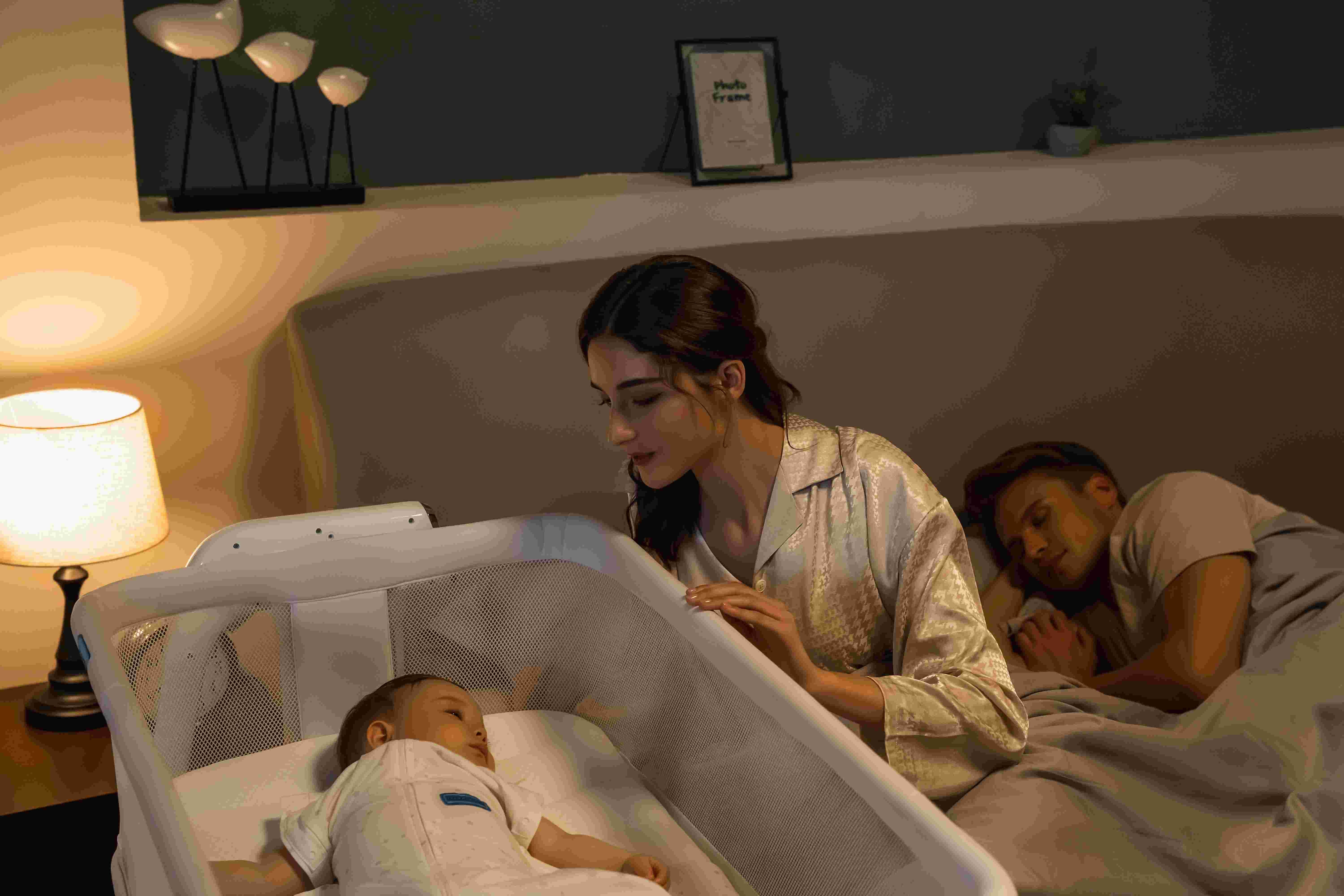
A safer “close but separate” option: If you want baby within arm’s reach without sharing the adult mattress, consider a bedside bassinet or a sidecar-style setup that meets current safety standards and is installed exactly as the manufacturer directs.

Room-sharing tips
Room-sharing can be wonderful and also… loud. Newborns grunt, squeak, and breathe like tiny pug dogs. That does not automatically mean something is wrong.
Help parents sleep too
- Use white noise at a low, steady volume, and keep the machine away from baby’s head.
- Try a little distance: place the bassinet a few feet from your bed if every snuffle wakes you.
- Keep the room dark and use a dim nightlight for feeds and diaper changes.
- Have a reset plan for frequent wakes: diaper, feed, burp, back down. Keep it boring.
- Split the night when possible: even a 3 to 4 hour protected block of sleep can change your whole day.
When it feels impossible
If you are dangerously sleep-deprived, talk with your pediatrician. Sometimes small changes, like feeding tweaks, addressing reflux symptoms appropriately, or getting support for postpartum mood concerns, can make nights safer and more manageable.
If you are repeatedly falling asleep during feeds, it is also worth building a simple fatigue plan: set up a safer feeding spot, ask a partner to take an early-morning shift, or explore bottle options (pumped milk or formula) if that helps you get a protected stretch of sleep. You are not “ruining” anything by needing sleep. You are reducing risk.
Transitioning to a crib
Some babies transition easily. Others act like you moved them to a different planet. Both are normal.
Gentle ideas
- Start with naps in the crib while you are awake and can practice.
- Use the same sleep cues: sleep sack, white noise, dark room, short routine.
- Keep bedtime consistent for a week or two before changing locations.
- Try the crib in your room first, if space allows, then move it to the nursery later.
- Respond, but keep it boring: quick reassurance, minimal talking, lights low.
If you are also moving from bed-sharing to independent sleep, it can help to do it in steps: first move baby to a separate surface in your room (bassinet or crib), then later move that surface to their room if that is your goal.

When to stop bed-sharing
If you have been bed-sharing, reassess frequently. Many families find risk changes as baby grows and starts rolling, scooting, or crawling.
- Once baby can roll, they can end up in riskier positions near pillows, blankets, or edges.
- As baby becomes more mobile, falls from the bed become a real concern.
- If your sleep changes (new medication, illness, a night out, extreme exhaustion), that is a night to keep baby on a separate sleep surface.
If you want help making a plan, your pediatrician can help you weigh your baby’s age, health history, feeding, and your sleep setup.
Swaddles and popular products
A couple quick notes on two topics that come up a lot at 3 AM:
- Swaddling: If you swaddle, follow product instructions and keep it snug at the chest and loose at the hips. Stop swaddling at the first signs of rolling, or by around 8 weeks, whichever comes first. Some families switch to an arms-out sleep sack at that point.
- In-bed loungers, nests, and inclined sleepers: Many of these products are not recommended for unsupervised sleep. If a product is not explicitly designed and approved for infant sleep on a flat surface, treat it as a place for awake, supervised time only.
When to call the pediatrician
Most sleep questions are about normal newborn behavior. Still, reach out promptly if you notice:
- Pauses in breathing, blue or gray color, or limpness
- Baby is difficult to wake
- Persistent vomiting, poor feeding, or signs of dehydration
- Fever in a baby under 3 months (follow your clinic’s guidance right away)
Bottom line
If you want the safest, most widely recommended setup: room-sharing on a separate, firm sleep surface for at least the first 6 months, ideally the first year.
If bed-sharing is happening, focus on removing the biggest hazards: no smoking exposure, no substances that impair arousal, no couches, no soft bedding, and no extra sleepers in the bed. And please, loop in your pediatrician for personalized advice, especially if your baby was premature, has medical needs, or you are feeling so sleep-deprived that you are not functioning safely.
You are not failing because your baby wants closeness. You are parenting a tiny human with very big opinions. Let’s keep that tiny human as safe as possible while you both get more sleep.
Medical disclaimer: This article is general educational information and is not a substitute for medical advice. Safe sleep guidance can vary based on your baby’s health history and your home environment. Always follow your pediatrician’s recommendations and your local public health guidance.
Sarah Mitchell
Sarah Mitchell is a Registered Pediatric Nurse and a mother of three who has spent over a decade helping families navigate the beautiful, chaotic early years of childhood. She combines evidence-based medical knowledge with real-world parenting experience to offer practical, compassionate advice. At Awesome Parent, Sarah's mission is to help exhausted parents find solutions, trust their instincts, and finally get some sleep.