A calm, parent-friendly guide to typical symptom timelines, when kids are most contagious, realistic masking and isolation tips, daycare return basics aligne...
COVID-19 in Babies Under 1: Symptoms, Feeding, and Care at Home

Sarah Mitchell
Sarah Mitchell is a Registered Pediatric Nurse and a mother of three who has spent over a decade helping families navigate the beautiful, chaotic early years of childhood. She combines evidence-based medical knowledge with real-world parenting experience to offer practical, compassionate advice. At Awesome Parent, Sarah's mission is to help exhausted parents find solutions, trust their instincts, and finally get some sleep.
If you are reading this at 2 or 3 AM with a warm little baby on your chest and a cold knot in your stomach, take a breath. Many infants who get COVID-19 have mild symptoms and recover with supportive care at home, but very young babies can get sick faster than older kids. The tricky part is that babies cannot tell us what hurts, and their “I don’t feel good” often looks like fussiness, sleepy feeds, or fewer wet diapers.
This page is focused on babies under 12 months, where the red flags are a little different than they are for toddlers and big kids. I will walk you through what COVID-19 can look like in infants, how to protect caregivers in the home, how to keep fluids and calories going, and exactly when to call your pediatrician or seek urgent care.

What COVID-19 can look like in a baby
In infants, symptoms can be subtle and change quickly. Some babies have classic cold symptoms. Others just seem “off.”
Common symptoms in infants
- Stuffy or runny nose
- Cough (sometimes mild, sometimes more persistent)
- Fever (not always present)
- Decreased appetite or shorter feeds
- More sleepiness or harder to wake for feeds
- Irritability or unusual fussiness
- Vomiting or diarrhea (yes, it can be a stomach thing)
Easy-to-miss symptoms
- Fewer wet diapers
- Less interest in feeding or tiring out mid-feed
- Faster breathing or working harder to breathe
- Less interactive than usual
If your baby is under 3 months, call your pediatrician early even if symptoms seem mild. Age alone makes us more cautious, because fever or breathing trouble in young infants can be serious and can also be caused by things other than COVID-19 (like RSV, flu, or a urinary tract infection). If your baby has a chronic condition (prematurity, heart or lung disease, immunodeficiency), also call early. With infants, we prefer “early and boring” calls over “late and scary” situations.
The 3 things I watch most
When I worked triage, these were the questions that quickly told me whether a baby was likely okay at home or needed to be seen.
1) Feeding
During illness, babies often eat less because their nose is clogged, they are tired, or their throat feels sore.
- Breastfed babies: look for continued interest in latching, audible swallows, and some feeds that feel “real,” even if they are shorter. It is common to want to nurse more frequently for comfort.
- Formula-fed babies: a temporary drop in ounces is common, but they should still take in fluids across the day.
Call your pediatrician if your baby is refusing most feeds, cannot stay awake to feed, vomits repeatedly, or you are having to “fight” for every sip.
2) Wet diapers
For sick babies, hydration can slip before parents realize it. A quick at-home way to monitor hydration is diaper output.
- General rule: you want a steady pattern of wet diapers across the day.
- Simple anchor: if your baby is going 8 hours without a wet diaper, call for same-day advice. If you are seeing a clear drop from your baby’s normal pattern, call even sooner.
- Watch for: darker urine, diapers that feel noticeably less heavy, or fewer wet diapers than usual.
- Other dehydration clues: dry lips and mouth, no tears when crying (in babies old enough to make tears), sunken soft spot, unusual sleepiness.
Seek same-day medical advice if your baby is having significantly fewer wet diapers than normal, especially if paired with poor intake or vomiting or diarrhea.
3) Breathing
Babies can have noisy breathing from congestion and still be okay. What matters most is whether they are working to breathe.
Signs of increased work of breathing:
- Breathing fast and staying fast even when calm
- Chest pulling in between ribs or under the ribs (retractions)
- Nostrils flaring with breaths
- Head bobbing with breathing
- Grunting sounds with each breath
- Pauses in breathing, or color changes
Emergency signs: blue or gray lips or face, severe difficulty breathing, your baby is hard to wake, or you are seeing repeated pauses in breathing. Call emergency services right away.
Fever in babies with COVID-19
Fever is common with COVID-19, but the age of your baby matters a lot when deciding what to do.
What counts as a fever
For infants, a fever is a rectal temperature of 100.4°F (38.0°C) or higher.
When fever needs urgent evaluation
- Under 3 months: any fever (100.4°F or 38.0°C or higher, rectal) should be discussed with a clinician right away. Many practices treat this as an urgent, same-day situation, regardless of whether you suspect COVID-19.
- 3 to 12 months: call your pediatrician for guidance if fever is high, persistent, or your baby seems very unwell, dehydrated, or is having breathing trouble.
Use a rectal temperature for the most accurate reading in infants. Forehead (temporal artery) and ear (tympanic) readings can be less reliable in little babies.
Medication note: Ask your pediatrician for correct dosing for acetaminophen. Ibuprofen is generally not recommended under 6 months unless a clinician specifically tells you to use it. Never give aspirin to children. Avoid multi-symptom cold medicines for infants.
At-home care
Think of home care as “support the basics” while the immune system does its job.
Help them breathe easier
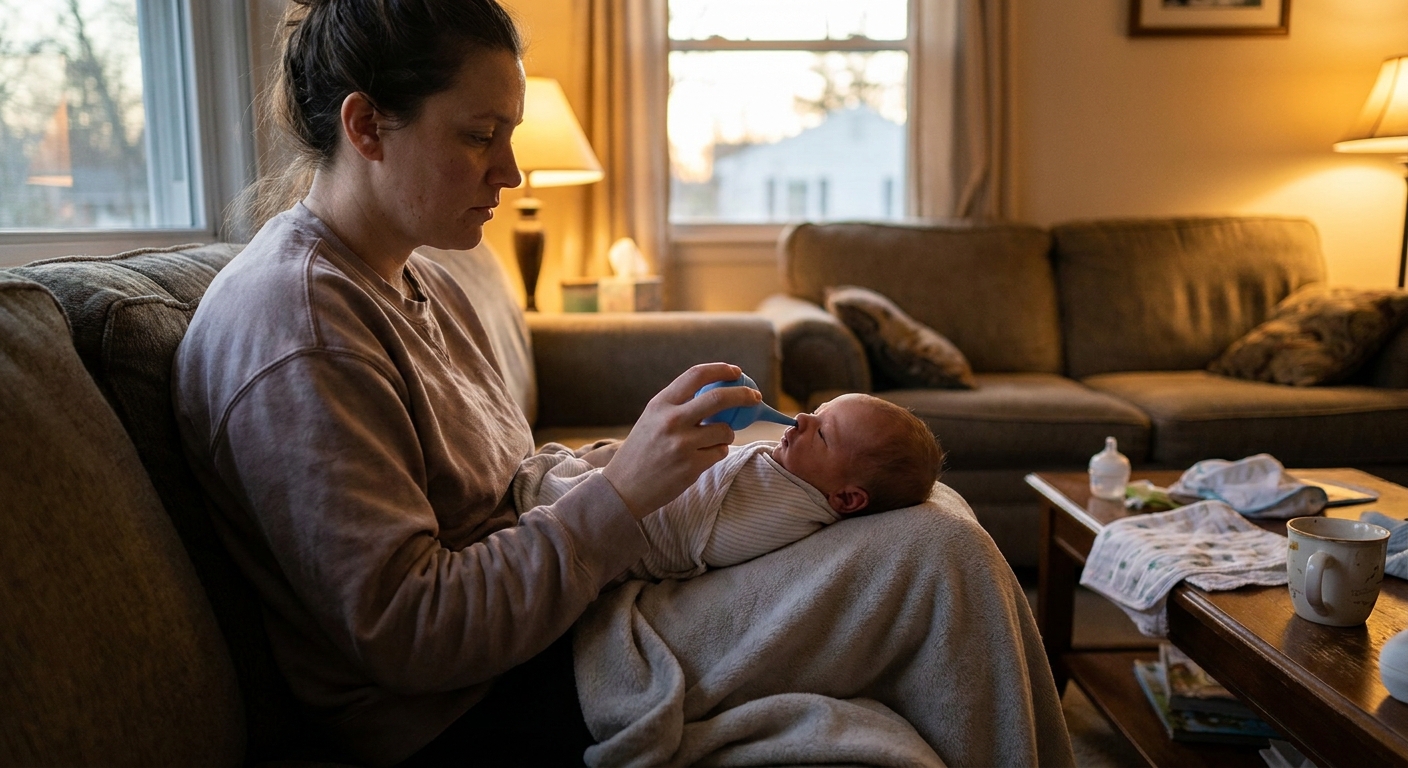
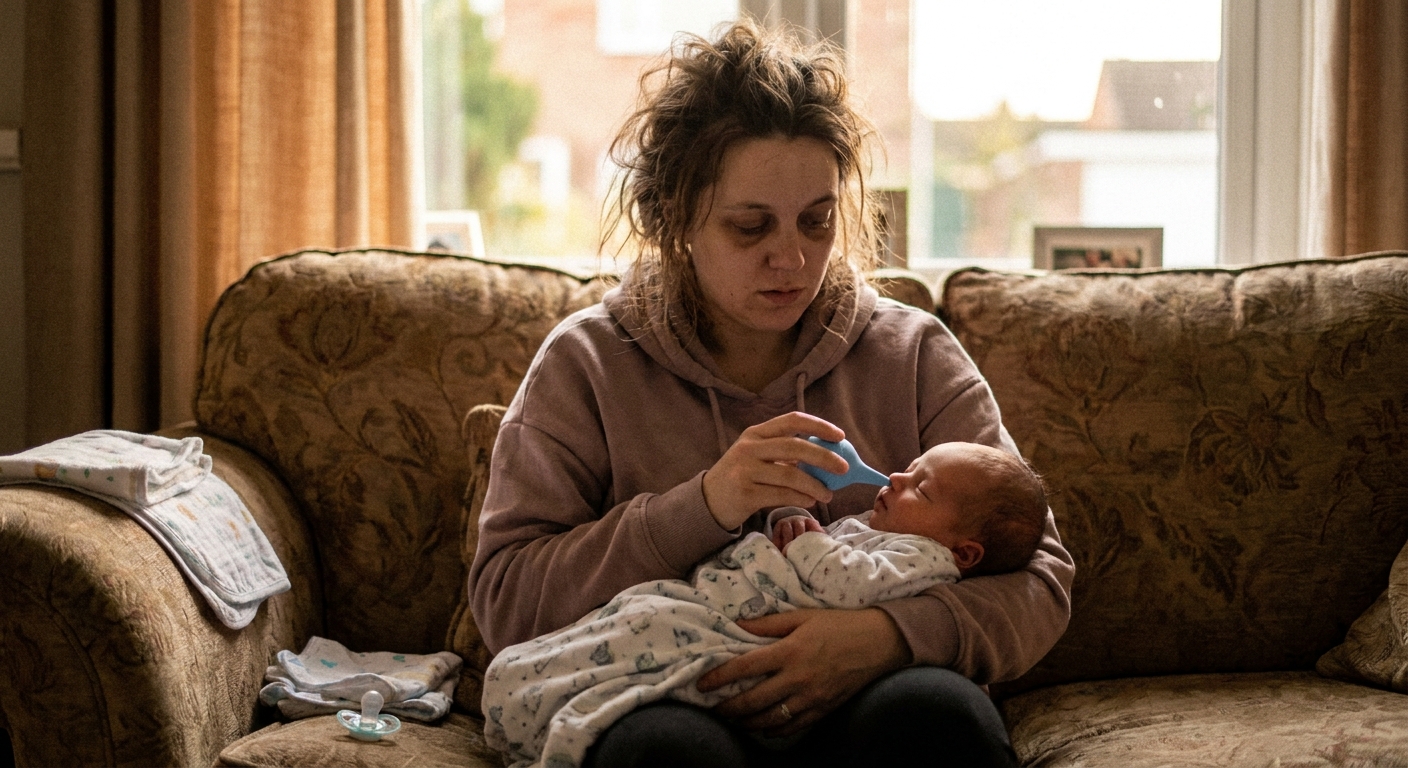
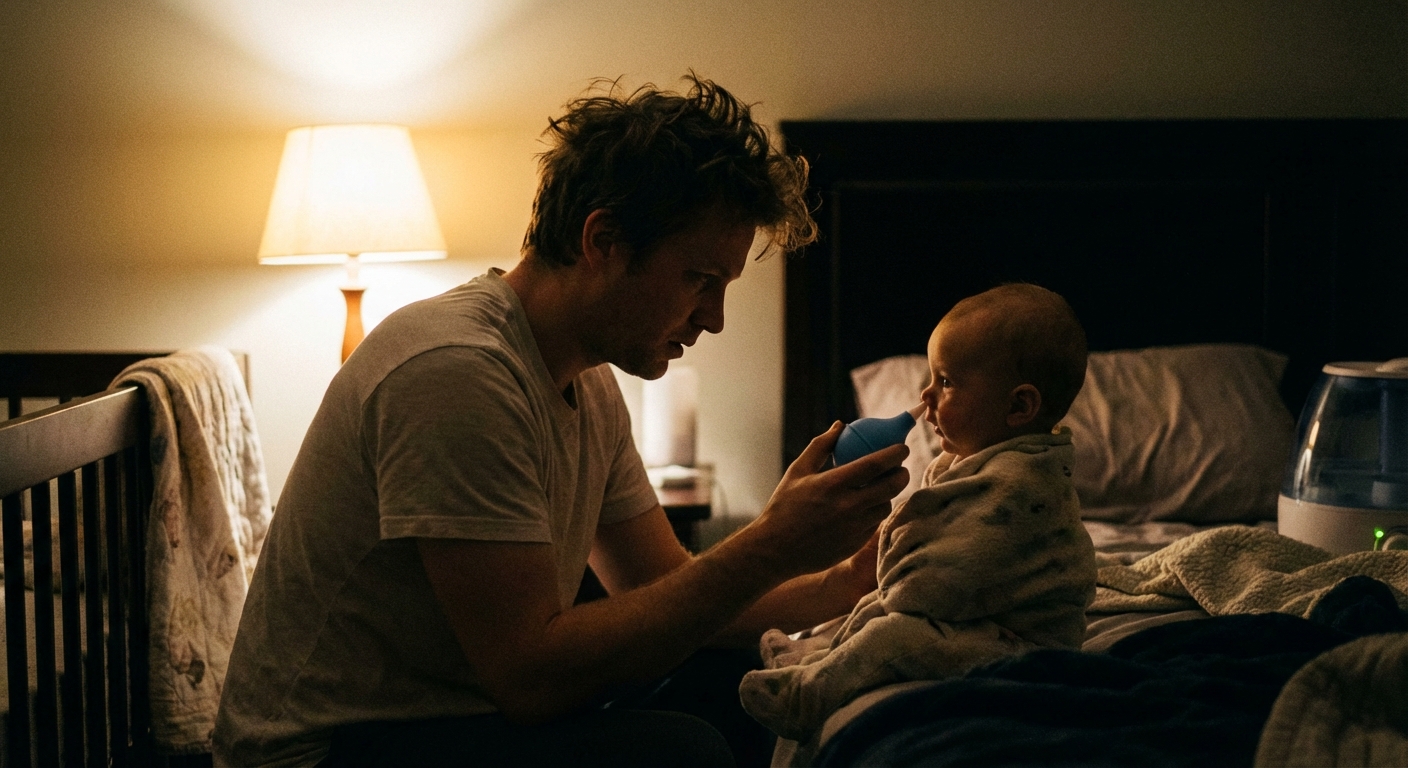
- Saline drops in the nose, then gentle suction (especially before feeds and sleep).
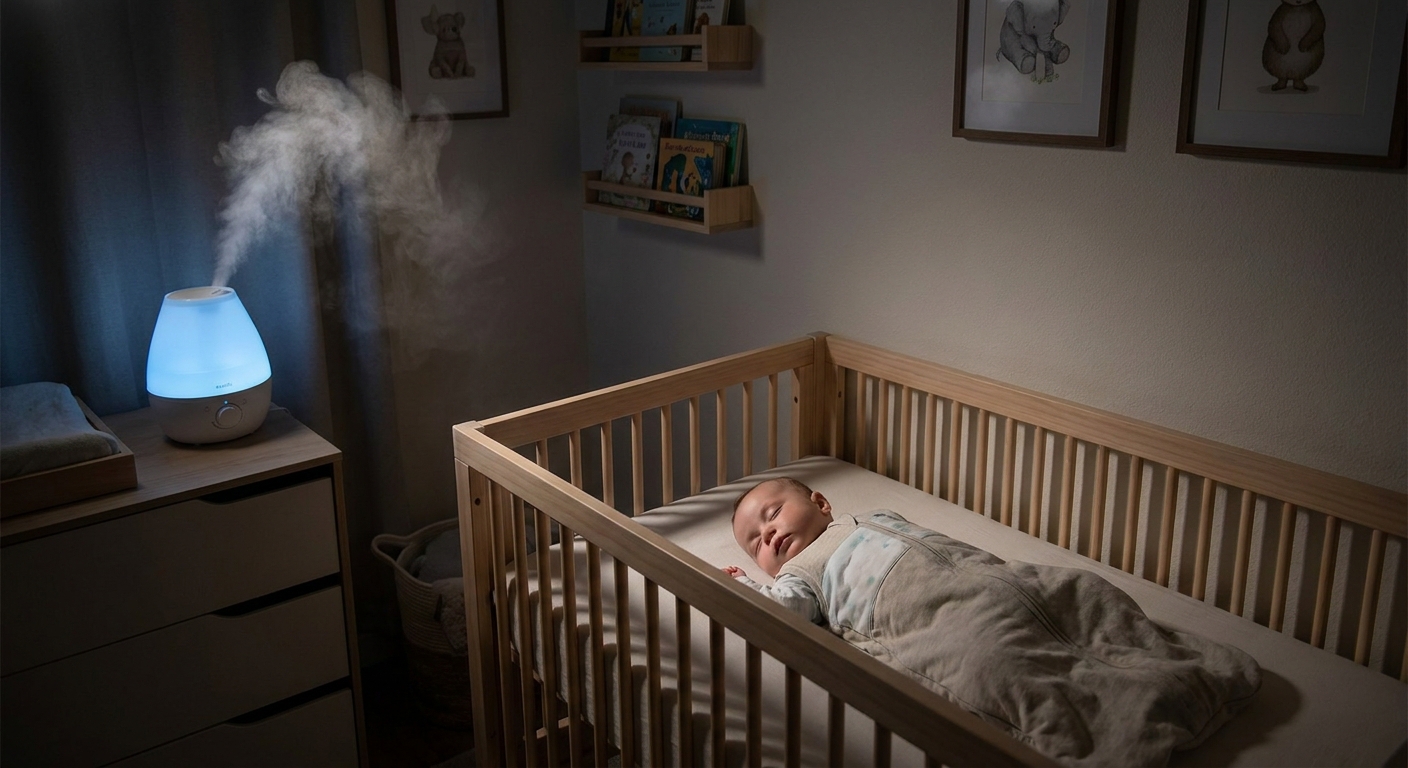
- Cool-mist humidifier in the room during sleep.
- Steam time: sitting in a steamy bathroom for 10 to 15 minutes can loosen congestion. Safety note: keep your baby in your arms and well away from hot water, and never bring a baby near a running hot shower stream.
- Keep baby upright during feeds and for a short period after, if reflux is an issue.
Avoid: over-the-counter cold medicines for infants, menthol rubs near the nose, and honey (not safe under age 1).
Keep fluids and calories going
- Offer smaller, more frequent feeds if your baby is tiring out.
- Focus on hydration first if your baby has vomiting or diarrhea.
- If breastfeeding: keep nursing. Breast milk is fluids plus calories plus immune support, and it is usually the easiest thing for a sick baby to tolerate.
If you are considering oral rehydration solution, ask your pediatrician for age-appropriate guidance, especially for younger infants.
Sleep and comfort
- Keep the room comfortably cool
- Dress baby in light layers
- Extra cuddles are allowed and encouraged
Safe sleep still applies
When babies are congested, it is tempting to try positioning tricks. Stick with safe sleep: back to sleep, on a firm flat surface. Avoid inclined sleepers, sleep positioners, and letting a baby sleep in a swing or car seat outside of travel.
Isolation basics
Let’s be realistic: you cannot truly isolate from an infant who needs hands-on care. The goal is to reduce spread as much as possible while keeping your baby safe and fed. Recommendations can change, so follow your pediatrician, your daycare, and current local public health guidance when possible.
If the caregiver is not sick
- Mask while holding, feeding, or soothing the baby, especially in close face-to-face moments.
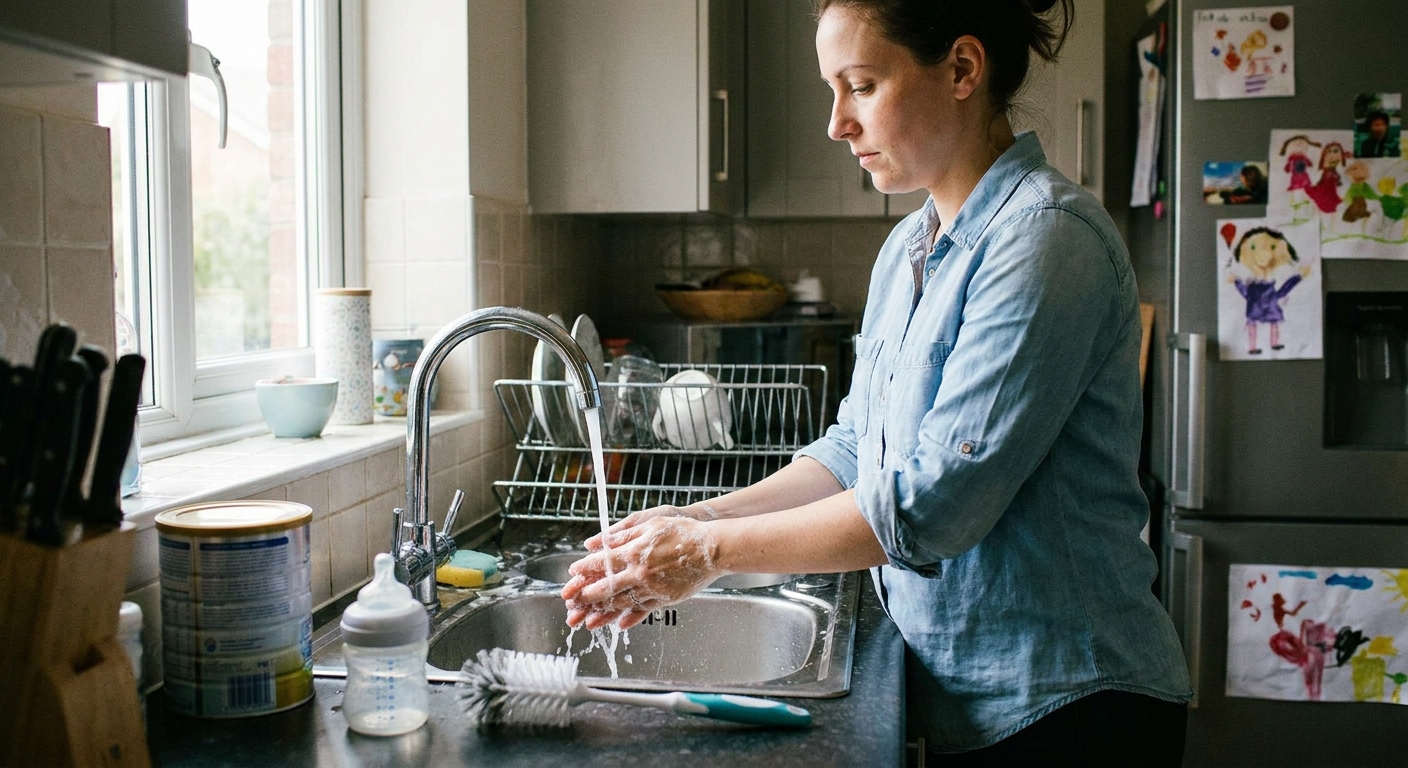
- Wash hands before and after diaper changes, feeds, and suctioning.
- Ventilation helps: open windows when possible, run an air purifier if you have one.
- Clean high-touch surfaces (phones, doorknobs, pump parts per instructions).
If the caregiver is also sick
This is common. Do the best you can:
- Mask during close care when you are able.
- Hand hygiene and ventilation still matter.
- If another healthy adult can take over some care, that can reduce the baby’s viral exposure, but in many homes there is no perfect separation.
Breastfeeding: In most cases, breastfeeding can continue even if a parent is COVID-positive. Masking and hand hygiene are typically recommended. If you are too sick to nurse, pumping and having another caregiver feed is an option if available to you.
Testing
If your baby has symptoms or a known exposure, testing can be useful for:
- Knowing what you are dealing with
- Guiding precautions around vulnerable family members
- Daycare return requirements
Home rapid tests can be harder to do with a wiggly baby and may be less sensitive early on. If symptoms are strong but a home test is negative, consider repeating in 24 to 48 hours, and call your pediatrician about repeat testing or a PCR test if needed.
When to call or go in
Parents often worry they are overreacting. In pediatrics, we would much rather you call and be reassured than wait until your baby is struggling.
Call your pediatrician today if
- Your baby is eating much less than usual or has trouble staying awake to feed
- You are seeing fewer wet diapers than normal
- Fever that concerns you, especially in younger infants
- Vomiting or diarrhea that is not letting up
- Your baby has underlying medical conditions or was born prematurely
- You feel like something is not right, even if you cannot name it
Seek urgent or emergency care now if
- Breathing looks labored: retractions, grunting, head bobbing, severe fast breathing
- Blue or gray lips, face, or skin
- Repeated pauses in breathing
- Your baby is hard to wake, floppy, or unusually unresponsive
- Signs of significant dehydration: very few wet diapers, very dry mouth, sunken soft spot
If you are unsure, call your local nurse line or pediatric office. Describe what you see: “ribs pulling in,” “only two wet diapers since morning,” “refusing feeds,” “breathing fast even when calm.” Those details are gold.
Return to daycare
Daycare policies vary and public health guidance changes over time. Always follow your daycare’s rules and your pediatrician’s recommendations. For infants, the practical questions usually come down to contagiousness and whether your baby can participate in normal care.
In general, babies should be home until
- Fever-free for at least 24 hours without fever-reducing medicine (if your baby had fever)
- Symptoms are improving (especially cough and congestion that interfere with feeding or sleep)
- Your baby can feed well enough to stay hydrated during the daycare day
- Your baby can breathe comfortably and does not need frequent suctioning beyond what daycare can reasonably do
Even after returning, consider extra precautions for a short period if recommended in your area, like caregiver masking during drop-off or being cautious around high-risk relatives.
If your baby is still having frequent coughing fits, struggling to feed, or needing constant suctioning, it is usually kinder to keep them home a bit longer, even if it feels like the calendar says you should be “done” by now.
Common parent worries
“My baby is congested and eating less. Is that dangerous?”
It can be, mainly because babies get dehydrated quickly. Focus on clearing the nose before feeds, offering smaller feeds more often, and tracking wet diapers. If diapers drop off, call.
“My baby coughed so hard they spit up. Is that vomiting?”
Spit-up after coughing is common. I worry more if your baby cannot keep feeds down, has repeated true vomiting, or shows dehydration signs.
“Can my baby sleep more when sick?”
Yes. Sleep is part of recovery. The key is that your baby should still wake enough to feed and should be rousable. If you cannot wake your baby for feeds or they are unusually hard to arouse, get medical help.
“Should I wake my baby to feed?”
If your baby is sleeping through a normal interval and has good wet diapers, you can often let them rest. If intake has been poor or diapers are dropping, waking for a feed is reasonable. When in doubt, call your pediatrician for baby-specific guidance.
Next 24 hours checklist
- Take an accurate temperature if your baby feels warm. In infants, a fever is 100.4°F (38.0°C) or higher rectal.
- Count wet diapers and notice trends.
- Offer frequent feeds and suction before feeding.
- Watch breathing when your baby is calm, not only when crying.
- Use a cool-mist humidifier and keep the room comfortable.
- Mask and wash hands during close care when possible.
- Call your pediatrician early if your baby is under 3 months, not feeding well, or you see any breathing concerns.
And one more thing from a nurse and a mom: you do not have to carry this worry alone. If your gut says something is off, listen to it and get help. That instinct is part of your parenting toolkit.
Sources
- American Academy of Pediatrics (AAP): COVID-19 Guidance for Families
- Centers for Disease Control and Prevention (CDC): Respiratory Viruses Guidance
- CDC: Breastfeeding and Caring for Newborns if You Have COVID-19
- World Health Organization (WHO): Coronavirus disease (COVID-19)
Sarah Mitchell
Sarah Mitchell is a Registered Pediatric Nurse and a mother of three who has spent over a decade helping families navigate the beautiful, chaotic early years of childhood. She combines evidence-based medical knowledge with real-world parenting experience to offer practical, compassionate advice. At Awesome Parent, Sarah's mission is to help exhausted parents find solutions, trust their instincts, and finally get some sleep.