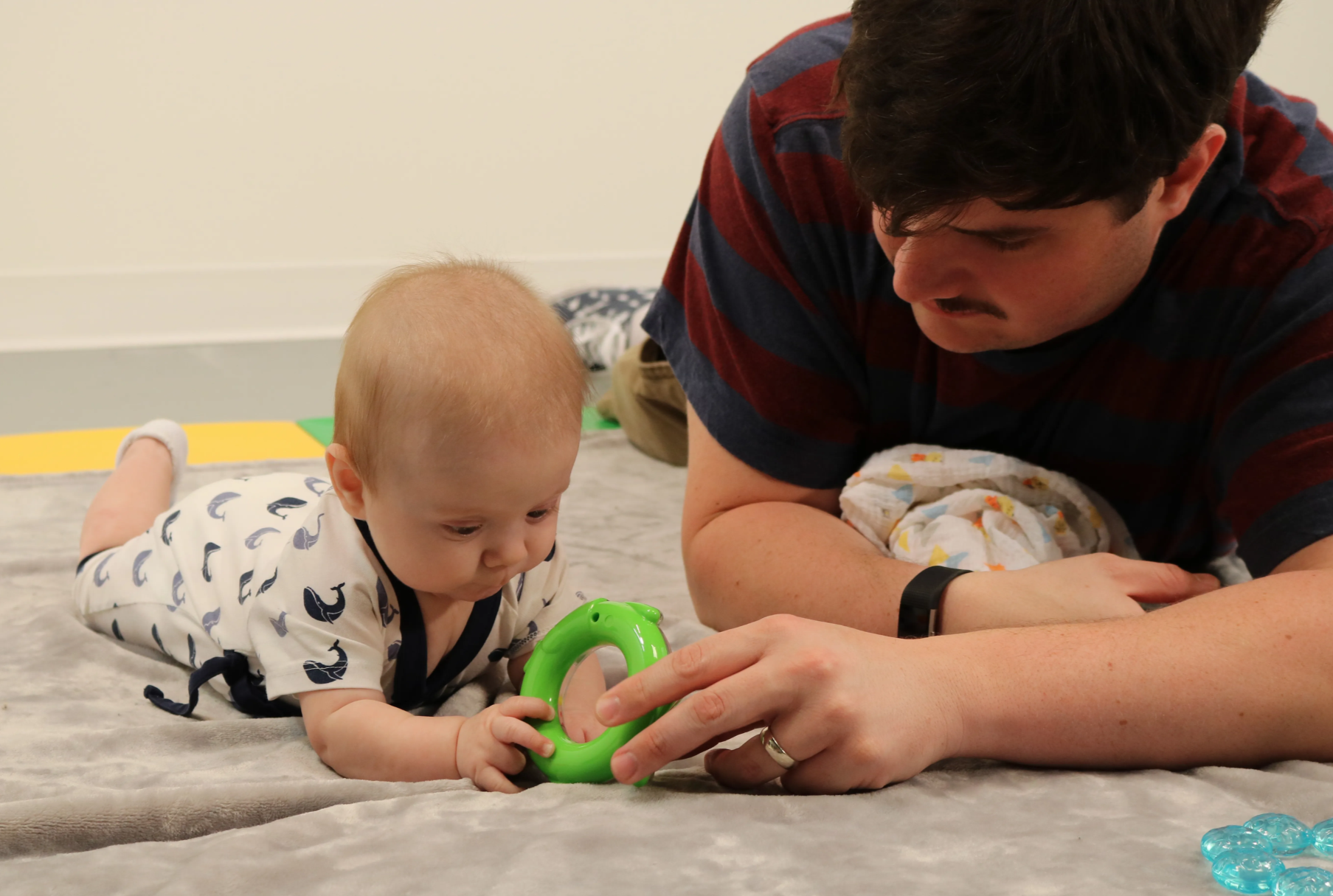
A calm, evidence-based guide to baby flat spots: why they happen, how to prevent and improve them, helmet therapy basics, and red flags that mean it’s time...
Craniosynostosis vs. Positional Flat Spots

Sarah Mitchell
Sarah Mitchell is a Registered Pediatric Nurse and a mother of three who has spent over a decade helping families navigate the beautiful, chaotic early years of childhood. She combines evidence-based medical knowledge with real-world parenting experience to offer practical, compassionate advice. At Awesome Parent, Sarah's mission is to help exhausted parents find solutions, trust their instincts, and finally get some sleep.
If you have found yourself staring at your baby’s head from every angle under the living room lamp, welcome to one of the most common parent spirals. I saw it constantly as a pediatric triage nurse, and I have absolutely done it with my own three kids.
Many head shape changes in infancy are positional, meaning they come from how a baby rests and turns their head. They are usually harmless and improve with time and some simple strategies. A smaller group of babies have craniosynostosis, where one or more skull sutures fuse too early, and that can change how the skull grows.
This article will help you tell the difference, spot true red flags, and know what the next steps usually look like so you can stop guessing at 3 AM.

The quick difference
Positional plagiocephaly (positional flat spot) is a shape change from pressure on the skull. Think: a soft skull plus lots of time on one area, often from sleeping on the back with the head turned the same way.
Craniosynostosis is a growth pattern change because a skull suture is fused. When a suture is closed, the skull cannot expand normally in that direction, so growth shifts to other areas and creates a more specific pattern.
Both can cause asymmetry. The key is the pattern and the feel, plus how things change over time.
What positional flat spots look like
Positional plagiocephaly is extremely common, especially since the safe sleep recommendation of back-sleeping (which saves lives). It often becomes noticeable between 6 weeks and 4 months, but some babies are noticed earlier or later.
Common signs of positional plagiocephaly
- Flattening on the back of the head, often on one side more than the other.
- From above, the head can look a bit like a parallelogram (one back corner flatter).
- Forehead on the same side may look slightly more prominent.
- The ear on the flattened side may shift forward a little.
- Often linked with a head-turning preference or torticollis (tight neck muscles), so baby tends to look one way.
Importantly, positional flat spots typically have a smooth contour. You do not usually feel a hard ridge.
What craniosynostosis can look like
Craniosynostosis can involve different sutures, and the shape pattern depends on which one is fused. Some forms are subtle early on, but many have a more distinct shape than a typical flat spot.
Red flags to get checked soon
- A raised, firm ridge you can feel along a suture line that does not soften over time.
- Head shape that looks unusual from birth or progresses despite good repositioning efforts.
- Asymmetry that is not mainly on the back, or looks more angular and structured than a flattening from pressure.
- A very small or closed soft spot plus an abnormal head shape or concerning head growth trend. Fontanelle size and closure timing can vary in healthy babies, so this finding alone is not diagnostic.
- Slow head growth or head circumference that drops percentiles over time (your pediatrician tracks this).
Families often ask me, “Is a small fontanelle normal?” Sometimes, yes. What matters is the combination of findings: head shape pattern, head growth over time, and what the sutures feel like.
Head shapes linked to fused sutures
This is not for self-diagnosis, but it can help you describe what you are seeing.
Scaphocephaly (sagittal synostosis)
- Long, narrow head from front to back.
- Often looks like the sides are pulled in a bit.
- You may notice a ridge along the top midline.
Anterior plagiocephaly (one coronal suture)
- Flattening of the forehead on one side rather than the back.
- The eye opening on that side can look different.
- The forehead can look pulled back on one side.
Trigonocephaly (metopic synostosis)
- Triangular-looking forehead when viewed from above.
- A noticeable midline ridge can be present (and this is where it gets tricky, because a metopic ridge can sometimes be benign).
Brachycephaly
This term means a broader, shorter head shape. It can be positional (common in babies who spend lots of time on the back) or, less commonly, related to certain suture fusions. This is one where your pediatrician’s exam really matters.
A quick note on lambdoid synostosis
True lambdoid synostosis (a fused suture at the back of the head) is rare, but it is an important reason clinicians look closely. One classic clue is that the ear position pattern can be different than positional plagiocephaly (often more posterior with lambdoid synostosis, versus more anterior with positional flattening), and there may be a mastoid bulge behind the ear. This is exactly the kind of subtlety that a pediatric exam is for.
If any of these patterns sound like your baby, the right move is not panic. It is a timely evaluation, because earlier assessment keeps options open.
How to check at home
You do not need special tools. A calm “once a week” check is usually plenty.
A simple parent check
- Look from above: With baby lying safely on their back, stand at the top of their head and look down. Is it mostly rounded, or does it look like a parallelogram, a long oval, or a triangle?
- Look at the ears: Do you notice one ear shifted forward more? That can happen with positional flattening.
- Feel gently: Do you feel a hard, fixed ridge line, or does the skull feel smooth?
- Watch for preference: Does baby always turn the head to one side? That matters because torticollis often drives positional flattening.
And a reminder from the nurse in me: keep placing your baby on their back to sleep . We address flat spots with awake-time strategies, not by changing safe sleep.
Safe sleep nuance that helps: tummy time is for awake and supervised. For sleep, place baby on their back. If your baby can roll independently, you still start them on their back, and if they roll on their own you do not need to constantly flip them back, as long as the sleep space is safe.
When to call the pediatrician
Call for an appointment within the next week or two if you notice:
- Flattening that is worsening quickly.
- A strong head-turning preference or suspected torticollis.
- Asymmetry that is not improving with repositioning and tummy time after a few weeks.
- Any ridge you can feel that concerns you.
- An unusual head shape that was present very early.
Call sooner if your baby is very young, you are seeing rapid change, or your gut says, “This feels like more than a flat spot.”
Helpful language: “I am concerned about head shape. Can you check sutures, fontanelle, and head circumference trend, and tell me if you suspect positional plagiocephaly versus craniosynostosis?”
What the evaluation looks like
In most clinics, the first step is a thorough physical exam and a review of head circumference growth over time.
If it looks positional
- Your pediatrician may recommend repositioning, more tummy time, and addressing any neck tightness.
- Many babies benefit from a referral to pediatric physical therapy if torticollis is present.
- If flattening is moderate to severe or not improving, some families are referred to an orthotist for a cranial remolding helmet. Timing matters, so do not wait months to ask.
Helmet therapy basics
- Not all flat spots need a helmet. Many improve with growth, mobility, and physical therapy when needed.
- When helmets are used, many programs consider a common “sweet spot” for starting around 4 to 6 months, with less effect as babies get closer to 12 months (because skull growth slows and babies spend less time on their back).
- Typical plans involve wearing the helmet most of the day (often about 23 hours a day), with regular check-ins for fit and skin checks. Your orthotist and clinician will give exact guidance for your baby.
If craniosynostosis is suspected
- You will typically be referred to a pediatric neurosurgeon, craniofacial surgeon, or a combined craniofacial team.
- Imaging varies by region and provider. Some babies may have a cranial ultrasound when the fontanelle is open. Some centers use 3D surface photography for tracking shape. Others may need a CT scan for a clear look at sutures. The specialist team weighs accuracy with radiation exposure and uses the lowest necessary dose when CT is needed.
- The team will discuss whether monitoring or surgery is recommended, based on suture involved, severity, and growth.
If you are offered imaging and you are nervous, it is okay to ask: “What question are we trying to answer, and is there a lower-radiation option that would still be reliable for my baby?”

Reassurance
Most babies with asymmetry have positional plagiocephaly, and most improve with growth, mobility, and consistent awake-time habits. Once babies can roll, sit, and vary positions on their own, pressure on one spot naturally decreases.
The goal is not a “perfect” head. The goal is a healthy baby and a plan you can realistically follow while you are also feeding, working, and trying to sleep.
What you can do today
For positional flattening
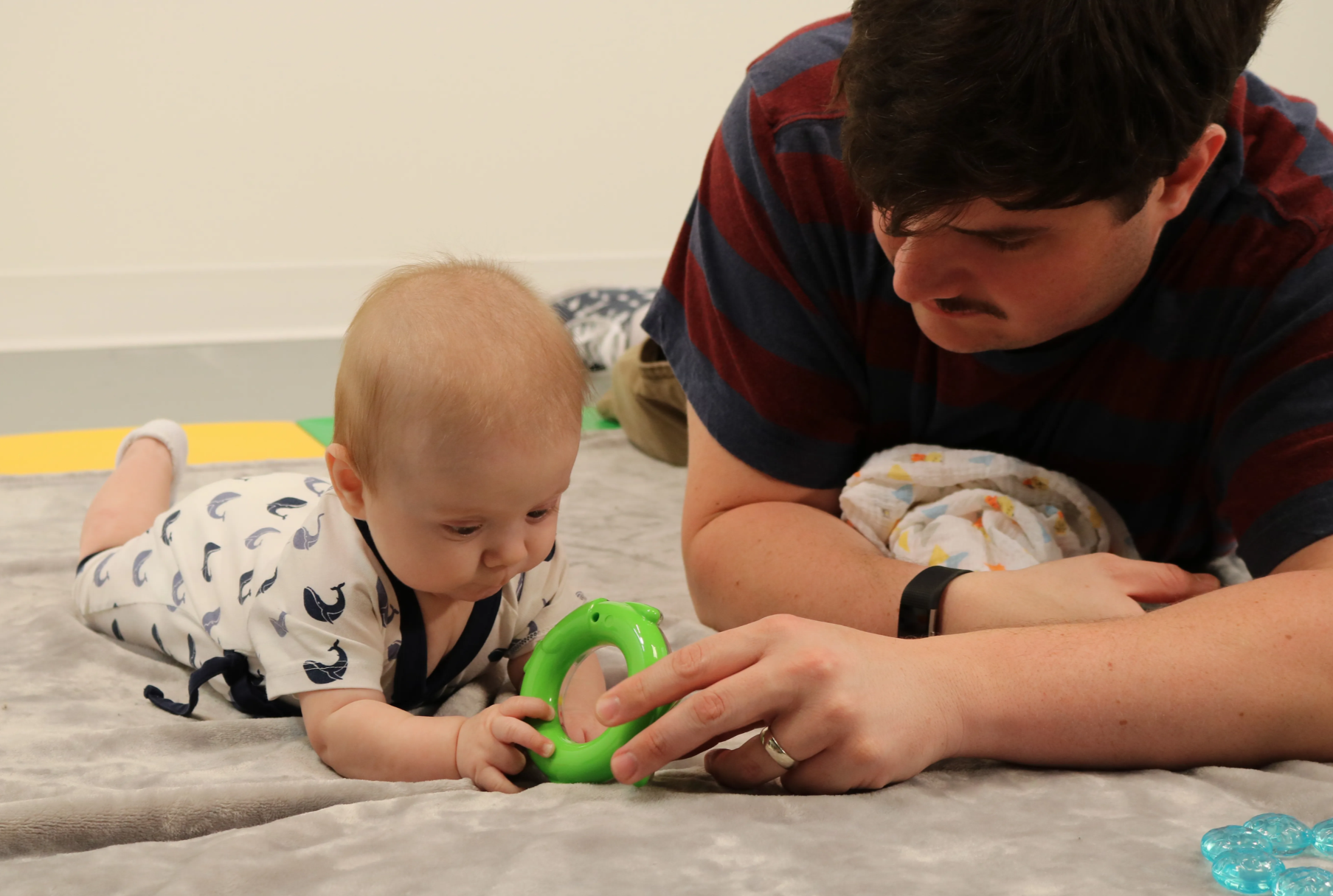
- Tummy time while awake and supervised, building up gradually. Little and often counts.
- Alternate head position when you put baby down to sleep (still on the back), and switch which end of the crib you place baby’s head so they naturally look the other way.
- Limit time in containers when possible (car seat, swing, bouncer) when baby is awake.
- Carry baby more: upright time reduces pressure on the back of the skull.
- If you suspect neck tightness, ask about torticollis screening and physical therapy.
If torticollis might be part of it
- Encourage turning by using light, your face, and toys on the non-preferred side during play.
- During feeds, try positions that gently invite looking both ways.
- Avoid forcing the neck into a position that clearly upsets your baby. Physical therapists can teach safe stretches and holds.
If you see red flags
- Take a few photos from top, side, and front once a week in similar lighting to track change.
- Schedule a pediatric visit and bring your questions and photos.
- Trust your gut. If something feels “not just a flat spot,” it is okay to push for a specialist opinion.
Important: do not use unapproved “head shaping” pillows in cribs or during sleep. They are not recommended because they can increase suffocation risk.
When to seek urgent care
Head shape concerns are usually not an emergency. But seek urgent medical care if your baby has any of the following:
- Bulging soft spot when calm and upright, especially with vomiting or extreme sleepiness
- Seizure
- Sudden change in alertness, poor feeding, or significant lethargy
- Signs of head injury
If you are unsure, call your pediatrician’s after-hours line. This is exactly what triage nurses are for.
FAQ
Can positional plagiocephaly affect the brain?
Positional plagiocephaly is generally considered a cosmetic skull shape issue and is not thought to cause brain injury. Some studies do show an association between plagiocephaly and developmental delays, but it is often considered a correlation (for example, babies with torticollis or motor delays may be more likely to develop flattening). Either way, clinicians still monitor development and refer to PT or early intervention when needed.
Can you have a flat spot and craniosynostosis?
It is possible to have positional flattening on top of another issue, which is why head growth tracking and a good exam matter. If your pediatrician is unsure, a specialist evaluation can clarify.
Is a ridge always craniosynostosis?
No. Some ridging can be normal as sutures change with growth, and a metopic ridge can be benign in some babies. A persistent, hard ridge plus an abnormal head shape is more concerning and should be examined.
What age is too late to do something?
It depends on the issue. Repositioning is most effective early. Helmet therapy (when appropriate) is often most effective when started around 4 to 6 months, with diminishing returns as babies approach 12 months. Craniosynostosis evaluation is also time-sensitive because treatment options and timing vary by suture and severity. If you are worried, earlier is better.
A final thought
Parents often feel guilty about flat spots, like they “did sleep wrong.” You did not. You followed safe sleep guidance, and that is exactly what we want.
Your job now is simply to notice patterns, bring concerns to your pediatrician, and take the next right step. You do not need to solve it alone in the dark.