Crib to Bed Transition: When and How to Switch

Sarah Mitchell
Sarah Mitchell is a Registered Pediatric Nurse and a mother of three who has spent over a decade helping families navigate the beautiful, chaotic early years of childhood. She combines evidence-based medical knowledge with real-world parenting experience to offer practical, compassionate advice. At Awesome Parent, Sarah's mission is to help exhausted parents find solutions, trust their instincts, and finally get some sleep.
The crib-to-bed transition is one of those parenting milestones that sounds simple until you are standing in a dark hallway at 2:11 AM, whispering, “Back to bed,” while your toddler joyfully practices door-opening skills.
Take a breath. You are not behind, you are not “creating bad habits,” and your child is not broken if they pop out of bed a dozen times. This is a big developmental leap: more freedom, more curiosity, and yes, more opportunities to test boundaries.
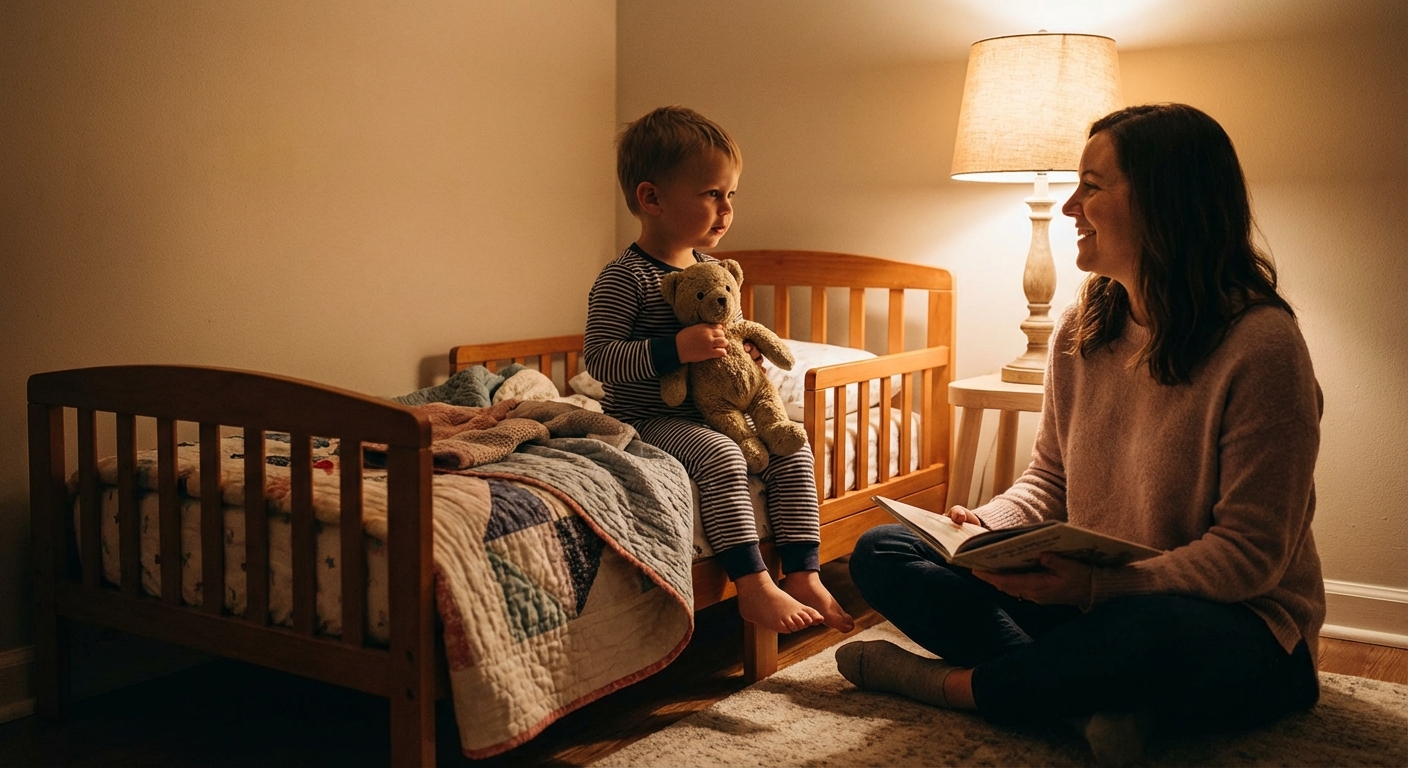
When to switch from crib to bed
Many kids do best switching around age 3, often somewhere between 2.5 and 3.5 years old. Some transition earlier and do fine, and some are happily in a crib longer. Readiness and safety matter more than the calendar.
The safest rule: crib safety first
Switch sooner if your crib is no longer safe. The biggest reason is climbing.
- If your child is climbing or attempting to climb out of the crib, it is time to transition. Falls from a crib can cause serious injuries.
- Follow the crib manufacturer’s limits for height and milestones. Many manuals recommend stopping use around 35 inches (89 cm), but your specific crib’s guidance wins.
- Lower the mattress according to your crib manual as your child becomes more mobile (often once they can sit up or pull to stand). This can buy time if climbing is not happening.
Signs your toddler may be ready
- They understand simple rules like “Stay in bed” and can follow them sometimes.
- They can climb up and down from a low bed safely.
- They are showing interest in “big kid” routines.
- You are about to potty train at night or they need nighttime bathroom access (not required, but it can help).
Reasons to wait if you can
If your crib is safe and your child is sleeping well, it is okay to hold off. Consider waiting if:
- Sleep is currently fragile (new baby, travel, daycare change).
- Your toddler is in a major separation-anxiety phase.
- You are in the middle of another big transition (moving homes, dropping naps).
In triage nursing we used to say, “Do not create two problems when you only have to solve one.” If the crib is safe, you can choose a calmer moment.
Choosing the right bed setup
You have a few options, and you do not need to buy the fanciest bed on the internet. The goal is safe sleep and predictable boundaries.
Option 1: Toddler bed
- Low to the ground, often uses the crib mattress.
- Some have built-in rails.
- Good for kids who roll a lot.
Option 2: Floor bed or mattress on the floor
- Very low fall risk.
- Can work well for younger toddlers who are transitioning early.
- Make sure the room is fully toddler-proofed since they have full access.
Option 3: Twin bed with guardrail
- Long-term solution, no second transition needed.
- Add a sturdy guardrail and keep the bed low if possible.

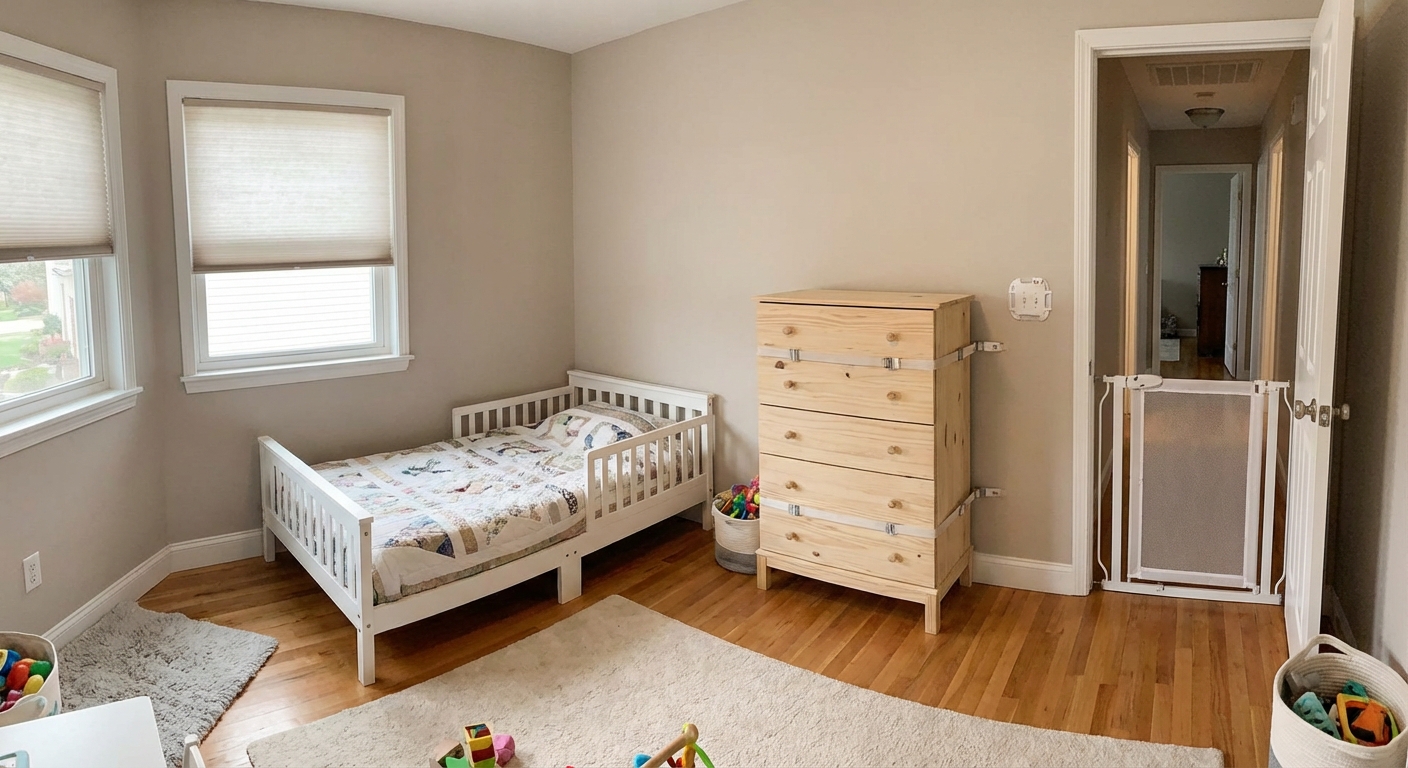
Safety first: the room is the new crib
This is the part parents underestimate, and I say that with love. Once your child is in a bed, the entire room becomes their sleep space. Think of it as “the crib got bigger.”
Bedroom safety checklist
- Anchor furniture: Dresser, bookshelf, changing table, and TV (if present) should be anchored to studs with anti-tip hardware.
- Cover outlets and keep cords out of reach, especially monitor cords and blind cords.
- Secure windows: Use window guards or stops so windows cannot open wide. Keep the bed away from windows.
- Remove hazards: Coins, button batteries, medications, small toys, and anything your toddler might mouth at 3 AM.
- Use a safe nightlight: A dim, warm light reduces fear without turning the room into party mode.
- Check the bed area: No heavy frames above the bed, no cords near the pillow area, and avoid bedding that could create entrapment or suffocation risk (especially for very young toddlers).
Door and hallway safety
If your toddler can leave the room, the whole home needs to be safe enough for a midnight stroll. Focus on layered safety:
- Install a baby gate at the top of stairs (and sometimes the bottom too, depending on layout).
- Use doorknob covers or a high door latch if your child is a runner or your home has stairs, a pool, or other hazards. This is not “locking them in.” It is keeping them safe the way a crib did.
- Consider a door alarm if you are worried you will not hear them. Many are simple stick-on alarms.
- Secure exterior doors with childproof locks placed high.
If you feel conflicted about restricting door access, I get it. Here is the nursing perspective: toddlers do not have the judgment to navigate emergencies at night, and a wandering toddler in a dark house is a real safety risk.
Important safety caveat: Whatever you choose, ensure adults can open the door quickly in an emergency, keep smoke and CO detectors working, and follow any local fire-safety guidance. Many fire services recommend sleeping with bedroom doors closed, which is another reason a consistent setup (monitor, quick adult access, clear plan) matters.
How to make the switch
You can do a smooth transition in a weekend, or you can do it slowly. Both can work. Pick the approach that fits your child’s temperament.
Step-by-step plan
- Talk it up during the day: Keep it simple. “Tonight you will sleep in your big kid bed. Mom and Dad will still be right here.”
- Let them help: Choosing sheets or a stuffed animal can create buy-in.
- Keep the bedtime routine the same: Same order, same timing. Predictability is magic.
- Do a room scan: Look for anything climbable, tippable, chokable, or any spillable liquids or open cups.
- First night goal: calm, not perfect: Expect some testing. Your calm is the anchor.
Practice runs
If your child is anxious, try having them nap in the bed for a few days first, or do a short “bedtime rehearsal” where they climb in, you read a book, then they get back out and you move on with the evening. It turns the bed into a familiar place, not a surprise.
Sleep sacks
If you use a sleep sack, you are not alone. Some parents find it helps with warmth and the “sleep cue” feeling. Just know: once a child is climbing or attempting to climb, a sleep sack can become a climbing hazard for some kids. Follow the product guidance and prioritize crib safety over buying more time.
Keeping them in bed
This is the heart of it. The bed is easy. The staying there is the sport.
1) Set one clear rule
Pick a simple phrase and repeat it like a very kind, very boring robot:
- “It is bedtime. You stay in bed.”
- “I will see you in the morning.”
Long explanations at night tend to energize toddlers. Save the pep talk for daylight.
2) Use the quiet return
If your toddler leaves the bed repeatedly, guide them back with minimal talking and minimal eye contact. You are not ignoring them. You are making the behavior unrewarding.
- Walk them back.
- Tuck them in.
- Say your one phrase.
- Leave.
The first few nights can be intense. Many families see improvement within the first week if they stay consistent, but it can take longer for some kids (especially during big life changes).
3) Try the “excuse me pass”
Some toddlers pop out for one more hug, one more drink, one more question about where the moon sleeps.
Give them a single “pass” card (a laminated index card works) that allows one bedtime request after lights out. If they use it, you honor it once. After that, the pass is “used up” and all other requests are met with a calm return to bed.
This works well for kids who do better with structure than power struggles.
4) Comfort object and check-ins
If your toddler gets anxious, consider timed check-ins:
- “I will come check on you in 5 minutes.”
- Then 10 minutes.
- Then 15 minutes.
Make the check-in quick and boring: a whisper of “You are safe. It is bedtime.” Then out.
5) Use an okay-to-wake clock
For early risers who consider 4:57 AM a reasonable morning, an “okay to wake” clock can help. You teach: “When the light is blue, we stay in bed. When it turns green, we can get up.”
Expect this to take practice. Toddlers are not born respecting tiny glowing clocks. They learn with repetition.
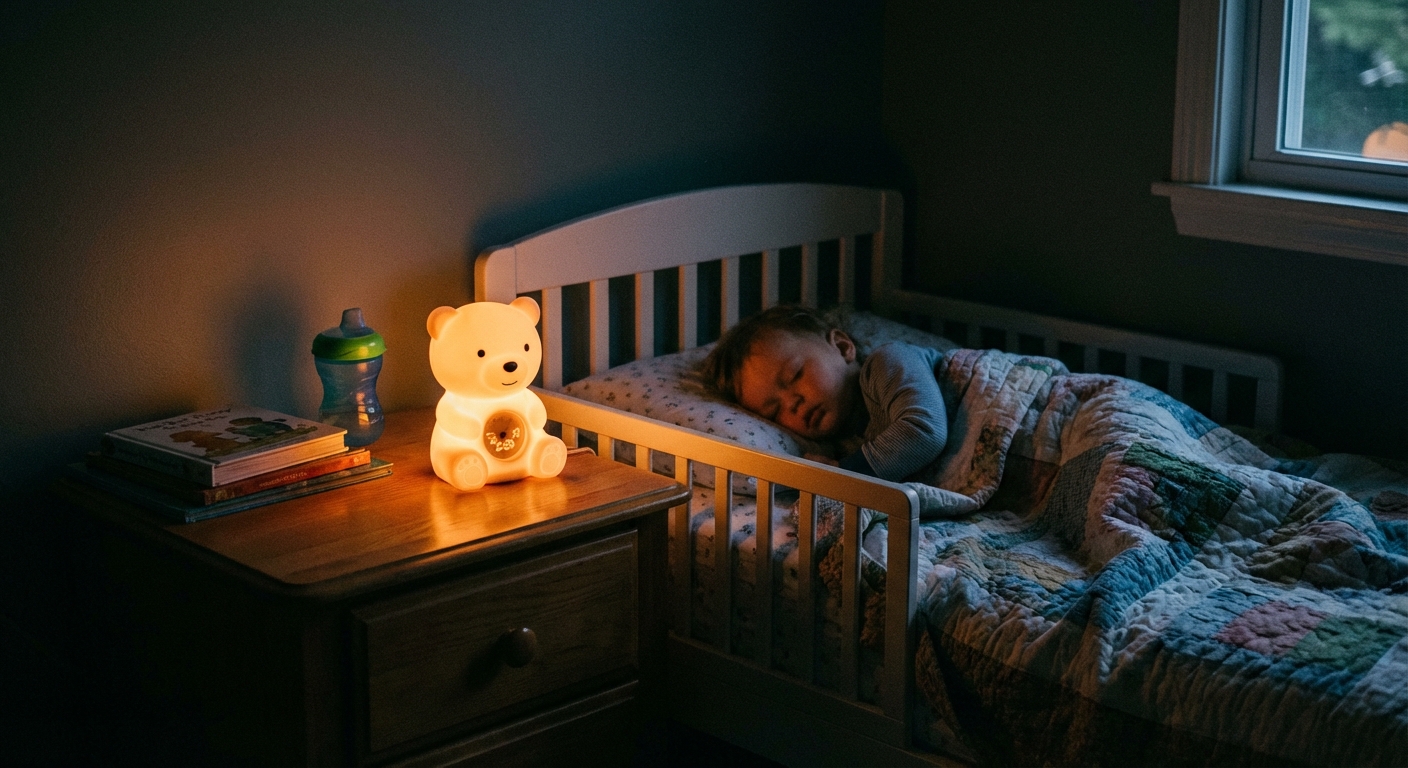
Preventing night wandering
Most nighttime wandering is not misbehavior. It is a mix of curiosity, habit, and normal toddler sleep cycles. The fix is a combination of safety and routine.
Start with the basics
- Earlier bedtime for a week: Overtired toddlers wake more. Many do best with bedtime between 7 and 8 PM.
- Limit screen time close to bed. Blue light and exciting content can disrupt settling.
- Make sure they are comfortable: Not too hot, not too cold, and pajamas they can move in.
- Potty before bed: Even if they are in diapers or pull-ups, try sitting on the potty or doing a diaper change right before lights out.
If they come into your room
Decide your plan ahead of time, because 2 AM decision-making is not real decision-making.
- If your goal is independent sleep: Walk them back each time, calmly and consistently.
- If your family is okay with occasional cuddles: Set a boundary like “You can come in once, and you sleep on a floor mat.”
What matters most is that the response is predictable. Toddlers are tiny scientists. They repeat what sometimes works.
Daycare and caregiver consistency
If your child naps at daycare or with another caregiver, share your new bedtime plan and the words you are using (“It is bedtime, you stay in bed”). You do not need perfection across settings, but consistency speeds things up.
Siblings and room-sharing
If a sibling shares the room, consider a short-term separation if you can (even a pack-and-play in your room for the sibling, or a temporary sleep spot for your toddler) while the new boundary is taking hold. If that is not realistic, use white noise and stagger bedtime so the toddler is settled first.
Common problems and fixes
“My toddler keeps falling out of bed”
- Add a guardrail or use a toddler bed.
- Place pillows or a folded blanket on the floor next to the bed (not in the bed) as a soft landing.
- Consider a lower setup like a floor bed temporarily.
“They treat bedtime like a trampoline show”
- Move active play earlier in the evening, then switch to calm activities 30 to 45 minutes before bed.
- Keep the routine short and consistent.
- Remove stimulating toys from the bedroom for now.
“They are suddenly scared at night”
- Use a dim nightlight and keep the room familiar.
- Try “monster spray” (water in a spray bottle) if your child likes playful reassurance, but pair it with real comfort and a predictable routine.
- Avoid scary shows, even “kid” ones, in the late afternoon and evening.
“Naps are a mess now”
Totally normal during transitions. Protect rest time with the same boundary you use at night: “It is rest time. You stay in bed.” If your child will not sleep, quiet time still counts.
What not to do
- Do not negotiate at the door: Long talks and repeated cuddles can accidentally reward pop-outs.
- Do not introduce big rewards at 2 AM: Save sticker charts and praise for the morning, not the moment they escape.
- Do not move bedtime later to “make them tired”: Overtired toddlers often sleep worse, not better.
Safety notes (a nurse’s take)
Do I need bed rails?
Not always, but they can help if your child rolls a lot. Make sure any guardrail is designed for toddler use and installed correctly. Avoid improvised rails that can create gaps.
Is it okay to use a childproof cover on the inside doorknob?
For many families, yes, especially if there are stairs or other hazards. Think of it as keeping your toddler in the safest sleep space, similar to a crib. Make sure adults can open the door quickly in an emergency, consider a monitor or door alarm, and keep smoke and CO detectors working and up to date. If you have questions, check local fire-safety recommendations for your home layout.
What about leaving the door open?
Some toddlers do better with the door open and a hallway light on. If you do that, double-check that the hallway is safe too. If the open door turns into wandering, you can switch to a gate or a closed door with a monitor.
When to call your pediatrician
Most sleep disruptions during the crib-to-bed transition are normal and temporary. Reach out to your child’s clinician if:
- Your child is snoring loudly, pausing breathing, or gasping (possible sleep-disordered breathing).
- They have night terrors frequently or you are not sure what you are seeing.
- Waking is paired with significant pain, persistent cough, vomiting, or fever.
- Sleep becomes so disrupted that daytime behavior, mood, or safety is being affected.
The bottom line
The “right” time to switch is when the crib is no longer safe or when your toddler is developmentally ready and your family can handle a short stretch of sleep bumps.
Focus on two things: safety (toddler-proof the room like it is the new crib) and consistency (one rule, calm returns). If you hold those lines, the freedom of a bed becomes normal faster than you think.
And if tonight is rough, remember: this is a phase, not a personality trait. You are teaching a skill, and skills take practice, especially at 2 AM.