Cry It Out and the Ferber Method

Sarah Mitchell
Sarah Mitchell is a Registered Pediatric Nurse and a mother of three who has spent over a decade helping families navigate the beautiful, chaotic early years of childhood. She combines evidence-based medical knowledge with real-world parenting experience to offer practical, compassionate advice. At Awesome Parent, Sarah's mission is to help exhausted parents find solutions, trust their instincts, and finally get some sleep.
If you're reading this at 2:47 a.m. with one eye open and a baby who is loudly sharing their opinions about bedtime, I see you. “Cry it out” and the Ferber method are two of the most searched sleep training approaches for a reason. They're structured, they're fast for many families, and they can feel emotionally intense.
As a pediatric nurse and a mom of three, my goal isn't to talk you into any method. It's to explain how these approaches actually work, when they're often appropriate, what to expect night by night, and how to do it safely and consistently if you choose to.
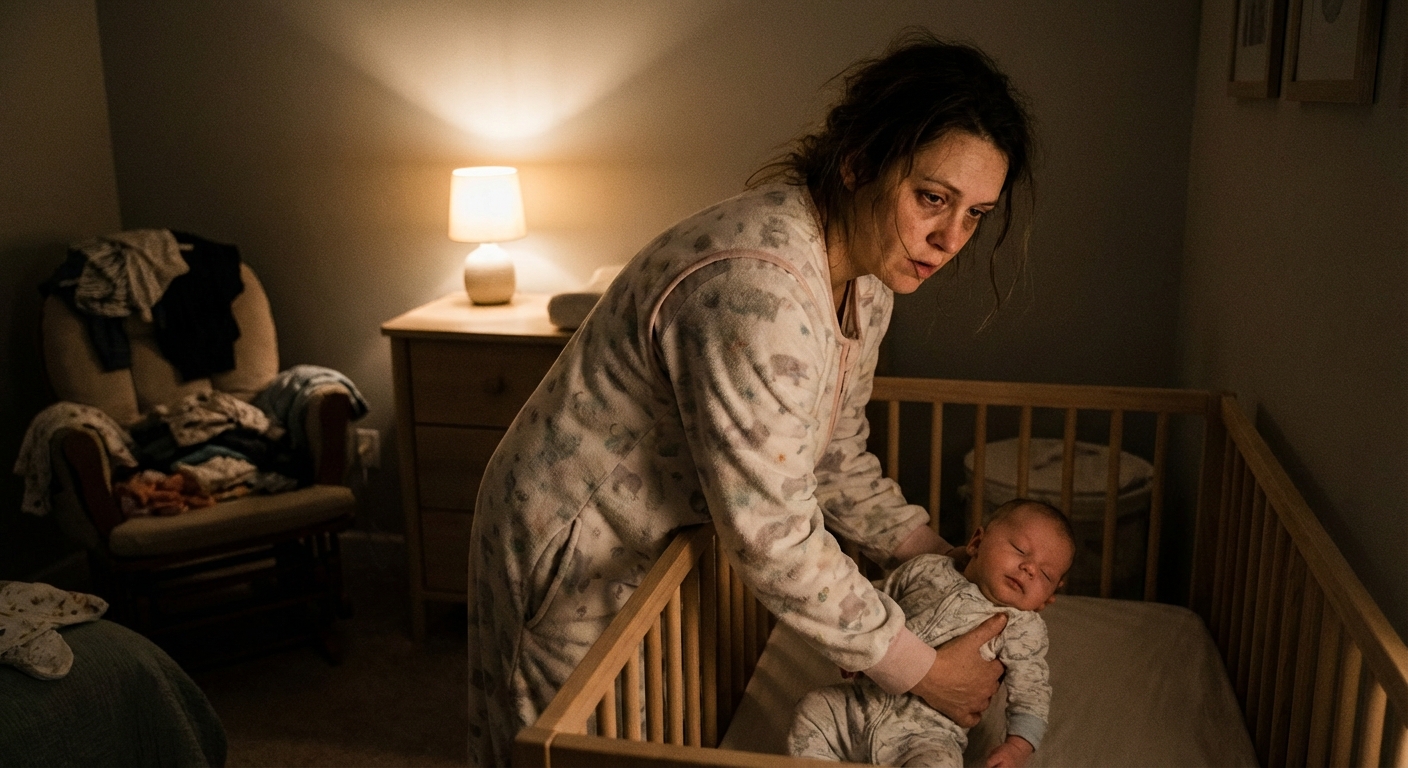
Cry it out vs Ferber: what's the difference?
People often use “cry it out” as a catch-all term, but there are two common versions:
- Full extinction (classic CIO): You do your bedtime routine, place baby down awake, and you don't do soothing check-ins. You still monitor for safety and you still respond for necessary feeds, illness, vomiting, breathing concerns, or anything that feels “not right.”
- Graduated extinction (Ferber): You do the same bedtime routine and place baby down awake, but you return for brief check-ins at increasing time intervals. The goal is to give reassurance without fully helping baby fall asleep.
Both methods aim to reduce sleep associations that require a parent to recreate them repeatedly overnight (rocking, feeding to sleep, being held until fully asleep). The main difference is that Ferber includes planned check-ins, while full extinction does not.
When can you start?
Many pediatric sleep experts recommend waiting until around 4 to 6 months for structured sleep training like Ferber or full extinction. Readiness varies by baby, and it's always okay (and smart) to loop in your pediatrician if you're unsure. That window matters because babies are usually better able to self-settle and can often go longer stretches at night without feeding, depending on growth and health.
A quick readiness checklist
- Your baby is generally healthy and growing well.
- They're showing a more predictable day-night pattern.
- You can follow a consistent bedtime and routine most nights.
- You've discussed night feeding needs with your pediatrician if there are concerns about weight gain, reflux, prematurity, or medical conditions.
When to pause and ask your pediatrician first
- Baby is under 4 months (especially under 12 to 16 weeks).
- History of prematurity or ongoing medical issues.
- Poor weight gain or you've been instructed to maintain specific night feeds.
- New symptoms like fever, vomiting, breathing difficulty, or signs of ear pain.
And for older babies and toddlers: you can use Ferber-style check-ins later too, but the approach often needs tweaks because older babies and toddlers have stronger stamina, separation anxiety, and very real opinions.
How Ferber works
The Ferber method is essentially a plan for how you respond after bedtime. It's not just “let them cry.” It's brief reassurance at scheduled intervals while your child practices falling asleep independently.
Step 1: Set up the basics
- Safe sleep space: firm mattress, fitted sheet, baby on their back, no loose blankets, pillows, bumpers, or stuffed animals.
- Comfort needs met: fed, dry diaper, appropriate room temperature, and any prescribed meds given.
- Age-appropriate bedtime: overtired babies often protest harder.
- White noise and darkness: optional, but helpful for many families.
Step 2: Keep the bedtime routine consistent (10 to 20 minutes)
Keep it simple and repeatable. For example: bath or wipe-down, pajamas, feed, book, song, lights out, into crib awake (ideally calm, not fully asleep). The “awake” part is what teaches the skill.
Step 3: Put baby down and leave
Say a short, loving phrase you can repeat every night, like: “I love you. It's time to sleep. I'll check on you.” Then leave the room.
Step 4: Follow timed check-ins
If baby cries, you wait for the first interval, then do a brief check-in. A check-in is usually 30 to 60 seconds.
What a check-in looks like
- Keep the room dark and boring (no bright lights).
- Use a calm voice and a simple phrase.
- Offer a gentle pat or hand on the chest/back if that helps.
- Avoid picking up unless you believe something is wrong.
- Don't stay until they're fully calm. The goal is reassurance, not sleep.
If you stay until they stop crying every time, the check-in can accidentally become the new “thing” they need to fall asleep.
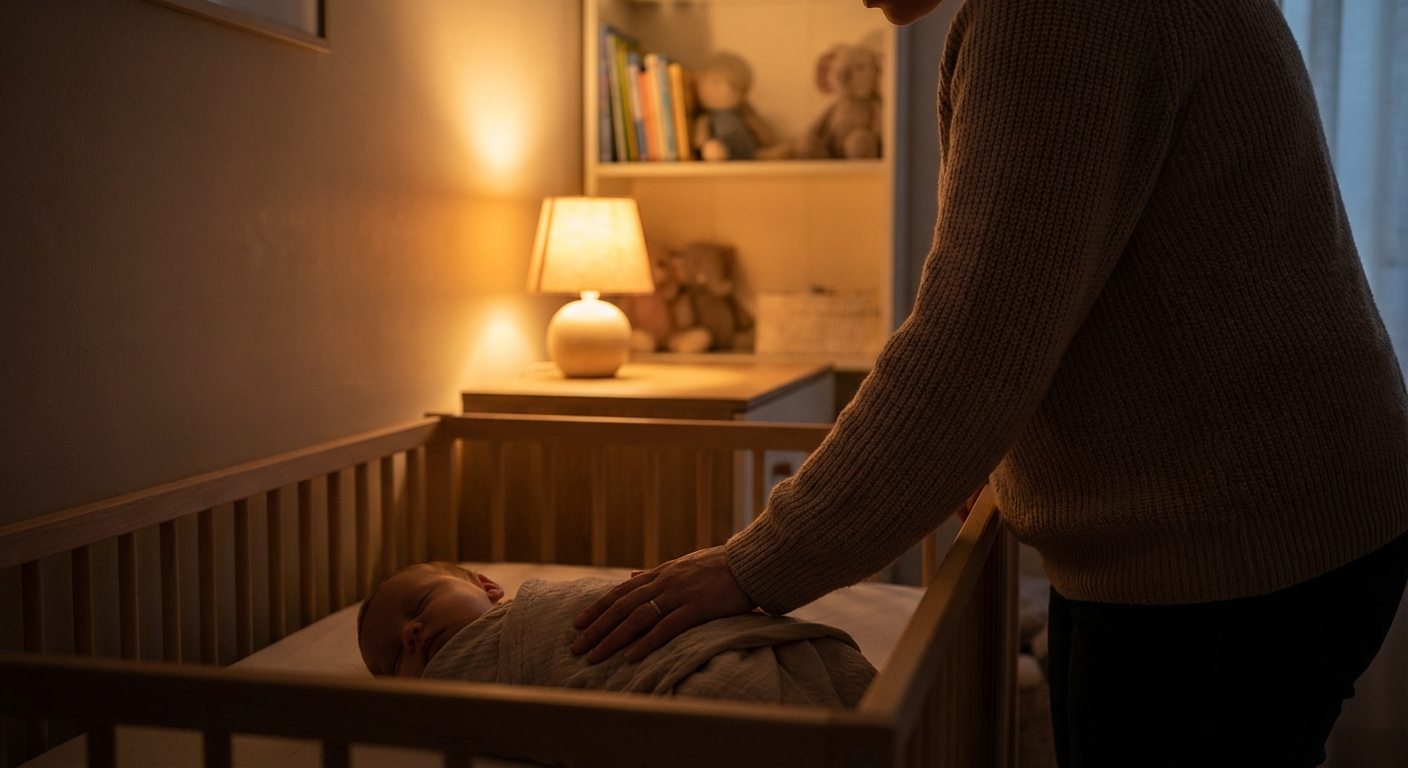
Ferber check-in schedule
There isn't one perfect schedule. Many families use the classic Ferber-style pattern: shorter waits at first, then longer waits over several nights. Here's a commonly used example that's close to the original approach.
| Night | 1st wait | 2nd wait | 3rd wait | Later waits |
|---|---|---|---|---|
| 1 | 3 min | 5 min | 10 min | 10 min |
| 2 | 5 min | 10 min | 12 min | 12 min |
| 3 | 10 min | 12 min | 15 min | 15 min |
| 4 | 12 min | 15 min | 17 min | 17 min |
| 5 | 15 min | 17 min | 20 min | 20 min |
| 6 | 17 min | 20 min | 25 min | 25 min |
| 7 | 20 min | 25 min | 30 min | 30 min |
How to use it
- Start the timer when crying begins.
- If crying stops briefly (like a short pause) and then starts again, continue with the next interval.
- If they've been quiet for a sustained period (many families use about 5 to 10 minutes), restart at the first interval the next time crying begins.
For middle-of-the-night wakeups: Use the same check-in pattern after you've addressed any planned feeds and basic needs.
How full extinction works
Full extinction removes the check-ins. The steps are similar: bedtime routine, put down awake, leave, and don't return for soothing. You still respond for safety and real needs, like illness, vomiting, breathing issues, or a scheduled feed you and your pediatrician have decided to keep.
Some parents find extinction easier because check-ins make their baby more upset. Others find it emotionally too hard. You're not “stronger” or “weaker” based on which approach you choose. You're a human who loves your kid.
What to expect
Every baby is different, but a realistic timeline helps you avoid quitting on the hardest night.
Nights 1 to 3
- Crying is common, sometimes intense.
- Falling asleep may take 20 to 60 minutes, occasionally longer.
- Night wakes can still happen, especially if baby is used to frequent feeding or rocking.
Nights 4 to 7
- Many babies fall asleep faster and wake less often.
- You may see one “random bad night.” That doesn't mean you broke your baby. It's normal.
Week 2 and beyond
- Bedtime is typically smoother.
- You may still see disruptions from illness, travel, teething discomfort, or developmental leaps.
The extinction burst
Sometimes right when things are improving, a baby can protest harder for a night. This is a classic behavioral pattern called an extinction burst. If you stay consistent and your baby is healthy, it often passes quickly.
Common mistakes
These are the patterns I saw constantly in clinic and in my own house. They're fixable.
- Starting too young: Under 4 months, many babies still need frequent night feeds and don't have the same self-settling abilities.
- Bedtime is too late: Overtired babies often cry longer. Many babies do best with an earlier bedtime (often between 6:30 and 8:00 p.m.), depending on age and naps.
- Check-ins that reset the clock: Long check-ins, picking up, turning on bright lights, or offering a feed every time can teach baby to wait for the “big reward.”
- Changing the plan nightly: Switching between rocking, feeding, Ferber, and extinction based on stress can lead to more crying over time because the pattern becomes unpredictable.
- Feeding to sleep at bedtime: If baby always feeds to sleep, start shifting the feed earlier in the routine so sleep isn't the immediate next step.
- Ignoring daytime sleep: An overtired baby at bedtime is like a tiny, sweaty CEO who missed their nap and still expects everyone to be calm about it.

Parental guilt
Guilt is common because crying triggers a very real biological stress response in parents. You're not being dramatic. Your nervous system is doing its job.
Two things can be true at once: your baby is unhappy in the moment, and you're teaching a skill that can improve sleep for the whole family. Better sleep isn't a luxury. For many parents, it's what makes safer driving, better mental health, and more patient parenting possible.
Ways to make it doable
- Decide on the plan with your partner or support person in daylight, not at midnight.
- Trade off check-ins so one parent isn't shouldering all the stress.
- Use a timer. When you're sleep-deprived, minutes feel like hours.
- Remind yourself what you're doing: meeting needs, providing safety, and allowing practice.
Is it safe? What research says
This is the question underneath almost every late-night Google spiral.
Research on behavioral sleep interventions in infants and young children, including graduated extinction (Ferber-style) and extinction-based approaches, generally shows improved sleep for many children and parents. In available studies, these approaches have not been associated with measurable long-term negative emotional or behavioral outcomes, including in follow-ups that looked at parent-child attachment. Like most parenting research, there are limitations, including who enrolls in studies, what outcomes are measured, and the fact that “sleep training” can look different from family to family.
What matters most is that your baby is healthy, their sleep space is safe, and your approach is consistent and responsive to actual needs (hunger, illness, pain, danger), not every protest.
If you have concerns about anxiety, postpartum depression, or trauma around crying, it's also okay to choose a different method. Your mental health is part of the safety equation.
Sources (for further reading)
- Mindell JA, Kuhn B, Lewin DS, Meltzer LJ, Sadeh A. Behavioral treatment of bedtime problems and night wakings in infants and young children. Sleep. 2006.
- Gradisar M, Jackson K, Spurrier NJ, et al. Behavioral interventions for infant sleep problems: a randomized controlled trial. Pediatrics. 2016.
- Price AMH, Wake M, Ukoumunne OC, Hiscock H. Five-year follow-up of behavioral sleep interventions in early childhood. Pediatrics. 2012.
Feeding at night
Many families sleep train while keeping some night feeds, especially at 4 to 6 months. The key is to make feeds intentional, not automatic for every wakeup.
Two common approaches
- Scheduled feeds: You choose set times you'll feed (for example, not before midnight, then again after 3 a.m.), and you use Ferber or CIO for other wakeups.
- Weaning feeds gradually: Reduce the ounces or minutes over several nights, or increase the time between feeds, with pediatrician guidance when needed.
If you suspect your baby is truly hungry, feed them. And if your baby is younger, was premature, has growth concerns, or your pediatrician has you on a specific feeding plan, follow that plan even if you're sleep training. Sleep training is never meant to override basic nutrition and safety.
When it's not working
If you've been consistent for about a week and things aren't improving, it's usually one of these:
- Schedule mismatch: Too much daytime sleep or too little. Bedtime too late. Wake windows too long for age.
- A sleep association is still there: Baby is still falling asleep in arms or while feeding at bedtime.
- Check-ins are too stimulating: Some babies escalate with parental presence. Shorten check-ins or consider extinction.
- Something medical: Ear infection, reflux pain, eczema itch, constipation. If your gut says “this cry is different,” get them checked.
If you want, write down your baby's age, typical nap schedule, bedtime routine, and how many times they wake. That little log can make patterns jump out fast.
Older babies and toddlers
From about 6 to 12 months, separation anxiety and new skills (rolling, sitting, standing) can make sleep training louder, even if they were previously doing well. For toddlers, check-ins can turn into negotiation. Keep your script short, keep boundaries steady, and avoid introducing new sleep crutches during the process.
If your toddler can climb out of the crib, that's a safety issue first. Talk with your pediatrician about how to handle the transition in a way that keeps them safe.
Naps: nights first or both?
Most families have an easier time training nights first, then tackling naps once nights are improving. Night sleep has more sleep pressure, which can make learning the skill a little smoother. If you do naps at the same time, expect progress to be slower and stay consistent with your plan.
Stop and get help
Sleep training should never mean ignoring signs that something is wrong. Pause and respond, and seek medical care when needed, if your baby:
- Has trouble breathing, turns blue, or has repeated choking or gagging.
- Has a fever (follow your pediatrician's guidance for age), is unusually lethargic, or seems very unwell.
- Is vomiting repeatedly or you suspect dehydration.
- Has a cry that feels painful or truly different to you.
- Is in an unsafe sleep situation (rolled into unsafe position, wedged, trapped, or anything that worries you).
Bottom line
Ferber and cry it out are structured behavioral approaches that can work well for many families, often starting around 4 to 6 months when babies are developmentally ready. Ferber uses timed, brief check-ins. Full extinction removes the check-ins. Both rely on consistency, a safe sleep setup, and realistic expectations for a few hard nights.
If your heart is telling you “not right now,” that's allowed. If your brain is telling you “we need sleep to function,” that's allowed too. There's no perfect parent. There's just the next safe, loving step.
Quick safety note
This article provides general education and isn't medical advice. If your baby has health concerns, was premature, has growth or feeding issues, or you're unsure whether night weaning is appropriate, check in with your pediatrician.