
From diet changes to toddler’s diarrhea, here’s what can cause loose stools, what to feed, how to hydrate, how to prevent spread, and when it’s time to...
Cryptosporidium in Kids: Pool and Daycare Diarrhea Outbreaks

Sarah Mitchell
Sarah Mitchell is a Registered Pediatric Nurse and a mother of three who has spent over a decade helping families navigate the beautiful, chaotic early years of childhood. She combines evidence-based medical knowledge with real-world parenting experience to offer practical, compassionate advice. At Awesome Parent, Sarah's mission is to help exhausted parents find solutions, trust their instincts, and finally get some sleep.
If your child has sudden, watery diarrhea a few days after a pool party, splash pad, or a “half the class is out sick” daycare week, Cryptosporidium (usually called Crypto) should be on your radar. As a pediatric triage nurse, I used to see this pattern every summer: parents doing everything “right,” then boom, nonstop watery stools that just will not quit.
Take a breath. Most healthy kids get better with time and good hydration. The tricky part is that Crypto can look like other stomach bugs at first, but it tends to last longer and it spreads easily in water.

What is Cryptosporidium (Crypto)?
Cryptosporidium is a microscopic parasite that infects the intestines. It causes watery diarrhea and can spread quickly when lots of little kids share bathrooms, toys, and water play areas.
Why pools and splash pads are common sources
Crypto is protected by a tough outer shell (called an oocyst) that helps it survive in the environment. The key parent takeaway is this: Crypto is very tolerant of chlorine and can survive for days even in properly chlorinated pools. That is why outbreaks are so often tied to pools, splash pads, and water parks.
It can be controlled, but it usually takes a combination of proper filtration, time, and (during outbreaks) specific public health steps like hyperchlorination.
How kids catch it
- Swallowing contaminated water at a pool, splash pad, or water table.
- Hand-to-mouth spread after diaper changes or helping with wiping in the bathroom.
- Daycare transmission through shared toys, surfaces, and imperfect handwashing (because, well, toddlers).
Crypto symptoms in kids
Crypto’s signature is frequent watery diarrhea that can be more persistent than a typical “24-hour bug.”
Common symptoms
- Watery diarrhea, often many times a day
- Stomach cramps
- Nausea or decreased appetite
- Low-grade fever (sometimes)
- Fatigue and irritability
Timing
Symptoms often begin 2 to 10 days after exposure (commonly around a week). That delay is one reason parents feel blindsided. The pool day was last weekend, and now it is Thursday and your child cannot stop having watery stools.
How long it can last
In otherwise healthy children, illness often lasts 1 to 2 weeks. Sometimes it hangs on 3 weeks or longer, and diarrhea can come and go, which is frustrating and confusing when you are trying to figure out if your child is “better.”
Who needs extra caution
I want you to call earlier (not later) if your child is very young (especially under 6 months) or has a weakened immune system (for example: on chemotherapy, after an organ transplant, on long-term steroids, or other immune-suppressing medicines). These kids can get sicker faster and may need testing and treatment sooner.
Crypto vs norovirus vs giardia
Parents often ask me, “Is this the stomach flu?” Sometimes yes, but Crypto has a few clues that set it apart.
Crypto vs norovirus
- Onset: Norovirus often hits fast, usually 12 to 48 hours after exposure. Crypto is often days later.
- Vomiting: Norovirus often causes a lot of early vomiting. Crypto can cause nausea or some vomiting, but diarrhea is usually the main event.
- Duration: Norovirus often improves in 1 to 3 days. Crypto can last 1 to 2 weeks or longer.
- Pool tie-in: Norovirus is not as famously pool-linked as Crypto, which is unusually chlorine-tolerant.
Crypto vs giardia
- Stool quality: Giardia often causes greasy, foul-smelling stools and bloating. Crypto is more classically watery.
- Duration: Both can linger. Giardia often persists without treatment.
- Source: Giardia is common with camping and untreated water, but it also spreads in childcare. Crypto is especially notorious for recreational water outbreaks.
Quick reality check
You cannot diagnose this perfectly from stool appearance alone. Many bugs overlap. The timing after pool exposure plus prolonged watery diarrhea is what makes clinicians think about Crypto.
If your child has severe, constant belly pain, high fever, or worsening vomiting, that is a clue it might be something else (or something on top of this) and it is worth medical evaluation.
Hydration checkpoints
Most kids with Crypto do not need antibiotics. Antibiotics do not treat parasites. What kids usually need is fluids, electrolytes, and close monitoring. Dehydration is the main danger.
Green light
- Peeing at least every 6 to 8 hours (more often is better)
- Moist mouth and tongue
- Tears when crying
- Alert, responsive, able to drink
- Soft spot on head (for infants) is not sunken
Yellow light: call today
- Diarrhea is very frequent and your child cannot keep up with drinking
- Urine is getting darker or less frequent
- Dry lips, no tears, noticeably low energy
- Diarrhea lasts more than a few days, especially after a known daycare or pool outbreak
- Your child is under 6 months
- Your child has immune system problems or takes immune-suppressing medications
Red light: urgent care or ER
- No urine for 8 to 12 hours (or far fewer wet diapers than usual in babies)
- Very sleepy, hard to wake, confused, or floppy
- Fast breathing, rapid heartbeat, or looks very ill
- Blood in stool or black tarry stool
- Severe belly pain that does not let up
- Signs of dehydration plus ongoing vomiting so they cannot drink
What to give at home
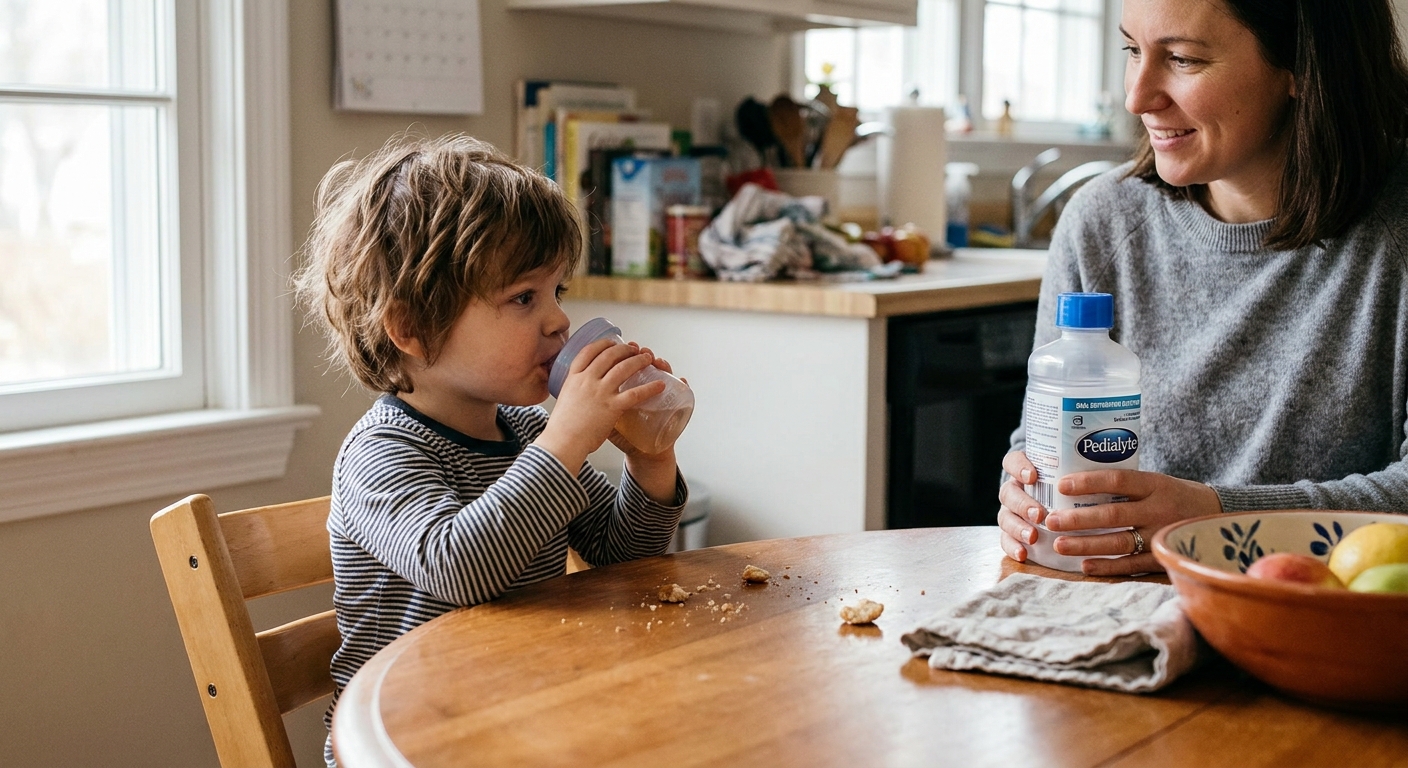
- Oral rehydration solution (ORS) is best for frequent watery diarrhea. Use small, frequent sips.
- For older kids, diluted juice or sports drinks can help a little, but ORS is more balanced for diarrhea.
- Keep normal foods if your child is interested: crackers, toast, rice, yogurt, bananas, soup, eggs. There is no need for a strict “BRAT diet,” but bland is often easier.
A quick note on dairy
After any intestinal infection, some kids get a short-term lactose sensitivity. If diarrhea clearly worsens with milk, ice cream, or lots of cheese, it can help to go lighter on dairy for a bit and focus on hydration. (Yogurt is often tolerated better, but every kid is different.)
What to avoid
- Large amounts of straight apple juice or soda can worsen diarrhea.
- Anti-diarrheal medications for young kids unless your clinician specifically recommends them.
When to test stool
Many short stomach bugs do not need testing. Crypto is one of the times stool tests are considered more often, especially during outbreaks or prolonged symptoms.
Testing may be considered when:
- Diarrhea is lasting more than 7 days
- There is a known daycare, camp, or pool outbreak
- Your child has severe diarrhea or dehydration
- There is blood in the stool (this is not classic for Crypto, so it raises other concerns)
- Your child has a weakened immune system or is medically complex (meaning they have significant underlying medical conditions or special care needs)
- There has been recent international travel, or multiple household members are sick
What tests are used
Clinics often use a stool PCR panel or antigen tests that can detect Crypto along with other common causes of infectious diarrhea (like norovirus, salmonella, and giardia). Your pediatrician will decide based on your child’s symptoms, age, and local outbreak patterns.
Does Crypto need medication?
Many healthy children recover with supportive care alone. In some cases, clinicians may prescribe an antiparasitic medication (often nitazoxanide) for kids who meet age criteria and have persistent symptoms. In the U.S., it is generally used for children 1 year and older who are otherwise healthy, depending on the exact product and your clinician’s judgment.
For children with significantly weakened immune systems, treatment decisions can be more complicated, and nitazoxanide may be less effective. Those kids need earlier, clinician-guided care.
Stop Crypto at home
Crypto spreads through tiny traces of stool. And yes, I know that sentence alone is enough to make you want to move out temporarily. These steps help a lot.
Handwashing that works
- Wash with soap and water for 20 seconds after diaper changes, potty help, and bathroom trips.
- Hand sanitizer is fine as a backup, but alcohol-based sanitizers are less effective against Crypto. When you can get to a sink, soap and water wins.
Bathroom and diaper area cleanup
- Clean first, then disinfect high-touch surfaces: toilet handles, faucets, light switches, potty chairs, and doorknobs.
- Important: Crypto oocysts are tough. Many routine disinfectants (and typical household bleach use) do not reliably kill them. During an outbreak, follow daycare or public health instructions for specific products and contact times. In general, focus on thorough cleaning plus handwashing.
- Wash soiled clothing and bedding on hot, and dry thoroughly.
Sibling survival tips
- Do not share towels.
- Keep bath toys out of the tub during illness.
- If your child is potty training, plan for extra help with wiping and immediate handwashing.
Back to daycare
Daycares have their own policies, and local public health rules sometimes change during outbreaks. In general, the safest guideline is symptom-based plus extra caution for Crypto’s stubborn shedding.
Typical timing
- Your child should be free of diarrhea for at least 24 hours without needing diarrhea-suppressing medicine.
- Your child should be able to participate normally and keep up with fluids.
- For diapered children, daycare may require stools to be contained in the diaper without leakage.
Important: Kids can continue to shed Crypto in stool for a while after symptoms improve. That is why strict handwashing after toileting and diaper changes matters even after they seem “back to normal.”
Back to the pool
This is the part I wish every pool sign spelled out in giant letters.
No swimming for 2 weeks
Public health guidance commonly recommends that people with Crypto avoid swimming for 2 full weeks after diarrhea stops. That is because Crypto can continue to be passed in stool after your child feels better, and it takes only a tiny amount to contaminate water.
I know, two weeks feels like an eternity in summertime. But it is one of the best ways to prevent the same families from ping-ponging this illness back and forth all season.
Pool prevention tips that help
- Do not let kids swim if they have diarrhea, even “just once.”
- Take regular bathroom breaks (for real, set a timer if you have to).
- Change diapers in a bathroom or designated changing area, not poolside.
- Teach kids to avoid swallowing pool water (I know, easier said than done).

When to call your pediatrician
Call if any of the following fit your situation:
- Watery diarrhea that lasts more than 3 days and is not improving
- Diarrhea lasting more than 7 days
- Diarrhea after a pool, splash pad, or daycare outbreak notice
- Signs of dehydration (less urine, dry mouth, no tears, lethargy)
- High fever, blood in stool, severe belly pain, or your child looks very ill
- Your child has immune system problems or takes immune-suppressing medications
If you are on the fence, call. A quick nurse line chat can save you a long night of worry and help you make a safe plan.
The bottom line
Crypto is a common cause of watery diarrhea linked to pools, splash pads, and childcare settings. Compared with norovirus, it often shows up later and lasts longer. Your biggest job is hydration and watching for dehydration red flags. Testing and medication are sometimes used, especially when diarrhea drags on or there is an outbreak.
And yes, the two-week “no swimming after diarrhea” rule is a buzzkill. It is also one of the kindest things you can do for every other parent who just wants one normal summer weekend.
Quick reminder: This article is for general education and does not replace medical advice. If your child is very young, looks dehydrated, has severe symptoms, has immune system problems, or you are worried, contact your pediatrician or seek urgent care.
Sarah Mitchell
Sarah Mitchell is a Registered Pediatric Nurse and a mother of three who has spent over a decade helping families navigate the beautiful, chaotic early years of childhood. She combines evidence-based medical knowledge with real-world parenting experience to offer practical, compassionate advice. At Awesome Parent, Sarah's mission is to help exhausted parents find solutions, trust their instincts, and finally get some sleep.