
Vomiting with no fever can be viral or trigger-related. Here are common causes, hydration steps that work, and the red flags that mean you should seek care f...
Cyclic Vomiting Syndrome in Children

Sarah Mitchell
Sarah Mitchell is a Registered Pediatric Nurse and a mother of three who has spent over a decade helping families navigate the beautiful, chaotic early years of childhood. She combines evidence-based medical knowledge with real-world parenting experience to offer practical, compassionate advice. At Awesome Parent, Sarah's mission is to help exhausted parents find solutions, trust their instincts, and finally get some sleep.
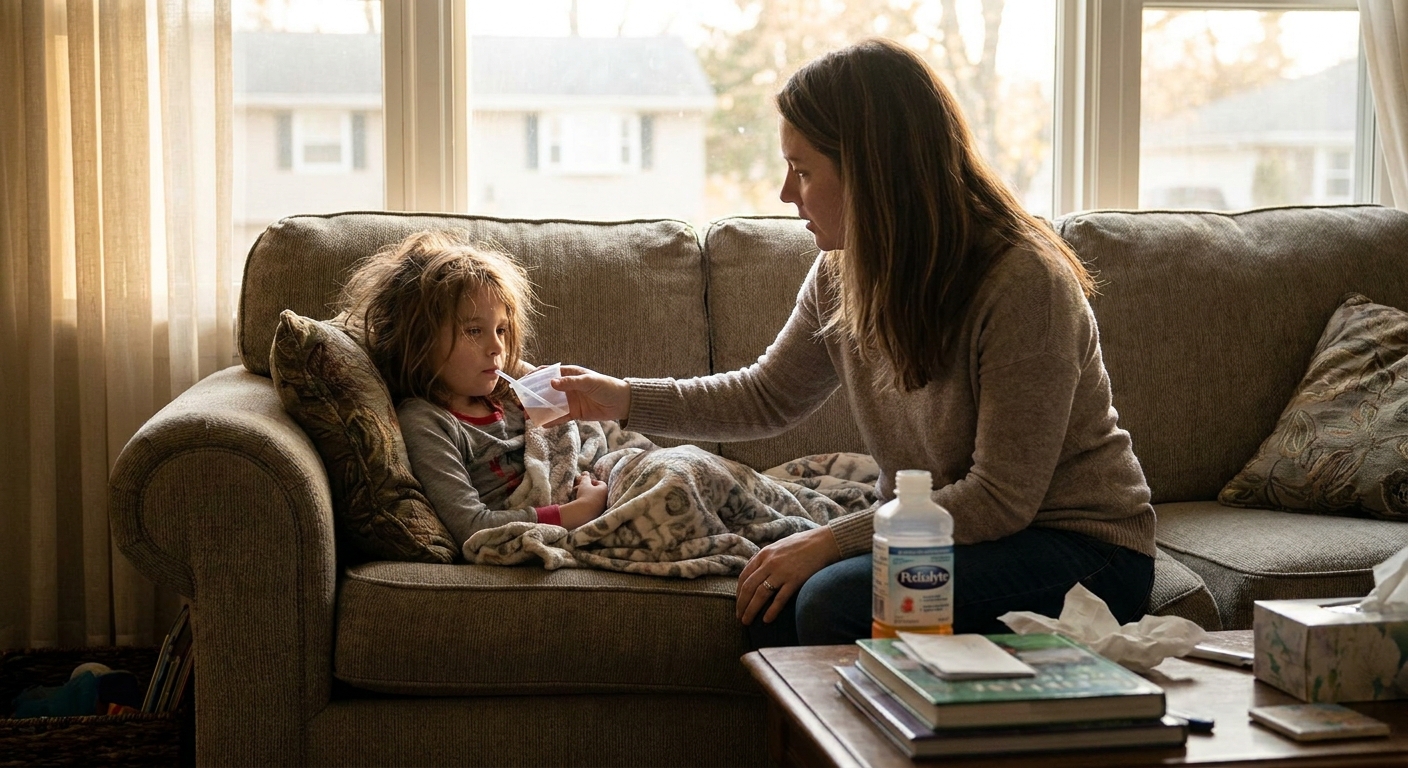
If your child has episodes of intense vomiting that seem to come out of nowhere, follow a pattern, then completely disappear in between, you are not imagining it and you are not alone. Cyclic Vomiting Syndrome (CVS) can look dramatic and scary, but it is also a recognized condition with real treatment strategies.
As a pediatric nurse and a mom, I will tell you the most helpful thing up front: CVS is not “just a stomach bug that keeps coming back.” It has a specific rhythm. Once you learn your child’s rhythm and build a plan with your care team, you can often shorten episodes, prevent some of them, and know exactly when it is time to head in for IV fluids.
What CVS is
CVS is a condition where a child has recurrent, stereotyped episodes of severe nausea and vomiting with stretches of feeling completely well in between. In plain language: the episodes tend to look similar each time, start suddenly, can be intense, and then your child returns to their normal self.
CVS is commonly linked to the migraine spectrum. Many children with CVS have a personal or family history of migraines, motion sickness, or “migraine-ish” symptoms like light sensitivity and headache as they get older.
Clinicians often use formal criteria (such as Rome IV and NASPGHAN guidance) plus a careful history to make the diagnosis and rule out other causes.
Typical pattern
- Well period: days to weeks (sometimes months) of feeling normal.
- Prodrome phase: early warning signs (nausea, pallor, yawning, abdominal pain, anxiety, headache). Some kids wake from sleep and say they “feel weird.”
- Vomiting phase: repeated vomiting and retching that can become very frequent at the peak (in some children, it can be every few minutes).
- Recovery phase: vomiting stops, sleep returns, then appetite slowly comes back.
CVS is a diagnosis your clinician makes after looking at the pattern and ruling out other causes of recurrent vomiting. It is not something you should diagnose from a checklist online, but the pattern is often very recognizable once someone asks the right questions.
How long episodes last
Episode length varies, but many kids have vomiting that lasts hours to several days. A common range is 1 to 5 days, though some children have shorter episodes and some have longer ones. The key detail is that the episodes are discrete, then there is a clear return to baseline.
During the vomiting phase, kids often cannot keep down fluids, and that is where dehydration risk climbs quickly, especially for younger children.
CVS vs. a stomach bug
Parents are often told, “It’s another virus,” because vomiting viruses are common. Sometimes that is true. But recurrent episodes with a predictable pattern deserve a closer look.
Stomach bug pattern
- Often comes with diarrhea and sometimes fever.
- Usually there is a household or school outbreak.
- Symptoms typically improve steadily over 24 to 72 hours (norovirus can be intense but often burns out relatively quickly).
- Your child may be wiped out for a day or two, but the illness does not usually “copy and paste” itself every few weeks.
CVS pattern
- Episodes look very similar each time and may start at the same time of day (often early morning).
- Long symptom-free periods where your child is completely fine.
- Triggers like stress, lack of sleep, or travel show up repeatedly.
- Diarrhea and fever are not the main features (though they can happen from irritation or a coincidental virus).
If your child has vomiting plus red-flag symptoms like severe belly pain, blood or green vomit, or vomiting that never truly stops between episodes, that is not “classic CVS,” and you should seek urgent medical care.
Common triggers
Triggers are not about blame. They are about pattern recognition. When you can name your child’s common triggers, you and your care team can often prevent episodes or catch them earlier.
Frequent triggers parents report
- Illness: colds, sinus infections, and fevers can set off an episode.
- Sleep disruption: late nights, sleepovers, travel, daylight saving changes.
- Stress and excitement: tests, birthday parties, big trips, performance days. Yes, happy excitement counts.
- Fasting: skipping breakfast, long gaps between meals.
- Motion: long car rides, amusement rides, boats.
- Certain foods: varies by child. Some are sensitive to chocolate, cheese, caffeine, or foods with MSG. Many kids have no clear food trigger.
- Heat and dehydration: hot weather, intense sports, not drinking enough.
A simple “episode journal” can help: date, start time, possible trigger, what your child ate and drank, sleep the night before, symptoms, and what treatments worked. Bring it to your pediatrician or GI specialist. It is pure gold for decision-making.

CVS look-alikes
Part of good CVS care is making sure we are not missing something else, especially early on or when the pattern changes. Your clinician may evaluate for:
- GI causes: reflux, constipation, inflammation, obstruction, malrotation, appendicitis (when pain is focal).
- Neurologic causes: increased pressure in the brain, especially with morning vomiting plus worsening headaches or behavior changes.
- Metabolic disorders: episodes triggered by fasting, unusual sleepiness or weakness during episodes, or low blood sugar concerns.
- Pregnancy in teens where relevant.
- Cannabis hyperemesis syndrome in adolescents, which can mimic CVS and requires a different approach.
This is why I always say: track the pattern, but do not self-diagnose. Recurrent vomiting deserves a real medical evaluation.
Hydration basics
With CVS, dehydration is usually the biggest immediate danger. Your child does not have to vomit for days to get behind. Repeated vomiting plus not drinking can dry them out fast.
Next up is the most practical piece of the whole article: what to do with fluids when your child cannot keep much down.
Best fluids during an episode
For most kids, the best choice is an oral rehydration solution (ORS) because it has the right balance of sugar and salts to optimize absorption in the gut.
- Use ORS, ice chips, or ORS popsicles when tolerated.
- Avoid chugging. It usually comes right back up and feels awful.
- Sports drinks, juice, and soda can sometimes worsen nausea or diarrhea because of the sugar load. If that is all you have, dilute juice or sports drink 1:1 with water until you can get ORS.
The “tiny sips” method
When vomiting is active, think in teaspoons and minutes, not cups and hours.
- Start with 5 to 10 mL (1 to 2 teaspoons) every 2 to 5 minutes.
- If that stays down for 20 to 30 minutes, slowly increase the amount.
- If your child vomits, wait 10 to 15 minutes, then restart with smaller sips.
Signs of dehydration
- Peeing less often (for older kids, no urine for about 8 hours can be concerning; for infants and toddlers it can be much sooner, or fewer wet diapers than usual).
- Very dark urine
- Dry mouth, no tears when crying
- Sunken eyes, listlessness, dizziness
- Fast heart rate, cool hands and feet
If your child cannot keep down even tiny sips, or vomiting is relentless, you may be headed toward IV fluids. That is not a failure. It is often the safest way to break the cycle.
ER vs. home
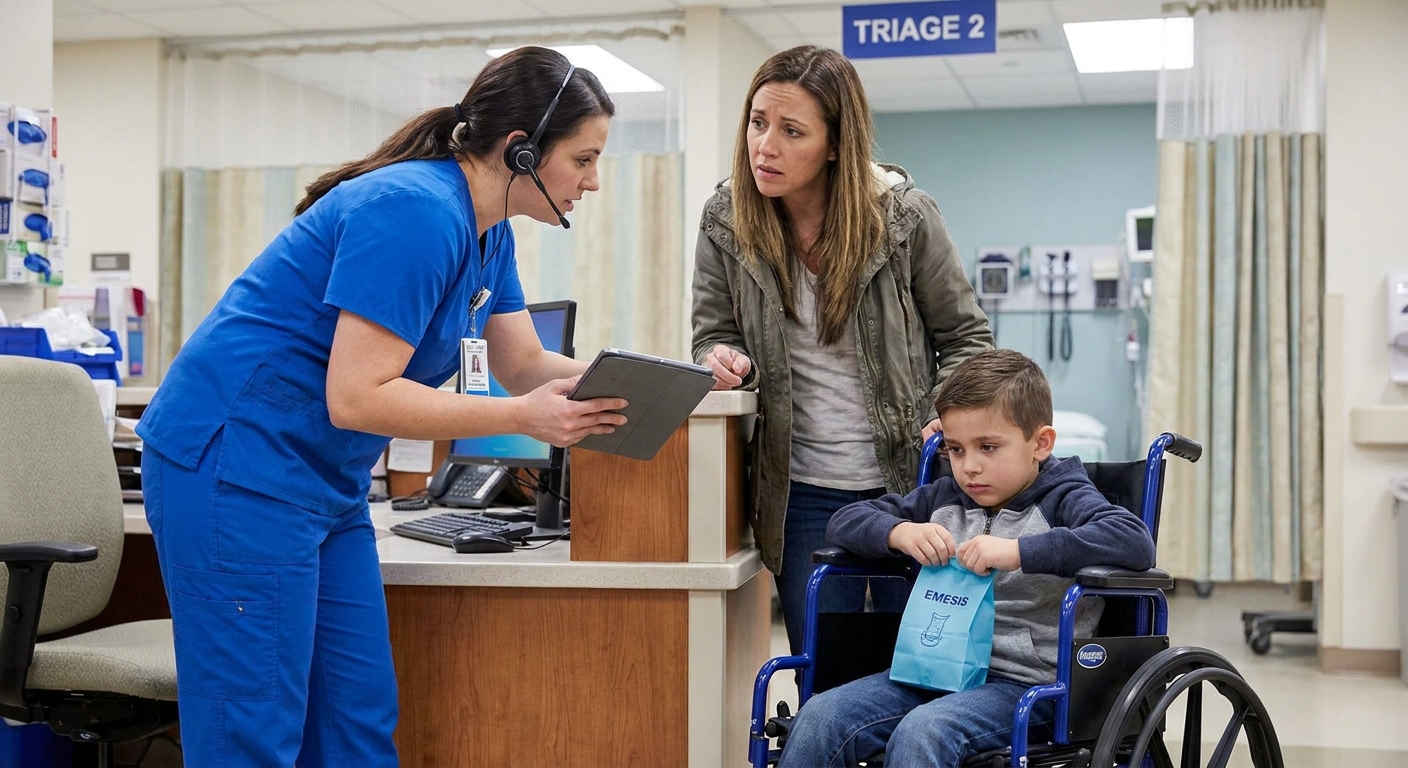
One of the hardest parts of CVS is the “Should I go in?” question at 2 AM. Here is a practical way to decide. When in doubt, call your pediatrician’s after-hours line or your child’s specialist, especially if this is a new pattern.
When home care is reasonable
- Your child is alert enough to sip fluids.
- Vomiting is slowing down or there are longer breaks between episodes.
- They are peeing at least a few times a day and urine is not extremely dark.
- No severe abdominal pain, no stiff neck, no confusion.
- No blood in vomit and vomit is not green.
Go to urgent care or the ER now
- Signs of moderate to severe dehydration: very sleepy or hard to wake, no urine for about 8 hours in an older child (or much sooner in babies and toddlers), cracked lips, sunken eyes, dizziness or fainting.
- Cannot keep any fluids down despite tiny sips for several hours.
- Green (bilious) vomit, which can signal a blockage and needs urgent evaluation.
- Blood in vomit or vomit that looks like coffee grounds.
- Severe or worsening belly pain, a swollen belly, or pain localized to one area.
- Severe headache, stiff neck, confusion, or unusual behavior.
- New onset vomiting in a child with no prior CVS diagnosis, especially with weight loss, poor growth, or persistent symptoms between episodes.
- Diabetes concerns (excessive thirst, frequent urination when well, fruity breath) or known diabetes with vomiting.
What to tell the ER team
If your child has known or suspected CVS, walk in with a short, calm script:
- “My child has a history of cyclic vomiting with similar past episodes.”
- “This episode started at [time], vomiting every [frequency].”
- “They have had [number] wet diapers/urinations in the last [hours].”
- “We tried [ORS, ondansetron if prescribed, migraine meds if prescribed].”
- “Their usual plan is [IV fluids, anti-nausea medicine, migraine protocol].”
If you have a written plan from your GI or pediatrician, bring it. It speeds things up, especially overnight.
Prevention plan
CVS management is typically a mix of abortive treatment (stop or blunt an episode once it starts) and preventive treatment (reduce how often episodes happen). The exact plan depends on age, episode frequency, and severity.
1) Confirm the diagnosis
Your pediatrician may refer you to pediatric gastroenterology or neurology. Depending on your child’s story, testing may include basic labs, urine tests, and sometimes imaging. The goal is to make sure we are not missing things that can mimic CVS, like obstruction, metabolic disorders, or increased pressure in the brain. Most children with a classic CVS pattern do not need an endless workup, but the initial safety check matters.
2) Build routines around triggers
- Consistent sleep schedule (yes, even on weekends when possible)
- Regular meals and snacks to avoid long fasting periods
- Hydration habits, especially during sports and hot weather
- Motion sickness planning for travel
- Stress support: school accommodations, counseling tools, test-day strategies
3) Early “episode abort” tools
Many children do best when treatment starts during the prodrome phase. Your clinician may recommend options such as an anti-nausea medicine like ondansetron, migraine-directed medicines in select cases (including triptans in some older children and teens), and a calm dark environment with sleep. Some ER protocols also include IV fluids with dextrose plus anti-nausea and pain control, depending on the child’s needs.
Do not use prescription medications unless they are prescribed for your child with clear instructions.
4) Preventive options
For kids with frequent or severe episodes, specialists sometimes use daily preventive strategies. Which medication is chosen depends on age and the child’s migraine features. Common examples you may hear your specialist discuss include:
- Preventive medications: cyproheptadine (often in younger kids), amitriptyline (often in older kids), and sometimes propranolol or other migraine-preventive approaches, depending on the child.
- Supplements used in some migraine-style plans: CoQ10, L-carnitine, and riboflavin.
These are not right for every child, and they still need clinician guidance for safety, dosing, and interactions. I include the names here so you have vocabulary when you walk into the GI or neurology appointment.
5) A written action plan
This is the game-changer for many families. A good plan often includes:
- Your child’s early warning signs
- Exact home steps for the first 2 to 4 hours
- When to give prescribed medicines
- Hydration goals and what counts as “not enough”
- Clear ER criteria
- Suggested ER treatments that your specialist prefers
Home comfort measures
CVS episodes can be miserable. Comfort care will not cure it, but it can reduce suffering and sometimes help the body settle.
- Dark, quiet room: many kids look very migraine-like during episodes.
- Sleep: if your child can sleep, let them. Sleep can be restorative and may shorten episodes.
- Warm bath or shower: some kids get real relief from warm water. If your child is dizzy or weak, supervise closely and keep it safe.
- Cool cloth: on forehead or neck for comfort.
- Mouth care: rinse mouth or brush gently after vomiting to protect teeth. If your child is old enough, a water rinse is fine. Avoid forcing large drinks.
- Small sips only: once vomiting slows.
If vomiting is continuous, your focus is less on food and more on preventing dehydration and getting medical help when needed.
School accommodations
If your child’s episodes affect school, you do not have to figure this out alone. Many families do well with a simple plan (often through the school nurse, a 504 plan, or individualized supports), such as:
- Permission to keep a water bottle and electrolyte drink at school
- Access to snacks to avoid long fasting periods
- A quiet, dim place to rest at the first sign of prodrome
- A plan for nausea medication if prescribed and allowed by school policy
- Flexible make-up work and testing options after an episode
- A clear “call home or seek care” threshold for the nurse
Questions to ask
- “Does my child’s pattern fit CVS, and what else do we need to rule out?”
- “Are you using Rome IV or another set of criteria to support the diagnosis?”
- “What is our home plan step-by-step for the first hour?”
- “Do we have a prescription for nausea medicine, and when exactly should we use it?”
- “At what point do you want us to go in for IV fluids?”
- “Can you provide a written ER protocol letter?”
- “Should we consider a migraine evaluation, abortive meds, or preventive treatment?”
- “Are there school accommodations we should request?”
- “For teens, do we need to discuss pregnancy testing or cannabis hyperemesis as part of the evaluation?”
A reality check
Watching your child vomit repeatedly is one of the most helpless feelings in parenting. CVS can also be emotionally exhausting because your child can seem perfectly fine in between, which makes other people underestimate how intense it is.
You deserve a plan that does not rely on guesswork. If you suspect a cyclic pattern, start tracking episodes and bring that record to your pediatrician. With the right diagnosis and a clear home-versus-ER action plan, many families get fewer surprises and more sleep.
If your child is newly having recurrent vomiting, do not self-label it as CVS. Get evaluated. The goal is to treat CVS well when it fits, and to catch the conditions that need different care when it does not.
References
- North American Society for Pediatric Gastroenterology, Hepatology and Nutrition (NASPGHAN): guidance on functional GI disorders and cyclic vomiting.
- Rome Foundation (Rome IV): diagnostic criteria for functional GI disorders, including CVS.
- National Institute of Diabetes and Digestive and Kidney Diseases (NIDDK): vomiting and dehydration basics.
- American Migraine Foundation: pediatric migraine resources that can overlap with CVS education.