Not all postpartum headaches and swelling are “normal.” Learn postpartum preeclampsia symptoms, how it differs from routine recovery, and exactly when to...
Diastasis Recti After Pregnancy

Sarah Mitchell
Sarah Mitchell is a Registered Pediatric Nurse and a mother of three who has spent over a decade helping families navigate the beautiful, chaotic early years of childhood. She combines evidence-based medical knowledge with real-world parenting experience to offer practical, compassionate advice. At Awesome Parent, Sarah's mission is to help exhausted parents find solutions, trust their instincts, and finally get some sleep.
If you have looked down postpartum and thought, “Why does my belly still look pregnant?” you are in very good company. One common reason is diastasis recti, which is a separation of the abdominal muscles that can happen during pregnancy. The internet can make it sound scary or permanent. In real life, many parents can make meaningful progress with time, smart movement, and the right support.
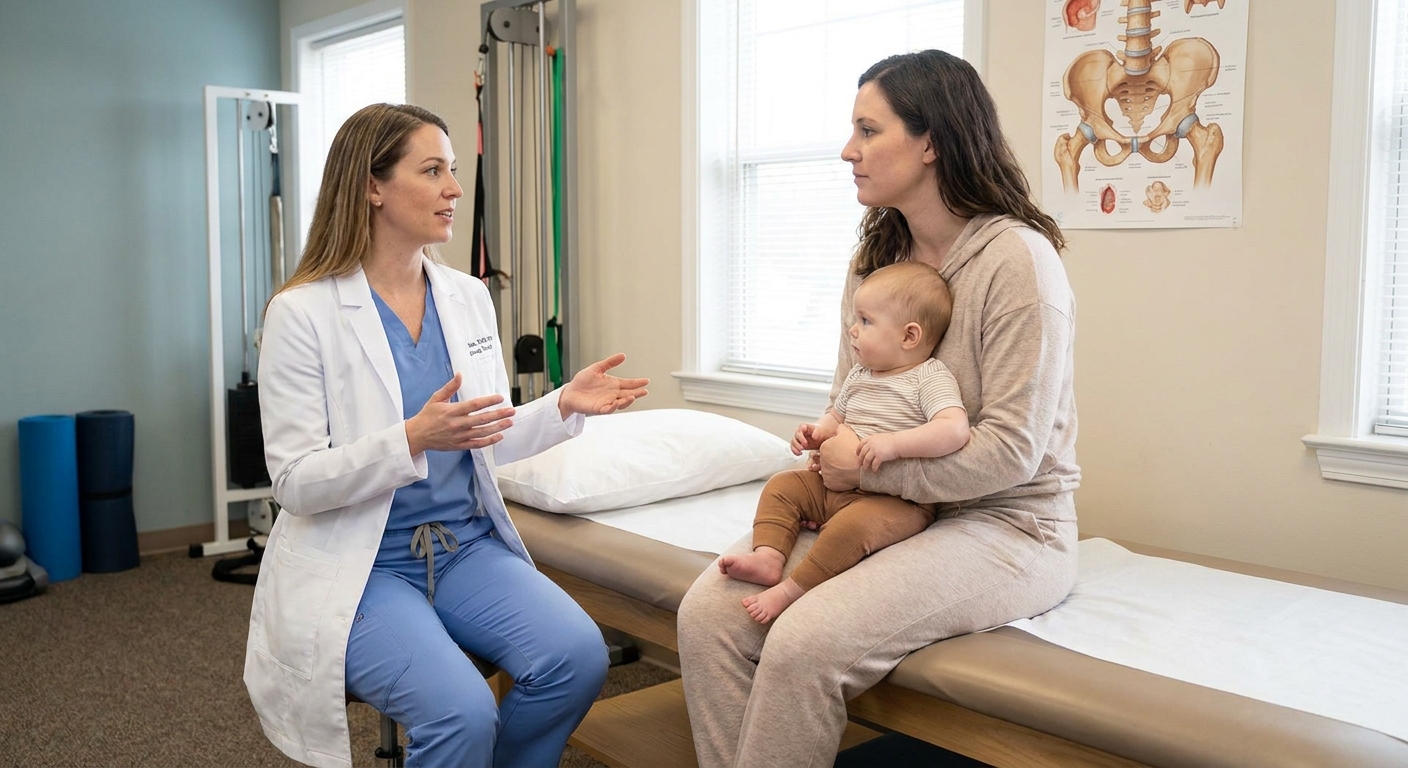
Let’s walk through what diastasis recti is, how a simple self-check can help you describe what you are feeling to a clinician, and what recovery timelines often look like. I will also share practical activity principles. For a personalized plan, a pelvic floor physical therapist is the gold standard.

What it is and is not
Diastasis recti (sometimes called abdominal separation) is when the two sides of your “six-pack” muscles (the rectus abdominis) move apart along the midline as the belly grows. The connective tissue between them is called the linea alba, and it naturally stretches in pregnancy.
Why it happens
- Normal pregnancy changes: Your uterus grows, your posture shifts, and your abdominal wall adapts. Stretching is expected.
- Pressure management: When internal pressure pushes outward and the tissues cannot manage the load well, the separation or midline softness may become more noticeable.
- Individual factors: Genetics, prior pregnancies, multiple gestation, a larger baby, and certain movement patterns can influence how it shows up. But none of this means you did something “wrong.”
Common signs parents notice
- A ridge or “doming” down the middle of the belly when sitting up, coughing, or lifting
- A midline area that feels soft or squishy
- Lower back or pelvic discomfort (not always)
- A feeling of core weakness, instability, or fatigue with daily tasks
Important nuance: diastasis recti is not just about the gap. Function matters, too. Many people have a small separation and feel strong. Others have a similar size separation but the tissue feels very soft and symptoms are bigger. That is one reason clinicians and PTs look at both width and tension.
Other reasons your belly looks postpartum
Diastasis is common, but it is not the only reason a belly can look or feel different after birth. Early on, normal uterine involution (your uterus shrinking), swelling, constipation or bloating, changes in body fat, posture and rib flare, and pelvic floor dysfunction can all play a role. Less commonly, an umbilical or ventral hernia can contribute, especially if you notice a distinct bulge that is tender or getting worse.
A simple self-check
This self-check is not a diagnosis. It is a way to describe what you are noticing so your OB-GYN, midwife, primary care clinician, or pelvic floor PT can confirm what is going on and guide you. Also, self-checks can be tricky and imprecise, so if you are unsure, that is normal.
When to check: Many parents wait until around 6 weeks postpartum or later, simply because early postpartum your tissues are still very tender and changing quickly. That said, you do not have to wait if you have symptoms or concerns. A pelvic floor PT can assess you earlier, and some clinicians prefer that to at-home measuring. If you are earlier and curious, be gentle and stop if anything hurts.
How to do a quick check
- Lie on your back with knees bent and feet flat. Relax your belly.
- Place two or three fingers horizontally across your midline at your belly button.
- Lift your head and shoulders slightly as if doing a tiny crunch. You are looking for the point where your abs engage just enough for you to feel the edges of the muscles.
- Feel for the edges of the left and right rectus muscles and estimate how many finger-widths fit between them.
- Repeat about 2 inches above the belly button and 2 inches below it. Separation can vary along the midline.
- Notice tension: Does the midline feel springy and supportive, or does it feel very soft and sinky even with a gentle lift?
- Watch for doming: If you see a noticeable ridge or cone shape, note when it happens.
Two helpful caveats: finger-width is a rough estimate since finger sizes and technique vary, and it can be hard to interpret what you are feeling. In clinic, some providers use more standardized tools (and in some settings, ultrasound) to assess tissue behavior.
Write down what you felt in plain language like: “About two finger-widths at the belly button, softer tissue, and I see doming when I sit up in bed.” That is very useful information for your clinician.
If you notice a very focal bulge that is painful, firm, discolored, or does not reduce when you relax, skip the self-check and contact your clinician. That can suggest a hernia or another issue that deserves a prompt exam.
Recovery timelines
Here is the most reassuring truth I can offer: your core is still in early recovery for months. Social media loves a dramatic before-and-after. Bodies do not heal on a reel timeline.
What many parents can expect
- 0 to 6 weeks postpartum: Big changes happen quickly as swelling decreases and tissues start to regain baseline tone. This is mostly rest, gentle walking, breathing, and basic daily movement.
- 6 to 12 weeks postpartum: This is often when people begin more intentional rehab, usually after clearance from their clinician. You may notice improved tension and less doming with better pressure management.
- 3 to 6 months postpartum: Many parents see meaningful functional improvements here, especially with consistent, appropriate strengthening and smart lifting mechanics.
- 6 to 12 months postpartum and beyond: Progress can continue, particularly if you are returning to higher-intensity exercise. Some people also notice their tissues feel different while breastfeeding due to ongoing hormonal shifts . This is a very common window for pelvic floor PT if symptoms persist.
What affects the timeline
- C-section versus vaginal birth: Both can involve diastasis, but C-section adds incision healing and may affect how soon certain movements feel comfortable.
- Sleep and stress: Yes, I know. If you are laughing right now, you are my people. Still, recovery is harder when you are depleted.
- How you move all day: Repeated strain from getting out of bed, lifting car seats, and carrying toddlers matters more than one workout.
- Symptoms: Pain, leaking, heaviness, or significant doming usually means you need a more tailored approach.
If you are a year out and still dealing with symptoms, that does not mean you failed. It usually means you need a more specific strategy, and pelvic floor PT can be a game-changer.
Activity principles
Think of recovery as learning to manage pressure and rebuild coordination, then strength, then endurance. These principles are broadly safe for most postpartum parents, but always follow your clinician’s guidance for your specific situation.
1) Lead with breath
A simple cue: exhale on effort. Exhale as you lift the stroller into the trunk, stand from a chair, or pick up your baby. This helps reduce outward pressure on the midline and supports your pelvic floor and deep core.
2) Reduce doming over time
If you see your belly form a ridge down the center during an activity, that usually means the load is currently exceeding what your system can manage or your strategy needs adjusting. It is also true that occasional mild doming can happen while you are learning coordination. The goal is not perfection. The goal is to choose options that make doming smaller and less frequent over time.
Modify by:
- Reducing the load or range of motion
- Changing position (for example, rolling to your side to get out of bed)
- Slowing down and exhaling through the hard part
3) Build deep core coordination
Many PTs start with gentle core work that focuses on the deep system, not aggressive crunches. Examples that are commonly used include:
- Diaphragmatic breathing with a relaxed belly
- Pelvic tilts or controlled heel slides
- Gentle dead bug variations or modified planks, only if you can do them with good control and without significant doming
Exact exercises and progressions should come from a pelvic floor PT who can assess your midline tension, pelvic floor function, and overall mechanics.
4) Be cautious with high-pressure core moves early
For some parents, movements like full sit-ups, aggressive crunches, double leg lowers, heavy front planks, or intense twisting can increase doming early in recovery. That does not mean “never.” It means not yet, or not like that.
5) Lift smarter
- Log roll out of bed: roll to your side, use your arms to push up
- Exhale as you lift baby, laundry, or a toddler
- Keep loads close to your body when carrying
- Use supportive posture: ribs stacked over pelvis as much as possible

Return to exercise
A common misconception is that being “cleared” at 6 weeks postpartum means you are ready to jump back into high-impact workouts. Clearance usually means you are healing normally. Readiness for running, heavy lifting, or HIIT often takes longer and depends on symptoms and control.
A simple progression
- Early weeks: walking, gentle mobility, breathing and coordination work
- Next: light strength with excellent form (think hinges, squats to a chair, carries with manageable loads), prioritizing breath and pressure management
- Then: gradually increase load, volume, and complexity while keeping doming and symptoms minimal
- Later: introduce impact and faster work if you can do it without leaking, heaviness, pain, or significant doming
If you want an efficient path back to your preferred exercise, this is where a pelvic floor PT can save you a lot of trial and error.
When to get help
Please reach out to your clinician or a pelvic floor physical therapist if you notice any of the following:
- Bulging or doming that is strong and hard to control even with modifications
- Persistent pain in the abdomen, back, pelvis, or around a C-section scar
- Leaking urine, fecal incontinence, or significant urgency
- A feeling of heaviness, dragging, or a bulge in the vagina (possible prolapse symptoms)
- A visible hernia or a spot that is very tender or worsening
- You cannot return to basic tasks without symptoms
Also: if you are having fever, redness, drainage, or worsening incision pain after a C-section, call your clinician urgently. That is not a diastasis issue. That is a wound-healing issue.
FAQs
Will it close completely?
Sometimes the width decreases a lot, sometimes it changes a little, and sometimes the bigger win is improved tension and function. Many parents feel strong and symptom-free even if a small gap remains.
Do wraps or binders fix it?
A supportive wrap can feel great early postpartum, especially after a C-section, and it may help you feel more stable and comfortable during daily activities. But it does not “close the gap” by itself. Think of it as temporary support that can be part of the early phase, not a replacement for rehab.
Can I work out with diastasis?
Often yes, but the right level and the right modifications matter. The goal is exercise that strengthens without repeatedly pushing pressure outward. A pelvic floor PT can help you return to running, lifting, yoga, or HIIT safely.
Is this my fault?
No. Pregnancy is a full-body remodeling project. Your focus can be recovery, not self-blame.
The bottom line
Diastasis recti is common, especially in the first months postpartum. A gentle self-check can help you describe what you are noticing, but your clinician or pelvic floor PT can assess it more accurately and guide your next steps. Give yourself time, focus on pressure management and smart daily movement, and ask for help if symptoms persist.
If you are reading this while feeding a baby in the dark, wondering if your body will ever feel like yours again: it can. And you do not have to figure it out alone.