Ear tugging, fever, fussiness, and sleep troubles can point to an ear infection. Here’s what to watch for, what helps, when antibiotics are needed, and whe...
Ear Infection vs Teething in Babies

Sarah Mitchell
Sarah Mitchell is a Registered Pediatric Nurse and a mother of three who has spent over a decade helping families navigate the beautiful, chaotic early years of childhood. She combines evidence-based medical knowledge with real-world parenting experience to offer practical, compassionate advice. At Awesome Parent, Sarah's mission is to help exhausted parents find solutions, trust their instincts, and finally get some sleep.
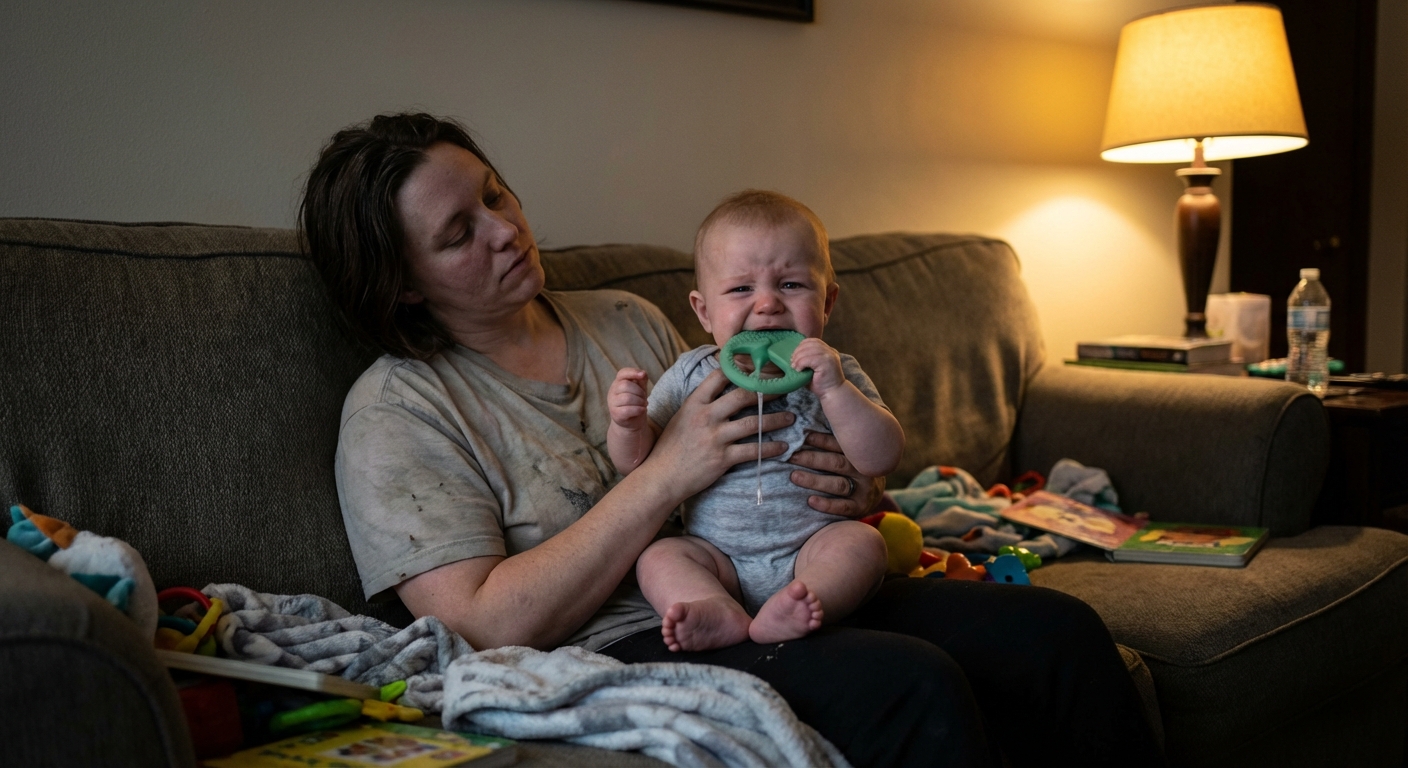
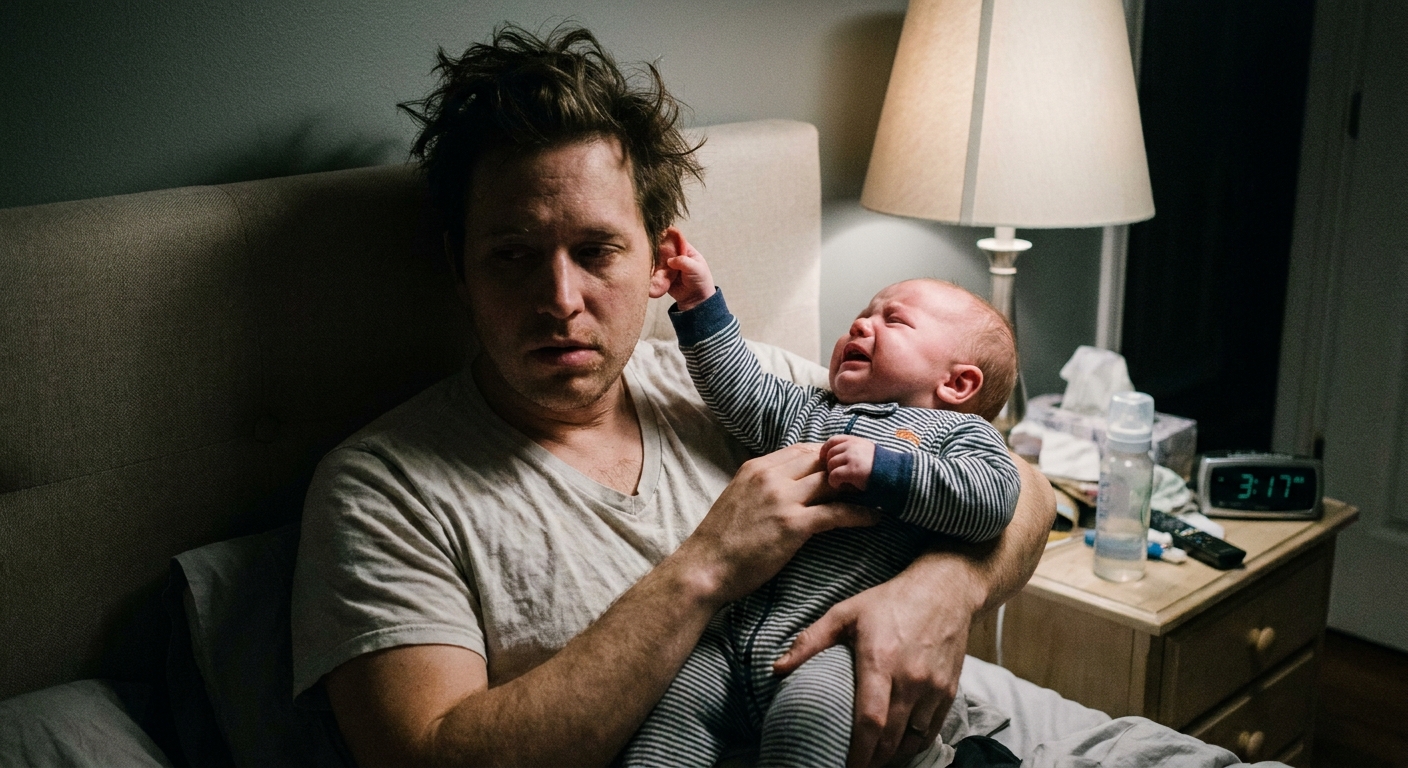
If your baby is tugging an ear, crying more than usual, and sleeping like they have a personal grudge against bedtime, it is very tempting to blame teething. Sometimes you are right. Sometimes an ear infection is quietly building in the background.
As a pediatric nurse and a mom of three, I will tell you the honest truth: these two can look annoyingly similar at 2 a.m. This guide is meant to help you sort through the overlap and make a reasonable plan, without panic-googling yourself into a spiral.
Why symptoms overlap
Babies explore sensations with their hands. When something hurts anywhere around the head and neck, ears are an easy target. Add in normal sleep regressions, colds, and big developmental leaps, and it can feel impossible to tell what is what.
Here is the most helpful framing:
- Teething is a developmental process that causes gum discomfort and lots of drool. It can make babies cranky and wakeful, but it should not make them look truly ill.
- Ear infection (acute otitis media) is an infection behind the eardrum, often after a cold. It can cause more intense pain, more disrupted sleep, and sometimes fever.
Teething timeline clues
Most babies get their first tooth sometime around 6 months, but the normal range is wide, often 4 to 12 months. Teeth can also come in waves, which means you might get a few rough days, a break, and then another rough patch.
Clues that point more toward teething
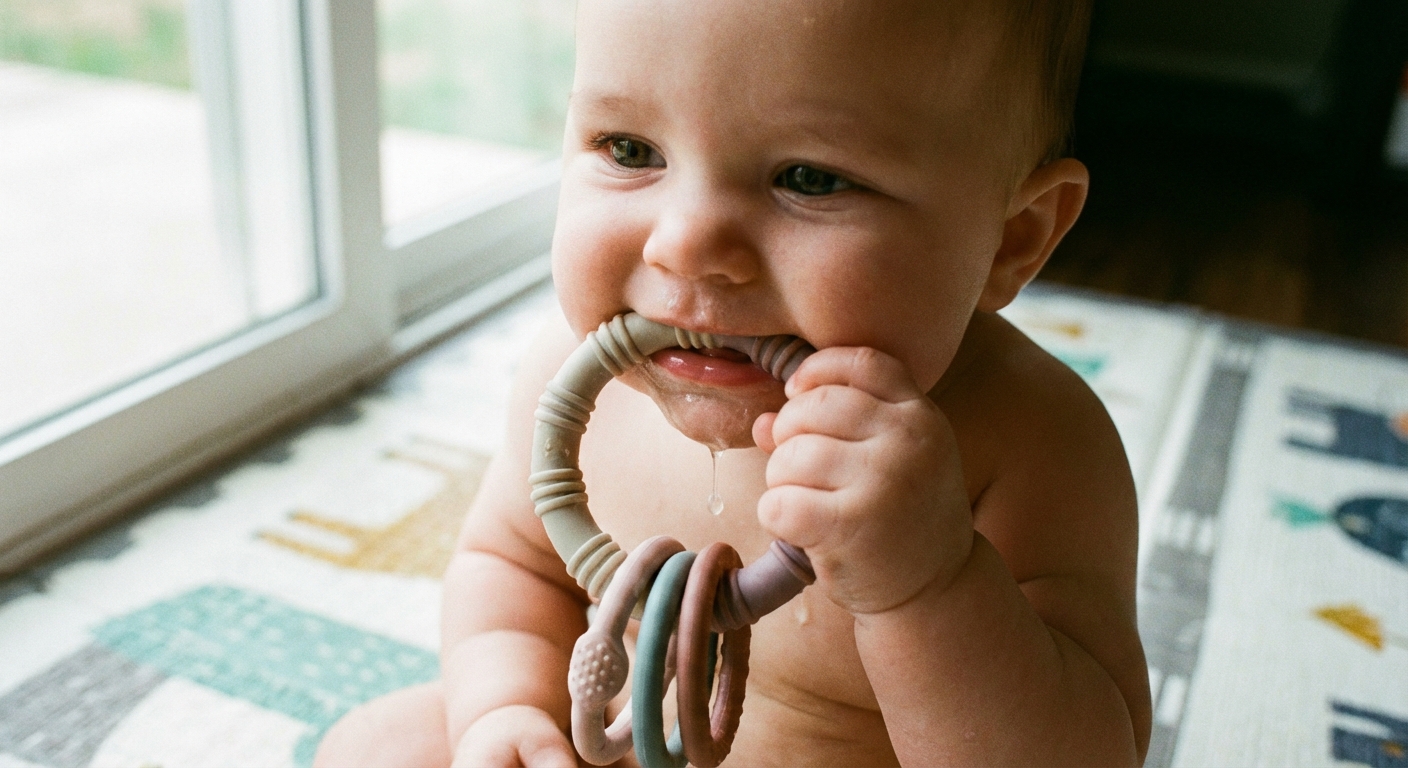
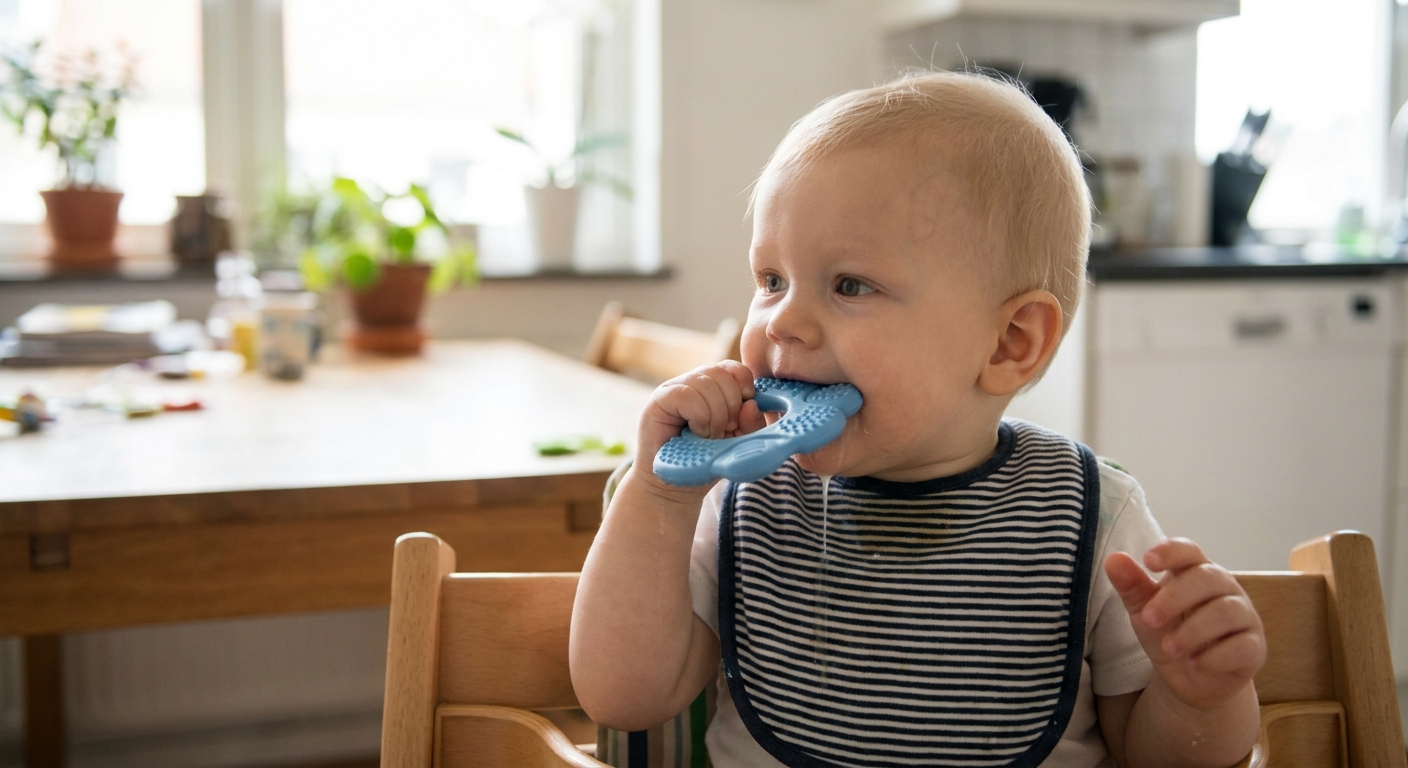
- Drooling ramps up, sometimes with a drool rash on the chin or chest.
- Chewing on hands, toys, bottle nipples, your knuckles, basically anything.
- Swollen or tender gums, sometimes you can see a little white bulge under the gum line.
- Fussiness that comes and goes, often worse in the evening.
- Mild temperature changes can happen around teething, but a true fever is less typical (more on that below).
What teething usually does not cause
- High fever
- Persistent, worsening ear pain
- New drainage from the ear
- Baby looking sick (very sleepy, hard to console, poor feeding beyond a day or so)
If those are showing up, I start thinking beyond teething.
Ear infection patterns
Ear infections commonly follow a cold because congestion can block the eustachian tube, trapping fluid behind the eardrum. That fluid can become infected.
Clues that point more toward an ear infection
- Recent cold symptoms (runny nose, cough, congestion) in the past week or two.
- Ear pain that is often worse lying flat. Many babies sleep worse than usual, especially at night.
- More intense, persistent crying, especially sudden crying spells.
- Fever can occur. Some babies have none, others do.
- Decreased appetite or pulling off the bottle or breast due to pressure changes when swallowing.
- One-sided symptoms sometimes happen: baby rubs one ear more, seems bothered when that side is touched.
Stronger ear infection clues
- Ear drainage (fluid or pus), especially if it is new.
- Sudden relief after severe pain plus drainage can suggest the eardrum has perforated. This still needs medical care. Many small perforations heal well, but the exam helps guide the right antibiotic choice (sometimes ear drops, sometimes oral medicine) and follow-up.
- Balance changes or new unsteadiness (in older babies).
Fever: how to use it
Parents are often told “teething does not cause fever.” In real life, teething can coincide with a slight temperature bump (babies drool, chew, and are generally a little inflamed and unsettled), but it should not explain a true fever.
Here is the practical, parent-friendly way to use fever as a clue:
- Teething: may come with no fever or a low-grade temperature.
- Ear infection or another illness: more likely if there is a true fever or baby otherwise looks unwell.
What counts as a true fever? In pediatrics, fever is generally 100.4°F (38°C) or higher measured with a reliable method.
Thermometer tips
- Under 3 months: Rectal temperatures are the most reliable at home. A rectal temperature of 100.4°F (38°C) or higher is urgent. Call your clinician right away or seek emergency care as directed.
- 3 to 6 months: If you are getting higher readings on a forehead or ear thermometer, confirm with your most reliable option and call for guidance, especially if baby is fussy, not feeding, or hard to wake.
- Over 6 months: Look at the whole picture: comfort, hydration, breathing, and how baby is acting. Temporal (forehead) thermometers can be helpful, but if the number is borderline and decisions hinge on it, double-check with a more reliable method for your child’s age.
Ear pulling: a clue, not proof
Ear tugging is one of the least specific symptoms we see in triage. Babies pull ears because:
- Their ear itches from eczema or cradle cap near the ear.
- They discovered ears exist and they are fascinating.
- Their gums hurt and pain can refer to the ear area.
- They have congestion creating pressure changes.
- They have an actual ear infection.
Plain reassurance: Ear pulling alone, especially without fever, cold symptoms, or a big behavior change, is often not an ear infection.
When ear pulling matters more: when it comes with night waking from pain, fever, recent cold, or feeding trouble.
Sleep: patterns that help
More typical teething sleep disruption
- Extra wakings for a few nights.
- Baby settles with comfort, rocking, or a teether.
- Fussiness is worse in the evening.
More typical ear infection sleep disruption
- Baby cannot get comfortable lying flat.
- Frequent waking with sharp crying.
- Comfort measures help briefly, then baby escalates again.
- Sleep gets progressively worse over 24 to 48 hours.
Trust your instincts here. Parents often tell me, “This cry is different.” That is a useful data point.
At-home clues (safe)
You cannot confirm an ear infection without looking at the eardrum. Even clinicians need an otoscope and experience to interpret what they see. Still, you can gather clues.
What you can check
- Cold symptoms: Any congestion or new cough?
- Feeding: Is baby refusing, or does swallowing seem to worsen crying?
- Drainage: Any wetness, crust, or fluid coming from the ear?
- Response to pain medicine: Do they improve noticeably after acetaminophen or ibuprofen (if age-appropriate)? Ear pain often does.
- Gums: Swollen gum line, new drool, increased chewing?
What to avoid
- Do not put cotton swabs in the ear canal.
- Do not use ear candles. They are unsafe and not effective.
- Do not put home remedies or oils in the ear unless your clinician has told you to, especially if there might be a perforated eardrum.
Quick compare: which fits best?
If you want a quick way to organize your thoughts, use this “more likely” checklist. It is not a diagnosis, just a way to decide whether watchful waiting is reasonable or if you should call.
| Symptom | More likely teething | More likely ear infection |
|---|---|---|
| Drool and chewing | Strong clue | Can happen, but less central |
| Fever 100.4°F (38°C) or higher | Less likely | More likely |
| Recent cold | May be unrelated | Common lead-in |
| Sleep disruption | Mild to moderate, comes and goes | Often significant, worse lying down |
| Ear pulling | Common | Common |
| Feeding refusal | Usually mild | Can be notable |
| Ear drainage | Not typical | Concerning, needs evaluation |
If you are still stuck, that is normal. When in doubt, your pediatrician’s office would rather you call and talk it through than lose sleep spiraling.
Comfort for teething
Teething is uncomfortable, but most babies do best with simple, safe soothing.
- Chilled teether: Cool, not frozen solid. (Frozen can be too harsh on gums.)
- Cold washcloth: Wet a clean washcloth, chill it, then let baby chew under supervision.
- Gum massage: Clean finger, gentle pressure.
- Drool rash care: Pat dry, then a thin barrier like petroleum jelly or a gentle zinc oxide cream on the chin and neck folds.
- Pain medicine if needed: Discuss dosing with your clinician. Use weight-based dosing with the infant formulation and the provided syringe. Avoid using it around the clock for many days without checking in.
Skip these products
- Topical numbing gels (including benzocaine products). They are not recommended for infants.
- Teething necklaces. Choking and strangulation risks are real.
- Aspirin for babies and children. Do not use it unless specifically directed by a clinician.
Comfort for suspected ear infection
If an ear infection is on your short list, comfort and hydration are your best friends while you decide about care.
- Age-appropriate pain relief: Acetaminophen or ibuprofen (ibuprofen is typically for babies 6 months and older). Use the dose your pediatrician recommends. Dose should be weight-based and measured with an oral syringe.
- Extra fluids: Small, frequent feeds.
- Upright time: Holding baby more upright can reduce pressure discomfort.
- Humidifier: Can help if congestion is contributing.
- Saline drops and gentle suction for a stuffy nose, especially before feeds and sleep.
Antibiotics? Some ear infections need them, some do not. Age, exam findings, symptom severity, and whether one or both ears are affected all matter. This is why an actual ear exam is so important.
How ear infections are diagnosed
One quick myth-buster: a “red ear” alone is not the same thing as an ear infection. Babies can have a red-looking eardrum from crying or a viral cold.
Clinicians diagnose acute otitis media based on the eardrum exam, especially signs of fluid behind the eardrum plus a bulging eardrum or clear signs of inflammation.
Same-day care: when it makes sense
I am a big fan of avoiding unnecessary urgent care visits. I am also a big fan of not suffering at home when a same-day visit is the right move. Consider same-day evaluation if:
- Your baby has ear drainage.
- Pain seems moderate to severe or is not improving with appropriate comfort measures.
- Sleep is significantly disrupted due to pain, especially multiple nights.
- There is a true fever plus ear symptoms.
- Your baby has had cold symptoms and now seems worse, not better.
- Your baby is not feeding well or has fewer wet diapers.
- You suspect an ear infection and your child is under 6 months (call for guidance).

If your child has ear tubes or a history of frequent ear infections, your clinician may give you different instructions. Follow your personalized plan when you have one.
Watchful waiting: what it means
If your baby is older and symptoms are mild, your clinician may recommend watchful waiting for 48 to 72 hours with good pain control and close follow-up. This does not mean “do nothing.” It means you treat the pain, watch hydration and sleep, and re-check if your child is not improving or is getting worse.
Urgent or emergency care
Please seek urgent help now (ER or emergency guidance from your pediatrician) if your baby has:
- Under 3 months with a rectal temp of 100.4°F (38°C) or higher.
- Trouble breathing, blue lips, or struggling to breathe.
- Signs of dehydration (very few wet diapers, very dry mouth, no tears when crying).
- Extreme sleepiness, difficult to wake, or not interacting as usual.
- Stiff neck, seizure, or a purple rash.
- Swelling or redness behind the ear, ear sticking out more than usual, or severe tenderness behind the ear.
If your gut says “this is not right,” that matters. You do not need to prove it to anyone before getting help.
What happens at the visit
Parents often ask me, “What will they actually do at the appointment?” Typically:
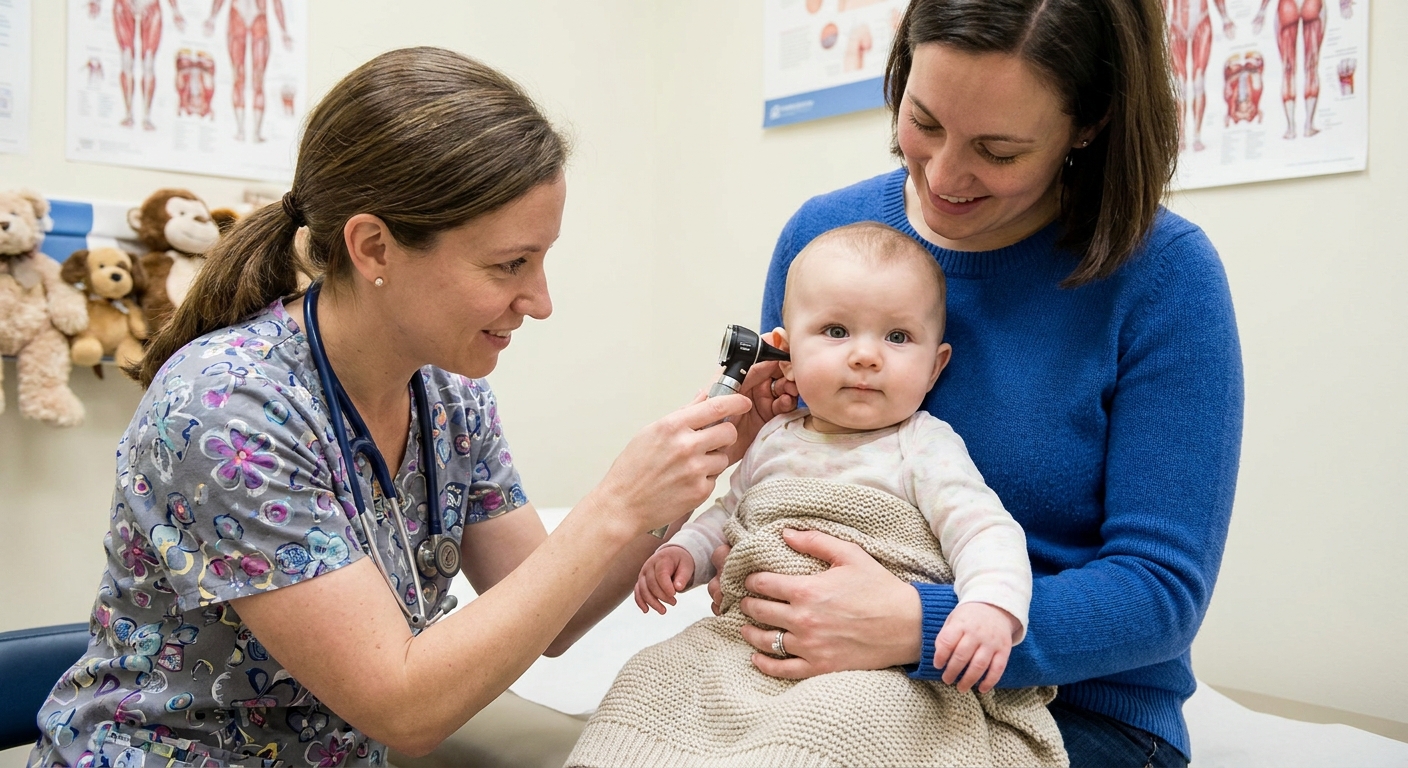
- Ear exam with an otoscope to check eardrum color, position (bulging or not), and whether there is fluid.
- Pneumatic otoscopy or other tools in some offices to see how well the eardrum moves (movement decreases when fluid is trapped behind it).
- Look at throat and gums, because teething, viruses, and throat irritation can all contribute.
- Assess overall hydration and breathing.
If it is an ear infection, treatment depends on age and severity. If it is teething plus a cold, the plan is usually comfort and time.
Frequently asked questions
Can teething cause a fever?
Teething can coincide with a mild temperature bump, but a true fever (100.4°F or 38°C and up) is more suggestive of an illness like a viral infection or an ear infection. If your baby has a true fever and seems uncomfortable, it is worth checking in with your pediatrician.
My baby is pulling their ear but has no fever. Is it still an ear infection?
Yes, it can be. Many babies with ear infections do not have fever. Look for the pattern: recent cold, worsening night pain, feeding trouble, and overall “off” behavior.
How long does teething fussiness last?
Often a few days around the time a tooth is close to breaking through the gum. Some babies are cranky on and off for longer, but if symptoms are escalating or your baby seems sick, consider other causes.
What if it is both?
It can absolutely be both. Babies can be teething and get a cold, and a cold can set up an ear infection. In that case, the more “illness” clues usually win: true fever, worsening pain, and significant sleep disruption.
Takeaway
If you remember nothing else, remember this: drool and chewing point toward teething, and cold symptoms plus worsening night pain point toward an ear infection. Ear pulling lives in both camps.
You are not failing if you cannot tell. When the picture is fuzzy or your baby is miserable, a same-day ear check is a very reasonable choice. And if it really is just a tooth, you still did the right thing by getting support and protecting everyone’s sleep.