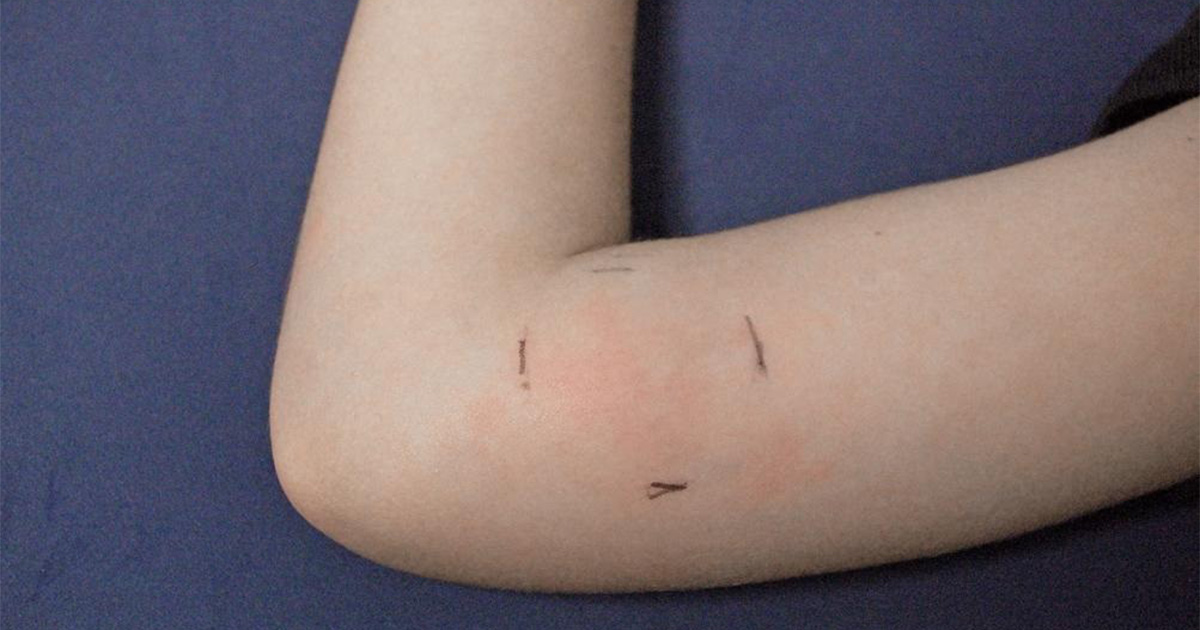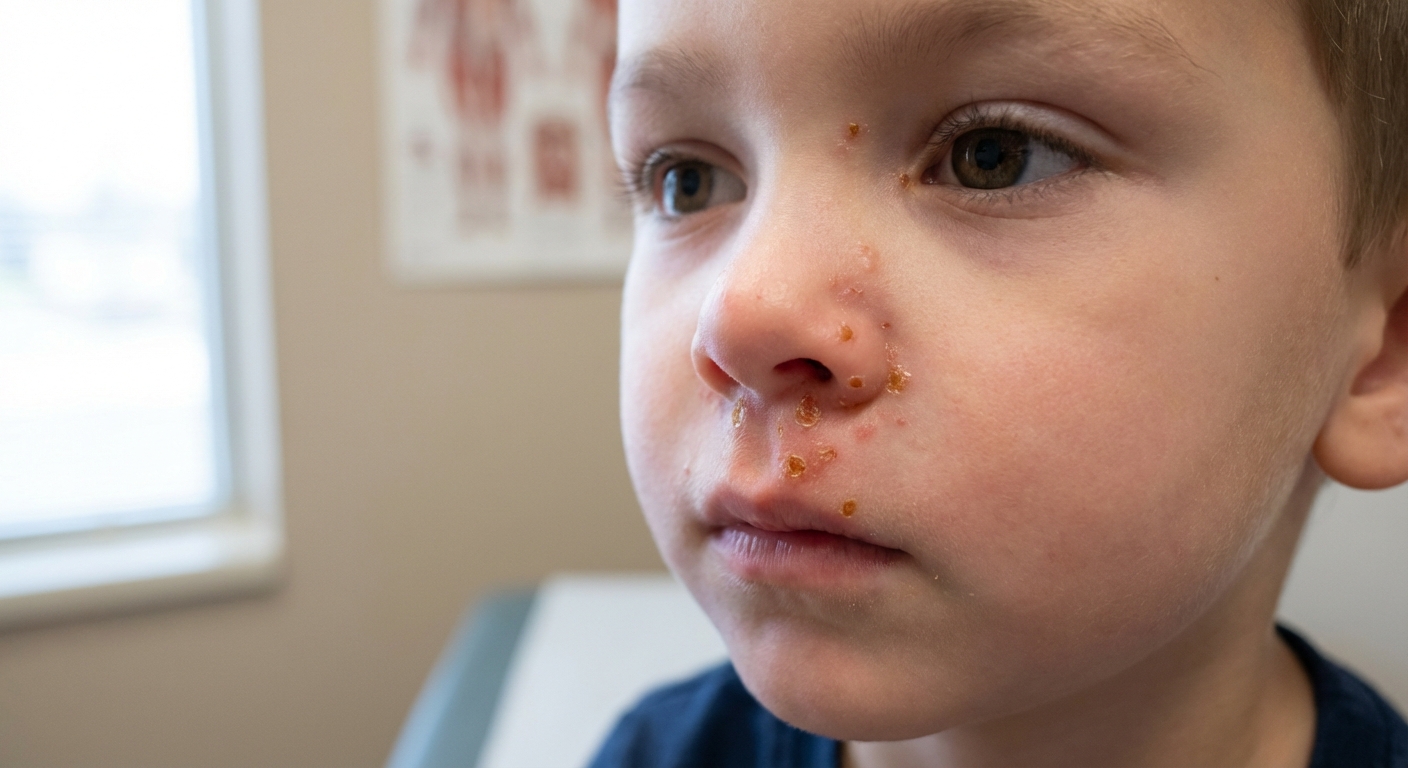
Honey-crusted sores, quick spread, and lots of parent worry. Here’s how to recognize impetigo, treat it safely, prevent reinfection, and know when it’s okay ...
Ecthyma in Kids: Deeper Sores Than Ordinary Impetigo

Sarah Mitchell
Sarah Mitchell is a Registered Pediatric Nurse and a mother of three who has spent over a decade helping families navigate the beautiful, chaotic early years of childhood. She combines evidence-based medical knowledge with real-world parenting experience to offer practical, compassionate advice. At Awesome Parent, Sarah's mission is to help exhausted parents find solutions, trust their instincts, and finally get some sleep.
I’ll never forget a mom who came into triage holding her preschooler’s leg out like it was made of glass. “It started like impetigo,” she told me, “but then it got… deeper.” That word matters. There is a big difference between the usual superficial, honey-colored crusts of impetigo and ecthyma, which is essentially impetigo that has gone deeper into the skin and can leave a small ulcer.
If your child has a sore that looks punched out with a thick, stuck-on crust, this is one of those times I want you to skip the late-night guesswork and get an in-person exam.
What ecthyma looks like
Ecthyma is a bacterial skin infection, most often caused by Strep bacteria or Staph bacteria. Unlike regular impetigo, it extends deeper into the skin and creates an ulcer under an adherent crust.
Common parent descriptions I hear
- “A crater” or “punched-out” sore
- A thick crust that looks yellow-brown or gray and is more firmly attached than typical impetigo crust
- When the crust lifts off (or falls off), the skin underneath looks like a shallow ulcer rather than a simple rash
- A red rim around the sore, sometimes tender
- Often on the legs, especially shins, but can occur elsewhere
Kids can have one lesion or several. Some are itchy, some hurt, and some kids barely notice them until a parent sees them during bath time.
Ecthyma vs. impetigo
Parents are often told impetigo is the “honey-colored crust” rash. That’s true, but it leaves out the key detail: classic impetigo is usually superficial.
Impetigo often looks like
- Small blisters or sores that break open
- Golden or honey-colored crust on the surface
- Often around the nose and mouth, sometimes on arms or legs
- More “spreadable” looking patches on the top layer of skin
Ecthyma often looks like
- A sore that looks deeper from the start, or becomes deeper over days
- A thicker, tougher, stuck-on crust
- A visible ulcer under the crust
- More common on the lower body, especially legs
If you’re staring at it thinking, “This is not just a crust on the surface,” trust that instinct.
Ecthyma vs. cellulitis
This is the comparison that causes the most anxiety, and I get it. Both are bacterial skin infections, and both deserve attention. The pattern is usually what helps clinicians tell them apart.
Cellulitis often looks like
- A larger area of redness that seems to spread
- Warmth and swelling of the skin
- Tenderness or pain that can be out of proportion to what you see
- The skin may look shiny or tight
- Often no central crusted sore, though there may be a small starting point (like a bug bite or scratch)
Ecthyma often looks like
- A more defined sore
- A thick crust with a central ulcer underneath
- Redness is often around the lesion, but the “main event” is that punched-out spot
Important note: ecthyma can have surrounding inflammation, and cellulitis can start from a small break in the skin. If your child’s redness is rapidly expanding, very painful, or they have fever, that’s a reason to be seen urgently.
Why an in-person exam matters
I’m a big fan of telehealth when it’s appropriate. Ecthyma is one of the times it often is not.
Here’s why an in-person visit matters:
- Depth is hard to judge on camera. Clinicians need to see if there is true ulceration and how extensive it is.
- It can mimic other infections. Boils, insect bite reactions, herpes infections, eczema with infection, and more can look similar early on.
- It is often treated with oral antibiotics. Some kids also need topical treatment and specific soak or crust care, depending on what the clinician sees. (I’m not giving doses here, because dosing depends on age, weight, allergy history, and local resistance patterns.)
- A culture might be needed. If your child has recurrent infections, poor response to treatment, or risk factors for resistant bacteria, the clinician may swab the lesion.
- Scarring risk. Because ecthyma ulcerates, it has a higher chance of leaving a mark than classic impetigo. Early, appropriate treatment helps.
What you can do at home
You do not need to “dig” the crust off, but gentle care can help reduce discomfort and limit spread while you wait to be seen.
Safe home steps
- Wash hands before and after touching the area.
- Gently cleanse once or twice a day with mild soap and water. Pat dry.
- Warm compress for 10 to 15 minutes can soften crusting and ease tenderness. Use a clean cloth each time.
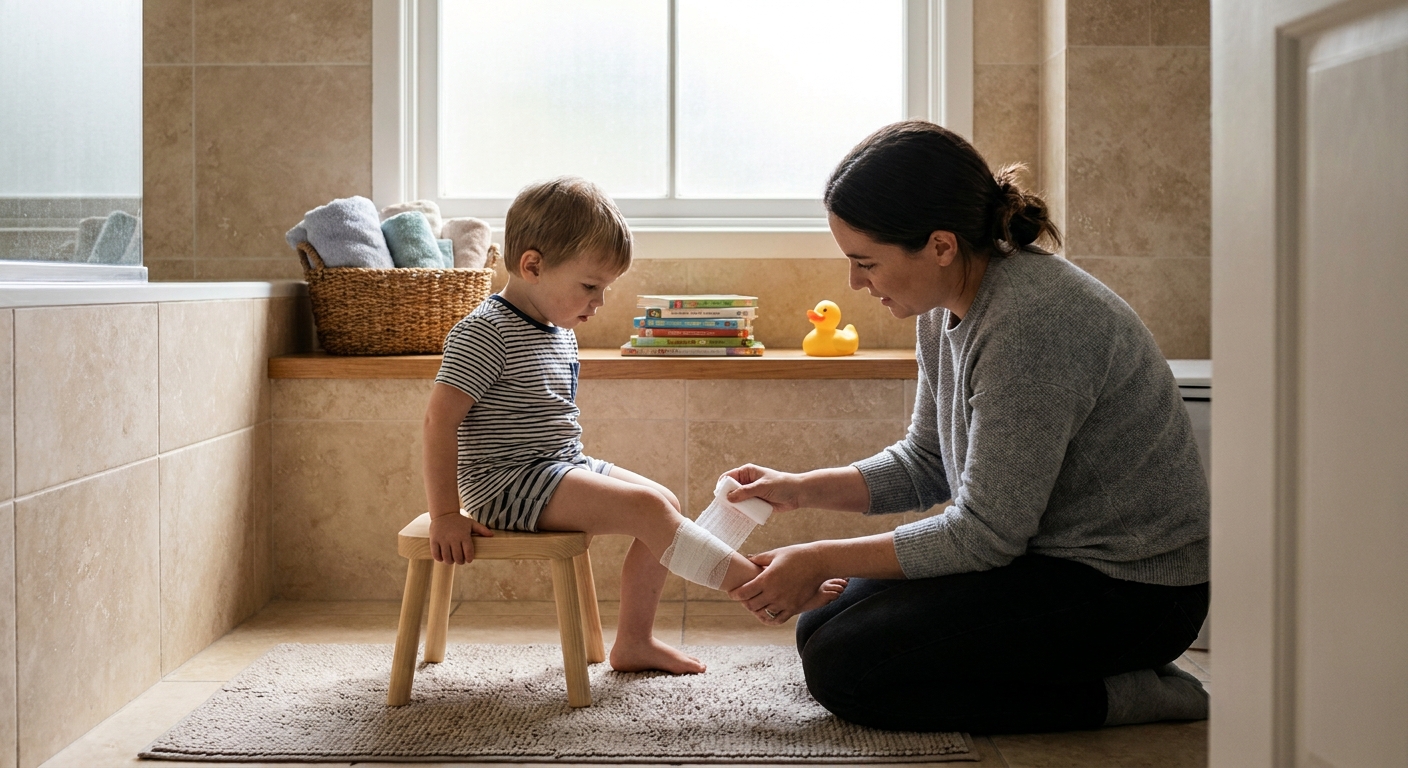
- Cover it with a nonstick dressing if it is weeping, if your child picks at it, or if it is in a spot that rubs on clothing.
- Trim nails short to reduce skin damage from scratching.
- Do not share towels, washcloths, razors, or clothing that touches the sore.
- Launder towels and bedding with regular detergent. Hot water can be helpful if available, then dry thoroughly.
Avoid these common “helpful” mistakes
- No harsh cleaners like hydrogen peroxide or rubbing alcohol on open sores. They can irritate tissue and are not recommended for routine open-sore care.
- No picking or scraping the crust. If it comes off with gentle soaking, fine. Forcing it off can worsen the ulcer.
- No leftover antibiotics from a previous illness. Wrong medication or incomplete courses can make things harder.
When to seek urgent care
Ecthyma is not usually an ER emergency, but there are situations where I want your threshold to be lower, especially for infants, facial lesions, or medically complex kids.
- Fever, chills, or your child seems notably unwell
- Rapidly spreading redness, swelling, or increasing pain
- Sores near the eye or on the face with swelling
- Your child is immunocompromised (for example, on chemotherapy or high-dose steroids)
- Red streaking moving up the limb
- The lesion is very large, there are many lesions, or it is worsening quickly
- Signs of dehydration or your child cannot keep fluids down
If you are ever on the fence, it’s appropriate to call your pediatrician’s nurse line. This is exactly the kind of question triage nurses are here for.
What to expect at the visit
Most visits for suspected ecthyma are straightforward and focused.
- A clinician will look closely at the lesion and surrounding skin, and check for swollen lymph nodes.
- They may ask about recent impetigo, eczema, insect bites, scratching, sports contact, crowding, and similar infections in the household.
- They may clean the area and decide whether a culture is helpful, including whether local patterns raise concern for resistant bacteria.
- Treatment may involve topical and/or oral antibiotics depending on depth, number of lesions, location, and your child’s overall health. (No doses here, on purpose.)
- You will get guidance on wound care and how long your child should stay home from school or daycare, if applicable.
How ecthyma happens
Ecthyma often starts when bacteria enter through a tiny break in the skin, then the infection extends deeper. Common “entry points” in kids include:
- Scratches from nails or itchy eczema
- Bug bites
- Scrapes on knees and shins
- Skin irritated by friction, sweating, or tight sports gear
Lowering the odds
- Clean and cover fresh scrapes for the first day or two, especially on shins and knees.
- For kids with eczema, focus on moisturizing and itch control to reduce scratching.
- Shower after sports when possible, and do not re-wear sweaty uniforms without washing.
- Do not share towels or sports equipment that touches skin, when you can avoid it.
FAQ
Is ecthyma contagious?
Yes. Like impetigo, ecthyma can spread through direct contact with the sores or through shared items like towels. Covering lesions and good hand hygiene help a lot.
When is it less contagious?
Many schools and daycares use a rule like “after 24 hours of effective antibiotics” and when lesions can be covered, but policies vary. Your clinician and your school nurse can help you follow the right standard for your setting.
Can ecthyma heal on its own?
Sometimes it can improve slowly, but because it is deeper and can ulcerate, waiting it out is not my favorite plan. It often needs prescription treatment to prevent worsening, spreading, or scarring.
Will it leave a scar?
Ecthyma is more likely to leave a mark than superficial impetigo because it involves an ulcer. Getting evaluated early and following wound care instructions lowers the risk.
Is ecthyma the same thing as MRSA?
No. MRSA is a type of bacteria that can cause certain skin infections. Ecthyma describes the pattern of infection in the skin. Your clinician may consider resistant bacteria depending on local patterns and your child’s history.
Can I send my child to school or daycare?
It depends on whether the sores can be covered and whether your child has started treatment. Many programs have rules similar to impetigo policies. Your clinician can give the best, situation-specific recommendation.
The bottom line
If your child’s “impetigo” looks like a punched-out sore with a thick, stuck-on crust, it may be ecthyma, which is deeper than typical impetigo and deserves an in-person evaluation. You do not need to panic, but you also should not try to manage this one with internet guesses alone. Clean it gently, cover it, avoid sharing towels, and get your child checked so treatment can match what’s really going on.
Sarah Mitchell
Sarah Mitchell is a Registered Pediatric Nurse and a mother of three who has spent over a decade helping families navigate the beautiful, chaotic early years of childhood. She combines evidence-based medical knowledge with real-world parenting experience to offer practical, compassionate advice. At Awesome Parent, Sarah's mission is to help exhausted parents find solutions, trust their instincts, and finally get some sleep.