White patches on your baby’s tongue or cheeks? Here’s how to tell thrush from milk residue, what causes it, how it can spread during breastfeeding, and h...
Epstein Pearls vs Thrush in Newborns

Sarah Mitchell
Sarah Mitchell is a Registered Pediatric Nurse and a mother of three who has spent over a decade helping families navigate the beautiful, chaotic early years of childhood. She combines evidence-based medical knowledge with real-world parenting experience to offer practical, compassionate advice. At Awesome Parent, Sarah's mission is to help exhausted parents find solutions, trust their instincts, and finally get some sleep.
Finding white spots in your newborn’s mouth can send even the calmest parent into late-night flashlight mode. The good news is that a very common cause is completely harmless: Epstein pearls (and their close cousins, Bohn’s nodules, also called gingival cysts or dental lamina cysts). Another common possibility is oral thrush, which is treatable but can be uncomfortable and sometimes needs medication.
Let’s walk through what to look for, what (gently) to try at home, and when it is time to call your pediatrician.
Quick difference: pearls vs thrush
If you only have 20 seconds, here’s the simplest way to think about it.
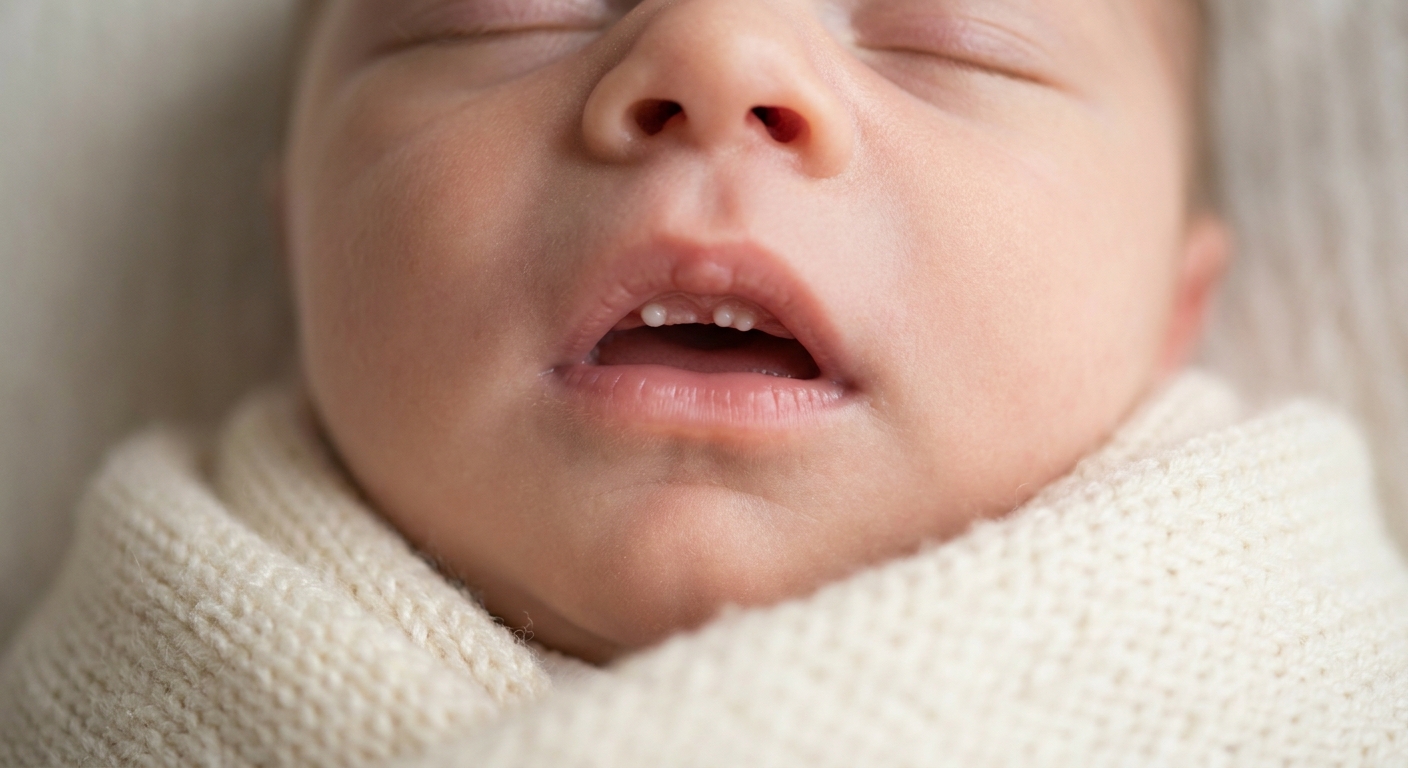
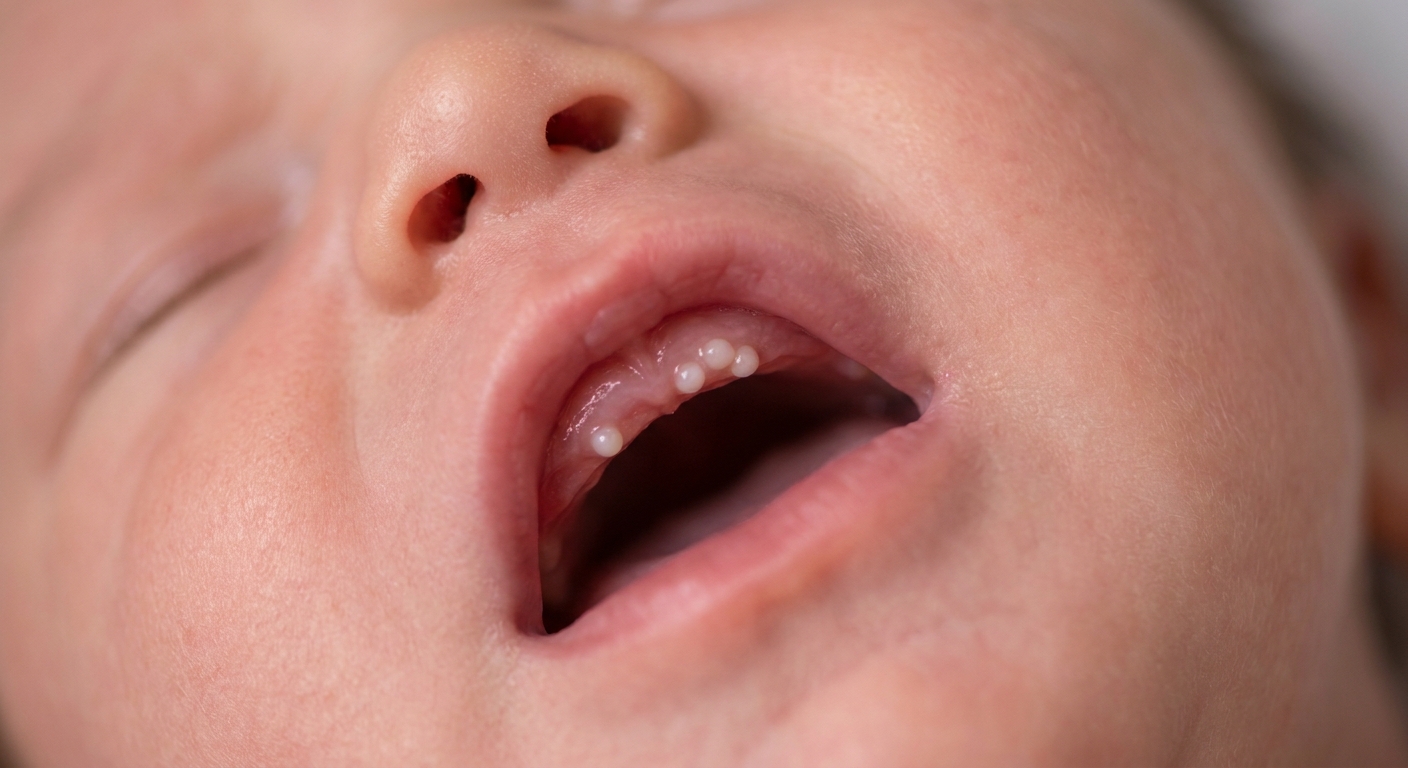
- Epstein pearls (and Bohn’s nodules) look like tiny, firm, white or yellow-white bumps (like little pearls). They usually show up on the gums or the roof of the mouth. They do not wipe off, and babies are usually totally unbothered.
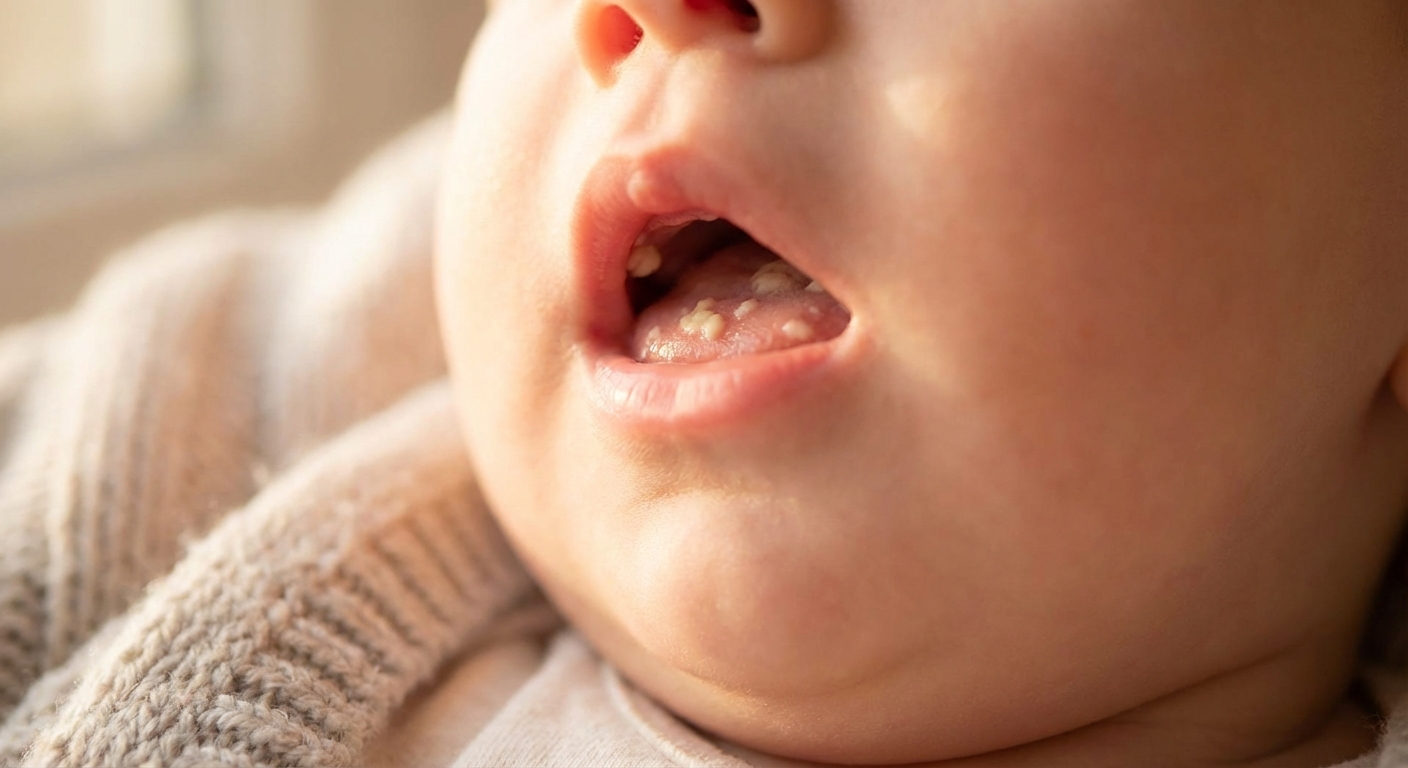
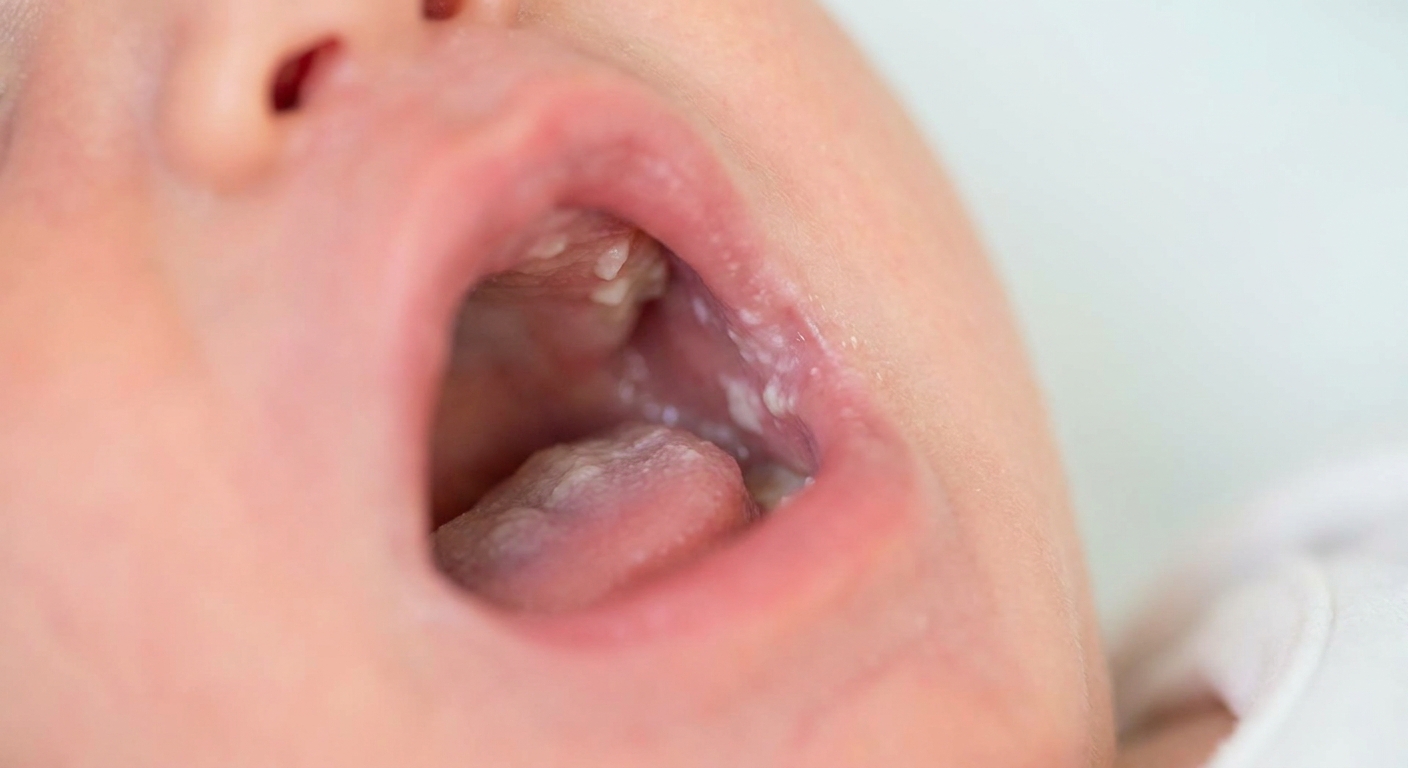
- Thrush looks like white, creamy patches on the tongue, inner cheeks, lips, or palate. It may look like milk, but it tends to stick and typically does not wipe away easily. If you try to wipe it, the tissue underneath can look red or irritated and may even bleed a little.
What Epstein pearls look like
Appearance
Epstein pearls are small cysts filled with keratin (the same protein found in skin and nails). They typically look like:
- Tiny white or yellow-white dots
- 1 to 3 mm bumps, often multiple
- Firm-looking, “pearl” or “seed” shaped
- Not fuzzy and not spread in thick patches
Where they show up
You’ll most often see them in one of these spots:
- Roof of the mouth (hard palate), often near the middle
- Upper gumline (or sometimes lower gums)
What about Bohn’s nodules? They are another type of common, benign newborn mouth cyst. They can look nearly identical to Epstein pearls, but are often described on the gums or along the sides of the palate. Like Epstein pearls, they resolve on their own.
Are Epstein pearls harmful?
No. Epstein pearls (and Bohn’s nodules) are benign, extremely common, and they go away on their own. Most resolve within a few weeks, and many are gone by 1 to 3 months.
They are not an infection. They are not from poor hygiene. And they are not a sign you are doing something wrong.
What to do (and not do)
- Do leave them alone.
- Do not rub, scrape, or try to “pop” them. This can irritate delicate tissue and raise infection risk.
- Do mention them at your next checkup if you want reassurance (especially if your clinician uses a different name like “gingival cysts” or “dental lamina cysts”).
What thrush looks like
Oral thrush is a yeast infection in the mouth, most commonly caused by Candida. Newborns are prone to it because their immune systems are still learning the ropes.
Appearance
Thrush often looks like:
- White, creamy patches (like cottage cheese)
- Commonly on the inner cheeks and tongue
- May spread to the lips or roof of mouth
- Tissue underneath can look red, raw, or sore
Does it wipe off?
This is where parents get stuck because milk residue can also look white, especially right after a feed. Here’s a gentle way to think about it:
- Milk residue tends to wipe away fairly easily with a damp cloth and usually sits mostly on the tongue.
- Thrush tends to cling, especially on the cheeks and lips. It may not come off with gentle wiping, and it can leave red irritated spots.
Please do not scrub. If you are testing, use one gentle swipe only. Mild thrush can sometimes partially wipe away, and scrubbing can irritate the tissue and make things look worse. If you are unsure, it is perfectly reasonable to have your pediatrician take a look.
Other signs thrush may be bothering your baby
- Fussiness during feeds or pulling off the breast or bottle
- Clicking sounds with nursing due to discomfort
- Less interest in feeding
- Cracking at the corners of the mouth
If you are breastfeeding, you might notice nipple pain, itching, shiny or flaky skin on the areola, or pain that feels “deep” during or after feeds. Some clinicians believe yeast can pass back and forth, so baby and parent may both need treatment. Because nipple and breast pain has multiple causes, it helps to get an evaluation so you are treating the right problem.
When to call the pediatrician
Call your pediatrician (or lactation consultant plus pediatrician) if:
- The white patches look like thrush and do not wipe away easily with gentle wiping
- Your baby seems uncomfortable, especially during feeds
- You see bleeding, sores, or significant redness in the mouth
- Your baby has fewer wet diapers, poor intake, or seems unusually sleepy
- Symptoms last more than a few days or are spreading
Go now if your baby is very young or seems ill
- Fever (especially in young infants, follow your clinician’s age-specific guidance)
- Refusing feeds or signs of dehydration (very few wet diapers, dry mouth, no tears, sunken soft spot)
- Lethargy, trouble breathing, or a rapidly worsening rash
Thrush is usually straightforward to treat, often with an antifungal medicine prescribed by your pediatrician (for example, nystatin is commonly used, and some cases need a different medicine). It can take a few days to see improvement. The key is getting the diagnosis right so you are not treating harmless pearls or milk residue with medication that is not needed.
Comfort and hygiene tips
If you suspect thrush or your baby seems a little mouth-sore, comfort measures can help while you wait to be seen.
Gentle mouth care
- Use a soft, damp cloth to wipe the gums once daily if there is visible milk buildup. Keep it gentle.
- Avoid using mouthwashes, honey, or “natural antifungal” products in a newborn’s mouth unless your pediatrician tells you to. Honey should never be given to babies under 12 months because it can contain spores that cause infant botulism, a rare but serious illness.
Feeding comfort
- Offer smaller, more frequent feeds if baby is fussy at the breast or bottle.
- Keep nipples and bottle nipples clean and dry between feeds.
- If breastfeeding is painful, consider a short check-in with a lactation consultant to rule out latch issues, which can mimic or worsen nipple pain.
Pacifiers and bottle nipples
- Wash pacifiers and bottle nipples with hot, soapy water daily. A dishwasher is fine if the items are dishwasher-safe.
- Replace worn or cracked nipples and pacifiers since tiny crevices can harbor yeast.
- If your pediatrician confirms thrush, follow their cleaning or sterilizing instructions during treatment. Some clinicians recommend extra cleaning steps for nipples and pacifiers while symptoms are active.
- If thrush is confirmed, ask whether you should temporarily limit pacifier use if baby is comfort-sucking a lot, since friction can irritate a sore mouth.
Common questions I hear at 3 AM
Can Epstein pearls turn into thrush?
No. Epstein pearls are benign cysts and do not “become” thrush. Thrush is a yeast overgrowth infection.
My baby has white on the tongue only. Is that thrush?
Often it is just milk residue, especially if it is most noticeable right after a feed, wipes away easily, and there are no patches on the cheeks or lips. Thrush commonly shows up on the inner cheeks and may look more like stuck-on creamy plaques.
Do Epstein pearls cause pain?
Typically no. Most babies with Epstein pearls feed normally and do not seem bothered.
The bottom line
Epstein pearls (and similar benign cysts like Bohn’s nodules) are tiny, pearl-like bumps on the gums or roof of the mouth and are harmless and self-resolving. Thrush tends to look like stuck-on creamy white patches, often on the cheeks and tongue, and may cause feeding discomfort or redness.
If you are unsure, trust your instincts and call your pediatrician. You deserve a calm, clear answer, and your baby deserves a comfortable mouth for all that very important newborn work: eating and sleeping.