Worried your baby always looks one way or tilts their head? Here’s how to recognize torticollis, what’s normal, what’s not, and the safest next steps, ...
Erb’s Palsy (Brachial Plexus Birth Injury): What to Watch and Healing Timelines

Sarah Mitchell
Sarah Mitchell is a Registered Pediatric Nurse and a mother of three who has spent over a decade helping families navigate the beautiful, chaotic early years of childhood. She combines evidence-based medical knowledge with real-world parenting experience to offer practical, compassionate advice. At Awesome Parent, Sarah's mission is to help exhausted parents find solutions, trust their instincts, and finally get some sleep.
If your newborn is holding one arm oddly, not moving it much, or you keep hearing phrases like brachial plexus injury or Erb’s palsy after a difficult birth, your brain can go straight to worst-case scenarios. Take a breath. Many babies with brachial plexus birth injuries recover well, especially with early follow-up and gentle, consistent care at home.
As a pediatric nurse and a mom who has been through my share of “Why is my baby doing that?” moments, here is what I want you to know, what to watch for, and the typical recovery windows that guide doctors and physical therapists.
What is the brachial plexus, and how can birth affect it?
The brachial plexus is a bundle of nerves that starts in the neck and travels to the shoulder, arm, and hand. These nerves control movement and sensation.
During delivery, especially if there is shoulder dystocia (when a baby’s shoulder becomes briefly impacted behind the pubic bone, also called the pubic symphysis), the neck and shoulder area can be stretched. That stretch can irritate or injure the brachial plexus nerves. This is called a brachial plexus birth injury (BPBI).
Important nuance: “Injury” can mean a range, from a temporary nerve “stunning” that heals on its own to a more significant injury that needs specialty care. (Clinicians may describe this spectrum as neurapraxia, axon injury, or in rare cases nerve root avulsion.) Your baby’s early movement patterns help your team estimate where on that spectrum your child may fall.
Common patterns: upper vs lower involvement
Most brachial plexus birth injuries after shoulder dystocia involve the upper nerves (often described as C5 to C6). That classic pattern is called Erb’s palsy .
Erb’s palsy (upper plexus, most common)
- Shoulder and elbow are most affected: baby may not lift the arm well at the shoulder or bend the elbow.
- Hand can look fairly normal because the lower nerves that control the wrist and fingers are often less affected.
- Arm may rest close to the body, turned inward, with the elbow straighter than usual.
Lower plexus involvement (less common)
When the lower nerves (often described as C8 to T1) are affected, the hand and fingers may be weaker. Some babies have a mixed pattern.
- Wrist and finger movement may be limited.
- Grip may be weaker on the affected side.
- In some cases, the baby may have shoulder motion but less hand function, depending on which nerves are involved.
Rare but important: If you notice a drooping eyelid or a smaller pupil on the same side as the weak arm (often noticed in certain lighting or in photos), call your pediatrician promptly. This can be a sign called Horner’s syndrome and can suggest a more extensive injury.
Why this matters: your pediatrician and physical therapist use these patterns to decide how urgently your baby needs specialty referral and which milestones are most meaningful to track early on.
The “floppy arm” question
Parents often describe a “floppy” arm or an arm that seems to lag behind the other. One of the most helpful at-home observations is: what is the hand doing?
If the arm is weak but the hand and fingers move
- This often fits an upper plexus pattern like Erb’s palsy.
- You might notice baby can wiggle fingers, grasp your finger, or bring the hand toward the mouth a bit, even if the shoulder and elbow look “stuck.”
If the hand is also weak or very still
- This can suggest more extensive nerve involvement.
- It does not automatically mean “permanent,” but it is a reason to make sure follow-up is prompt and thorough.
Another clue parents notice: the affected arm may not participate in the newborn startle reflex the same way as the other arm.
One more important note: a baby may also hold an arm still because of pain from a clavicle (collarbone) fracture or upper arm fracture from birth. Those injuries can look similar in the first days. Your clinician may examine for tenderness or order an X-ray if needed.
How to use this section without spiraling: observations like “the hand moves” help you describe what you see at your next checkup. Red flags that need faster evaluation are listed in the next section.

Call urgently: signs to take seriously
Most babies with suspected brachial plexus injury are evaluated soon after birth. Still, I want you to have clear “call now” triggers (or seek urgent care if you cannot reach your pediatrician promptly).
- Baby seems in significant pain when the arm is moved or touched.
- Swelling, bruising, or an obvious deformity in the shoulder, collarbone, or upper arm.
- The hand looks pale, bluish, or feels cooler than the other hand.
- No finger movement on the affected side, especially if it is new or worsening.
- Drooping eyelid or unequal pupil size on the affected side (possible Horner’s syndrome).
- Breathing concerns (fast breathing, persistent retractions, or unusual belly and chest movement). Rarely, a more extensive injury can affect the phrenic nerve and the diaphragm, and your baby needs prompt evaluation.
If you are unsure whether something is urgent, call. You are not expected to sort this out alone at home.
Early follow-up: pediatrics, PT, and sometimes a specialty team
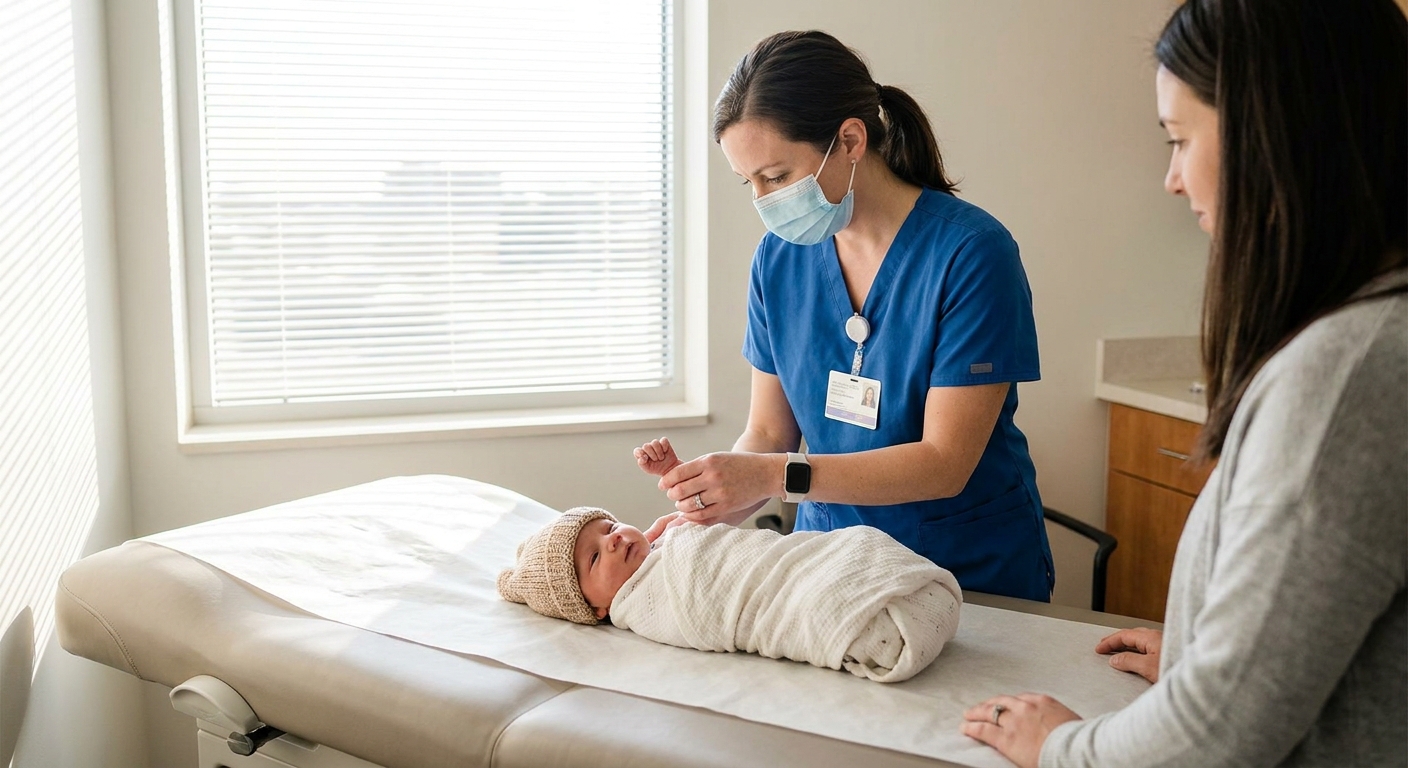
In the first weeks, the goal is to protect the shoulder, prevent stiffness, and track return of function.
What follow-up often looks like
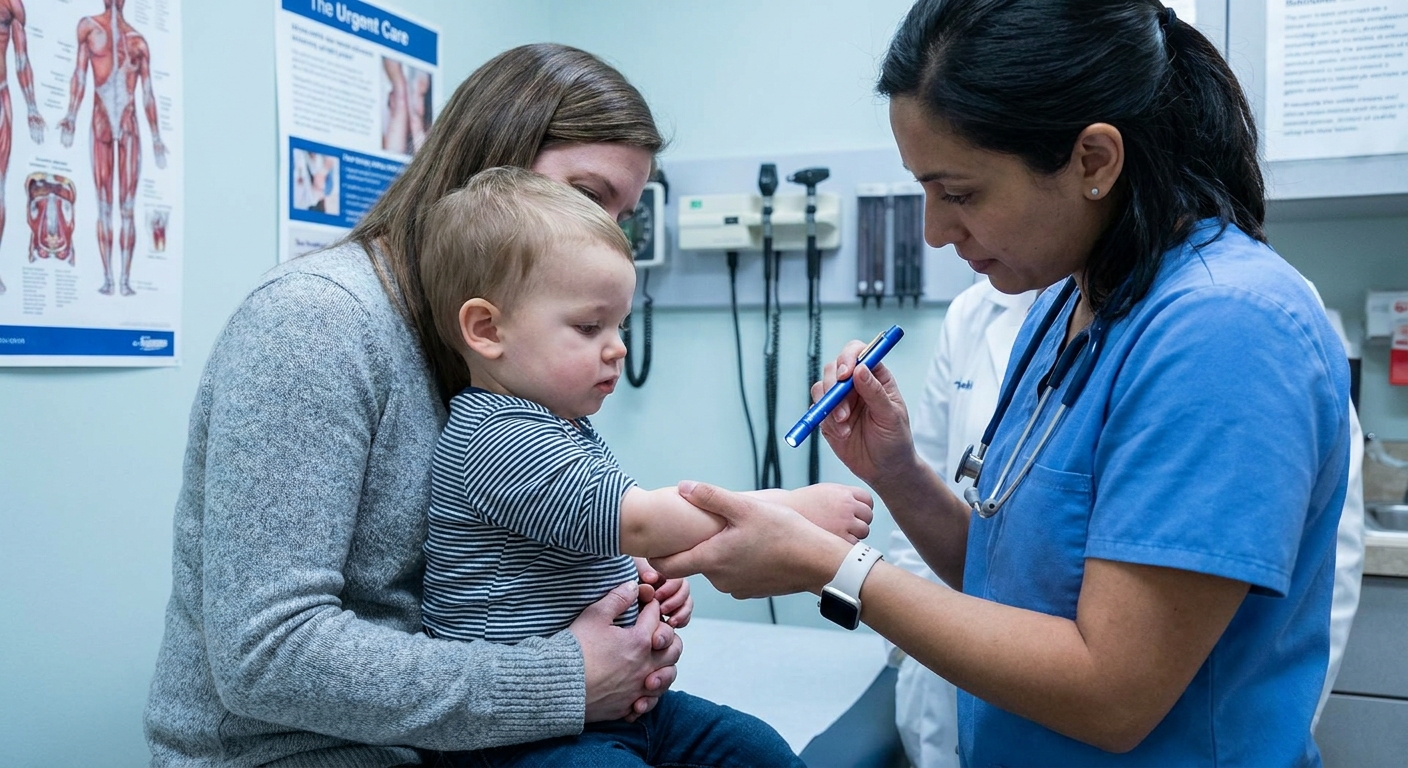
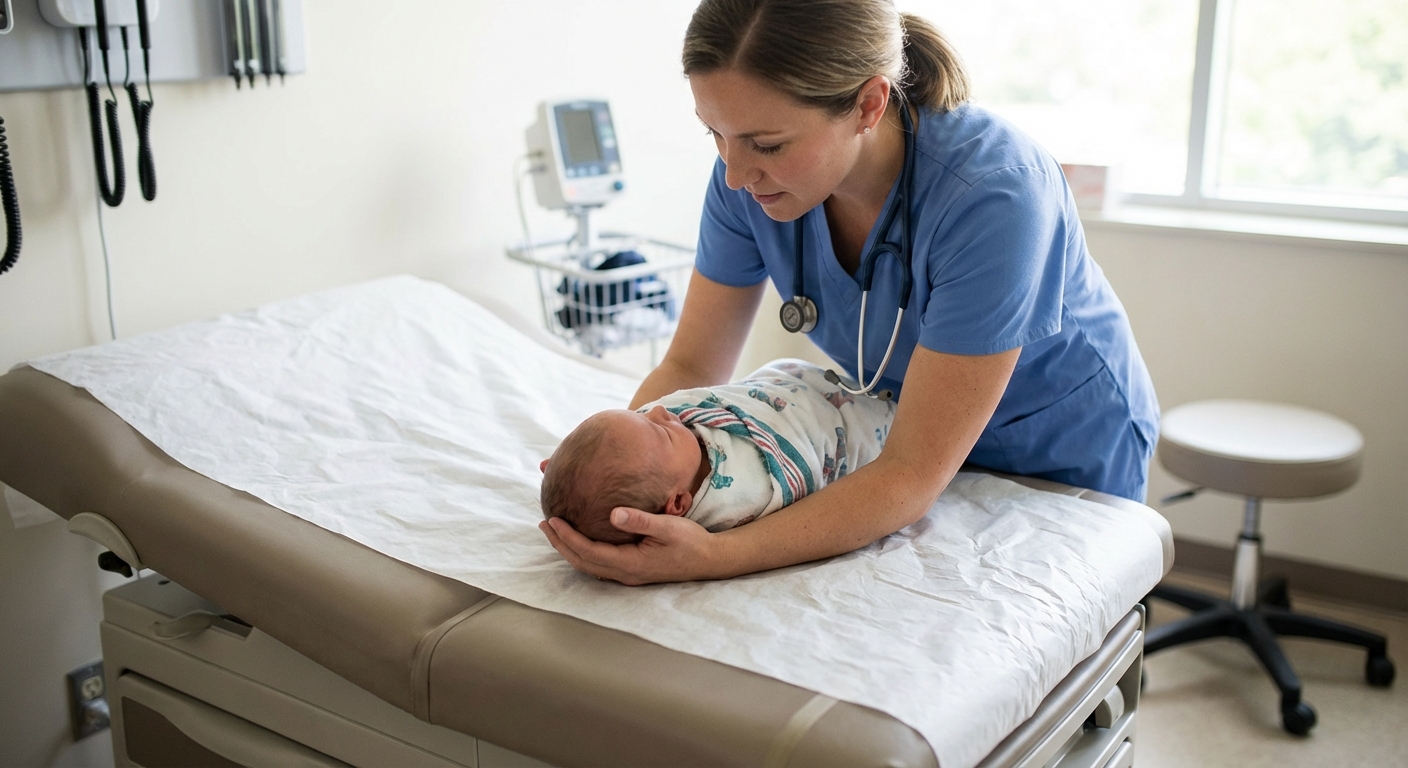
- Newborn and early weight checks: your pediatrician watches movement, checks reflexes, and documents progress.
- Physical therapy referral: often within the first few weeks, sometimes sooner depending on severity.
- Specialty referral: if recovery is slow or the pattern is concerning, your pediatrician may refer you to a brachial plexus clinic (often pediatric orthopedics, neurology, and a multidisciplinary team).
What testing might look like (and why it varies)
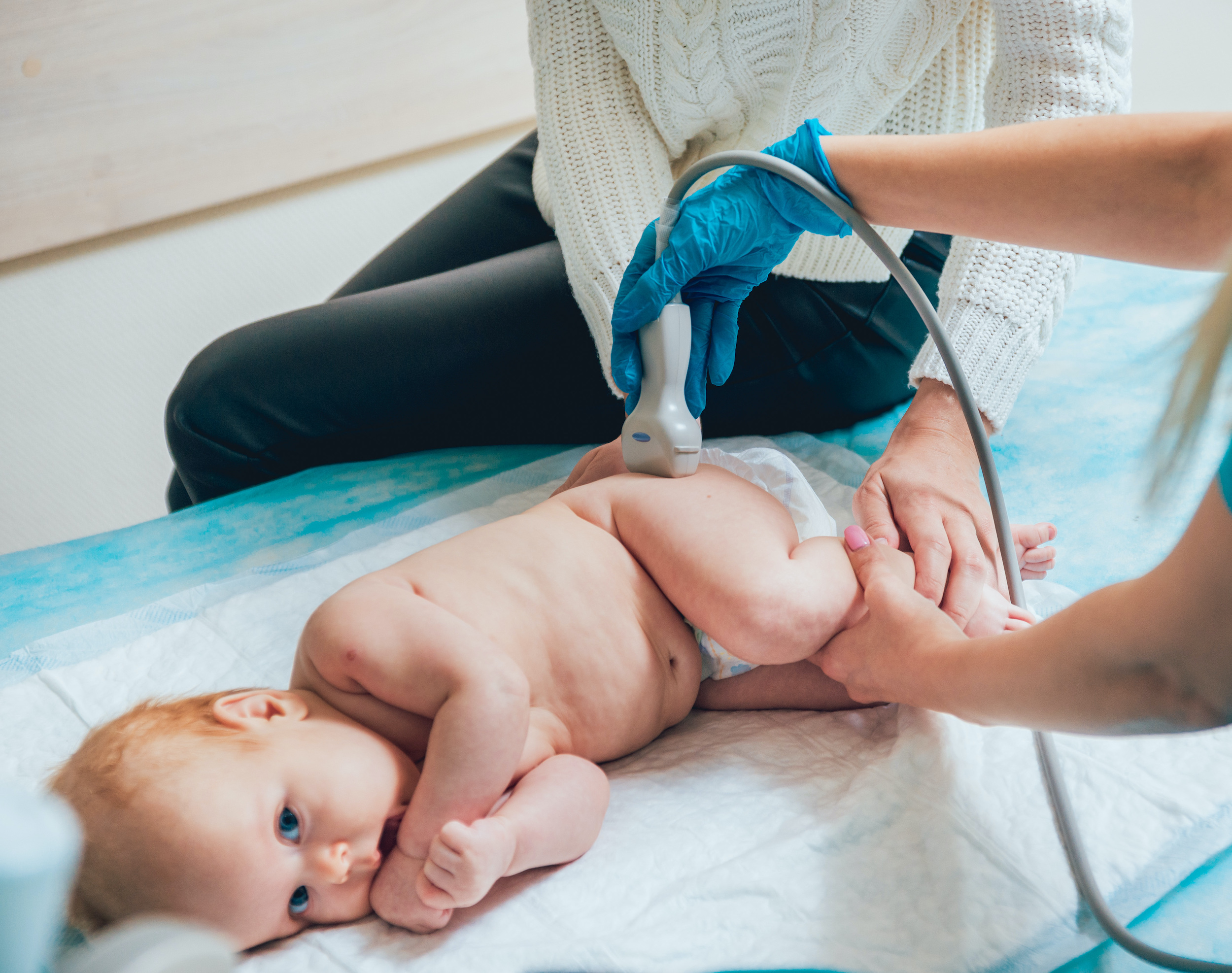
Many cases are diagnosed and followed based on the physical exam alone. In select situations, specialists may use imaging (like ultrasound or MRI) or nerve testing (like EMG) to help guide decisions. If your team does not order tests right away, it does not mean they are dismissing your concerns. It often means the early plan is careful follow-up plus therapy.
Why early PT matters (even when recovery is expected)
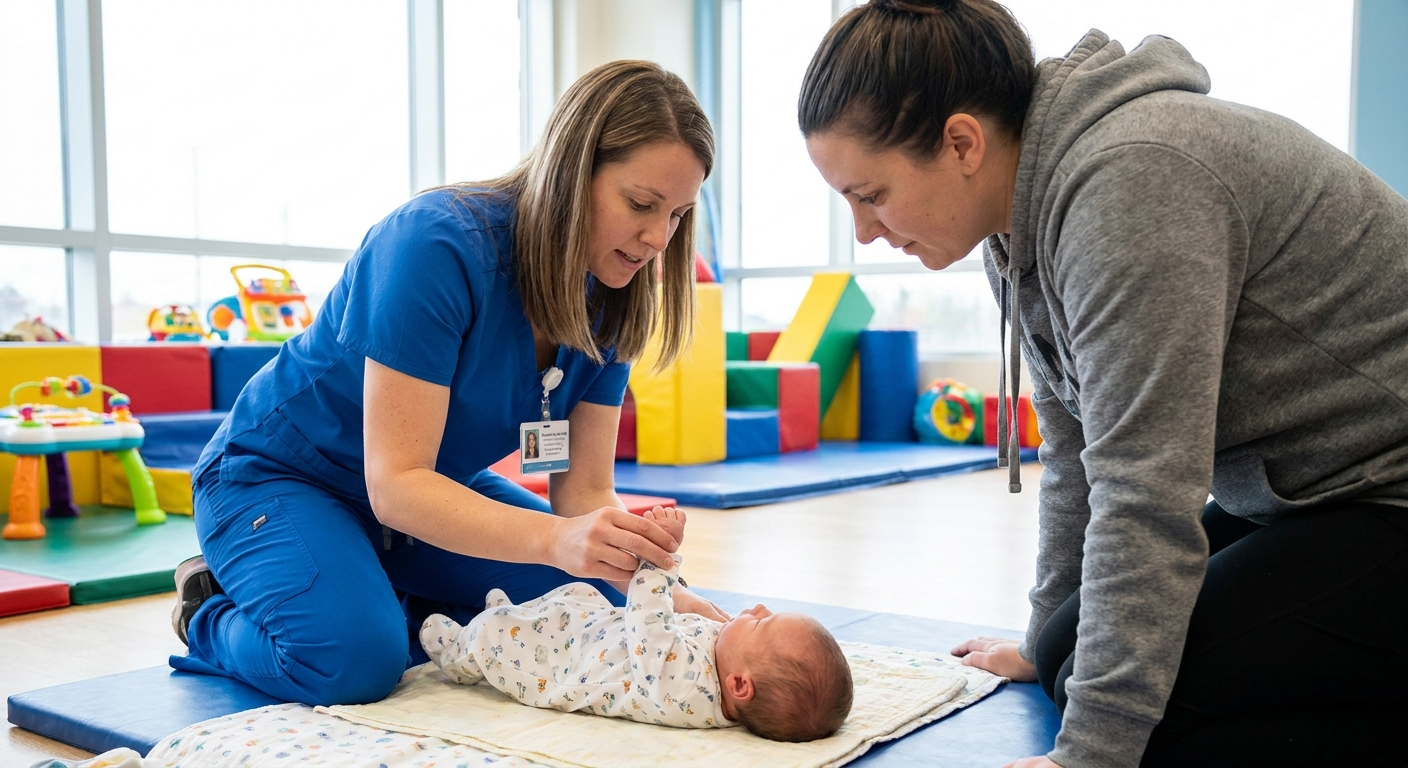
Early therapy is not about “pushing” a newborn. It is about:
- Keeping joints flexible so the arm can move normally when the nerve wakes back up.
- Teaching you safe positions for feeding, carrying, and sleep.
- Giving you a simple home routine you can actually do while exhausted.
Safe positioning at home
In the early days, think: support, comfort, and symmetry.
Do
- Support the affected arm during feeding and carrying, so it is not dangling.
- Use gentle midline positioning: bring baby’s hands toward the center of the body during cuddles and play.
- Alternate holding sides so baby experiences looking and turning both directions (this also helps overall comfort and head shaping) .
- Dress the affected arm first and undress it last to avoid tugging.
Do not
- Do not pull on the arm to lift baby.
- Do not force the arm overhead or into positions your physical therapist has not shown you.
- Do not “stretch hard”. Newborn tissue is delicate, and aggressive stretching can irritate the area.
If you are unsure whether a position is helpful or risky, snap a quick photo of how you hold baby for feeding or in the car seat and show it to your pediatrician or physical therapist. It is a simple way to fine-tune support.
Gentle exercises at home
Your physical therapist should tailor exercises to your baby. Always follow the plan your clinician gives you, especially if there are concerns about fractures or significant pain.
Safety caveat that matters: some babies need a brief rest period early on if there is significant pain or a suspected fracture, before starting range-of-motion work. Your clinician will tell you what is right for your baby.
1) Passive range of motion (slow and small)
This means you gently move your baby’s arm through a comfortable range, usually during calm times like after a diaper change or bath. Typical targets include:
- Shoulder: gentle outward rotation and lifting to a comfortable level.
- Elbow: bending and straightening.
- Wrist and fingers: opening and closing the hand, gentle wrist movement if needed.
2) Tummy time with smart support
Tummy time is not just for head and neck strength. It also encourages weight shift and arm activation. If your baby struggles, your physical therapist may suggest starting with:
- Short bursts (30 to 60 seconds) multiple times per day.
- Chest-to-chest tummy time on a parent.
- A small rolled towel under the chest for support, if recommended.
3) Sensory input and play
Gentle touch, massage, and bringing the affected hand to the midline during play can help your baby “map” that arm and use it more naturally as movement returns.
Real-life tip from the clinic: tie exercises to something you already do, like diaper changes. Consistency beats intensity every single time.

Recovery windows: milestones doctors watch
Nerves heal slowly. Most of the time, progress is measured in weeks to months, not days. Here are the general windows that clinicians often use to guide expectations and decisions.
First 2 to 4 weeks
- Many babies show early improvement if the injury is mild (often a stretch injury).
- Your team watches for any new movement at the shoulder, elbow, wrist, or fingers.
By 6 to 8 weeks
- Clear gains in spontaneous movement are reassuring.
- Physical therapy focuses on maintaining flexibility and encouraging symmetrical use.
By 3 months (a big checkpoint)
This is a commonly used milestone in brachial plexus follow-up because return of certain movements by this point can help predict longer-term recovery.
- Many specialty centers watch closely for active, antigravity elbow bending (biceps function) by about 3 months.
- If active elbow bending is not showing up by that point, many teams recommend urgent referral to a brachial plexus specialty clinic to discuss next steps. Exact timing and thresholds vary by center.
3 to 6 months
- Many babies continue to gain strength and control.
- Therapy shifts from mostly passive movement toward encouraging active use as baby becomes more interactive.
6 to 12 months
- Ongoing improvement can continue throughout the first year and beyond.
- Some children have near-complete recovery, while others may have residual weakness, tighter shoulder movement, or differences that need longer-term therapy.
Quick reality check: you may hear different timelines from different sources. That is because “brachial plexus injury” is an umbrella term. The recovery window depends on which nerves were affected and how severely.
What “good recovery” can look like
Many infants with Erb’s palsy improve significantly, and some recover almost fully. Prognosis depends on:
- Severity of the nerve injury (stretch vs more significant disruption).
- Which nerve levels are involved (upper only vs broader involvement that includes the hand).
- How soon movement returns, especially active elbow bending.
- Consistency with therapy and home positioning.
Even in children who do not have full recovery, early physical therapy and specialty care can improve function and help prevent secondary problems like stiffness and shoulder tightness. Specialty teams also monitor for longer-term issues such as contractures and shoulder joint alignment changes.
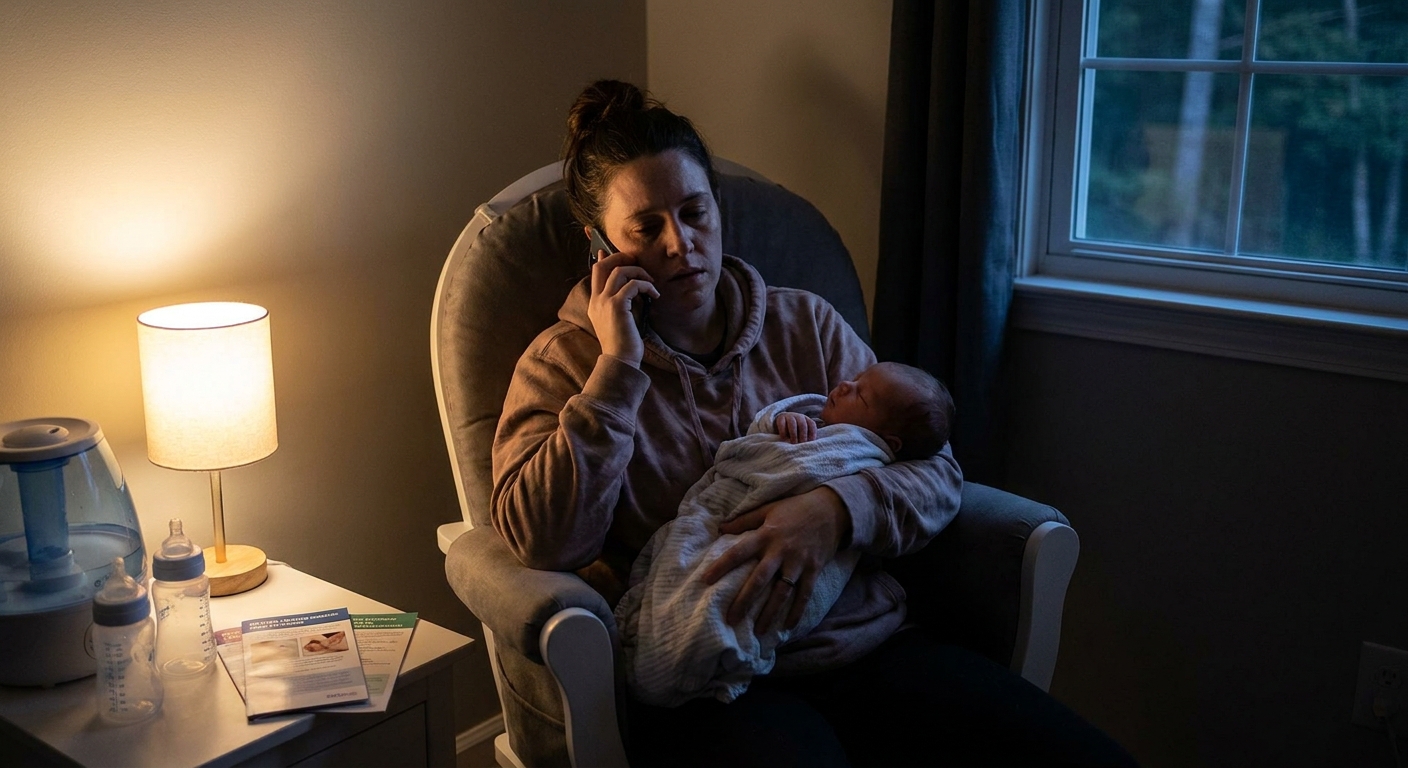
If you are staring at your baby’s tiny arm at 3 AM wondering what the future holds, please hear this: your job is not to predict the outcome. Your job is to show up to follow-ups, do the gentle exercises you are taught, and love your baby. The rest is a step-by-step process.
Questions to ask at your next visit
- Which brachial plexus pattern do you suspect: upper (Erb’s) or more extensive?
- Is there any concern for a clavicle or humerus fracture?
- When should we start physical therapy, and how often?
- Which movements should we be seeing by the next visit?
- At what point would you refer us to a brachial plexus specialty clinic?
- Can you show us how to hold, dress, and position baby safely?
- Are there any signs (like eyelid droop or breathing changes) that you want us to report right away?
Trust your gut
If something feels off, reach out. Specifically, call your pediatrician promptly if:
- Your baby’s arm movement seems to be worsening rather than slowly improving.
- Your baby seems increasingly uncomfortable with normal handling.
- You are struggling to do the exercises because you are not sure you are doing them safely.
You deserve clear answers and a plan you can follow without fear.
One last thing
It is very common for parents to replay the birth when a shoulder dystocia or birth injury is mentioned. Please remember: shoulder dystocia is an emergency that happens quickly, and it is not caused by something you did or did not do.
Focus on what helps now: early follow-up, gentle movement, safe positioning, and tracking progress over time. You are already doing the most important thing by seeking reliable information and support.
Quick note: This article is for education and reassurance. Your pediatrician and physical therapist are the best sources of guidance for your specific baby.