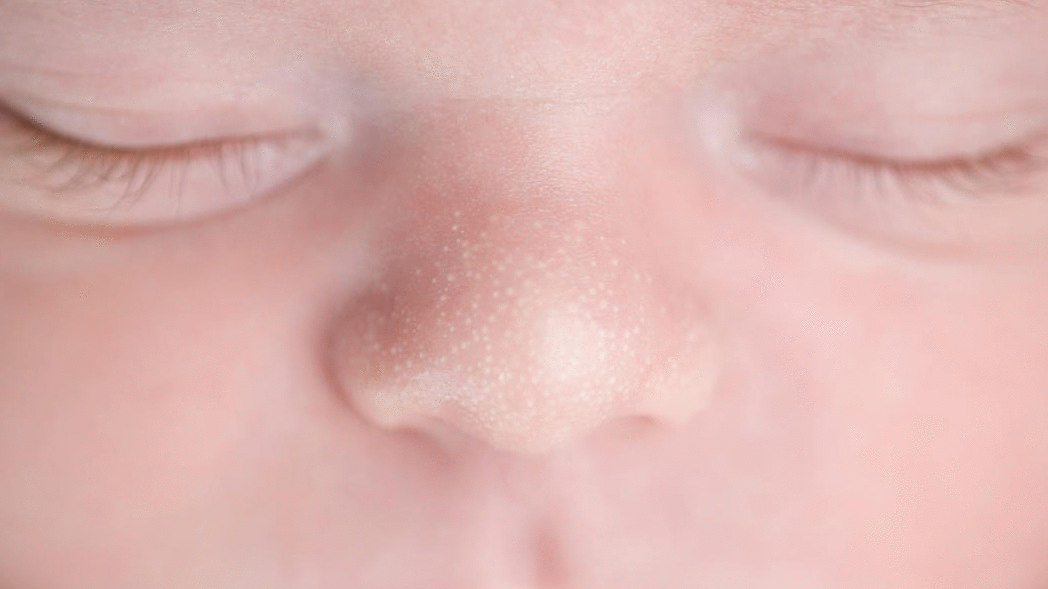
Not sure what those red bumps mean? Here’s how to identify common baby rashes, what causes them, what you can do at home, and when to call your pediatrician.
Erythema Toxicum in Newborns

Sarah Mitchell
Sarah Mitchell is a Registered Pediatric Nurse and a mother of three who has spent over a decade helping families navigate the beautiful, chaotic early years of childhood. She combines evidence-based medical knowledge with real-world parenting experience to offer practical, compassionate advice. At Awesome Parent, Sarah's mission is to help exhausted parents find solutions, trust their instincts, and finally get some sleep.
If you just unwrapped your newborn for a diaper change and saw angry-looking red spots that seem to pop up out of nowhere, take a breath. There is a very good chance you are looking at erythema toxicum, one of the most common newborn rashes. Despite the dramatic name and the way it can resemble insect bites or little welts, it is harmless and self-limited.
I used to see this constantly in clinic, and I have also done the 2 AM phone flashlight inspection on my own babies. The reassuring truth is that this rash is basically your baby’s skin saying, “Hello world,” not “Something is wrong.”
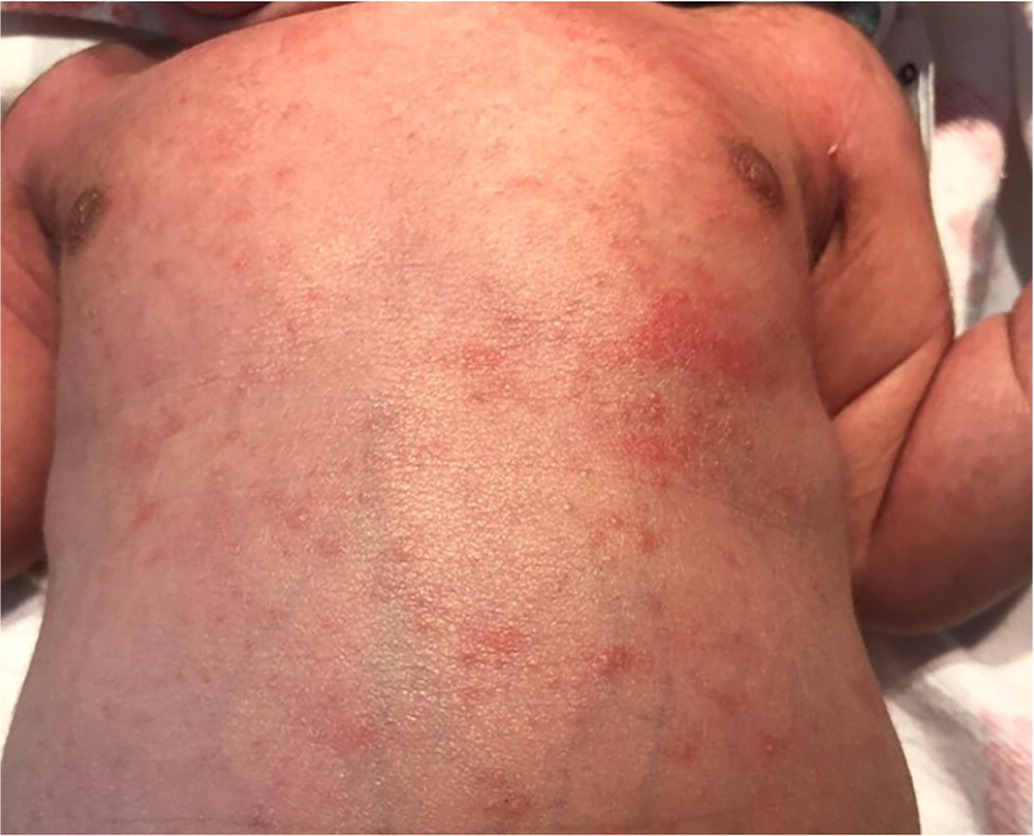
What is erythema toxicum?
Erythema toxicum (often called erythema toxicum neonatorum or just ETN) is a common, benign newborn skin eruption. It is not an infection, not an allergy, and not a sign of poor hygiene.
Think of it as a normal newborn skin transition. Your baby has been in a warm, watery environment for months, and now their skin is adjusting to air, clothing, soaps, temperature shifts, and normal bacteria on the skin.
How common is it?
Very. Depending on the study, it is seen in a large chunk of healthy full-term newborns. If your baby has it, they are in excellent company.
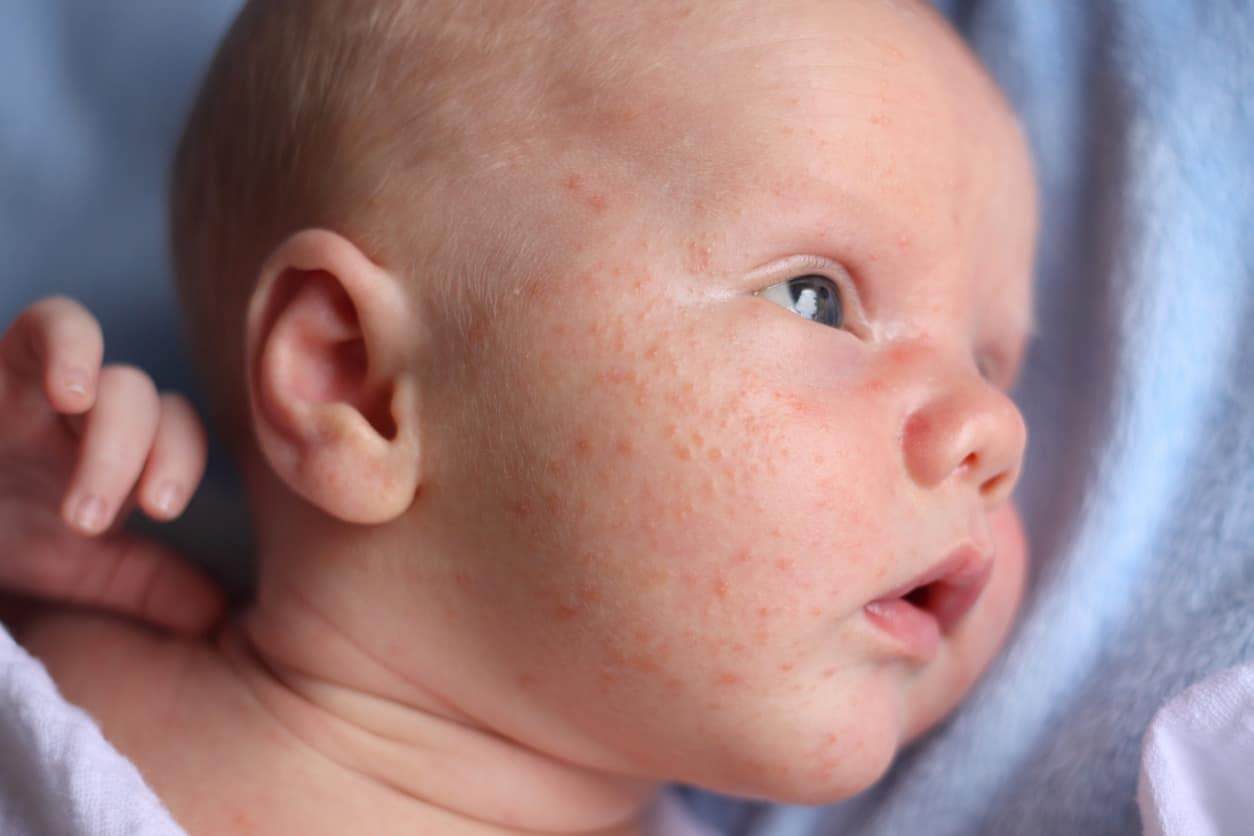
What it looks like (and why it can look like bites)
Erythema toxicum can be startling because it often has two layers:
- Red blotches or patches (like little welts)
- Tiny bumps in the center that can look like small pimples or pustules (yellow-white dots)
This “red halo with a tiny bump” is exactly why parents tell me, “It looks like mosquito bites,” or “Are these hives?”
Common locations
- Trunk (chest, back, belly)
- Face
- Upper arms and thighs
It usually spares the palms and soles. That detail matters, because some rashes that involve hands and feet deserve a closer look.

When it shows up and how long it lasts
The timing of erythema toxicum is one of its most reassuring features.
- Typical start: day 1 to day 3 of life, but it can appear any time in the first week
- Typical course: comes and goes in different spots
- Typical resolution: clears on its own within about a week, sometimes up to two weeks
The spots can look better in the morning and worse by afternoon. They can disappear in one place and show up somewhere else. That “fleeting” behavior is classic.
Why it looks worse after a bath or when your baby is warm
Parents often notice erythema toxicum right after:
- a warm bath
- skin-to-skin time
- being swaddled
- crying (increased blood flow to the skin)
- being in a warm room or car seat
Heat and increased skin blood flow can make the red patches look brighter and more dramatic. It does not mean the rash is spreading dangerously. It usually settles back down as your baby cools and relaxes.
If you want a practical step: dress baby in one light layer, keep the room comfortably cool, and skip overly hot baths for now.
Do you need to treat it?
No treatment is needed, and most “rash creams” just add extra irritation.
What to do instead
- Keep skincare boring: warm water, gentle fragrance-free cleanser if needed
- Avoid heavy ointments on the rash unless your clinician specifically recommends it
- Do not scrub or try to “pop” bumps
- Use fragrance-free laundry detergent for baby clothes and blankets
What not to use (unless a clinician tells you to)
- topical antibiotic ointments
- steroid creams
- antifungal creams
- essential oils
If your baby seems comfortable, eating normally, and acting like themselves, erythema toxicum is almost always a “look but do not touch” situation.
Erythema toxicum vs. other rashes that look similar
This is the part that matters at 3 AM, when everything looks like an emergency in the glow of your phone screen.
Erythema toxicum vs. hives
- Erythema toxicum: red patches with tiny central bumps, often on trunk, comes and goes over days
- Hives: raised itchy welts that move around quickly, often linked to a trigger
Newborns can get hives, but it is less common in the first days of life. If your baby seems very itchy (rare in newborns) or has swelling of lips/eyes, that is not typical for erythema toxicum.
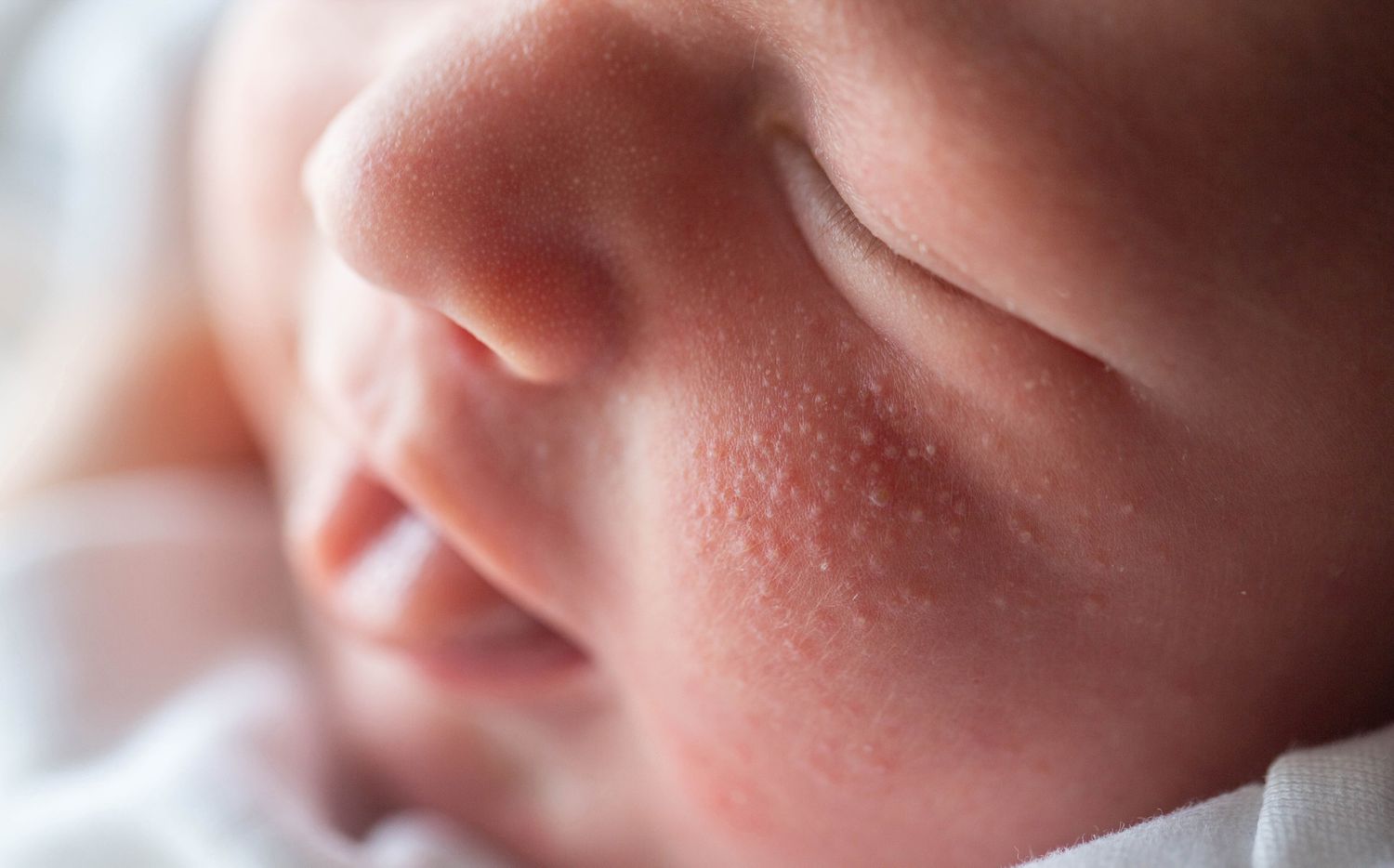
Erythema toxicum vs. baby acne
- Erythema toxicum: usually first few days, more blotchy, more trunk
- Baby acne: tends to appear later (often 2 to 6 weeks), mostly face, looks like small pimples without big red blotches
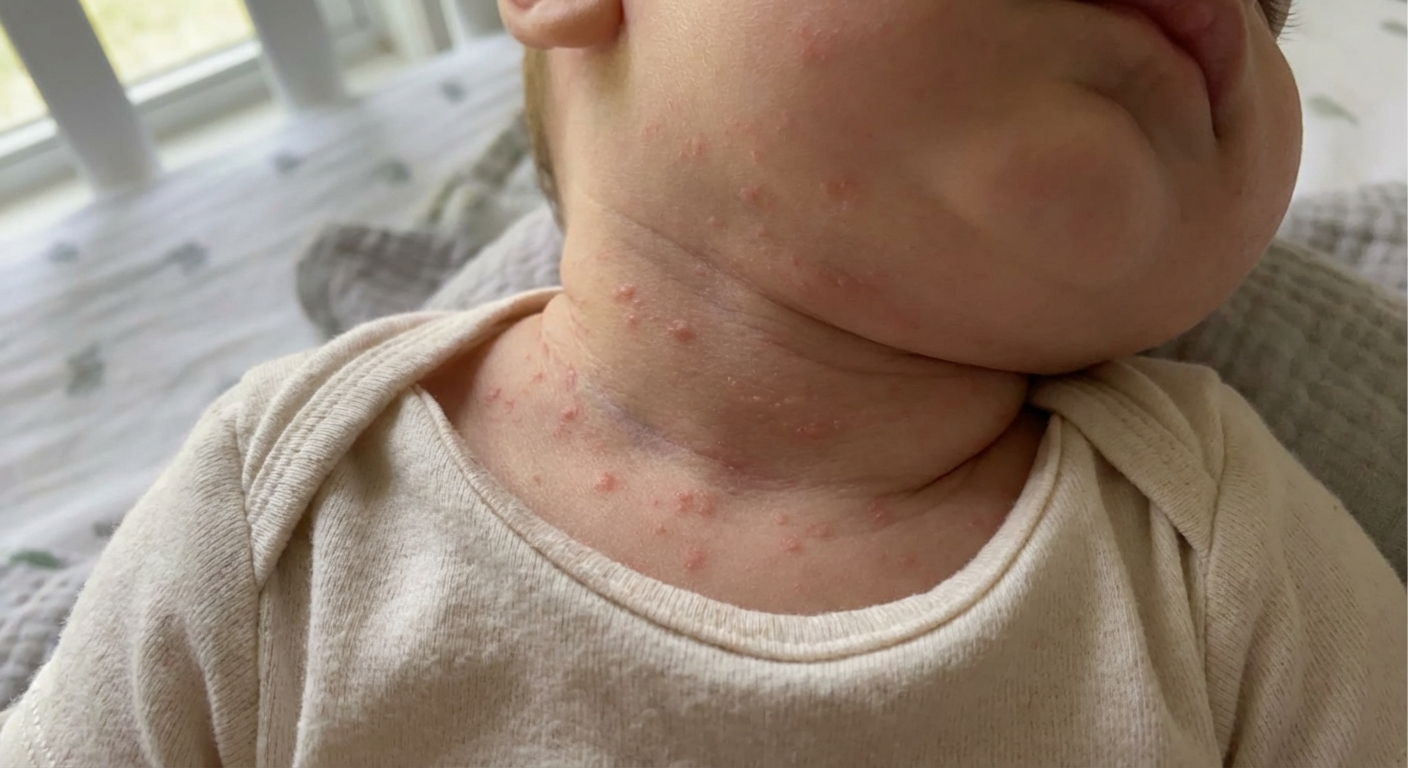
Erythema toxicum vs. heat rash
- Erythema toxicum: red blotches with central bumps, newborn first week
- Heat rash: tiny pinpoint bumps in sweaty areas (neck, chest folds), linked to overheating
Erythema toxicum vs. infection (when we worry)
Infections can cause pustules, blisters, or crusting, and babies can get sick quickly. Erythema toxicum should not make your baby ill.
Call your baby’s clinician urgently if the rash comes with fever, poor feeding, unusual sleepiness, or breathing changes.
Erythema toxicum vs. blisters or fluid-filled vesicles
Erythema toxicum bumps are usually tiny and superficial. If you see clear fluid-filled blisters (vesicles), especially in clusters, or sores around the mouth/eyes, that needs same-day medical advice to rule out things like herpes infection in a newborn.

When to call the doctor (or seek urgent care)
I am firmly in the “trust your gut” camp. If you are worried, you are allowed to call. But here are clear red flags that are not typical for erythema toxicum.
Call the pediatrician the same day if:
- your baby has a rectal temperature of 100.4°F (38°C) or higher (in a newborn, this is urgent)
- the rash has blisters, looks like open sores, or is rapidly worsening
- there is spreading redness that feels warm, swelling, or tenderness (possible skin infection)
- there is yellow crusting, oozing, or pus that looks infected
- your baby seems less alert, is hard to wake, feeds poorly, or has fewer wet diapers
- the rash involves the eyes or looks painful
Go to urgent care or the ER now if:
- any fever in a baby under 28 days old
- trouble breathing, blue/gray lips, or significant lethargy
- a rash with purple spots that do not blanch (do not fade when pressed)
If you are not sure whether spots blanch, press gently with a clean finger or the side of a clear glass. If the redness does not fade at all, get urgent advice.
Photo panic: how to take a helpful picture for your pediatrician
Rashes love to look their worst when the clinic is closed. If you want to message your pediatrician or bring photos to an appointment, here is what helps:
- Take one photo close up and one from farther back to show location
- Use natural light if possible
- Avoid flash if it washes out redness
- Include a photo before and after a bath only if it clearly changes
- Note your baby’s age in days and whether they have any symptoms (fever, feeding changes)
And yes, erythema toxicum often looks redder after a bath. That detail actually supports the benign diagnosis.
FAQ
Is erythema toxicum contagious?
No. It is not an infection and does not spread to siblings or caregivers.
Did I eat something or use a product that caused this?
Almost never. Erythema toxicum is not typically caused by something you did or did not do.
Can it be from bed bugs or mosquitoes?
In the first days of life, true insect bites are much less likely than erythema toxicum. Bites also tend to show up on exposed areas and often have a more consistent “cluster” pattern. If your baby has bites plus other household members do too, or you see bugs, then it is worth investigating. But for most families, this rash is a normal newborn thing, not a home infestation.
Will it leave scars?
No. Erythema toxicum resolves without scarring.
The bottom line
Erythema toxicum is one of those newborn surprises that looks dramatic but behaves gently. If your baby is in their first days of life, has red blotches with tiny central bumps on the trunk or face, and is otherwise acting well, it is very likely a normal, self-resolving rash.
If anything about the rash feels “off,” especially blisters, fever, or a baby who is not feeding or waking normally, call your pediatrician right away. You are not overreacting. You are parenting.
Sarah Mitchell
Sarah Mitchell is a Registered Pediatric Nurse and a mother of three who has spent over a decade helping families navigate the beautiful, chaotic early years of childhood. She combines evidence-based medical knowledge with real-world parenting experience to offer practical, compassionate advice. At Awesome Parent, Sarah's mission is to help exhausted parents find solutions, trust their instincts, and finally get some sleep.