
A calm, evidence-based guide for parents: fatigue, brain fog, dizziness, PEM-aware pacing, return-to-school planning, mental health, red flags, and how evalu...
Fainting in Kids and Teens: Vasovagal or Emergency?

Sarah Mitchell
Sarah Mitchell is a Registered Pediatric Nurse and a mother of three who has spent over a decade helping families navigate the beautiful, chaotic early years of childhood. She combines evidence-based medical knowledge with real-world parenting experience to offer practical, compassionate advice. At Awesome Parent, Sarah's mission is to help exhausted parents find solutions, trust their instincts, and finally get some sleep.
If you have ever watched your child turn pale, wobble, and go down, you know how fast your brain jumps to the scariest possibilities. In clinic triage, fainting is one of those symptoms that can be totally benign or a true emergency. The trick is knowing what details matter.
This guide will help you sort common vasovagal (reflex) fainting from situations that need urgent evaluation, plus what to do in the moment, what triggers to fix at home, and what a provider may monitor after a first episode.

What fainting (syncope) is
Syncope is a brief loss of consciousness from a temporary drop in blood flow to the brain. Most kids wake up quickly and return to baseline within minutes, though they may feel washed out, sweaty, nauseated, or headachy afterward. Some also feel extra tired for a few hours, which can be normal after a vasovagal episode.
The most common type in otherwise healthy kids and teens is vasovagal syncope, also called a reflex faint. It happens when the nervous system overreacts to a trigger and causes blood vessels to widen and heart rate to slow, dropping blood pressure for a moment.
Vasovagal fainting
Common triggers
- Dehydration or not eating much
- Heat and hot showers
- Standing still for a long time (assemblies, choir, lines)
- Sudden standing after sitting or lying down
- Pain, fear, or seeing blood (shots, injuries)
- Illness with fever, vomiting, diarrhea
- Lack of sleep and stress
Typical warning signs
Many children and teens feel symptoms for seconds to a few minutes before fainting. These clues are reassuring because they fit the vasovagal pattern:
- Lightheadedness or dizziness
- Vision changes (tunnel vision, spots)
- Nausea
- Feeling hot, sweaty, or clammy
- Pale skin
- Ringing in ears
- Weakness or “I need to sit down now”
If your child can recognize these early, you can often prevent the faint by getting them down flat quickly.

Standing-up dizziness
A lot of kids, especially tall, fast-growing teens, get dizzy when they stand up quickly. That can be:
- Orthostatic lightheadedness: brief dizziness that passes in a few seconds
- Orthostatic hypotension: blood pressure drops when standing, sometimes leading to fainting
- POTS (postural orthostatic tachycardia syndrome): a heart rate jump with standing plus symptoms like dizziness, fatigue, “brain fog” (diagnosis requires a medical evaluation)
What helps in the meantime is similar for all three: hydration, salt (when appropriate), slow position changes, regular meals, and conditioning. If your child is fainting repeatedly, missing school, or having symptoms daily, it is worth a targeted visit with their clinician.
Breath-holding spells
Parents often mix up fainting with breath-holding spells, and that is understandable because both can end with a child going limp.
Typical pattern
- Age: usually 6 months to 6 years (most commonly toddlers, and many resolve by about 4 to 5)
- Trigger: often anger, frustration, pain, or being startled
- Starts with crying, then the child holds their breath
- They may turn blue (cyanotic) or very pale (pallid)
- Brief loss of consciousness can happen, then quick recovery
Breath-holding spells are not the same mechanism as vasovagal syncope, and they are less typical in older kids and teens. If your toddler has frequent spells, talk with your pediatrician. Some children benefit from checking iron levels because iron deficiency can be associated with more frequent episodes.
What to do if your child faints
Step-by-step first aid
- Lower them to the ground if possible and protect their head.
- Have them lie flat on their back. If you can, raise legs about 12 inches.
- Loosen tight clothing around the neck and waist.
- Check breathing and responsiveness. Most kids breathe normally during a vasovagal faint.
- If they are vomiting, or not fully awake, roll them onto their side (recovery position) to help protect the airway.
- Once awake, keep them lying down for a few minutes, then sit up slowly.
- Offer fluids once they are fully awake and not nauseated.
What not to do
- Do not force anything into their mouth during the episode.
- Do not try to make them stand up right away.
- Do not give food or drink until they are fully awake and able to swallow safely.
Recovery tips
- Let them rest. Many feel shaky and tired afterward, sometimes for a few hours.
- A salty snack and water can help if low intake or dehydration contributed.
- Do not rush them back into sports, hot showers, or standing for long periods right away.

When it is an emergency
Most fainting in kids and teens is vasovagal, but these situations need urgent medical evaluation.
Call emergency services now if:
- Your child does not wake up promptly (for example, within about a minute or two), is hard to arouse, or you are worried about their breathing
- They have trouble breathing, blue lips that do not improve quickly, or you suspect choking
- They fainted after a head injury or had a significant fall
- There is ongoing chest pain or severe shortness of breath
- They fainted during exercise (not after stopping) or collapsed while running or swimming
- They have palpitations right before fainting or an unusually fast heartbeat that persists
- There is a family history of sudden unexplained death, inherited heart rhythm disorders, or cardiomyopathy
- They have repeated episodes in a short period, or fainting with no warning and no clear trigger
- They have a known heart condition
Seizure vs. fainting
Brief jerks can happen during fainting and can look seizure-like. Also, loss of bladder control can occur with both, so it is not a reliable “either-or” sign. Seek urgent evaluation if you notice:
- Prolonged stiffening or rhythmic shaking
- Tongue biting (especially the side of the tongue)
- Confusion that lasts more than 10 to 15 minutes after waking
- No clear trigger and no warning signs
If you are unsure, you are not overreacting by getting checked. This is one of those symptoms where “better safe” is a perfectly reasonable parenting strategy.
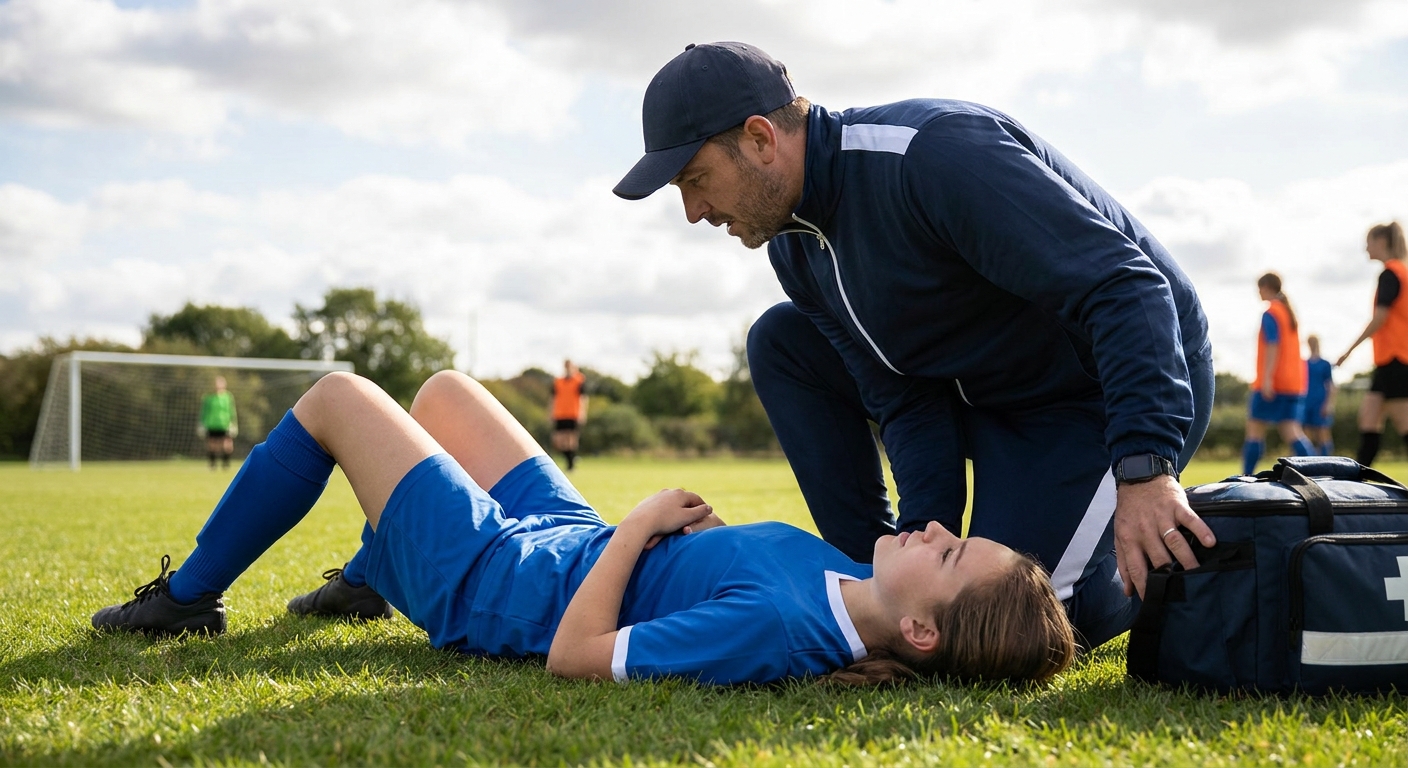
Sports collapse
Sports and fainting make everyone’s heart rate jump, including mine when I am watching my own kids. The key question is when it happened.
More reassuring
- Fainting after exercise when they suddenly stop (blood pools in the legs)
- Overheating, dehydration, or not eating much that day
- Clear warning signs: nausea, tunnel vision, clammy skin
Concerning
- Collapse during exercise (mid-run, mid-play, while swimming)
- Chest pain, palpitations, or severe shortness of breath before the episode
- No warning signs at all
- Family history red flags (sudden death under age 50, known rhythm disorders)
Any fainting during exertion should be treated as a potential cardiac emergency until proven otherwise and should be evaluated promptly. Your child should not return to play until cleared.
Why dehydration is so common
Dehydration is one of the most common, modifiable contributors to fainting. When blood volume is low, it is harder for the body to keep blood pressure steady with standing, heat, or stress.
Signs your child may be under-hydrated
- Dark yellow urine or peeing only a few times a day
- Headaches
- Constipation
- Feeling dizzy when standing
- Dry mouth, fatigue
Practical hydration tips
- Start the day with water. Many teens begin school already behind.
- Pack a bottle they like and set a simple goal, like finishing it by lunch.
- Add electrolytes when sweating heavily, sick with vomiting or diarrhea, or if your clinician recommends it.
- Do not skip breakfast, even if it is small.
If your child has a medical condition that affects fluid or salt intake, follow your clinician’s guidance.
Medications and stimulants
Sometimes the trigger is not just heat or hydration. It can also be what is in the medicine cabinet or the energy drink aisle.
- Stimulants and decongestants can raise heart rate and worsen palpitations in some kids.
- Diuretics and some blood pressure medicines can contribute to low blood pressure or dehydration.
- Caffeine and energy drinks can worsen fast heart rate, poor sleep, and dehydration.
- Nicotine (including vaping) can affect heart rate and blood vessels.
Do not stop a prescribed medication without medical guidance, but do tell your clinician exactly what your child is taking, including supplements and pre-workout products.
After a first faint
For a first episode, clinicians focus on the story. The details are diagnostic gold.
Questions you can expect
- What were they doing right before it happened (standing, shower, exercise)?
- Any warning signs (nausea, vision changes, sweaty, palpitations)?
- How long were they out? How did they look (pale vs. blue)?
- How quickly did they return to normal?
- Any injuries?
- Any medications, energy drinks, vaping, or substances?
- Recent illness, poor intake, heavy periods, weight loss, dieting?
- Family history of heart disease or sudden death?
Common checks
- Vital signs, sometimes including orthostatic vitals (lying, sitting, standing)
- Heart and lung exam
- Electrocardiogram (ECG/EKG) to screen for rhythm issues
- Blood sugar check in some settings
- Pregnancy test for post-pubertal teens who could be pregnant (routine and important, not a judgment)
- Blood work sometimes, such as CBC and ferritin or iron if anemia is suspected, or electrolytes if dehydration is significant
Tests that may be added
- Holter or event monitor (wearable heart rhythm monitoring)
- Echocardiogram (ultrasound of the heart)
- Exercise stress test for exertional symptoms
- Neurology evaluation if seizure is a concern
If everything points to vasovagal syncope, many kids do not need extensive testing, just trigger management and a safety plan.
Preventing future episodes
Respond early
If your child feels a spell coming on, the goal is to get blood back to the brain fast.
- Best: Lie flat as soon as possible, ideally with legs elevated.
- If lying down is not possible: sit down and put head down while you get help.
- Leg muscle squeezes: cross legs and tense thighs, or do calf pumps if standing
- Hydrate and cool down once fully steady
Reduce triggers
- Hydration and regular meals, especially breakfast
- Salt intake as advised by your clinician
- Slow transitions from lying to standing
- Avoid long, motionless standing when possible
- Be cautious with hot showers if that is a trigger
And yes, the unglamorous basics matter: sleep, nutrition, and recovery when sick.
Quick FAQ
Is it normal for a child to look very pale?
Yes. Pallor and clamminess are common in vasovagal fainting.
Can my child have jerking movements and still be fainting?
They can. Brief, small jerks can occur when the brain is briefly under-perfused. Prolonged or rhythmic shaking, significant confusion afterward, or no clear trigger needs urgent evaluation.
Should my child go to school the same day?
If they are back to baseline, have no red flags, and the episode fits a typical vasovagal pattern, many can return. If the episode was during exercise, involved injury, or you are unsure, get medical guidance first.
When to call your pediatrician
- First-time fainting in a very young child (true syncope is less common in little kids)
- More than one episode
- Episodes that are increasing in frequency
- Fainting plus significant headaches, weight loss, vomiting, or heavy periods
- You suspect an eating disorder, dehydration, substance use, or stimulant or energy drink overuse
- Any episode that does not match the “classic” vasovagal pattern
If you take one thing from this page, make it this: fainting during exercise, fainting with chest pain or palpitations, or fainting without warning deserves urgent evaluation. Everything else is still worth discussing, but those are the big red flags.
Sarah Mitchell
Sarah Mitchell is a Registered Pediatric Nurse and a mother of three who has spent over a decade helping families navigate the beautiful, chaotic early years of childhood. She combines evidence-based medical knowledge with real-world parenting experience to offer practical, compassionate advice. At Awesome Parent, Sarah's mission is to help exhausted parents find solutions, trust their instincts, and finally get some sleep.