False Start Bedtimes: Why Your Baby Wakes 30–45 Minutes After Falling Asleep

Sarah Mitchell
Sarah Mitchell is a Registered Pediatric Nurse and a mother of three who has spent over a decade helping families navigate the beautiful, chaotic early years of childhood. She combines evidence-based medical knowledge with real-world parenting experience to offer practical, compassionate advice. At Awesome Parent, Sarah's mission is to help exhausted parents find solutions, trust their instincts, and finally get some sleep.
If your baby goes down at bedtime like a tiny angel… and then pops back up 30 to 45 minutes later like it was just a warm-up, welcome. This is one of the most common sleep complaints I heard as a triage nurse and one I lived through with my own kids.
This pattern is often called a false start at bedtime. It can happen in young infants, older babies, and toddlers, and it usually has a fixable cause. Let us walk through what is happening inside your child’s sleep cycle, the most likely culprits, and a calm, staged plan you can try without turning bedtime into an emotional contact sport.

What a false start is
A false start is when your child falls asleep at bedtime, then wakes fully (often crying) within about 30 to 45 minutes (sometimes closer to the first hour), and has trouble settling again without help.
That timing is not random. For many babies and toddlers, it often coincides with a natural lightening of sleep as they move through their first sleep-cycle transition.
Why it happens
Sleep is made up of cycles. Babies’ sleep cycles are often roughly 40 to 60 minutes, while toddlers’ can be longer (often around 60 to 90 minutes). Within those cycles, sleep depth shifts, and many kids briefly “check in” as they transition between stages.
Think of it like your phone briefly lighting up during an update. Most of us roll over and go back to sleep. Babies and toddlers do that same check-in, and whether they can drift back off depends on a few key things:
- Bedtime timing: Are they sleepy enough, or overtired and wired?
- Sleep associations: Did they fall asleep one way and wake up another way?
- Environment: Did something change in the room, temperature, noise, light, or discomfort?
- Development: New skills, separation anxiety, teething, illness.
The goal is not to prevent normal brief wake-ups. The goal is to help your child transition through them without needing a full reset.
Common causes
1) Sleep associations (the biggest one I see)
A sleep association is anything your child relies on to fall asleep. Classic examples are rocking, feeding to sleep, pacifiers that fall out, being held, or a parent lying next to the crib until the eyes close.
If your child falls asleep with a specific “ingredient” present, they may protest when they wake at that first transition and the ingredient is missing.
Clues this is your main issue:
- Your baby falls asleep quickly at bedtime with help but wakes upset 30 to 45 minutes later.
- The wake-up is intense and hard to soothe unless you repeat the same routine (feed, rock, replace pacifier, lay with them).
- Naps may be short too, especially if they wake after one cycle.
What helps: Work toward your child falling asleep in the same conditions they will have during the night. That does not mean “no comfort.” It means predictable, repeatable comfort that is not dependent on you doing the exact same motion for 45 minutes.
Pacifier note: If your older baby can reliably grab and replace a pacifier, some families place a couple of pacifiers in the crib so they can find one during a wake-up. For young infants, keep the sleep space clear and follow safe sleep guidance.
2) Undertired at bedtime (yes, this is real)
We tend to blame bedtime wake-ups on overtiredness, and sometimes that is true. But a very common false-start cause is not enough sleep pressure built up before bed.
If your child goes to bed a little too early for their current needs, they may fall asleep (because bedtime is cozy and dark) but not stay asleep once sleep lightens after that first stretch.
Clues:
- They wake happy or only mildly upset and want to party.
- They had a long late nap or a catnap too close to bedtime.
- Bedtime has crept earlier and earlier because evenings are chaotic.
What helps: Gradually adjust the last wake window or bedtime by 10 to 15 minutes every couple nights. More on that below.
3) Overtired and wired (the other common culprit)
When babies stay awake too long, they can get a “second wind.” Some kids then fall asleep fast but sleep more lightly or wake more easily, especially in that first part of the night.
Clues:
- Bedtime is a meltdown: crying, arching, fighting sleep.
- They conk out instantly the moment you start soothing.
- False starts happen on days with missed or short naps.
What helps: Earlier bedtime on rough nap days, a calmer wind-down, and making sure the last wake window is not stretching too long for age.
Quick reality check: Overtired can look like undertired. A wired, chatty, frantic kid at bedtime is not always “not tired.” Sometimes they are too tired.
4) Environment (light, noise, temperature)
Some kids are most sensitive to the room in that first stretch of the night. A small environmental issue can trigger a full wake-up.
- Light leaks: Sunset, hallway light, a nightlight that feels “fine” at bedtime but brightens the room later.
- Temperature shifts: Some homes cool quickly after bedtime. Babies can wake if they get chilly.
- Noise: Dishwasher, older siblings, barking dog, evening traffic.
What helps: A quick environment audit and a few simple tweaks.
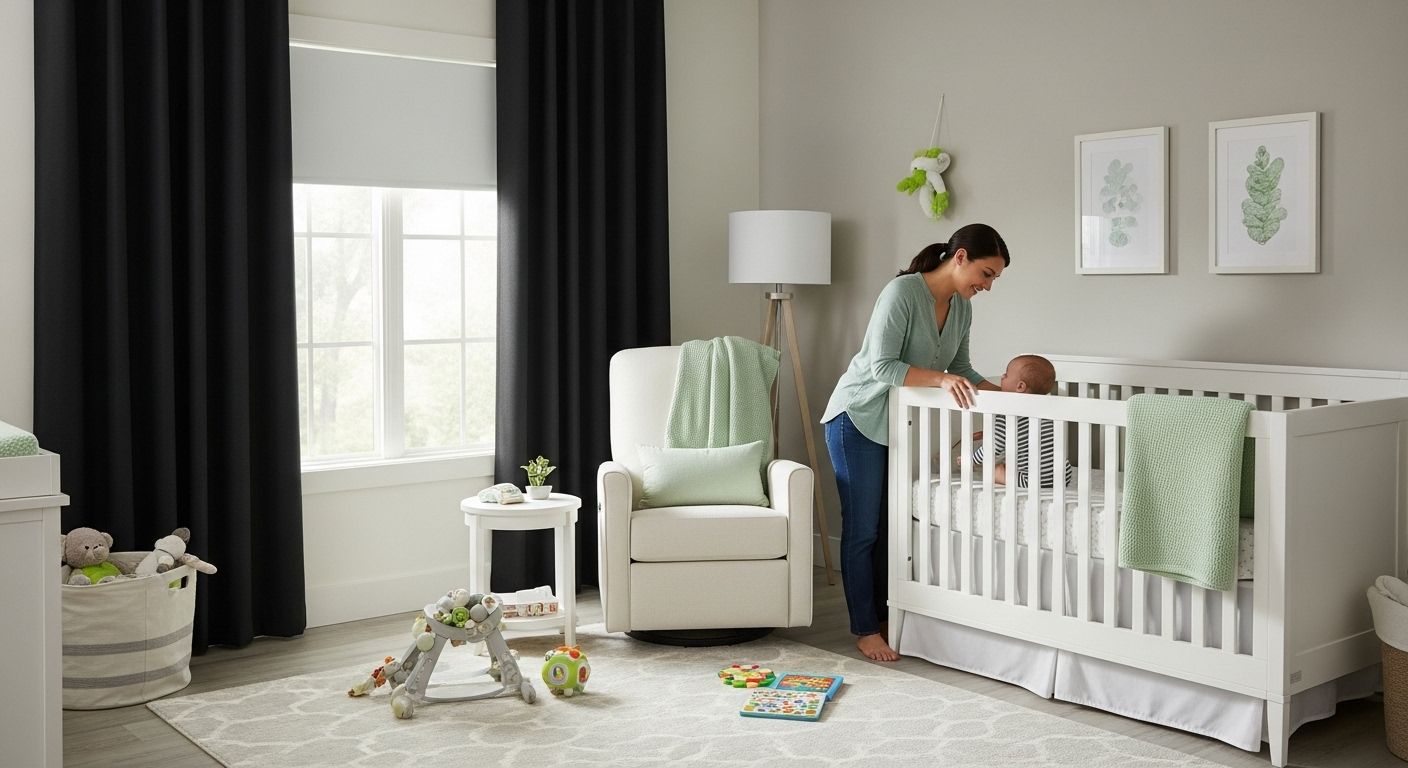
2-minute environment check
- Dark: Make the room as dark as you can. If you can easily see across the room, it might be too bright for a light-sensitive sleeper.
- Sound: Consider continuous white noise at a safe volume, placed across the room from the crib. Many pediatric sources suggest keeping it low (often around 50 dB or less).
- Temperature: Aim for a comfortably cool room. Dress your baby appropriately and consider that the room may cool after bedtime.
- Comfort: Check diaper, hunger patterns, and signs of reflux discomfort. For toddlers, check for itchy pajamas, a scratchy tag, or new fears.
- Safety basics: Follow safe sleep guidance for infants: firm, flat surface, no loose bedding or soft items in the sleep space. If you swaddle, stop at the first signs of rolling.
Timing by age
Every child is different, but false starts often improve when bedtime lines up with your child’s current sleep needs. If you suspect undertiredness or overtiredness, start with a simple timing check.
Newborns (0 to 3 months)
Sleep is messy here, and “bedtime” is more of a suggestion. False starts can still happen, but the plan is mostly comfort, feeding support, and gentle rhythm building.
- Keep wake times short and follow sleep cues.
- Expect lots of help settling, especially in the evening.
4 to 6 months
This is a very common time for false starts because sleep is maturing and babies become more aware of how they fell asleep.
- Many babies do well with 2 to 3 hour wake windows, depending on the time of day.
- A too-long final wake window can create wired, shallow sleep.
6 to 12 months
False starts often relate to nap schedule changes, late afternoon catnaps, and stronger sleep associations.
- Watch the last nap. A late nap can push bedtime resistance and false starts.
- If your baby just dropped a nap, expect a rocky week as the schedule stabilizes.
Toddlers (1 to 3 years)
Toddlers can false start from being undertired, overtired, or simply mad about bedtime. All three can look identical at 8:10 PM.
- If naps are long or late, bedtime may need a gentle shift later.
- If nap is dropping, bedtime may need to move earlier for a while.
Tip from my nurse brain and my mom life: Change bedtime gradually. A sudden 45-minute shift often backfires.
What to do when it happens
When your child false starts, it is tempting to throw every soothing tool at them at once. Instead, use a staged response. You are giving them a chance to resettle, while still showing you are present and responsive.
Stage 1: Pause briefly (20 to 60 seconds)
If your baby is fussing but not escalating, pause. Many babies will roll around, grumble, and drift back off.
Stage 2: Minimal help in the sleep space
- Place a hand on their chest or back.
- Shush or use a calm phrase.
- For pacifier users, replace it and stop there.
Keep lights off and your energy boring. This is not the time for play, extra snacks, or screen glow.
Stage 3: Increase support if crying escalates
If they are fully upset, pick the least disruptive soothing that works for your child:
- Infants: Pick up, calm, then put down drowsy but awake if you are working on independent settling. Or soothe to sleep if you are in survival mode. Both are valid.
- Older babies: Brief pick-up, calm, then back to crib. Repeat as needed.
- Toddlers: Short check-ins, a consistent phrase, and back to bed. If they are out of the crib, return them calmly and consistently.
Stage 4: If it becomes a full wake-up
Sometimes a false start turns into a longer awake period. If you hit 30 to 45 minutes of trying with no progress, do a quick reset:
- Keep lights dim.
- Offer a small feed if hunger is plausible for age and schedule.
- Do a mini bedtime routine: diaper, cuddle, one song, back down.
This can help you avoid unintentionally creating a pattern where bedtime turns into a whole second evening.

Fix the root cause
False starts are frustrating because there are multiple possible causes. The fastest way to improve them is to pick one primary hypothesis, make a small change, and watch for a pattern over 3 nights.
If you suspect undertiredness
- Move bedtime later by 10 to 15 minutes for 2 to 3 nights.
- Or lengthen the last wake window slightly.
- Watch the last nap. Cap it or end it earlier if it is too close to bedtime.
If you suspect overtiredness
- On short-nap days, move bedtime earlier by 15 to 30 minutes.
- Start the bedtime routine earlier and slow it down.
- Protect the last wake window from stretching too long due to errands, siblings’ sports, or “just one more episode” for the big kids.
If you suspect sleep associations
- Separate feeding from falling asleep when possible. Try feeding earlier in the routine, then book, song, cuddle, bed.
- If rocking to sleep is the current pattern, aim to rock until calm and drowsy, then finish in the crib.
- If the pacifier is the main issue, either commit to replacing it consistently or work on gradually reducing reliance.
Progress usually looks like less intensity first, then a shorter wake-up, then fewer wake-ups.
If you suspect environment
- Darken the room further.
- Add steady white noise at a low, safe volume.
- Adjust clothing layers and check the room temperature about an hour after bedtime.
Sneaky contributors
Teething, illness, reflux
Discomfort can absolutely cause false starts. If your child is sick, pulling at ears, has a fever, is vomiting, refusing feeds, wheezing, or has significant pain, focus on comfort and call your pediatrician for guidance.
Reflux-like discomfort can also peak after lying down. If your baby is frequently uncomfortable after feeds, discuss it with your clinician rather than trying to troubleshoot alone at 2 AM.
Separation anxiety and new skills
Babies who just learned to roll, sit, crawl, or pull to stand sometimes wake shortly after bedtime and practice. Toddlers can false start when they realize you are leaving for the night.
What helps: Extra connection before bed, a consistent routine, and calm confidence during check-ins.
If it keeps happening despite changes
If you have tightened timing, associations, and environment for a couple of weeks and false starts are still frequent and intense, it is reasonable to ask your clinician about other contributors like reflux, eczema or itching, low iron (which can contribute to restless sleep), or sleep-disordered breathing.
When to call the pediatrician
Most false starts are behavioral and schedule-related. Still, you should check in with your child’s clinician if you notice:
- Breathing pauses, persistent loud snoring, or labored breathing during sleep.
- Frequent vomiting, poor weight gain, or feeding refusal.
- Signs of ear infection, persistent fever, or your baby seems unusually hard to wake or unusually lethargic.
- You suspect pain that is not improving with typical comfort measures.
If your gut says, “This feels different,” trust that. You do not need to earn the right to call.
A plan for tonight
- Do a 2-minute environment check: dark, cool, steady sound.
- Review the last nap and last wake window: decide if you will try 10 to 15 minutes earlier or later tomorrow.
- Pick your staged response: pause, then minimal help, then brief pick-up if needed.
- Keep it boring: no bright lights, no play, no big snacks for toddlers unless hunger is truly likely.
- Track for 3 nights: bedtime, last nap end, false start time, and how long it took to resettle.
You are not failing because bedtime is not smooth right now. You are collecting clues. That is parenting in a nutshell, and yes, it is exhausting.
If you want a simple next step: start by adjusting bedtime timing slightly and tightening the “falling asleep conditions” so they match what your child will have after that first sleep-cycle transition. Those two changes solve a big chunk of false starts.