A calm, step-by-step guide for parents: what febrile seizures are, what to do during one, what not to do, how long they last, and the red flags that mean eme...
Febrile Seizures in Babies: What You See and When to Go to the ER

Sarah Mitchell
Sarah Mitchell is a Registered Pediatric Nurse and a mother of three who has spent over a decade helping families navigate the beautiful, chaotic early years of childhood. She combines evidence-based medical knowledge with real-world parenting experience to offer practical, compassionate advice. At Awesome Parent, Sarah's mission is to help exhausted parents find solutions, trust their instincts, and finally get some sleep.
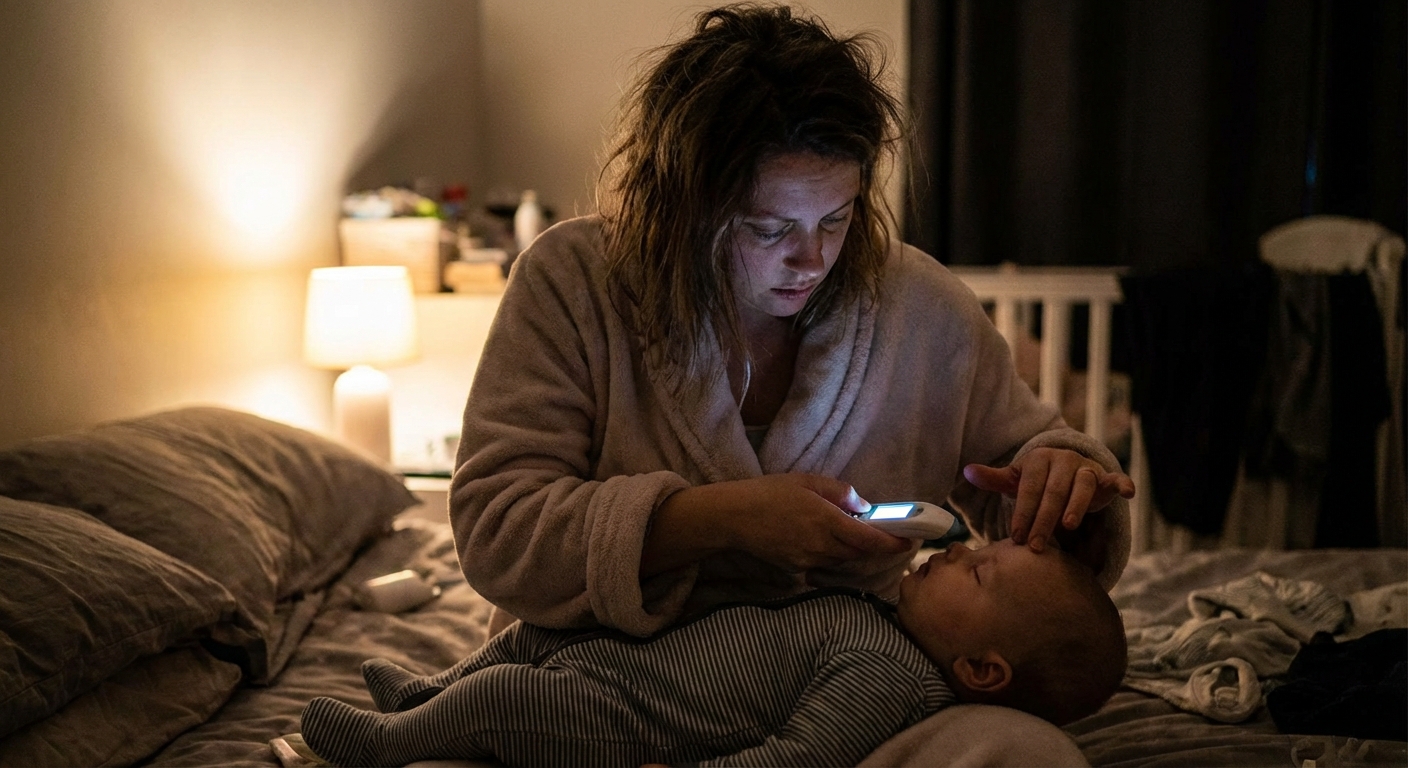
If you are reading this at 2 or 3 AM after a scary fever moment, take a breath. Most febrile seizures are brief and do not cause brain damage. But when it is your baby, it can look like an emergency movie scene. This page is here to translate what you saw, tell you exactly what to do next, and give you clear “go now” thresholds.
Quick definition (so you know what we mean): A febrile seizure is a seizure that happens with a fever (often 100.4°F / 38°C or higher) in a young child, without evidence of a brain infection (like meningitis) and without another clear cause. Many kids who have them are otherwise healthy and develop normally.
Simple vs complex (why doctors ask so many questions):
- Simple: generalized shaking or stiffening, lasts under 15 minutes, and happens once in 24 hours.
- Complex: lasts 15 minutes or longer, has focal signs (one-sided movements or eyes stuck to one side), or happens more than once in 24 hours.
Important note: True “febrile seizures” are most common from about 6 months to 5 years. When a baby is younger than 6 months, seizure-like activity with fever needs urgent medical evaluation because the list of possible causes is different. In practice, any seizure in a young infant warrants urgent, in-person care, even if a fever is present.
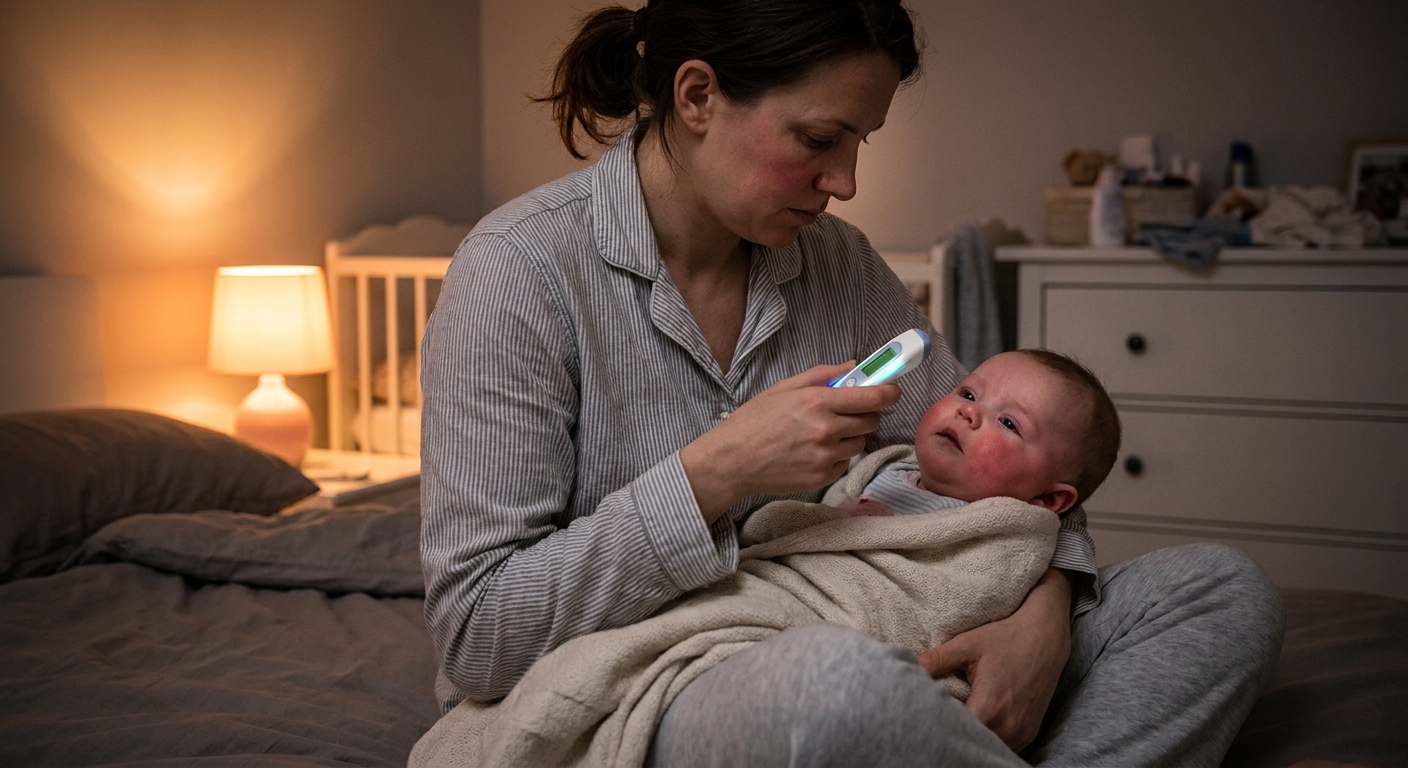
What it can look like
Parents often tell me, “I wish I had recorded it because no one believes how scary it looked.” If you have a video, it can actually help your clinician, but do not feel guilty if you did not record. In the moment, you are doing exactly what you should do: protecting your baby.
Common simple signs
- Whole-body stiffening, sometimes followed by rhythmic jerking of arms and legs
- Eyes rolling up or staring
- Not responding to your voice for a short time
- Drooling or foamy saliva
- Color change: brief paleness or a little duskiness around the lips can happen. Persistent blue color or obvious breathing trouble is not typical and is an emergency.
- Sleepiness afterward (the “post-seizure nap”), often 30 to 60 minutes, and sometimes longer. What matters most is that your baby gradually improves.
Most febrile seizures stop on their own and are usually under 5 minutes, often around 1 to 3 minutes. Watching even 60 seconds can feel like an hour.
Things that can look similar
Babies do weird things when they are sick and exhausted. Some common mimics include:
- Shivering or rigors: intense shaking with fever where baby can still track you, cry, or respond between shakes
- Startle reflex or jitteriness (especially in young infants)
- Breath-holding spells (more common in older infants and toddlers, often after crying)
- Reflux-related arching (sometimes called Sandifer-type posturing)
If you are unsure, prioritize safety anyway: place your baby on their side, start a timer, and watch breathing. You can always have your baby evaluated afterward. You will never regret being cautious.
Baby vs toddler: what is different
If you have already read about toddler febrile seizures, you will notice overlap. The big difference is the age-specific risk and how aggressive we are about evaluating fever in younger babies.
Key age takeaways
- Under 6 months: Seizures with fever are less likely to be a classic simple febrile seizure. Clinicians worry more about infections (including meningitis), metabolic issues, or other causes. This age group needs urgent in-person evaluation.
- 6 to 12 months: Febrile seizures can happen, but many babies are having their first big viral illnesses and first big fevers. We take the history seriously and look closely for a source of fever.
- Over 12 months: Still can have febrile seizures, but the “typical” age band is better established and many kids have a clear viral fever pattern.
| Scenario | Why clinicians care | What parents should do |
|---|---|---|
| Baby is under 6 months and had seizure-like activity with fever | Higher concern for causes other than simple febrile seizure | Get emergency medical care immediately. Call 911 if actively seizing or if breathing looks off. |
| Baby 6 to 12 months, first seizure with fever | Often benign, but first-time episodes need a careful exam | Seek same-day evaluation. The ER is appropriate if you cannot be seen quickly, or if any red flags below. |
| Known history of simple febrile seizures, typical pattern, quick recovery | Recurrence is common, dangerous causes less likely | Follow your child’s seizure plan and fever care. Discuss with your pediatrician for guidance specific to your baby. |
One more baby-specific point: fever thresholds matter more in younger infants . A fever in a 2-month-old is handled very differently than a fever in a 2-year-old, even without a seizure.
Post-vaccine fever questions
This is a question I hear constantly in clinic: “My baby had shots, got a fever, then had a seizure. Did the vaccine cause this?”
Vaccines can cause low-grade fever as the immune system responds. Fever itself can trigger a febrile seizure in a small number of children who are already prone to them. That does not mean the vaccine caused a seizure disorder, and it does not automatically mean your baby cannot be vaccinated in the future. It may mean your baby is in the group that is sensitive to fever.
Timing patterns
- Same day or within 24 to 48 hours can happen after many routine infant vaccines. For example, DTaP can be associated with fever in the first day or two.
- About 7 to 14 days later is a common window for fever after some live vaccines. For example, fever after MMR is often reported around 7 to 10 days after the shot.
If a seizure happens after immunizations, tell your pediatrician and ask how to report it (in the US, this is often through VAERS). Reporting is about tracking patterns, not about blame.
Practical tip: Do not “pre-dose” fever medicine before vaccines unless your clinician recommends it. It often does not prevent fever, and in some situations it may slightly blunt the immune response. If fever happens afterward and your baby seems uncomfortable, ask your pediatrician about appropriate dosing based on your baby’s exact weight.
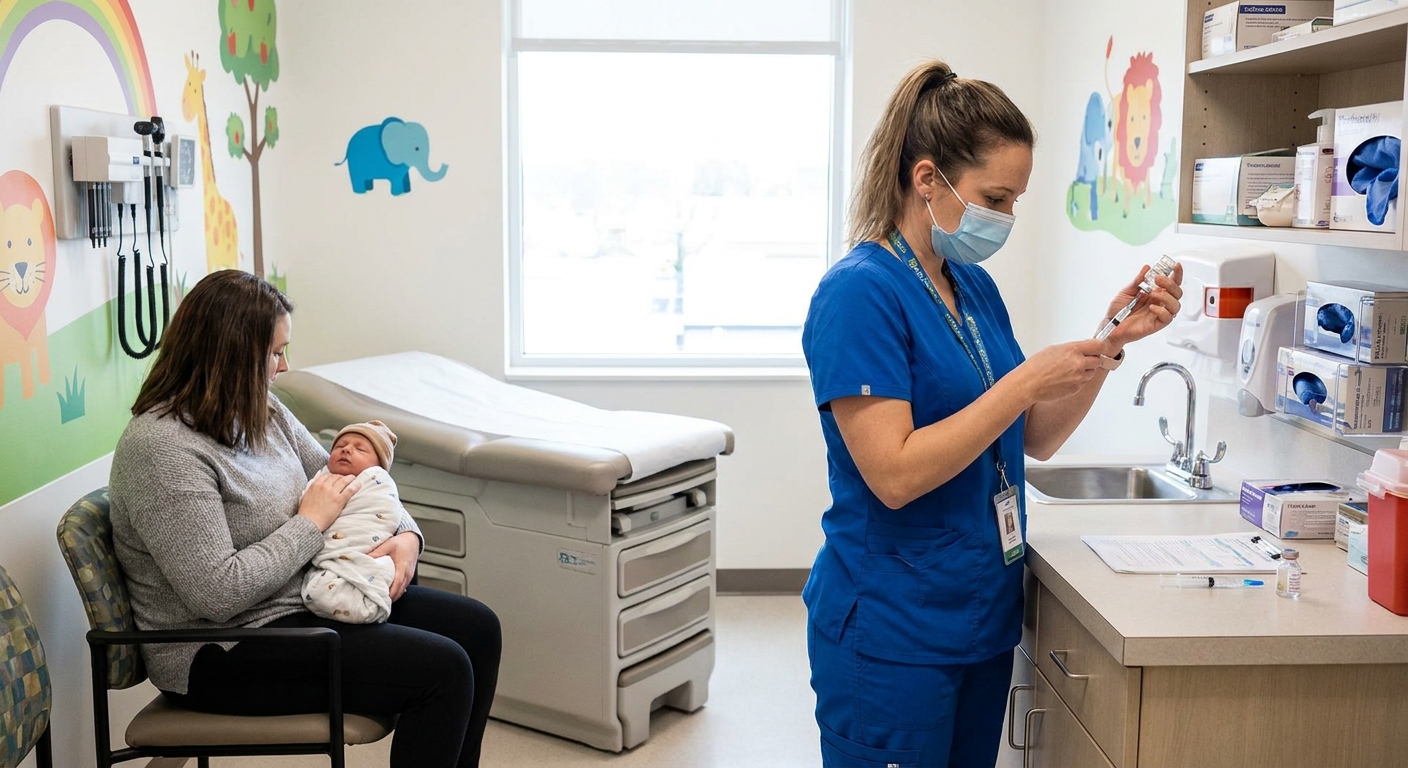
What to do during one (60 seconds)
In triage, we teach a simple script because panic steals your memory. Here it is.
- Start a timer. Use your phone. Duration matters.
- Put baby on a safe surface like the floor or a firm bed, away from edges.
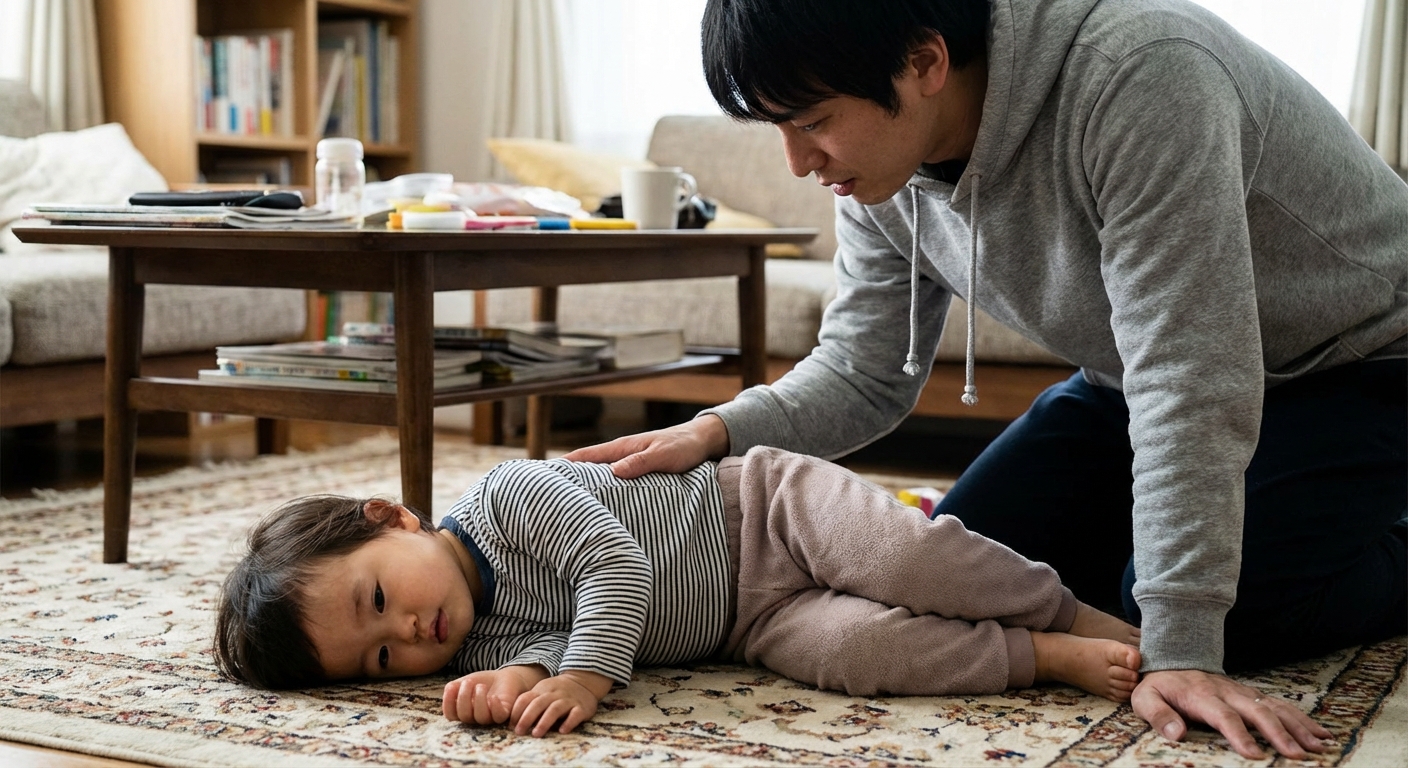
- Turn baby on their side to help saliva or vomit drain.
- Do not put anything in the mouth. They will not swallow their tongue. Fingers and objects can cause injury.
- Do not restrain the shaking. Just protect their head.
- Do not give oral meds, water, or milk during the event. Wait until they are fully awake and swallowing normally.
- Look at breathing and color. Brief color change can happen, but if breathing seems absent or very labored, call 911.
If you can safely do it, a short video can help your clinician later. But your first job is safety.
What to do right after
Once the shaking stops, keep your baby on their side and watch for steady breathing and gradual wake-up.
- Do a quick head-to-toe check for injury.
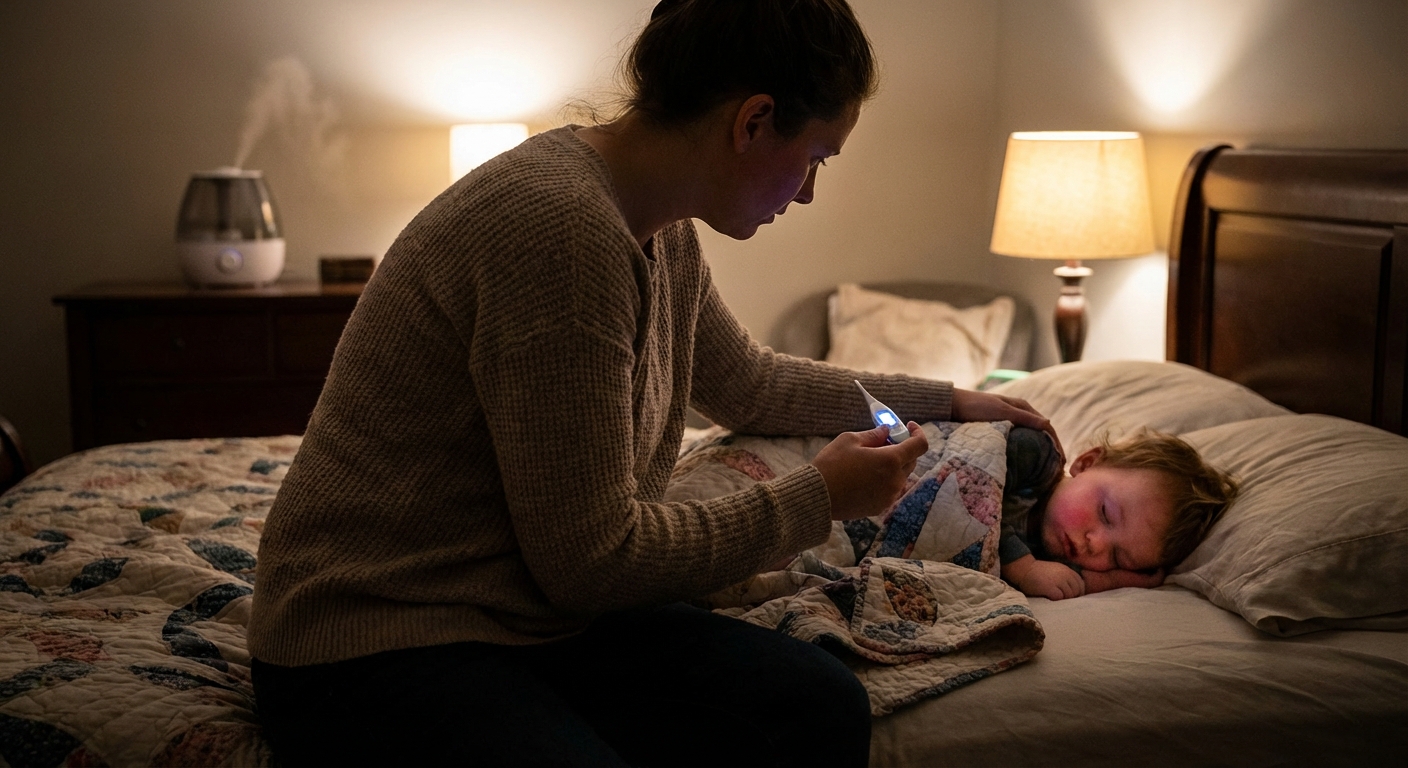
- When your baby is awake enough to swallow safely, you can check the temperature. If your clinician has told you it is OK for your baby’s age, you can give fever medicine for comfort using weight-based dosing.
- Comfort matters more than chasing a perfect number. Fever medicine can help your baby feel better, but it does not reliably prevent another febrile seizure.
911 vs ER: clear thresholds
Parents deserve clear thresholds. Use these.
Call 911 now if
- The seizure lasts 5 minutes or longer.
- Your baby has trouble breathing, turns blue, or you cannot tell if they are breathing.
- Your baby is under 6 months and is actively seizing, seems hard to wake, or you are worried about breathing.
- Your baby is injured, you suspect poisoning, or this happened in water (bath, pool).
- Your baby does not start to wake up and improve after the seizure ends, or remains very difficult to arouse.
- There is a second seizure back-to-back without a clear return to baseline.
Go to the ER today (urgent evaluation) if
- This is the first seizure ever (even if it was brief and they look okay now).
- Your baby is under 6 months and had any seizure-like episode with fever, even if it stopped quickly.
- Your baby is 6 to 12 months and you cannot get same-day pediatric evaluation.
- Seizure features are not typical for a simple febrile seizure: only one side of the body jerks, eyes pull to one side, or there is weakness afterward.
- Your baby has stiff neck, persistent inconsolable crying, a new bulging soft spot, or a purple rash that does not blanch.
- Your baby is dehydrated (very few wet diapers, very dry mouth), has persistent vomiting, or you are worried they cannot keep fluids down.
- Your baby has a known medical condition that raises risk (prematurity with complications, immune compromise, known neurologic disorder) and your clinician told you to have a lower threshold.
Call your pediatrician soon if
- Your baby has a known history of simple febrile seizures, the event was under 5 minutes, they recovered well, and the fever source seems like a typical viral illness.
- You are unsure about fever medicine dosing or the fever source.
If you are stuck between options, choose the safest route. You will never be “wasting” help by getting a baby evaluated after a seizure.
Post-seizure phase
After a febrile seizure, many babies are:
- Sleepy or “out of it”
- Fussy once they start waking
- Warm because the fever is still there
This can be normal. What I want you to watch for is the trajectory. They should gradually look more like themselves.
At home after you have been cleared
- Focus on comfort, not chasing a perfect number. Fever is a symptom, not a toxin.
- Offer fluids frequently. Breast milk, formula, or small sips of oral rehydration solution if your pediatrician recommends it.
- Dress in light layers. Avoid ice baths or alcohol rubs.
- Use fever medicine only as directed for age and weight. Ask your pediatrician which option is safest for your baby’s age.
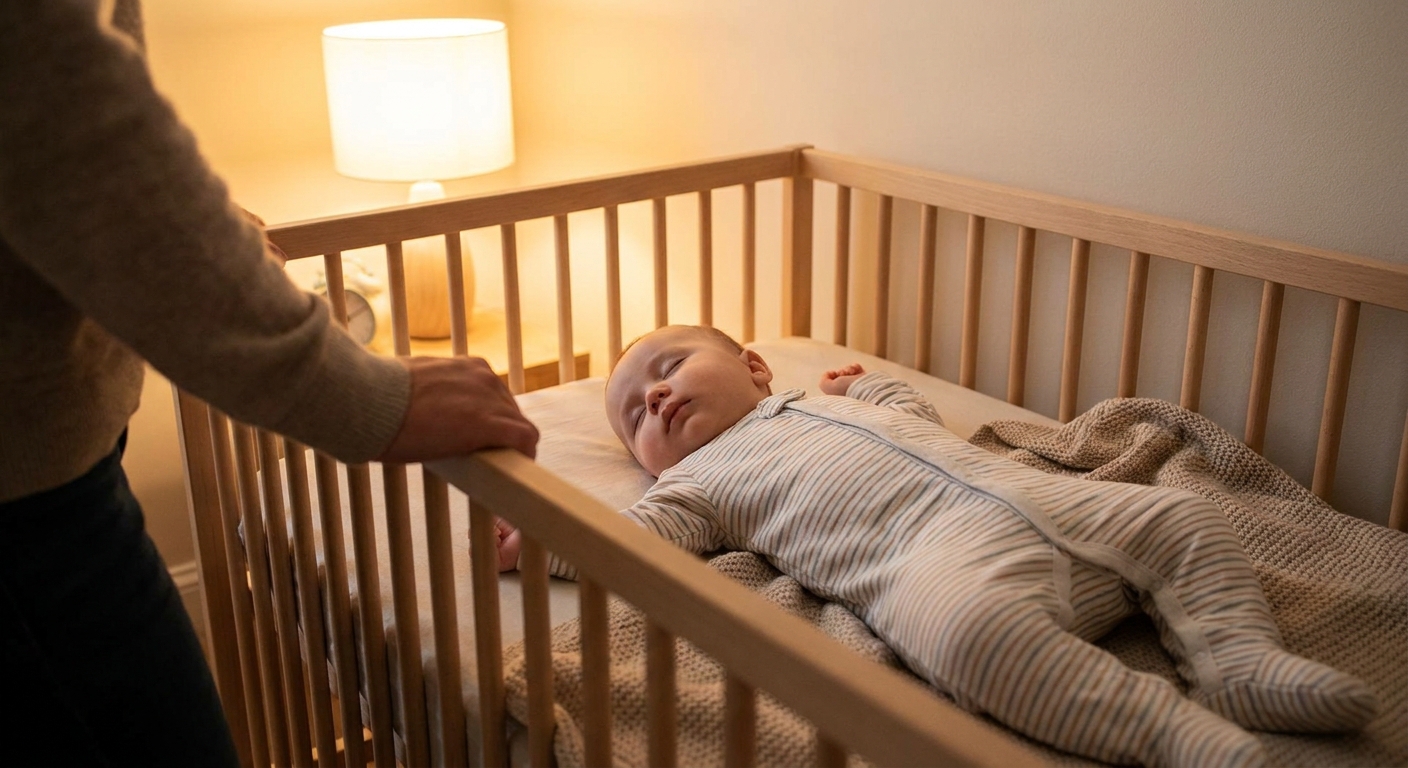
- Follow safe sleep basics, especially when you are exhausted. Baby should sleep alone, on their back, in a crib or bassinet. Avoid falling asleep with baby on a couch or adult bed.
If you were given a rescue medication plan (usually for longer seizures), keep it where you can find it fast and review the steps when you are calm.
Will it happen again?
Here is the honest answer: it might. Febrile seizures can recur, especially when the first one happens at a younger age or there is a family history.
Many families want numbers. A commonly quoted ballpark is that recurrence happens in roughly about 1 in 3 children (often cited around 30 percent), with higher risk when the first seizure happens early. The risk of later epilepsy is slightly higher than in children who never had febrile seizures, but still low overall for most kids. Your clinician can give you a more personalized estimate based on your baby’s age at first seizure, family history, seizure features (simple vs complex), and development.
What you can and cannot control
- You cannot always prevent a febrile seizure by treating fever quickly. Seizures often happen as the temperature is rising fast, sometimes before you even realize your baby is sick.
- You can control safety: know the side-lying position, time the event, and know your 911 thresholds.
- You can control your plan: talk with your pediatrician about what to do next time, and whether you should have rescue medication at home.
What doctors look for
In the ER or clinic, the goal is not to “prove it was febrile.” The goal is to make sure we are not missing something dangerous.
Depending on age, exam, and history, clinicians may:
- Check blood sugar and vital signs
- Look closely for a source of fever (ear infection, viral symptoms, urinary tract infection)
- Consider urine testing, especially in younger infants
- Decide if further testing is needed based on red flags (persistent altered mental status, concerning exam findings, very young age)
Many babies with a classic brief febrile seizure and a normal exam do not need extensive testing, but infants often get a more cautious approach than toddlers.
If you recorded a video
If you have a clip, it can be helpful to share it with your clinician. Before you go in, jot down these details:
- Exact duration (start and stop time)
- Whether movements were both sides or one-sided
- Any color change and whether baby seemed to breathe
- Your baby’s temperature and how you measured it
- Any recent vaccines and the date
- Other symptoms (runny nose, cough, vomiting, diarrhea, rash)
This turns a terrifying memory into usable medical information. And yes, you did something valuable by noticing and remembering.
Calm checklist
I hope you never need this again. But if you do, you will be ready.
- Keep your phone set so you can access the timer quickly.
- Know the side-lying position.
- Save your pediatrician’s after-hours number in your favorites.
- Ask your clinician to write down your personal ER threshold based on age and history.
- If you were given rescue medication, store it together with dosing instructions.
If your baby is under 6 months and has seizure-like activity with a fever, treat it as urgent and get in-person medical care right away. For older infants, any first-time seizure still deserves same-day evaluation, even if they look okay afterward.
If you want, tell me your baby’s age, how long the episode lasted, and what the fever was from (if you know). I can help you think through the safest next steps and which questions to ask at your visit.