Fifth Disease in Kids: Slapped Cheek Rash and What to Expect

Sarah Mitchell
Sarah Mitchell is a Registered Pediatric Nurse and a mother of three who has spent over a decade helping families navigate the beautiful, chaotic early years of childhood. She combines evidence-based medical knowledge with real-world parenting experience to offer practical, compassionate advice. At Awesome Parent, Sarah's mission is to help exhausted parents find solutions, trust their instincts, and finally get some sleep.
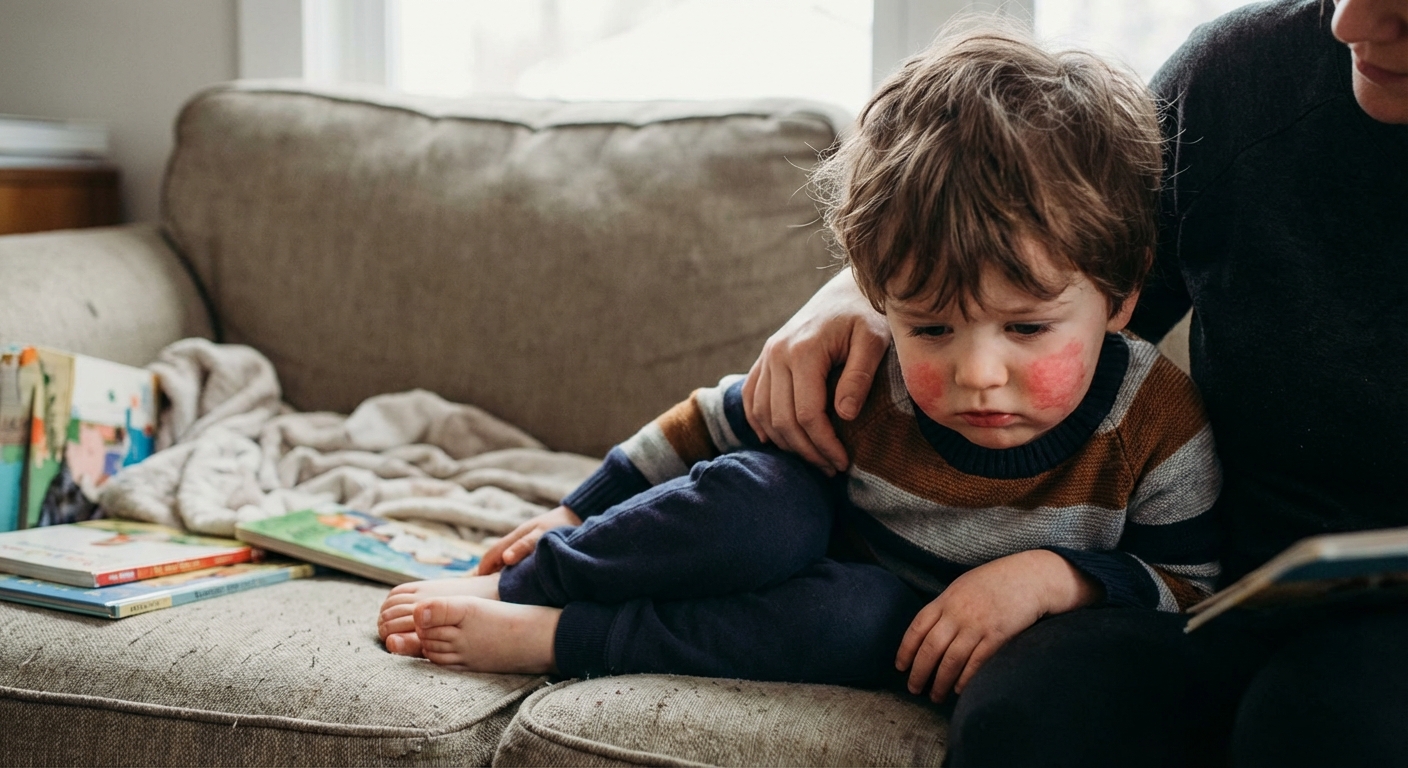
If your child’s cheeks suddenly look like they were kissed by a winter wind (or lightly “slapped” as the nickname goes), take a breath. Fifth disease is one of those childhood viruses that looks dramatic but is usually mild and self-limited. As a pediatric nurse and a mom who has seen plenty of mysterious rashes show up at bedtime, I can tell you: this one tends to be more alarming than dangerous.
Let’s walk through what fifth disease looks like, what to expect day-by-day, when kids are contagious, how it spreads, and the few situations where you should loop in a clinician promptly.
What is fifth disease?
Fifth disease is a common childhood illness caused by parvovirus B19. It often circulates in schools and daycares, especially in late winter and spring, but it can happen any time.
It spreads mainly through respiratory secretions such as saliva and nasal mucus, especially when kids cough or sneeze (and via hands that have been in the splash zone).
It’s called “fifth” because it was historically listed as the fifth of several classic childhood rash illnesses. The most recognizable sign is the bright red “slapped cheek” rash, followed by a lacy, net-like rash on the body.
Signs and symptoms
1) Mild cold symptoms (often before the rash)
Many kids have a few days of symptoms that look like a very ordinary virus. Some kids have no symptoms at all until the rash appears.
- Low-grade fever
- Runny nose
- Sore throat
- Headache
- Fatigue
2) The “slapped cheek” rash
After the early symptoms (or sometimes out of nowhere), cheeks become bright red. The skin around the mouth may look paler by comparison.
The cheeks can feel warm, and some kids say they itch. Others act completely unbothered while parents worry. Both reactions are normal.
3) The lacy body rash that follows
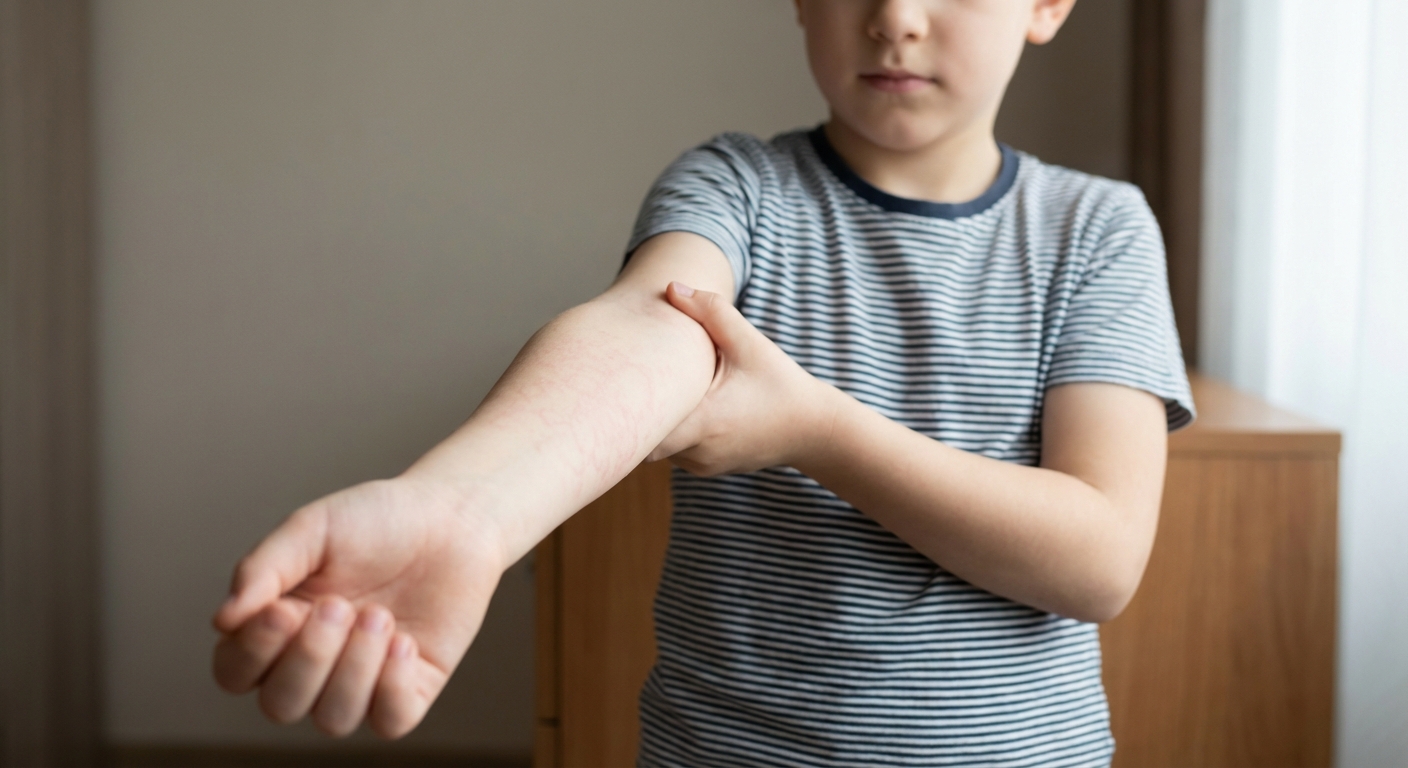
Over the next day or two, many kids develop a pink, lacy rash on the:
- Arms
- Legs
- Trunk (chest/back)
- Buttocks
This rash can come and go for 1 to 3 weeks (sometimes longer), especially if your child gets hot or flushed.
What to expect
Timing varies a lot. The incubation period (time from exposure to symptoms) is often about 4 to 14 days, and sometimes longer.
- Days 1 to 5: Mild viral symptoms, or nothing at all.
- Days 4 to 10: Cheek rash often appears.
- Next 1 to 3 days: Lacy rash on the body may show up.
- Next 1 to 3 weeks: Rash can fade and flare (heat, sun, exercise, hot baths, stress can bring it back temporarily).
Most kids feel fine by the time the rash is obvious. That mismatch is part of why fifth disease confuses parents: your child looks like they have a huge rash, but they are asking for snacks like nothing happened.
Is it contagious?
Yes, but the timing is surprising.
- Most contagious: Before the rash appears, during the mild cold-like phase (coughing, sneezing, runny noses, and shared germs).
- Generally less contagious: Once the slapped cheek rash and lacy rash show up.
So if your child is already sporting the classic cheeks, they typically picked it up earlier and may have already shared it. I know that is not comforting, but it is useful for school and daycare decisions.
A nuance worth knowing: children with weakened immune systems can sometimes have a longer course, including prolonged anemia, and may need clinician guidance about contagiousness and return to group settings.
Can my child go to school or daycare? Often yes, if they feel well enough. Keep them home if they have a fever, are too uncomfortable to participate, or if your school or daycare has a specific policy about rashes or outbreaks.
Home care
There is no specific antiviral treatment for uncomplicated fifth disease. Care is focused on comfort.
For fever or discomfort
- Fluids and rest
- Acetaminophen or ibuprofen as directed for age and weight (use weight-based dosing)
- Avoid aspirin in children and teens due to the risk of Reye syndrome
- Avoid ibuprofen under 6 months unless your clinician specifically recommends it
For itchiness
- Cool compresses
- Fragrance-free moisturizer
- Oatmeal bath (lukewarm, not hot)
- Talk to your pediatrician about an age-appropriate antihistamine if itching is keeping your child up
For the “why does it keep coming back?” rash flare
If the rash reappears after a warm bath or a day outside, it usually does not mean the infection is worsening or that your child became contagious again. It is a common, harmless flare.
When it’s usually mild
For most healthy children, fifth disease is mild and resolves on its own. The rash can look intense, but it is not typically dangerous, and it does not usually leave scars.
Some older kids and teens can have achy joints or mild swelling. In adults, joint pain can be more noticeable, especially in women. Even then, it usually improves with time.
When to be cautious
There are two situations where fifth disease deserves extra attention: pregnancy exposure and certain blood or immune conditions.
Pregnancy exposure
If a pregnant person is exposed to parvovirus B19 (for example, your child is diagnosed and you are pregnant, or a caregiver is pregnant), it’s worth contacting their OB or midwife. Many adults are already immune from past infection, and even when infection occurs, most pregnancies do well.
Rarely, infection during pregnancy can lead to fetal anemia and complications like hydrops, which is why the OB may recommend blood tests (often IgG/IgM) and sometimes ultrasound monitoring.
Call the OB or midwife if: you are pregnant and you had close contact with a confirmed or likely case, especially if you develop cold-like symptoms or a new rash.
Blood disorders or weak immune system
Parvovirus B19 can temporarily slow down red blood cell production. That is usually not a problem for healthy kids, but it can be serious for children who already have conditions affecting red blood cells or immunity.
Contact your child’s specialist or pediatrician promptly if your child has:
- Sickle cell disease
- Other chronic hemolytic anemias
- Known significant anemia
- Immune compromise (from medications, cancer treatment, transplant, or certain immune disorders)
When it might be something else
“Rash” is a big category, and fifth disease is only one piece of it. Reach out to your pediatrician if the picture does not fit, especially if your child looks sick.
- Measles concern: high fever plus cough, runny nose, and red eyes (especially if unvaccinated or exposed)
- Hives/allergy: raised, very itchy welts that come and go, especially with facial swelling or breathing symptoms
- Hand-foot-and-mouth: sores in the mouth and rash on hands and feet
- Scarlet fever: sore throat plus a sandpapery rash
When to call the doctor
Most fifth disease can be managed at home, but trust that gut feeling when something seems off. Call your pediatrician if:
- Your child is under 6 months and has a new rash or fever
- Fever is high, persistent, or your child seems unusually sleepy or irritable
- The rash is accompanied by significant swelling, widespread hives, or intense itching
- Your child has joint swelling or pain that limits movement
- Your child has a blood disorder or weakened immune system
- You are pregnant or someone in the household is pregnant and there was close exposure
Seek urgent care or emergency care if you notice:
- Trouble breathing
- Signs of dehydration (very dry mouth, no tears, not peeing, extreme lethargy)
- Blue or gray lips
- A rapidly spreading purple or bruise-like rash
- Severe headache, stiff neck, or your child is hard to wake
How it’s diagnosed
Most of the time, clinicians diagnose fifth disease based on the typical story and the classic rash pattern. Lab testing is not usually necessary for a healthy child with a straightforward case.
Testing may be considered when:
- A pregnant person has been exposed
- A child has an underlying blood disorder or immune compromise
- The presentation is atypical and your clinician wants to rule out other causes
Can kids get it twice?
Most kids develop lasting immunity after infection, so repeat infections are uncommon. That said, rashes can flare for weeks after the initial illness, which can look like it is “back” even though it is part of the same infection.
Quick reassurance
If your child has bright red cheeks, a lacy body rash, and otherwise seems okay, fifth disease is a very likely culprit and it is usually mild. The rash often shows up after the most contagious stage, and it frequently looks worse than your child feels.
If you want, take a photo of the rash in good lighting and jot down: when the fever started (if any), when the cheeks turned red, and whether your child is eating, drinking, and peeing normally. That information is gold if you call your pediatrician.
Sources
- Centers for Disease Control and Prevention (CDC): Parvovirus B19 and Fifth Disease (Erythema Infectiosum)
- American Academy of Pediatrics: HealthyChildren.org guidance on parvovirus B19
- Mayo Clinic: Fifth disease overview and symptoms