A calm, practical guide to toddler flu: how to tell it from a cold, what symptoms look like day by day, safe at-home care, Tamiflu considerations, ER warning...
Flu in Babies Under 12 Months: Red Flags and When to Call the Doctor

Sarah Mitchell
Sarah Mitchell is a Registered Pediatric Nurse and a mother of three who has spent over a decade helping families navigate the beautiful, chaotic early years of childhood. She combines evidence-based medical knowledge with real-world parenting experience to offer practical, compassionate advice. At Awesome Parent, Sarah's mission is to help exhausted parents find solutions, trust their instincts, and finally get some sleep.
If you are reading this with one hand while the other holds a warm, fussy baby, I see you. Flu season can feel extra scary in the first year of life, not because you are doing anything wrong, but because babies have tiny airways, less ability to compensate when sick, and they dehydrate faster than older kids.
This page will help you sort out what to watch for, what to do at home, when to call your pediatrician, and when you should skip the waiting and get urgent medical help.

Why flu is different in babies
Toddlers can feel miserable with influenza and still keep drinking, breathing comfortably, and bouncing back after a few days. Babies under 12 months often cannot.
- Babies dehydrate faster. They have smaller fluid reserves, and fever plus fast breathing burns through fluids quickly.
- Smaller airways. A little swelling or mucus can make breathing harder, especially in babies under 6 months.
- They cannot tell you what hurts. In infants, flu may show up as poor feeding, unusual sleepiness, or nonstop fussiness rather than a dramatic “I feel awful” complaint.
- Higher risk of complications. Infants are at higher risk for severe flu, including pneumonia and breathing trouble.
Bottom line: the threshold to call your child’s clinician is lower in the first year, especially under 3 months.
Flu symptoms in babies
Influenza often comes on quickly. Many parents tell me it felt like their baby was “fine at breakfast and miserable by lunch.”
Common symptoms
- Fever (not always)
- Cough
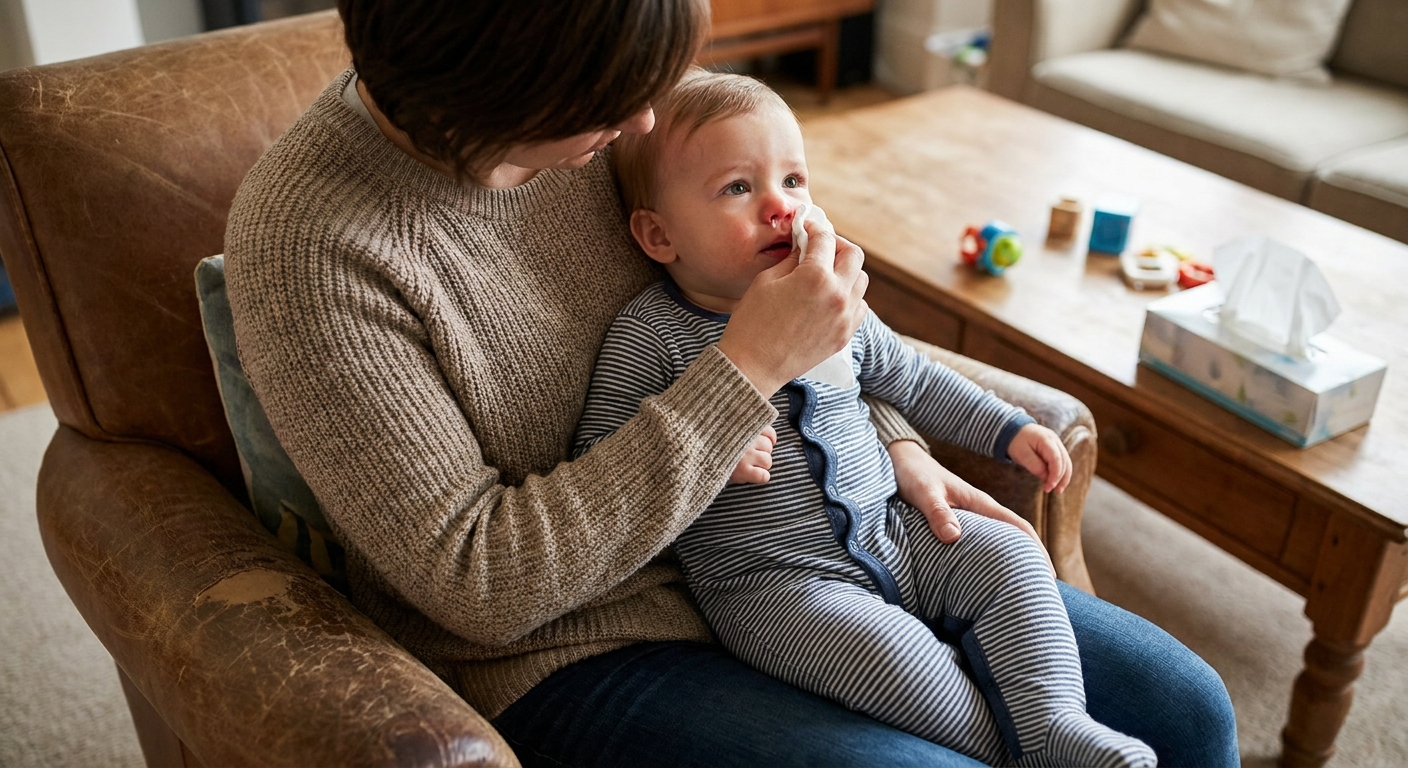
- Runny or stuffy nose
- Fussiness or irritability
- Sleepiness or low energy
- Poor feeding
- Vomiting or diarrhea (can happen with flu)
What can look similar
RSV, COVID, the common cold, and ear infections can look very similar early on. In young babies, doctors also use the term bronchiolitis for a common wheezing and mucus-filled chest illness, which is often caused by RSV (but can be caused by other viruses too). The “right” diagnosis matters because it changes what your pediatrician watches for and whether antivirals are recommended.
Red flags: get help fast
In triage, we focus on two big dangers with infant flu: breathing trouble and dehydration. Here is what should raise your alarm.
Breathing red flags (urgent)
- Struggling to breathe: ribs sucking in, belly pulling hard, nostrils flaring, or grunting
- Breathing so fast they cannot comfortably feed, or breathing much faster than usual
- Pauses in breathing or color changes
- Blue, gray, or very pale lips/face
- Wheezing or harsh, persistent cough with visible effort
- Too tired to wake for feeds or seems weak and floppy
Dehydration red flags (call same day, sometimes urgent)
- Fewer wet diapers: a clear drop from normal is concerning. As a rough guide, fewer than about 3 to 4 wet diapers in 24 hours can be a red flag, and you should call sooner for younger babies (especially under 6 months).
- Very dry mouth, no tears when crying, or sunken soft spot
- Repeated vomiting or vomiting everything
- Refusing feeds or taking much less than normal
Fever red flags by age
- Under 3 months: any fever of 100.4°F (38°C) or higher is a call now and needs urgent medical evaluation.
- 3 to 12 months: fever plus poor feeding, lethargy, breathing concerns, or dehydration needs a call. Fever alone may be okay to monitor briefly, but trust your gut.
When to seek urgent evaluation now
- Any breathing distress or color change
- Unusual sleepiness or difficult to wake
- Signs of severe dehydration (very few wet diapers, sunken soft spot, very dry mouth, weak cry)
- Seizure
- Baby under 3 months with fever
Where to go: If you are seeing these signs, seek urgent medical care now (ER, urgent care, or same-day pediatric evaluation as directed by your clinician and what is available where you live).
If you are debating whether it is “bad enough,” that is often your answer. You do not need to be 100 percent sure to seek care.
Should my baby be tested?
Sometimes. Testing decisions depend on your baby’s age, symptoms, current flu activity in your community, and whether the result will change treatment.
Your clinician may recommend a nasal swab test when:
- Your baby is under 12 months and has concerning symptoms
- There are high-risk household members (newborns, elderly relatives, immunocompromised family)
- The clinician is considering antiviral medication
- They need to distinguish flu from other infections with different care plans
If testing is not offered, it is usually because your baby is stable and the plan would be the same either way: supportive care and close monitoring.
Antivirals: what to know
Antiviral medicine (most commonly oseltamivir, also known by a brand name many parents recognize) does not “erase” the flu. But in infants, it may reduce severity or shorten illness, especially when started early.
Timing matters
Antivirals work best when started within about 48 hours of symptom onset. That said, doctors may still prescribe them later for babies who are very ill or at higher risk for complications.
Age details parents ask about
Oseltamivir is FDA-approved for treatment down to 14 days old, and clinicians may recommend it in some younger infants based on current pediatric guidance. Your pediatrician will decide what is appropriate for your baby’s age, weight, and risk factors.
Who is more likely to be offered antivirals
- Babies under 12 months, especially under 6 months
- Infants with breathing problems, dehydration, or complications
- Babies with underlying medical conditions (prematurity, heart or lung conditions, immunocompromise)
Possible side effects
The most common side effects are nausea and vomiting. Your clinician will weigh the potential benefit against side effects and your baby’s current feeding and hydration status.
Important note: only a clinician who knows your baby’s age, weight, and medical history can decide whether an antiviral is appropriate and what dose is safe. If you suspect flu, call early rather than waiting it out for a few days.
Home care that helps
Supportive care is not “doing nothing.” For babies, the basics are powerful.
1) Focus on fluids
- Offer breast milk or formula more often, in smaller amounts.
- If your baby is vomiting, try frequent tiny feeds and ask your pediatrician if an oral rehydration solution is appropriate for your baby’s age.
- Count wet diapers. It is one of the best at-home “vital signs” you have.
2) Ease congestion so they can feed
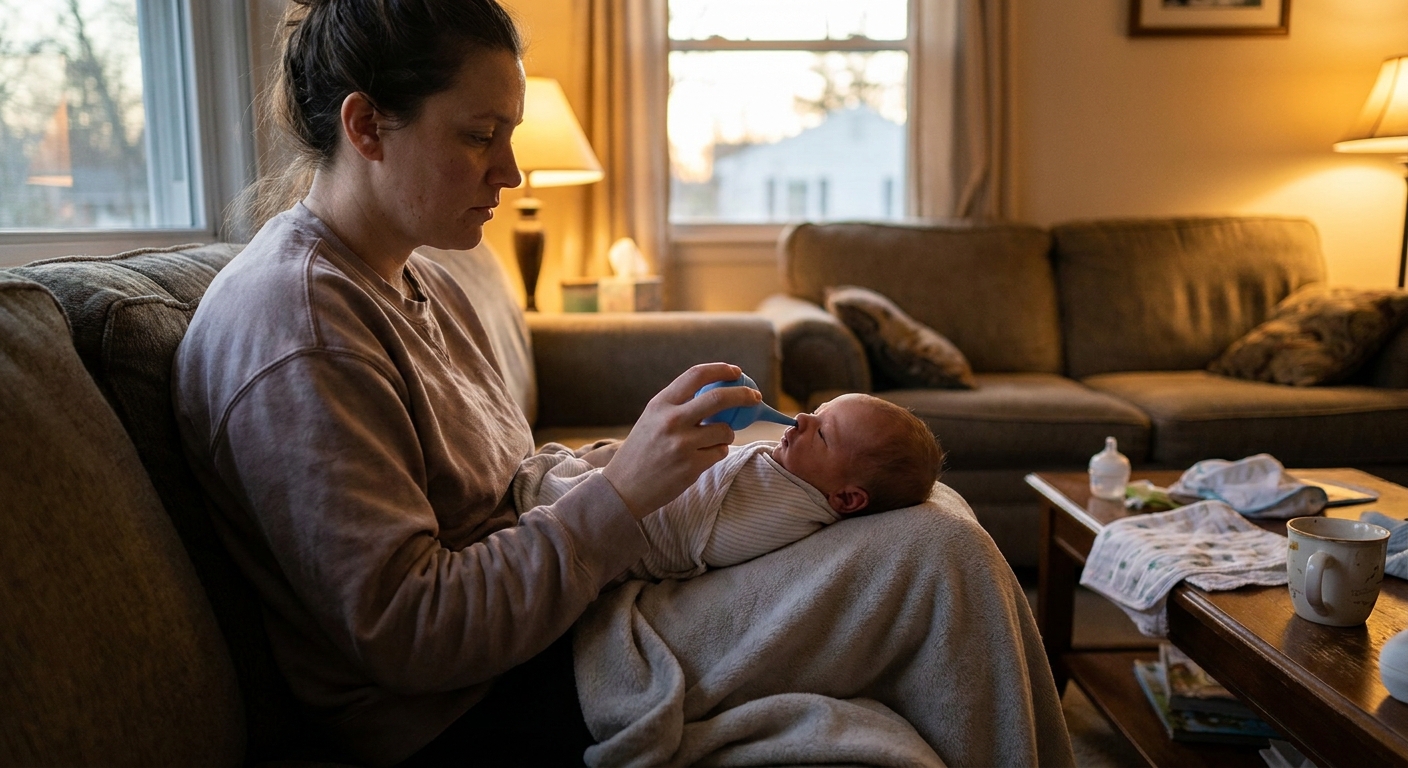
- Use saline drops and gentle suction before feeds and sleep.
- Run a cool-mist humidifier in the room.
- Keep your baby upright during feeds (as much as is safe and comfortable).
3) Fever comfort and medication safety
- Dress baby in light layers. Over-bundling can trap heat.
- If your clinician recommends medication, use infant dosing based on current weight and follow their instructions.
- Do not give ibuprofen (Motrin/Advil) to babies under 6 months unless your clinician specifically tells you to.
- Do not give aspirin to children.
- Do not give honey to babies under 12 months (even if the cough is miserable).
4) Sleep and monitoring
Let your baby sleep, but check in often. If your baby is sleeping so deeply that they are hard to wake for feeds, that is a call-now symptom.
5) What not to do
- No OTC cough and cold medicines for infants.
- Avoid putting essential oils or mentholated rubs on or near your baby’s nose.
- Avoid hot steam setups that can cause burns. If you use steam from a shower to loosen mucus, keep it gentle and keep your baby safely away from hot water.

When to call the pediatrician
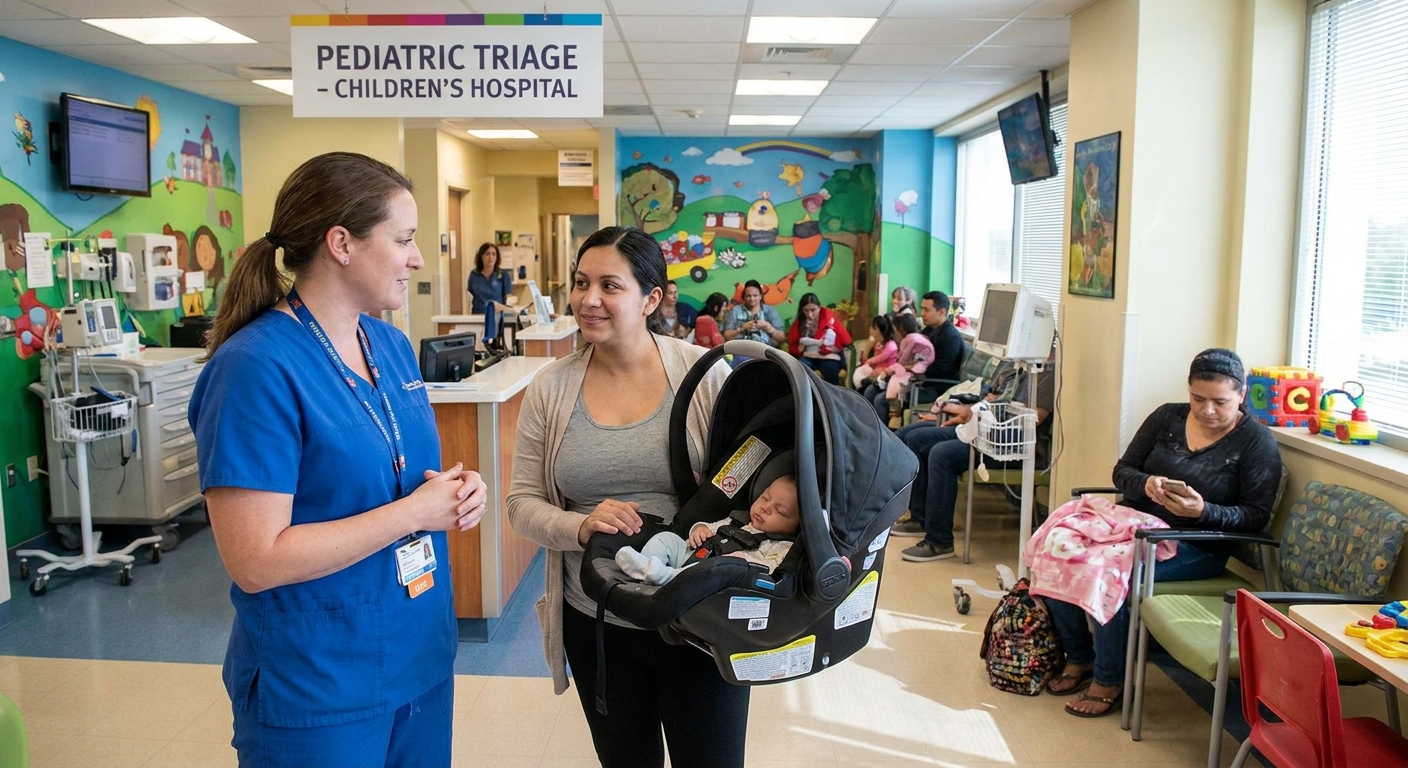
If your baby is under 12 months and you suspect flu, it is reasonable to call within the first day, especially during high flu activity. Call sooner if your baby is younger, was born prematurely, has a chronic condition, or looks worse than a typical cold.
Call today if
- Your baby is under 12 months with flu symptoms and reduced feeding
- Fever is high (for example 104°F or 40°C), lasts more than 3 days, or returns after improving
- Your baby is under 3 months with any fever of 100.4°F (38°C) or higher
- Cough is worsening, sleep is disrupted by breathing, or you hear persistent wheezing
- You are seeing early dehydration signs (fewer wet diapers, very dry mouth)
- Your baby has any chronic medical condition or was born prematurely
What helps triage most
- Your baby’s age and weight
- Temperature and how you took it (rectal is most accurate in young infants)
- Breathing description: fast, pulling in at ribs, grunting, color changes
- How much your baby has taken in the last 6 to 12 hours
- Number of wet diapers in the last 24 hours
- When symptoms started (this matters for antiviral timing)
Quick note on taking a temperature
If you have a baby under 3 months and you are making a decision about fever, a rectal temperature is the most reliable. Forehead scanners and some ear thermometers can be less accurate in very young babies. If you are not sure, call and ask what your clinic recommends.
How long flu lasts
Many babies have the worst symptoms for 3 to 5 days, with cough and fatigue sometimes lingering for 1 to 2 weeks. Call your clinician if your baby seems to improve and then suddenly worsens, or if breathing gets harder at any point.
Protecting your baby
Babies under 6 months are too young for a flu shot, so they rely heavily on the adults and older kids around them.
- Vaccinate caregivers and siblings if eligible. It is one of the best ways to protect an infant.
- Hand hygiene: wash hands before feeding or holding baby.
- Limit close contact with sick visitors, even if they “just have allergies.”
- Masking can be a reasonable short-term layer during outbreaks or if someone in the home is ill.
If someone in the household has confirmed flu, ask your pediatrician whether your baby needs extra monitoring or preventive medication based on age and risk factors.
Quick checklist
- If your baby is under 3 months and has a fever: get urgent medical guidance now.
- Watch breathing and hydration first.
- Call early if symptoms started within the last 48 hours, since antivirals may be time-sensitive.
- Get urgent help now for breathing distress, color change, severe dehydration, seizure, or unusual difficulty waking.
You do not need to win an award for “toughing it out.” If your instincts say this is more than a cold, listen to that voice and call.
Sarah Mitchell
Sarah Mitchell is a Registered Pediatric Nurse and a mother of three who has spent over a decade helping families navigate the beautiful, chaotic early years of childhood. She combines evidence-based medical knowledge with real-world parenting experience to offer practical, compassionate advice. At Awesome Parent, Sarah's mission is to help exhausted parents find solutions, trust their instincts, and finally get some sleep.