Flu in Toddlers: Symptoms, Treatment, and When to See the Doctor

Sarah Mitchell
Sarah Mitchell is a Registered Pediatric Nurse and a mother of three who has spent over a decade helping families navigate the beautiful, chaotic early years of childhood. She combines evidence-based medical knowledge with real-world parenting experience to offer practical, compassionate advice. At Awesome Parent, Sarah's mission is to help exhausted parents find solutions, trust their instincts, and finally get some sleep.
If you are reading this at 3 AM with a warm little forehead pressed against your shoulder, I see you. Flu season has a way of showing up fast and loud, especially in toddlers. The good news is most kids recover at home with supportive care. The key is knowing what to watch for, what actually helps, and when it is time to call your pediatrician or head in.

Flu vs. cold in toddlers
Colds and flu can look similar at first, but the flu tends to hit harder and faster. Think: your toddler was okay-ish at breakfast and by lunchtime they are wiped out.
Typical cold
- Starts gradually over a day or two
- Mild to moderate symptoms
- Runny or stuffy nose is often the main event
- Sore throat and cough are common
- Fever may be low-grade or absent
- Energy is usually only a little reduced
Typical flu
- Starts suddenly
- Higher fever is common
- Big body aches or your child seems “hurts all over”
- Significant fatigue, more sleepiness, less interest in play
- Headache can happen (toddlers may just be extra cranky)
- Dry cough is common
- Vomiting or diarrhea can occur, especially in kids
Reality check: You cannot always tell by symptoms alone. If you need to know for sure, a clinic test can confirm flu.
Flu symptom timeline: what to expect
Every child is different, but this is a common pattern I saw over and over in pediatric triage and then again in my own house.
Days 1 to 2
- Sudden fever (often 100.4°F to 104°F or 38°C to 40°C)
- Chills, crankiness, low appetite
- Body aches, headache
- Cough may start or build quickly
Days 3 to 5
- Fever often improves, but cough and congestion can ramp up
- Energy slowly returns in short bursts
- Sleep may still be messy
Days 6 to 10
- Most toddlers are clearly improving
- Cough can linger and sound worse at night
- Appetite may take time to bounce back
Lingering cough is common for 1 to 2 weeks after flu. What we do not want is a child who improves and then suddenly gets worse again.
Home treatment: what actually helps
For most toddlers, flu care is supportive. Your job is comfort and hydration, and your toddler’s job is to be unimpressed with every plan you make. Fair trade.
1) Fluids and hydration
Dehydration is one of the top reasons little kids with flu end up needing medical care.
- Offer small, frequent sips: water, milk, broth, oral rehydration solution, popsicles.
- If vomiting, start with tiny amounts (like 1 to 2 teaspoons every few minutes) and build up.
- Watch urine output: fewer wet diapers or very dark urine is a red flag.
2) Fever and pain control (safe options)
Fever is part of how the body fights infection. We treat fever mainly to help your toddler feel better and drink more.
- Acetaminophen (Tylenol) and ibuprofen (Motrin, Advil) are generally safe when dosed by your child’s weight.
- Do not use aspirin in children due to the risk of Reye syndrome.
- Do not use over-the-counter cough and cold combo medicines for children under 4 unless your pediatrician specifically tells you to. They can cause side effects and do not reliably help.
Dosing note: Because safe doses depend on weight and the exact product concentration, use your pediatrician’s dosing chart or ask your pharmacist to confirm the correct dose for your child’s current weight.
3) Congestion and cough relief
- Saline spray or drops plus gentle suction (especially before meals and sleep).
- Cool-mist humidifier in the bedroom. Clean it daily to prevent mold.
- Honey for cough if your child is over 12 months: 1/2 to 1 teaspoon as needed. (No honey under 1 year.)
- Warm baths and steamy bathroom time can loosen mucus.
- Elevate the head safely: For toddlers, you can slightly elevate the mattress by placing a towel under the mattress, not pillows under the child.

4) Rest and realistic expectations
Flu fatigue is real. Your toddler may sleep more, play less, and melt down faster. Lower the bar, rotate quiet activities, and accept help if it is offered.
Tamiflu for toddlers: what to know
Tamiflu (oseltamivir) is an antiviral medication. It does not “cure” the flu instantly, but it can shorten illness by about a day for some kids and may reduce complications in higher-risk children.
When it helps most
- Best started within 48 hours of symptom onset.
- Often recommended for kids who are at higher risk of severe flu, including:
- Children under 5, especially under 2
- Asthma or chronic lung disease
- Heart conditions
- Neurologic conditions
- Diabetes or metabolic conditions
- Immune compromise
- Significant medical complexity
- May also be prescribed for otherwise healthy toddlers with confirmed or strongly suspected flu depending on local flu activity and symptom severity.
Common side effects
- Nausea and vomiting are the most common.
- Less commonly: stomach pain, headache.
- Rarely: unusual behavior or confusion has been reported. If you see concerning behavior changes, call your doctor right away.
Bottom line
If your toddler is within the first 1 to 2 days of symptoms, has significant symptoms, or has any high-risk condition, it is worth calling your pediatrician the same day to ask whether Tamiflu makes sense.
When to call the pediatrician
Call your child’s doctor for advice if:
- Your child is under 2 and you suspect flu.
- Fever lasts more than 3 days or returns after going away.
- Your child has ear pain, new drainage from the ear, or is suddenly very fussy and not sleeping (possible ear infection after a viral illness).
- Your child has asthma or uses inhalers more than usual.
- Cough is worsening or your child seems to be working harder to breathe.
- Your child is not drinking well, is peeing less, or you are worried about dehydration.
- Your child improves and then gets worse again (possible secondary infection like pneumonia).
Go to the ER now: red-flag signs
Trust your gut. If your toddler looks very ill, you do not need to win an argument with Google first.
- Trouble breathing: fast breathing, struggling to breathe, ribs pulling in with breaths, grunting, or flaring nostrils
- Blue, gray, or very pale lips or face
- Signs of dehydration: very dry mouth, no tears when crying, significantly fewer wet diapers or no urine for 8 to 12 hours, extreme sleepiness
- Unusual sleepiness, hard to wake, limp, or not interacting
- Seizure
- Severe or persistent vomiting or inability to keep fluids down
- Stiff neck, severe headache, or sensitivity to light (in a toddler this may look like extreme irritability and inability to be comforted)
- Fever in a baby under 3 months (100.4°F / 38°C or higher) is always urgent
If you are unsure whether it is “ER-worthy,” call your pediatrician’s after-hours line or local nurse advice line. That is exactly what they are there for.
Flu testing: do you need it?
Not always. Many families can manage flu at home without a test. Testing is most helpful when:
- Your child may be eligible for an antiviral and is early in the illness.
- Your child is high-risk or appears more ill.
- The diagnosis would change school or childcare decisions in your household.
- Your pediatrician wants to rule out other issues (like COVID-19 or RSV), depending on current circulation.
Preventing spread at home
Flu is contagious. You can reduce spread with a few realistic moves.
- Hand hygiene: wash hands after wiping noses, before food, after the bathroom.
- Wipe high-touch surfaces: doorknobs, tablet screens, light switches, toys.
- Separate cups and utensils.
- Teach “cough into your elbow”, and then expect zero follow-through for a while.
- Keep your child home until fever-free for 24 hours without fever-reducing medicine and energy is returning.

Flu vaccine for toddlers
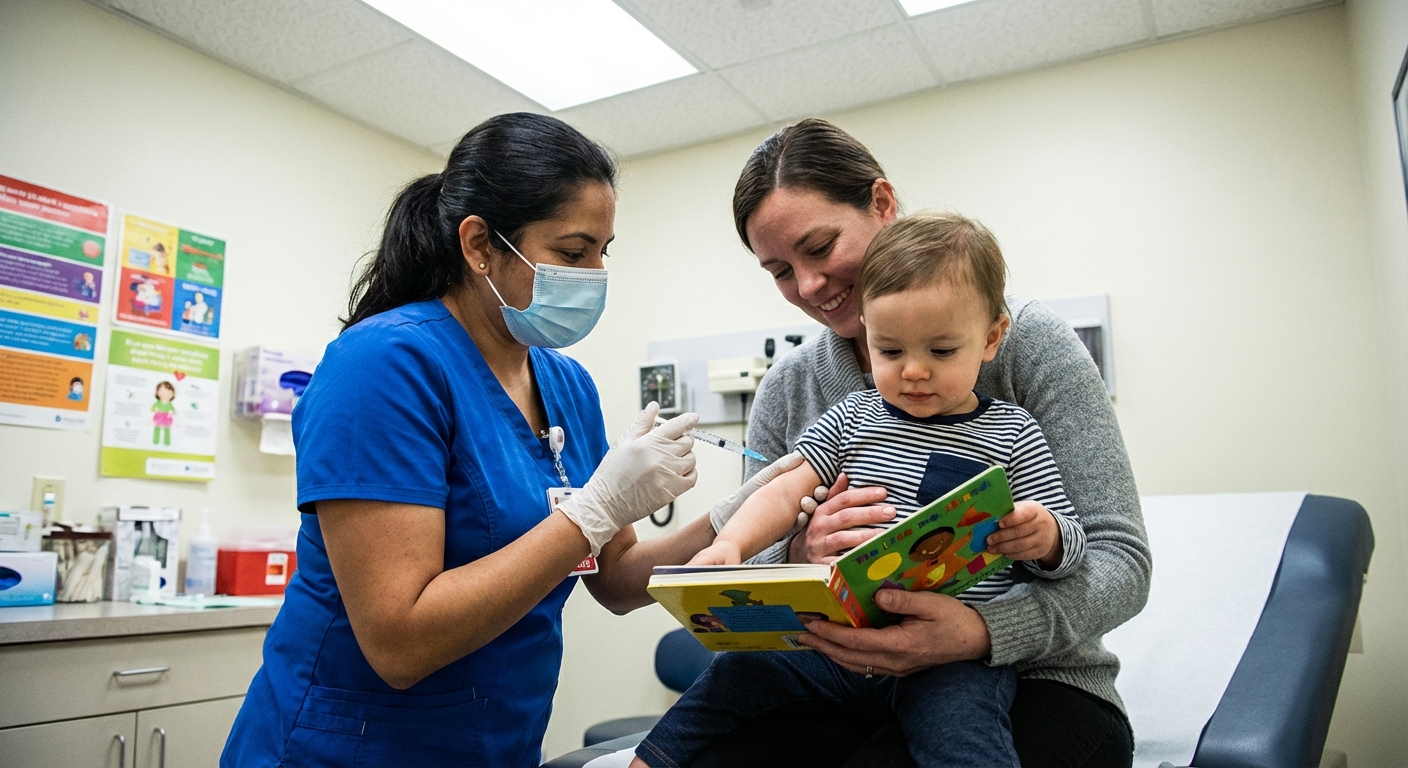
The flu shot is still the best tool we have to reduce the risk of severe flu, hospitalization, and complications in kids.
Who should get it
- Everyone 6 months and older should get a flu vaccine each year, unless their clinician advises otherwise.
When to get it
- Ideally before flu starts spreading widely in your community. Many families aim for early fall, but getting it later is still worthwhile while flu is circulating.
Two doses the first season for some kids
- Some children ages 6 months through 8 years need two doses in a season if they have not previously received enough flu vaccine doses. Your pediatrician or pharmacy can confirm based on your child’s record.
Flu shot with egg allergy
In most cases, yes. Current guidance allows flu vaccination for people with egg allergy. If your child has had a severe allergic reaction to a flu vaccine in the past, discuss the safest plan with your pediatrician.
Nasal spray vaccine
The nasal spray vaccine is approved for some people, including healthy children 2 years and older. It is not approved for children under 2 and is not recommended for certain health conditions. Your pediatrician can tell you what is appropriate for your toddler.
Quick checklist
- Fluids first, then food.
- Treat fever for comfort using weight-based dosing.
- Use saline, suction, humidifier, and honey (over 12 months) for cough and congestion.
- Ask about Tamiflu early if your child is high-risk or within 48 hours of symptoms.
- Watch breathing and hydration closely.
- Go in right away for red-flag symptoms.
When in doubt, call. If you are unsure about dosing, symptoms, or whether your child needs to be seen, your pediatrician’s office, after-hours line, or pharmacist can help you decide the next right step.
This article is for general education and does not replace medical advice. If you think your child is having an emergency, call your local emergency number or go to the nearest ER.