Songs, choices, playful routines, and calm boundaries that work. Plus toddler brushing technique, fluoride amounts by age, and what to do during a meltdown.
Fluoride Toothpaste for Babies and Toddlers: Safe Amounts by Age

Sarah Mitchell
Sarah Mitchell is a Registered Pediatric Nurse and a mother of three who has spent over a decade helping families navigate the beautiful, chaotic early years of childhood. She combines evidence-based medical knowledge with real-world parenting experience to offer practical, compassionate advice. At Awesome Parent, Sarah's mission is to help exhausted parents find solutions, trust their instincts, and finally get some sleep.
If you have ever tried to brush a tiny human’s teeth, you already know the truth: most toothpaste does not get “spit.” It gets licked, swallowed, or smeared on a cheek like frosting.
The good news is that fluoride toothpaste is still safe and recommended for babies and toddlers when you use the right amount. Fluoride helps prevent cavities by strengthening enamel, and in the real world, preventing cavities early matters a lot.
Quick answer: how much by age
Here is the simple “rice-sized vs. pea-sized” guidance used by pediatric and dental organizations.
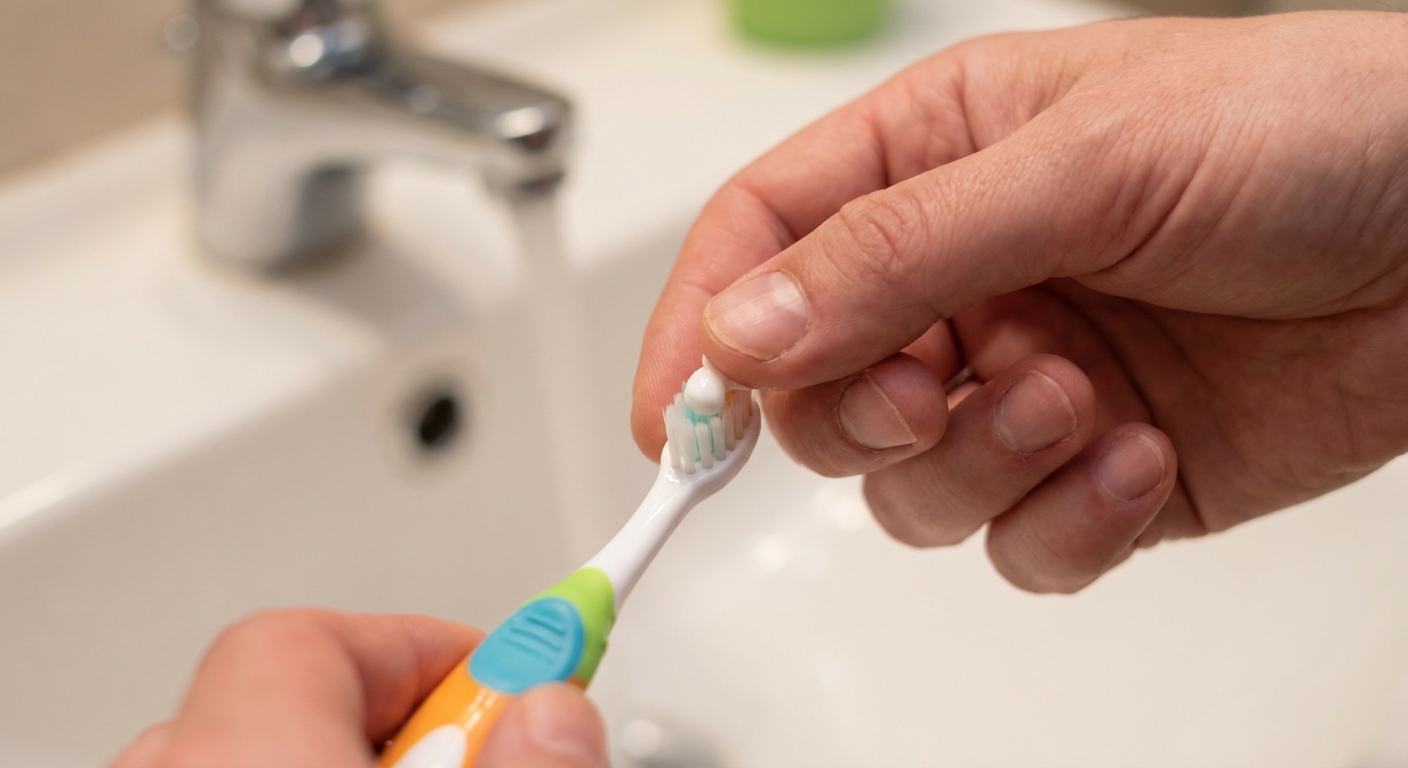
- First tooth to age 3: Use a smear of fluoride toothpaste, about the size of a grain of rice.
- Age 3 to 6: Use a pea-sized amount of fluoride toothpaste.
- Age 6 and up: Use no more than a pea-sized amount, with an emphasis on spitting and not swallowing.
Bottom line: Start fluoride toothpaste when the first tooth appears, use tiny amounts early, and supervise brushing for years. If you are thinking, “My kid will absolutely swallow it,” you are not alone. The amounts above are designed with that reality in mind.
When to start fluoride toothpaste
Start at the first tooth
As soon as you see that first little tooth, you can start brushing twice a day with a smear of fluoride toothpaste.
Before teeth, wipe the gums
Even before teeth, it is helpful to wipe baby’s gums with a clean, damp washcloth after feeds or before bed. It is not about perfection. It is about getting your baby used to “mouth care” as part of the routine.

Why fluoride is recommended
Fluoride works in two main ways:
- Topical protection: It strengthens tooth enamel where the toothpaste touches the teeth.
- Remineralization support: It helps early weak spots rebuild minerals before they turn into full cavities.
Because cavities can start as soon as teeth come in, waiting until a child can reliably spit often means waiting too long for prevention. That is why the recommendation is fluoride toothpaste in very small amounts, plus adult supervision.
What “rice” and “pea” really mean
Rice-sized smear (first tooth to age 3)
Think: a thin swipe across the bristles, not a blob. If it looks like you could take a bite of it, it is too much.
Pea-sized (age 3 to 6)
A small pea. Not a grape. Not a blueberry. A pea.
If your child insists on pumping their own toothpaste, try putting the toothpaste on the brush yourself and letting them do the “honors” by holding the brush.
Spitting vs. swallowing
Babies and young toddlers usually swallow
This is developmentally normal. They do not have the coordination to spit well, and many think toothpaste is “snack adjacent.” Using the rice-sized smear keeps fluoride exposure low while still protecting teeth.
Many kids learn to spit between 3 and 6
Some learn at 3. Some are still working on it at 5. Some take longer. If your child is in the “swallowing phase,” keep using the recommended amount for their age and keep supervising.
How to teach spitting
- Practice with water during bath time. Small sip, lean forward, spit.
- Make it a game: “Can you spit like a fountain into the sink?”
- Model it by brushing next to them and spitting yourself.
What if my child eats toothpaste?
This happens. Tubes get squeezed. Caps get left off. Toddlers move fast.
If they swallowed the normal brushing amount
If you used the recommended rice-sized or pea-sized amount and they swallowed it, you can consider it a normal day. Offer a sip of water and move on.
If they ate a big mouthful
A large amount can cause stomach upset like nausea, vomiting, or diarrhea, especially if it is swallowed on an empty stomach.
- Wipe out the mouth and remove any remaining toothpaste.
- Offer water and keep an eye out for vomiting or persistent belly pain.
- Consider milk or yogurt if your child can have dairy while you contact Poison Control. Calcium can help bind fluoride in the stomach, but it is not a substitute for professional advice.
- Do not induce vomiting.
- Call Poison Control for personalized advice: 1-800-222-1222 (US). If you are outside the US, call your local poison center.
When to get urgent help
Call emergency services or go to urgent care if your child has trouble breathing, severe or ongoing vomiting, extreme sleepiness, or you cannot keep fluids down.
Choosing a fluoride toothpaste
You do not need anything fancy. Look for:
- Fluoride listed as an active ingredient.
- A flavor your child will tolerate, but not one that encourages eating it like candy.
- If you prefer, a toothpaste labeled for kids. Many are milder, but the key is still fluoride + the right amount.
A quick reality check: for most families, “fluoride toothpaste” means a standard over-the-counter toothpaste (often around 1,000 to 1,450 ppm fluoride, depending on the product and region). Prescription-strength toothpastes and fluoride gels are different. Use those only if your dentist specifically recommends them.
If your child has special health needs, enamel defects, or you have been told your water has high fluoride, ask your pediatrician or pediatric dentist what is best for your family.
How to brush (real-life tips)
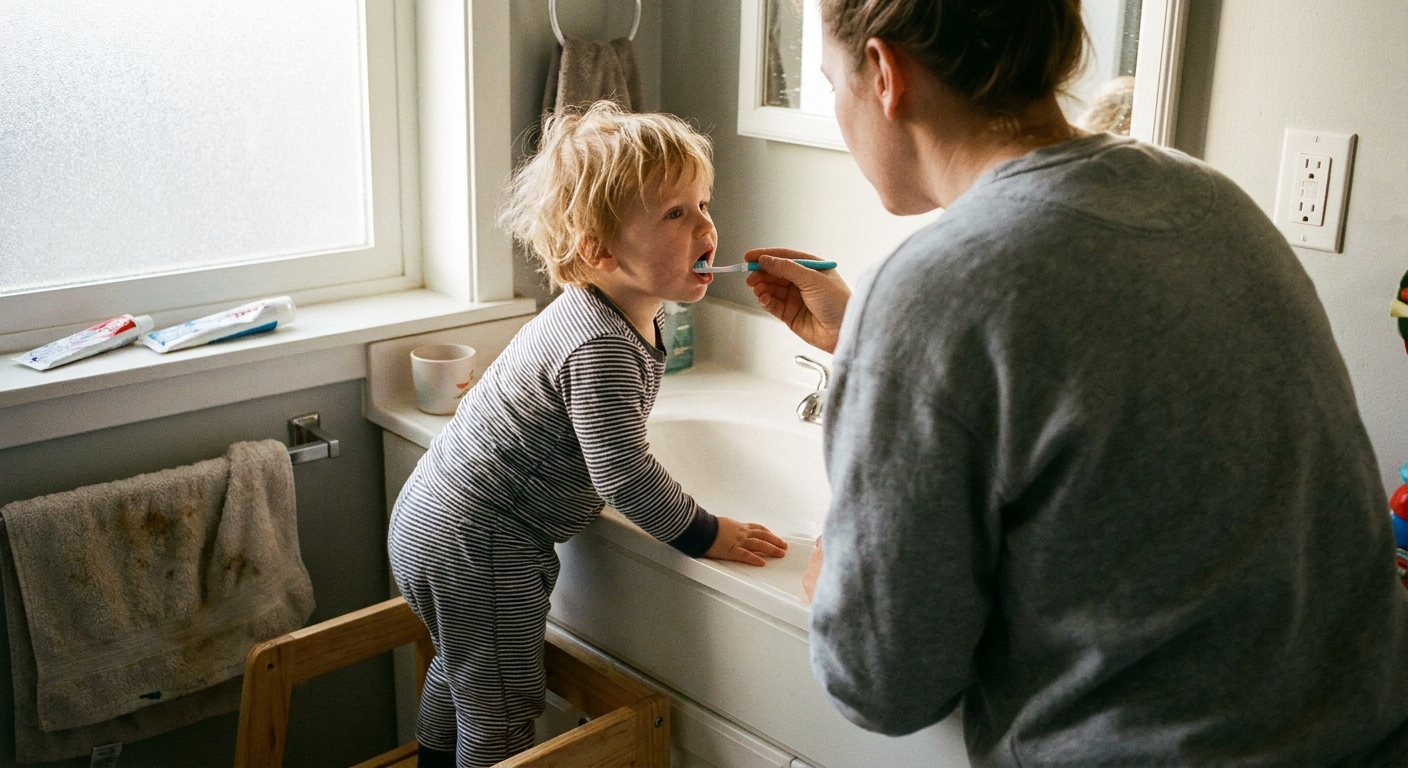
Baby and young toddler
- Brush twice a day, especially before bed.
- Use a soft, small toothbrush.
- Aim for two quick passes over each tooth. It does not need to be perfect to be helpful.
Older toddler and preschooler
- Let them try first, then you do a quick “parent finish.”
- Keep toothpaste to the pea-sized amount after age 3.
- Supervise brushing and toothpaste until they are reliably spitting and not sucking toothpaste off the brush. For many kids, that means active help until about age 7 to 8.
First dentist visit
If you have not already, aim to establish a “dental home” by age 1 or within 6 months of the first tooth. It is usually quick, surprisingly helpful, and it sets you up with personalized guidance on fluoride, brushing, and cavity risk.
FAQ
Should I wait to use fluoride until my child can spit?
Most pediatric guidance supports fluoride toothpaste from the first tooth, using a rice-sized smear, because cavity prevention starts early and swallowing is expected at first. If you are concerned due to your child’s health history or fluoride exposure from water, check in with your pediatrician or dentist.
Does fluoride cause fluorosis?
Fluorosis is usually linked to too much fluoride over time while teeth are developing. Using the right tiny amount of toothpaste and supervising brushing greatly lowers the risk. The bigger day-to-day risk I see in clinic is actually the opposite: early cavities from not enough fluoride protection.
What about fluoride in drinking water?
Fluoridated water can add protection against cavities. If you use well water, filtered water, or bottled water, ask your child’s dentist or pediatrician whether your child needs additional fluoride support. Do not start fluoride supplements without professional guidance.
Take-home message
- Start fluoride toothpaste at the first tooth.
- First tooth to age 3: rice-sized smear.
- Age 3 to 6: pea-sized amount.
- Age 6 and up: no more than a pea-sized amount.
- Swallowing is normal at first. The amounts are designed for that.
- If a child eats a lot of toothpaste, call Poison Control (1-800-222-1222) for tailored advice. Do not induce vomiting.
If you want one simple goal to hold onto: protect the teeth you can see, twice a day, with the tiniest amount of fluoride toothpaste. That is a win, even when your toddler’s “spit” is more of a vibe than an action.
Sources
- American Dental Association (ADA). Fluoride: Topical and systemic supplements and ADA brushing guidance summarized for parents (smear then pea-sized; supervise).
- American Academy of Pediatrics (AAP). Good Oral Health Starts Early (fluoride toothpaste from first tooth; first dental visit by age 1).
- American Academy of Pediatric Dentistry (AAPD). Policy on the Use of Fluoride (smear for under 3; pea-sized for 3 to 6; supervise).
- CDC. Fluoride Toothpaste: FAQs (amount by age; supervision).
- Poison Control (US). PoisonHelp.org and phone number 1-800-222-1222 for accidental ingestion guidance.
Sarah Mitchell
Sarah Mitchell is a Registered Pediatric Nurse and a mother of three who has spent over a decade helping families navigate the beautiful, chaotic early years of childhood. She combines evidence-based medical knowledge with real-world parenting experience to offer practical, compassionate advice. At Awesome Parent, Sarah's mission is to help exhausted parents find solutions, trust their instincts, and finally get some sleep.