
A calm, practical guide to toddler gastroenteritis: what to watch for, how to prevent dehydration with small sips of oral rehydration solution, food tips, me...
Food Poisoning in Kids: Symptoms, Hydration, and When to Go to the ER

Sarah Mitchell
Sarah Mitchell is a Registered Pediatric Nurse and a mother of three who has spent over a decade helping families navigate the beautiful, chaotic early years of childhood. She combines evidence-based medical knowledge with real-world parenting experience to offer practical, compassionate advice. At Awesome Parent, Sarah's mission is to help exhausted parents find solutions, trust their instincts, and finally get some sleep.
If your child is suddenly vomiting or has diarrhea and you are staring at the clock wondering, Is this food poisoning or a stomach bug? take a breath. In triage, this is one of the most common calls we get, and the plan is usually the same at first: protect hydration, watch for red flags, and avoid anything that makes the stomach work harder.
Many kids start to look better within 24 to 72 hours, especially when vomiting is the main symptom. But it is also normal for diarrhea to last several days, and some foodborne bacterial illnesses can last longer than a typical stomach virus. This guide will help you sort out symptoms, hydrate confidently, and know exactly when to seek urgent care or the ER.

Food poisoning vs stomach bug: why it is hard to tell
Parents use “food poisoning” as an umbrella term for vomiting and diarrhea after eating. Clinically, the symptoms overlap a lot with viral gastroenteritis (a stomach bug like norovirus). The biggest difference is usually the timing and sometimes the pattern of symptoms.
Timing clues (not perfect, but helpful)
- Sudden vomiting within hours of eating (often 1 to 6 hours): can happen with toxins made by bacteria like Staph or Bacillus cereus. These often cause intense vomiting and then improve relatively quickly.
- Symptoms that start later: viruses often begin around 12 to 48 hours after exposure. Some bacteria can start in this window too, but many foodborne bacterial illnesses more commonly show up 1 to 5 days after exposure (sometimes longer), including Salmonella, Campylobacter, and some types of E. coli.
- Multiple people sick after sharing a meal: points toward a food-related cause, but viruses can spread through families fast too.
Symptoms that overlap a lot
- Vomiting
- Watery diarrhea
- Stomach cramps
- Low fever
- Headache, body aches, fatigue
Bottom line: you do not have to identify the exact germ at home. What matters most is hydration and watching for warning signs.
Common symptoms parents notice
Foodborne illness can look mild or dramatic. Some kids throw up once and bounce back. Others have a rough day that leaves everyone tired and on high alert.
Most common symptoms
- Vomiting, sometimes forceful
- Diarrhea, usually watery
- Crampy belly pain that comes and goes
- Fever (often low grade, but not always)
- Loss of appetite
Symptoms that need more caution
- Blood in stool or black, tarry stool (call for guidance, even though iron supplements or bismuth can also darken stool)
- Bright green vomit (bilious vomiting)
- Severe belly pain that is constant, localized, or worsening
- High fever or a child who looks very ill
- Signs of dehydration (more on that below)
The real goal at home: hydration
When kids get vomiting or diarrhea, the biggest immediate risk is dehydration. The good news is that most children can be safely rehydrated at home with the right approach.
Extra note for young infants: babies under 3 months can get dehydrated quickly and deserve a lower threshold for same-day medical advice if they have vomiting, diarrhea, or any fever.
Best fluids for vomiting and diarrhea
For most kids, the top choice is an oral rehydration solution (ORS). These are designed with the right balance of sugar and electrolytes to absorb well even when the gut is irritated.
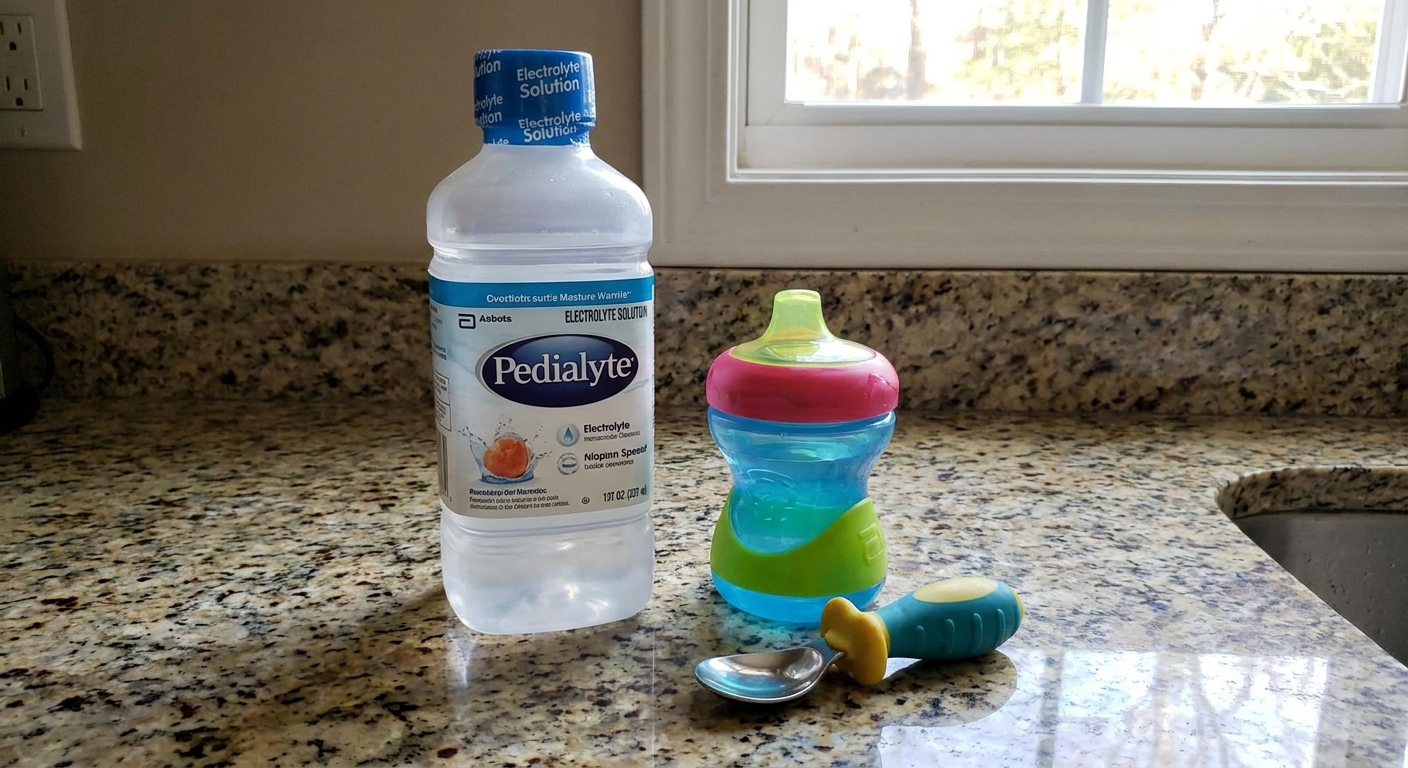
- Oral rehydration solution (store brand ORS, Pedialyte, or similar)
- ORS popsicles (often easier for toddlers)
- For breastfed babies: continue breastfeeding if they will nurse
- For formula-fed babies: in many cases, continue usual formula unless your clinician advises otherwise
Fluids to be careful with
These are not “bad parent” choices. They just often work poorly during stomach illness and can worsen diarrhea.
- Juice, soda, sweet tea: too much sugar can pull more water into the intestines
- Sports drinks: better than soda, but often not ideal for small kids because the electrolyte balance is not the same as ORS
- Plain water only: fine for older kids who are otherwise eating, but if a child is losing a lot through vomiting and diarrhea, they usually need electrolytes too
The tiny sips method
If your child is actively vomiting, large gulps can trigger more vomiting. Instead, aim for frequent, small amounts.
- Start with 1 to 2 teaspoons every 2 to 5 minutes (use a spoon, syringe, or tiny cup).
- If that stays down for 20 to 30 minutes, slowly increase the amount.
- If vomiting happens, wait 10 minutes, then restart with smaller sips.
If diarrhea is the main issue and they are not vomiting, you can usually offer larger amounts more normally. A helpful rule of thumb: offer ORS after each large diarrhea stool and keep aiming for steady sips across the day.
How to tell if your child is getting dehydrated
In clinic, we look at a handful of practical signs. You can do the same at home.
Mild dehydration (watch closely)
- Dry lips or dry mouth
- More tired than usual
- Thirsty, asking for drinks
- Fewer wet diapers or fewer bathroom trips
Moderate to severe dehydration (needs urgent medical care)
- No urine for about 8 hours in older kids, or no wet diaper for about 6 hours in babies, or any markedly decreased urination (go sooner if your child is an infant, looks very ill, or is worsening)
- Very sleepy, difficult to wake, or unusually floppy
- Sunken eyes or no tears when crying
- Fast breathing or fast heartbeat
- Dizziness or fainting (older kids)
Trust your gut here. If your child looks “not right” in a way you cannot shake, it is appropriate to call your pediatrician’s nurse line, urgent care, or go in.
What to feed (and when)
For years, parents were told to do the BRAT diet (bananas, rice, applesauce, toast). Those foods can be fine, but we now know kids often do better when they return to a normal, gentle diet as tolerated.
When your child is ready to eat
- Breastmilk or formula for infants
- Bananas, rice, oatmeal, toast, crackers
- Applesauce or plain yogurt (if tolerated)
- Soups, noodles, lean proteins in small amounts
Foods to pause temporarily
- Greasy, fried foods
- Very spicy foods
- Large amounts of dairy if it seems to worsen diarrhea (temporary lactose sensitivity can happen after stomach illness)
How long will this last?
- Vomiting often improves over 24 to 48 hours.
- Diarrhea commonly lasts several days, and it can linger longer with some infections even when your child otherwise seems better.
If your child refuses food for a day but is drinking enough and peeing, that is usually okay. Hydration is the priority.
Medications: what to consider and what to avoid
I am intentionally non-prescriptive here because the “right” medication depends on age, symptoms, and medical history. But there are a few safety principles that can help you avoid common pitfalls.
- Do not give anti-diarrhea medicines to young children unless your clinician specifically tells you to. In particular, loperamide is generally avoided in young kids and should not be used with bloody diarrhea or severe illness.
- Antibiotics are not automatically helpful for suspected food poisoning and can be harmful for some causes. They should be clinician-directed. One key example: in suspected STEC (Shiga toxin producing E. coli), antibiotics are often avoided because they may increase the risk of serious complications.
- Avoid aspirin in children and teens.
- If you need help controlling fever or discomfort, ask your pediatrician what is appropriate for your child’s age and weight.
If your child has ongoing vomiting and cannot keep down even tiny sips, your pediatrician may recommend an evaluation and specific treatment options.
When to go to urgent care or the ER
This is the part parents want spelled out clearly. Here are the red flags we use in triage. If any apply, call your child’s clinician right away or go in.
Go to the ER now (or call emergency services) if
- Signs of severe dehydration: very sleepy or hard to wake, no urine for a prolonged period, very dry mouth, no tears, dizziness, or fainting
- Blood in stool or black, tarry stool
- Bright green (bilious) vomit (this can be a sign of bowel obstruction and should be treated as an emergency)
- Severe, constant, or worsening abdominal pain (especially if localized to one spot)
- Breathing trouble, blue lips, or severe weakness
- Seizure
Seek same-day medical advice (pediatrician or urgent care) if
- Your child is under 3 months with vomiting, diarrhea, or any fever
- Vomiting lasts more than 8 to 12 hours or your child cannot keep down ORS despite tiny sips
- Diarrhea is frequent and watery and lasting more than 24 to 48 hours in a young child
- High fever or a child who looks very ill
- Recent travel, exposure to reptiles/chicks, or a known outbreak in daycare or school
- Your child has a condition that increases risk (immune suppression, kidney disease, diabetes) or is medically fragile
If you are on the fence, hydration plus a quick call to your pediatrician’s nurse line can save you hours of worry. That is exactly what it is there for.
Possible causes (and why your doctor asks)
You might hear these names in news stories or during a clinic visit. Different causes can have different risks and testing needs.
Norovirus (spreads fast)
- Often rapid onset vomiting, watery diarrhea, and intense cramps
- Very contagious in families and childcare settings
Salmonella and Campylobacter
- Can cause diarrhea, fever, cramps, sometimes blood in stool
- Often linked to undercooked poultry, cross-contamination, unpasteurized milk, and contact with certain animals
Shiga toxin producing E. coli (STEC)
- Can cause severe cramps and bloody diarrhea
- This is one reason bloody stool is an urgent red flag
When testing might be considered
Not every child needs testing. Your clinician decides based on age, severity, dehydration, blood in stool, high fever, symptoms lasting longer than expected, and concerns about outbreaks or travel.
Food safety basics that matter
Most foodborne illness is not because someone “failed.” It is usually a normal kitchen moment plus bad luck. That said, a few habits make a big difference.
- Wash hands before food prep and after handling raw meat, diapers, or pet reptiles.
- Separate raw meat from ready-to-eat foods. Use separate cutting boards if you can.
- Cook meats to safe temperatures and reheat leftovers until steaming hot.
- Chill promptly: refrigerate perishable foods and leftovers quickly, do not let them sit out for long stretches.
- Avoid unpasteurized milk and juices for kids.

Keeping others from catching it
If this is a virus, it spreads easily. If it is foodborne, others may already be incubating symptoms. Either way, these steps help.
- Handwashing with soap and water after every diaper change, bathroom trip, and vomit cleanup (hand sanitizer is less reliable against norovirus)
- Clean and disinfect high-touch surfaces
- For suspected norovirus, use a bleach-based disinfectant or a product labeled effective against norovirus, and follow the label directions
- Wash soiled linens and clothing promptly
- Do not share cups, utensils, or towels during illness
Quick parent checklist
- Hydration first: ORS, tiny sips often
- Offer ORS after big diarrhea stools
- Watch urine output and overall alertness
- Return to gentle foods when hungry, do not force eating
- Avoid over-the-counter anti-diarrhea meds unless a clinician tells you to
- ER for severe dehydration, blood in stool, bright green vomit, or severe belly pain
- Call same-day for babies under 3 months, persistent vomiting, or worsening symptoms
You are not overreacting. You are parenting while tired and trying to keep a small human hydrated, which is genuinely hard work. If you want reassurance, call your pediatrician with the details: your child’s age, how many times they have vomited or had diarrhea, whether they can keep fluids down, and the last time they peed. That information is gold in triage.
Sarah Mitchell
Sarah Mitchell is a Registered Pediatric Nurse and a mother of three who has spent over a decade helping families navigate the beautiful, chaotic early years of childhood. She combines evidence-based medical knowledge with real-world parenting experience to offer practical, compassionate advice. At Awesome Parent, Sarah's mission is to help exhausted parents find solutions, trust their instincts, and finally get some sleep.